
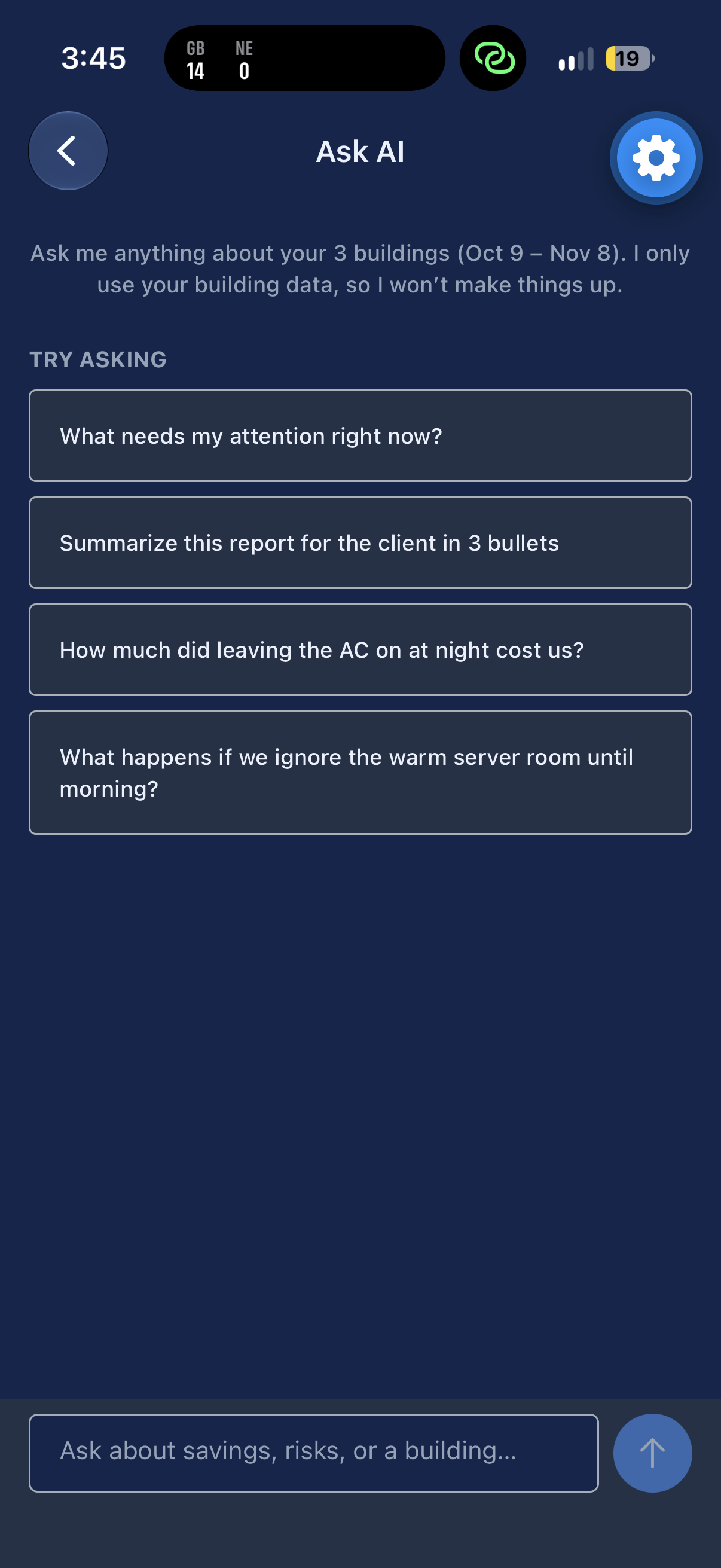
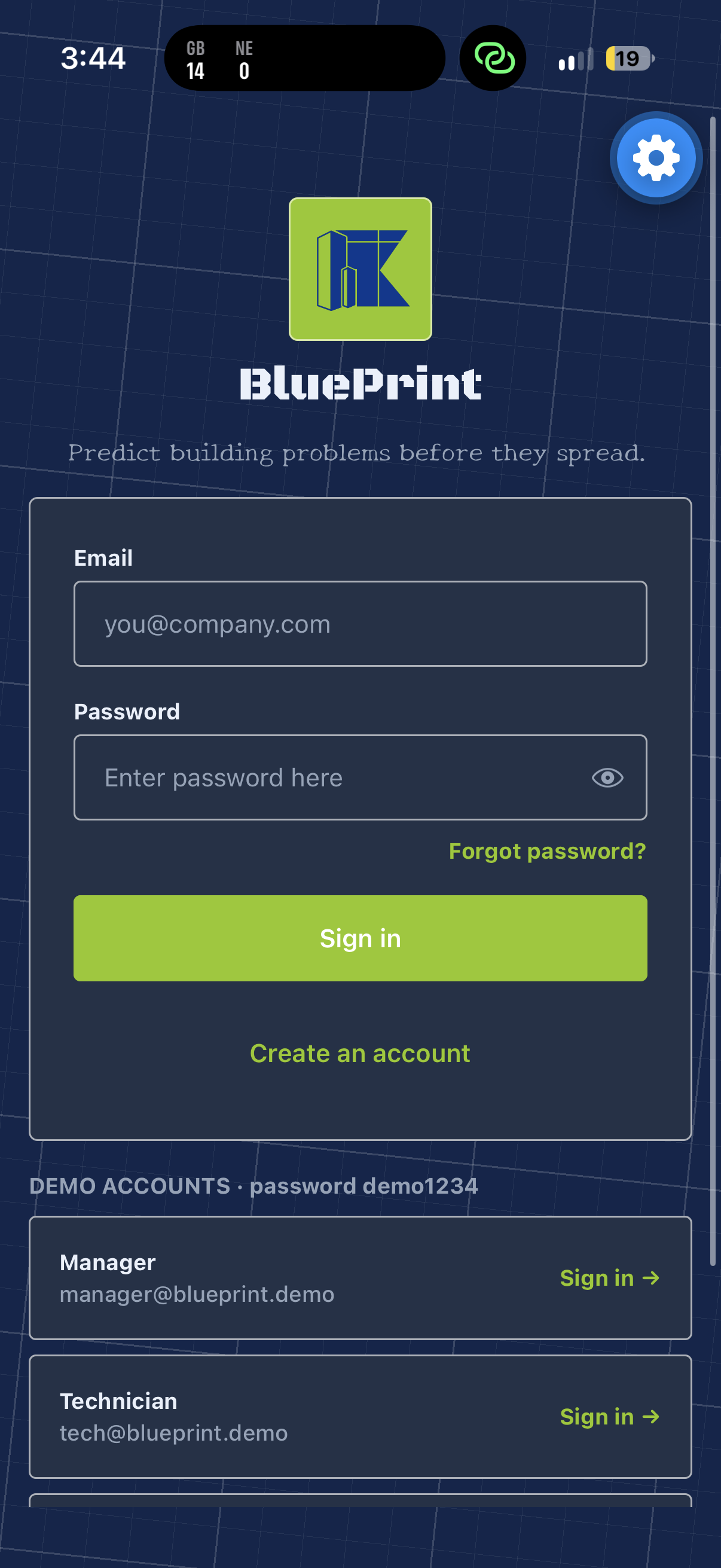
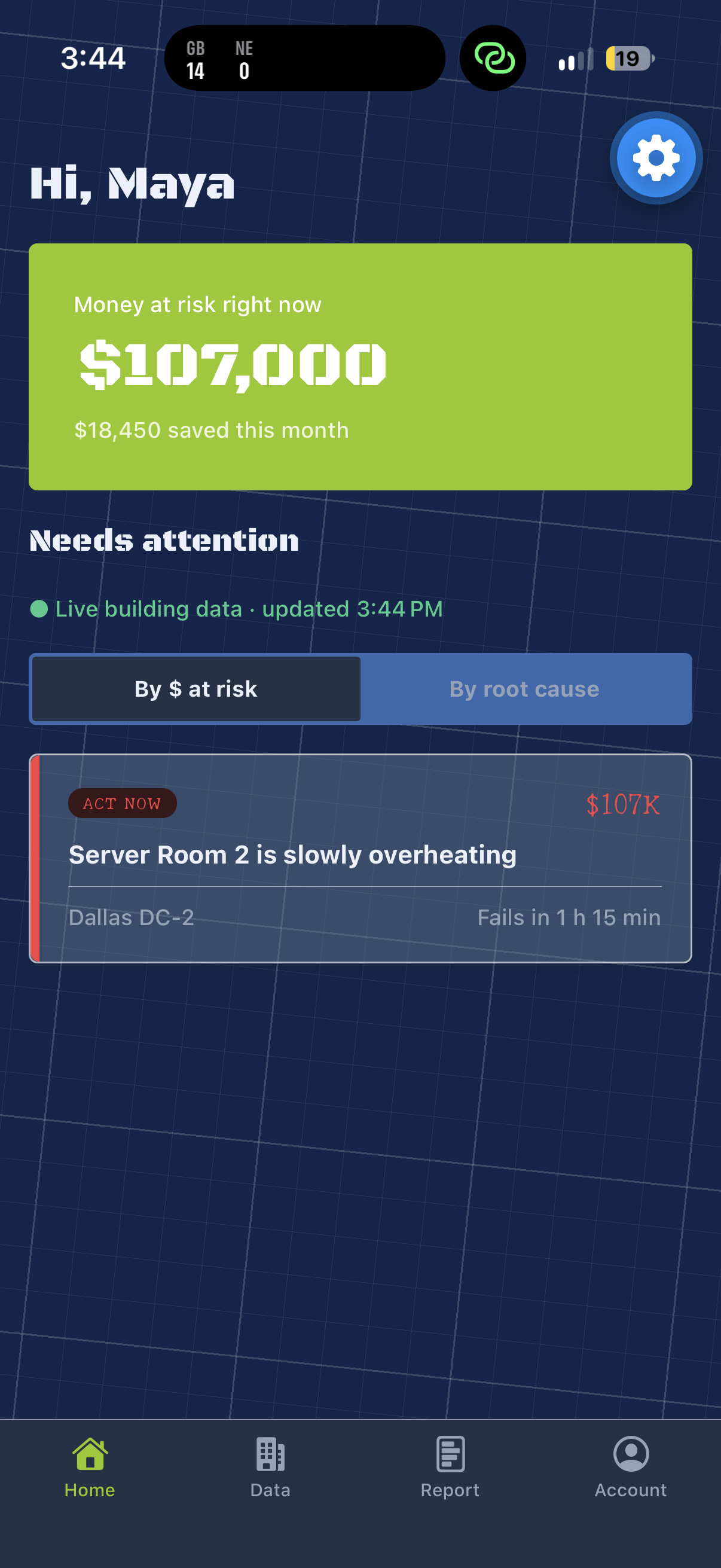
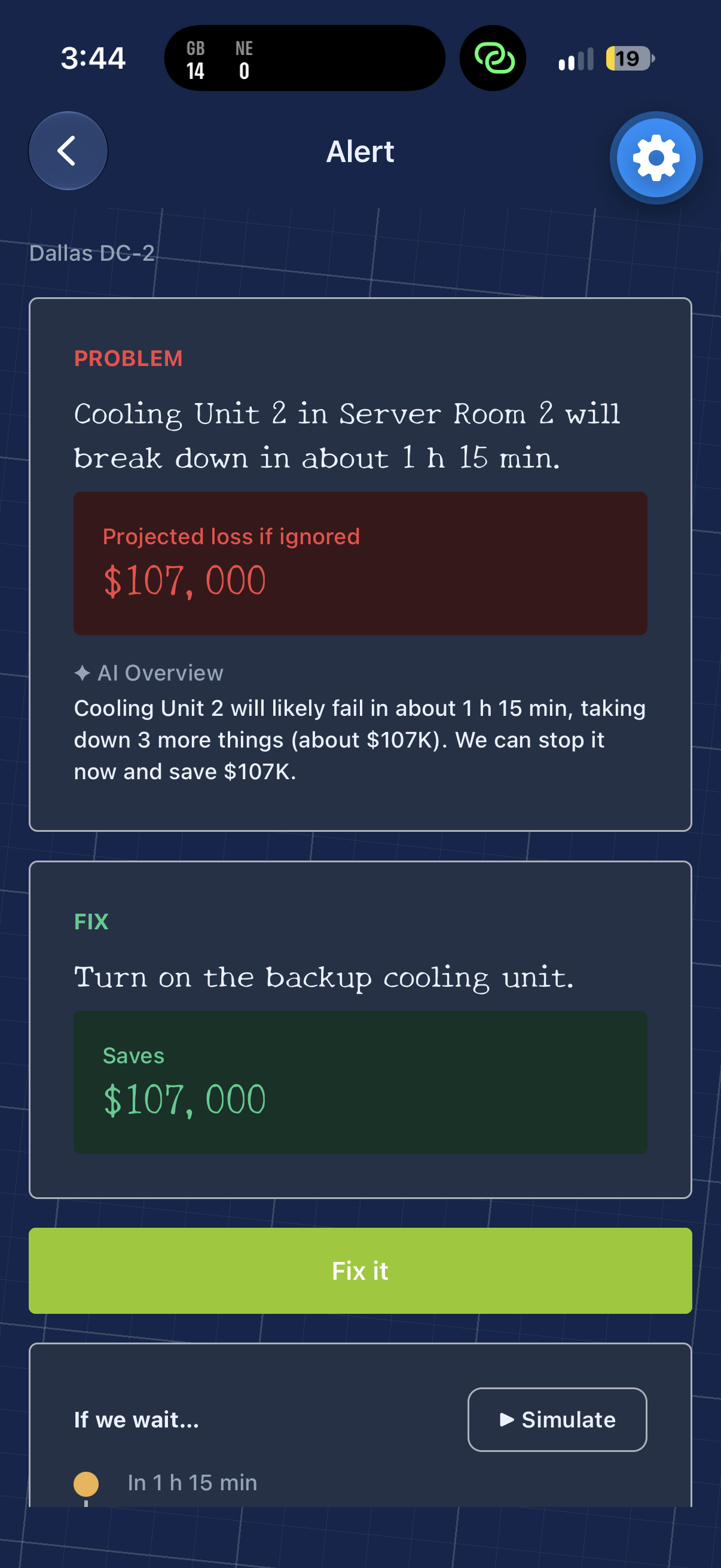
Inspiration
In real estate, data is always spread across multiple systems which results in small issues going unnoticed. Our group had seen this, and due to this, we wanted to create a solution to this problem which led to the creation of BluePrint.
What it does
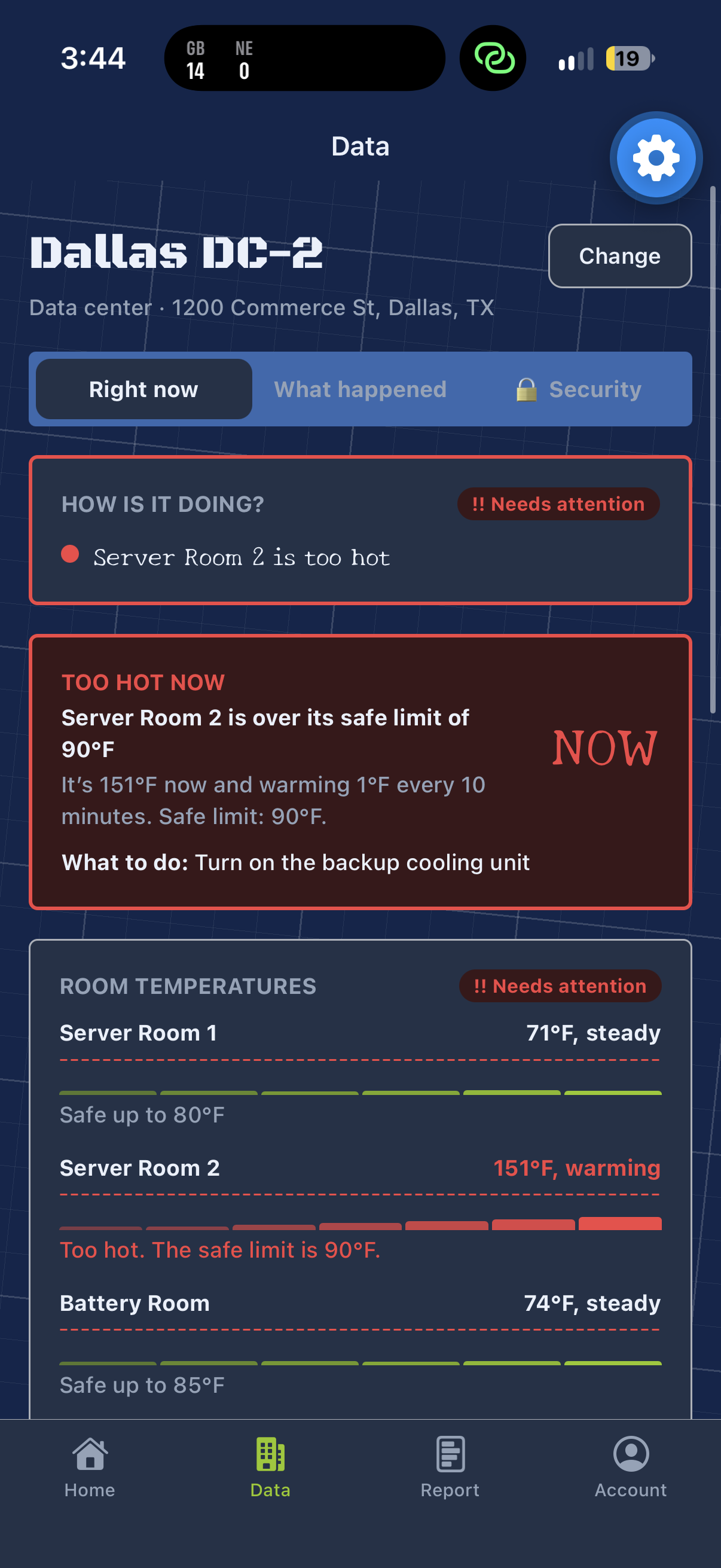
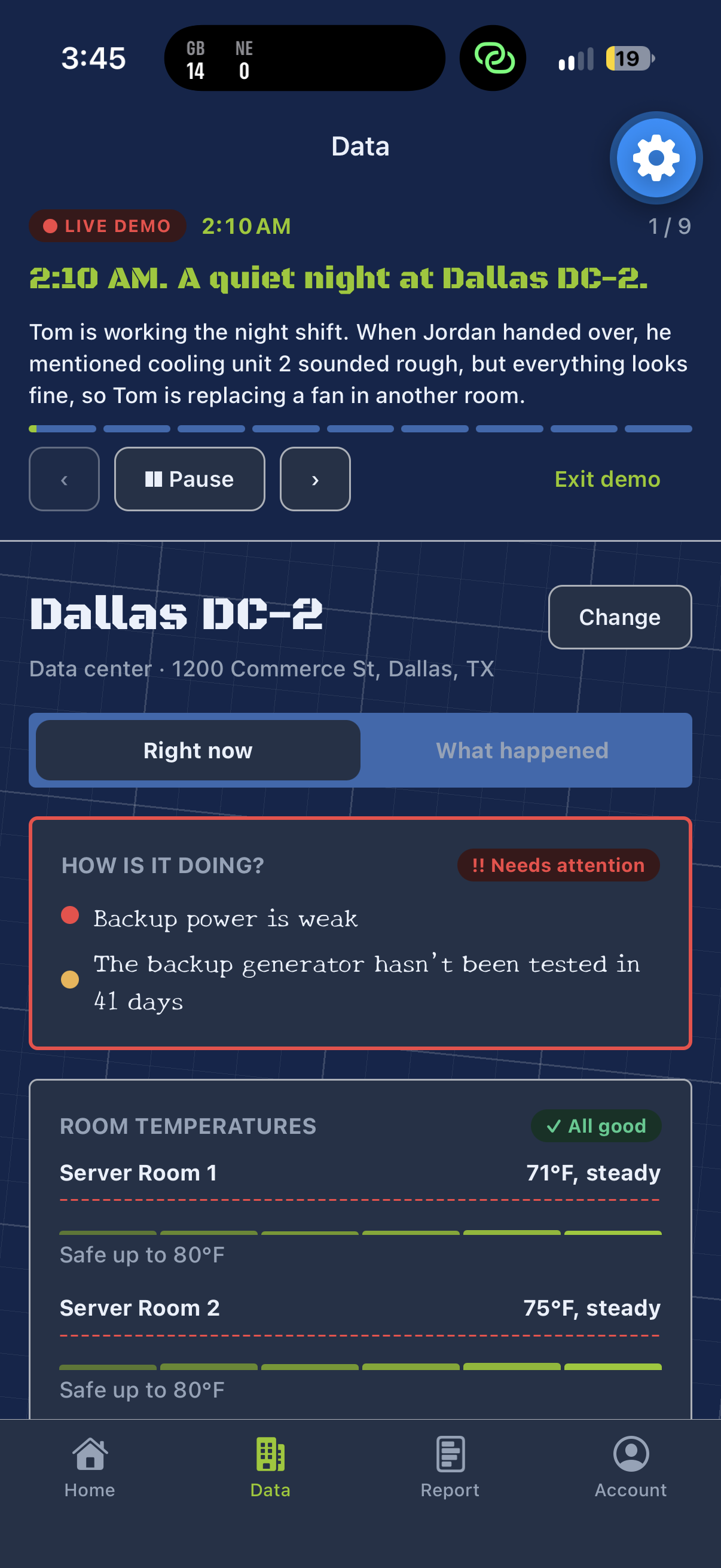
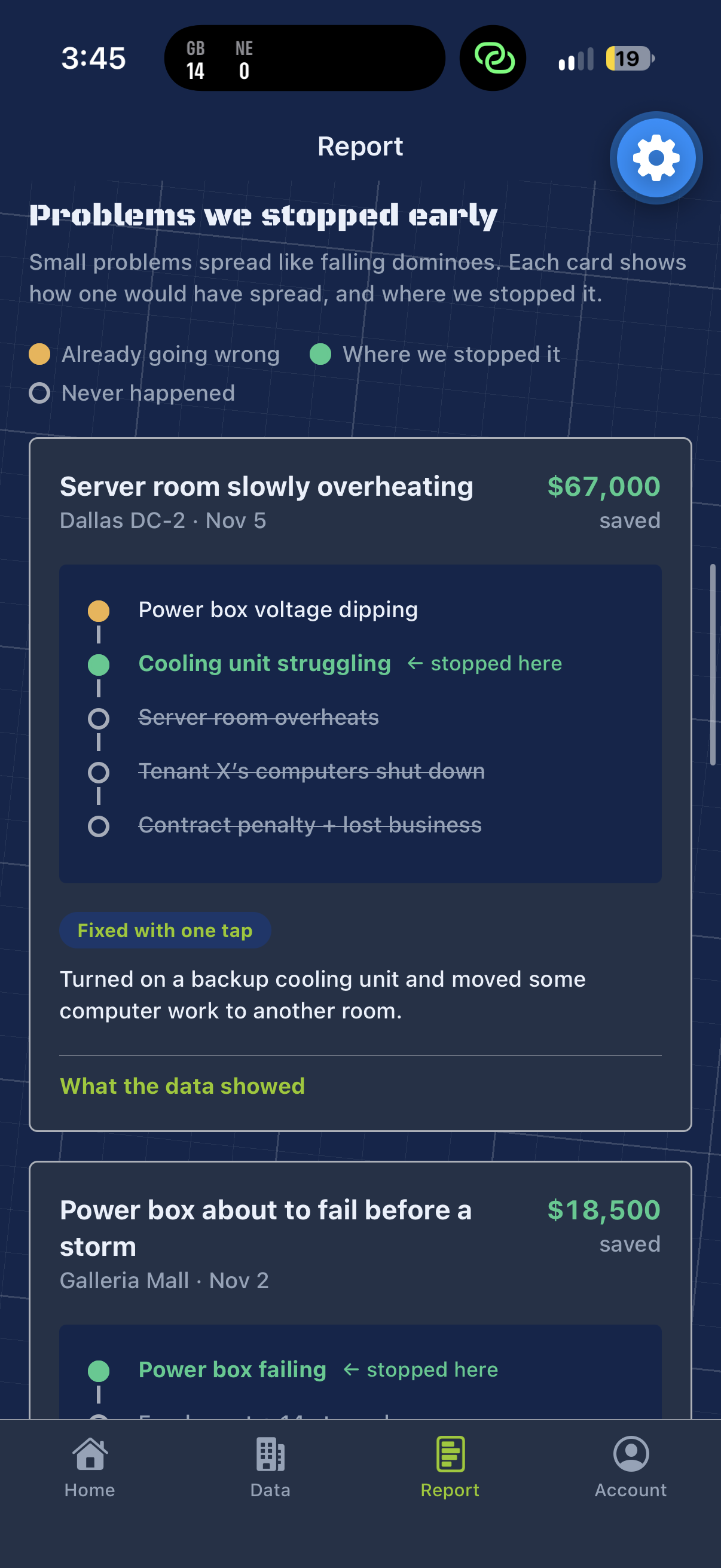
BluePrint connects building systems into one app to reduce confusion for users. Additionally we have the ability to detect suspicious activity across systems and can predict failures and security faults before they spread. An example of this is when something overheats and it causes a chain reaction that may cost thousands of dollars. BluePrint not only detects this issue live, but also finds the root cause of the chain reaction, rather than just fixing one problem at a time. Due to this we are able to reduce the total costs of many issues within commercial real estate while documenting it for the user and giving a recommendation for what steps to take and what to fix first.
Another type of security it can detect is danger to datacenters. Beyond they physical issues, datacenters are prone to infiltration and having separate programs for that causes confusion among administration. In BluePrint, when a datacenter is chosen for the building, it gives you an extra security tab that talks bout breach risks. Examples of this is when someone swipes in, but holds the door open for too long, it sends a potential threat alert. It also senses stuff like someone being in a part of the building they don't need to be. This goes past just regular password checks and 2 factor authentication, it gets actual risks that are hard to detect live.
How we built it
- Expo + React Native: We built BluePrint as a cross-platform mobile app using React Native, with Expo to speed up development and testing on both iOS and Android from a single codebase.
- Supabase + PostgreSQL: Supabase serves as our backend, with a PostgreSQL database storing building and data center information such as sensor readings, access logs, and incident records. This let us bring data from separate systems into one place.
- EAS Hosting: We used Expo Application Services (EAS) to build and deploy the app so it can be accessed and tested easily.
Challenges we ran into
We struggled with merging our various data and implementing a database through Supabase and PostgreSQL.
Accomplishments that we're proud of
We are proud to be able to create a project which has the ability to benefit both CBRE and NMC2. Additionally, we are proud that the UI turned out great and it is easy to use for the user. we think this was something we wanted to put emphasis on because we don't need people to be confused in a time of dire need.
What we learned
We learned more about how security and day to day operations are linked. we discovers how fast expenses domino out of control. How much money companies are actually paying just to keep a few buildings running. We learned that although there may be platforms for physical vulnerabilities, hackers are getting smarter and are able to breach data easily. So we realized how important it is to be able to catch this fast so we can prevent cyber-crime.
What's next for BluePrint
Next we would need to connect our systems to real buildings systems. Additionally we would need to use real incident data within our dataset while automating our responses.
Built With
- eas
- expo.io
- postgresql
- react-native
- supabase


