-
-
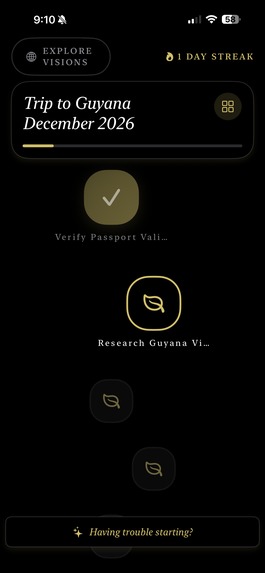
Milestone Path
-
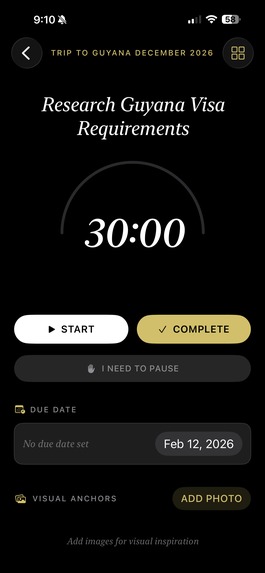
Milestone Details
-
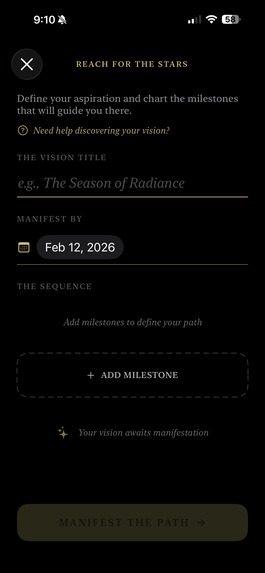
Vision Creation
-
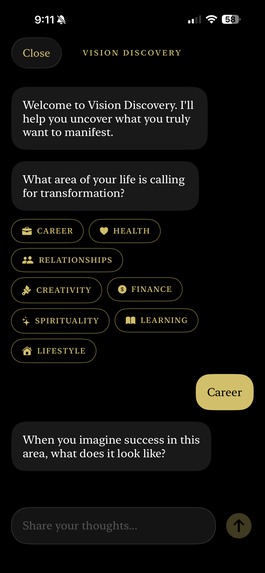
Vision Discovery
-
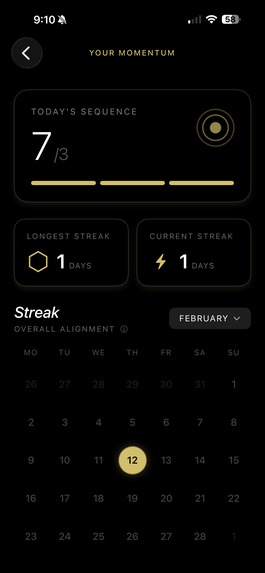
Streaks
-
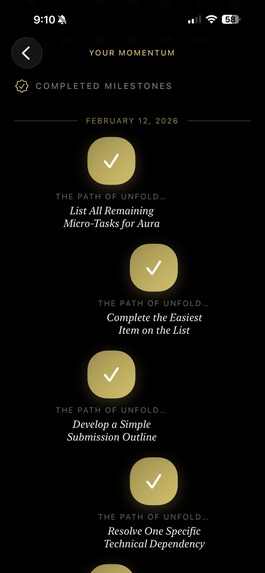
Completed Visions
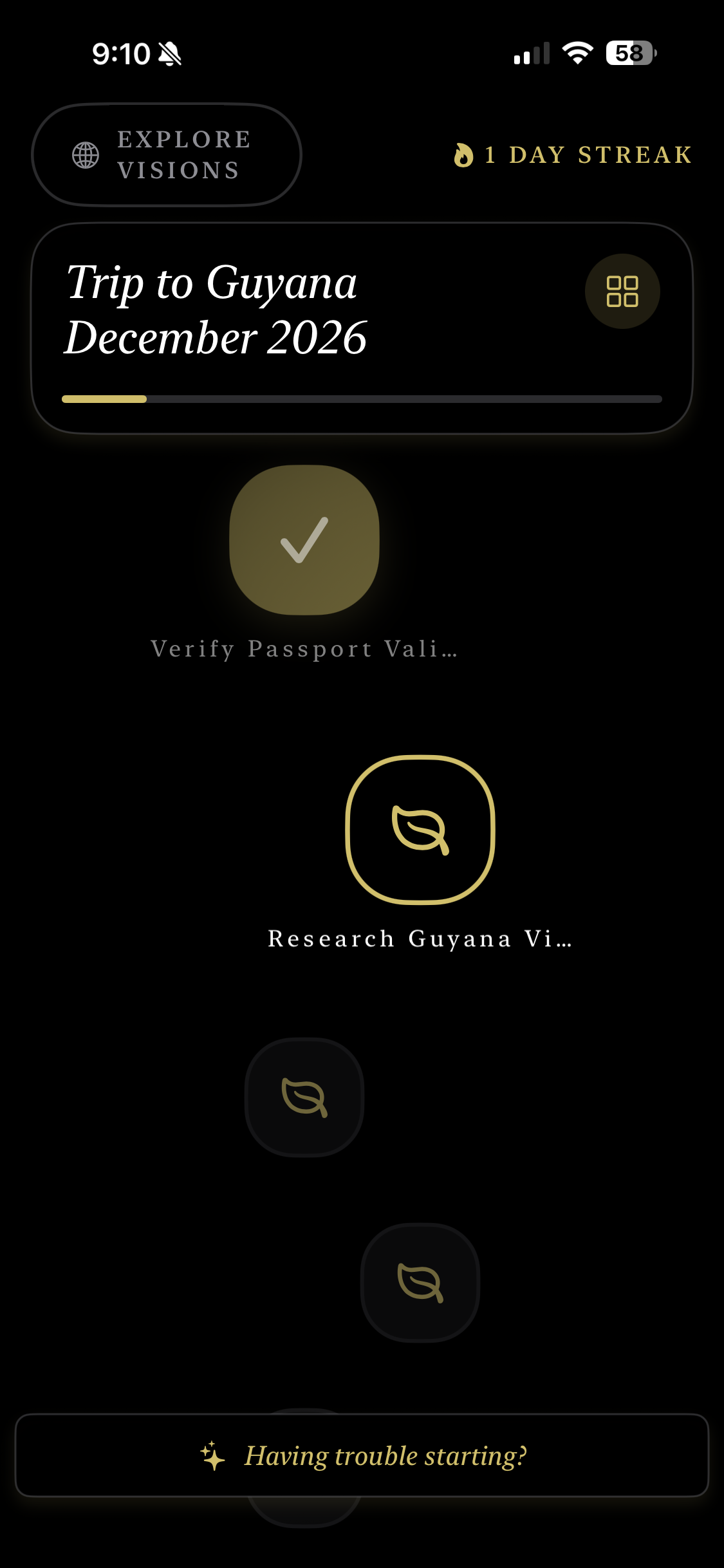
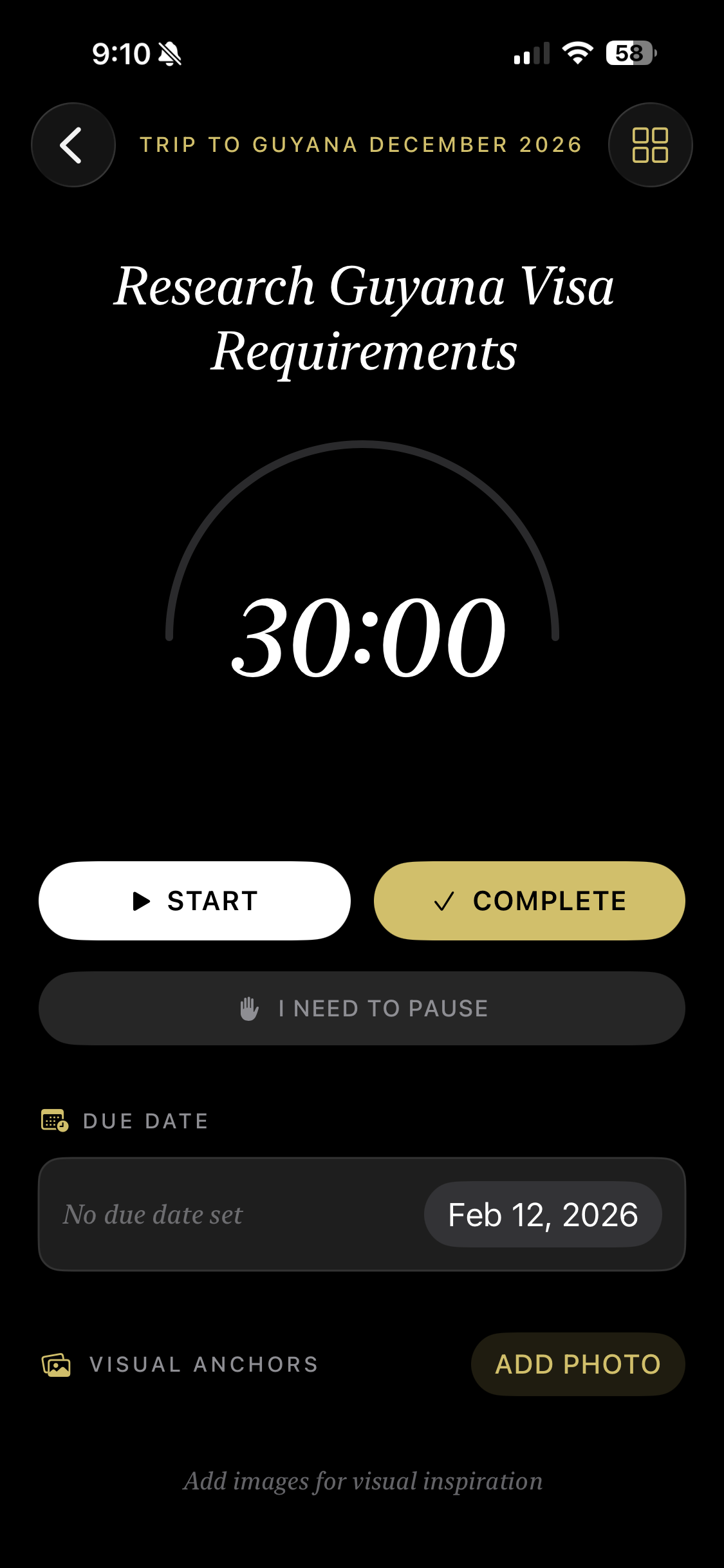
Inspiration
My name is Ashli, and I'm an ambitious woman who sometimes struggles to start on her goals. I'll create a goal, then wonder, "Now what?" Or I'll have so many goals that I don't know where to place my focus. Other times, I'll check off my goals and look back only to realize I can't see the journey that brought me to where I am.
Gabby Beckford's brief spoke to me directly. The challenges she highlighted confidence challenges where life feels like it's not progressing because there are too many goals and no clear starting point, or not celebrating wins because they aren't visible enough to appreciate are challenges I've faced in my own life.
These experiences inspired me to create Aura: an app that helps people visualize their progress and find where to start on the goals that matter most to their future and personal growth.
Early in development, I went down a path focused on daily challenges, to-dos, habits, and checking boxes. But while using that version, I asked myself: Is this actually solving the problem I face? Would I use this app? Would it help me grow and thrive, or am I just checking boxes? That honest reflection redirected the entire project.
What It Does
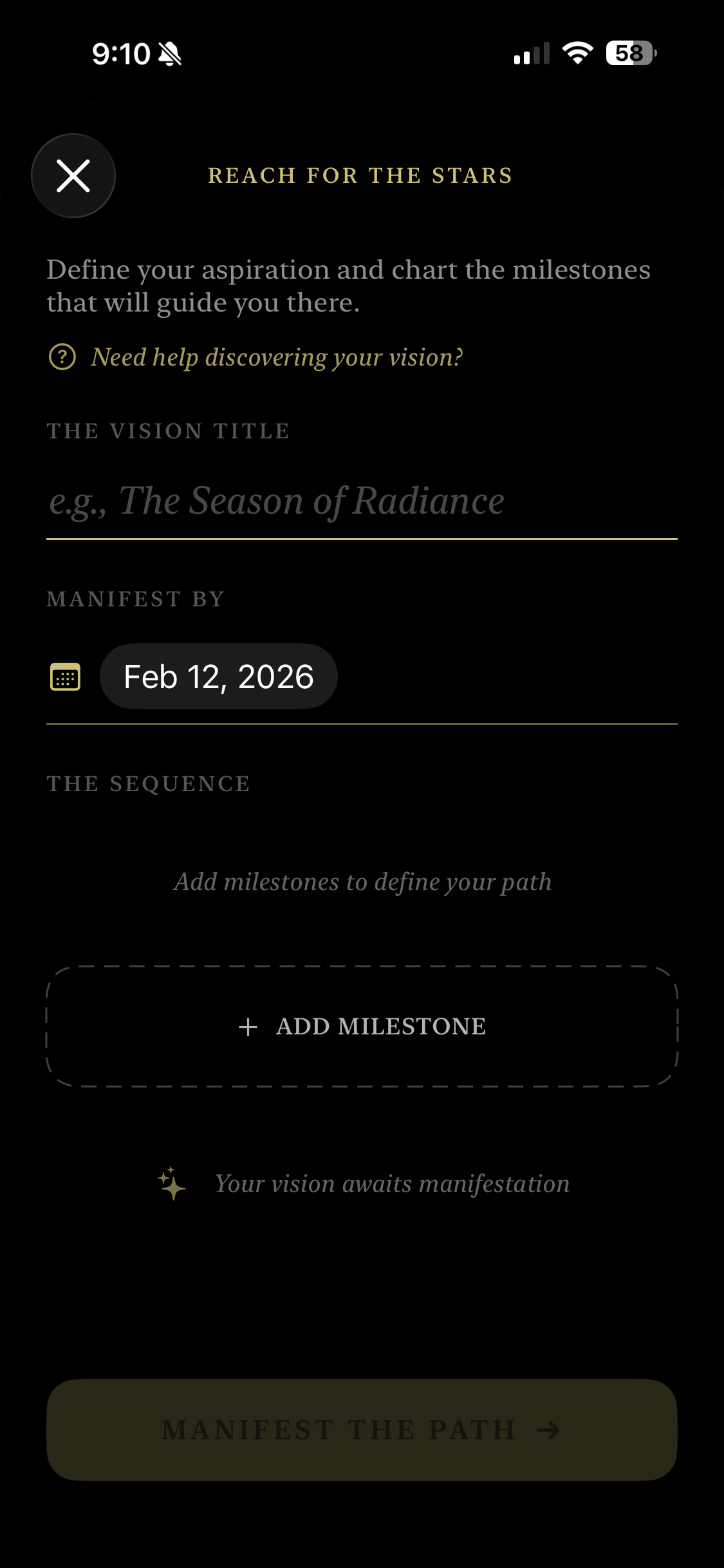
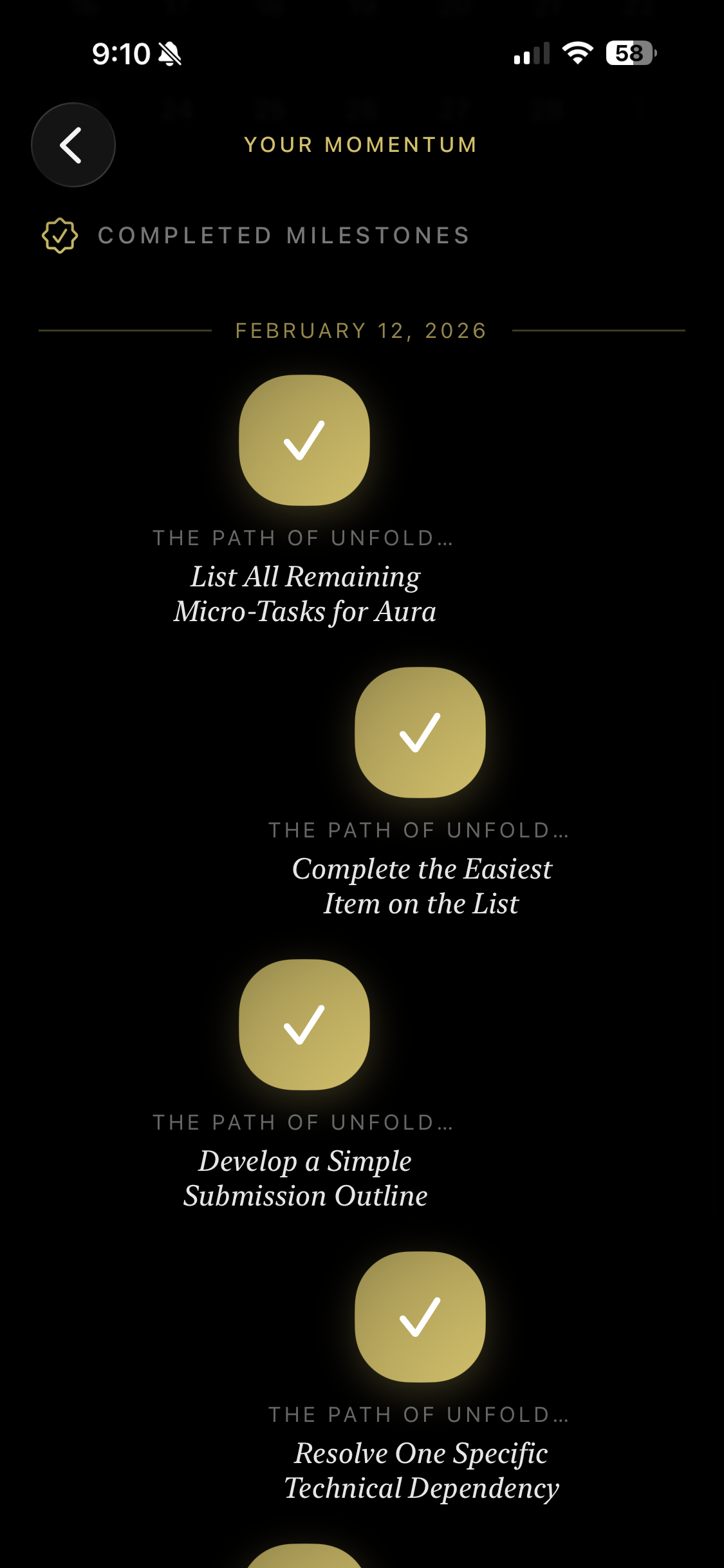
Aura is a mindful goal-achievement app that transforms how people pursue their visions. Instead of overwhelming users with endless task lists, Aura breaks big dreams into small, intentional milestones and provides intelligent support when life gets in the way.
When a user creates a vision like "Launch my side business" or "Get healthier this year," Aura's AI breaks it down into concrete, actionable milestones. But here's where it gets interesting: when users feel blocked whether from low energy, distractions, or time constraints, they can tap the Having trouble starting? button. The AI generates personalized "micro-steps" that take just 1–5 minutes each, providing the user with quick motivation boost while still making progress towards their goal.
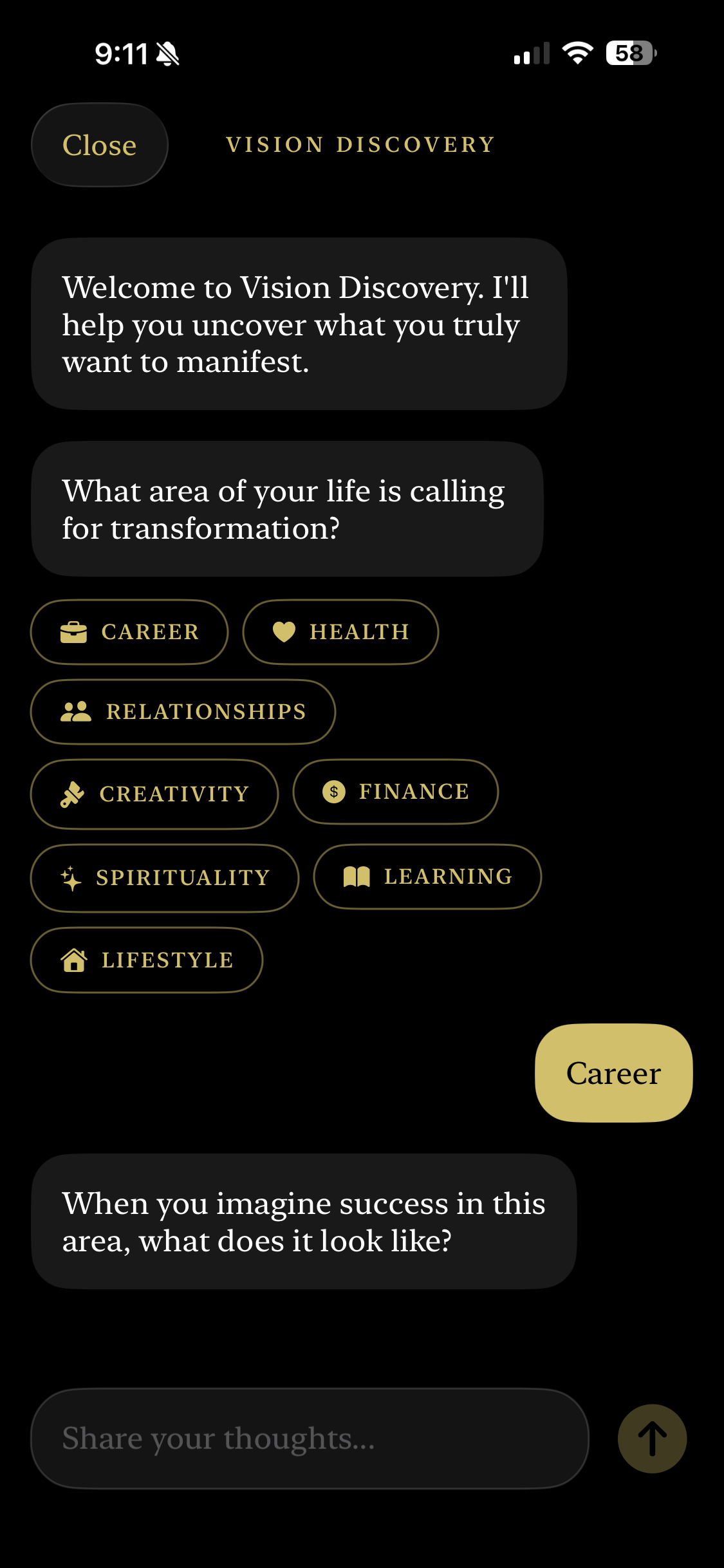
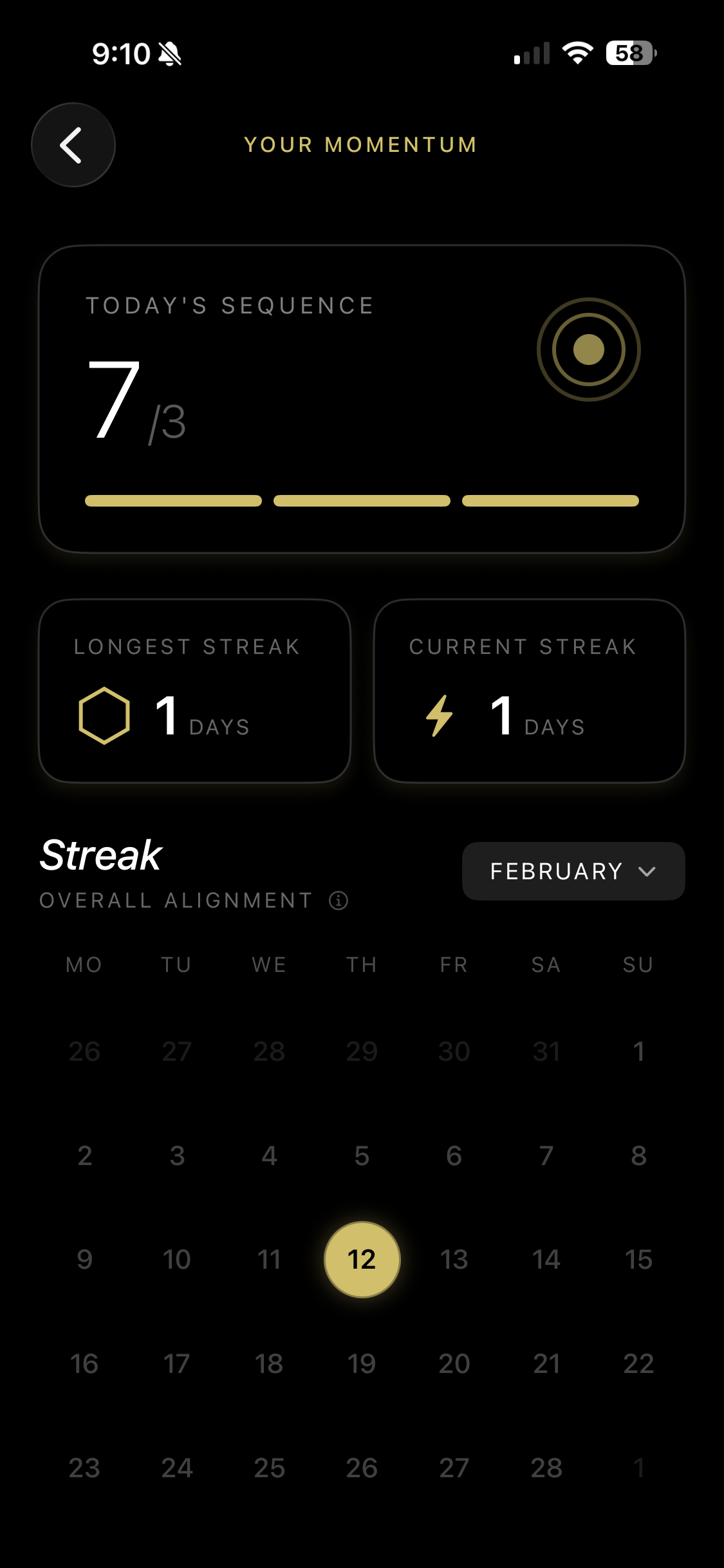
The app tracks streaks to build momentum, celebrates milestones with custom firework animations, and sends gentle notification to keep users anchored to their path. There's also a Vision Discovery feature, a conversational AI that helps users who don't yet know what they want to achieve discover their next meaningful goal through guided questions.
How I Built It
I built Aura as a native iOS app using Swift and SwiftUI, with The Composable Architecture (TCA) by Point-Free as the foundation. TCA gave me unidirectional data flow, strong testability, and a clean way to compose features from smaller, isolated reducers. Every screen from onboarding to milestone details is its own self-contained reducer that plugs into the larger app.
For the AI features, I integrated Firebase AI with Google's Gemini 2.5 Flash model. I used structured JSON schemas to ensure the AI returns consistent, parseable responses for vision breakdowns, micro-steps, and vision discovery options. The prompts are carefully crafted to act as an "execution coach" that prioritizes momentum and small wins.
Monetization runs through RevenueCat, which handles subscription logic, receipt validation, and paywall presentation. I set up three tiers weekly at $0.99, monthly at $3.99, and yearly at $39.99 with a "premium" entitlement that unlocks AI features and unlimited visions.
Data persistence uses a combination of TCA's @Shared property wrapper with file storage for user preferences. This also powers the home screen widget that displays the user's current streak.
The celebration animations fireworks and sparklers are custom Canvas-based particle systems I built to make completing milestones feel genuinely rewarding.
Challenges I Ran Into
State management complexity. Managing the flow between visions, milestones, Strategic Intelligence, and celebrations required careful coordination. When a user completes a milestone through the Strategic Intelligence flow, the app needs to dismiss the sheet, mark the milestone complete, increment the streak (without showing the streak celebration, since the blocker-conquered celebration takes priority), trigger fireworks, persist to disk, and update the widget all in the right order. TCA's effect system made this manageable, but getting the sequencing right took real iteration.
AI response consistency. Early on, the AI would return milestones that were too vague ("research more") or responses that didn't match the JSON schema. I refined the prompts extensively, adding explicit rules like "Use verbs first" and "Avoid vague steps if research is needed, specify exactly what to research and what the output should be." Structured schema enforcement in Gemini helped ensure type safety.
Paywall timing. Deciding when to show the paywall was tricky. Too aggressive and users bounce; too passive and nobody converts. I landed on a "one free vision" model where users can experience the core loop before hitting the paywall on their second vision or when accessing AI features.
Accomplishments I'm Proud Of
Built a complete, end-to-end product From architecture to AI integration to monetization to custom animations, every layer of this app is something I designed, built, and iterated, shout out to Claude Agent in Xcode 26.3 which was a big velocity booster, to ensure I could prototype ideas for feature before building the features in the app. Also, shout out to Gemini, which helped me with the visual designs, taking the my ideas and drawing then organizing them into high fidelity designs.
Created an AI system that actually helps. The Strategic Intelligence feature isn't a gimmick. The structured prompts and schema enforcement produce genuinely useful, actionable micro-steps that lower the barrier to starting.
Stayed true to the real problem. I had the discipline to scrap my first approach when I realized it wasn't solving the right problem. That pivot from a generic task-checker to a vision-driven progress tool made all the difference.
Custom celebration animations. Building Canvas-based particle systems from scratch to make milestone completion feel rewarding was a technical challenge, and the result adds real emotional weight to the user experience.
What I Learned
AI needs guardrails. Structured output schemas and detailed prompts are essential. The difference between "generate some steps" and a carefully crafted prompt with explicit rules, examples, and output format is night and day.
Celebration matters. Users don't just want to complete tasks they want to feel successful. The fireworks, the streak celebrations, and the achievement milestones aren't nice-to-haves; they're core to the engagement loop.
Monetization requires empathy. The paywall isn't an obstacle it's a value proposition. Users who see the AI break down their vision into actionable steps understand what they're paying for. Leading with value before asking for payment builds trust.
AI can be a massive productivity booster if you leverage it correctly. When I first started using Gemini Canvas, I fed it my hand-drawn sketches and it generated screens with full designs. But as the screens grew more complex and required more revisions, mistakes piled up and the canvas would fail to render. I learned to limit each canvas to 1–3 screens. This prevented the context degradation that would happen when all my designs lived in a single thread or canvas. By isolating designs into individual canvases, Gemini maintained context and produced work I could actually be proud of.
What's Next for Aura
- Vision Board: A space that aggregates media into a meaningful progress log for decision-making and reflection.
- Free trials to lower the entry barrier.
- Focus Mode: Block distracting notifications from other apps while a user locks in.
- Mindfulness features: Breathing exercises before starting a milestone to reduce anxiety and help center the user.
- Maintenance and bug fixes—because once real users arrive, the real bugs show up.
- App Store release.
- Retention and subscription analysis to identify what's working and what needs adjusting.
- User feedback loops, allowing users to weigh in on features they believe would help them succeed long-term.
- Exploring more economical LLMs to make summaries, breakdowns, and analysis cheaper to run.
- Themes: Offering different visual themes for users who prefer something beyond the dark color scheme.


Log in or sign up for Devpost to join the conversation.