-
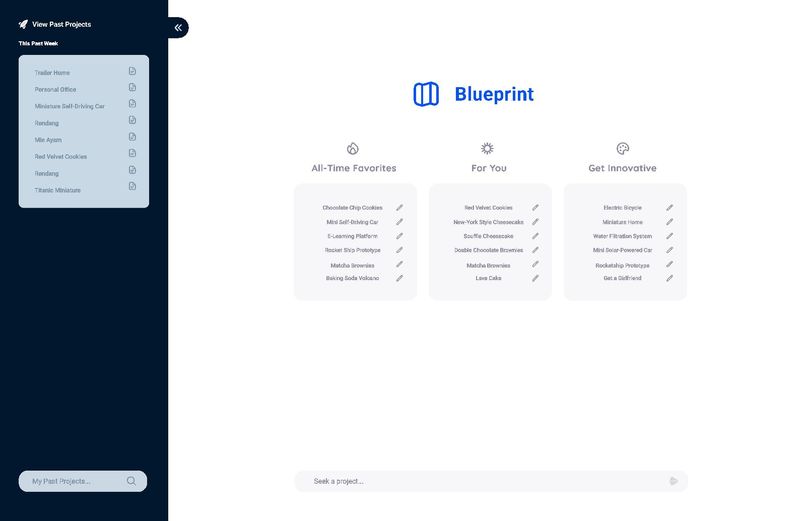
Landing Page
-
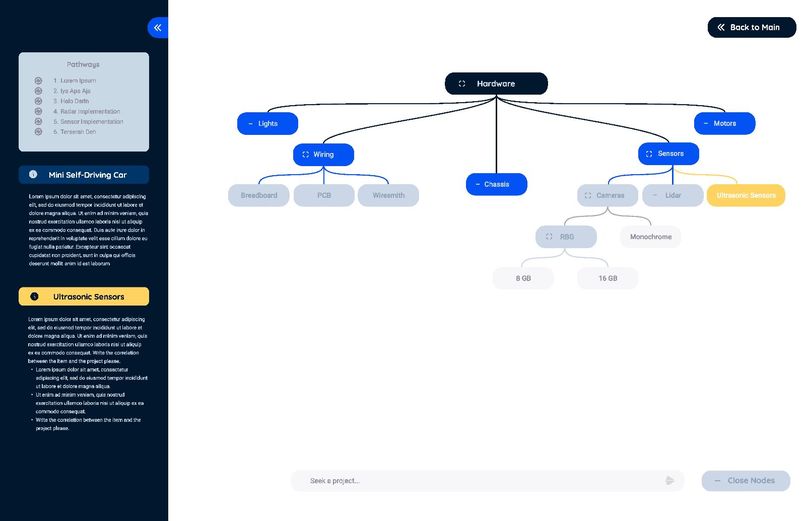
Project View
-
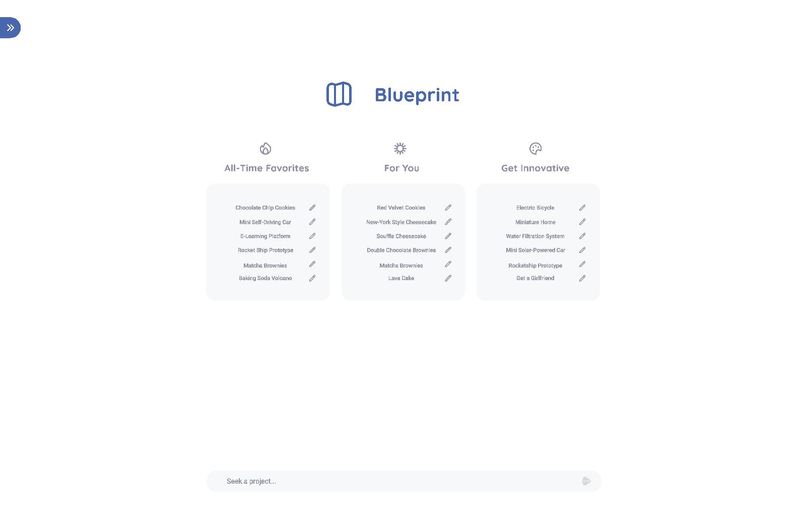
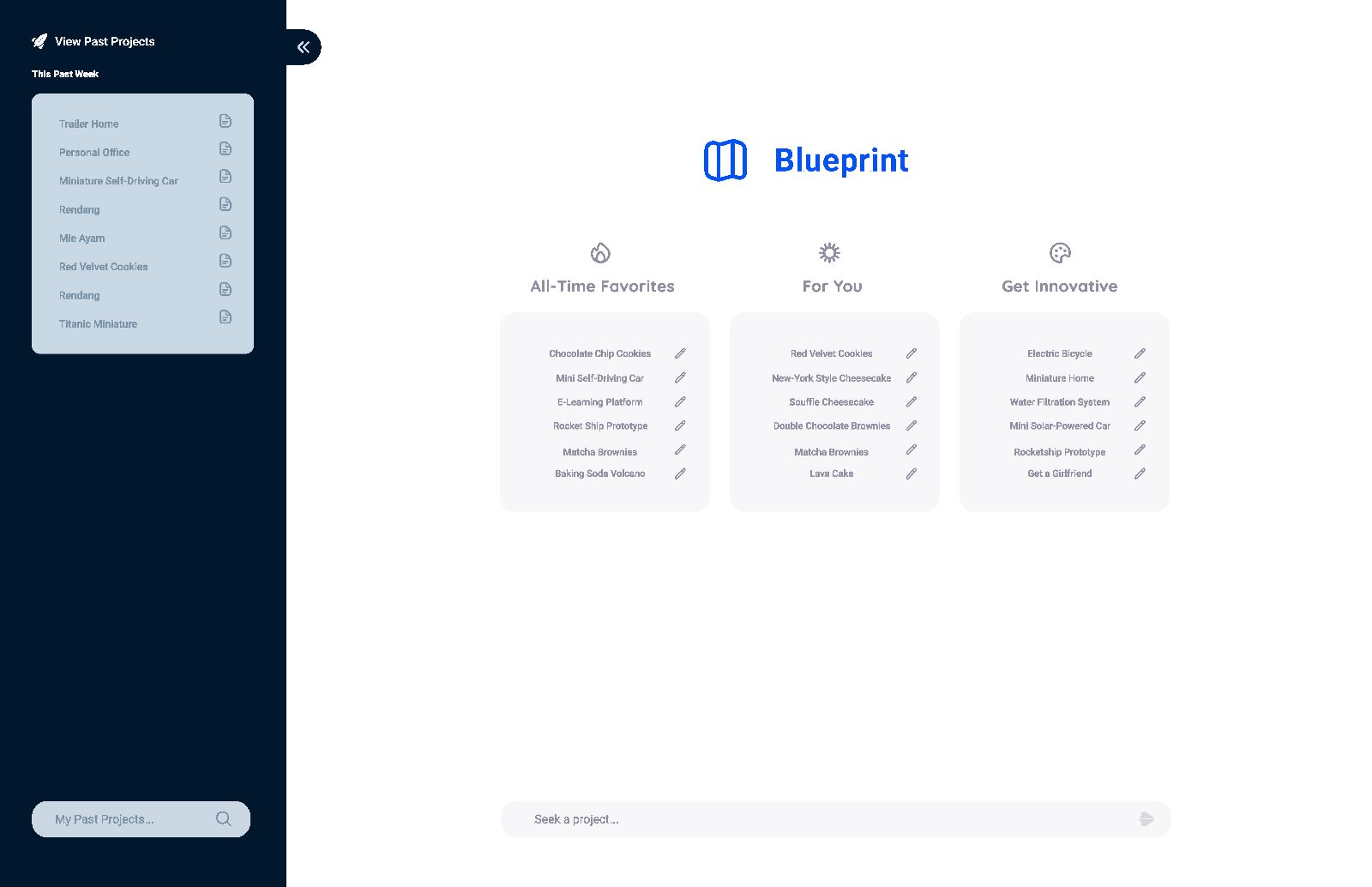
Landing page
-
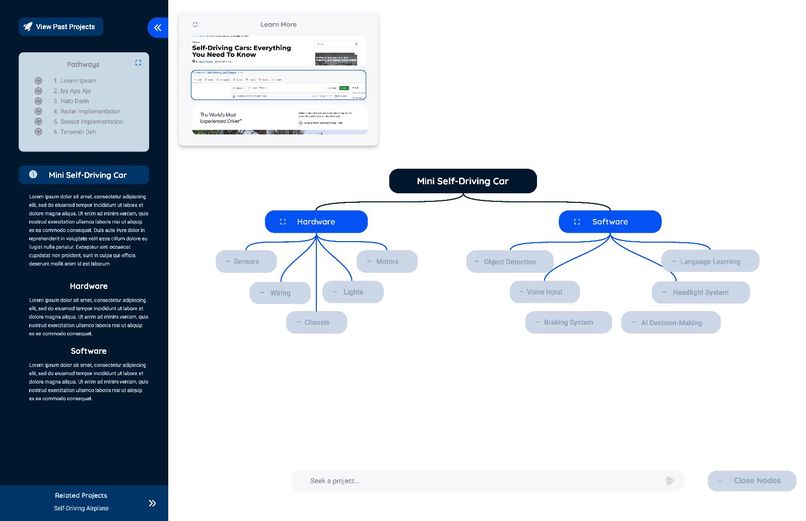
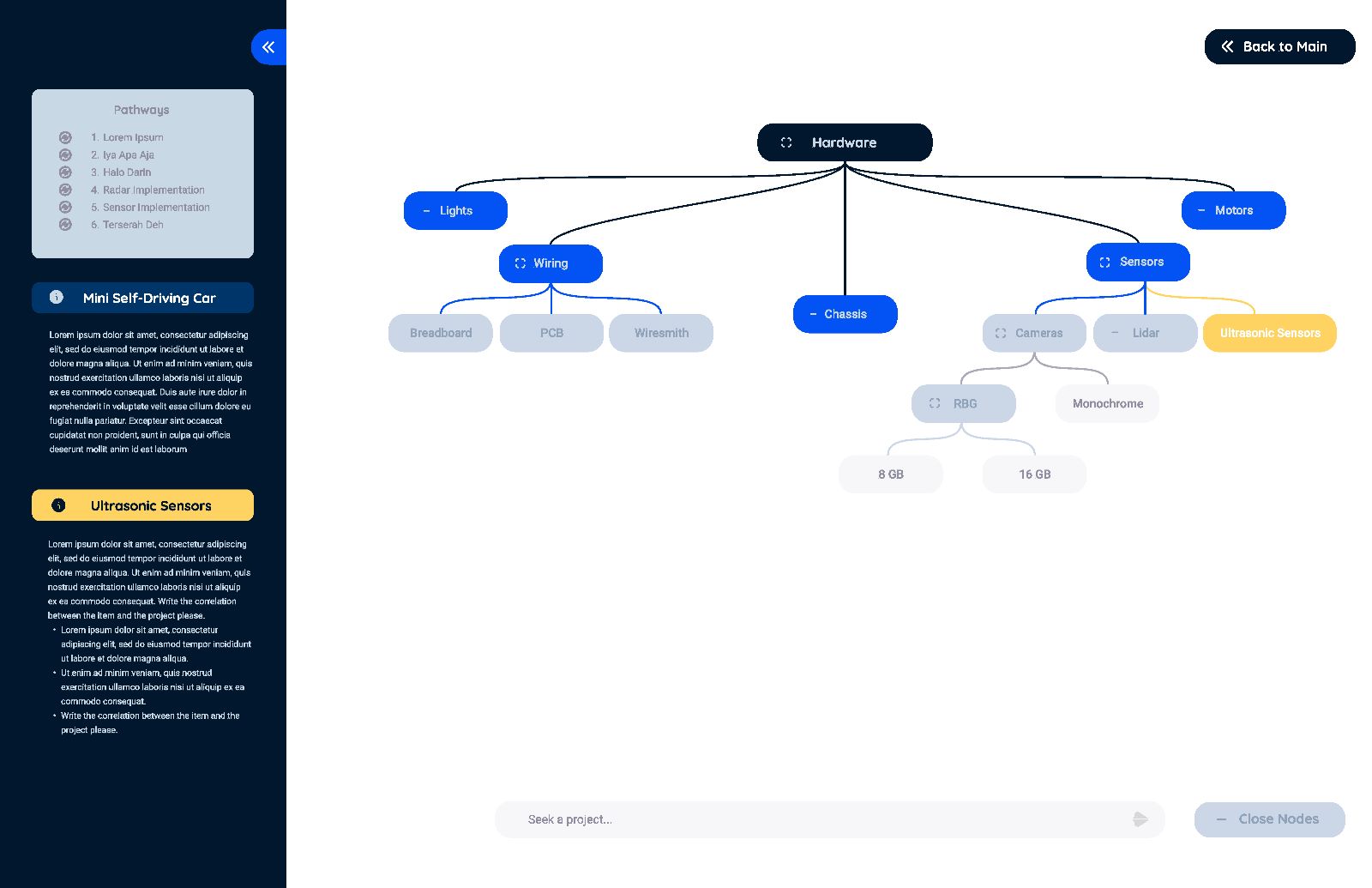
Project View
-
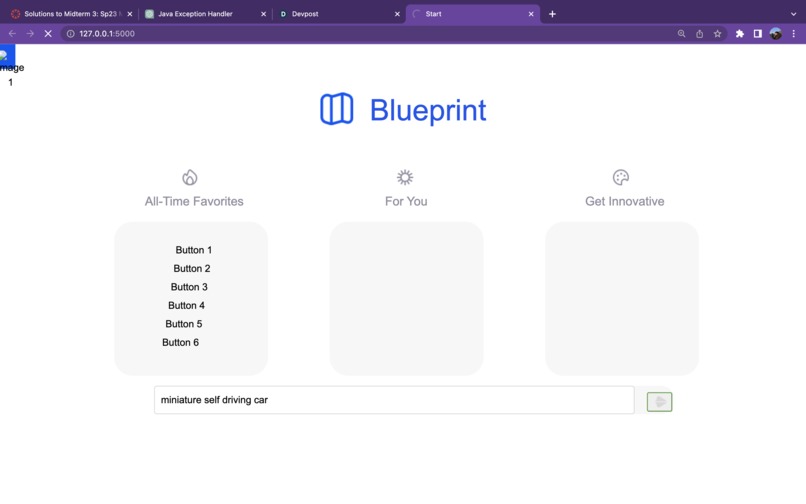
Landing Page Prototype
-
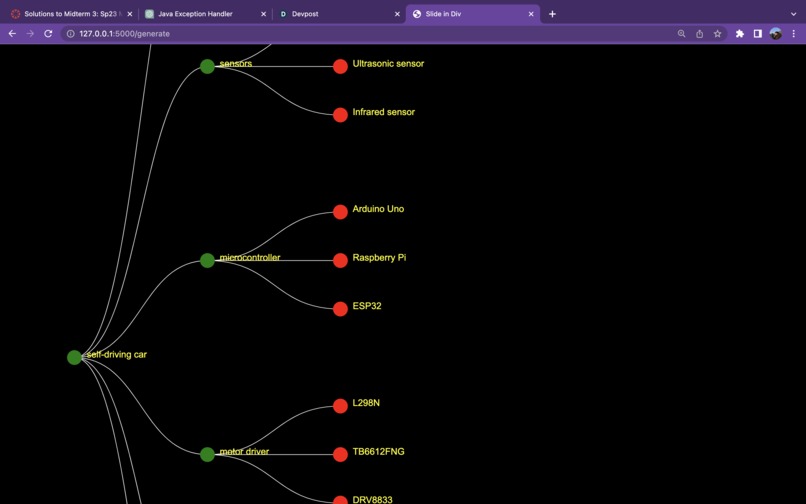
Visual Tree Prototype
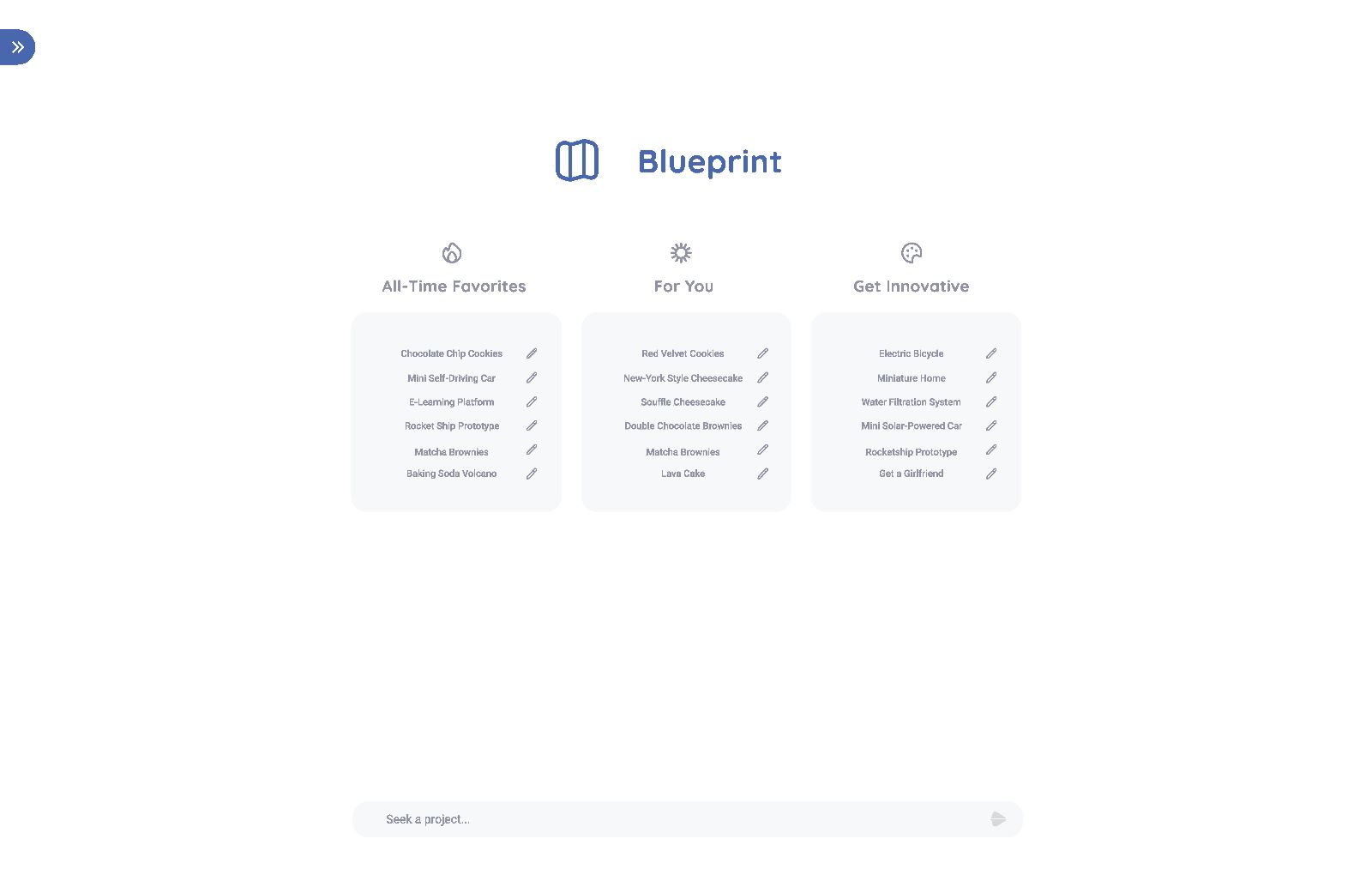
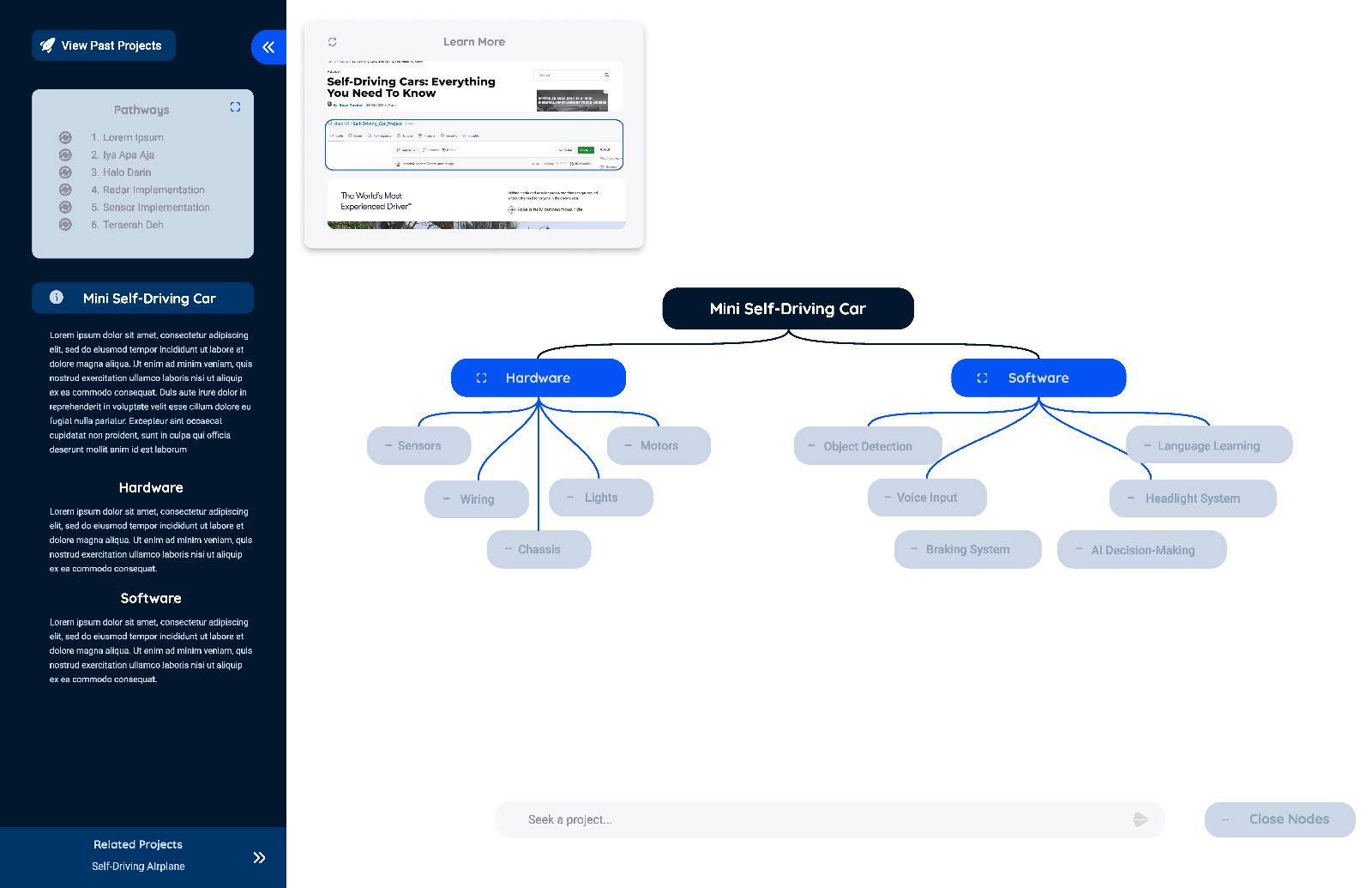
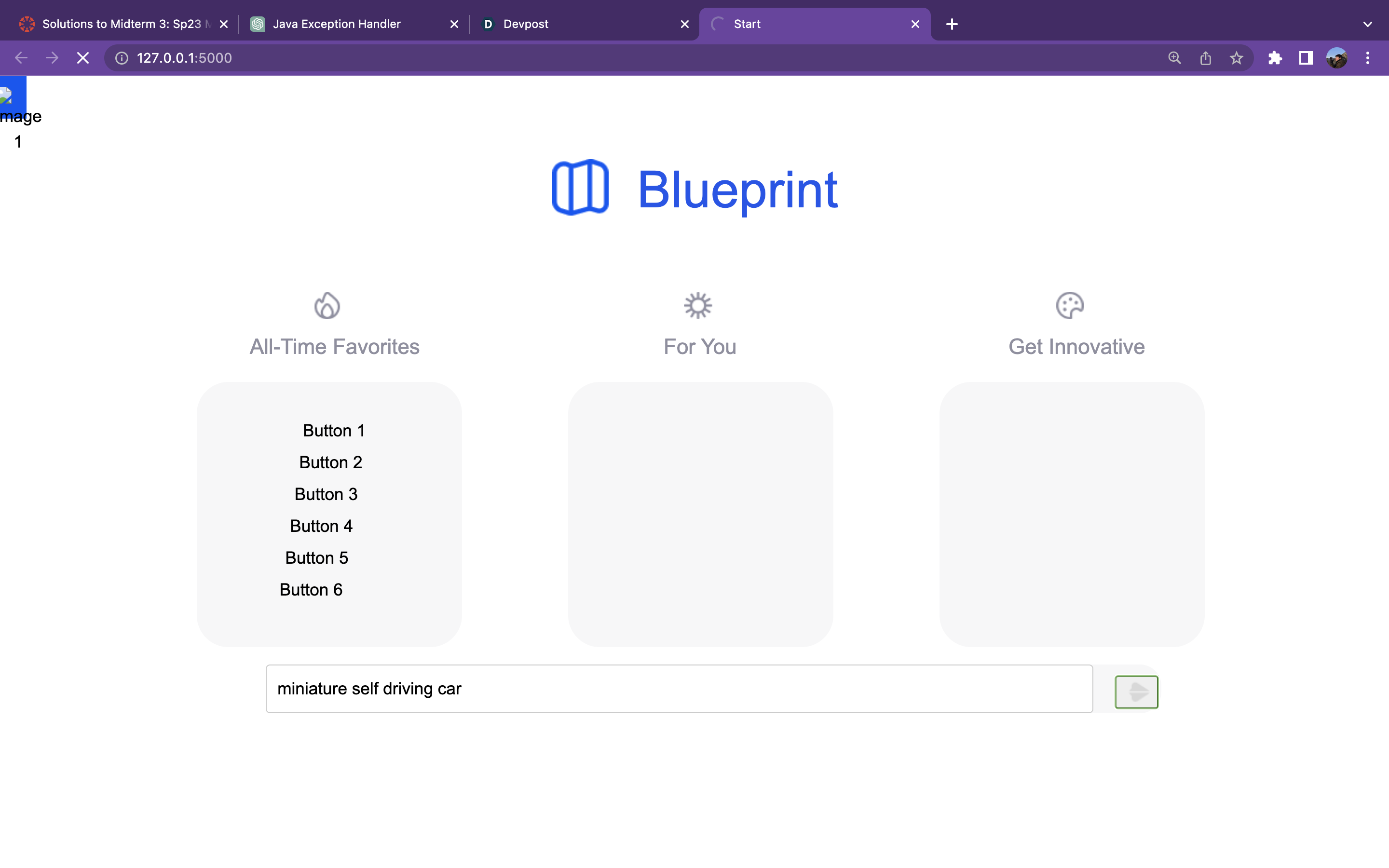
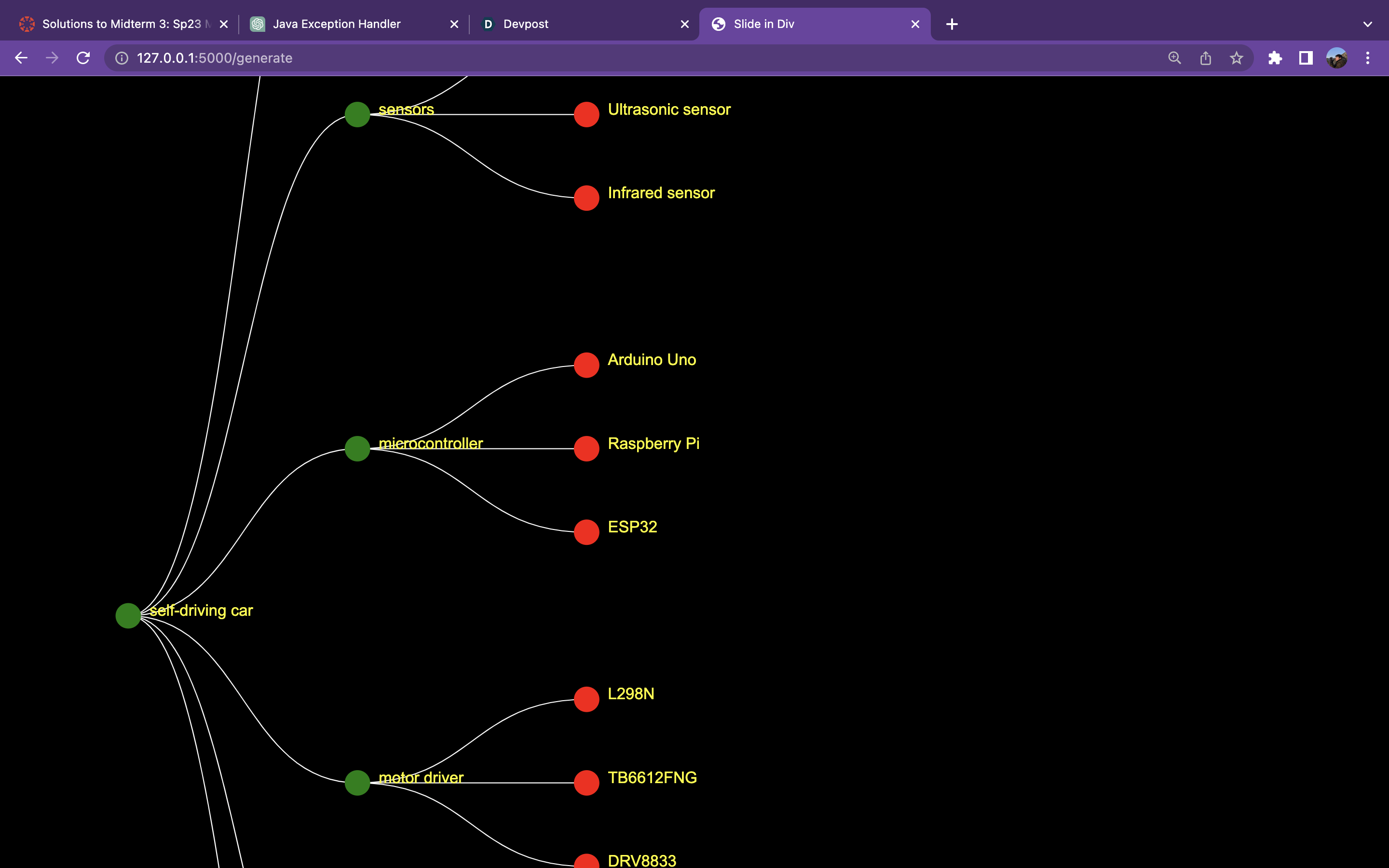
Initially, our project was inspired by an engineering project we were building on a self-driving car. Prior, I (Darin) had 0 practical experience handling hardware, and there are many daunting components we needed to tackle. From microcontrollers, to sensors and wiring. After many hours of research, websites only provided details on specific project pathways and didn’t offer any extensive information on how to build the project with better cost efficiency or the different ways we could reach the same endpoint. It essentially took a lot of time to understand the big picture of a new project with complex and cryptic components.
[to better clarify, you could make a miniature self driving car with cameras, lidar, or maybe simple ultrasonic sensors, and each of these have their own benefits in terms of cost and efficiency]
When beginning on a project, it can be incredibly difficult to grasp the complete picture. There are countless things that must be taken into consideration— resource and material allocation, projected costs, mechanism structures and primarily, project paths. Tens of Google searches are simply unable to coverall the necessary components of complex, larger-scale projects
Even building the simplest projects like baking chocolate chip cookies, still require great organizational skills, resource allocation, and ultimately, component assembly. This process is often extremely time consuming. People will often scour the internet for various alternatives to construct a project; configurations, mechanisms, and materials often vary based on preferred project paths. Blueprint offers solutions attributed to resource allocation, cost calculation, correlations between the components and the overall project, and last but not least, project path alternatives. We want to foster the endeavors of engineers, students, project managers, and even hobbyists to turn their ideas into tangible realities more efficiently
The Solution
Blueprint offers solutions attributed to resource allocation, cost calculation, correlations between the components and the overall project, and last but not least, project path alternatives. We want to foster the endeavors of engineers, students, project managers, and even hobbyists to turn their ideas into tangible realities more efficiently.
Features
Project Paths
In project management, project paths are a key tenet towards completion. They are determined by project specifications and impact duration, costs, efficiency, and even quality. Any project with interdependent elements may benefit from efficient, critical path analysis.
Resource Allocation
Users are linked to external resources that show them examples of past, similar projects, in-depth information regarding each component, and of course, sources to purchase those materials.
(Functionality in the future)
Estimated Time and Cost Projections
Providing estimated time and cost projections allow users to view the scale and feasibility of the project. It saves time, increases efficiency, and provides users with a better visual on the project they are building.
Target Audience
Our target audience encapsulates a wide audience, from project managers and engineers, to students and even hobbyists. Anybody who is looking to work on a tangible product can utilize Blueprint. Our product helps streamline project execution, enhance collaboration, provide valuable project insights, improve project visibility, and ultimately allow users to achieve their goals more efficiently.
WHAT WE LEARNED.
We learnt to integrate API’s into our web app, and we also learnt a bit more about pipelines for the API and the app, how data should be converted, a bit on prompt engineering as well as vector databases (which we hadn’t implemented)
HOW WE BUILT THE PROJECT.
We built it starting with a design on Figma, as well as compiling the ideas for the finished product, and then we continued to use a python flask framework for developing the app’s backend along with d3.js for the visual tree representation for the prototype, and we used the OpenAI API to send prompts and get data back in JSON format to display on our app. We planned to use pinecone for vector databases (long term memory storage) for better app efficiency, but that was something we hadn’t implemented in time
CHALLENGES FACED.
The scope of the project was more technically difficult than we imagined as we dived right into trying to create the project, and it was especially complex for us having had no experience with AI before (or LLM’s), and it took a while for us to understand and create a pipeline for how data should be sent and converted between the OpenAI API and our app.
More specifically, it was hard on the web development end as we tried to create a visual tree that alters based on the data given to it (we decided to use data in JSON format because that’s what seemed to be the norm), and with none of us having had deeper web development experience either was a stunting point.


Log in or sign up for Devpost to join the conversation.