-

Home page
-
-
-
-

Inspiration
Bluenote was inspired by both a real-world problem and the hackathon themes. Managing multiple credit cards through spreadsheets is frustrating and often leads to poor accountability, so we wanted a tool that actively guides spending decisions instead of just tracking numbers.
The hackathon’s noir aesthetic influenced the visual style, while the “Big Score” track — focused on money management and financial security — shaped the app’s purpose. This led us to build a cinematic yet practical platform that combines AI decision support with high-speed data storage to help users budget smarter and optimize credit card rewards.
What it does
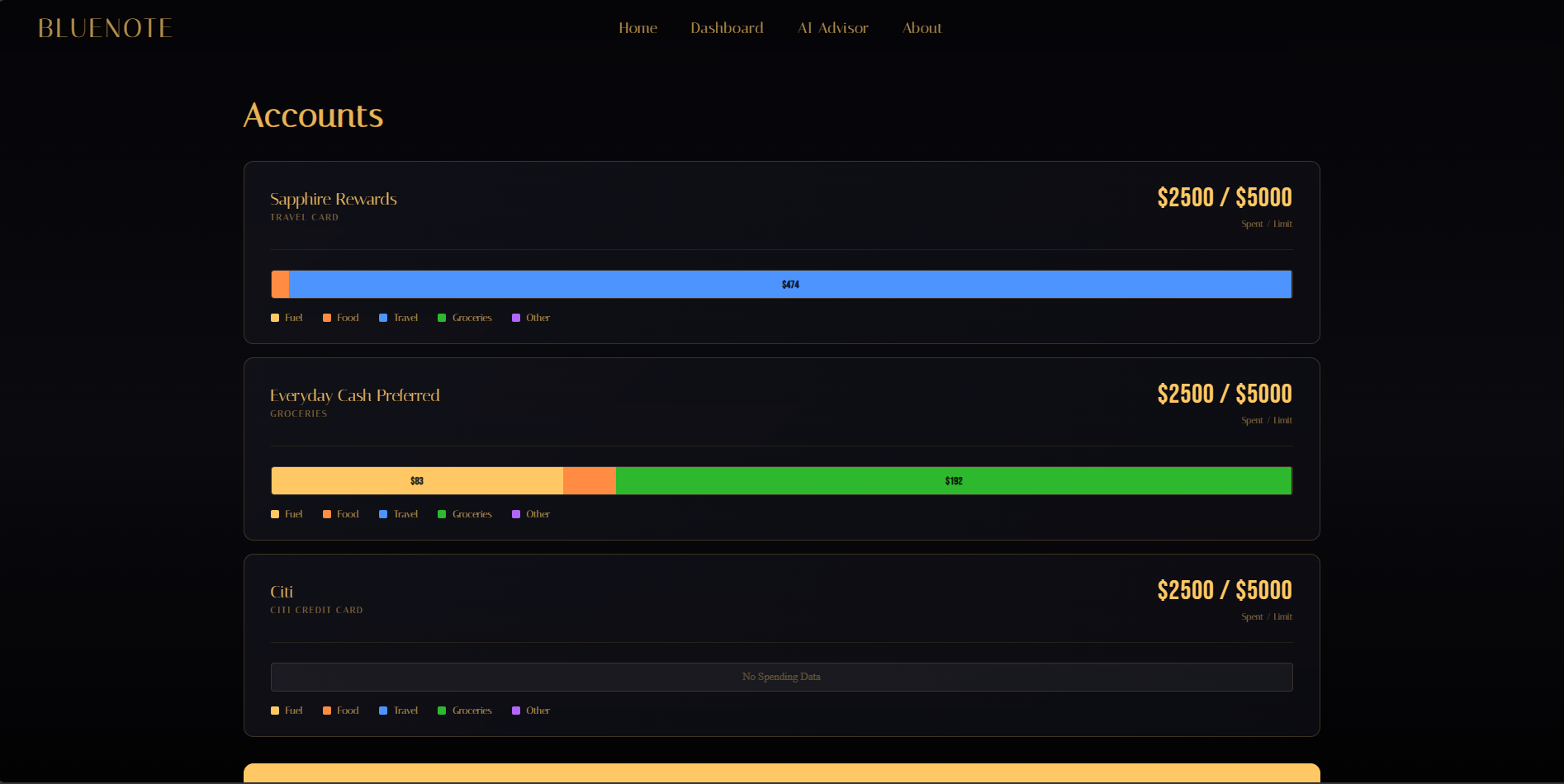
Bluenote is an AI-powered credit card and account management platform designed to:
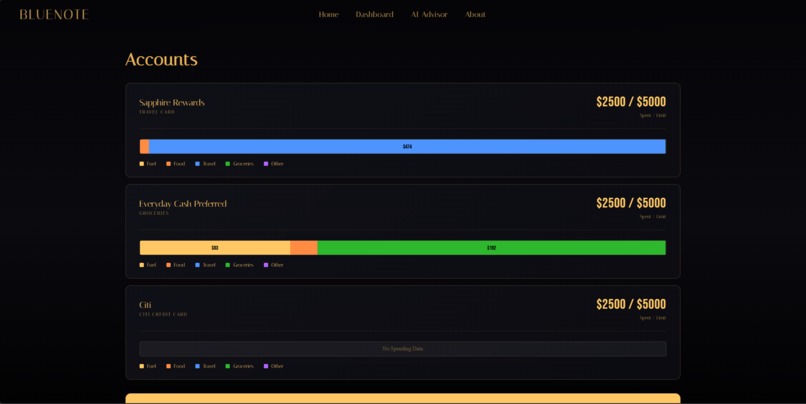
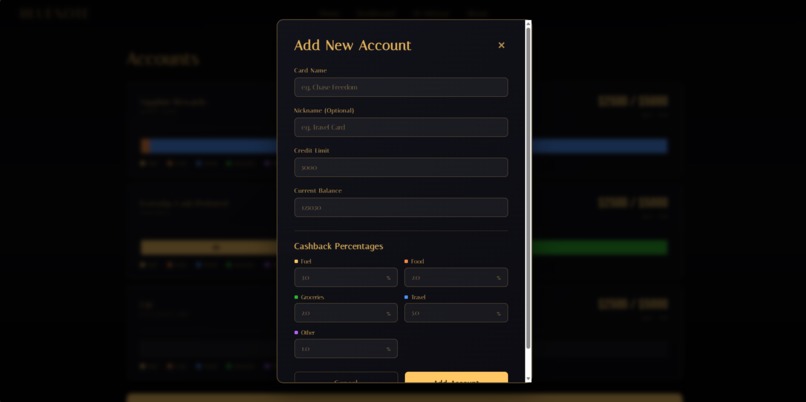
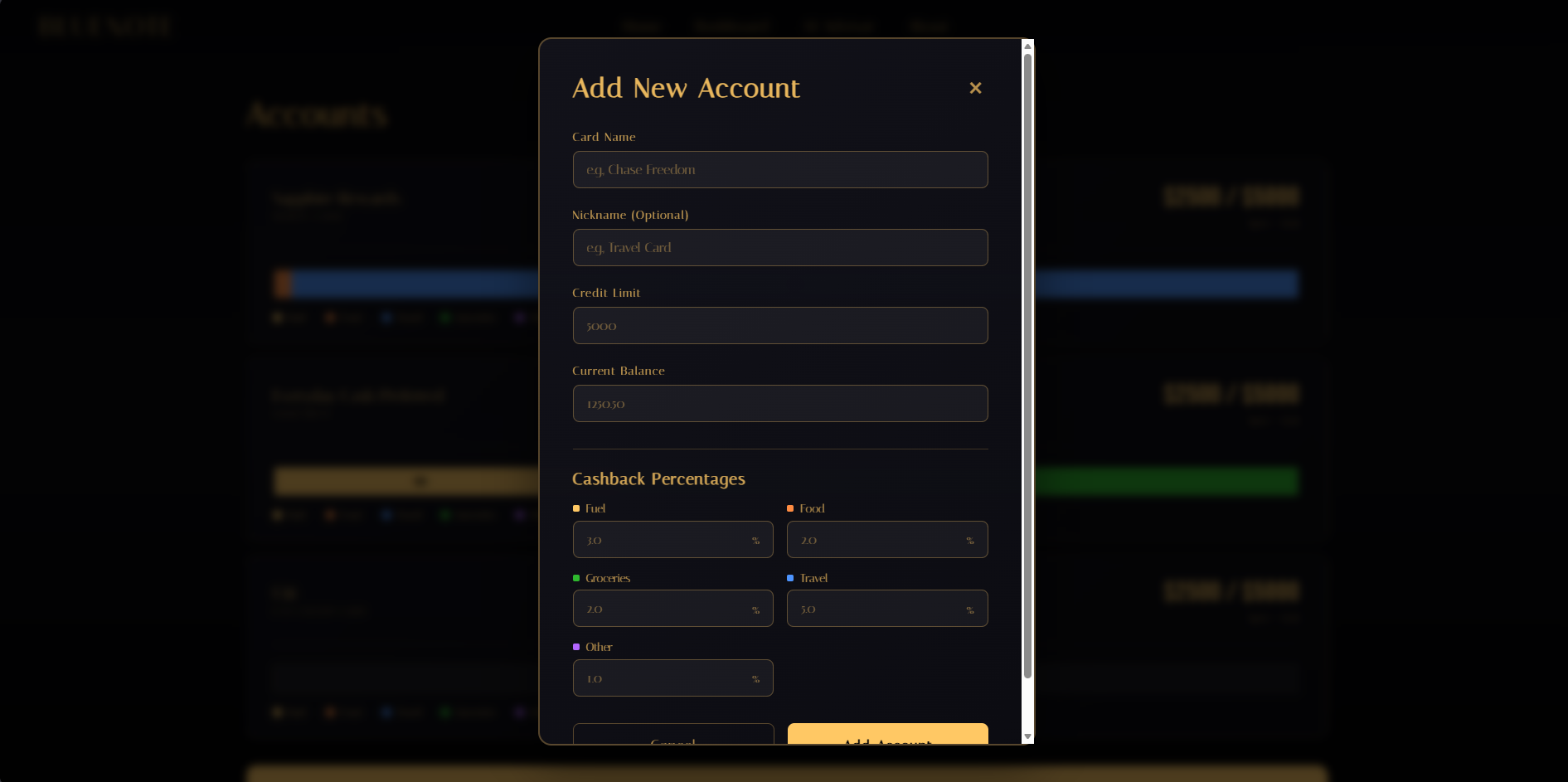
- Track balances and spending across cards
- Assist with budgeting decisions
- Optimize cashback and reward usage
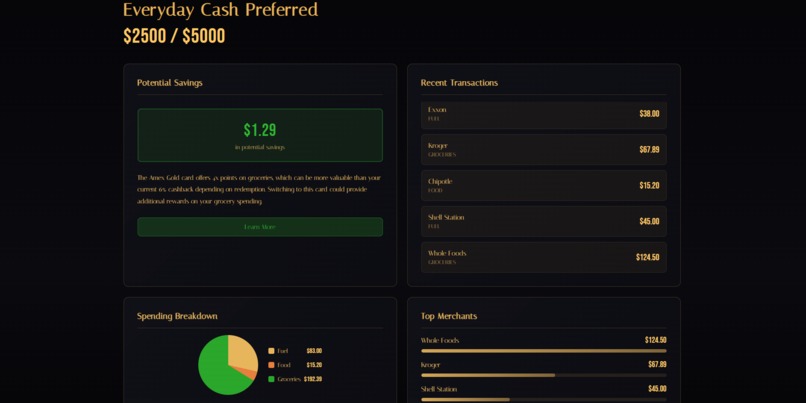
- Recommend better credit cards based on actual spending habits
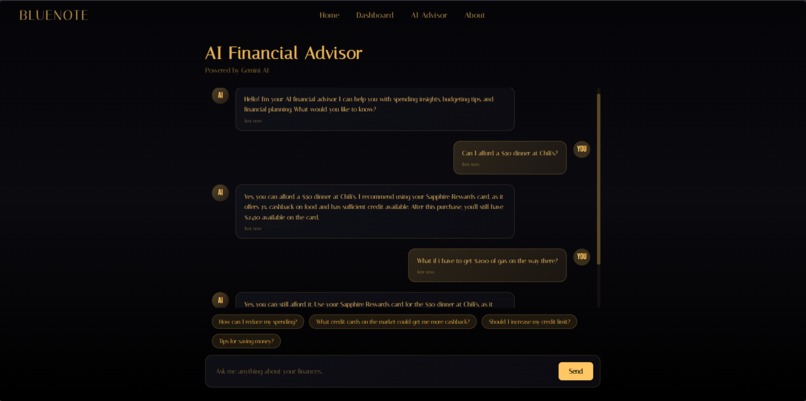
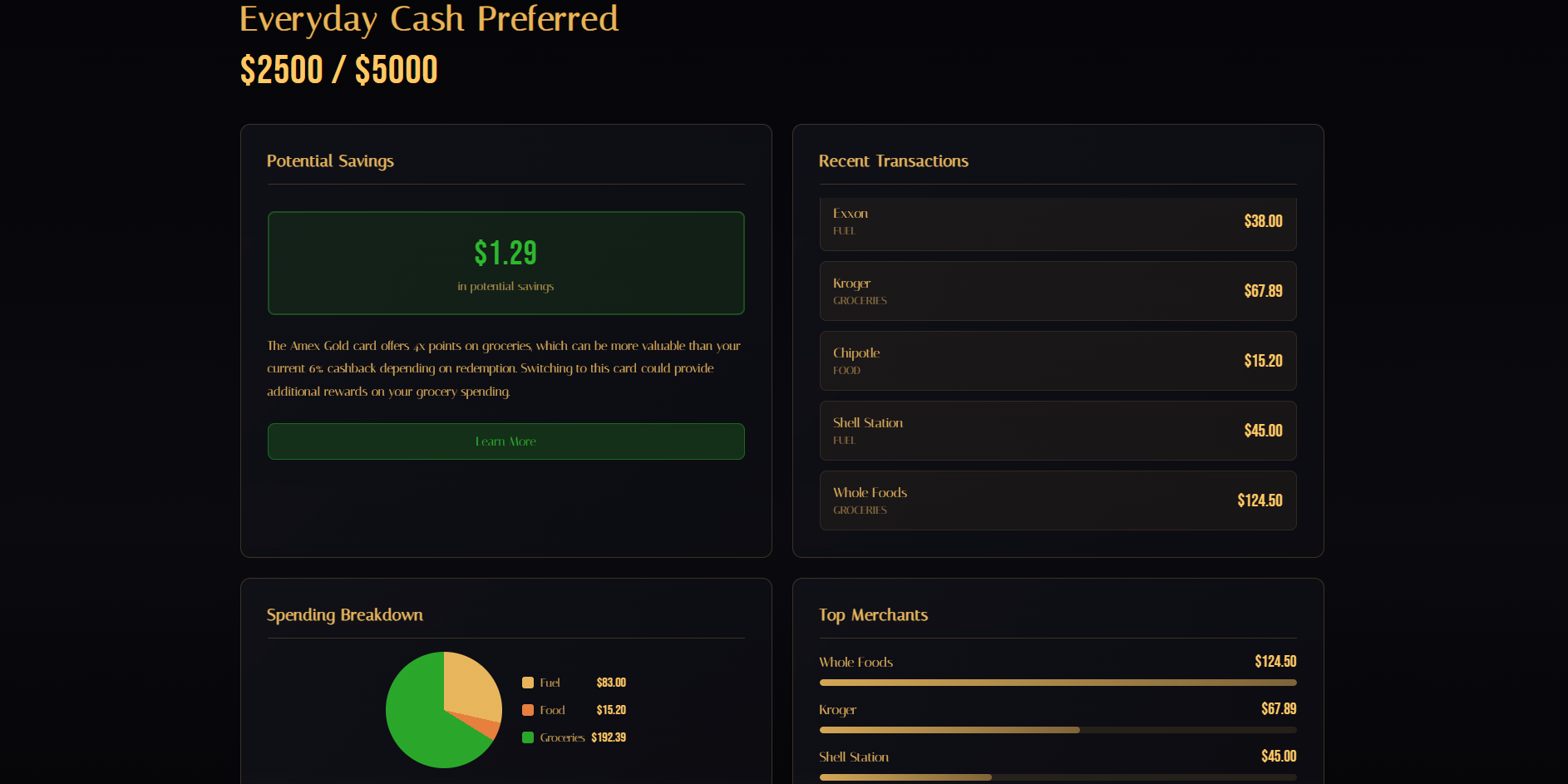
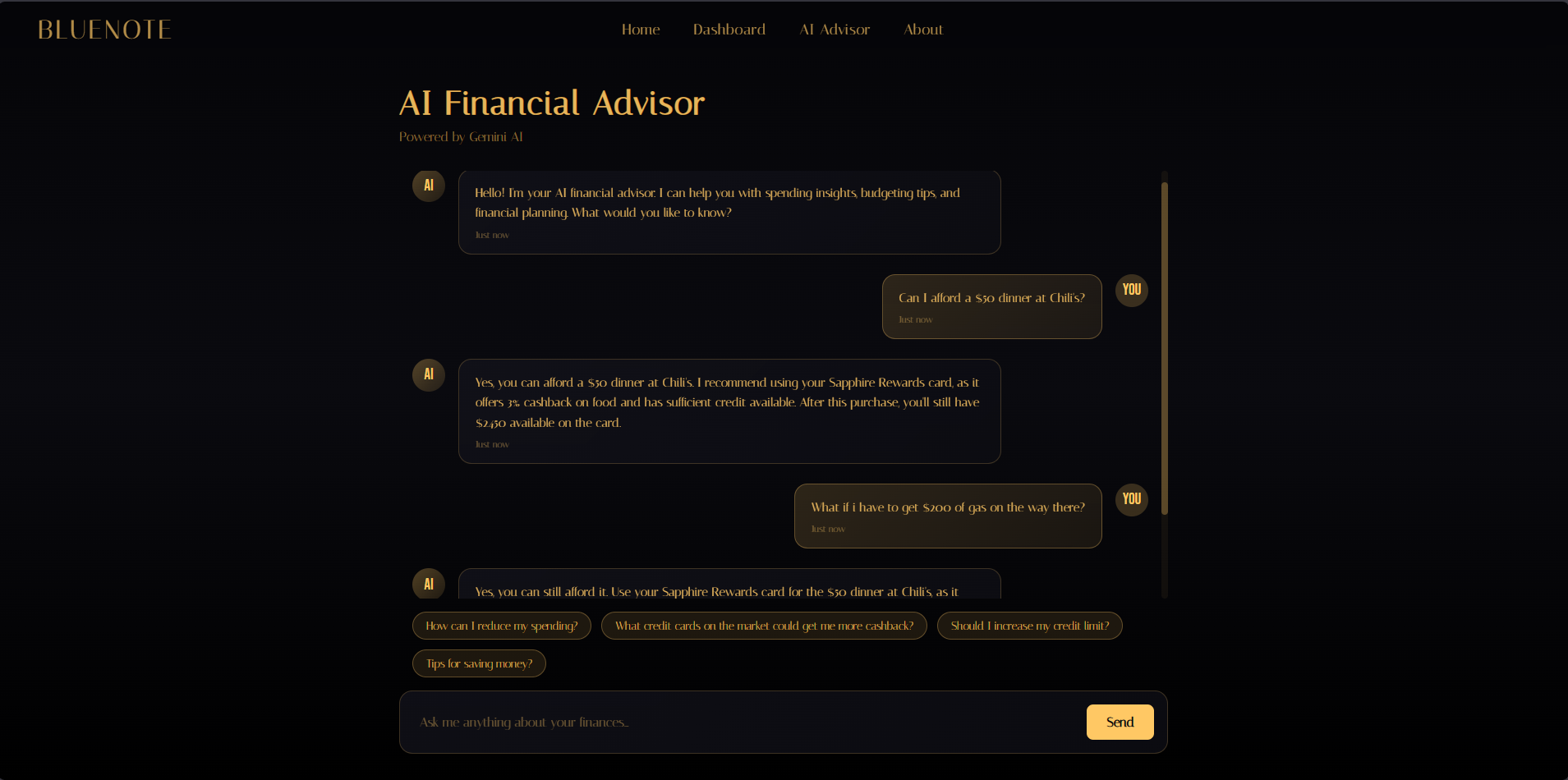
Instead of simply logging transactions, Bluenote analyzes user behavior and provides actionable financial insights. The integrated AI advisor evaluates affordability, suggests the most rewarding card for a purchase category, and highlights potential “lost savings” from suboptimal cashback usage.
How we built it
The project was developed in two largely independent halves:
- Frontend: A stylized, interactive browser interface built with vanilla JavaScript, HTML, and CSS.
- Backend: A Node.js + Express server handling business logic, AI orchestration, and database access.
These two halves were later stitched together through API endpoints. Integration was significantly accelerated by using Google Gemini in an agentic development workflow via Roo Code, which helped us debug issues, fill knowledge gaps, and refine architectural decisions in real time.
Challenges we ran into
- API Integration: None of us had prior experience implementing external AI APIs, so learning authentication, request formatting, and error handling under time pressure was difficult.
- Brainstorming Under Time Constraints: Early ideation was chaotic, and converging on a unified vision took longer than expected.
- Iteration Discipline: We occasionally departed from ideal development practices, which made it harder to retrace steps when bugs appeared.
- First-Time Technologies: Docker, Valkey, and AI function calling all introduced steep learning curves simultaneously.
Accomplishments that we're proud of
- Building our first AI-integrated full-stack application
- Delivering a unique and visually distinctive concept
- Successfully integrating live data with AI decision-making
- Two of our three team members completing their first hackathon project
- Creating a working prototype that goes beyond tracking into active optimization
What we learned
- Practical use of Node.js and Express for backend services
- How to integrate and constrain AI APIs for reliable outputs
- Applying agentic AI tools to accelerate software development
- Containerization basics with Docker
- The importance of structured iteration and version control in collaborative projects
What's next for bluenote
Future development goals include:
- Transaction editing and deletion
- Expanded chatbot question coverage and financial reasoning
- TLS encryption for secure communication
- Access Control Lists (ACLs) to support multiple users
- Transitioning to a fully multi-user client-server architecture with shared database access
- Improved financial data ingestion and categorization

Log in or sign up for Devpost to join the conversation.