-
-
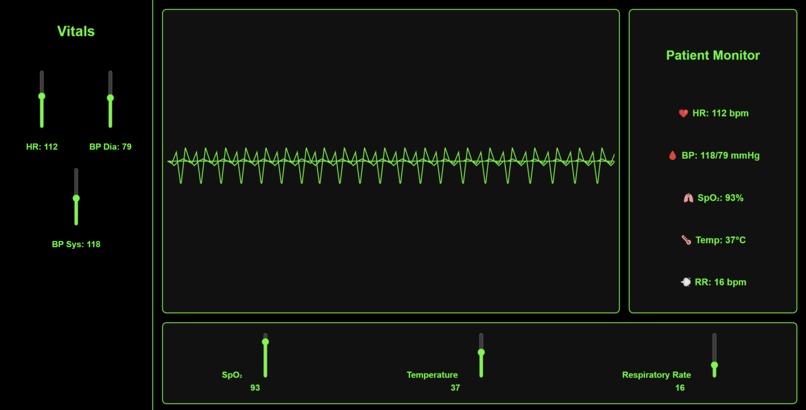
Simulation of Vital Signs and EKG Diagram
-
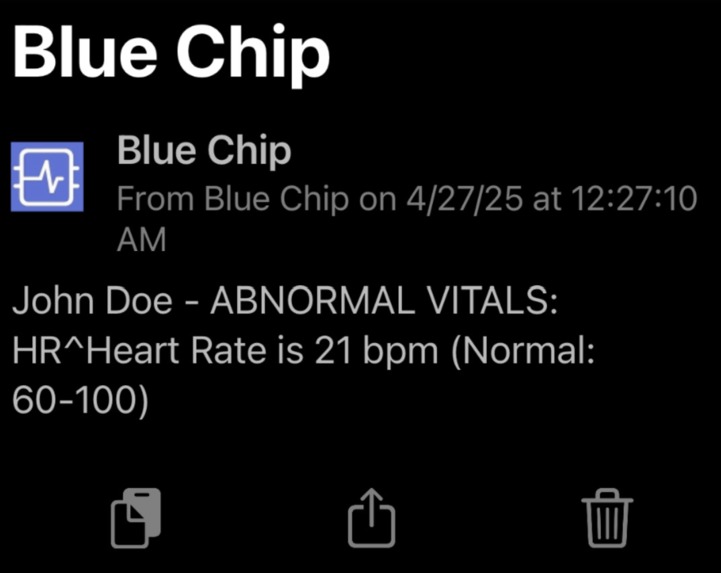
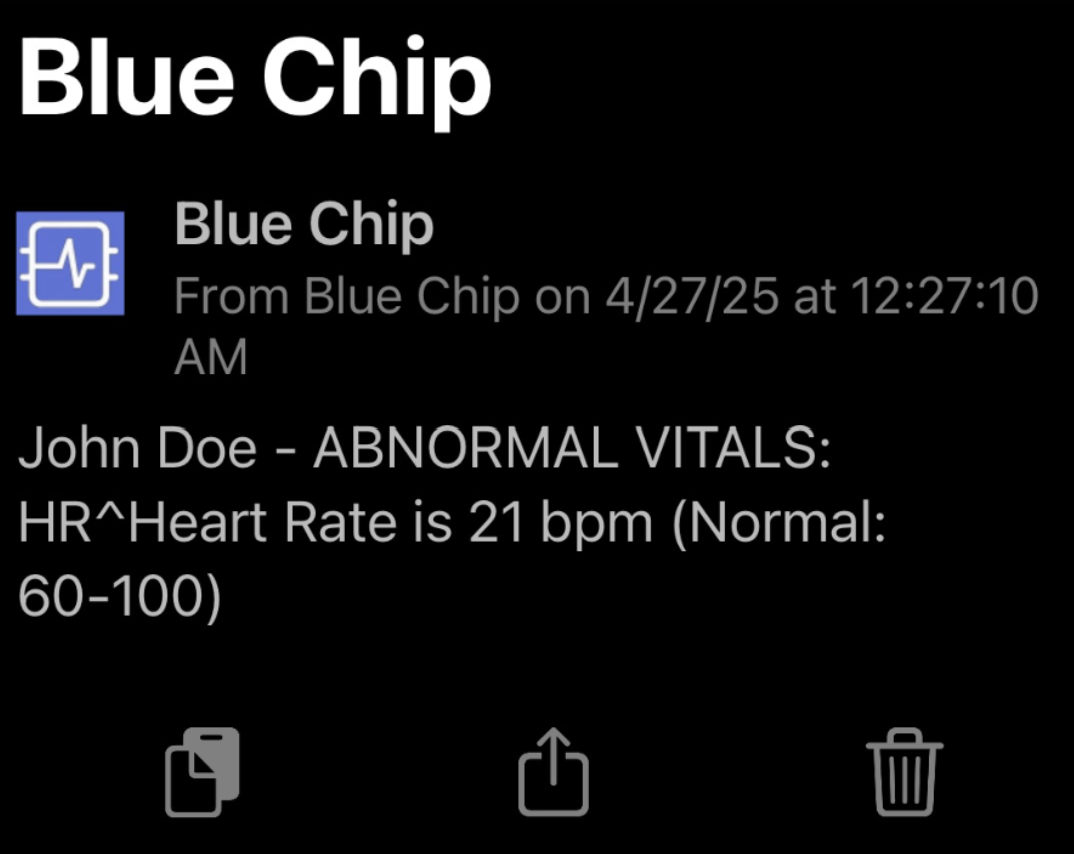
Notification of an Urgent Situation
-
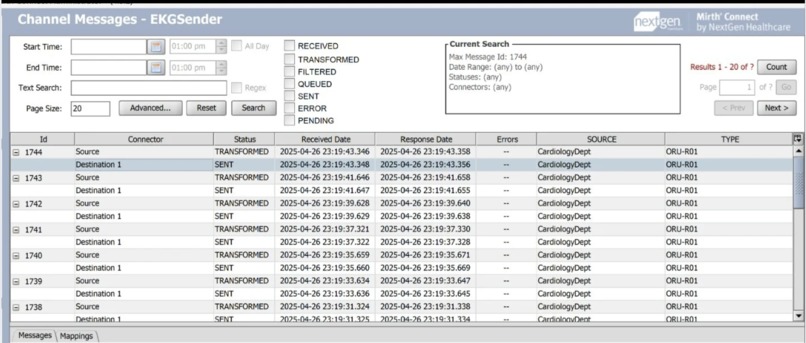
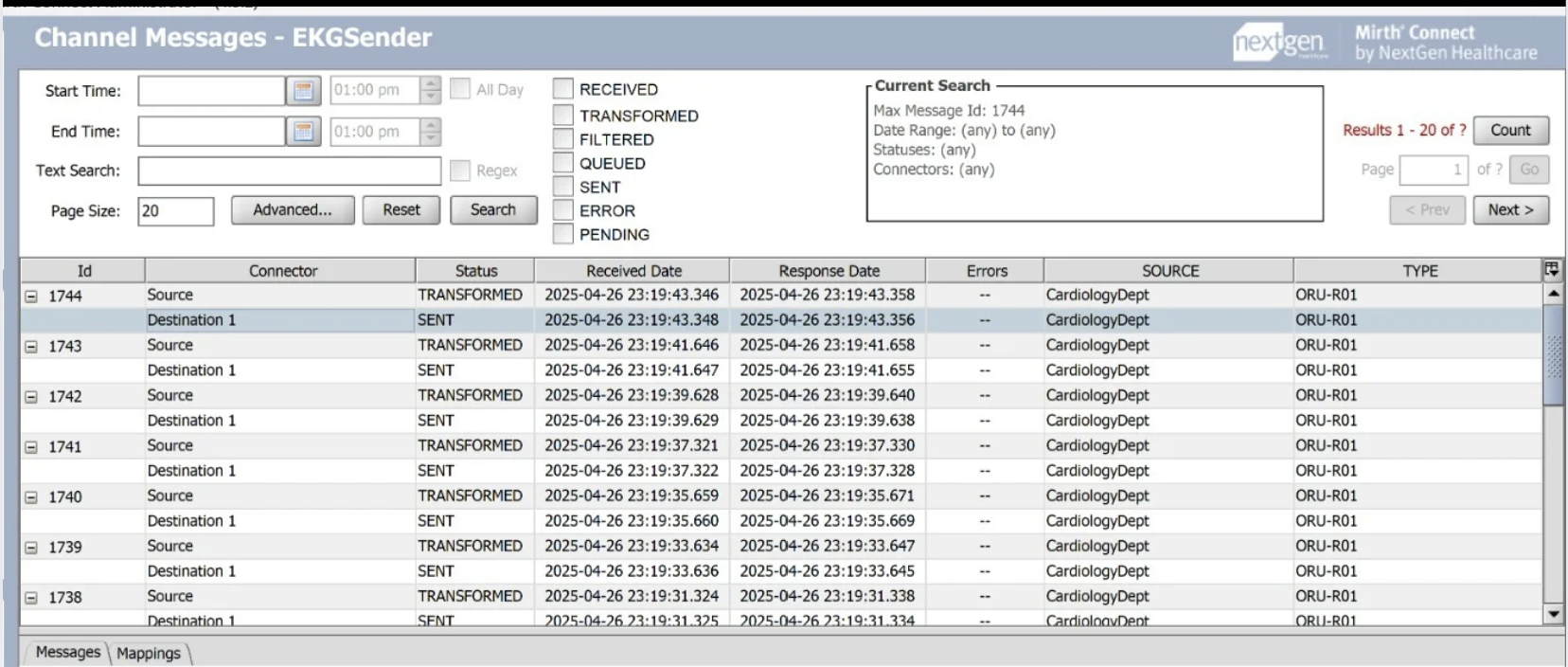
MirthConnect Dashboard
Inspiration
According to the National Institutes of Health, between 2005 and 2008, 566 people died from alarm-related deaths in hospitals. This is due to excessive and misleading alarms from clinical devices.
What it does
Introducing BlueChip: a simple solution to a widespread problem. BlueChip uses Mirth Connect, the industry standard software for communication between medical devices and computers, to understand patients’ vital signs. Harnessing this software, BlueChip sends notifications to nurses and doctors through push and email notifications. This provides a direct link between the patient’s vital signs and medical professionals. Beyond an alarm ringing to notify doctors and nurses, BlueChip introduces a way to specify specific medical professionals to respond to a certain call.
How we built it
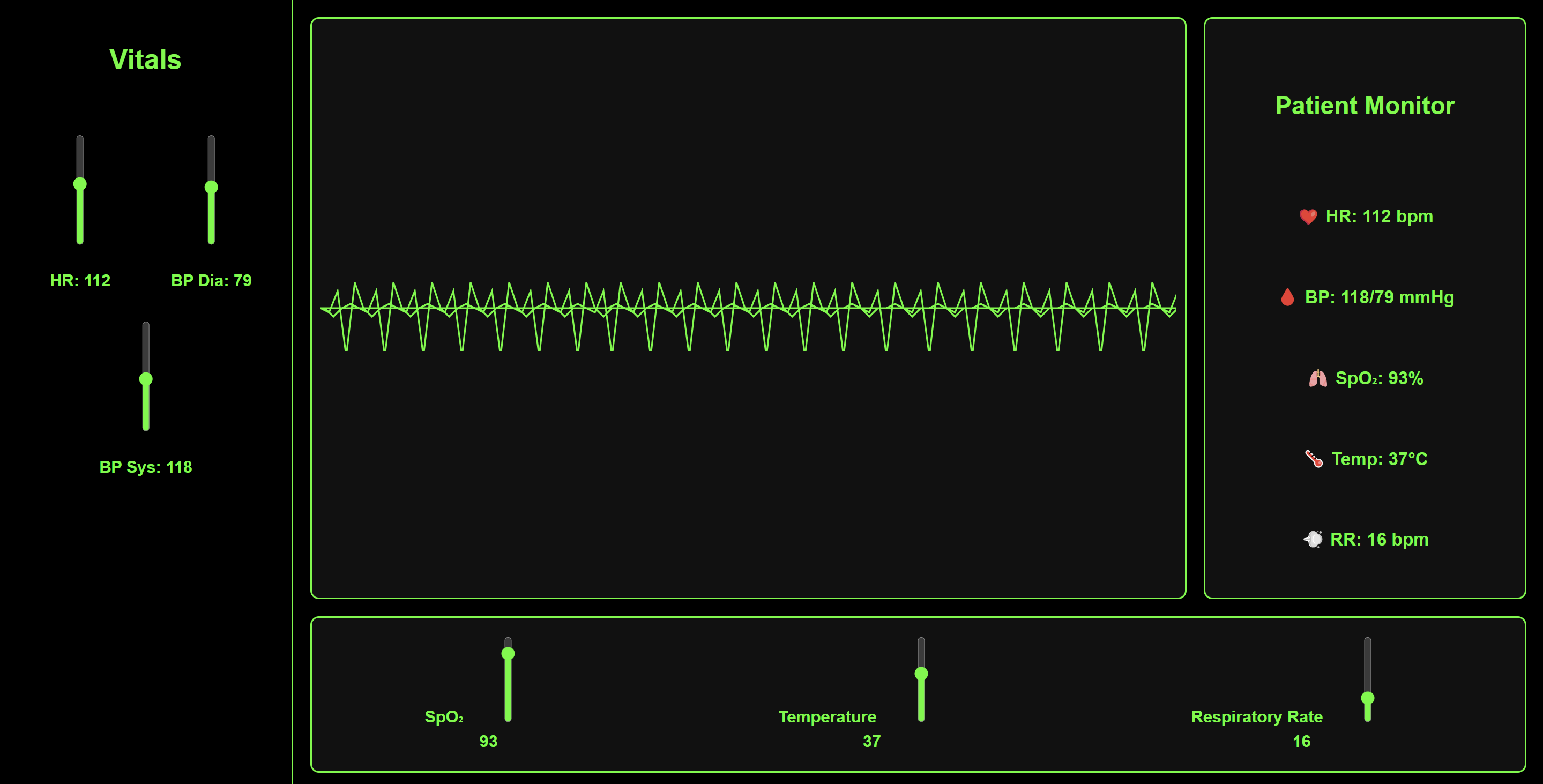
For our front-end, we utilized React with JavaScript and CSS to display the various modules, such as the sliders and EKG graph. We implemented a slider function to simulate and control the vital signs for a patient. The real-time EKG diagram will dynamically shift its period based on the current heart rate set at the time.
Using the data from the simulator, we can send mock EKG statistics, such as heart rate, blood pressure, and temperature, to our backend, as if it were a physical device.
For recording and managing the data, we used Mirth Connect. It is widely used by over 3000 hospitals in the US alone, making it one of the most prevalent interface engines in the healthcare sector. This allowed us to use the Health Level Seven (HL7) data format, the industry standard for exchanging electronic health information between different healthcare systems. It is also the designated format for EKGs, allowing us to easily integrate with them and scale to other healthcare devices in the future.
We then use Mirth’s API to read a steady flow of the patient’s data, monitoring it continuously for any abnormalities. If they are detected, a notification is sent.
We utilized the Pushover app to send real-time push notifications to mobile devices. Additionally, through Gmail’s SMTP library in Python, we are also able to send real-time email notifications to devices, which will be easy to integrate with pagers in the future. Both of these notification methods display pertinent information, such as which patient is in critical condition and what reading is abnormal.
Challenges we ran into
Integration of Software - Mirth Connect is a 19-year-old software made for clinical settings, so the input and output sources were unfamiliar with how EKG Machines would input data and how computers would read that data. This led to challenges in the utilization of Mirth’s API when trying to figure out the necessary headers, in understanding the specific types of channels and which features are only available in the enterprise version, and in understanding how to use the HL7 data type.
Installation of libraries - Many Python libraries needed to be installed to work with our program, such as SMTP. Since our computers had multiple versions of Python installed that may not have been configured correctly, many of these libraries were not added to PATH. This meant our programs couldn’t access the libraries until we figured out how to add libraries and folders to PATH and our programs ran.
Accomplishments that we're proud of
We are proud that we were able to implement a practical solution to a real-life problem that affects many people. Since we were able to iterate our solution into the hospital industry standard software so that if would be widely compatible. We surprised ourselves with being able to quickly learn how a new open-source software worked in the time limit that we were given.
What we learned
We learned that the solutions to major problems are not always the most complicated and that solutions should be presented in a way that is relatable and resonates with the audience. Mentors are important in the development of how to get across your ideas because they can provide immediate feedback and act like an audience for you. Our team learned extensively about how to integrate various technologies to create a seamless solution. We utilized Flask to connect our front end to our python scripts on the backend. As software aimed for clinical settings, learning how to integrate Mirth Connect was also a valuable learning experience, showing us how to extract useful information from its output and using that data in notifying devices.
What's next for BlueChip
Next would be to contact local hospitals such as the Ronald Reagan UCLA Medical Center and deploy this system, and start saving lives. Already using Mirth Connect, we could easily connect to an EKG machine and begin integrating our program with actual hospitals. Implementing this software on an Arduino or small device to connect with EKG machines would make this software a portable and simple solution to implement in hospitals.

Log in or sign up for Devpost to join the conversation.