-
-
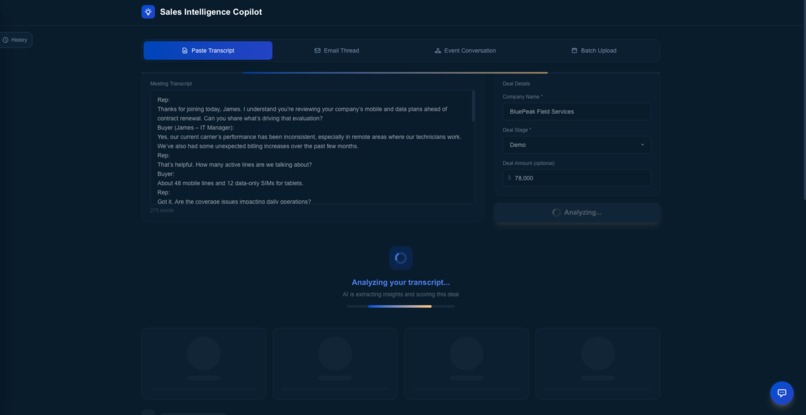
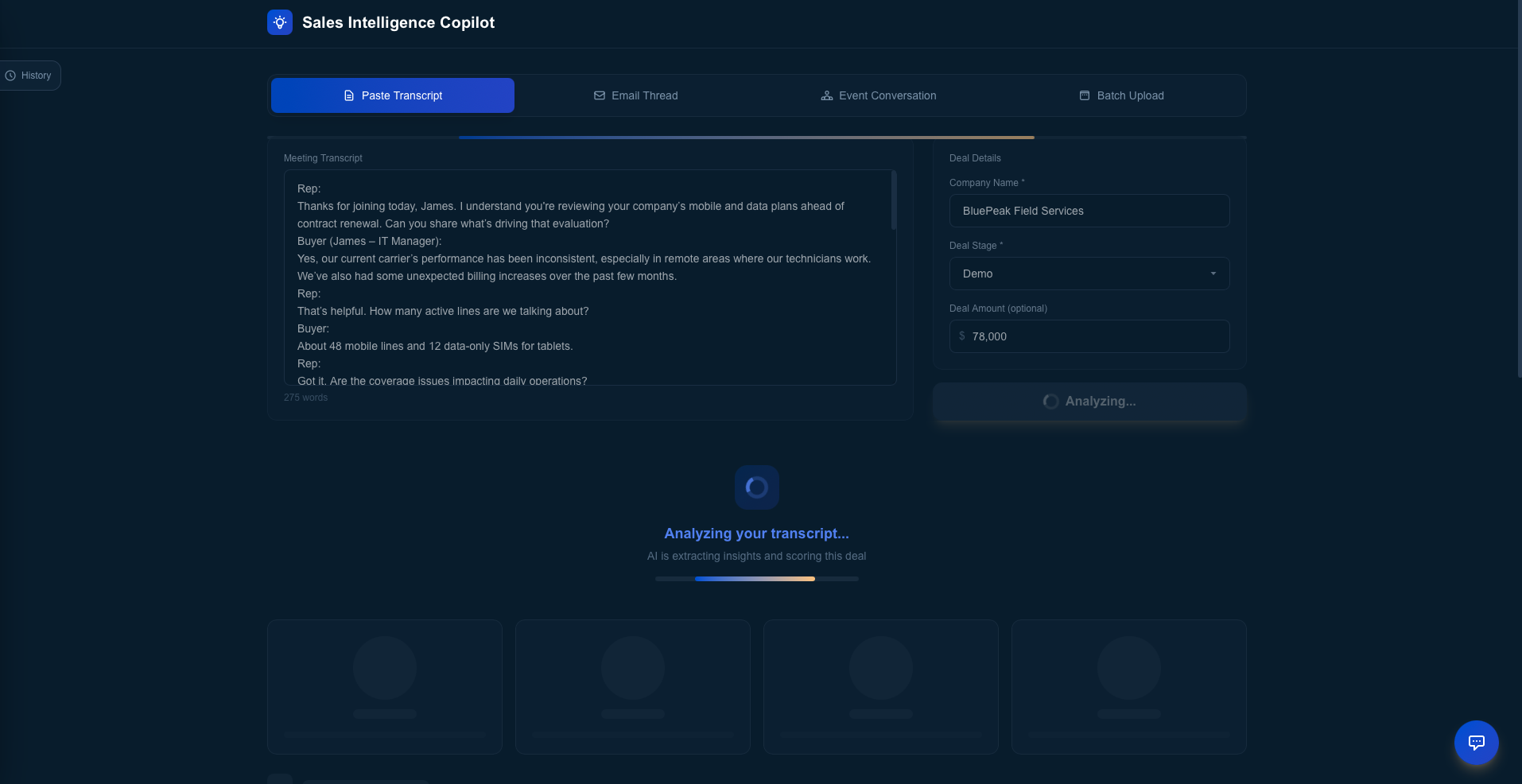
Transcript based Analysis
-
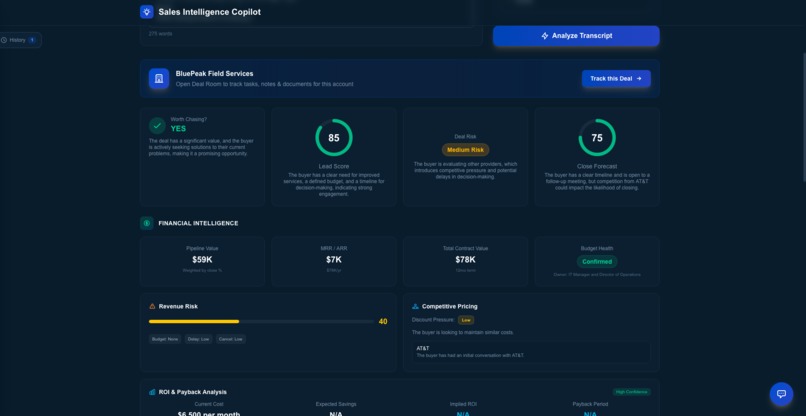
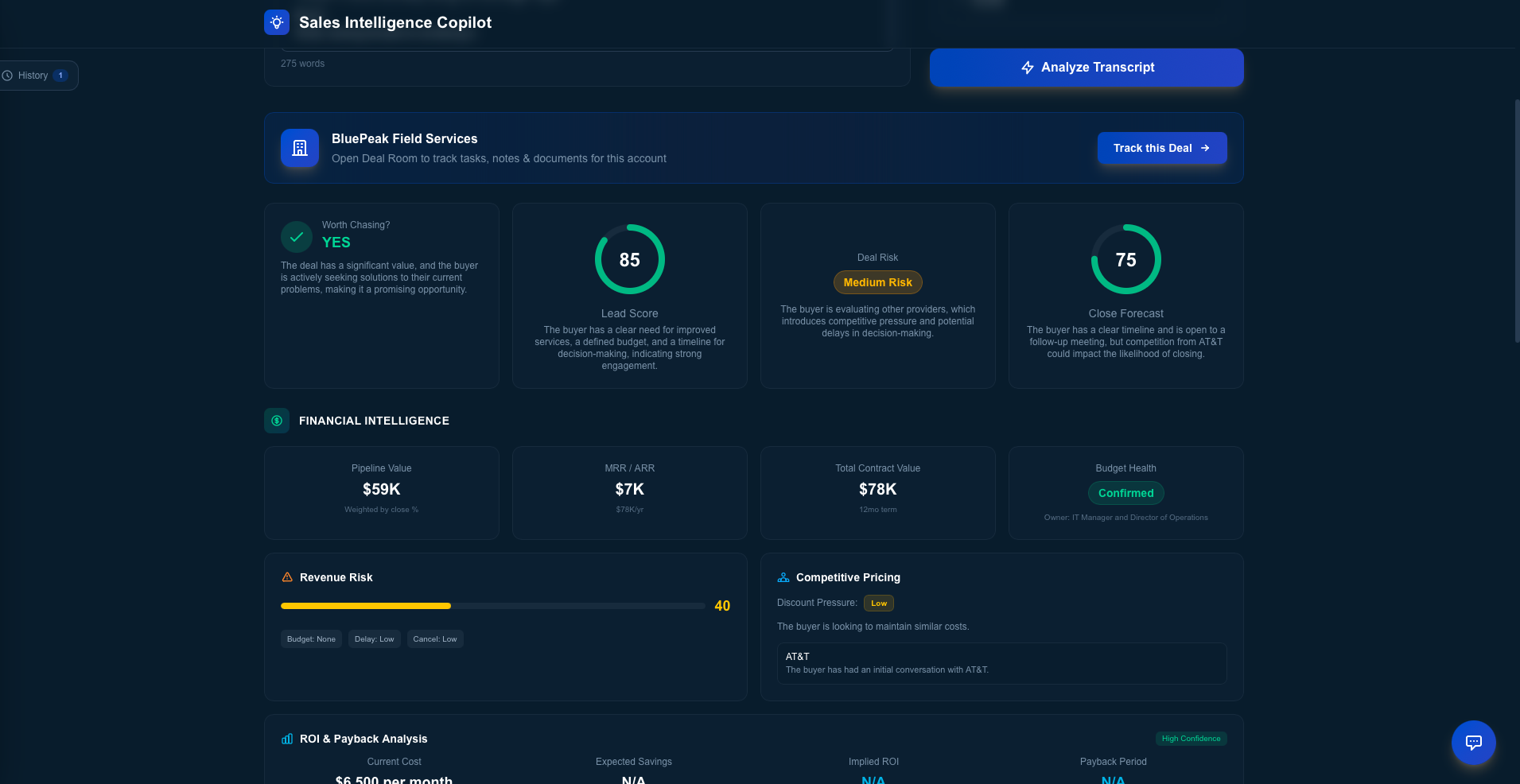
Transcripts based Analysis shows financial intelligence and deal room to store documents
-
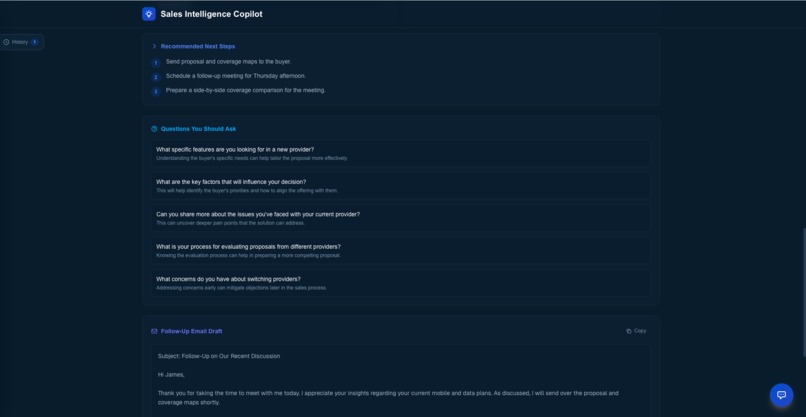
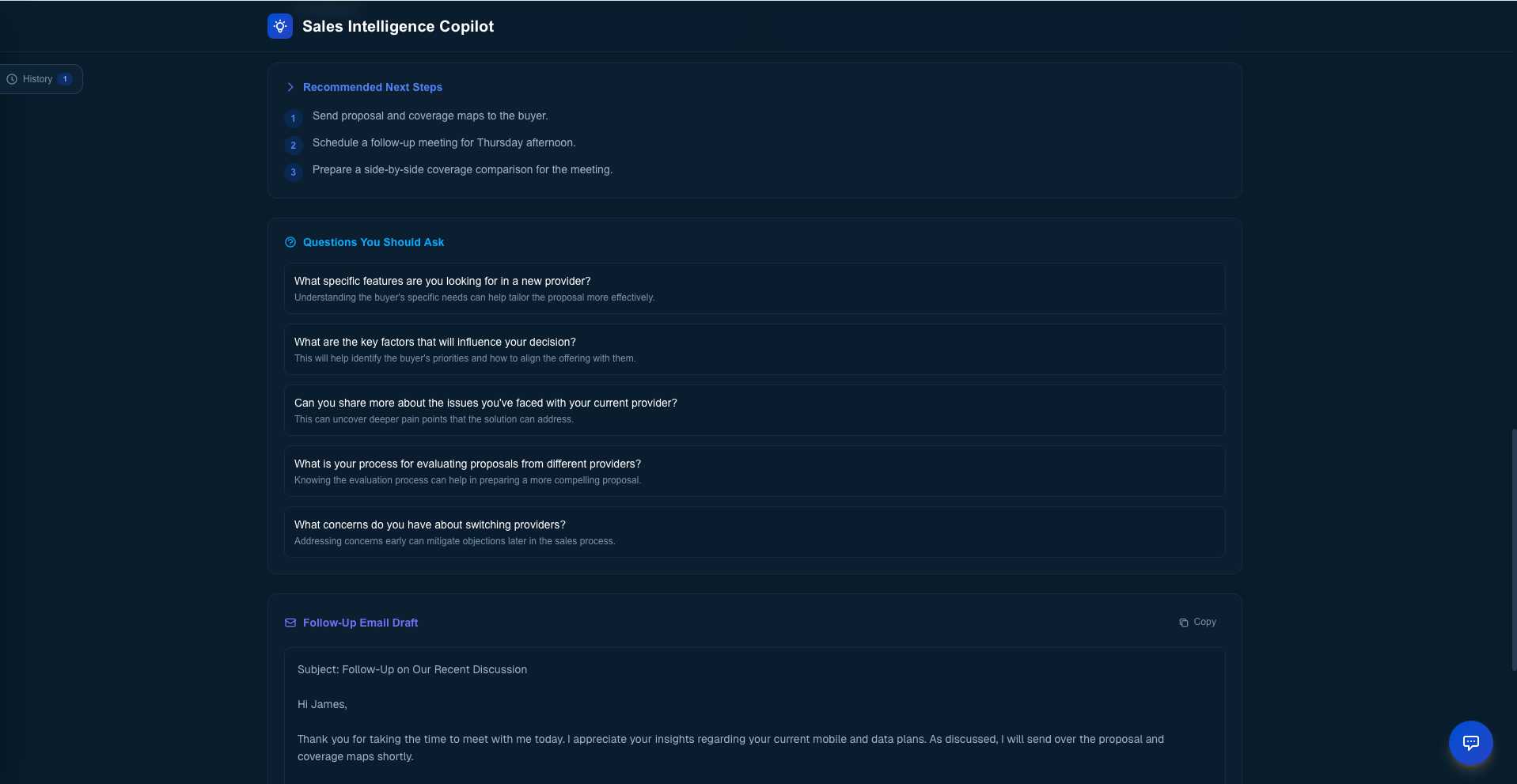
Transcripts based Analysis gives next steps to take after 1st post call analysis to convert that lead into deal closing
-
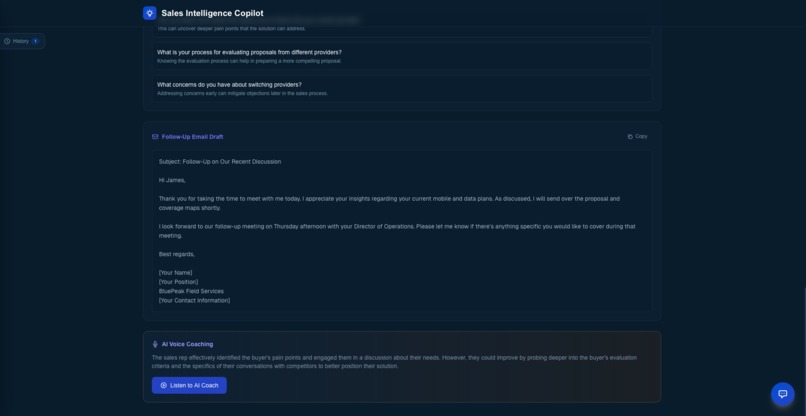
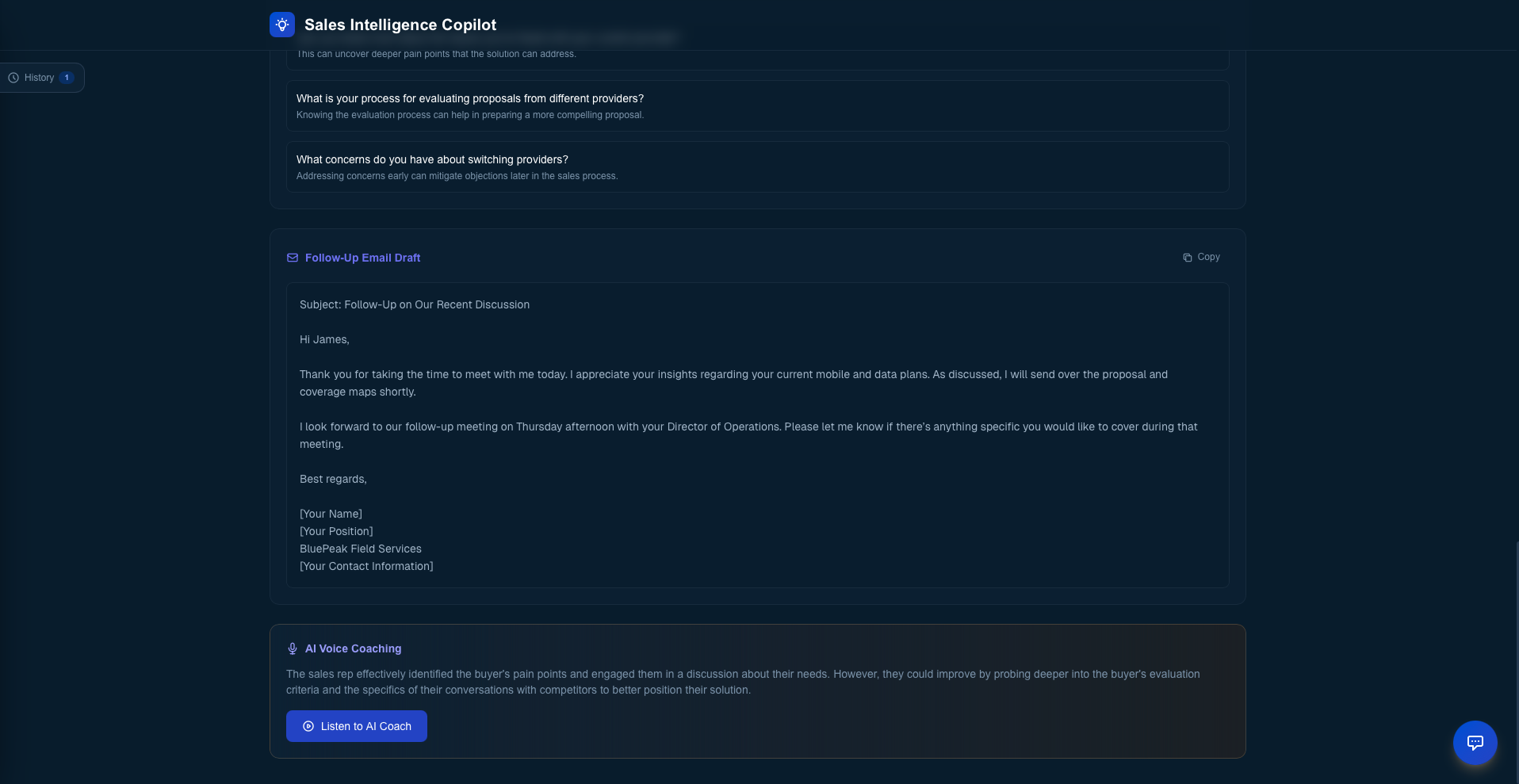
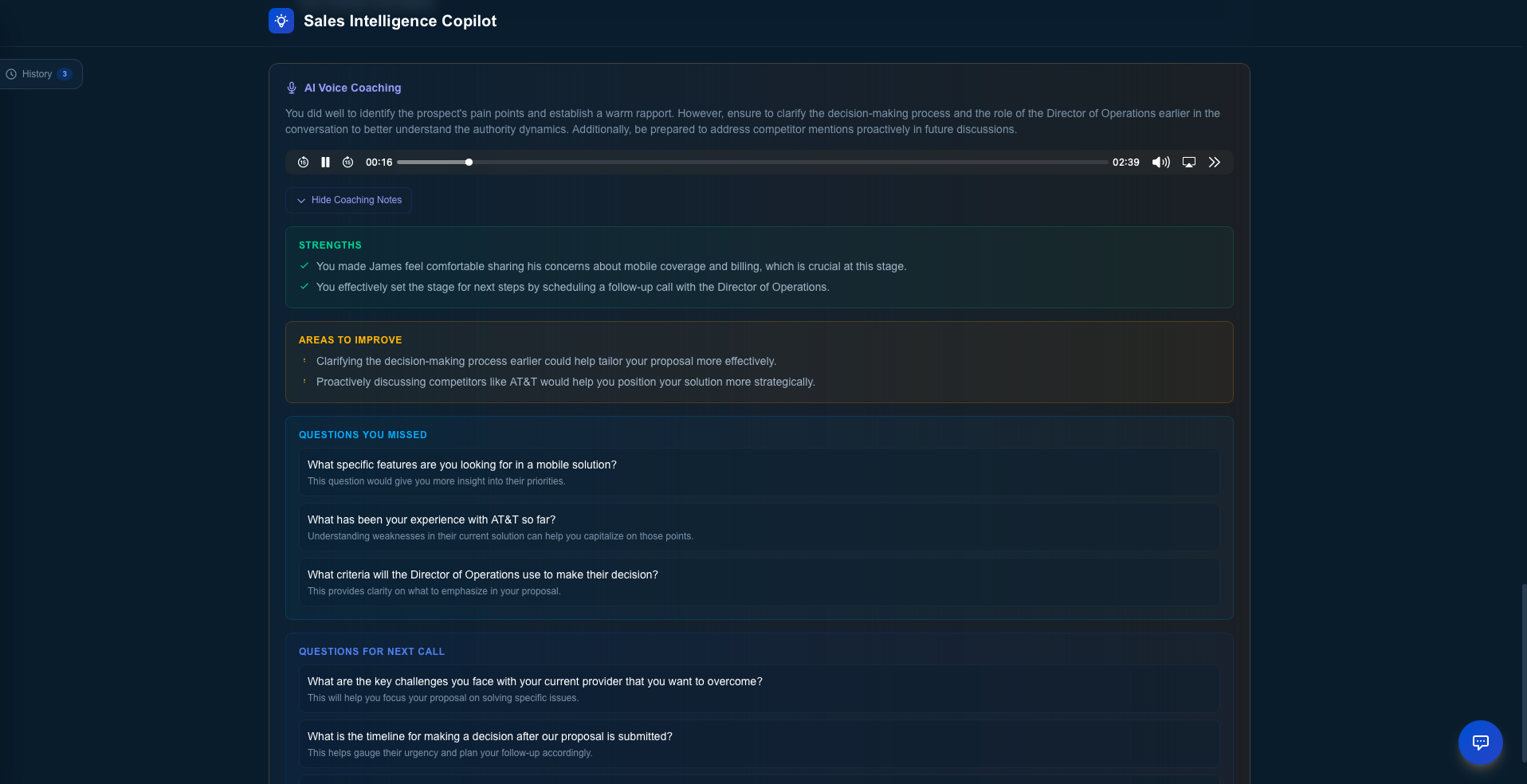
Transcripts based Analysis have voice AI based coaching for sales reps to improve there way to sell
-
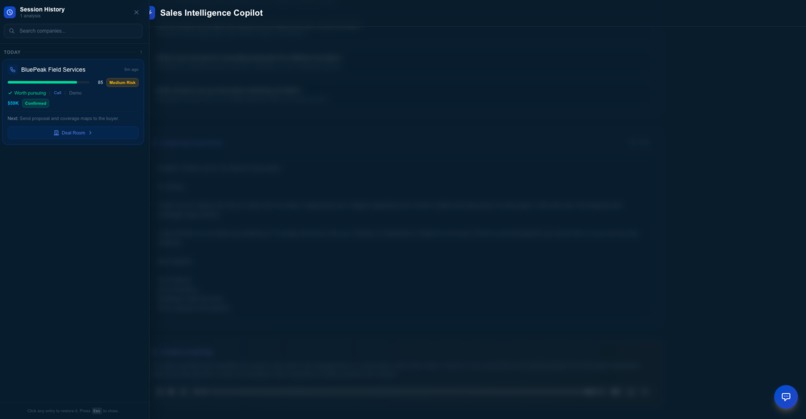
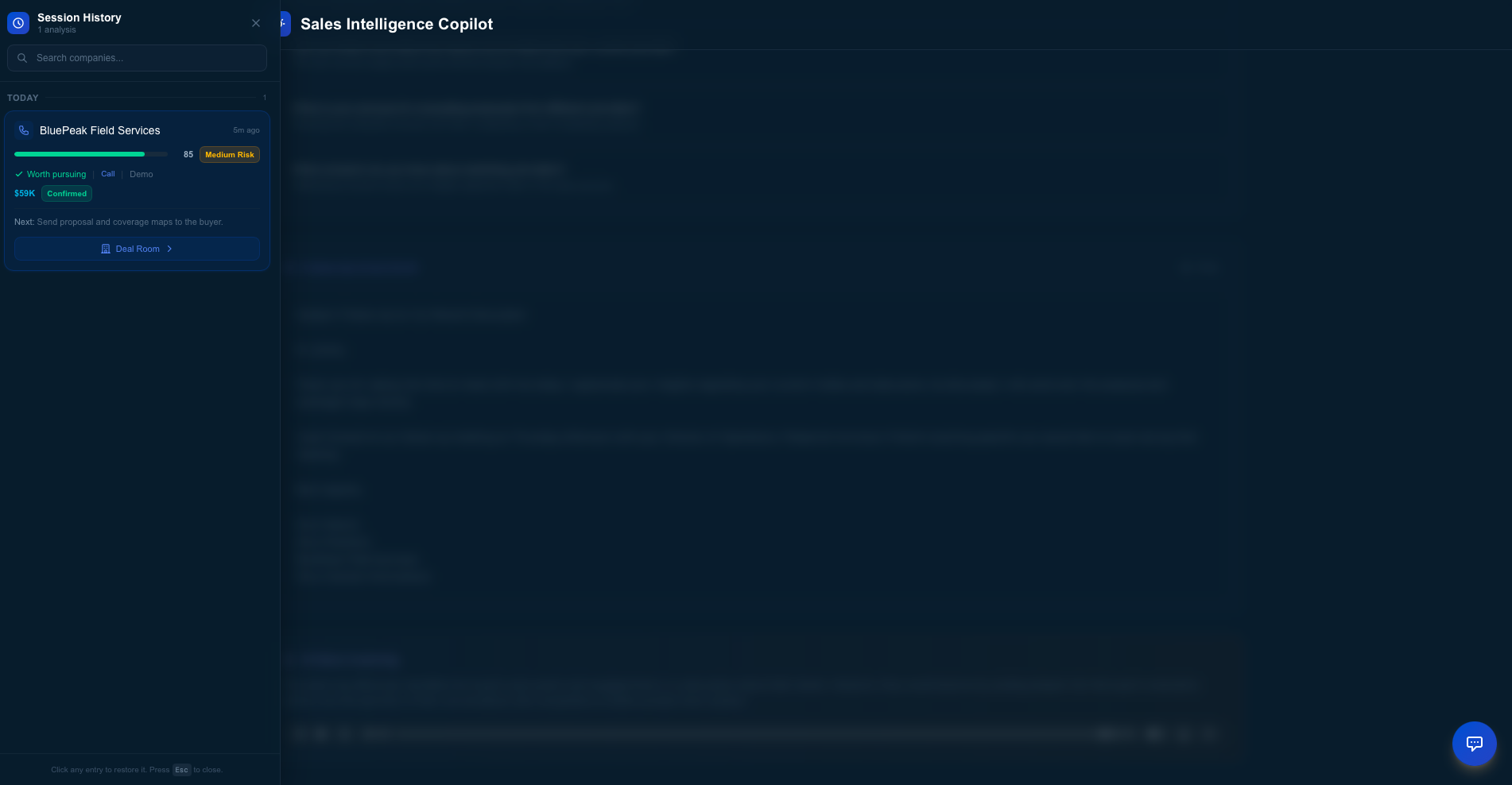
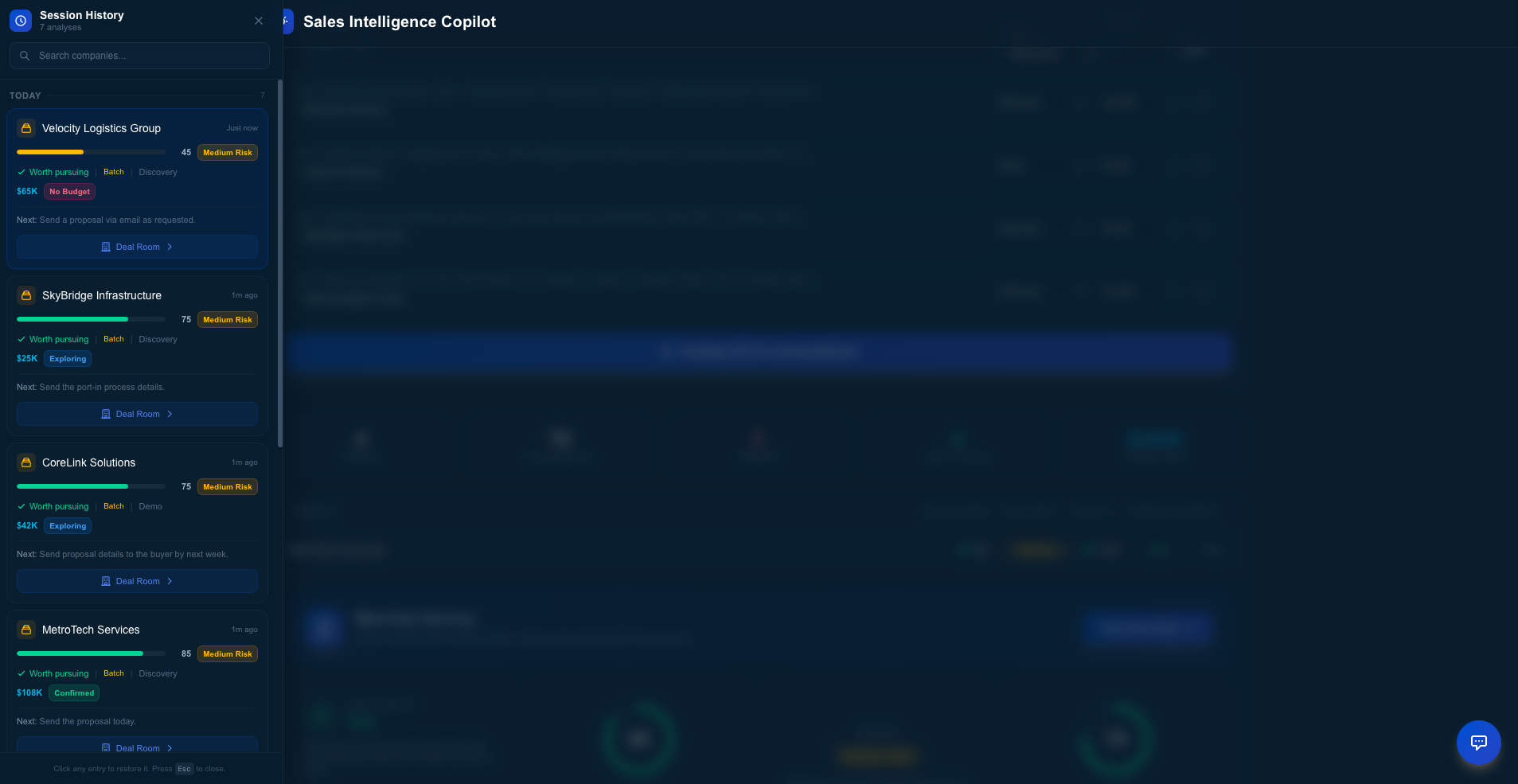
The history is stored for each action
-
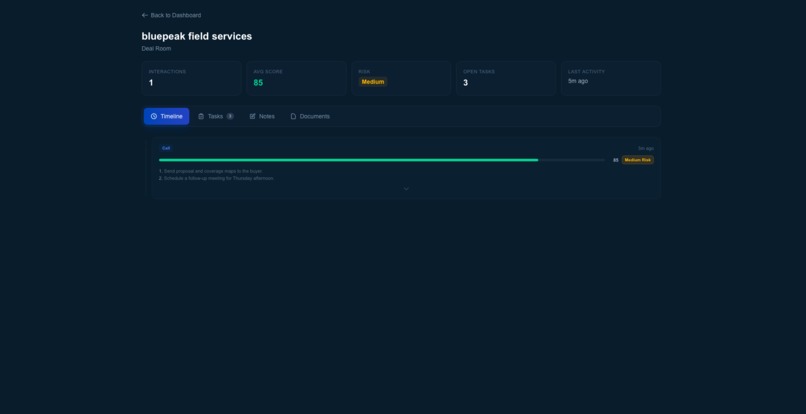
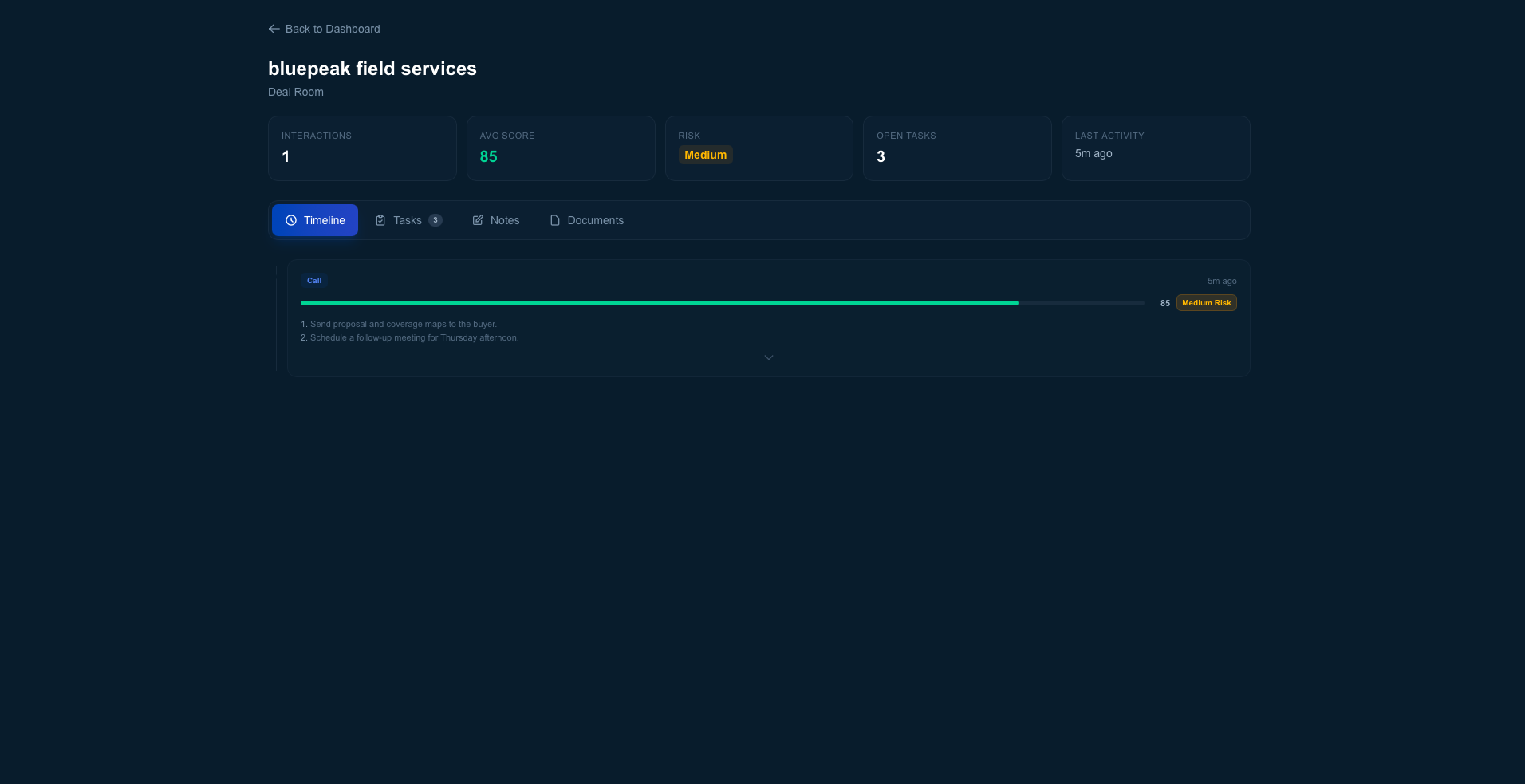
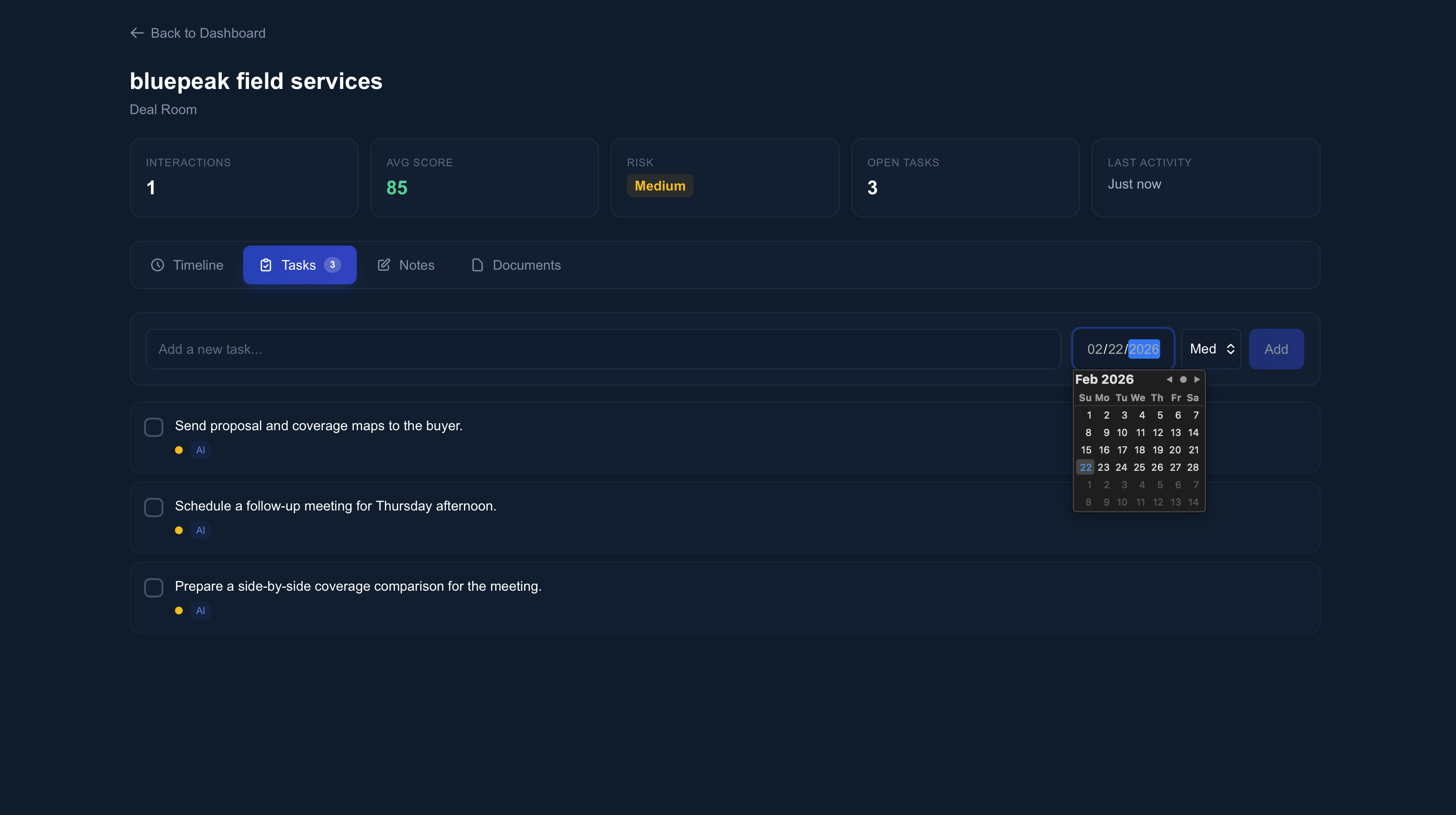
Each company has deal room to keep track of conversations, set remainders with tasks, upload notes and Important contract documents
-
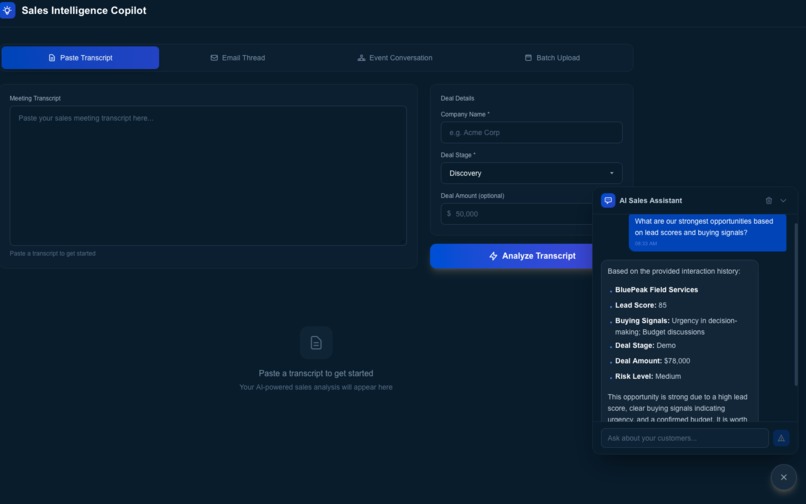
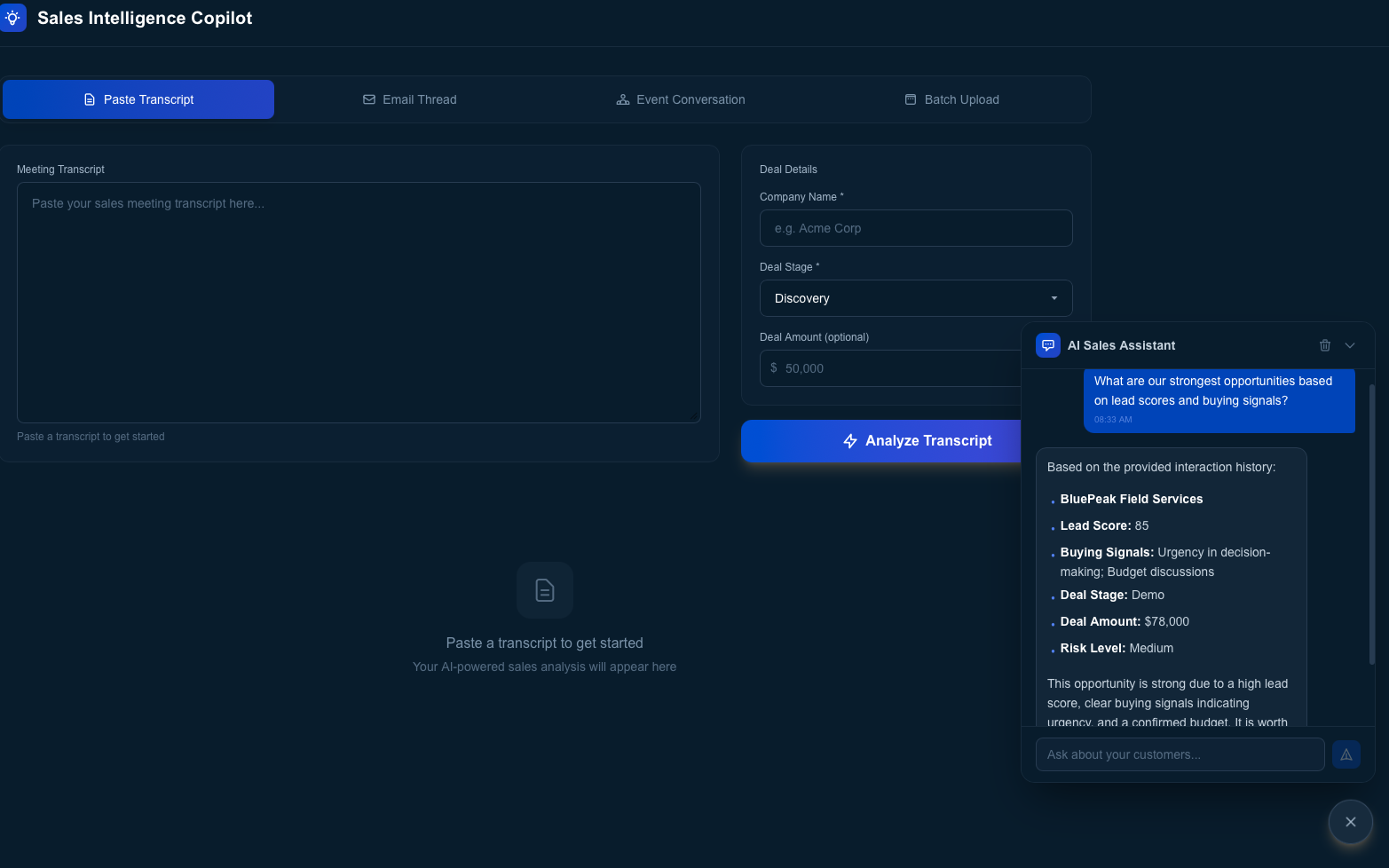
It has chatbot integration to ask any question related to prospective leads
-
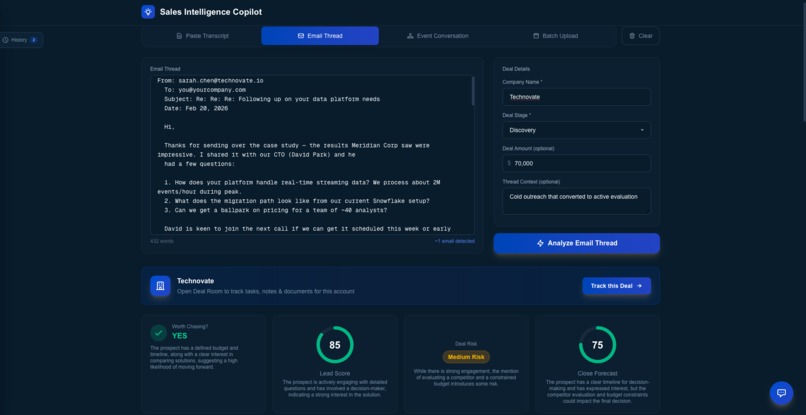
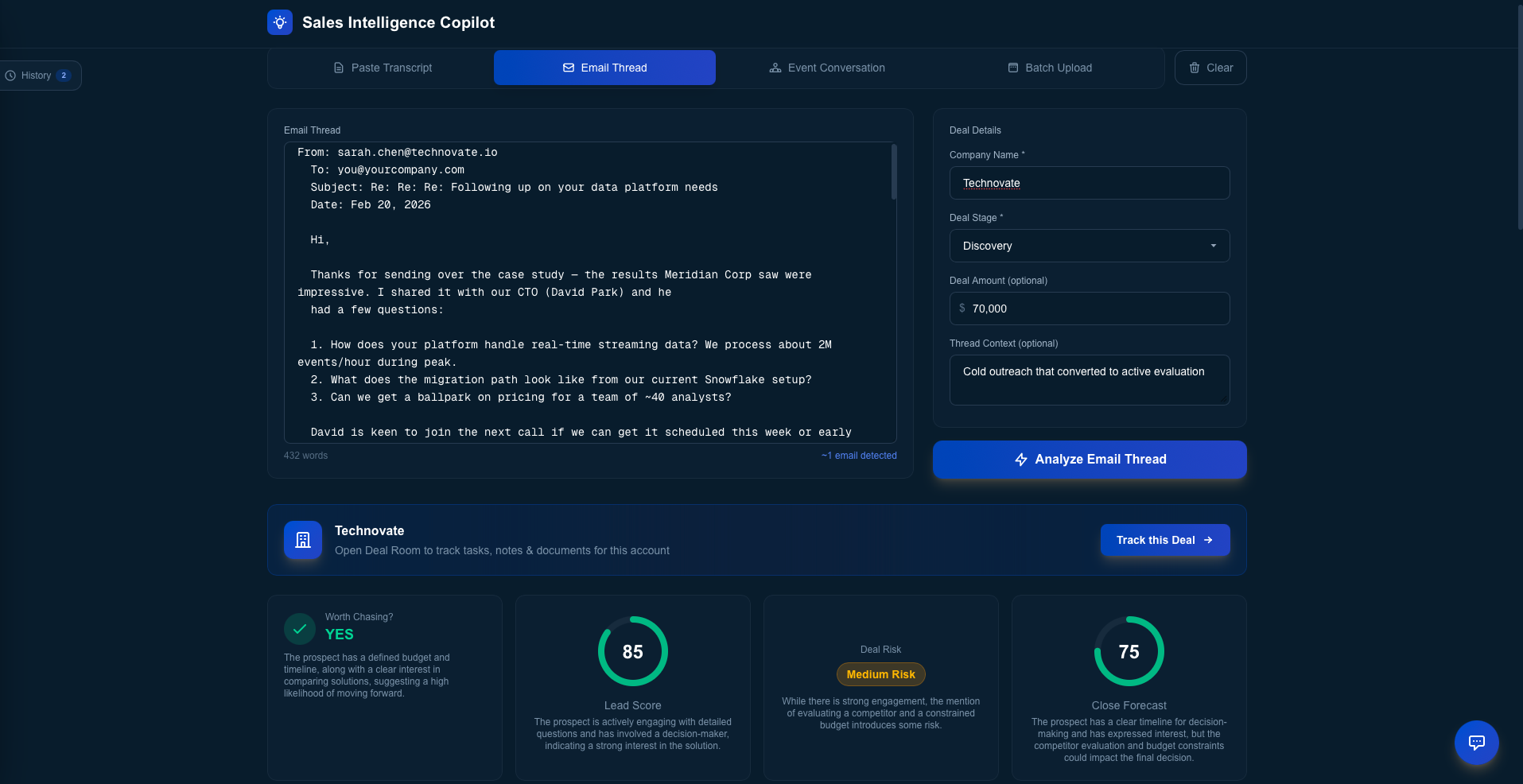
Email thread based analysis
-
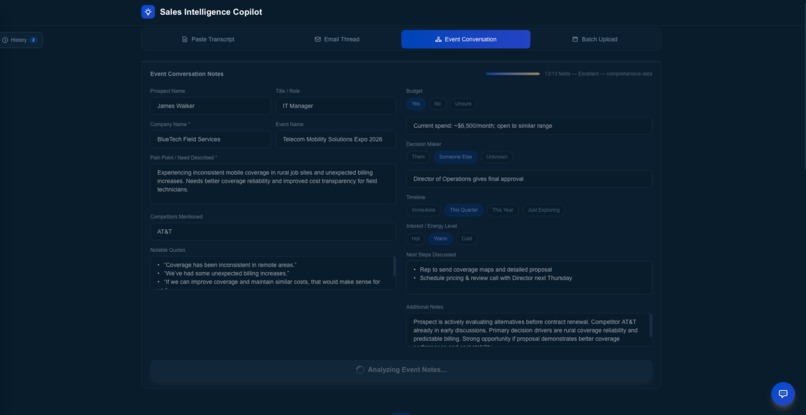
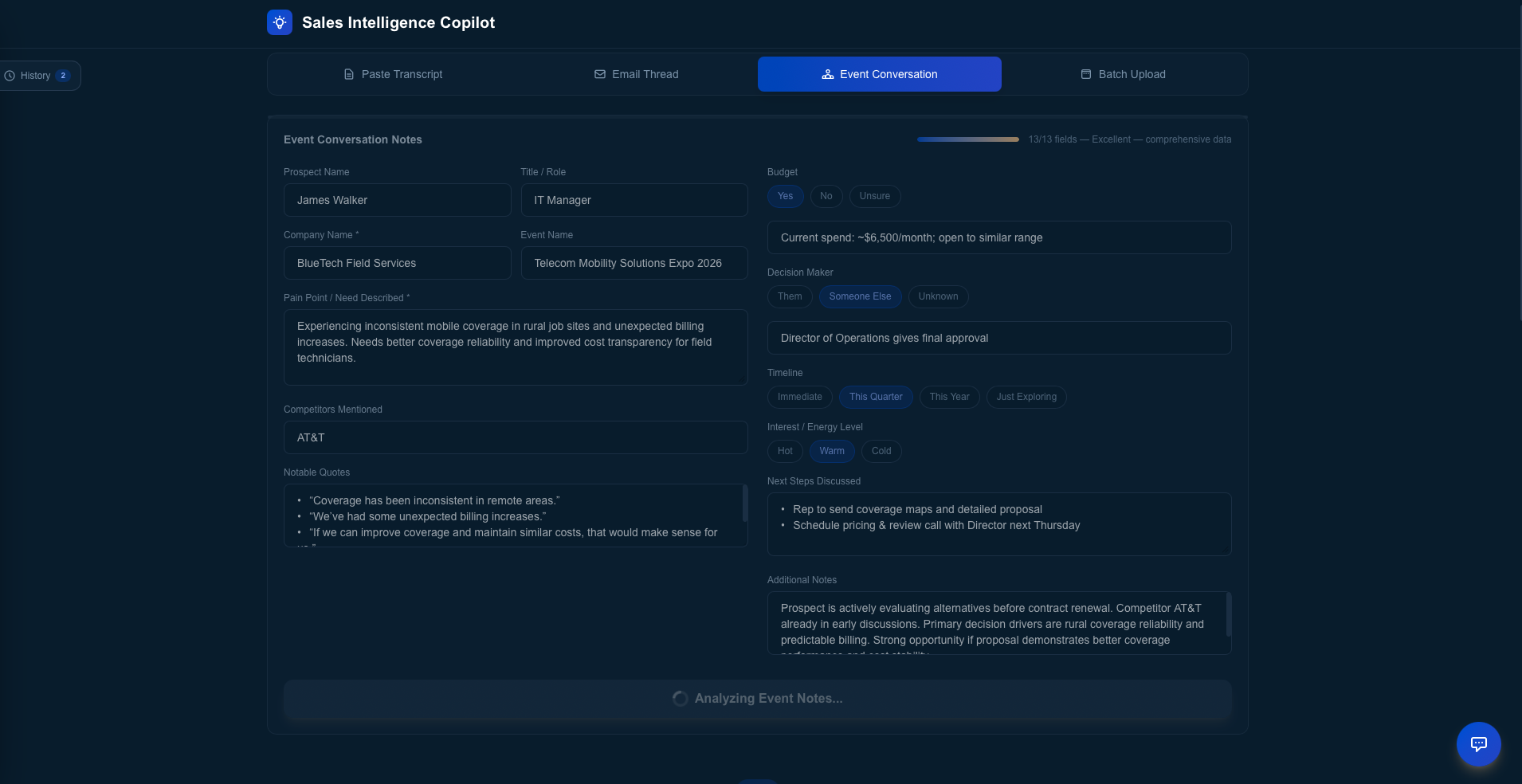
After Event Lead Analysis - Smart form Analysis
-
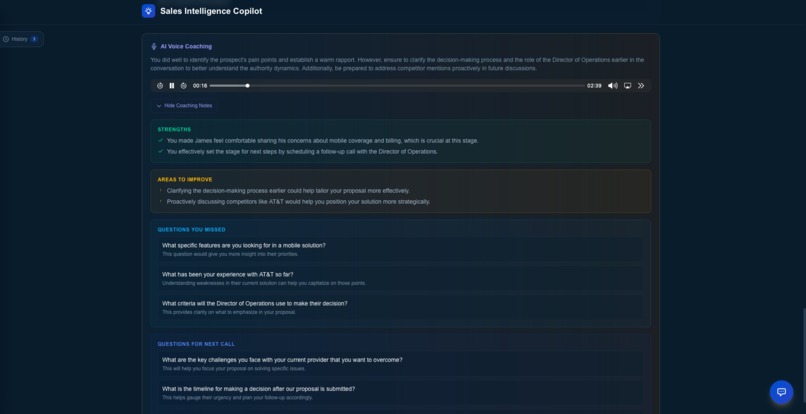
Detailed Voice AI Coaching
-
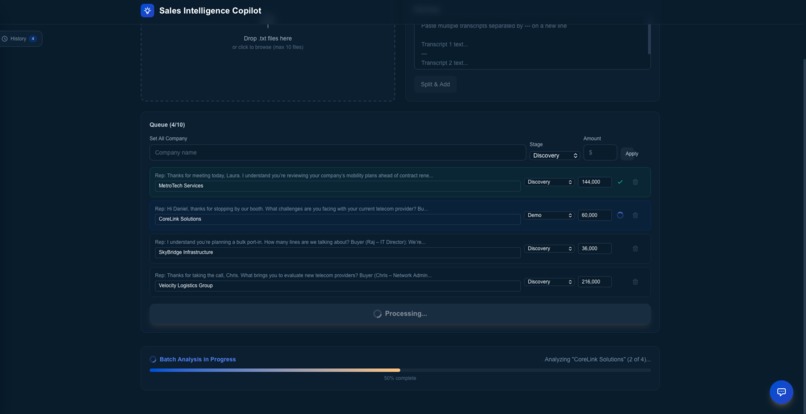
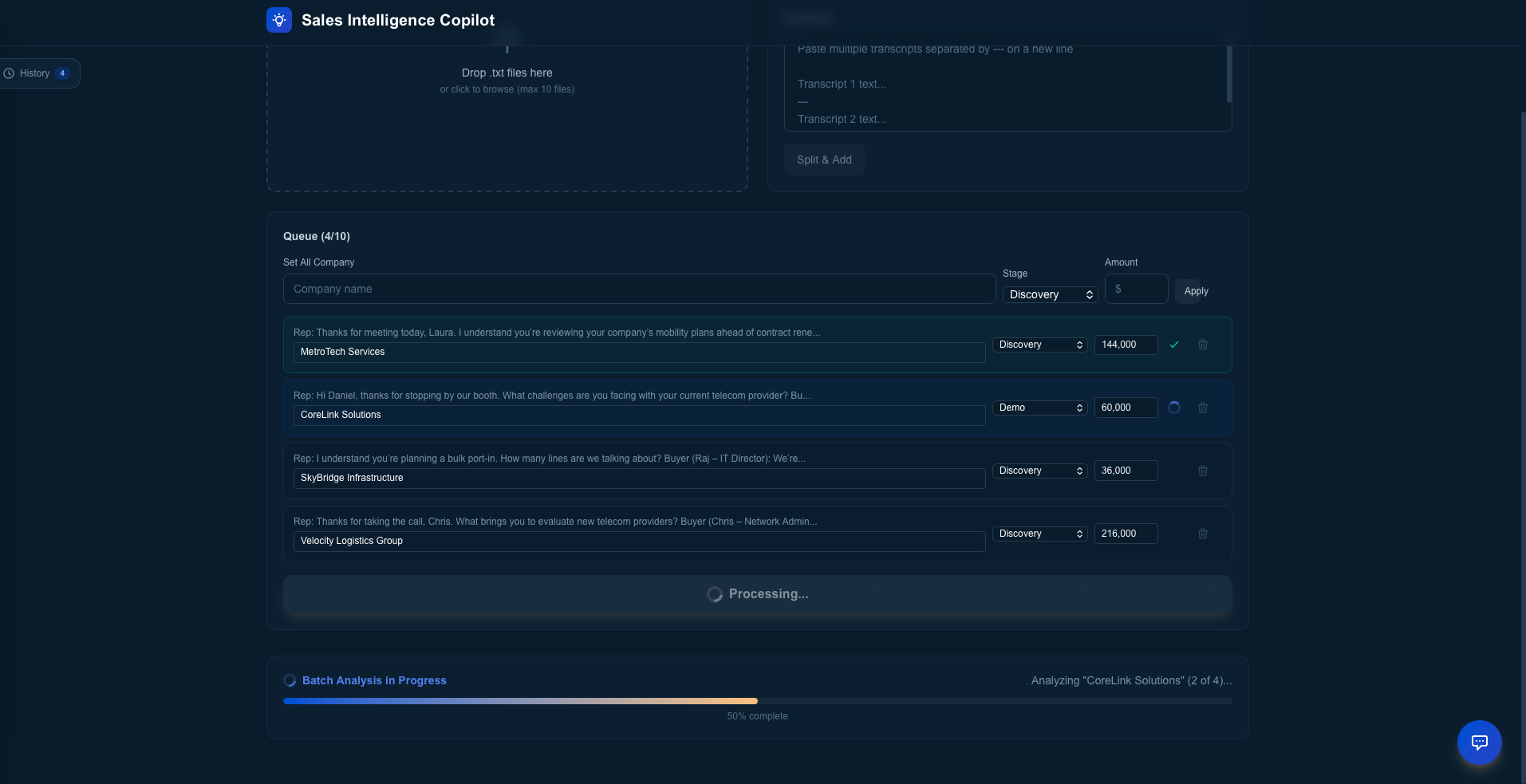
Batch Transcript Upload from different online lead meetings
-
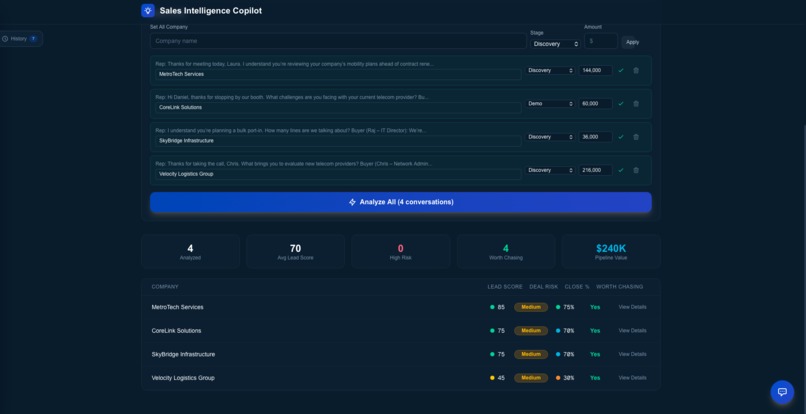
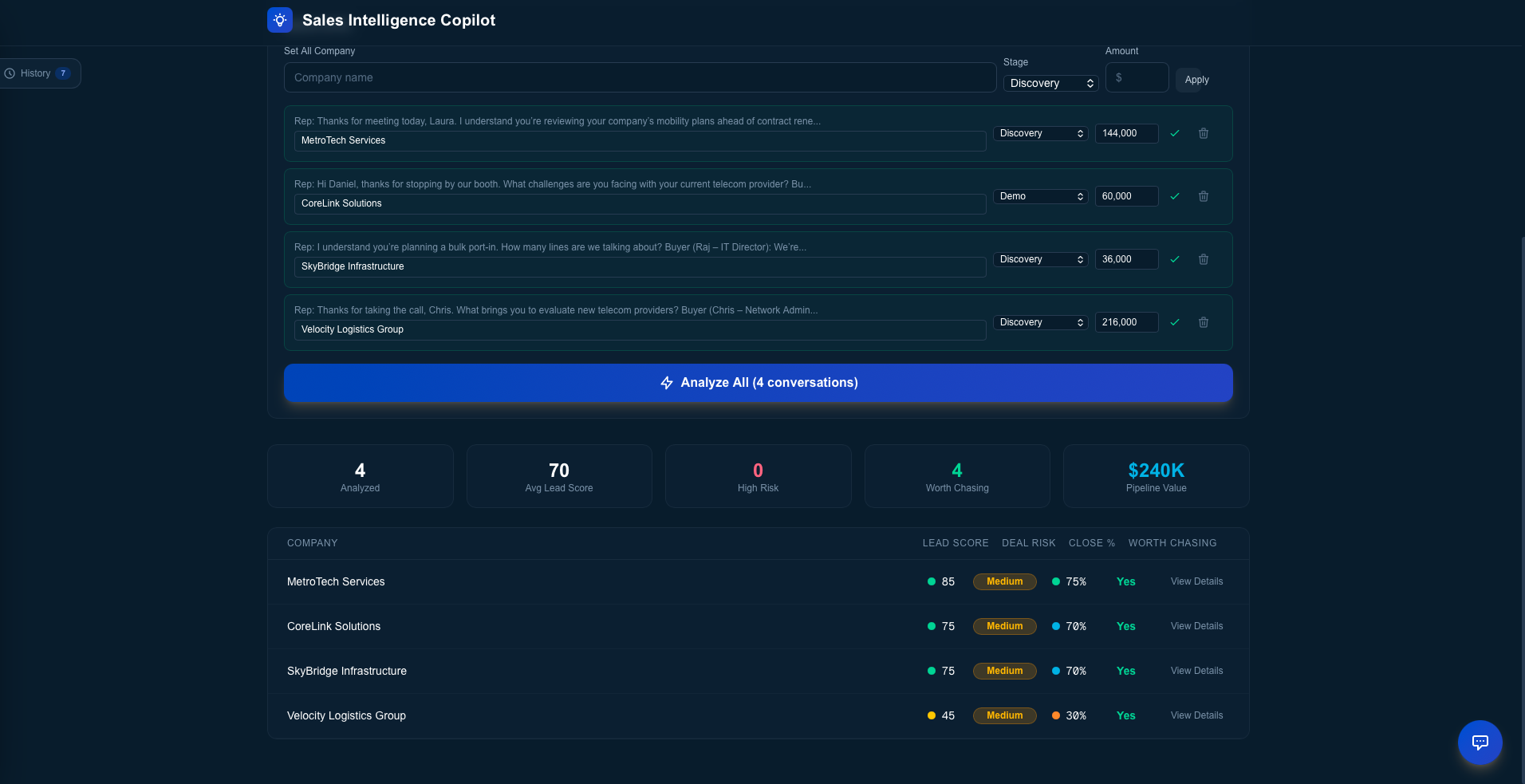
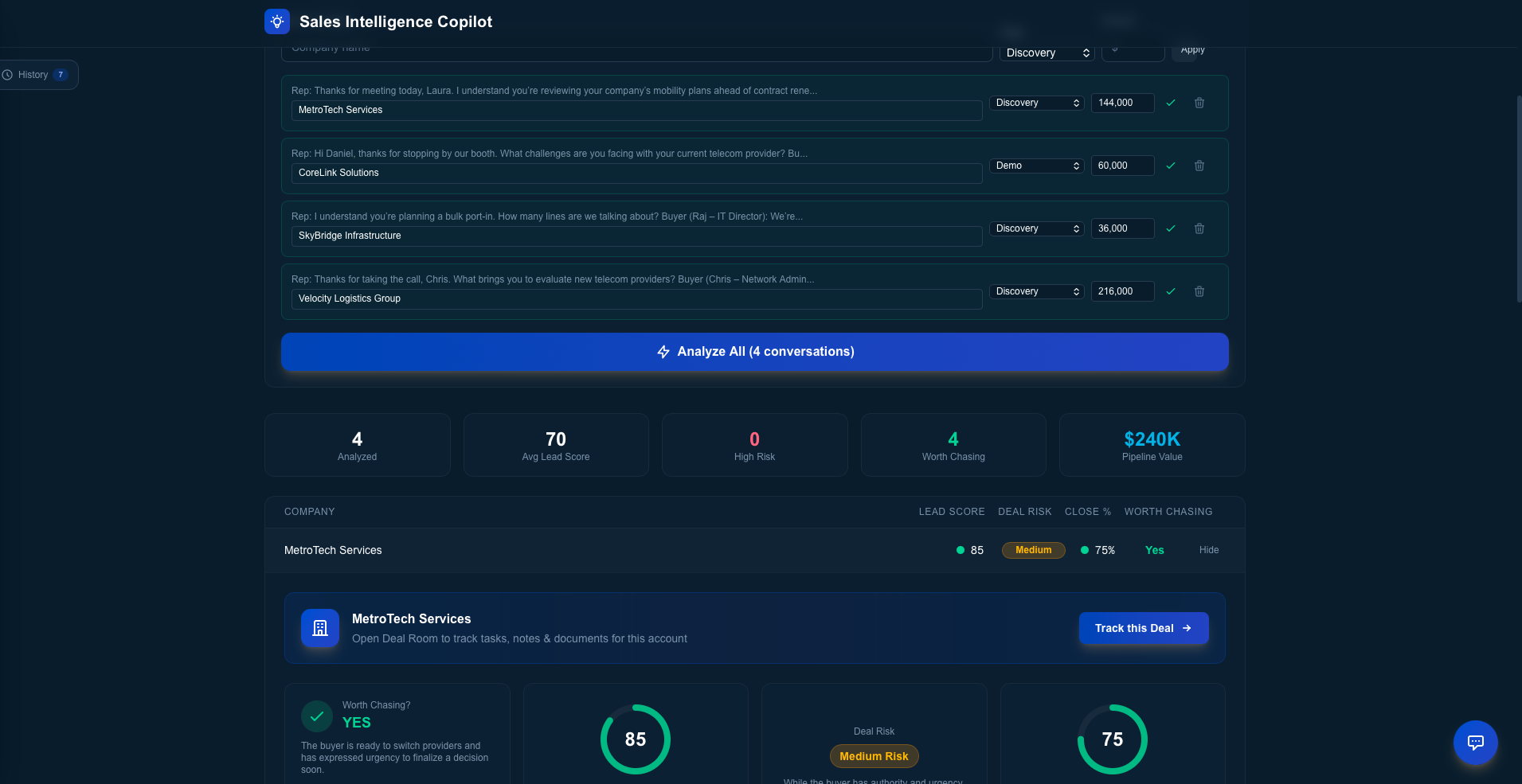
After Batch Analysis - Gives detail Analysis for each company
-
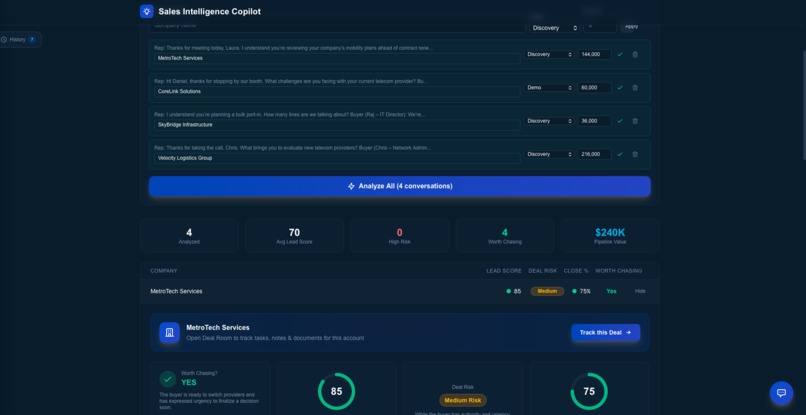
Each company Analysis in batch upload style
-
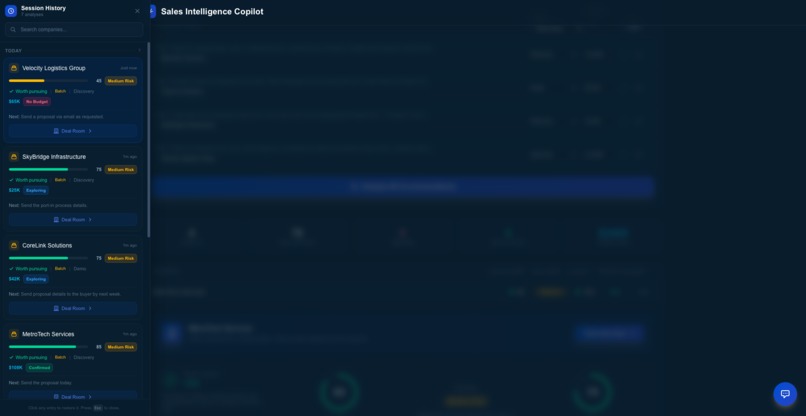
Tags in the history makes it easy to spot the deal from which source and gives quick analytics in first glance with company wise breakdown
-
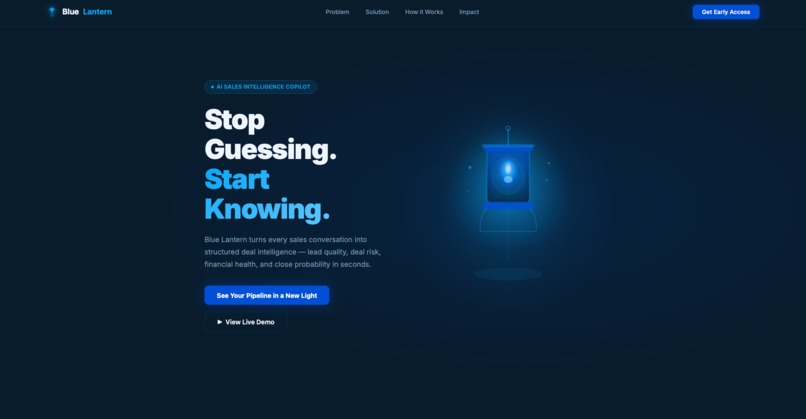
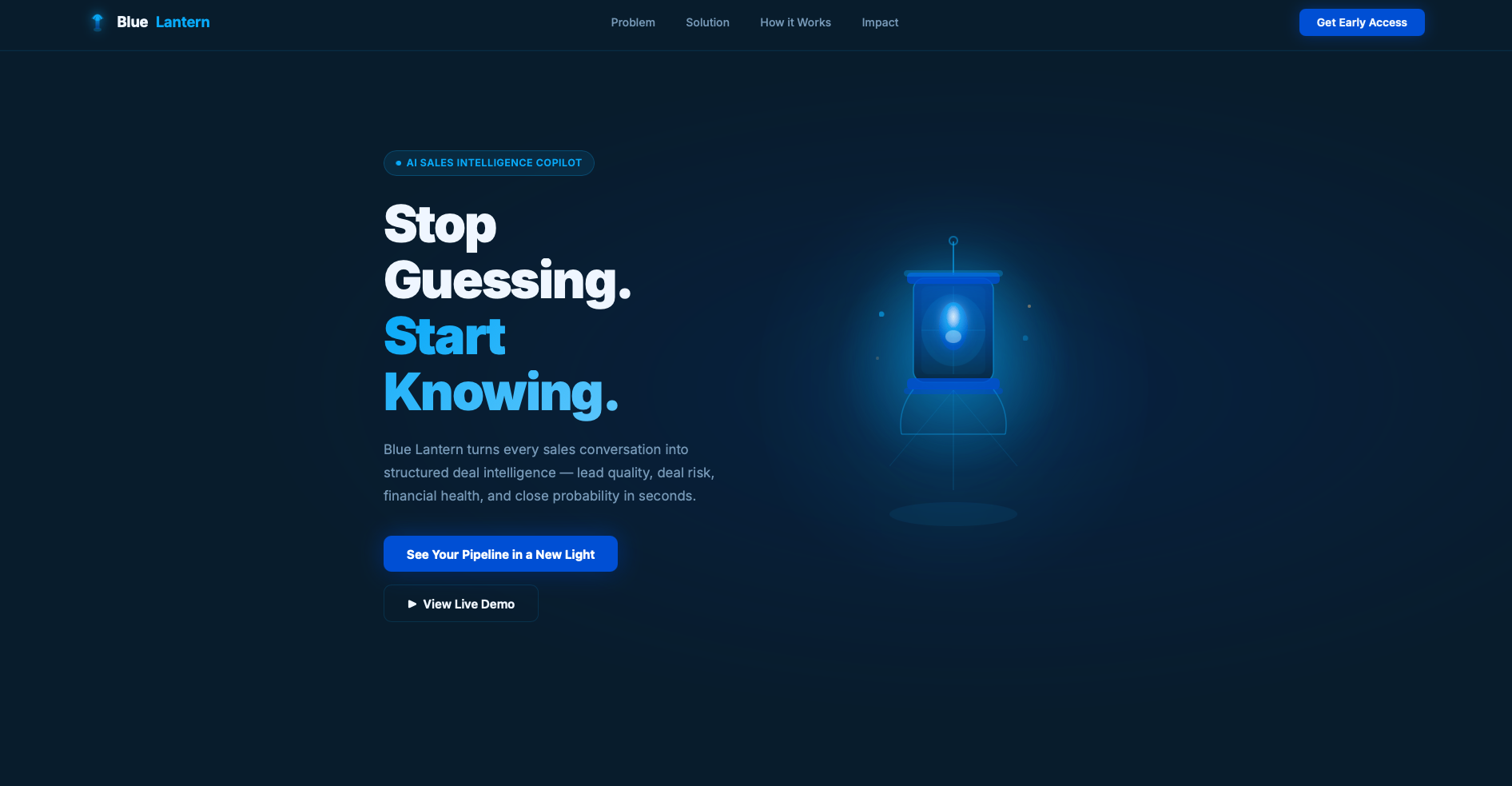
Landing Page (Blue Lantern) and Sales intelligence Copilot is a MVP product under it
-
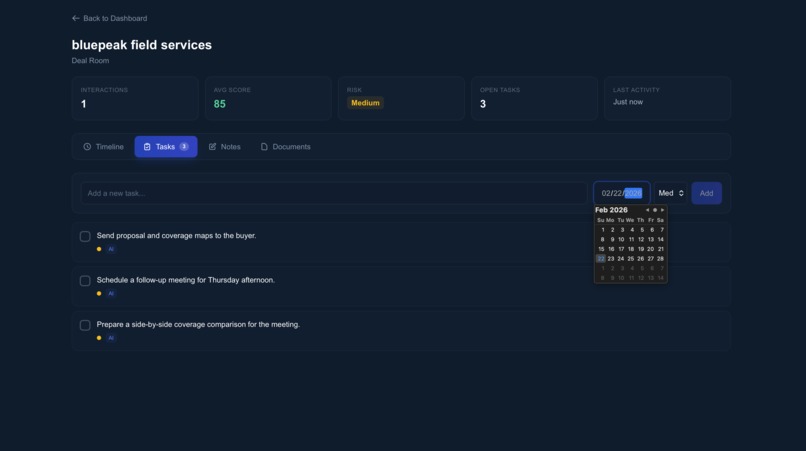
Company Specific Document storage and to do task remainders
Inspiration
I've seen sales reps come back from calls and spend the next hour typing up notes, trying to remember what the prospect said about budget, and wondering if the deal is even worth chasing. Most of the time they're guessing. I wanted to build something that takes that guesswork out and gives reps a clear picture of where they stand - right after the conversation happens.
What it does
Blue Lantern takes any sales conversation - a call transcript, an email thread, or even quick notes from an event booth - and breaks it down instantly. It scores the lead, flags deal risks, spots buying signals and objections, and drafts a follow-up email ready to send. It also coaches the rep on what they did well and what they missed. The financial intelligence layer goes deeper. It pulls out actual numbers from the conversation - deal sizes, contract values, ROI estimates - and tells you if the budget is real, if competitors are undercutting you on price, and where the revenue risk is hiding. Every deal gets its own workspace with tasks, notes, and a timeline of all interactions.
How we built it
I built it with Next.js and React on the frontend with Tailwind CSS for styling. The backend runs on Next.js API routes that send conversations to OpenAI's GPT-4o-mini for analysis. The AI returns structured JSON with scores, signals, financial breakdowns, and coaching - all validated before hitting the UI. I also added a chat assistant powered by the same model that can answer questions across your entire pipeline. The app supports four input modes - transcript paste, email thread, event quick-capture form, and batch processing for up to 10 conversations at once.
Challenges we ran into
Getting the AI to return consistent, structured financial data was tricky. Sometimes it would hallucinate numbers or miss budget signals entirely. I had to build strict validation and careful prompt engineering to make the output reliable. Designing the prompt to work equally well for call transcripts, emails, and event forms was another challenge since each format has very different signals. I had a team mate (Amrit Mundlapudi was part of the team but was unable to contribute or attend the demo due to personal reasons)
Accomplishments that we're proud of
The financial intelligence layer is something I haven't seen in other projects. It doesn't just tell you "this is a good lead" - it tells you why the money makes sense or doesn't. I'm also proud of how the four input modes make it usable for different real-world scenarios, not just the ideal case of having a perfect transcript.
What we learned
Prompt engineering is everything when you need structured output from an LLM. Small changes in how you ask for financial data completely change what you get back. I also learned that sales workflows are messier than they look - reps don't always have full transcripts, sometimes they just have rough notes from a conference booth, and the tool needs to handle all of that.
What's next for Blue Lantern
I want to add CRM integrations so deals flow directly into tools like Salesforce and HubSpot. I'm also looking at adding voice input so reps can just talk into the app right after a call. Longer term, I want to build pipeline-level analytics that spot trends across all deals - like which objections keep coming up or which competitors are showing up more often.
Built With
- elevanlabs
- html5
- javascript
- next.js
- node.js
- openai
- react
- tailwind
- typescript
- vercel

Log in or sign up for Devpost to join the conversation.