-
-
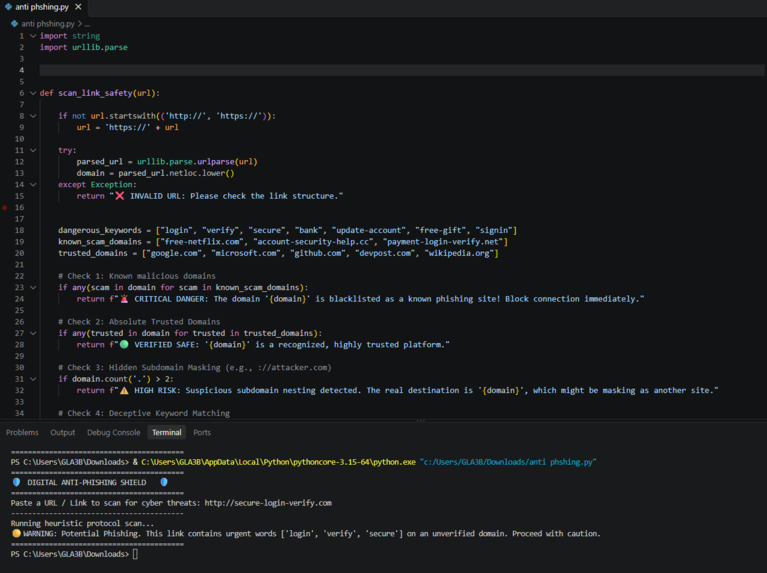
#test1
-
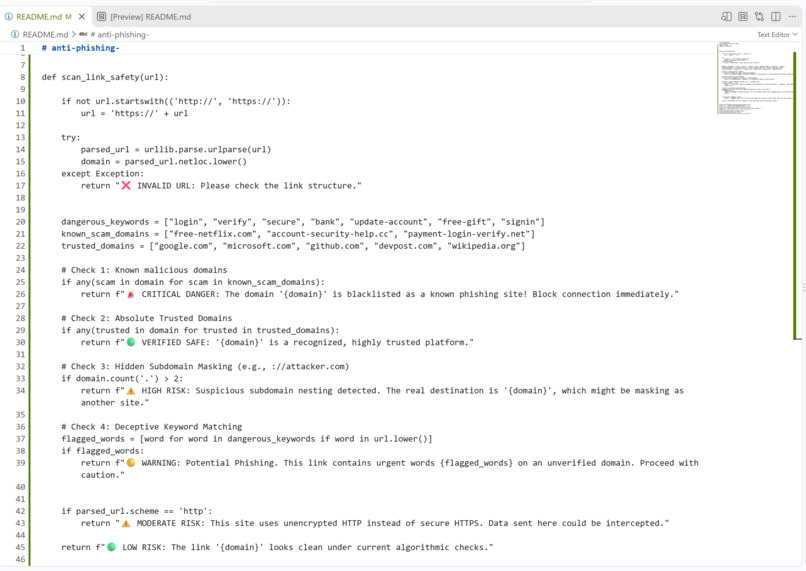
github
-
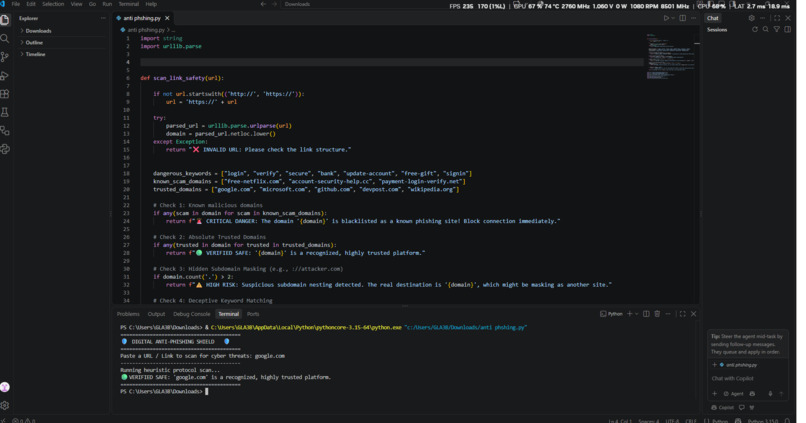
#test2
-
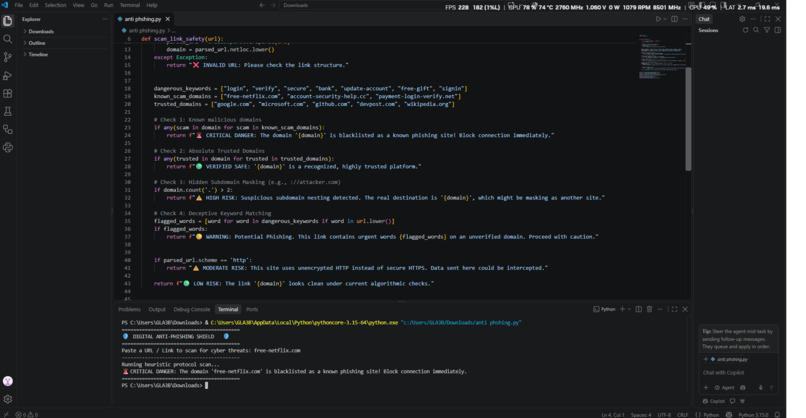
#test3
-
#test4
-
#test5
-
#test6
Inspiration
Honestly, we notice fake links and phishing scams happening all the time, and it's really easy for everyday people to fall for them. We were actaully close to fall for them so that encouraged us to do this and since we are just starting out in tech and cybersecurity, we wanted to build something practical that could actually help someone check if a link is safe before they click on it and accidentally risk their data.
What it does
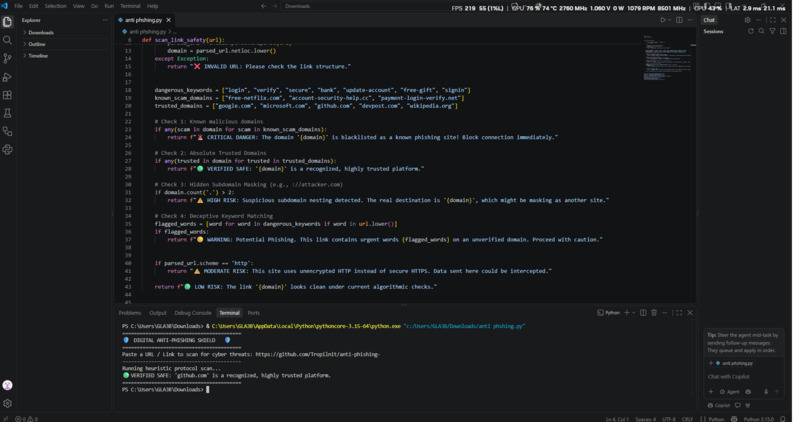
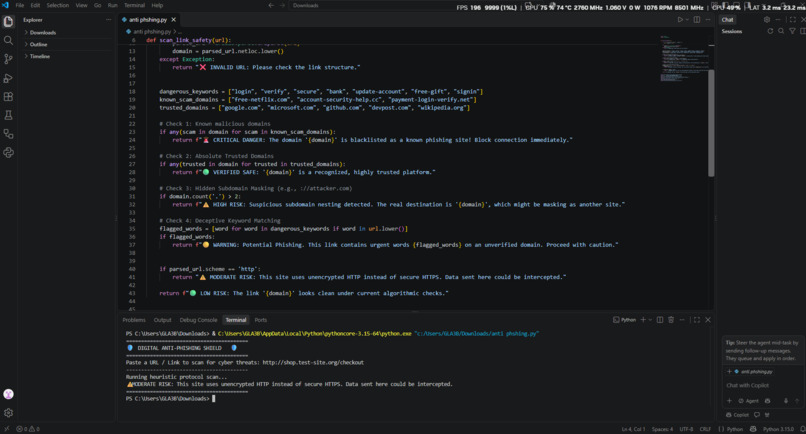
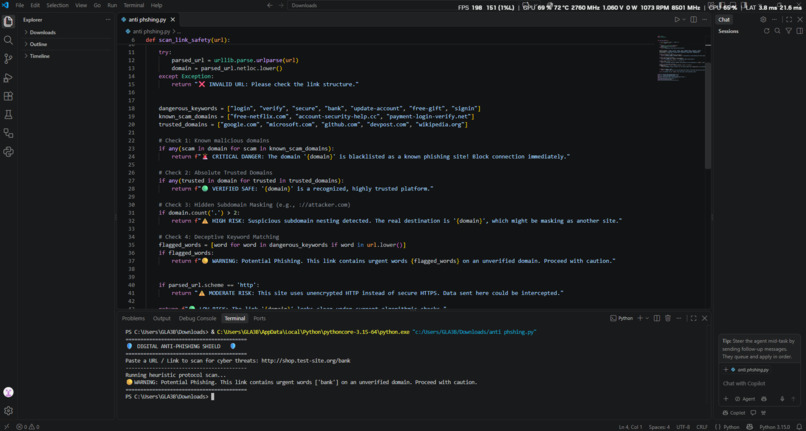
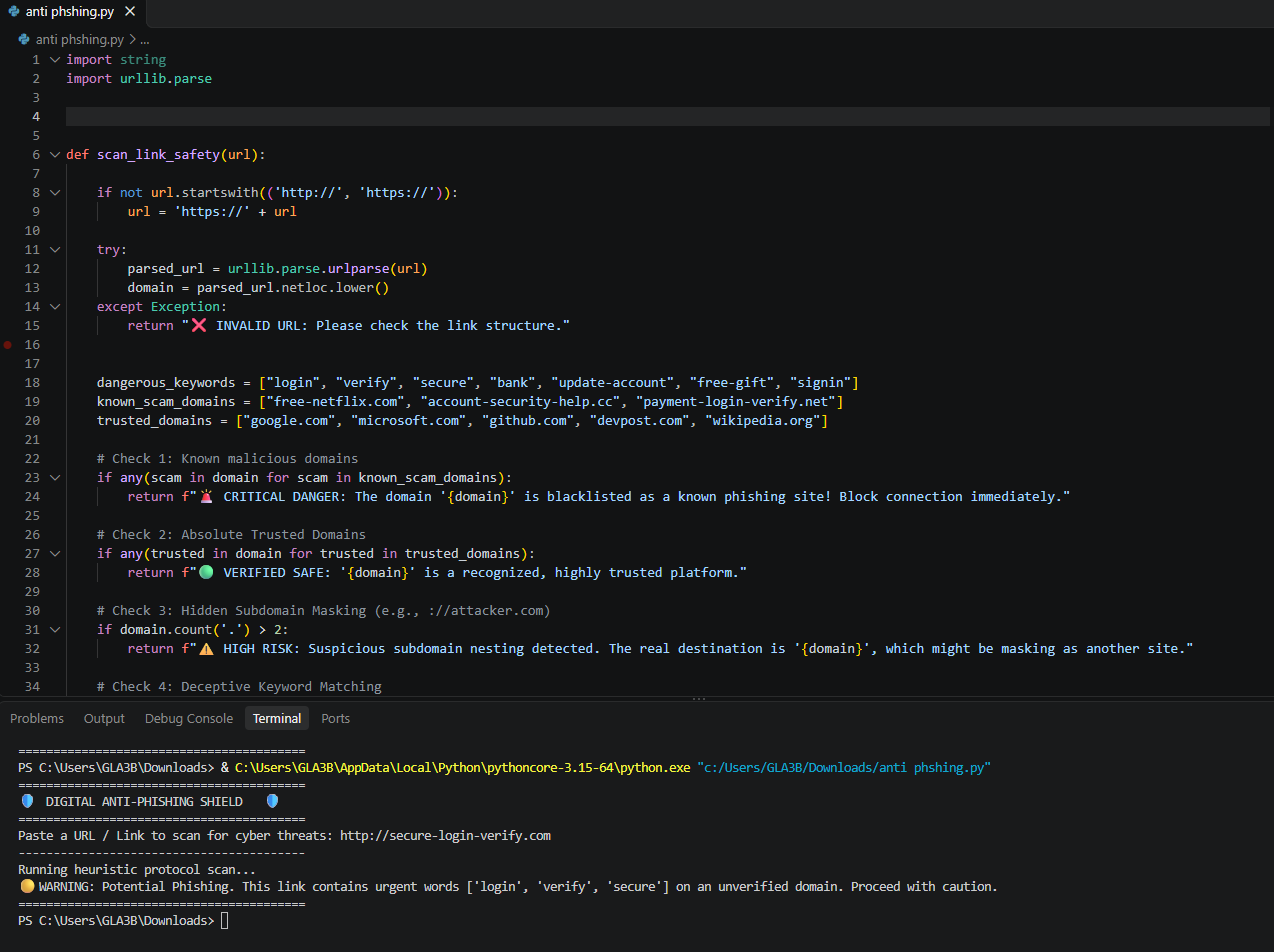
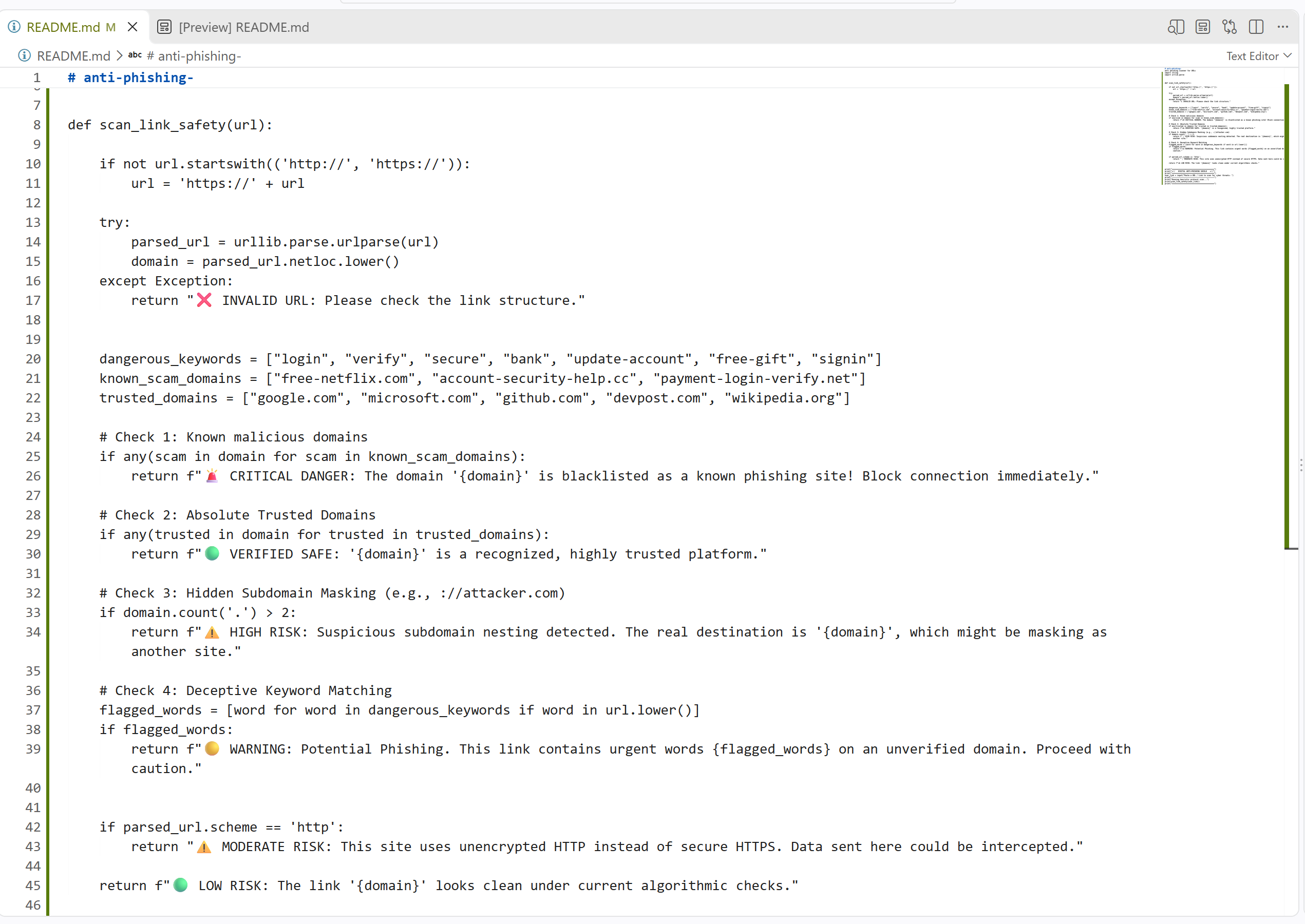
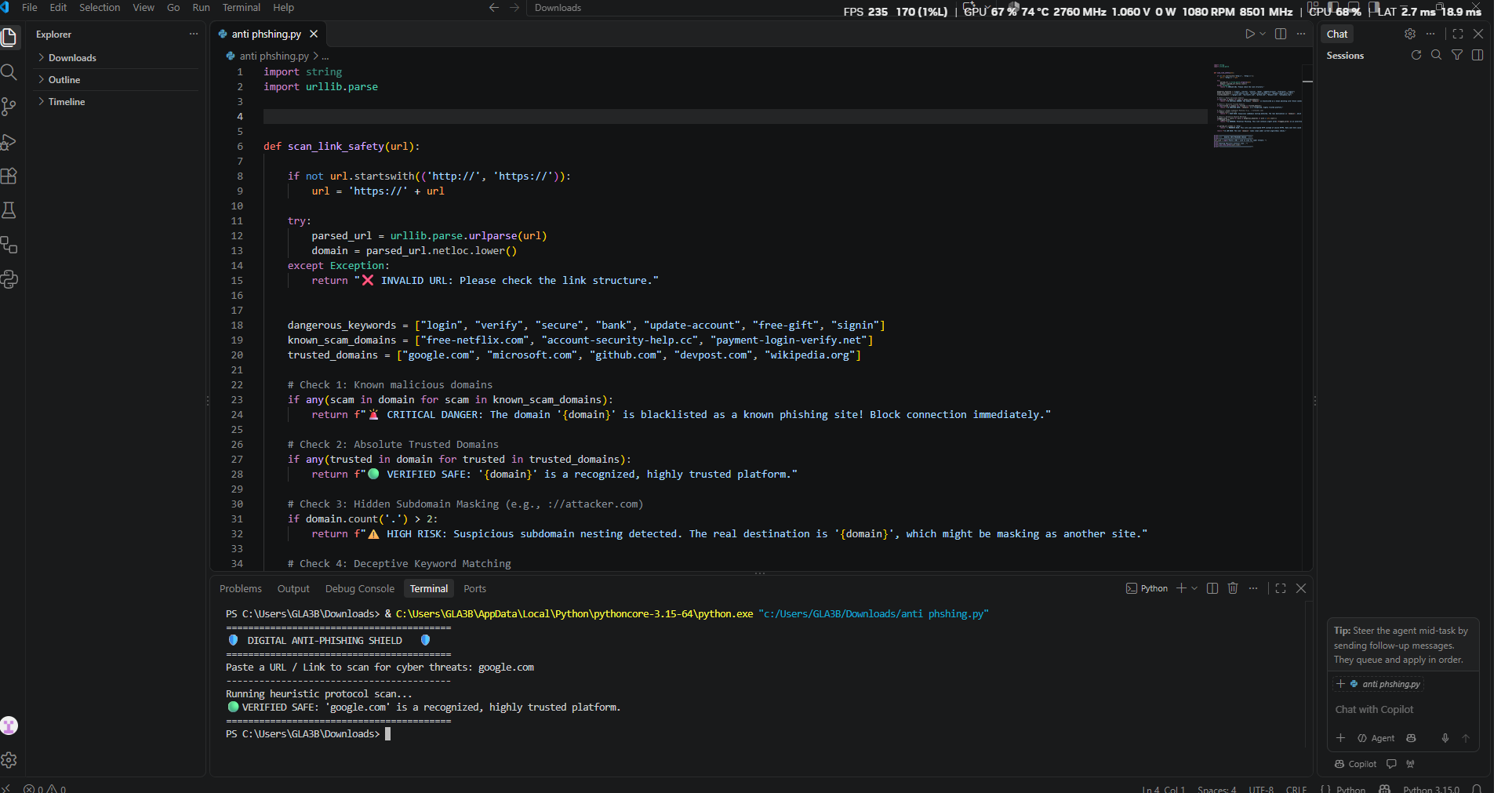
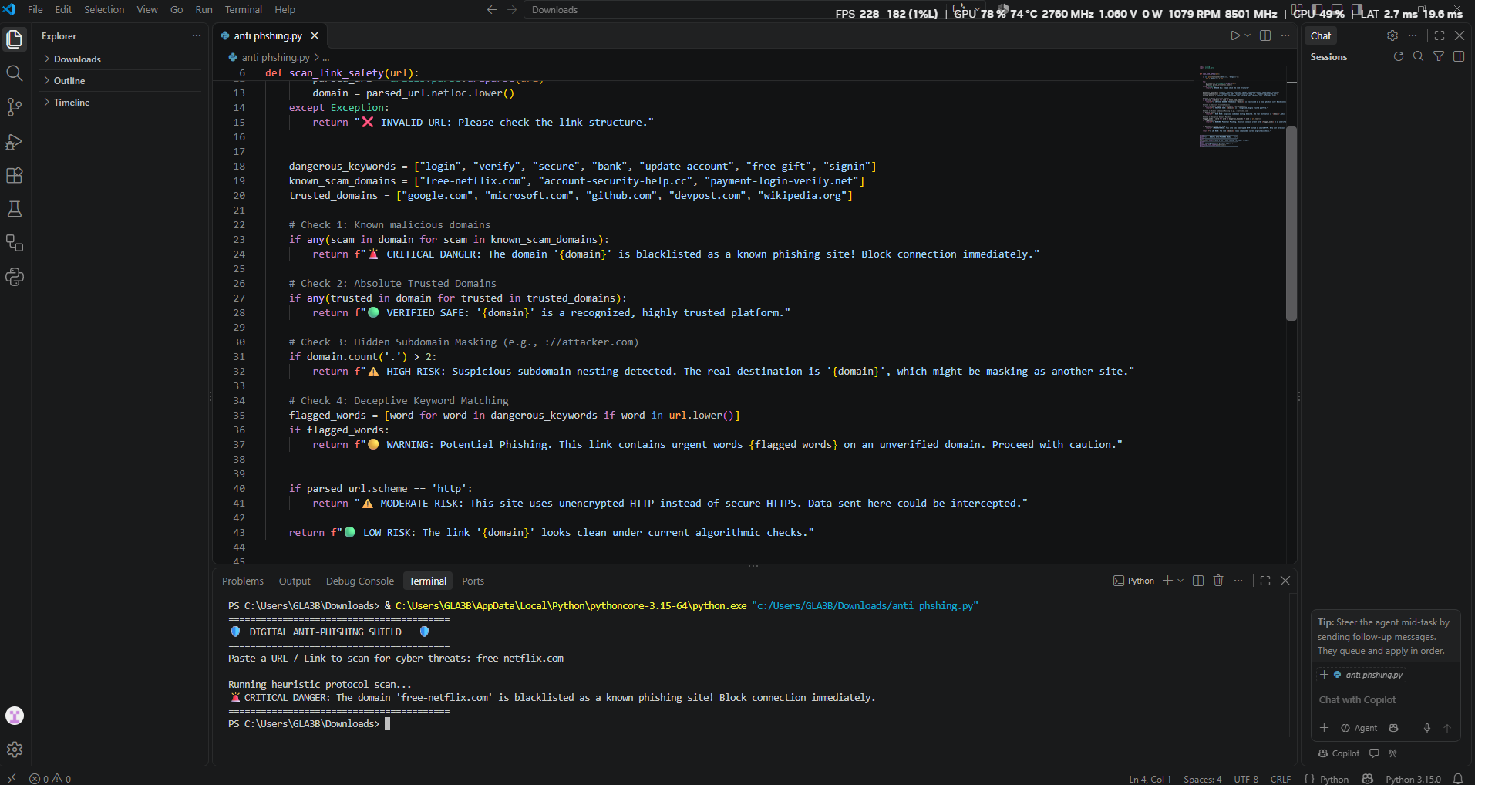
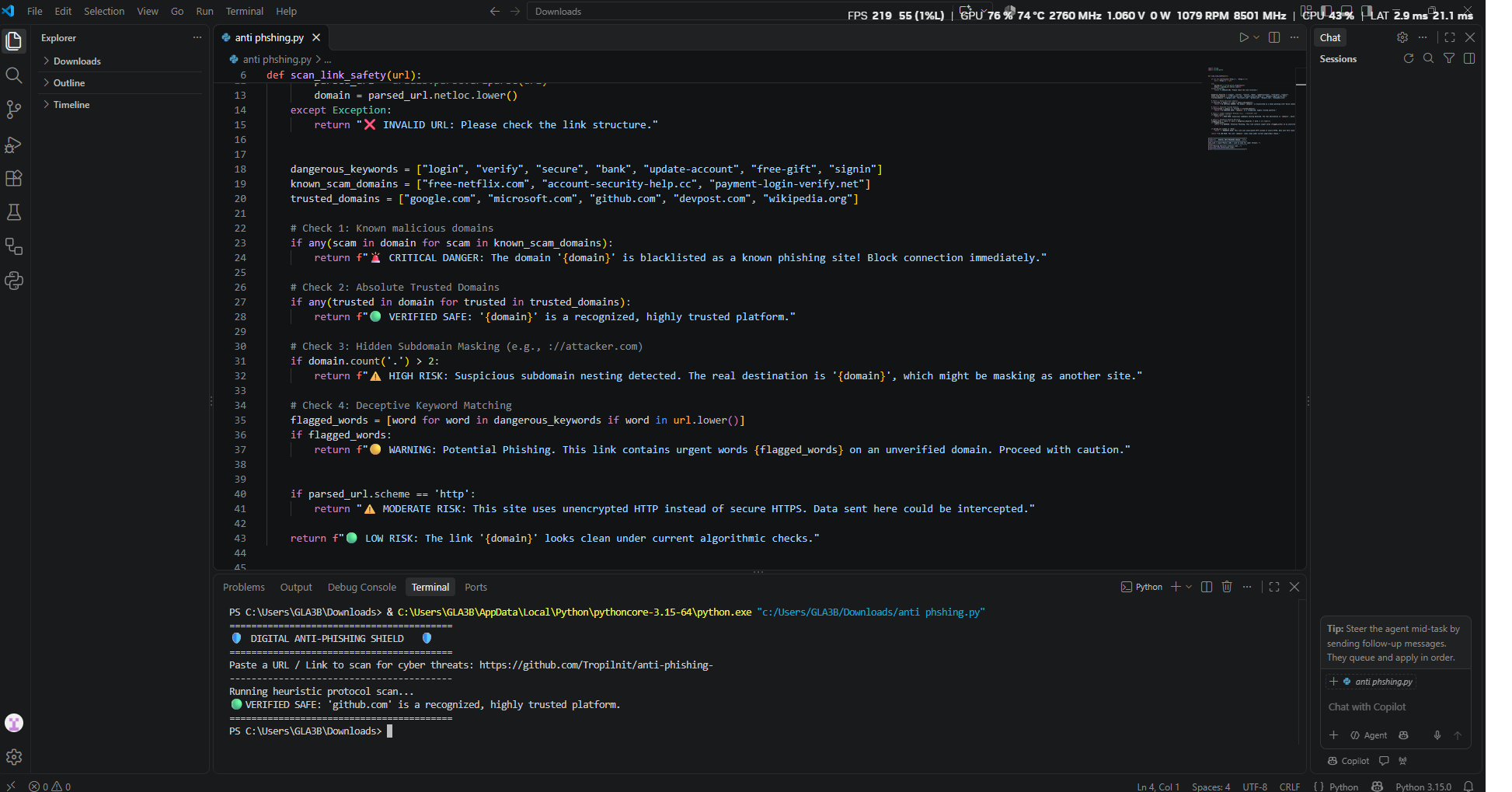
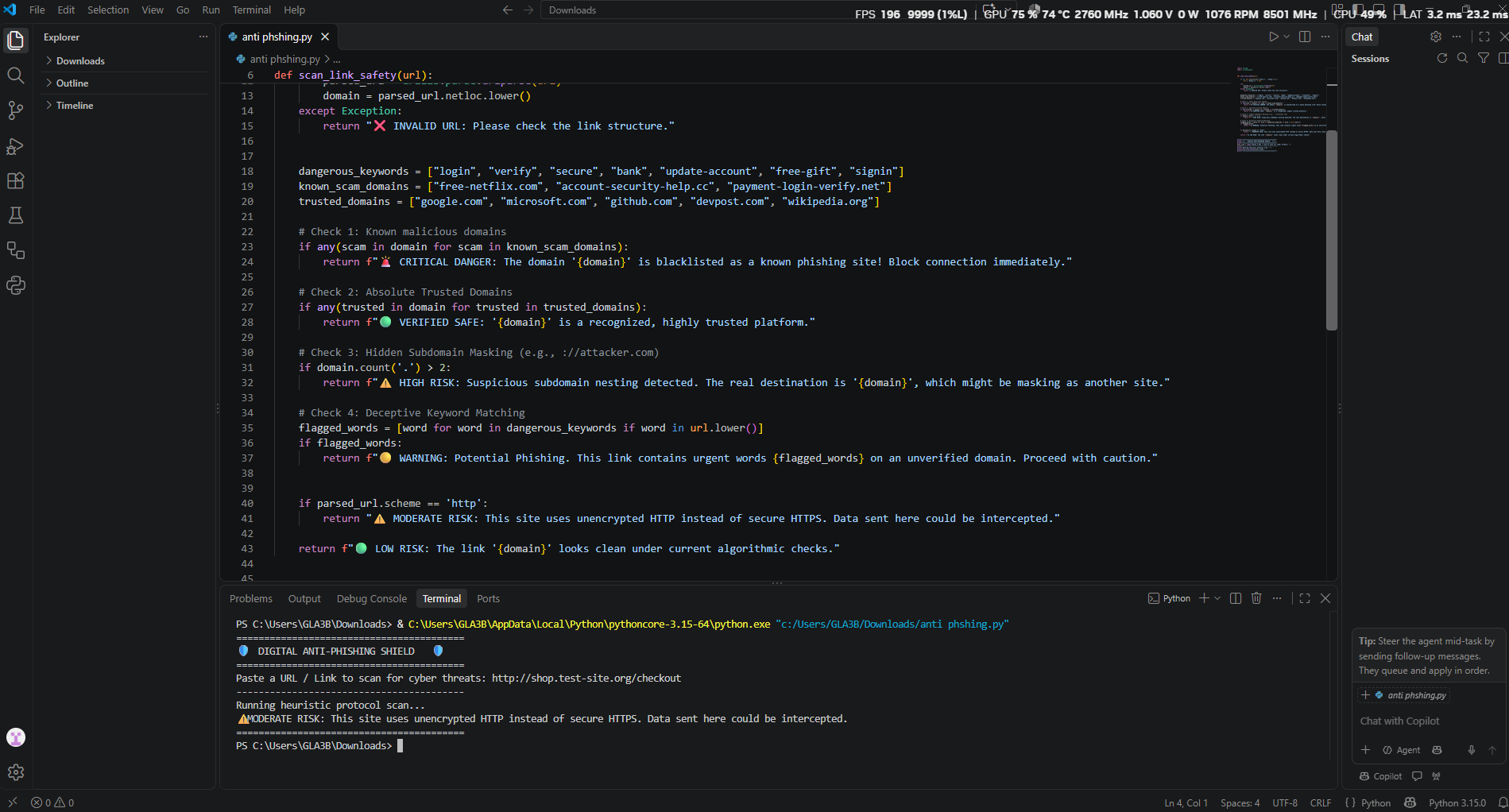
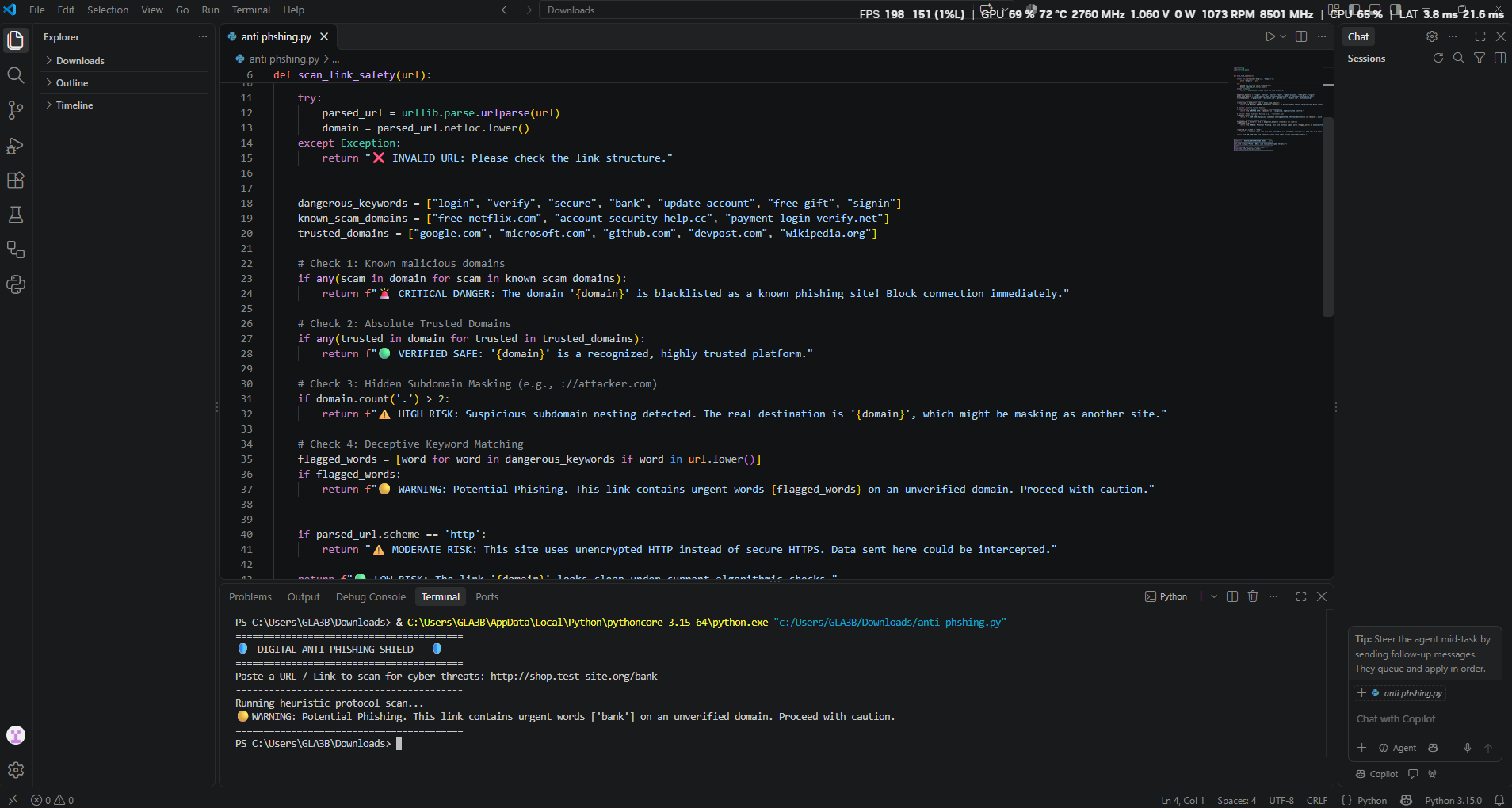
Our project is a quick Python script that analyzes links. When you paste a URL into it, the script runs a few checks: it looks to see if the site is on a known scam blacklist, checks if it's from a verified trusted domain (like Google), flags suspicious keywords like 'login' or 'free-gift', and checks if the link is secretly masking its real destination using tricky subdomains.
How we built it
We wrote the entire tool using Python. We used Python's built-in 'urllib' library to break down and read the links, which was great because we didn't have to install any complicated external software. It keeps the whole program incredibly fast and lightweight.
Challenges we ran into
The trickiest part was handling how different people type links. Some people include 'https://', some start with 'www.', and others just type the bare domain name. It kept breaking our scanner at first, so we had to write a special formatting function at the very beginning to clean up the text before scanning it.
Accomplishments that we're proud of
We are proud that we actually got a functional security tool working in such a short amount of time! Working together as a team to turn basic logic rules into code that catches real-world digital threats was a huge win for us.
What we learned
We learned a ton about how hackers structure phishing links to deceive people. On the coding side, we got a lot better at string parsing and handling user inputs in Python.
Built With
- python
- scripting
- security
- visual-studio

Log in or sign up for Devpost to join the conversation.