-
Blu Logo
-
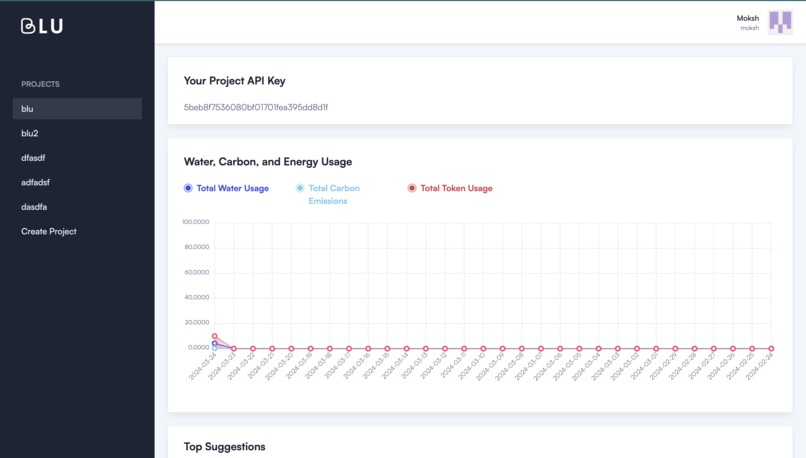
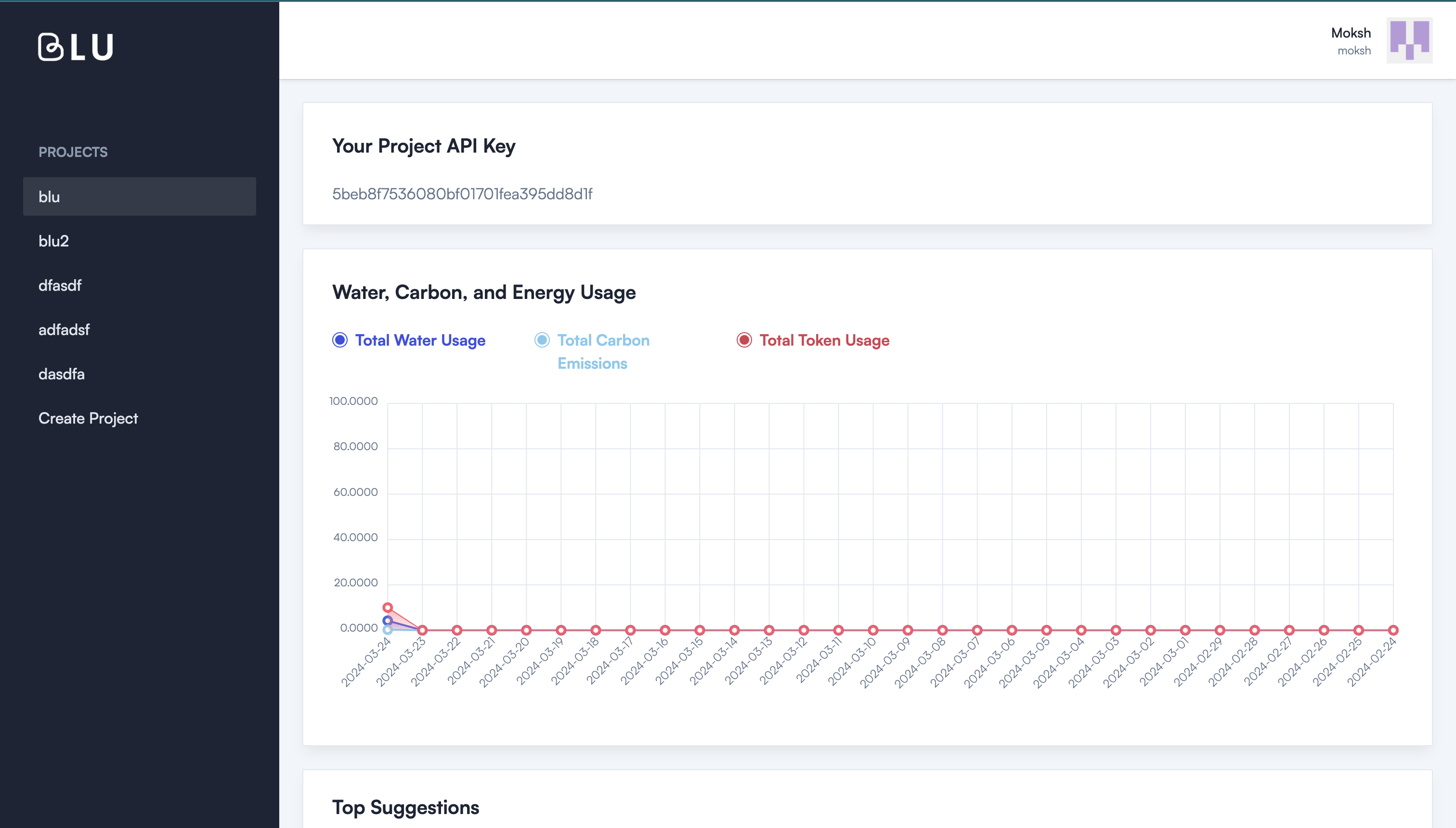
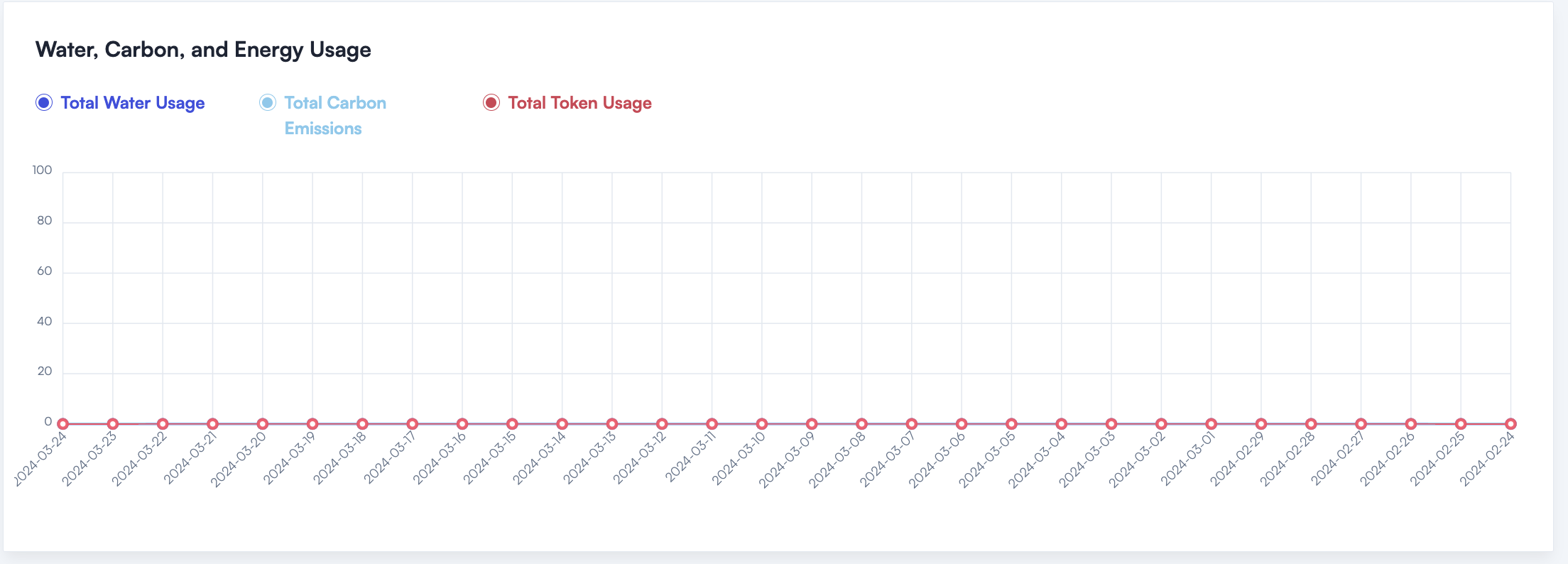
Carbon Footprint and Water Footprint GPT Tracker Dashboard
-
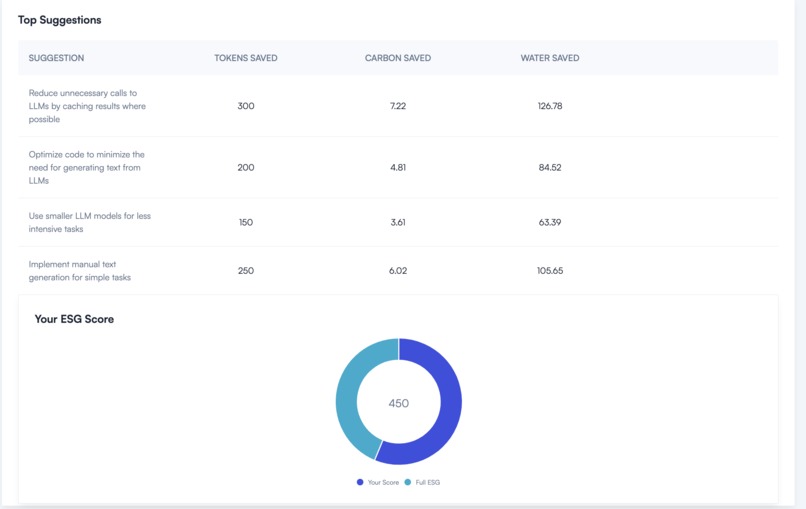
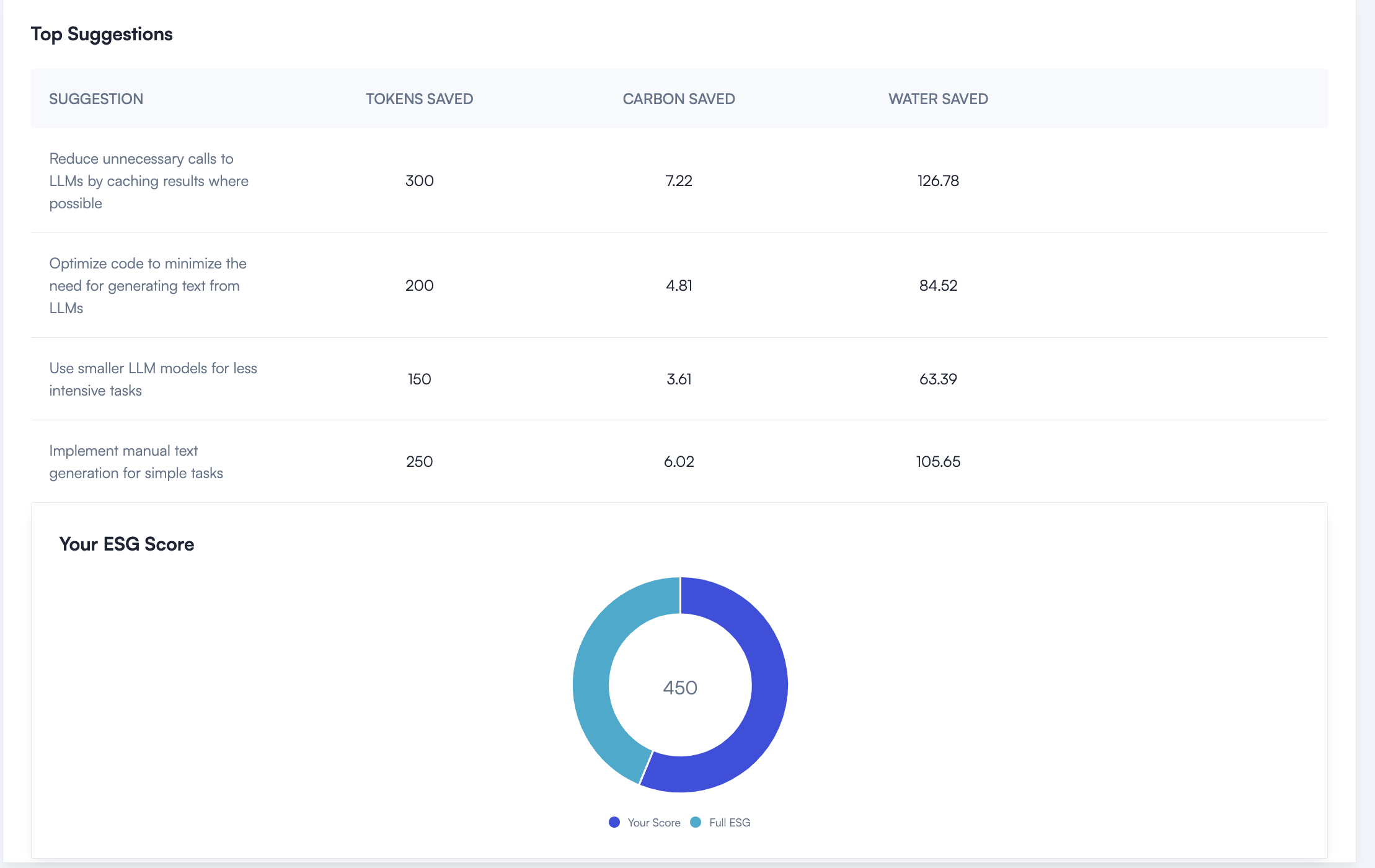
Dashboard to View AI Generated Suggestions From Scanning Code
-
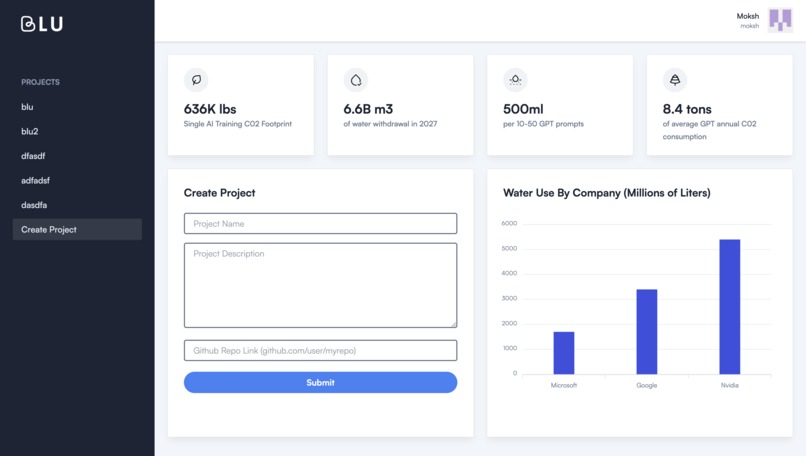
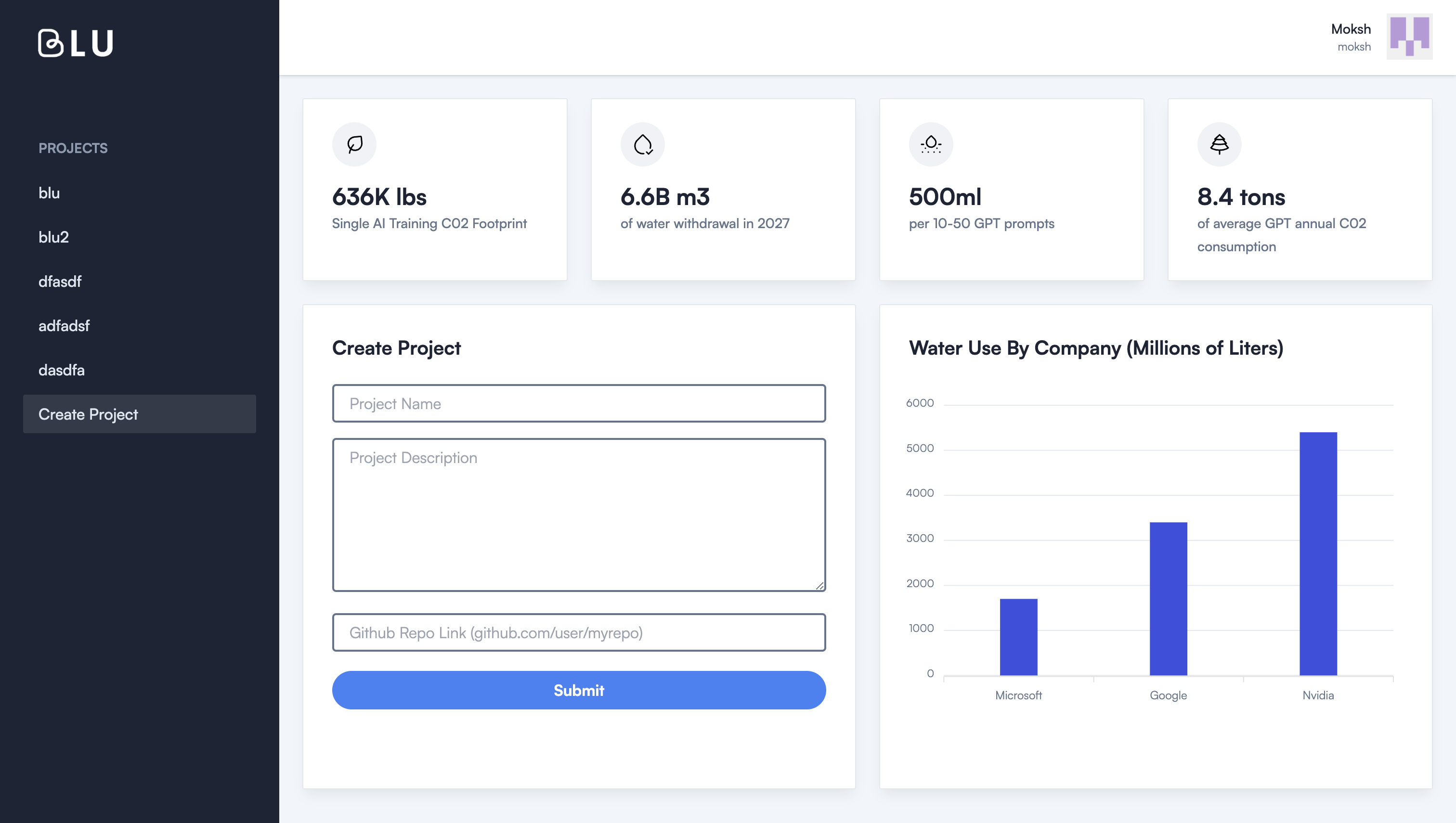
Project Create Form with Stats About AI Enviornmental Impact
-
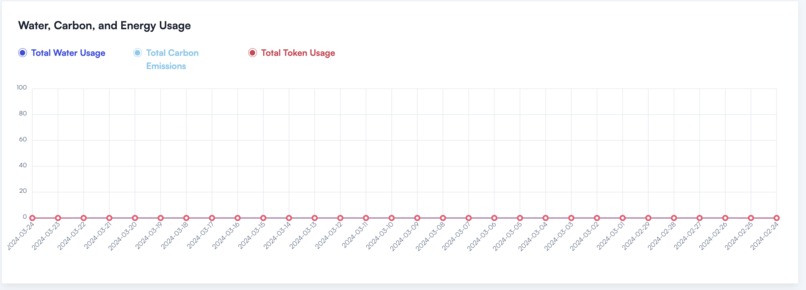
Carbon Footprint and Water Footprint GPT Tracker
-
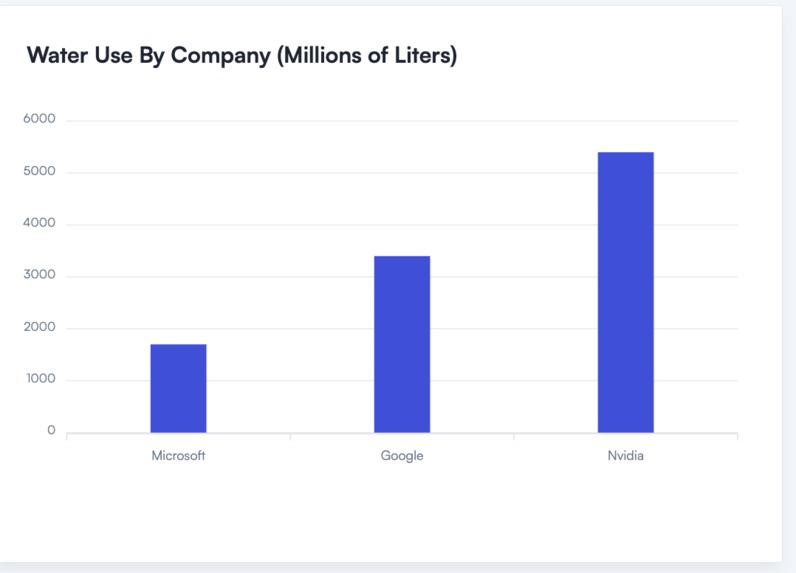
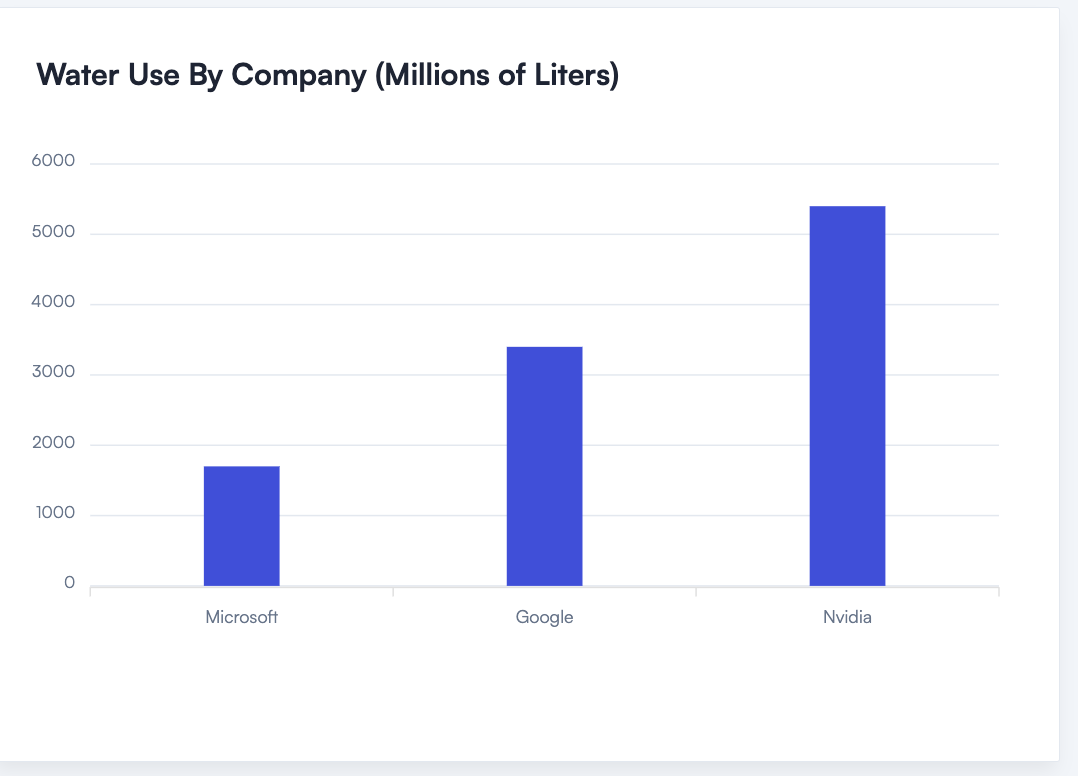
Water Use By Large AI Companies
-
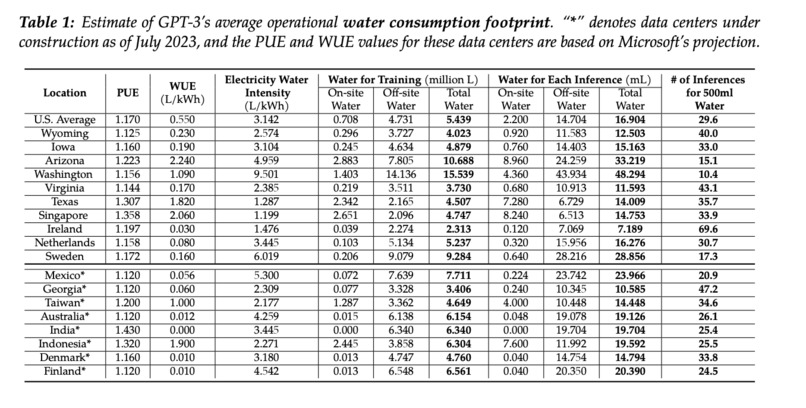
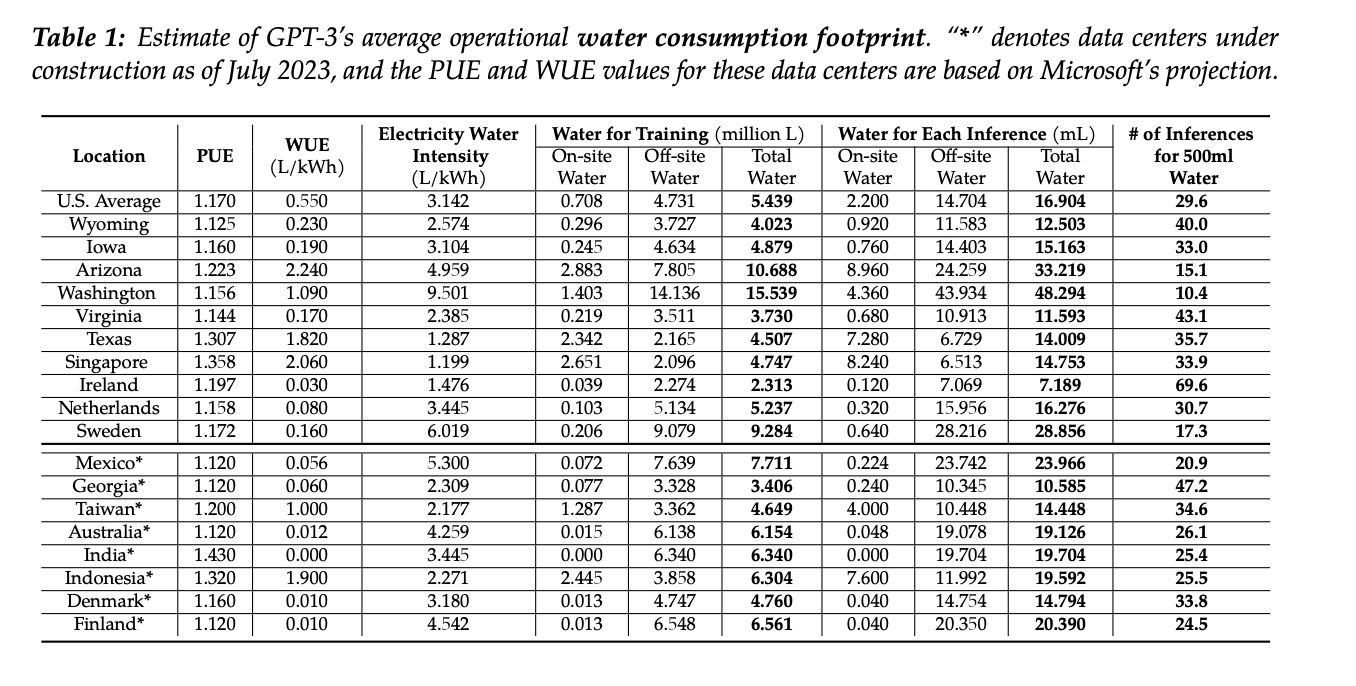
Data used to base water and CO2 data off of for GPT calls
-
Auth With PropelAuth

Inspiration
Ronit, one of our hackers, lives next to a GPU housing facility in Berkeley. Everyday, he notices a plume of smoke arising from the building. As we explored the potential environmental dangers of AI, we saw an article that found that GPT-3 "drank" 500mL of water for every 50 prompts it was given. GPT-4 is a much larger model and uses much more water to cool its GPUs. This encouraged us to explore a product that could help mitigate the inevitable risks of AI.
Amid the growth of demand for GPUs in the AI boom, the environmental impact of software that utilizes GPU heavy tech such as LLMs will only grow. As such, developers that create AI backed products need to be held responsible for their AI footprint. Blu serves as a middleware and code auditing tool to ensure that developers are aware of their environmental impact and moves us closer to a carbon and water neutral tech industry.
What it does
Blu serves as a transformative technological interface that prioritizes environmental sustainability. Its primary function is to monitor and assess the environmental impact of AI operations. By acting as an API middleware, it rigorously tracks the carbon dioxide emissions and water usage associated with your AI models. Instead of using the GPT-4 model directly with OPENAI's API, use Blu's API, which tracks the carbon and water impact of your GPT calls. You can than view this tracking data in your dashboard.
But that's not all. Blu offers an innovative solution to make your programming more eco-friendly. By simply inputting your GitHub code into Blu, the application scans your code meticulously, identifying areas that contribute to high carbon footprints or excessive water usage. These suggestions will show up in the projects dashboard, with estimated environmental savings of each suggestion.
Blu then provides specific, actionable recommendations to optimize your code. These changes will not only drive down the environmental impact of your AI operations but will also help boost performance. Whether you're a programmer looking to reduce your digital carbon footprint, a startup wanting to demonstrate a commitment to sustainability, or a company aiming to meet corporate social responsibility targets, Blu can help you make a major contribution towards a greener planet.
How we built it
We used PropelAuth for the authentication with GitHub, as this is a developer centric product. We then used NextJS for the frontend, and connected it to an ExpressJS backend. We created CRUD API endpoints to allow users to add projects to their dashboard. We then used the GitHub API to scan through a code file that the user inputs and we created a custom LLM to give recomendations on how to make the code more sustainable. We also created a backend endpoint that acts as a middleware for OPENAI's GPT-4. Everytime this is called through Blu, we track the token length and the environmental impact of the inference. We found these numbers through various research papers as well as some estimation on the internet. In order to display the data, we then used ApexCharts with React. For styling, we used Tailwind CSS.
Challenges we ran into
One of the biggest challenges we faced was fine-tuning hyperparameters in order to optimize model performance. Integrating an LLM into our application required us to adjust prompting as needed in order to produce the desired output. Additionally, accessing both private and public repositories posed a challenge that BlueAI successfully addressed using private Github API keys, enabling seamless integration with user’s codebases.
Accomplishments that we're proud of
Our biggest achievement was creating the first ever carbon-neutral AI, demonstrating our commitment to environmental responsibility while setting a new standard for sustainable AI development. We also take pride in our use of Tailwind CSS and Next.js to create a sleek and user-friendly UI that enhances the overall experience for users. Additionally, our incorporation of PropelAuth provides users with seamless authentication across various platforms along with state-of-the-art security mechanisms.
What we learned
Our journey in developing BlueAI brought a crucial realization to light: AI has a larger carbon footprint than expected. In 2023 alone, Google’s data centers consumed over 5.5 billion gallons of water. ChatGPT, the world’s most popular AI tool by far, consumes approximately half a liter of water for every 10-50 prompts. Our experiences with BlueAI emphasize the importance of integrating eco-friendly strategies such as energy-efficient computing, responsible data center management, and renewable energy adoption to make AI more sustainable.
What's next for Blu - Creating Water and Carbon Neutral AI
We want to create more options for LLM endpoints to hit. We would love integrations with Anthropic's Claude, and Google's Gemini as well. We also would create libraries in popular languages such as Python, Node.js, Rust, and Java to make the developer experience better. Another idea we had was to integrate Stripe to automatically offset donations.
Built With
- apexcharts
- atlas
- express.js
- githubapi
- gpt
- javascript
- jquery
- mongodb
- nextjs
- node.js
- openai
- react
- tailwind
- typescript


Log in or sign up for Devpost to join the conversation.