Inspiration
Generating games with AI is still hard, because of A) hard distribution and B) lack of coherent style/trust.
Roblox is the easiest way to get a game in front of people, but the tools are painful to iterate with if you are not already a Studio person:
- How do you find assets that actually look like they belong in the same world?
- How do you agentically build a map (this is largely unsolved)?
- How do you rapidly playtest instead of staring at a viewport?
Most AI world tools either dump a pile of unrelated marketplace meshes, or generate a pretty picture you cannot walk around in. We wanted the opposite: one prompt, a world you can run through while it is still being built, and a real Roblox place at the other end.
What it does
BloxMCP is an interactive tool for quickly building Roblox maps from a sentence.
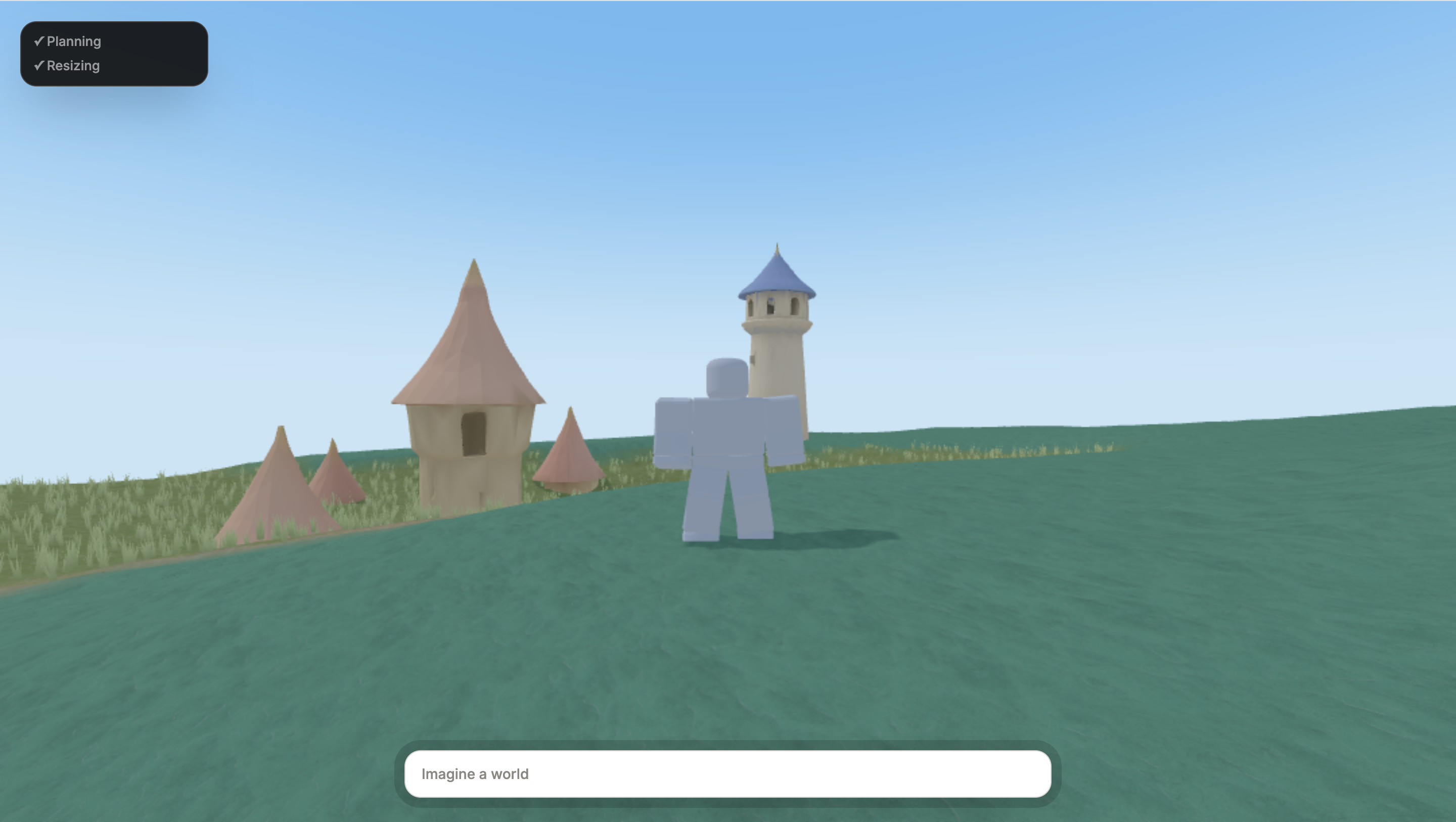
You type into a prompt (“Imagine a world…”), then walk an R15 character through a live Three.js replica of the place. Terrain shows up first. Landmark objects appear one by one as they finish reconstructing. You can keep playing while that happens.
If something is wrong, you do not have to regenerate the whole map. “Delete the campfire” or “make the tower bigger” is routed as an instant edit: Jev picks the named object (and if there are two barrels, the one closest to you), and the world updates on the next poll.
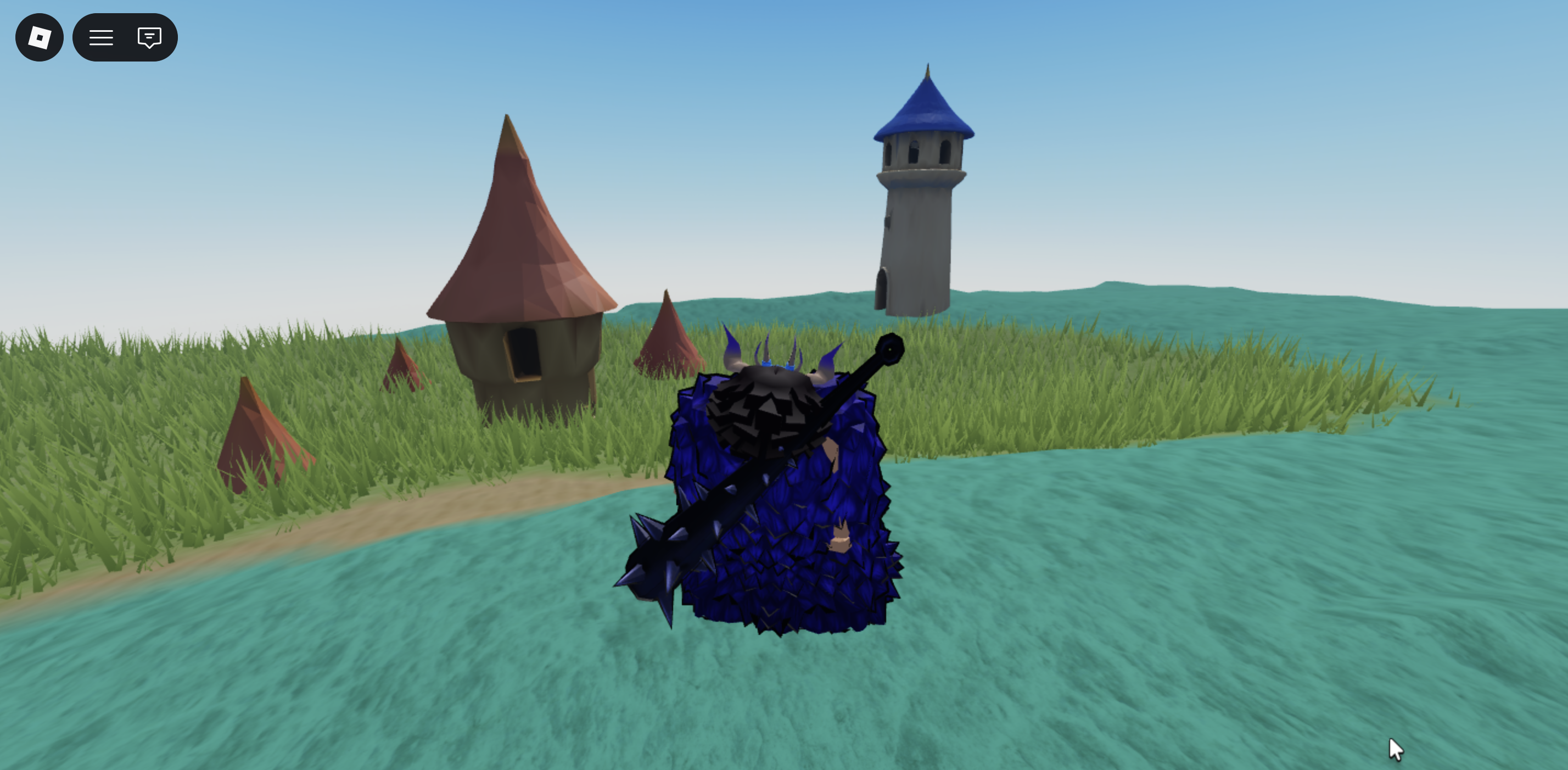
A Roblox Studio plugin stays subscribed to the same world head, so the place you are playtesting is the place you can publish.
How we built it
A Three.js frontend that plays like Roblox, so you can walk the map while it is still being built.
A Studio plugin that turns that same build into a real place, so the replica and the game stay in sync.
A backend that runs the agents and stores the world like git. The browser and the plugin both pull from it. Incoming requests go through Jev: cheap edits happen immediately, and heavier “make this world” work goes to the full generation pipeline.
Challenges we ran into
We first treated it as an agent that plans a list of objects, scatters filler, and tweaks placement until things look planted. That drifted from the picture, buried landmarks, and made playtest lag behind generation.
We then flipped it: one composition image is the source of truth, objects appear as soon as they reconstruct, and Jev only handles the instant stuff (delete, resize, route the request). Getting there meant throwing out a lot of clever middle steps in favor of a simpler loop people could actually walk around in.
Accomplishments that we're proud of
A map you can walk while it is still being invented Instant edits in natural language Fully synced with roblox studio in real time
What we learned
For coherent style, generate one picture of the finished shot and lift objects out of it. Do not independently sample “a dock” and “a cabin” from a mesh library and hope they match
Agents should be routed. Cheap structured choices (Jev) for “what kind of request is this” and “which barrel.” Heavy generative tools only for the parts that need taste.
Built With
- golang
- jev


Log in or sign up for Devpost to join the conversation.