-
-
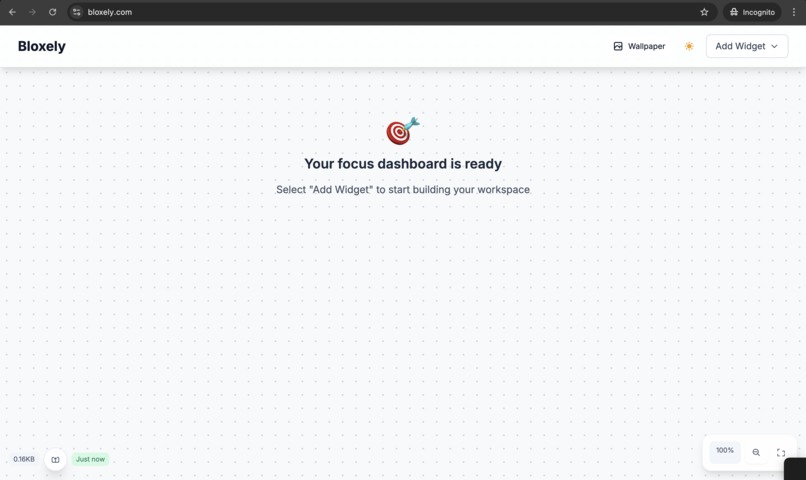
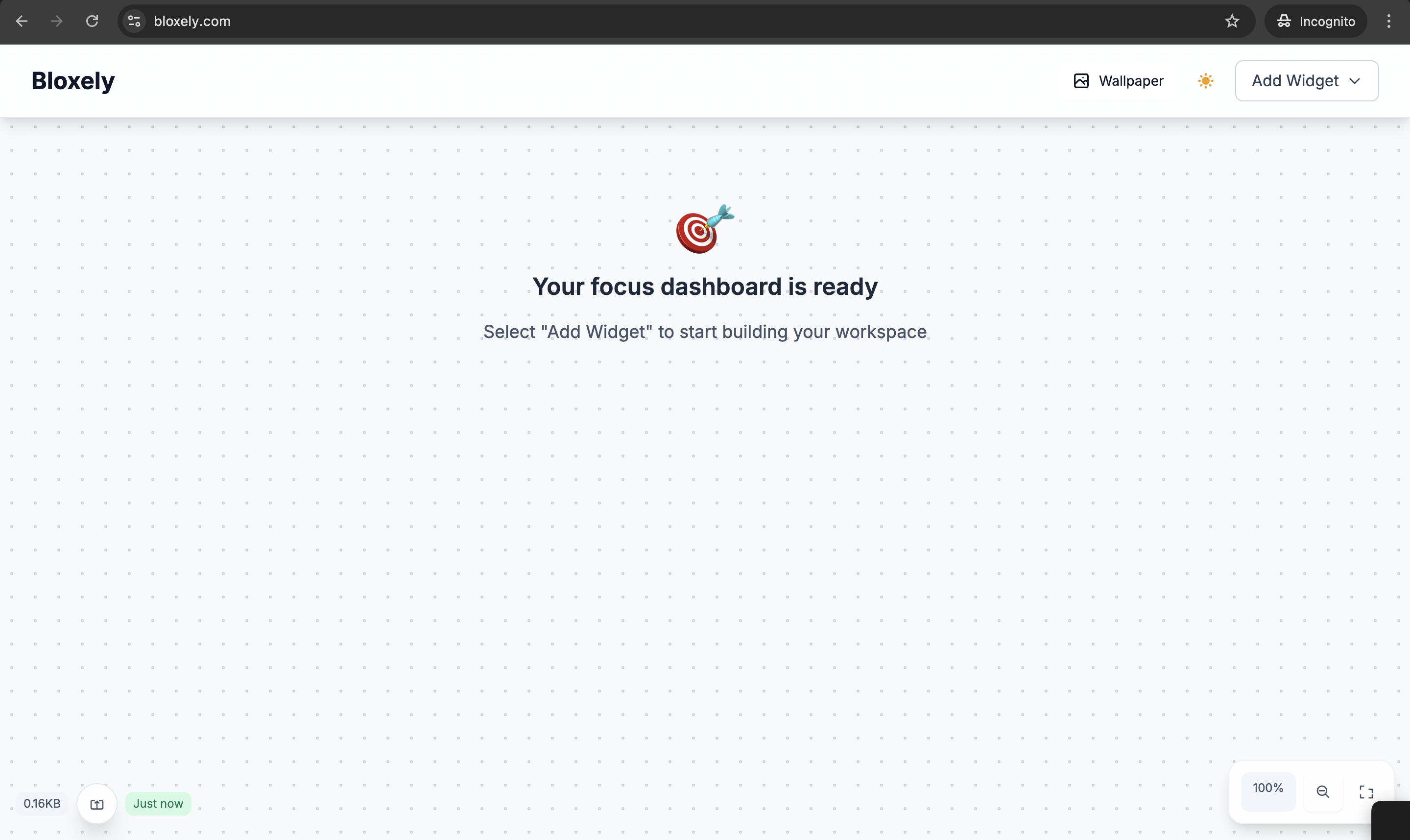
Bloxely - Home Page
-
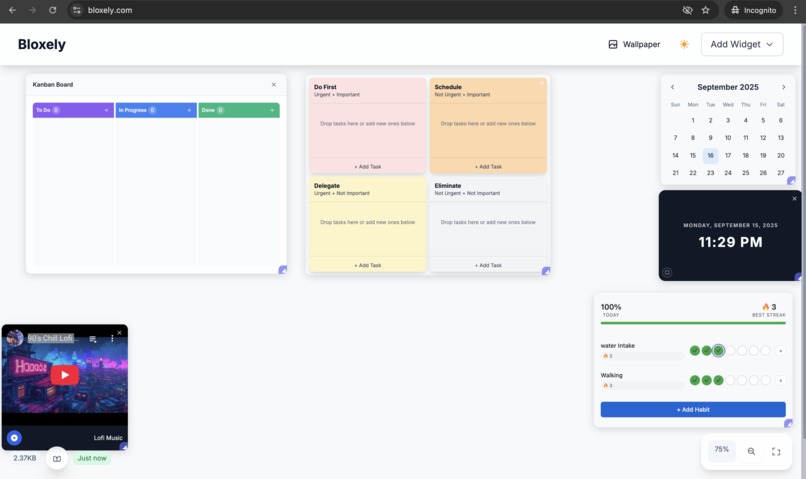
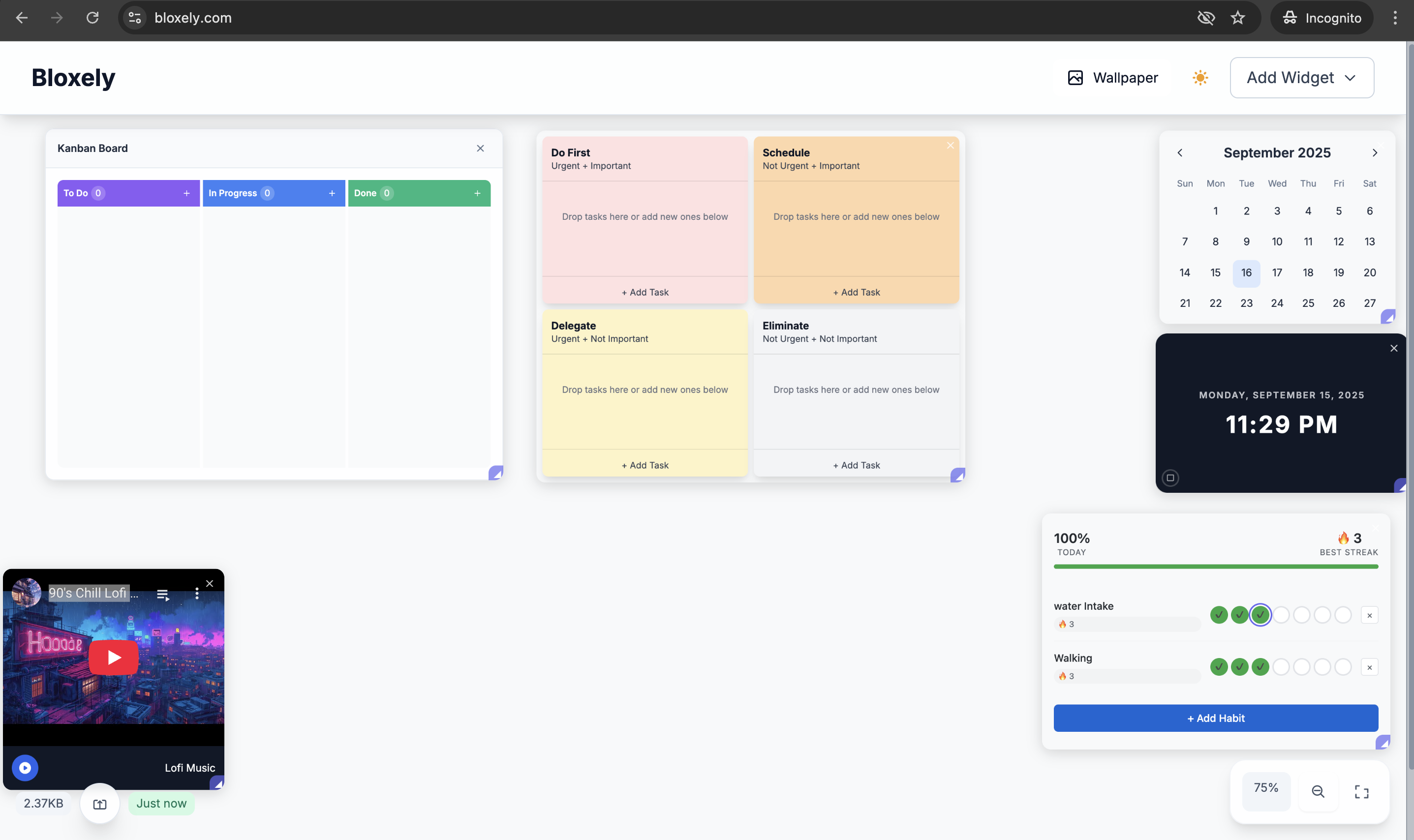
Bloxely Dashboard
Inspiration
I’ve always wanted a dashboard that doesn’t overwhelm me. Most tools either show me too much or too little. Big dashboards make me lose focus, and simple sticky notes don’t give me enough structure.
I kept asking myself:
“What if I only saw the top priorities for today, and nothing else?”
I tested this idea with a notebook. I wrote down just one or two things to focus on, and my productivity improved dramatically. Distractions faded away, and I could finally concentrate on what mattered. That small experiment became the seed for Bloxely.
What it does
Bloxely is a focus dashboard made of customizable building blocks. It’s not as complex as Notion, and not as limited as sticky notes. Instead, it allows you to build your own dashboard by adding only the blocks you need.
Key Features
- ✅ To-do list
- 📌 Kanban board
- 🔲 Priority matrix
- 🔄 Habit tracker
- 📝 Sticky notes & voice-supported notes
- 📅 Minimal calendar
- ⏱️ Pomodoro timer
- 🕒 Clock
- 🎵 Embedded YouTube player for lofi music
- 🖼️ Images, screenshots, and custom wallpapers
- 🔍 Zoom out for extra space
The blocks are resizable and moveable, so the workspace adapts to your style of working.
How we built it
Bloxely came to life step by step with Kiro as my development partner. I began by describing my vision in plain language: a dashboard made of blocks that users could resize, move, and customize. Kiro transformed that rough idea into a structured specification with requirements, design notes, and tasks. Suddenly, I had a clear roadmap instead of a blank page.
From there, I used vibe coding with Kiro to bring features to life one block at a time. I would explain what I needed, like a Pomodoro timer or a resizable Kanban board, and Kiro generated clean, working code that I could immediately test. When I ran into issues such as drag-and-drop logic, state management conflicts, or linting errors, Kiro fixed them in real time and explained why they happened. This let me stay focused on designing the user experience instead of getting stuck on bugs.
The most impressive moment was how quickly complex features came together. A drag-and-drop, resizable block system with local storage would normally take weeks. With Kiro, it became the backbone of Bloxely in just hours. Every iteration felt faster, cleaner, and more aligned with my vision because I wasn’t building alone—I was building with Kiro.
Challenges we ran into
One of the hardest parts was balancing simplicity with flexibility. If I added too many features, the dashboard felt cluttered. If I added too few, it felt limiting. I also had to work through drag-and-drop performance for resizable blocks and ensure the design was responsive across different screen sizes. Another challenge was debugging unexpected state management issues when multiple blocks interacted with one another.
Accomplishments that we are proud of
I am proud that Bloxely became a truly modular dashboard where users control exactly what they see. I managed to integrate multiple productivity tools into one lightweight workspace and design an experience that actually improves focus and clarity rather than adding noise. Along the way, I also learned how to use Kiro not just as a coding helper but as a true collaborator in building a product.
What we learned
I learned that productivity tools should always prioritize clarity over the number of features. Small design decisions, like limiting how many tasks appear at once, can make a big psychological difference. I also discovered that working alongside AI can accelerate not only coding but also idea validation and design thinking, making the entire process smoother and more creative.
What’s next for Bloxely
- Add collaboration features for teams (shared boards, real-time sync).
- Integrate AI Chat (AI Chat Box).
- Add live wallpapers.
- Provide a mobile app for on-the-go productivity.
- Create social media presence to promote Bloxely.
- Release community feature where user can share open block ideas so users can create and share their own blocks.
Built With
- kiro
- react
- typescript

Log in or sign up for Devpost to join the conversation.