Inspiration
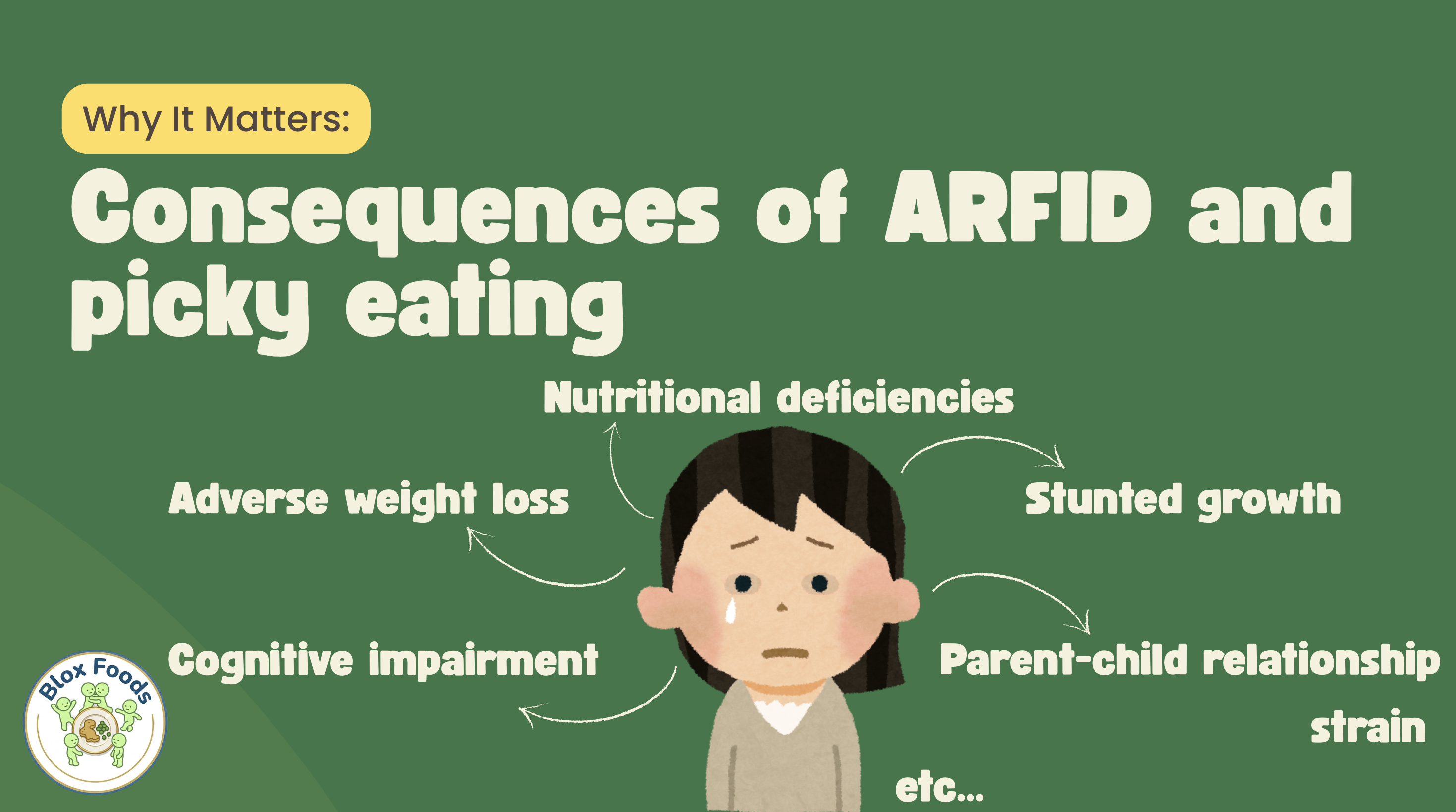
For most people, eating is associated with a pleasant experience. However, this is not the case with people living with eating disorders. Around 6 million children around the world are affected by Avoidant / Restrictive Food Intake Disorder (ARFID) (1). This is a condition where anorexia is driven by a lack of interest in eating or oversensitivity to certain textures. It has many consequences not only on the child, but also on his caregivers. Some that can be noted include nutritional deficiencies that lead to cognitive impairment, adverse weight loss, developmental impairment and psychosocial stress. Caregivers on their part can experience feelings of failure, increased mental burden and conflict, which can exacerbate over time. The same consequences can be observed in children who are picky eaters; although typically to a lesser extent. Picky eating affects up to 50% of preschool children and 27% of older children, which makes it a significant challenge families have to face all around the world (2). By building another context than fear around the concept of meal time, we thought that children might be more encouraged to eat and appreciate meal time. That’s what motivated us to create Blox Food, which creates a celebration ambiance when the child faces their food. By taking part in a simple game, children will have an easier time taking in their minds of textures, smells and anxiety related to the moment.
What it does
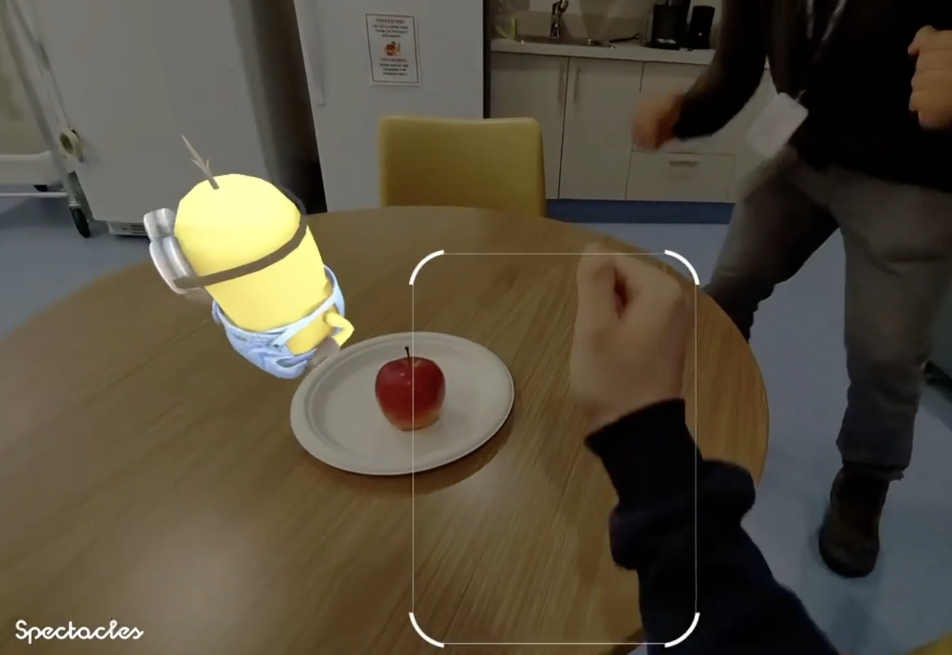
Blox Foods adds a playful aspect to meal time, encouraging children to eat by having small characters dancing all around their plate. When the glasses are turned on, party music starts and characters appear. We hope they will be able to turn this experience into a fun time they look forward to. This can serve as a tool to reduce the burden on the parent to make their child eat at every meal, reduce conflict and tension related to mealtimes and, thus, avoid psychosocial distress. In extreme cases, such as in ARFID, this tool can support the cognitive behavioural therapy (CBT) already in place.
How we built it
For conceptualization, we used the platform Miro to come up with ideas for healthcare improvements that could be made with the help of AR. We then chose the project that had the widest reach and impact and chose Lens Studio for prototyping. To confirm applicability, we used real-life food items to test recognition. We then created the effects around it thanks to 3D models imported from Sketchfab. Finally, the logo was designed using the platform Meshy.
Challenges we ran into
Finding a good balance between game complexity and children's understanding was a challenge we had to think about, since intellectual levels vary greatly at this stage of life (ex. number integration, text, etc.). While making the eating experience more enjoyable, the game did not have to take away completely the child’s attention, which would have the reverse effect of encouraging eating. Learning to use Lens Studio was particularly challenging, since most members of the team had no previous coding or UX design experience. We overcame challenges relating to food/plate recognition and audio integration, among others.
Accomplishments that we're proud of
Even with absolutely no experience in 3D modelling software, we were able to use the tools at our disposal and come up with a fun and creative way to tackle a common and significant challenge for parents worldwide. We are proud that we pushed all the way through to the end.
What we learned
For our very first hackathon, we learned a lot about the creative process behind any worthwhile innovation. From proper brainstorming on Miro to seemingly endless revisions, we got to appreciate how complex and long it may take to create something truly unique, yet feasible.
What's next for Blox Foods
Since the game only creates a good ambiance around mealtimes for now, it could eventually become a real game to further engage children. This could be achieved by integrating a point system based on a child’s progress through their meal. Nutritional education could also be integrated into the game by attributing more value to foods recommended by nutritional guidelines (such as fruits/vegetables). Furthermore, the food recognition system could be widened to include more items, as well as full meals and diverse cultural foods. These steps could all be guided by nutritionists to ensure validity. At last, the system could be made even more precise by detecting the behaviour of eating instead of just the picking up of food.
References
- Johansson M, Hermansson J, Linnsand P, Gillberg C, Nygren G. Avoidant/restrictive food intake disorder, other eating difficulties and compromised growth in 72 children: background and associated factors. Front Child Adolesc Psychiatry. 2023 Jun 20;2:1179775. doi:10.3389/frcha.2023.1179775 PubMed PMID: 39816854; PubMed Central PMCID: PMC11732122.
- Norris ML, Spettigue WJ, Katzman DK. Update on eating disorders: current perspectives on avoidant/restrictive food intake disorder in children and youth. Neuropsychiatr Dis Treat. 2016 Jan 19;12:213–8. doi:10.2147/NDT.S82538 PubMed PMID: 26855577; PubMed Central PMCID: PMC4725687.
Built With
- lens
- sketchfab


Log in or sign up for Devpost to join the conversation.