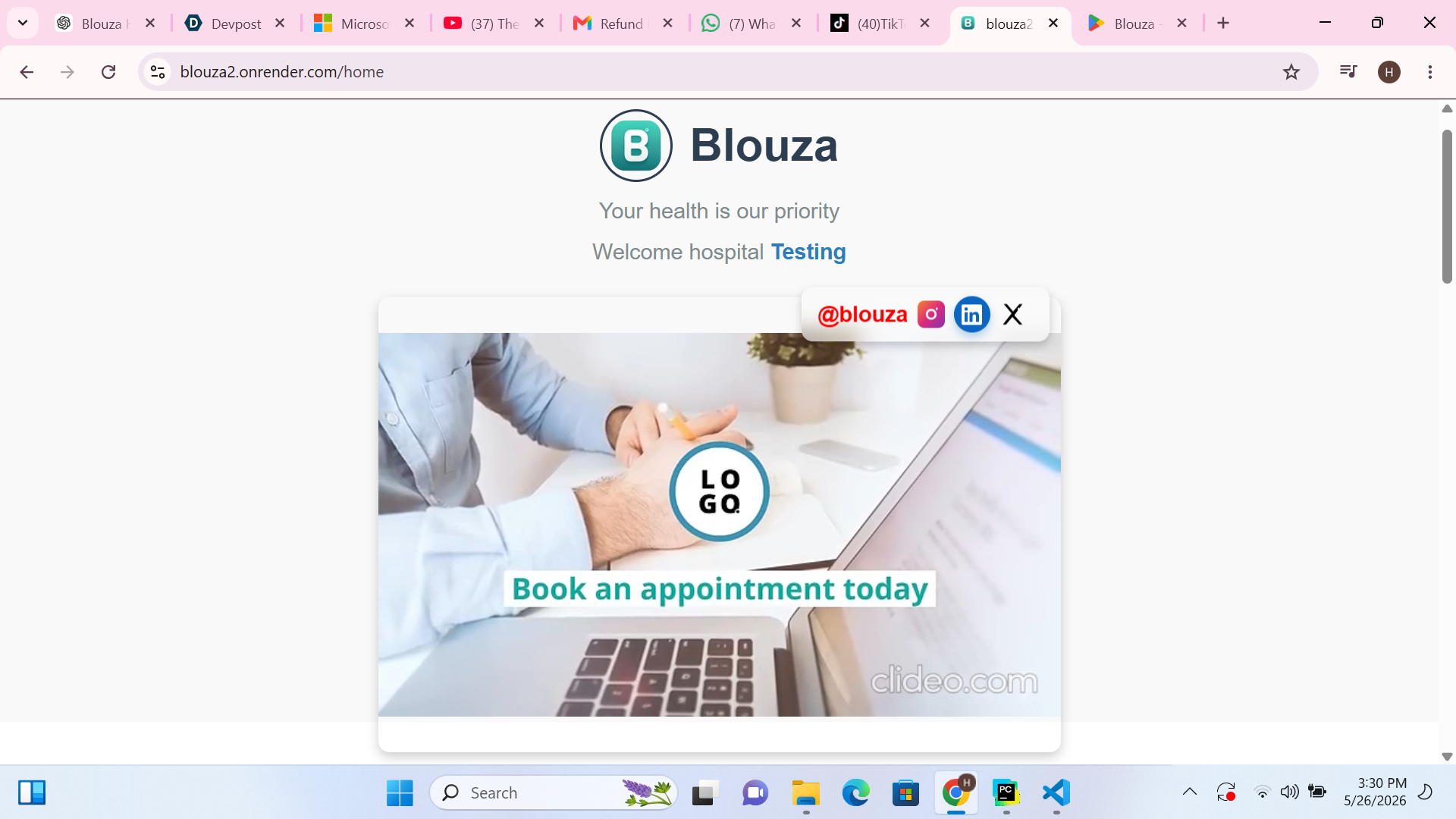
Blouza was inspired by a simple question: What if accessing healthcare could be easier for patients while the same healthcare data could help hospitals make smarter decisions?
In many healthcare journeys, patients may need to travel to a hospital simply to begin a consultation, wait for appointments, and navigate different parts of the healthcare system separately. At the same time, hospitals generate valuable information every day through patient visits, symptoms, diagnoses, appointments, laboratory results, and treatment records.
I wanted to bring these pieces together into one digital platform that could improve the patient experience while helping healthcare providers make better use of their data.
This idea led me to create Blouza, a digital healthcare platform that connects patients and hospitals through appointment booking, telemedicine, digital patient records, hospital communication, laboratory information, and AI-powered healthcare analytics.
The Project
Blouza is designed to connect the patient side of healthcare with the hospital side.
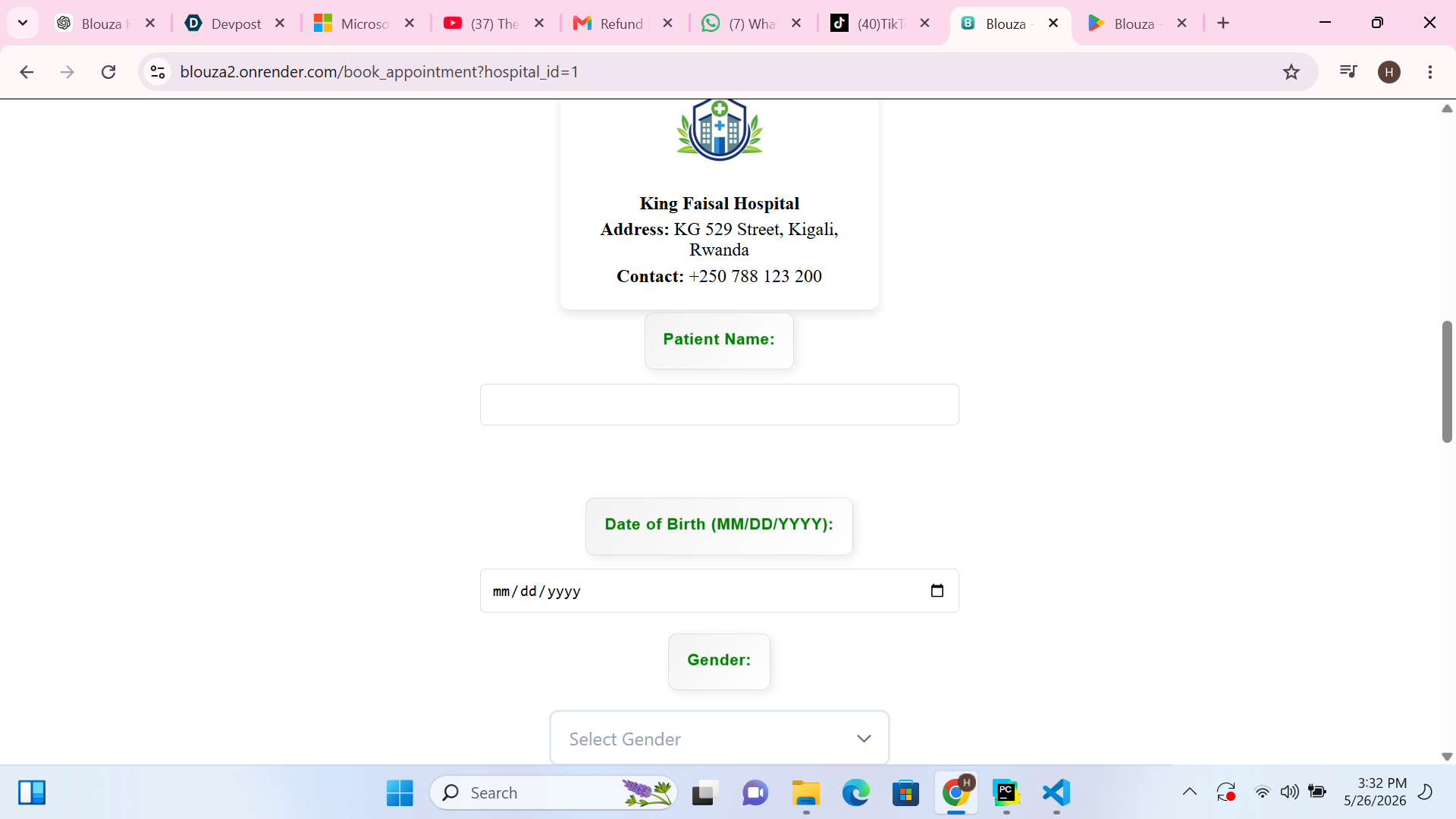
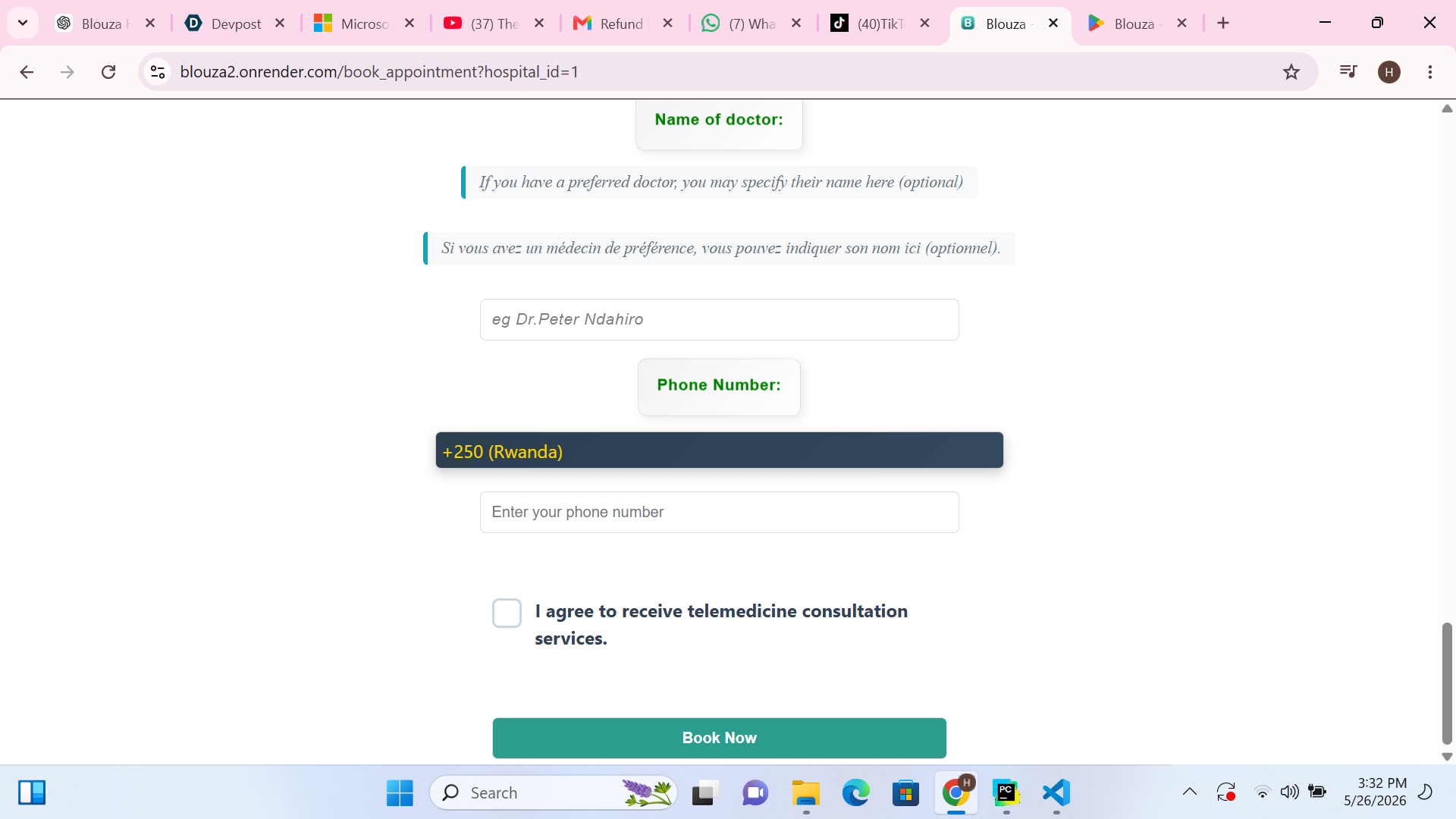
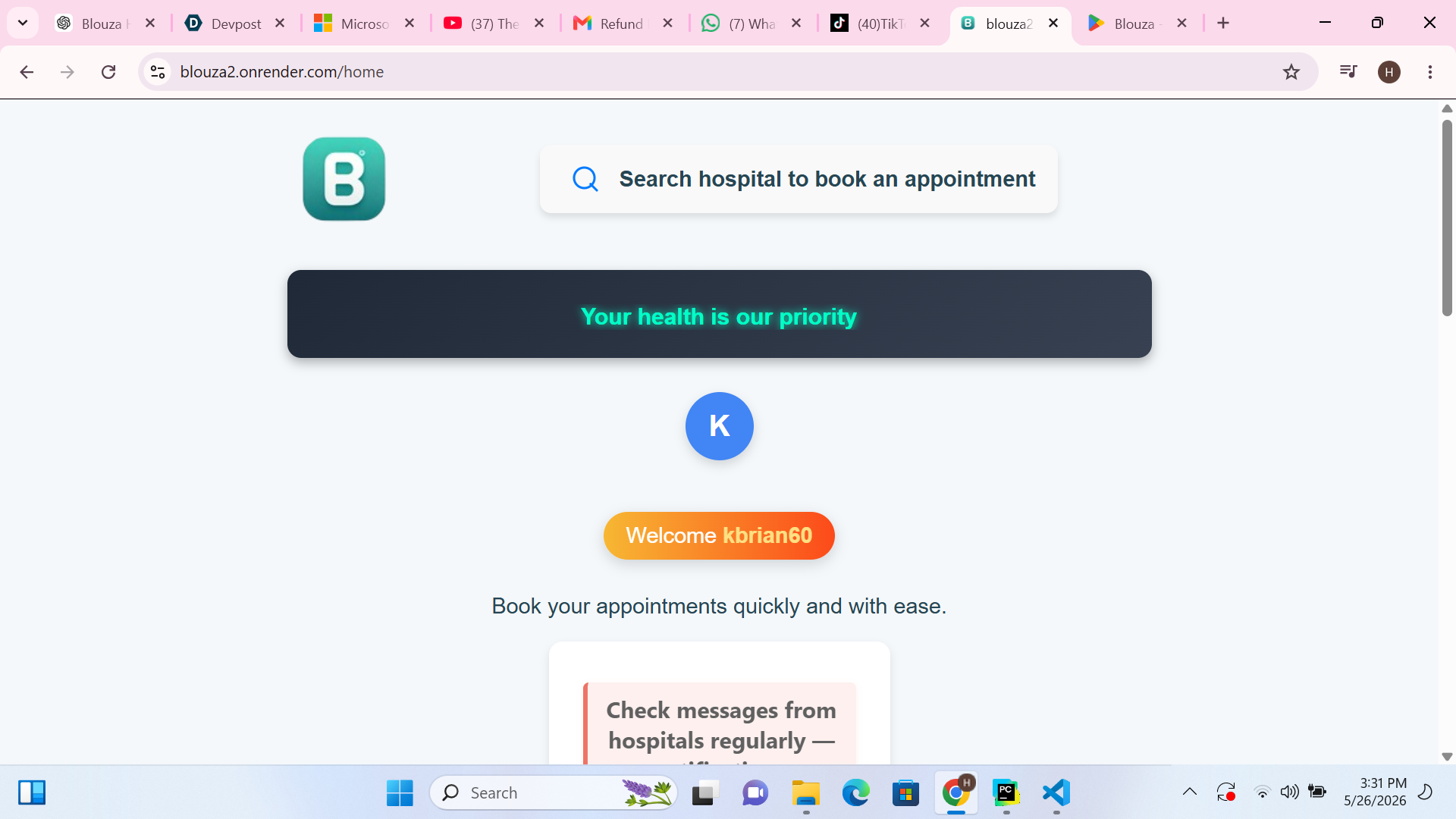
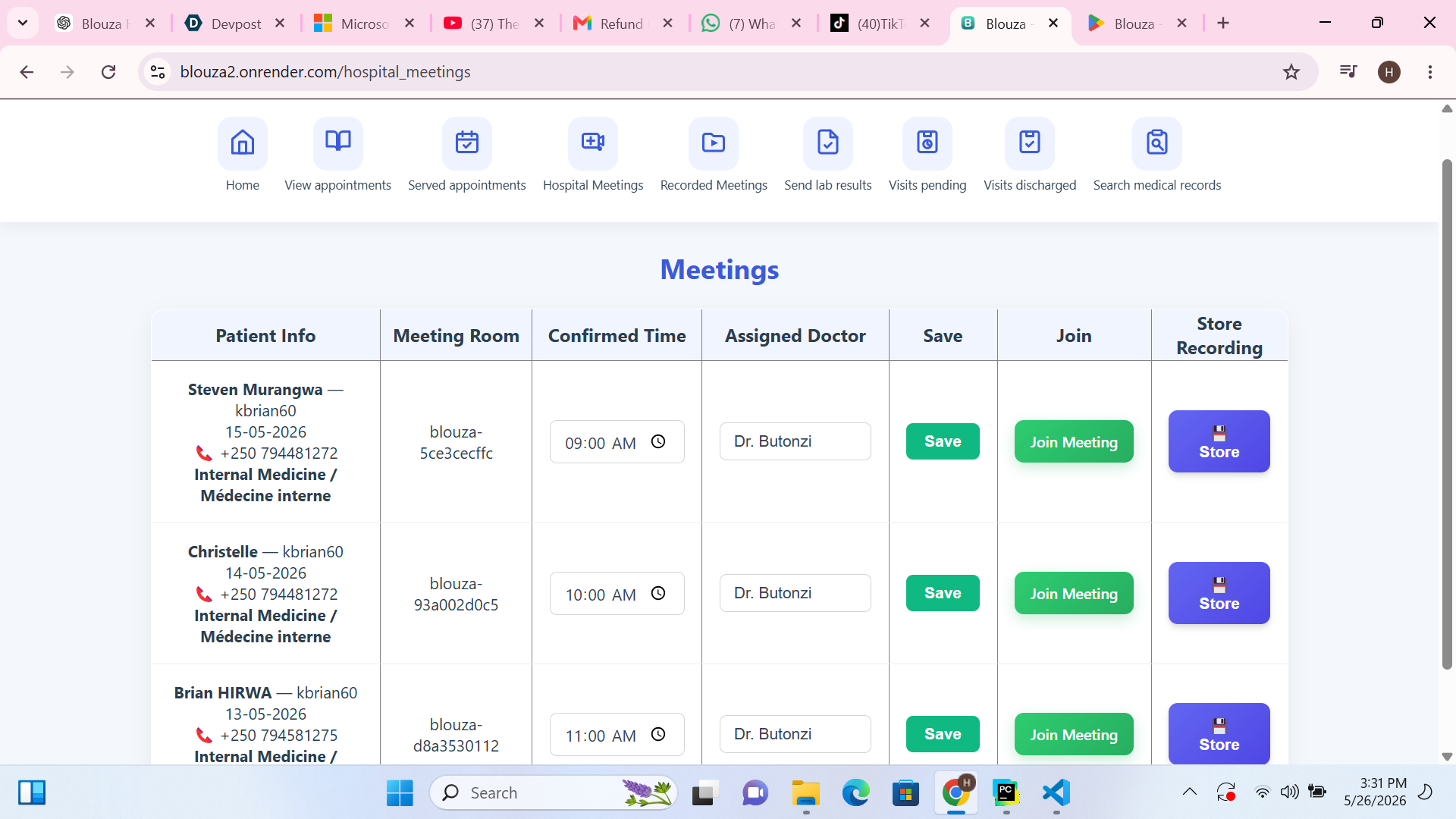
Patients can search for hospitals, provide information about their symptoms, book appointments, and access healthcare services digitally. The platform also incorporates telemedicine, allowing healthcare to move beyond the physical hospital by enabling patients and healthcare providers to interact remotely when an in-person visit is not necessary.
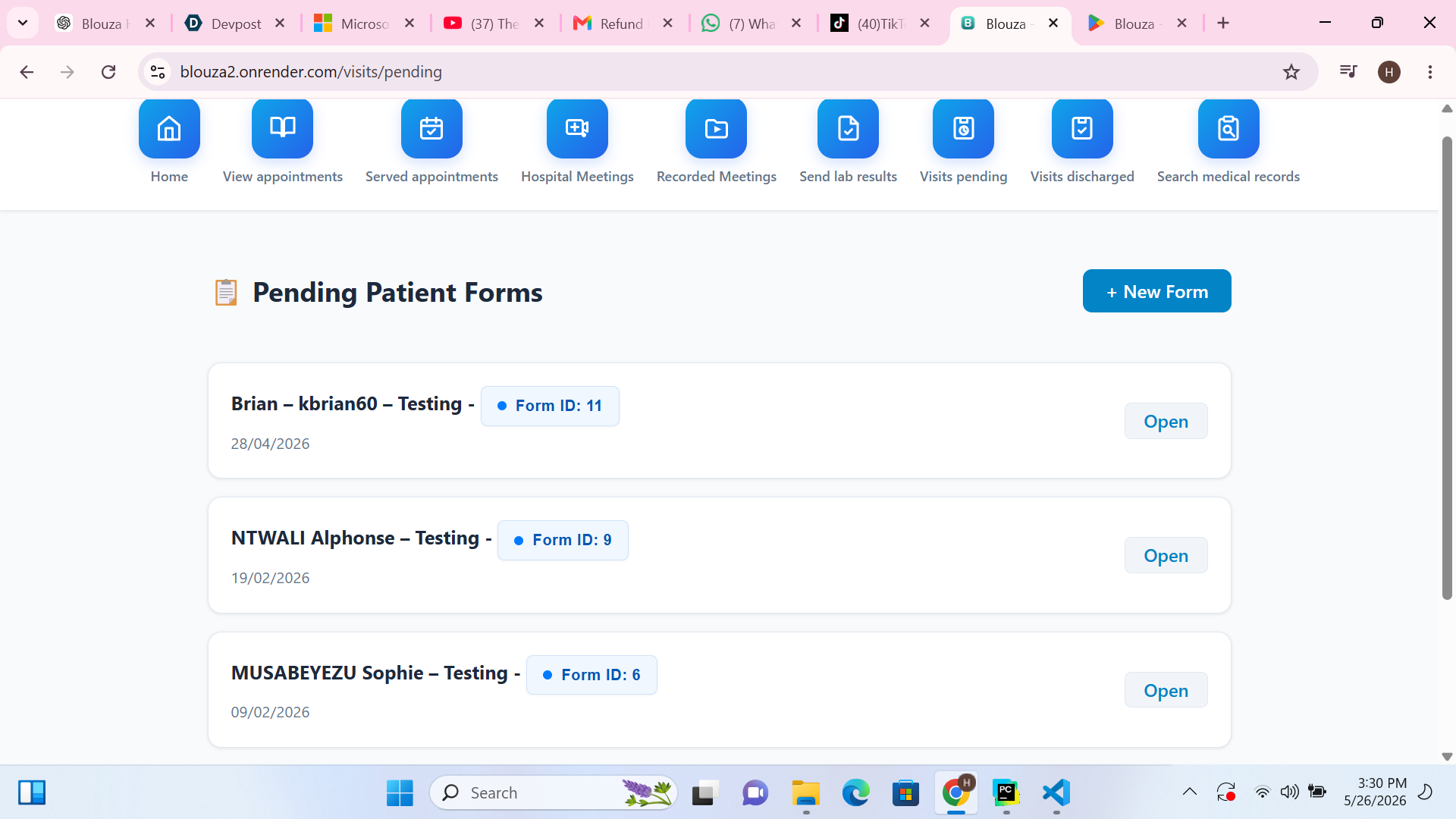
The platform is designed to support the patient's journey from accessing care to maintaining their healthcare information. Hospitals can manage appointments, patient information, medical records, communication, and laboratory results in one digital environment.
The second major part of Blouza is its AI-powered healthcare analytics system.
Hospital administrators can select a period and analyze discharged patient records. Blouza processes information such as diagnoses, symptoms, age, gender, departments, doctors, insurance information, and payments.
The system calculates statistics such as:
- Most common diseases
- Most common symptoms
- Patient demographics
- Department workload
- Doctor workload
- Average patient age
- Average payment
- Hospital revenue
- Disease distribution by gender
These statistics are then passed to an AI model, which produces a structured analysis covering disease trends, symptom patterns, operational insights, healthcare risks, preventive recommendations, and patient-care improvements.
The goal is to transform:
$$ \text{Healthcare Data} \rightarrow \text{Analytics} \rightarrow \text{AI Insights} \rightarrow \text{Better Decisions} $$
Together, these components create a broader healthcare ecosystem:
Patients → Digital Access to Care → Hospitals → Healthcare Data → AI Insights → Better Healthcare Decisions
This is only the beginning of the vision for Blouza.
The next stage is to introduce historical time-series analysis and predictive models that can identify unusual increases in diseases, detect emerging patterns, forecast patient demand, and provide early warning signals to healthcare providers.
Rather than claiming that AI can independently diagnose an outbreak, the objective is to provide healthcare professionals with early signals that deserve investigation and action.
How I Built It
I built Blouza as a web-based healthcare platform using Python and Flask for the backend, together with HTML, CSS, and JavaScript for the frontend.
The application uses a relational database to manage healthcare information including users, hospitals, appointments, patient records, diagnoses, messages, and laboratory results.
For the analytics system, patient records are collected for a selected period and transformed into structured data using Python and Pandas.
For example, the application can calculate the proportion of patients associated with different diagnoses:
$$ \text{Disease Percentage} = \frac{\text{Number of Patients with Disease}} {\text{Total Patients}} \times 100 $$
The resulting statistics are then provided to an AI model through an API. The AI analyzes the information and generates a human-readable report for hospital staff.
This approach allows the hospital to move from raw database records to a summarized view of its healthcare activity.
What I Learned
Building Blouza taught me that developing healthcare technology requires much more than simply creating an application that works.
I learned how to design databases for complex healthcare workflows, develop authentication and access control, process structured data, integrate APIs, deploy web applications, and integrate AI into a real software system.
Building the telemedicine and digital healthcare components also taught me that technology should not simply digitize existing processes. It should make healthcare more accessible, connected, and efficient.
I also learned an important lesson about AI: a convincing AI response does not automatically mean that the underlying analysis is reliable.
For healthcare applications, the quality of the underlying data and statistical analysis is extremely important. Instead of simply asking an AI model to "analyze patients," I first calculate structured statistics from the data and then use AI to interpret those results.
This creates a clearer separation between:
Data → Statistical analysis → AI interpretation → Human decision
I also learned that AI should support healthcare professionals rather than replace them. The system is intended to highlight patterns and provide decision-support information, while medical professionals remain responsible for clinical decisions.
Challenges
One of the biggest challenges was bringing different healthcare workflows into a single platform.
Telemedicine, patient appointments, medical records, hospital operations, communication, laboratory information, and analytics all require different types of data and relationships. Designing the system so that these components could work together was challenging.
Another challenge was working with sensitive healthcare information. A healthcare platform must take privacy, authentication, authorization, and secure handling of information seriously.
Integrating AI presented another challenge. It was important to avoid making the AI appear more capable than it actually is. The current system provides descriptive healthcare analytics and AI-generated insights, while predictive disease surveillance is part of the next stage of development.
This distinction is especially important in healthcare because an AI-generated suggestion should not be presented as a confirmed medical diagnosis or outbreak declaration.
Future Vision
My long-term vision for Blouza is to evolve from a digital healthcare platform into a healthcare intelligence network.
With enough historical data, the system could analyze disease patterns over time and establish normal baselines for participating hospitals.
For example:
$$ \text{Historical Data} \rightarrow \text{Trend Analysis} \rightarrow \text{Anomaly Detection} \rightarrow \text{Forecasting} \rightarrow \text{Early Warning} $$
If a hospital normally records a certain number of cases of a disease but suddenly experiences an unusual increase, Blouza could flag that change for investigation.
With multiple participating hospitals, aggregated and appropriately protected data could potentially reveal broader regional patterns that may not be visible from one hospital alone.
The ultimate goal is to help hospitals become more proactive rather than reactive—using healthcare data to identify trends earlier, prepare resources more effectively, and support better decision-making.
Blouza is currently available to download on Google play store for android users.
Blouza started as an idea for making healthcare access easier through digital appointments and telemedicine. It has evolved into a broader vision: using technology and AI to make healthcare more accessible, connected, intelligent, and proactive.

Log in or sign up for Devpost to join the conversation.