Blossom 🌸 – A Brainstorming Tool for the Mind and Team
Inspiration
We began our hackathon journey as many do—overflowing with ideas, yet struggling to agree on a single direction. Our whiteboard quickly became cluttered with concepts, none of which felt quite right. We weren’t lacking creativity; we were lacking alignment. That’s when it clicked: what if we built a tool to help people like us figure out what actually matters to them?
Originally, we had dreamed up an experience map for therapists and patients to trace life events and traits—a powerful idea, but too ambitious for the scope of a hackathon. As we circled around ideas (sometimes literally rehashing the same ones), we realized that our inability to commit to one idea was the problem we wanted to solve. And so, Blossom was born.
What it does
Blossom is an interactive brainstorming assistant built for XR. It helps individuals or teams map their values and test new ideas against them—visually, physically, and intuitively.
Here’s how it works:
- Values are abstract or concrete concepts (e.g., "edible", "fun", "small", "red") that you care about. These are added to the virtual "storm" as evidence orbs.
- Hypotheses are candidate ideas (e.g., "apple", "cucumber") represented as hypothesis orbs.
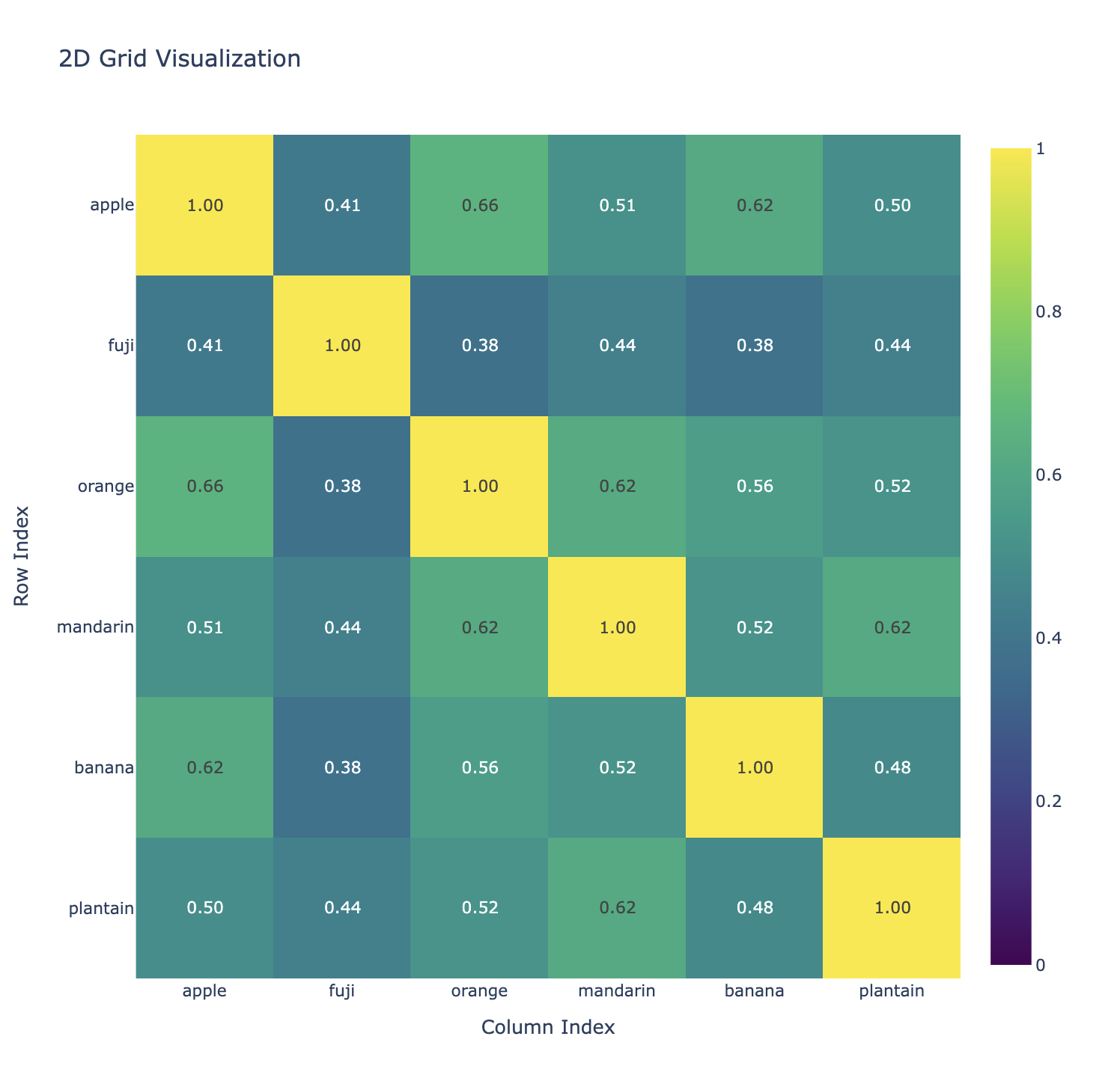
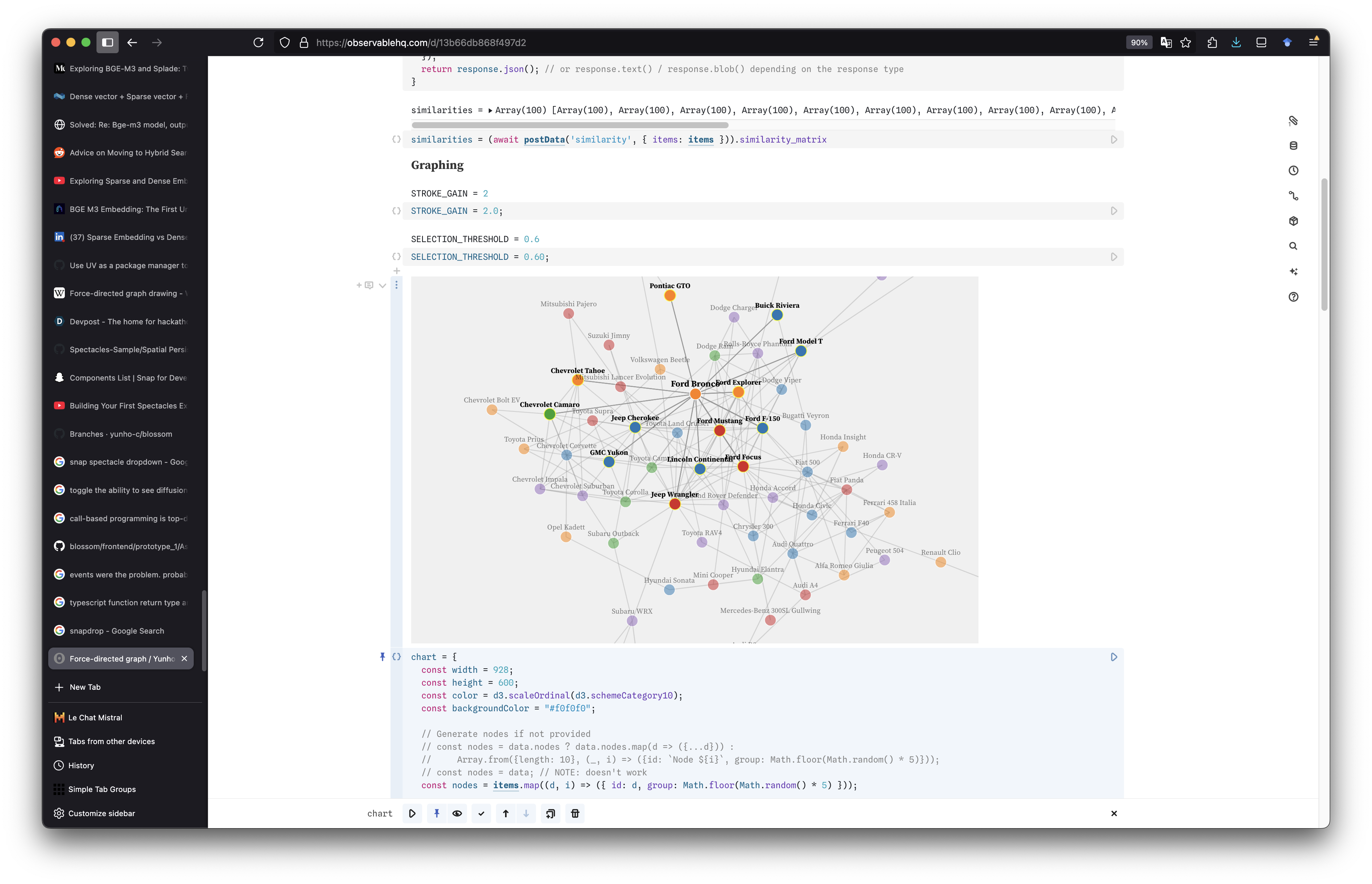
- When thrown into the storm, these orbs interact based on their semantic similarity—similar ideas attract, while unrelated ones repel.
- If a hypothesis aligns strongly with your existing values, it illuminates—literally glowing brighter—while weaker ideas remain dim.
This playful yet powerful interface transforms abstract thinking into a visual, tactile experience. It's brainstorming that feels more like discovery.
How we built it
Tech stack:
- XR & UI: Built in Snapchat’s Lens Studio, using their demos to implement grabbable objects, particle effects, and voice input.
- Server & Embeddings: A FastAPI server with Python, powered by the BGE-M3 language embedding model to map all inputs into latent space.
- Similarity & Physics:
- Cosine similarity scores the relationships between values and hypotheses.
- These scores translate into forces in a custom physics engine—stronger matches pull closer, weaker ones push away.
- The system runs interactively within Lens Studio’s physics simulation.
Challenges we ran into
We dove headfirst into unfamiliar territory—none of us had experience with Lens Studio, TypeScript, or Snap Spectacles development. Debugging took hours, sometimes because of simple syntax errors, sometimes due to unpredictable deployment issues on hardware.
Integrating everything—from embeddings to physics to real-time UI—meant constantly shifting between different tech domains, and it tested our ability to adapt fast.
Accomplishments we’re proud of
- Built a full XR experience with zero prior Lens Studio experience.
- Created a custom physics engine based on language embeddings.
- Developed an intuitive, voice-enabled UI with dynamic idea illumination based on alignment.
What we learned
- How to develop in Lens Studio from scratch
- How to embed abstract ideas in vector space using BGE
- How to translate semantic similarity into physics-based visual interactions
- How to rapidly prototype an immersive experience that bridges creativity and structure
What’s next for Blossom
- Enhanced hypothesis generation: Recommend ideas based on past value sets
- Collaborative multi-user mode: Brainstorm together, live
- Voice-only interaction: For seamless, hands-free ideation
- User testing: To refine the experience and explore real-world use cases (classrooms, design sprints, therapy sessions, etc.)
Blossom turns brainstorming into a game of exploration. It doesn’t generate ideas for you—it helps you uncover the best ones already inside your head.
Let your thoughts take shape. Let your ideas blossom 🌸
Built With
- lens
- python
- typescript
- uv


Log in or sign up for Devpost to join the conversation.