-
-
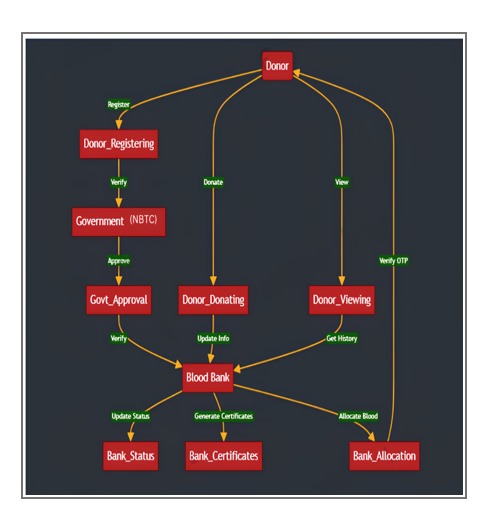
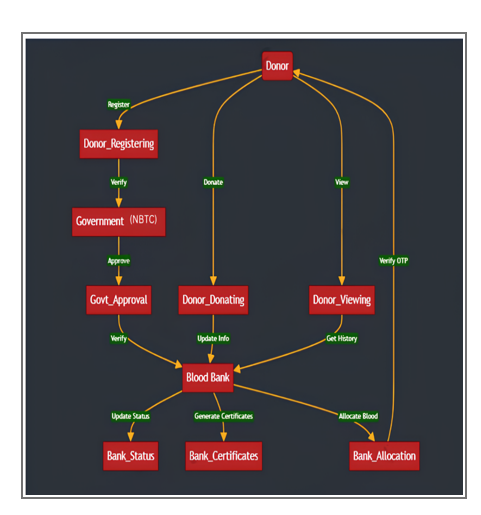
overview of blooddrop architecture
Inspiration :
Annually 15 million people in india are losing their lives just because of no proper inventory management system in blood management system .Out of these 15 million people there are three more friends of mine who almost lost their lives because of no proper communication in blood management system.Then we realised no one care untill it is our turn , so we decided to take step in it and then evolved as Blooddrop
What it does
Blood Drop is a digital platform that transforms blood transfusion management by ensuring efficient, transparent, and equitable distribution of blood. It is especially vital for chronic transfusion-dependent conditions like thalassemia, enabling timely access, better tracking, and prioritized care. The system operates through the seamless integration of the three tiers, each serving a specific role:
- Government Side: o Blood banks register with the government tier, which collects and stores comprehensive data about each blood bank’s inventory and location. o When a donor or healthcare facility requests blood, the government tier’s request management system evaluates available blood units across all registered blood banks. o An allocation algorithm determines the best match for the request, considering factors such as blood type compatibility, inventory levels, and urgency. o Notifications are sent to relevant blood banks and donors to confirm the allocation and update them on the status of their request.
- Donor Side: o Donors create accounts and provide personal and medical information, allowing them to manage their donation history and preferences. o They can schedule appointments to donate blood at their preferred time and location, increasing convenience and participation. o Donors needing blood can request units through the system, specifying their requirements and receiving notifications about their request status.
- Blood Bank Side: o Blood banks process allocation requests from the government tier and update their inventory accordingly, maintaining accurate records. The invention Blood banks receive donated blood, which is registered and entered into the inventory management system. • The system tracks the expiration dates of blood units to ensure timely usage and avoid wastage. thus offers a comprehensive solution to the challenges of blood donation and management , enhancing the efficiency and effectiveness of blood supply systems.
Blood Transfusion Management Highlights: Efficient Blood Allocation System: Blood Drop intelligently matches donors with recipients based on blood type and location. Prioritizes based on urgency, expiry date (since blood expires in ~35 days), and availability.
Real-Time Availability: Provides real-time information on blood stock in blood banks. Helps hospitals and patients reduce search time during emergencies. Donation Tracking and Reminders:
Maintains individual blood accounts for donors. Sends alerts for next eligible donation date, improving donation frequency. Minimizing Wastage: Rotates and allocates soon-to-expire units first. Encourages blood circulation across multiple banks to ensure no unit goes unused.
Transparency and Trust: Tracks every unit from donor to recipient. Builds a traceable system for regulatory and safety checks.
Thalassemia-Specific Highlights:
Regular Blood Needs Tracking: Thalassemia patients often need transfusions every 2–4 weeks. The system can create recurring transfusion schedules and alerts for patients. Priority Access for Chronic Conditions: Recognizes chronic patients like those with thalassemia for prioritized allocation. Avoids transfusion delays which can lead to serious complications.
Cross-Matching History: Stores transfusion history to prevent alloimmunization (reaction to foreign antigens). Tracks specific donor compatibility for repeated use. Improved Care Coordination: Bridges gaps between patients, blood banks, and government systems. Ensures consistent and timely access to safe blood.
Awareness and Inclusion: Educates public about thalassemia and encourages targeted donations. Could support campaigns encouraging regular donations for such patients.
How we built it
- Three-Tier Architecture
We designed Blood Drop using a modular, three-tier architecture to manage the flow between users, logic, and databases:
a. Presentation Layer (Frontend)
Tools/Tech: HTML, CSS, JavaScript, React.js (or Angular) Functionality: Interfaces for donors, blood banks, and government administrators. Real-time request form, blood donation history dashboard, and alerts for eligibility/reminders. Responsive and user-friendly design for mobile and desktop user b. Application Layer (Backend/Logic)
Tools/Tech: Node.js, Express.js Functionality:
- Implements the core logic: donor eligibility checks, blood expiry tracking, request prioritization, and inter-bank blood circulation.
- Authentication and authorization for different roles (donor, admin, bank personnel).
- Notification services for reminders and approvals (via email/SMS).
c. Data Layer (Database)
Tools/Tech: MongoDB Functionality:
- Stores donor profiles, blood inventory (type, quantity, expiry date), transfusion records, and request logs.
- Ensures consistency, security, and easy querying for fast response times.
- Smart Allocation Algorithm
Designed an algorithm that:
- Prioritizes blood units closest to expiration.
- Matches requests with nearest blood banks having compatible stock.
- Supports auto-forwarding of requests across nearby blood banks if stock is unavailable.
- User Roles and Authentication
Donor: Can view donation history, register donations, and request blood in emergencies. Blood Bank: Updates blood stock, verifies donor eligibility, approves/denies requests. Government/Admin: Monitors data across all banks, handles emergency dispatches, generates analytics.
- Security and Compliance
- Used JWT (JSON Web Tokens) for secure login.
- Encrypted sensitive health data to comply with medical data regulations.
- Implemented validation to prevent misuse or fraud in blood requests.
- Deployment
Cloud Hosting: Deployed the backend and database on cloud services like Render, Heroku, or AWS. CI/CD Pipelines: Used GitHub for version control, integrated with CI tools for automatic testing and deployment.
- Additional Features
Reminder System: Automated SMS/email reminders for donors after 3 months. Analytics Dashboard: For blood banks and administrators to monitor blood usage, demand trends, and donations. Support for Thalassemia Patients: Created persistent profiles for frequent transfusion needs with pre-scheduled alerts.
Challenges we ran into
During the development of Blood Drop, we encountered several challenges that tested both our technical and design decisions. One major issue was ensuring real-time synchronization of blood inventory across multiple blood banks, which led to race conditions and data inconsistencies—this was addressed by implementing timestamp-based updates and real-time syncing using polling/WebSockets. Managing blood expiry was another complexity, as we had to accurately track and prioritize near-expiry units to minimize wastage. Designing a smart blood allocation algorithm that could handle edge cases like thalassemia patients’ recurring needs while ensuring fairness across all users required multiple iterations. We also faced hurdles with role-based authentication and maintaining secure data handling, especially since the system involves sensitive health data. Lastly, creating an intuitive interface for users with varying digital literacy levels, especially in rural areas, pushed us to simplify workflows and make the platform more accessible.
Accomplishments that we're proud of
we're proud of having a patent on blooddrop project by central government of india
What we learned
Through building Blood Drop, we learned how technology can solve real-world healthcare problems when thoughtfully designed. We gained hands-on experience in system design, role-based access control, real-time data handling, and healthcare data sensitivity. We also understood the critical importance of user experience, especially for donors and patients in rural or low-digital-literacy areas. Most importantly, we saw the value of proactive blood management in saving lives, especially for conditions like thalassemia that require frequent transfusions
What's next for BLooodDrop
Moving forward, we plan to integrate AI-powered blood demand forecasting, support for multilingual interfaces to reach more users, and government API integration for real-time PAN/Aadhaar-based verification. We also aim to collaborate with hospitals and NGOs to launch pilot programs and collect real usage feedback. Eventually, we envision scaling Blood Drop into a nationwide platform that connects donors, recipients, blood banks, and governments into one seamless, life-saving ecosystem.
Built With
- amazon-web-services
- bcrypt
- bootstrap
- css
- css3
- express.js
- firebase
- git
- github
- html
- https
- javascript
- jwt
- maps
- monogdb
- node.js
- react.js
- vercel

Log in or sign up for Devpost to join the conversation.