-
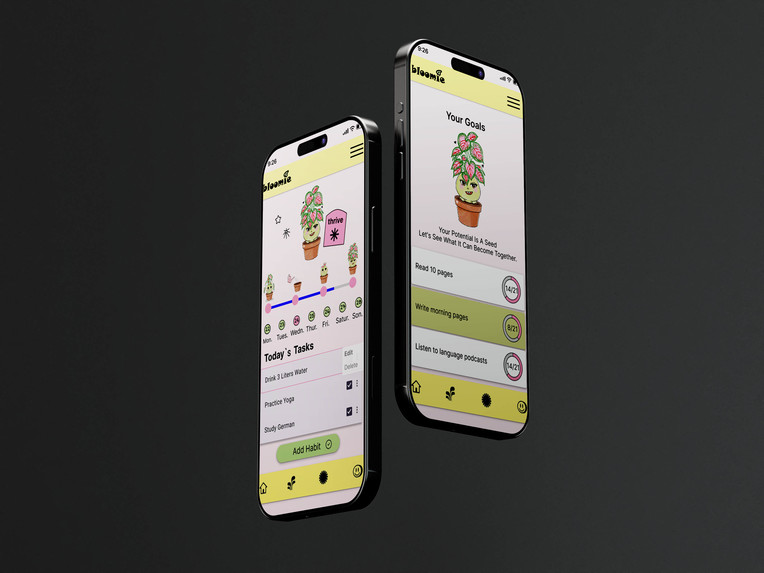
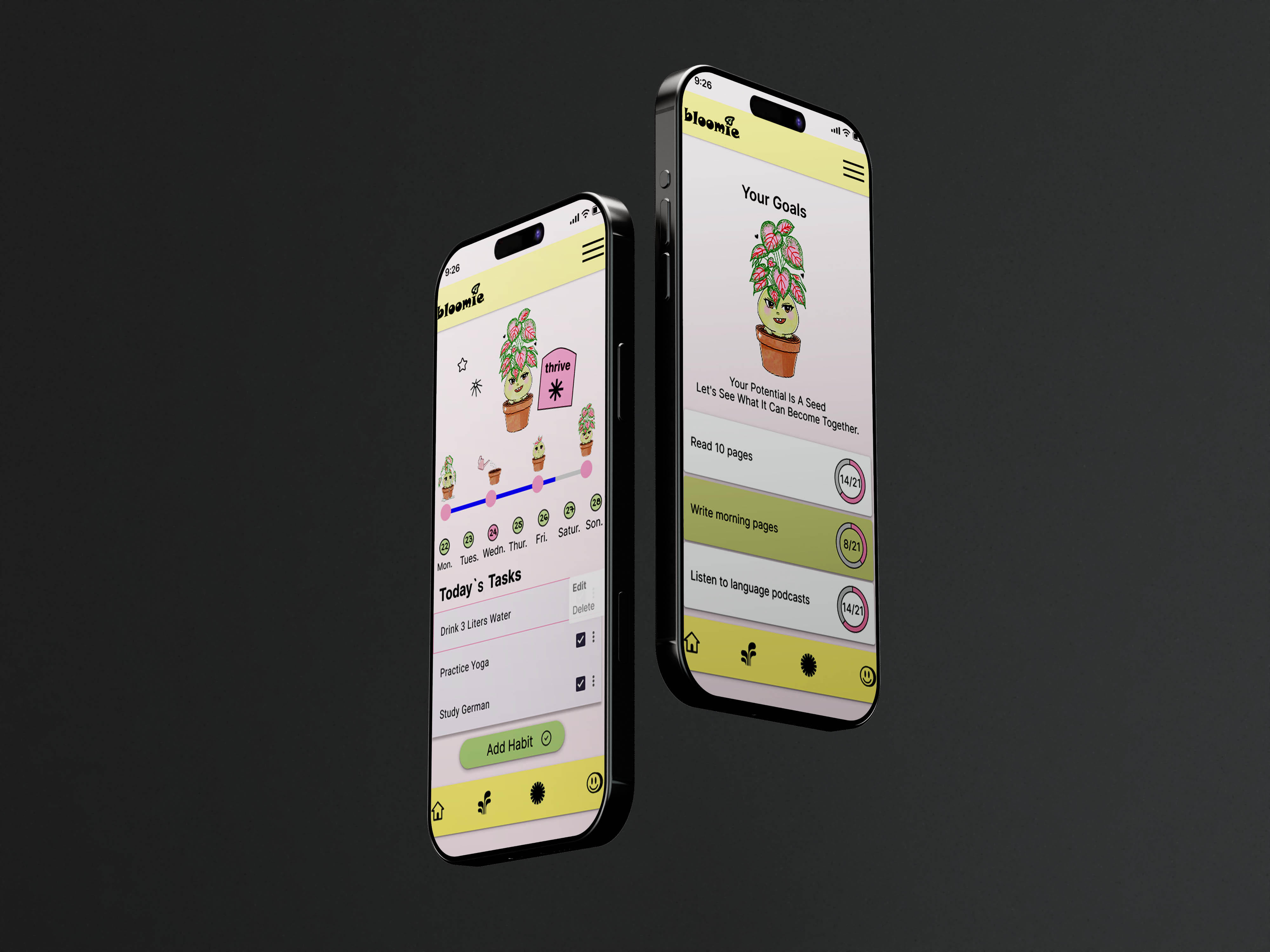
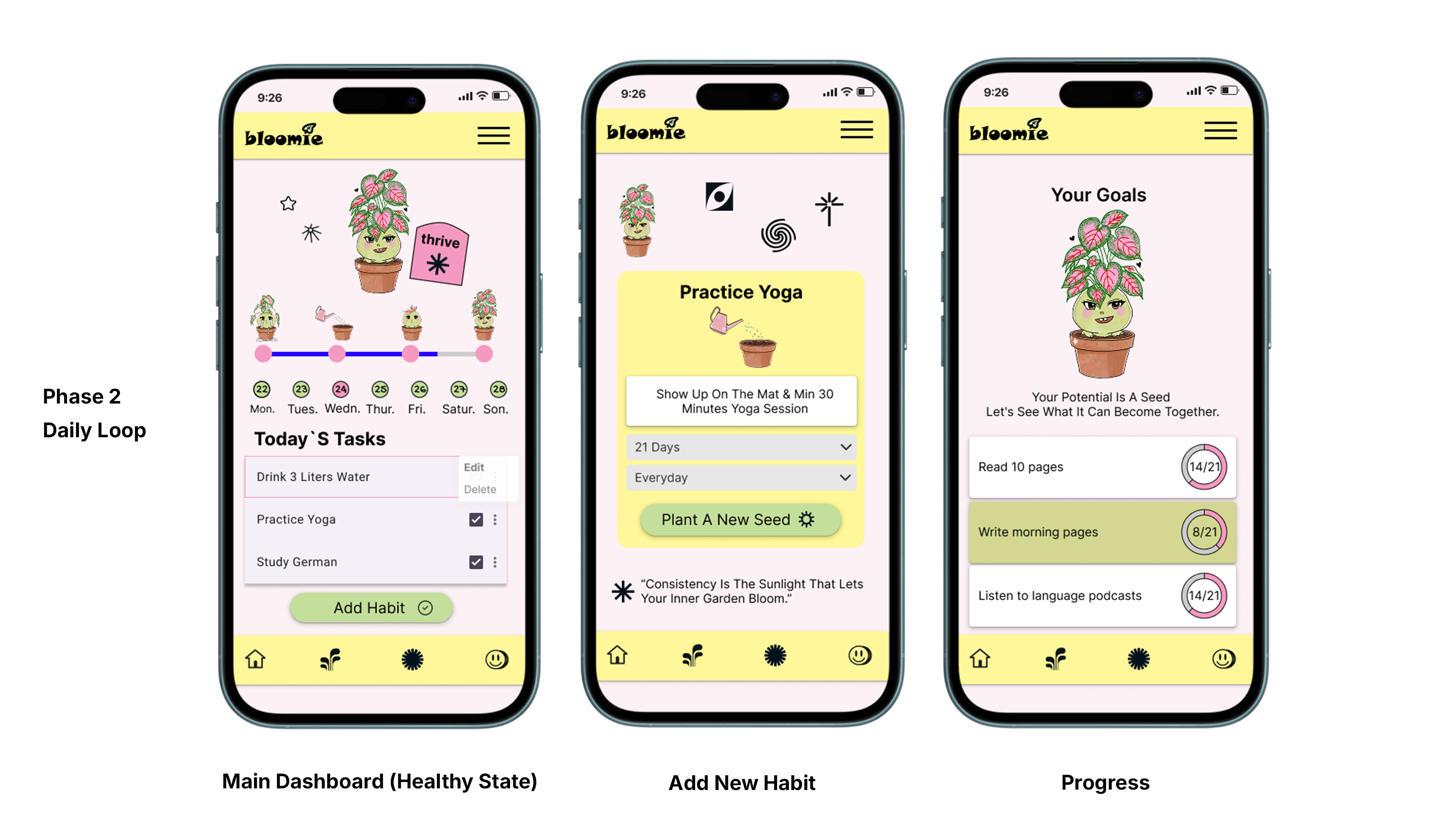
Soft visual feedback, no pressure metrics. Your progress lives in your Bloomie's evolution, not a streak counter.
-
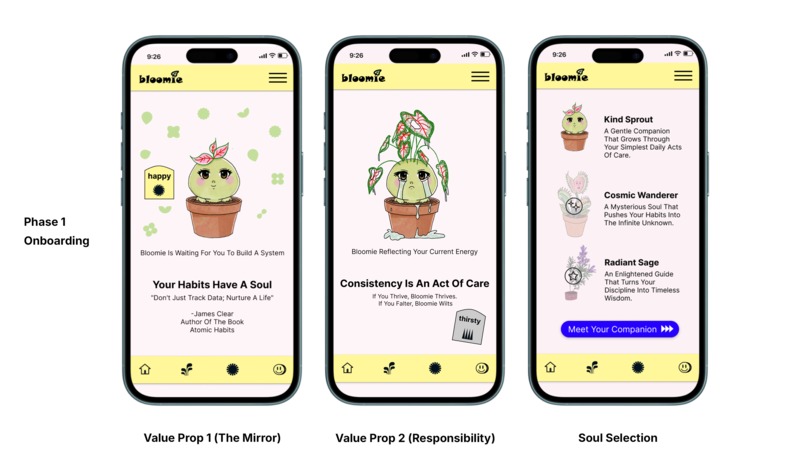
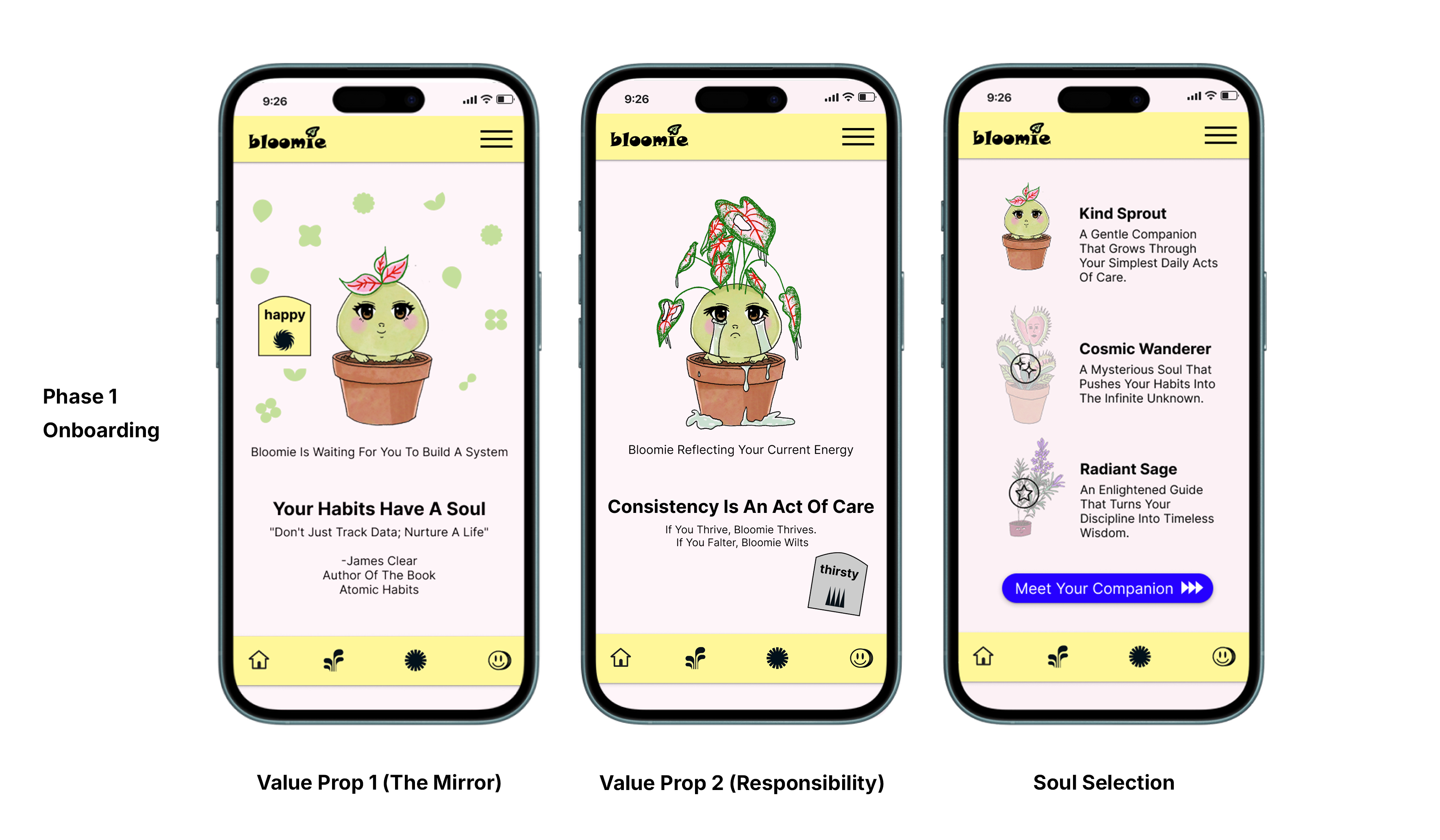
Onboarding sets the emotional contract: your habits have a soul, consistency is an act of care, and your companion is yours to choose.
-
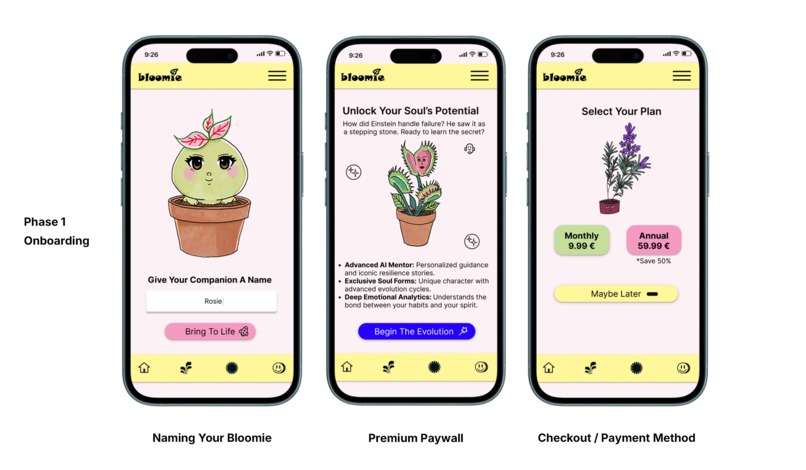
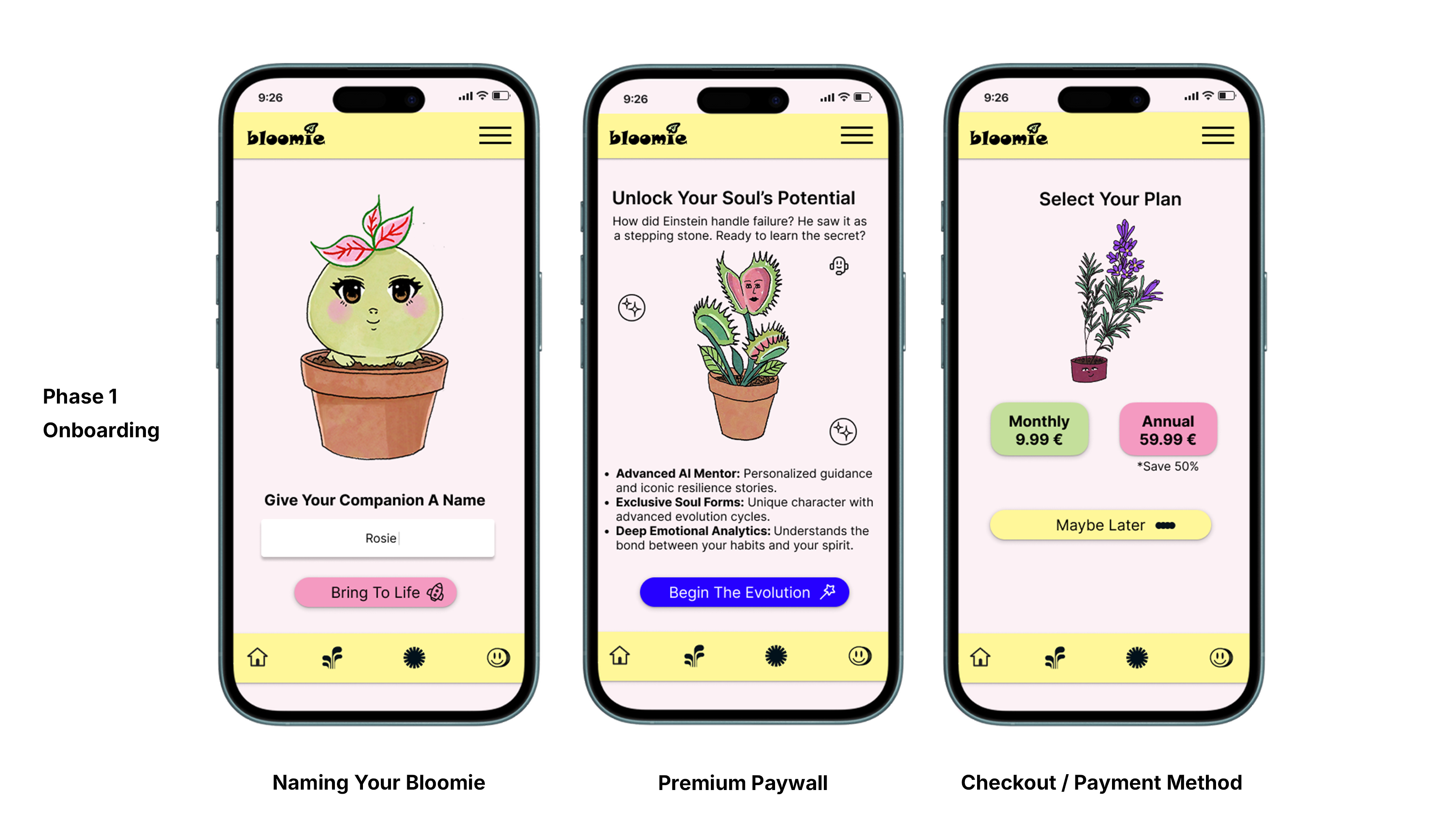
ree tier tracks your habits. Premium makes your AI Mentor actually know you,your soul, your struggles, your growth arc.
-
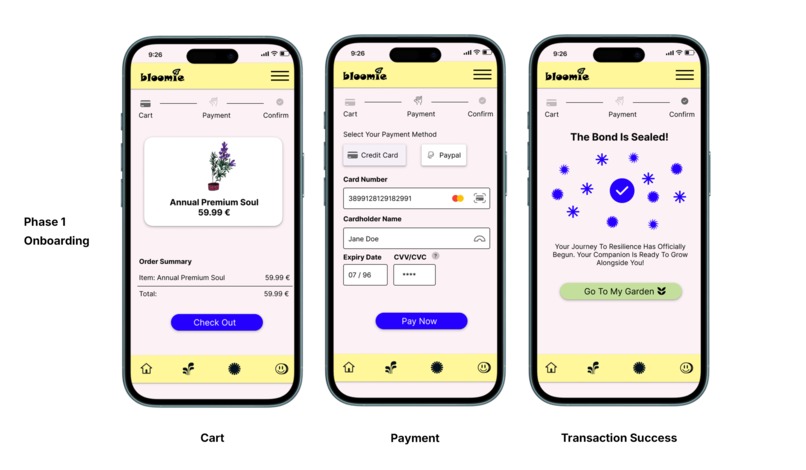
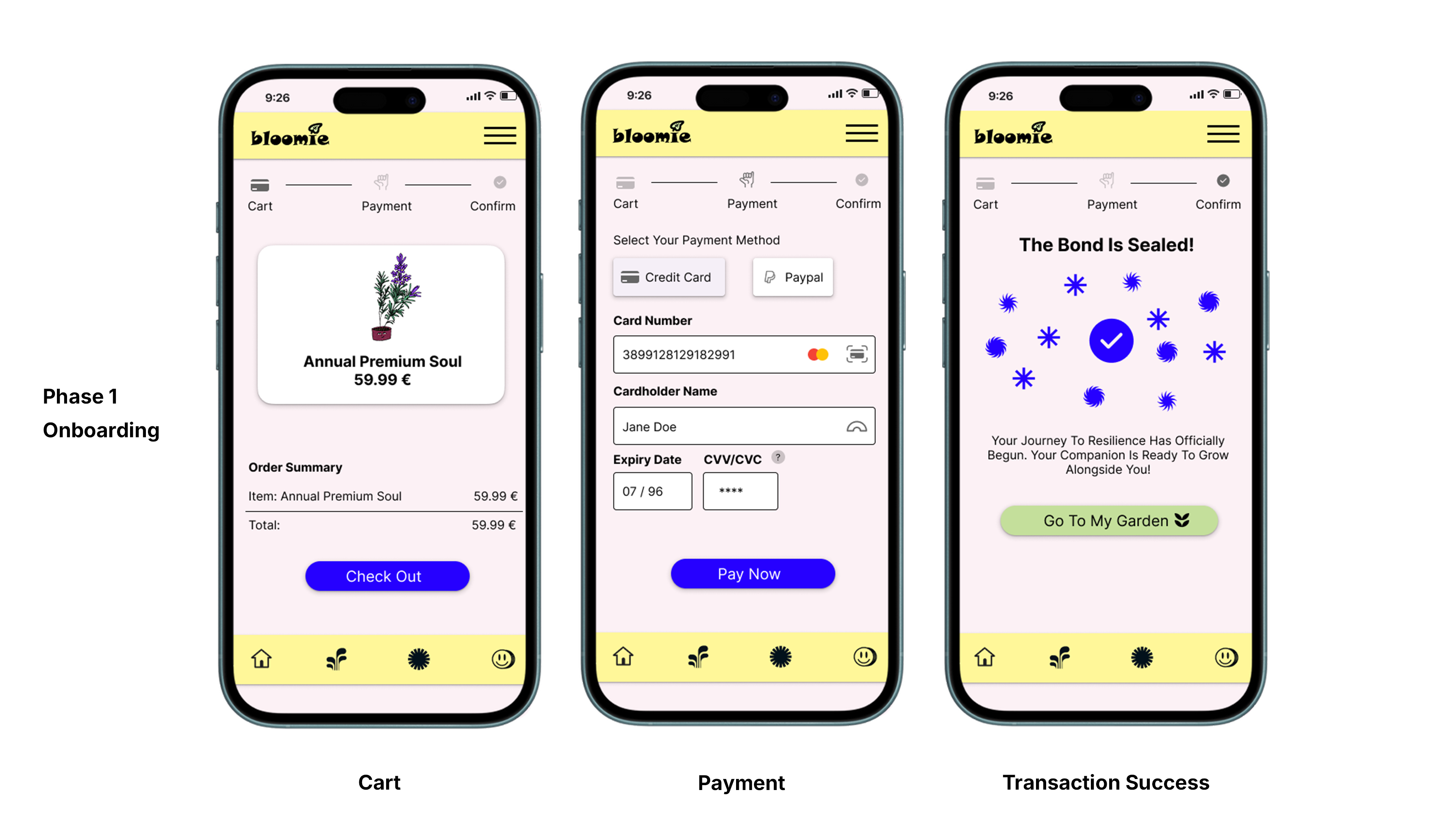
Even the confirmation screen stays in character, not 'Payment Successful,' but 'The Bond Is Sealed.'
-
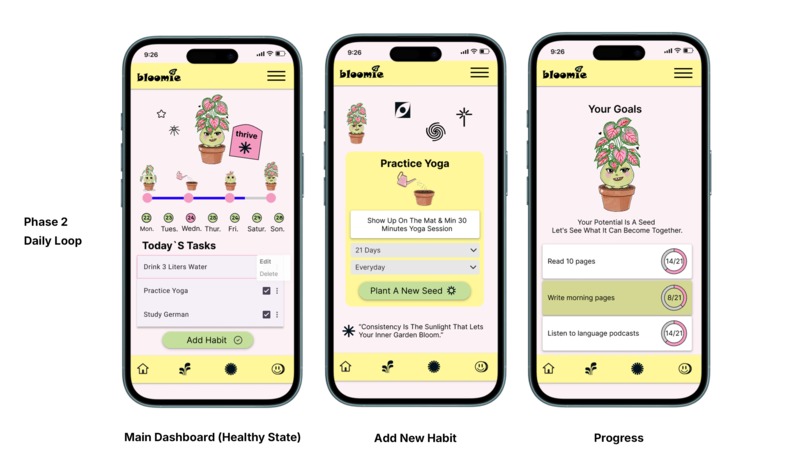
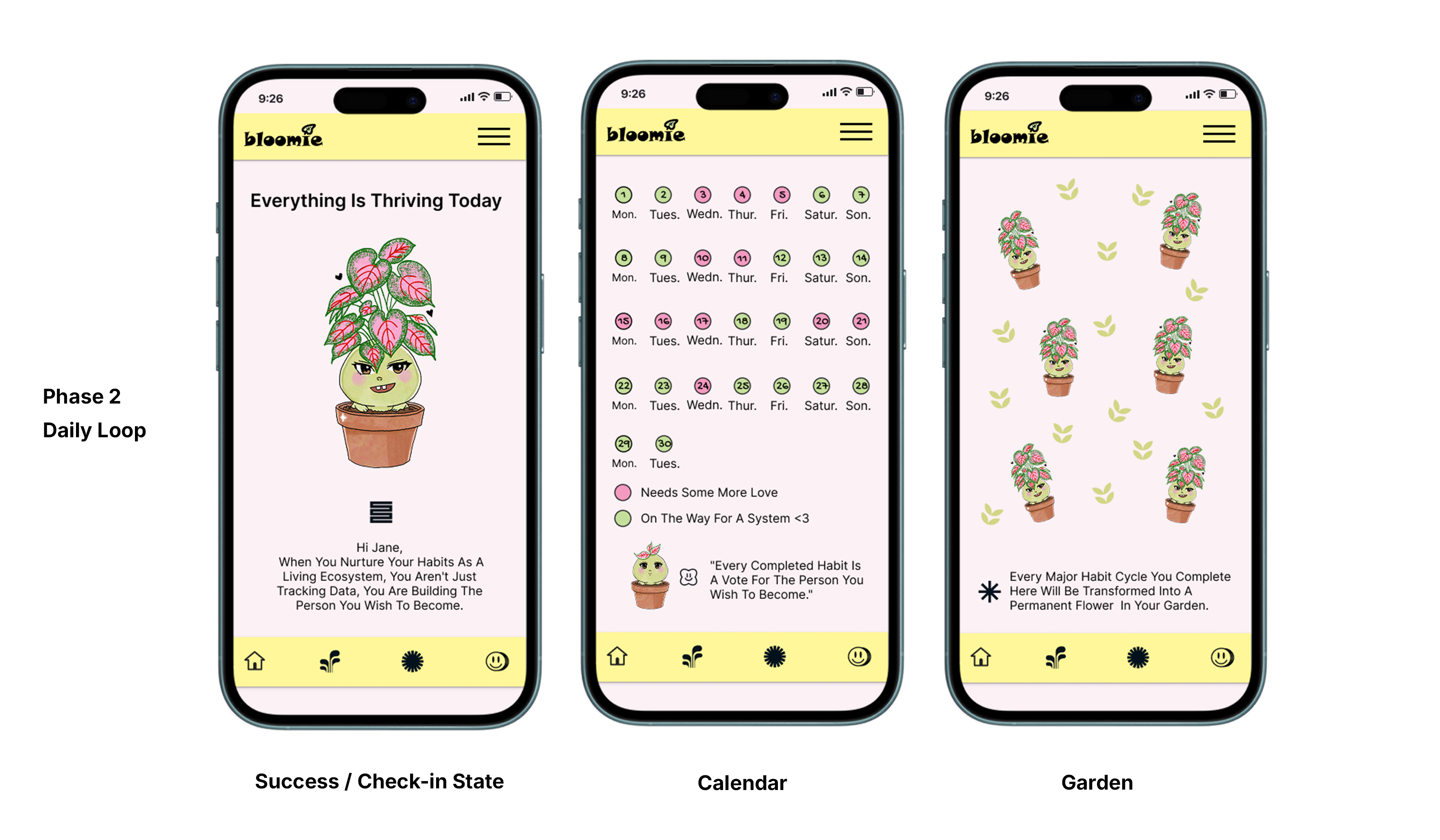
You don't add a habit, you plant a seed. Progress isn't a percentage, it's a making your companion happy, design language is important.
-
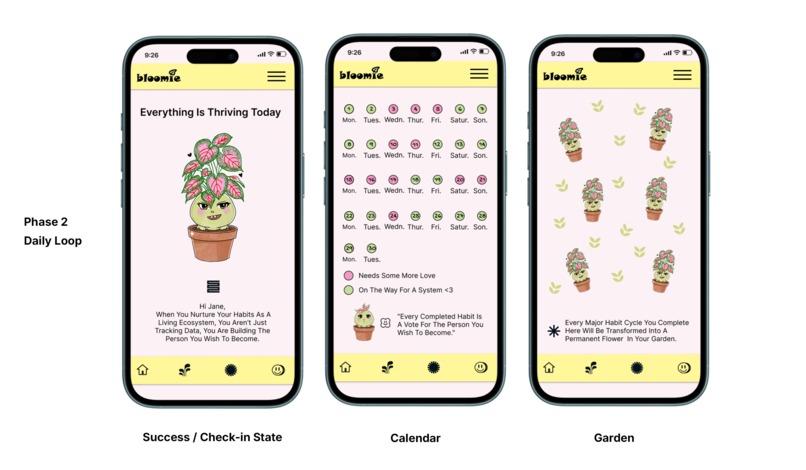
Your history doesn't live in a number. It grows in a garden.
-
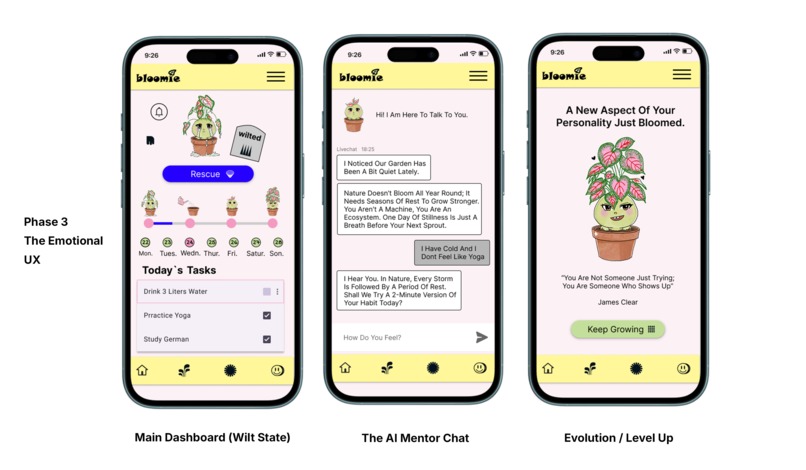
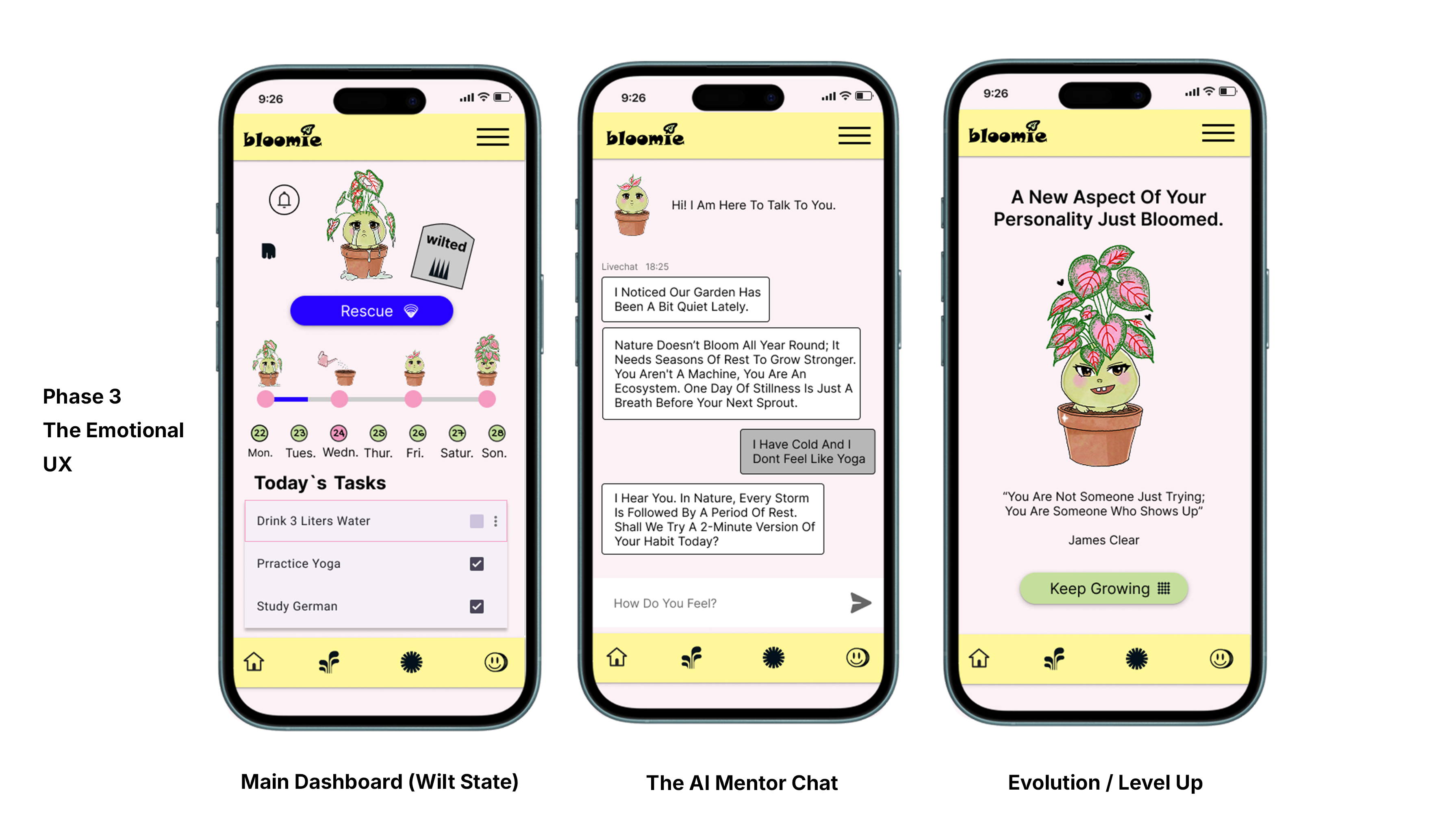
When you miss a day, Bloomie wilts. AI Mentor doesn't punish. It offers a 2-minute version of your habit so you never fully break the chain
-
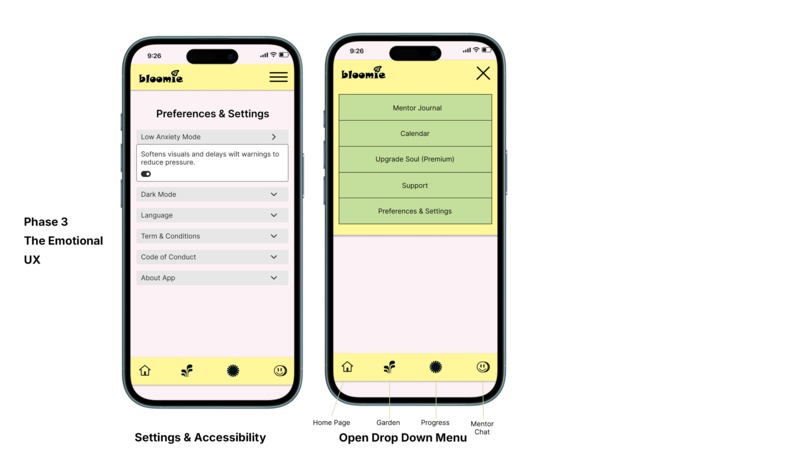
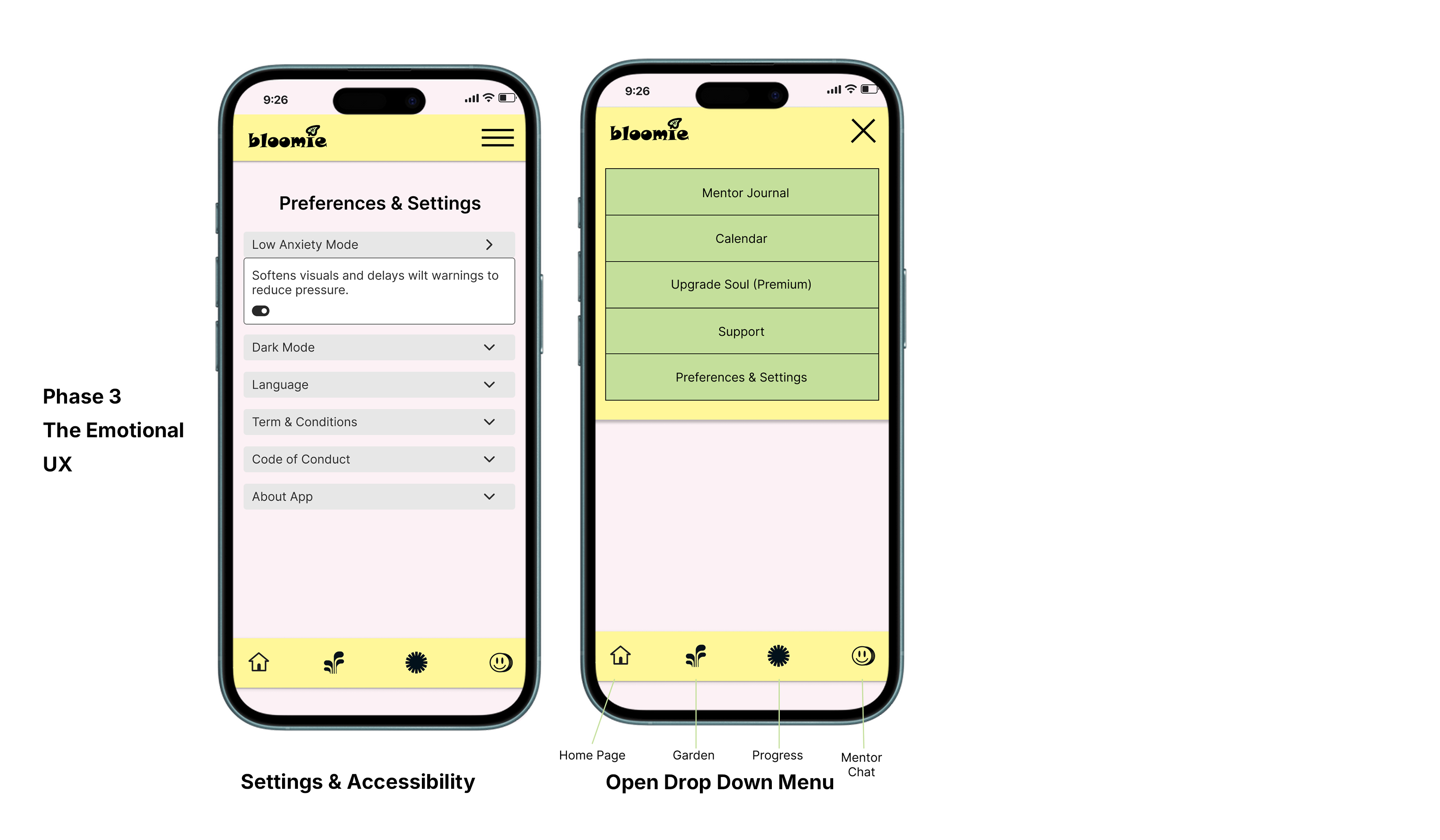
Even the settings reflect the core design value: you're in control of how much pressure this app puts on you
Inspiration
I started noticing a pattern in habit app reviews: people weren't quitting because they lacked discipline. They were quitting because the apps made them feel bad. Streaks broke, guilt kicked in, and the app became something to avoid rather than something to return to. That observation sent me down a research rabbit hole netnography across hundreds of App Store reviews for Duolingo, Habitica, Streaks, and Forest. The pattern was consistent: guilt-based mechanics cause churn. The design was engineering shame, not growth. I wanted to build something different.
What it does
Bloomie is a character-driven mobile habit tracker where a digital organism, your Bloomie, reacts and evolves based on your consistency. Miss a day and it wilts gently, seeking your attention. Show up and it blooms, growing from a pixelated seed into a vibrant flower. The core insight: emotional attachment drives retention far more sustainably than punishment does. Bloomie replaces the streak counter with a living relationship.
How I built it
- Research — I conducted a netnography of 200+ App Store reviews to map the emotional failure points of existing habit apps. I identified guilt, static feedback, and lack of empathy as the three root causes of churn.
- Design — I built the full product design from scratch: brand identity, WCAG 2.1 AA accessible color system, component library, high-fidelity prototype, and monetization flows all in Figma.
- Build — I brought Bloomie to life using Lovable, vibe coding the actual app from my designs. This was my first time bridging the gap between a high-fidelity prototype and a working product and it completely changed how I think about the designer-developer handoff.
Challenges I ran into
The hardest design problem was the wilt state, how do you show that a user has fallen behind without triggering the exact shame spiral I was trying to prevent? The answer was softness: Bloomie droops, doesn't die. It waits. The AI Mentor speaks in the language of nature, not failure. The second challenge was monetization. Premium upgrades had to feel like an investment in the relationship not a paywall. Naming your Bloomie before the paywall appears was the key UX decision that made the upgrade feel personal rather than transactional.
Accomplishments that I am proud of
Bloomie started with no brief, no client, and no one asking for it. Just a hunch that the habit app industry had gotten the emotional design fundamentally wrong and a decision to do something about it. Building and shipping a fully working app solo, from research to design to code, while no one was watching and no deadline was forcing it, that's the thing I'm most proud of. It's easy to finish projects when someone is waiting for them. It's a different kind of discipline to finish one for yourself. But the accomplishment that actually surprised me: people are using it. Real people, not friends doing me a favor, users who found Bloomie, connected with it, and kept coming back. Seeing Bloomie thrive in someone else's hands, helping them build a habit they care about, is the validation no design critique can replicate.
What I learned
That behavioral design is never just about the interface it's about the emotional contract you make with the user the moment they open the app. Every micro-copy choice, every animation state, every color in the palette is either reinforcing that contract or breaking it. Bloomie taught me to design with empathy as a system, not just a sentiment.
What's next for Bloomie the Habit Tracker
Bloomie's next chapter is about listening. The design was built on research into why habit apps fail but that research was observational. What comes next is direct: getting Bloomie into more hands, watching how real people interact with it, and letting their behavior shape the next version. More users means more signal. Which habits do people actually stick with? Where does the emotional connection break down? When does Bloomie's wilt state feel gentle and when does it still sting? These are questions only real usage can answer. The goal isn't growth for its own sake. It's building a feedback loop tight enough that the next iteration of Bloomie is designed with its users, not just for them.
Built With
- figma
- lovable
- react

Log in or sign up for Devpost to join the conversation.