-
-
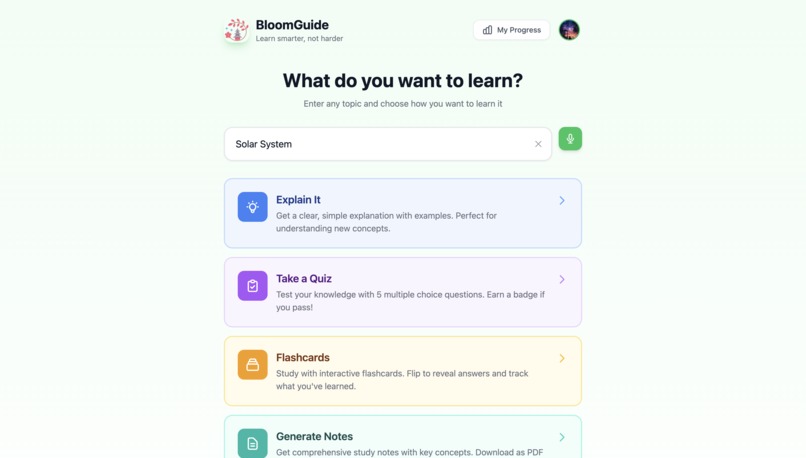
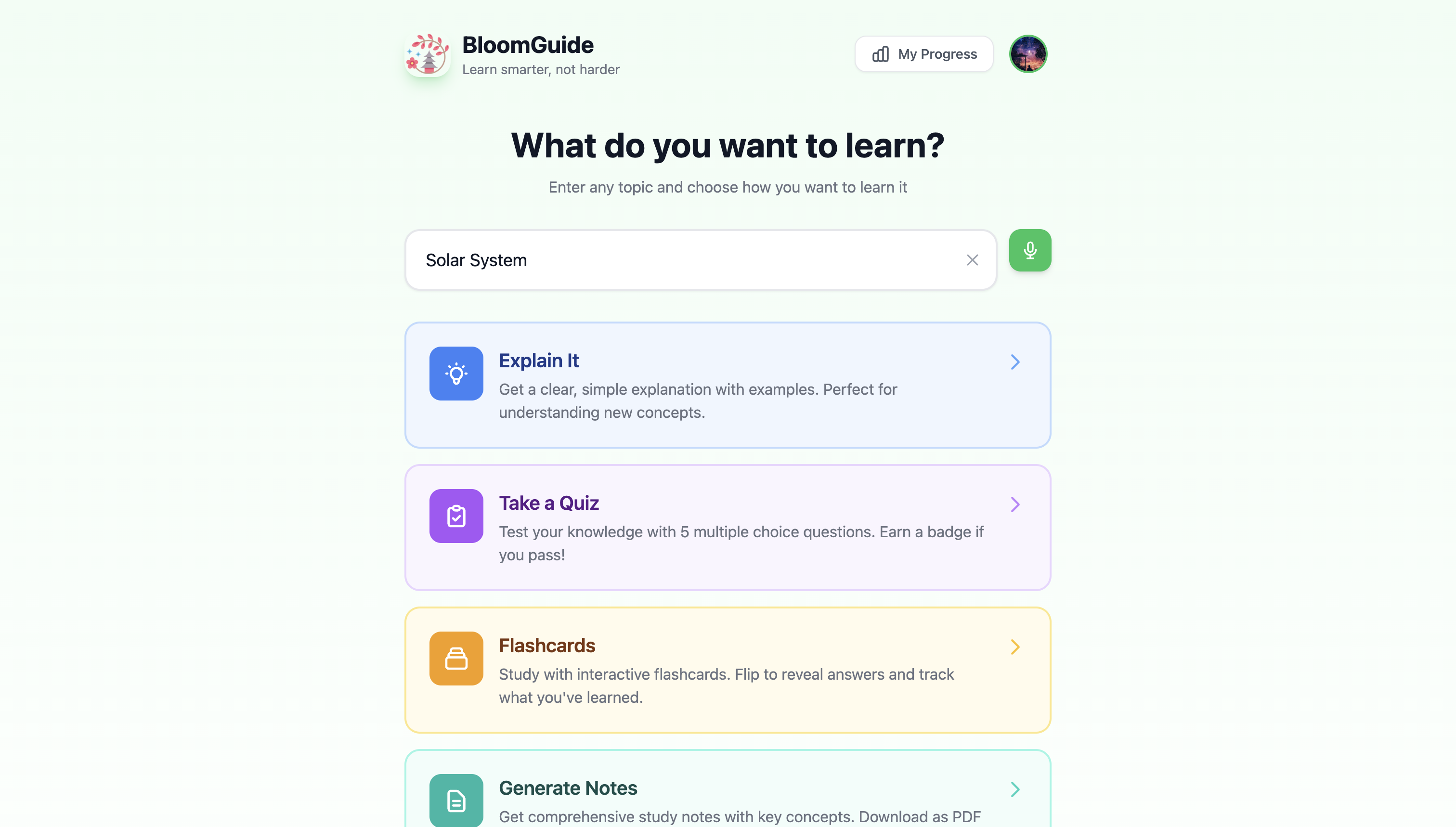
home page with different modes.
-
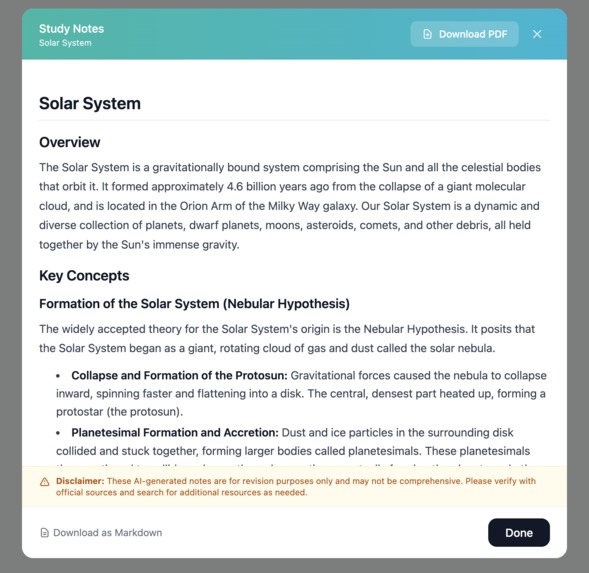
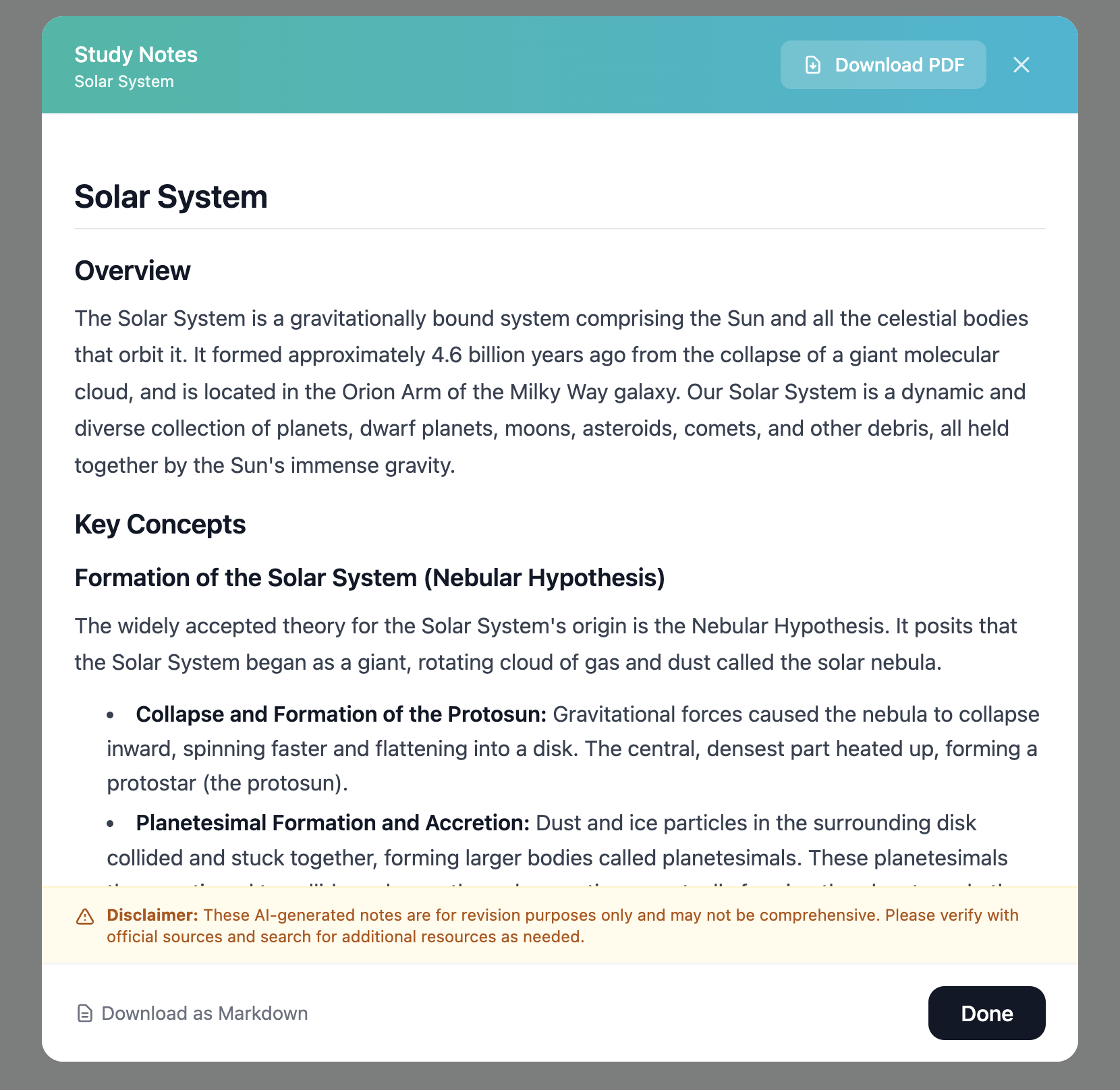
downloadable notes
-
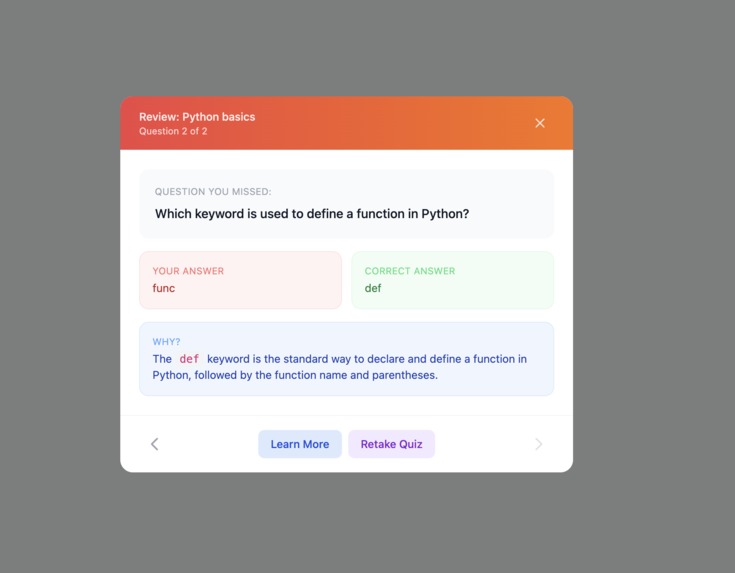
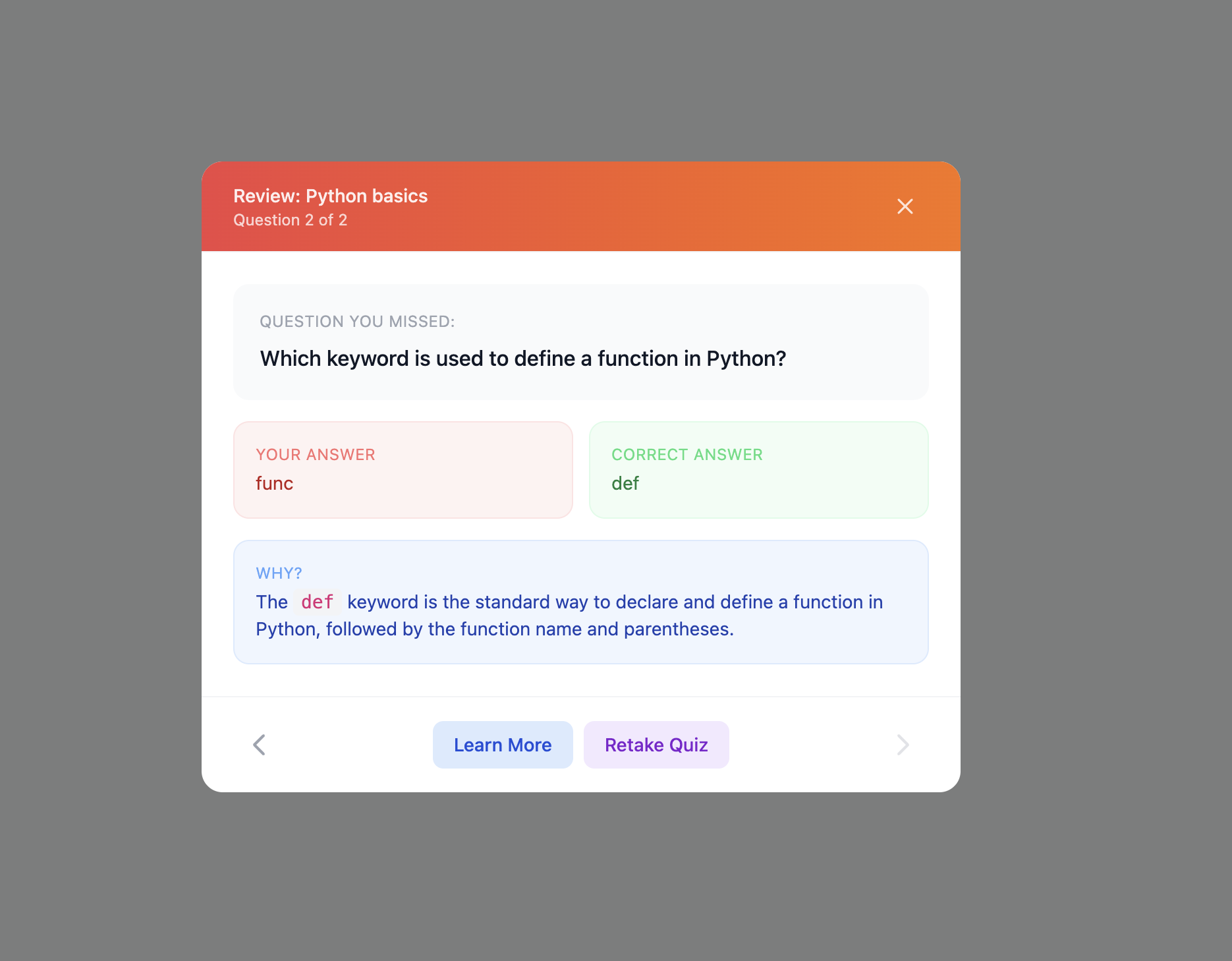
quiz to practice your concepts.
-
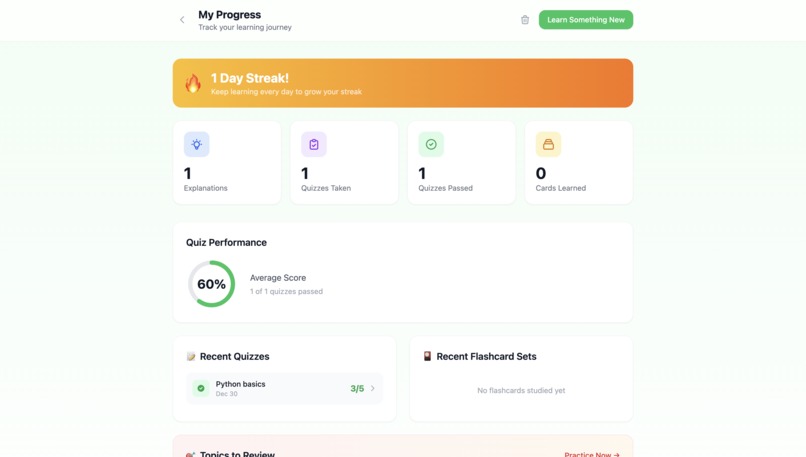
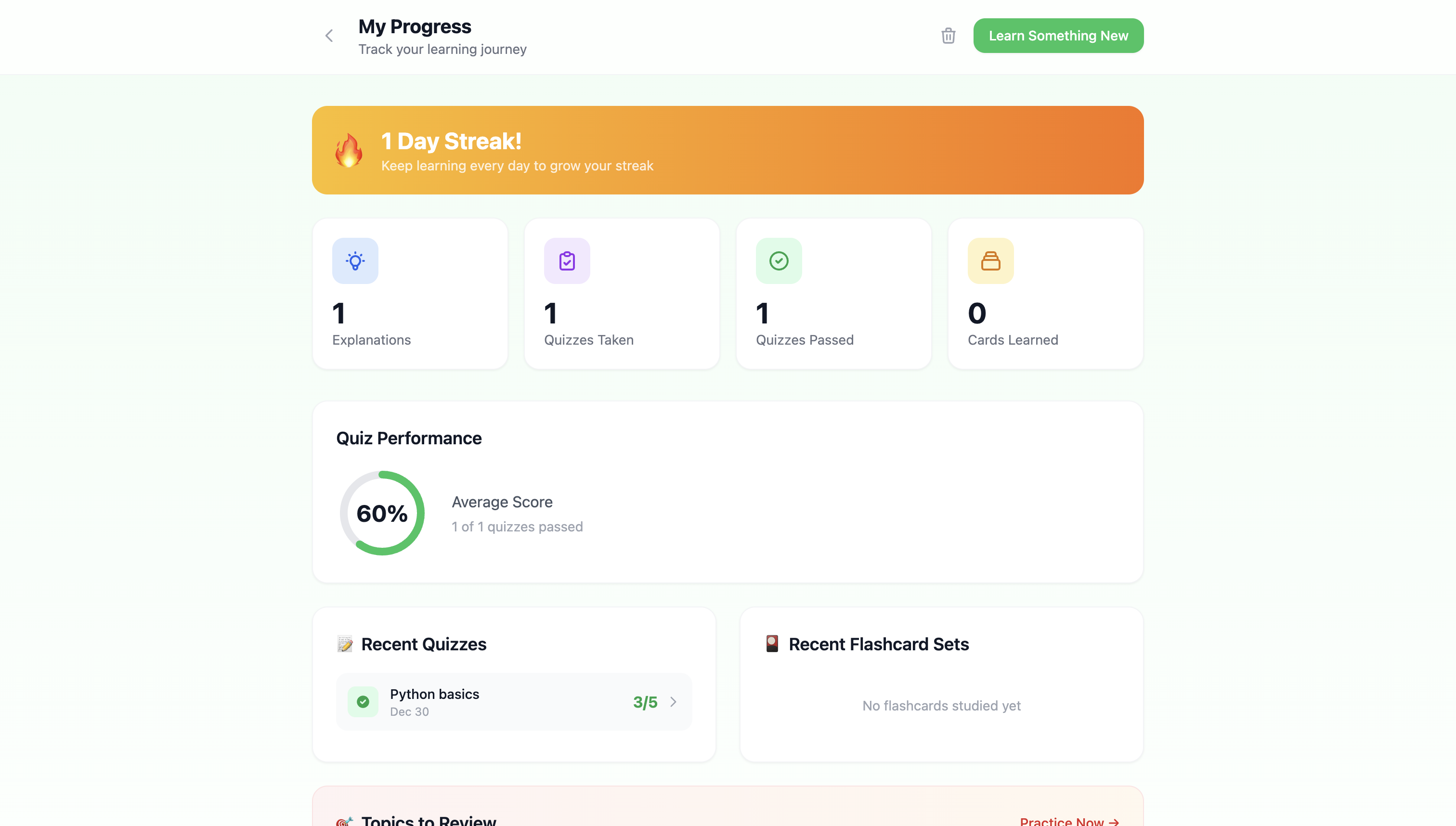
dashboard to see progress
Inspiration
Students are using AI to cheat. Schools are banning ChatGPT. But the real problem isn't AI itself—it's that current tools optimize for answers, not learning.
What if AI could be the teacher you always wanted? One that doesn't just hand you solutions, but guides you through the "aha!" moment yourself. That's BloomGuide.
What it does
BloomGuide is an AI-powered learning assistant with 5 core modes:
- Explain Mode — AI breaks down any topic with analogies, examples, and step-by-step explanations
- Quiz Mode — 5-question MCQs with instant feedback; wrong answers become "weak topics" for review
- Flashcards — Swipeable cards for active recall practice
- Notes Mode — Comprehensive study notes with one-click PDF export
- Multiplayer — Real-time quiz battles with friends (requires sign-in)
- Custom API Key — Users can add their own Gemini API key if rate limited (stored locally, never sent to servers)
Plus a Dashboard that tracks your progress, streaks, quiz scores, and topics you need to review.
How I built it
- Next.js 15 (App Router) for the framework
- Tailwind CSS for rapid, responsive styling
- Google Gemini 2.5 Flash for all AI-generated content
- NextAuth.js for Google OAuth (multiplayer requires login)
- localStorage with user-prefixed keys for per-user data isolation
- Web Speech API for voice input
- Vercel for deployment
- Client-side API key storage for users who hit rate limits
Started with the core loop (topic → AI response → display), then layered each mode. Prioritized shipping over perfection.
Challenges I ran into
- No database: Used localStorage with user-prefixed keys. Works for MVP, but limits cross-device sync.
- Real-time multiplayer without WebSockets: Built a polling system with in-memory game rooms. Functional for demo, not production-ready.
- Time pressure: Found this hackathon 1 day before deadline. Built everything in ~6 hours.
- Scope creep: Wanted spaced repetition, teacher dashboards, and more. Had to ruthlessly cut features to ship.
Accomplishments that I am proud of
- 5 fully functional learning modes in a single cohesive app
- Multiplayer quiz battles that actually work in real-time
- Weak topic tracking — the app learns what you struggle with
- Voice input for accessibility
- Clean, mobile-friendly UI that feels polished
- Shipped in ~6 hours from idea to deployment
- Secure user API key support — users can bring their own Gemini key without exposing it
What I learned
- Gemini 2.5 Flash is incredibly fast for generating educational content on-the-fly
- Real-time multiplayer without WebSockets is possible (polling + in-memory state)
- localStorage with user-prefixed keys can simulate per-user data without a database
- The Web Speech API makes voice input surprisingly easy
- Building under pressure forces you to prioritize ruthlessly
What's next for BloomGuide
- Database Storage — PostgreSQL/MongoDB for cross-device sync and persistence
- Spaced Repetition — SM-2 algorithm for intelligent flashcard scheduling
- Teacher Dashboard — Educators can create classes and track student progress
- AI Difficulty Scaling — Adapt quiz difficulty based on performance history
- Collaborative Study Rooms — Persistent groups with shared flashcard decks
- Mobile App — Native iOS/Android with offline support
- LMS Integration — Connect with Canvas, Google Classroom, Moodle
Built With
- google-gemini-api
- localstorage
- next.js
- nextauth.js
- react
- speech
- tailwind-css
- typescript
- vercel
- web

Log in or sign up for Devpost to join the conversation.