-
-
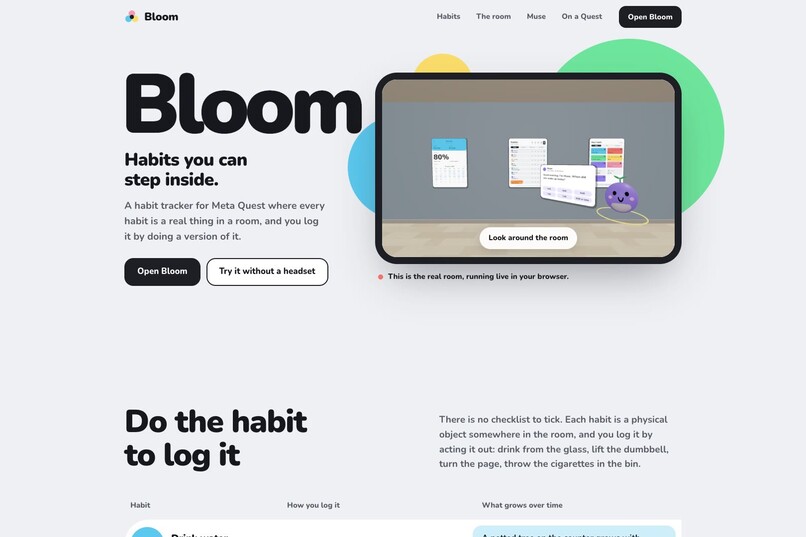
musebloom.app: open Bloom on a Quest, or try it in an emulated headset in your browser
-
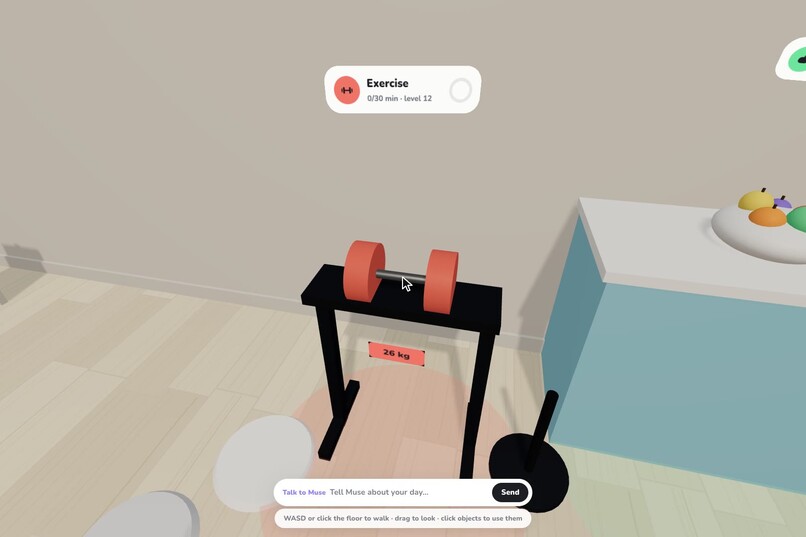
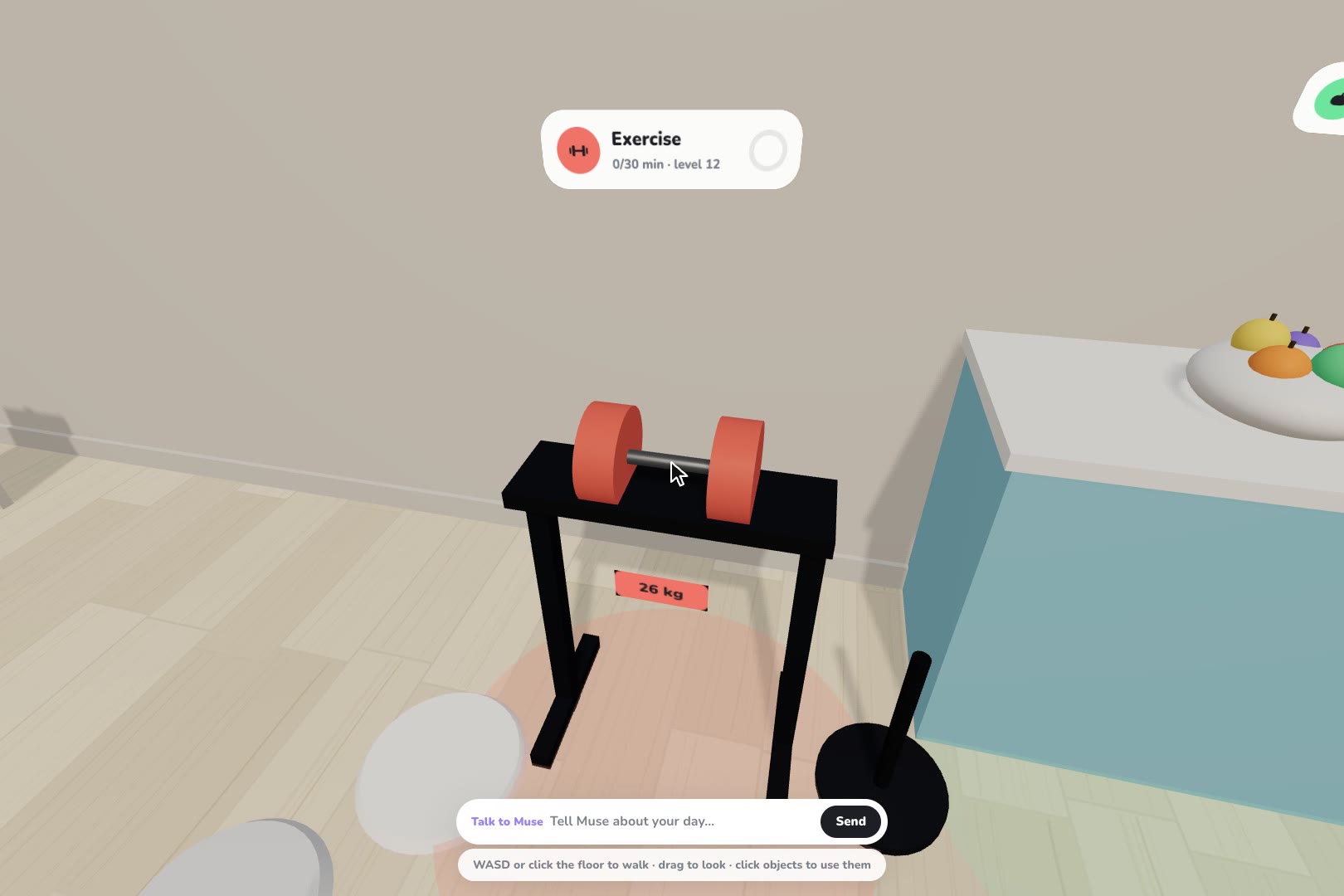
Exercise: lift the dumbbell overhead. It gains 2 kg for every 150 minutes trained
-
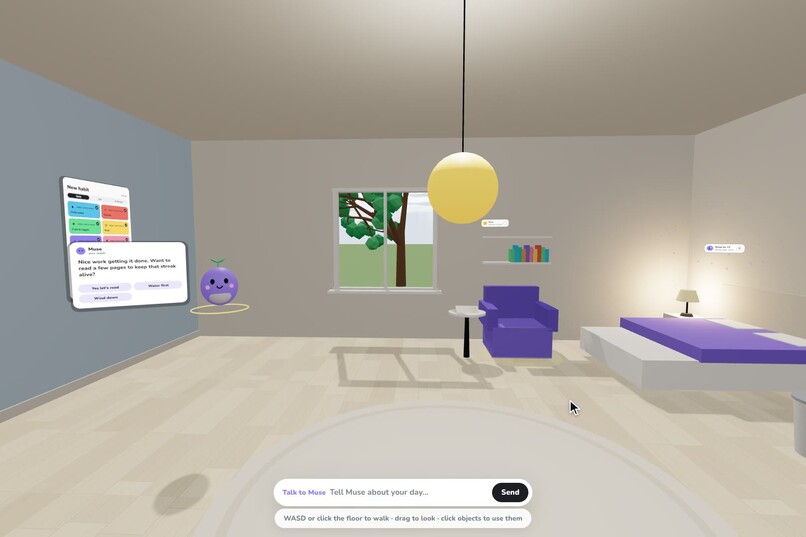
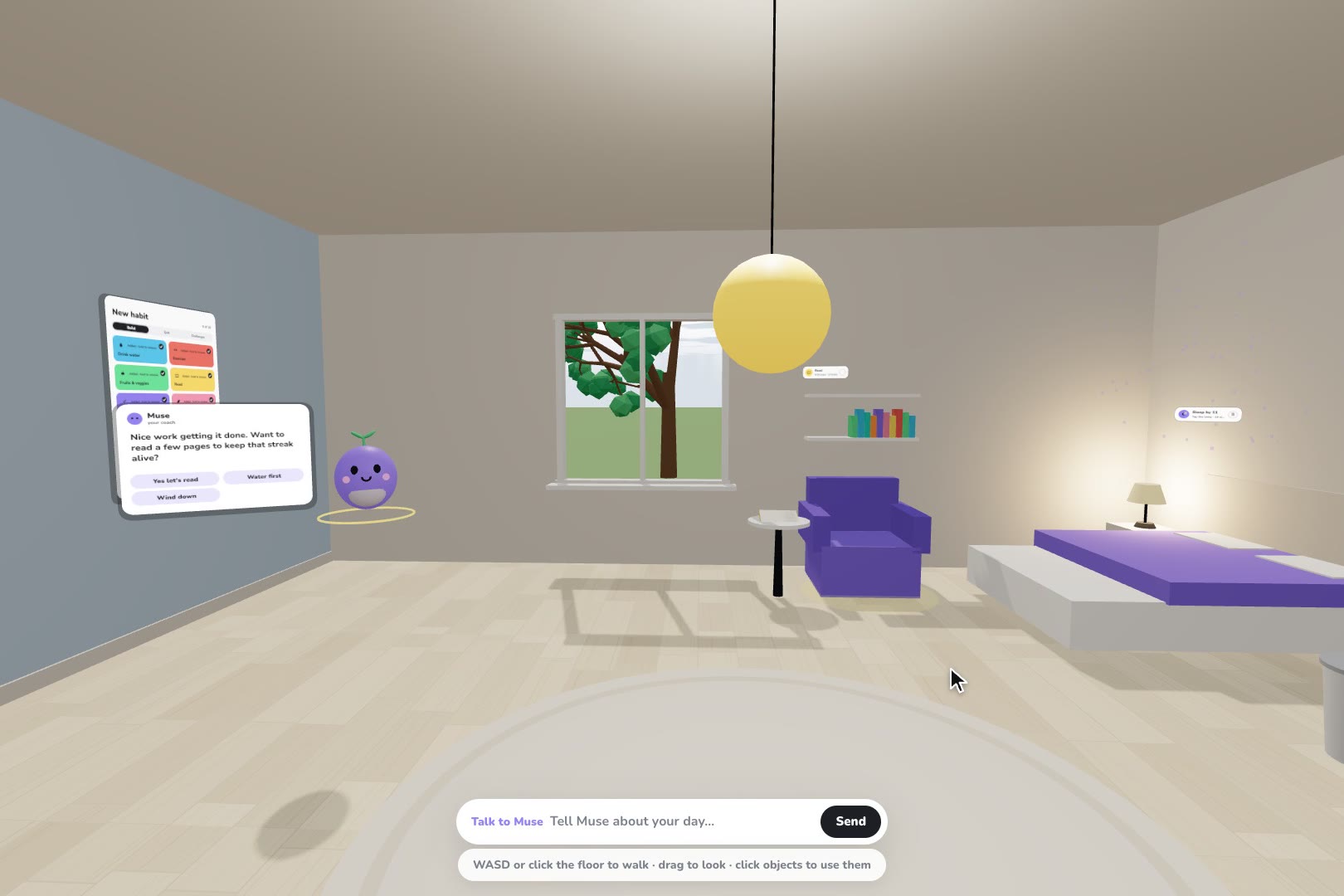
Sleep by 11: switch off the bedside lamp. More stars appear above the bed for every night kept
-
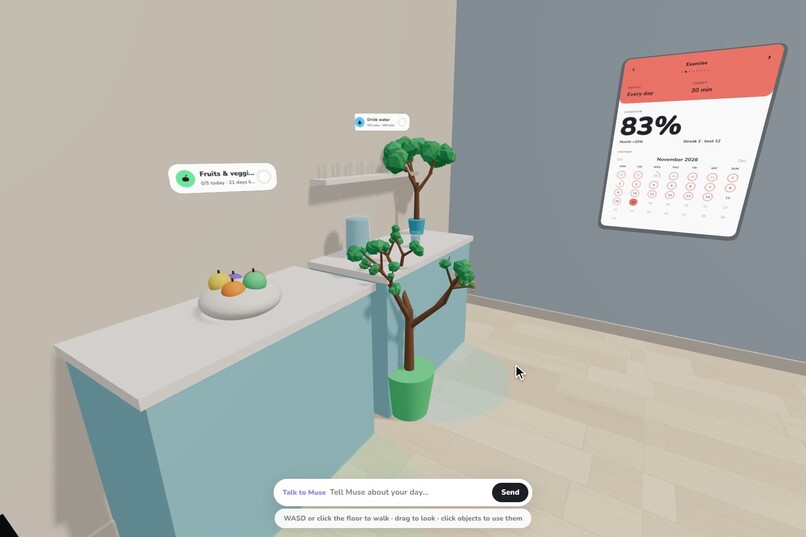
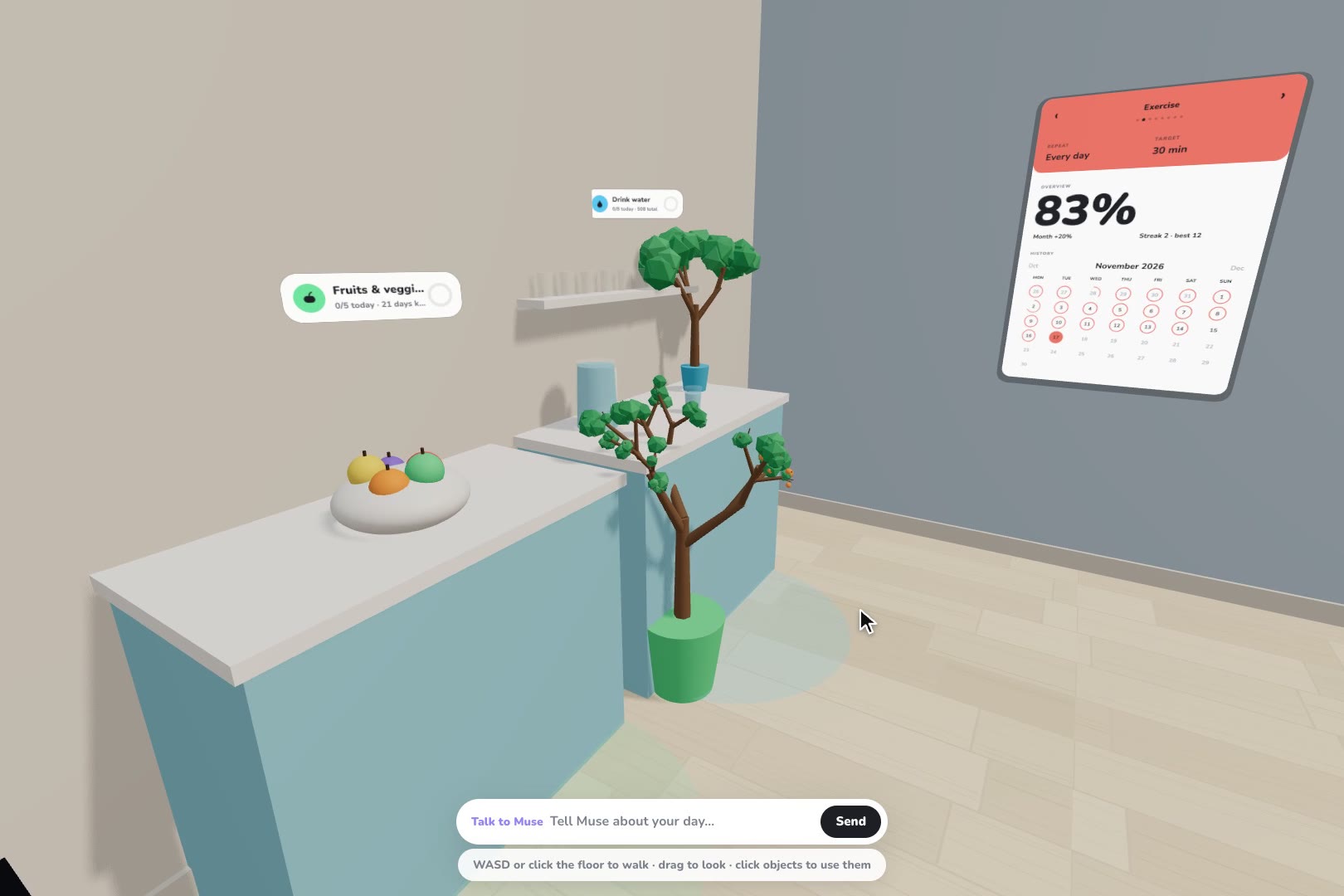
Drink water: every glass grows the tree on the kitchen counter
Inspiration
Habit trackers ask you to tick a box, and a box is easy to ignore. In a headset, a habit can be something you hold. Bloom asks: what if logging a habit meant acting out a tiny version of it, in a room that visibly changes as you keep it up? It's built for a short daily visit: a couple of minutes, seated, bare hands, the length of a bus stop.
What it does
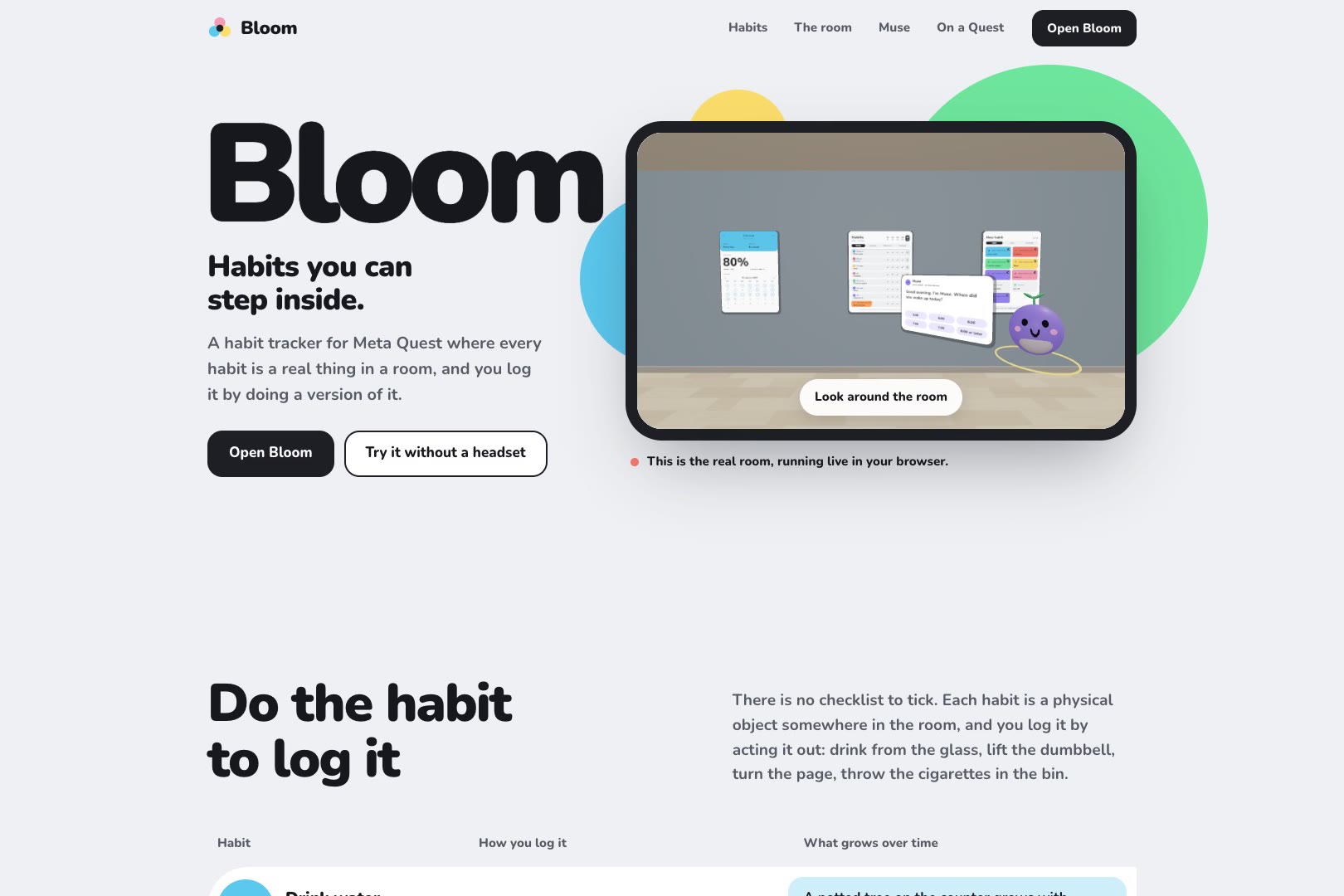
Bloom is a room for Meta Quest where every habit is a physical object within arm's reach:
- Drink water: pick up the glass and drink. A tree on the counter grows with every glass.
- Exercise: lift the dumbbell overhead. It levels up, +2 kg for every 150 minutes trained, with a shelf of every weight you've earned.
- Read, meditate, journal, sunlight, sleep: turn the page, strike the singing bowl and breathe, write with the pen, pull the blind cord, switch off the lamp.
- Quit habits: throw the cigarettes (or sugar, or doomscrolling) in the bin when you resist an urge. A plant grows every day you stay free and flowers at milestones.
The room keeps score, so there's no stats screen. The sky clears from overcast to sunshine as you keep today's habits, a life tree grows outside, a wall calendar marks each day, and streak trophies fill a shelf.
Muse, a small coach in the room, asks one thing at a time (when you woke, when you slept, whether you made the gym) and logs your answers; you reply with a fingertip or a pinch. Free conversation runs through Meta's Model API (muse-spark-1.3). With a pairing code, your own agent outside the headset can read the room, log habits you mention and pass in today's calendar.
Everything works seated and hands-only. Controllers are optional, and mixed reality drops the walls so the objects stand in your own room.
How we built it
- Meta's Immersive Web SDK (IWSDK 1.1, WebXR) for the world, XR session, hand input, grabbing (the dumbbell is a
OneHandGrabbable) and locomotion. It runs in the Quest Browser with nothing to install. - Three.js: the whole room, including the growing plants, is procedural, with no downloaded models or textures.
- Gestures (drink, lift, pull, throw, write) are read from IWSDK hand poses; the wall boards respond to fingertip touch and pinch.
- The bridge: Vercel functions and Vercel Blob hold the room record, pairing codes and agent actions. Secrets are stored only as hashes, and the model key never leaves the server.
- Tested with Meta's Immersive Web Emulator and Playwright-scripted walkthroughs.
Challenges
- Making gestures feel natural without a controller: telling "drink" (hand to mouth) from "lift" (hand overhead) with forgiving thresholds.
- Keeping every station inside a seated ~2 ft reach while it still feels like a room.
What we learned
Progress you can see beats a percentage. A heavier dumbbell or a flowering plant says more than a chart.
What's next
Anchoring stations to your real furniture in mixed reality, shared rooms with friends, more habits, and more gesture tuning on Quest hardware.
Built With
- immersive-web-sdk
- javascript
- meta-model-api
- meta-quest
- node.js
- playwright
- three.js
- vercel
- vercel-blob
- vite
- webxr
