-
-
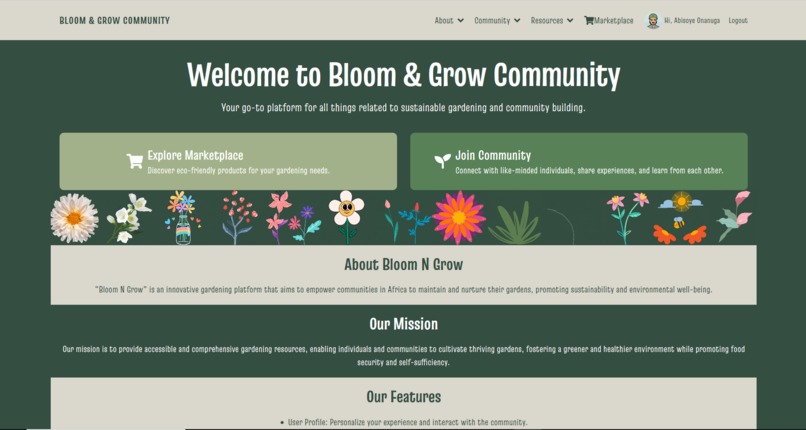
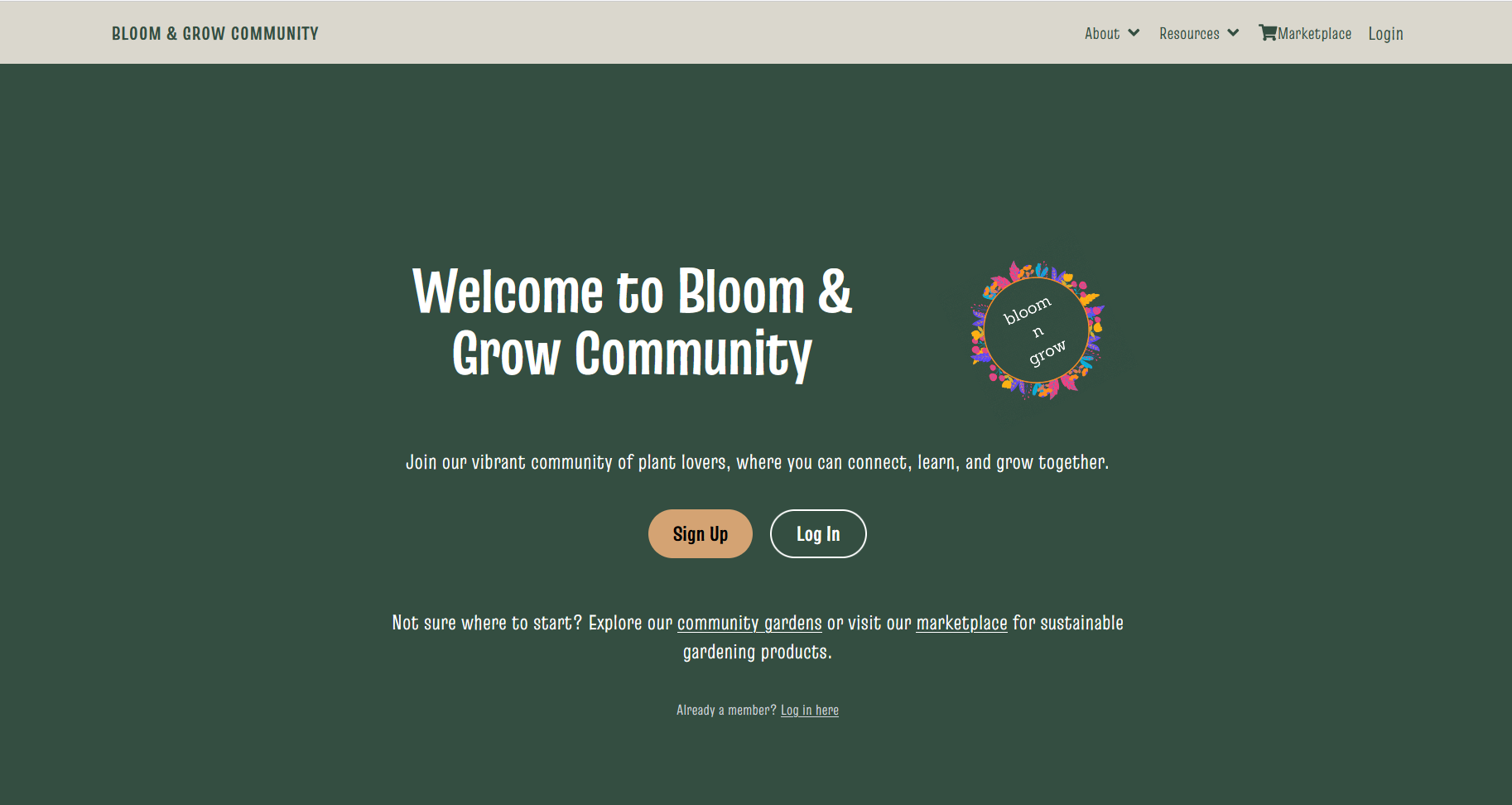
Welcome Page
-
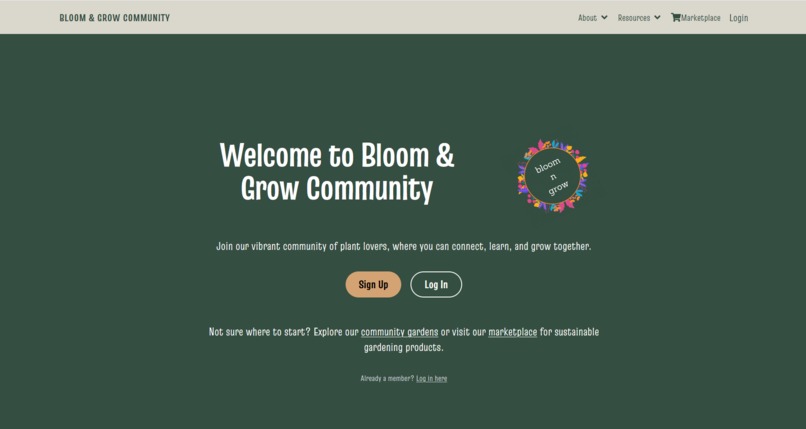
Login page
-
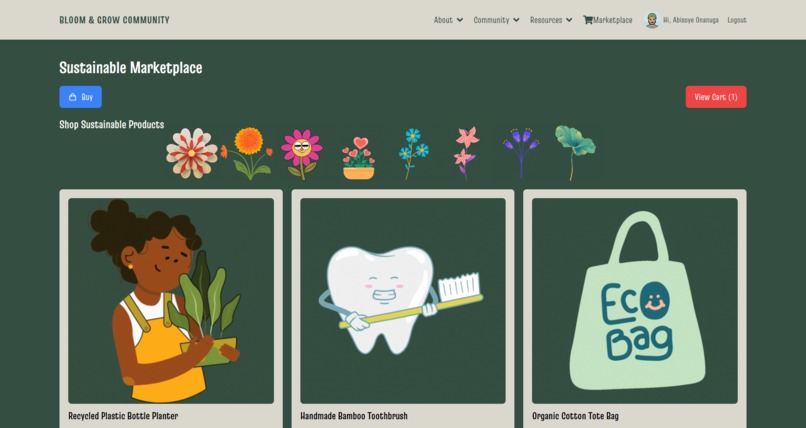
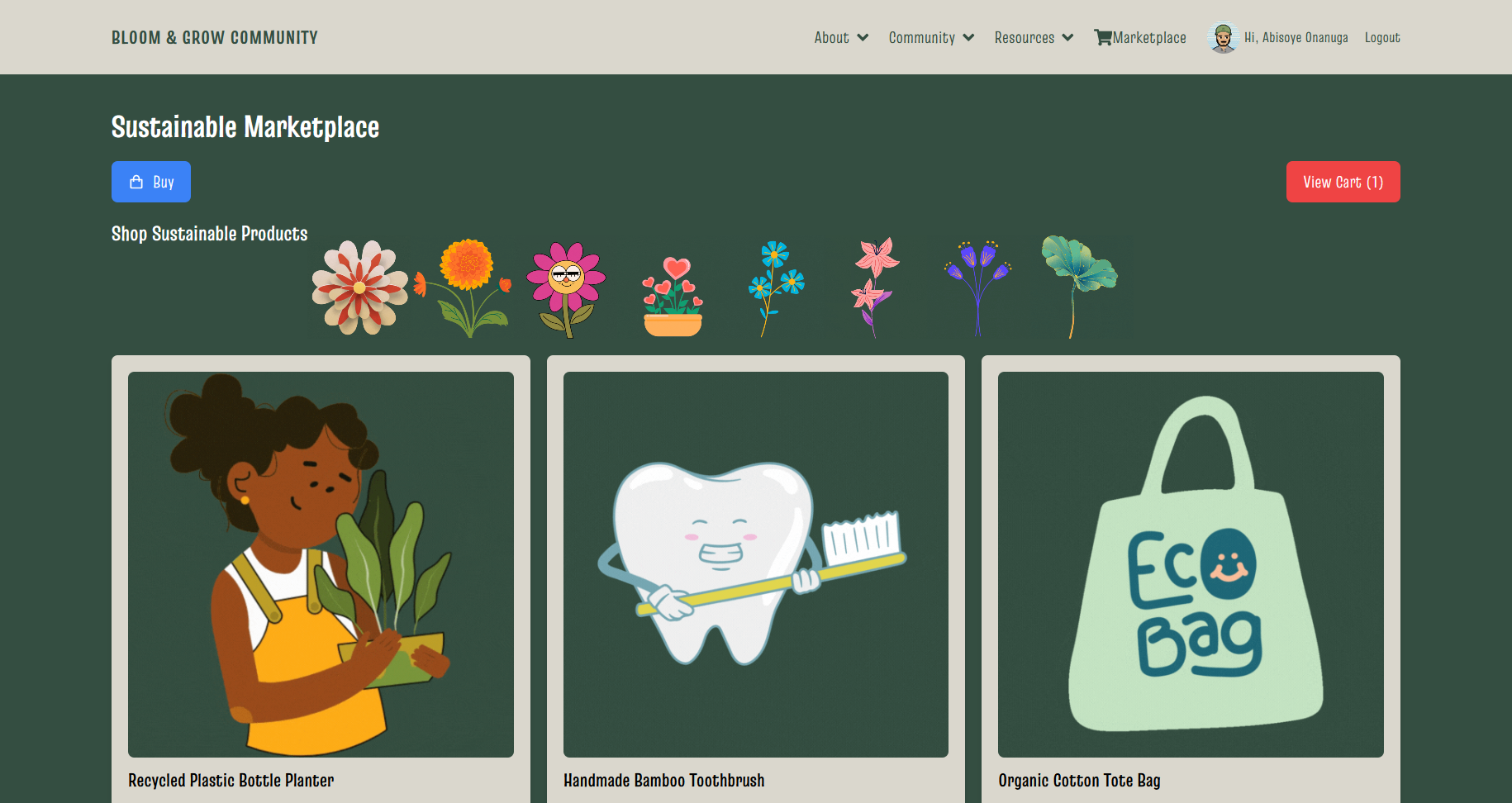
Sustainable Marketplace
-
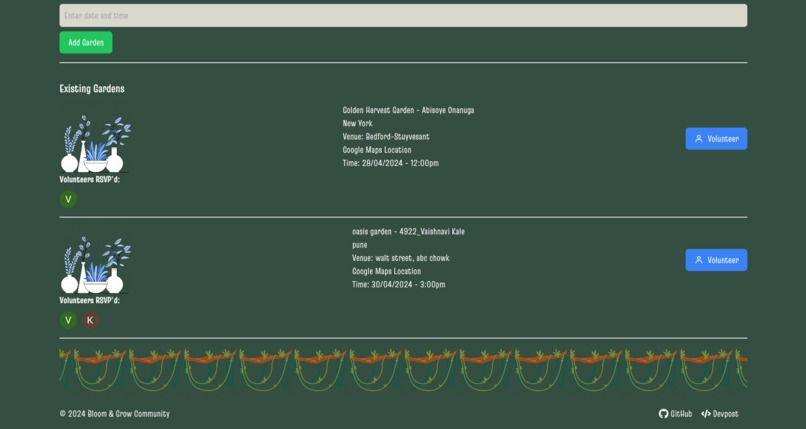
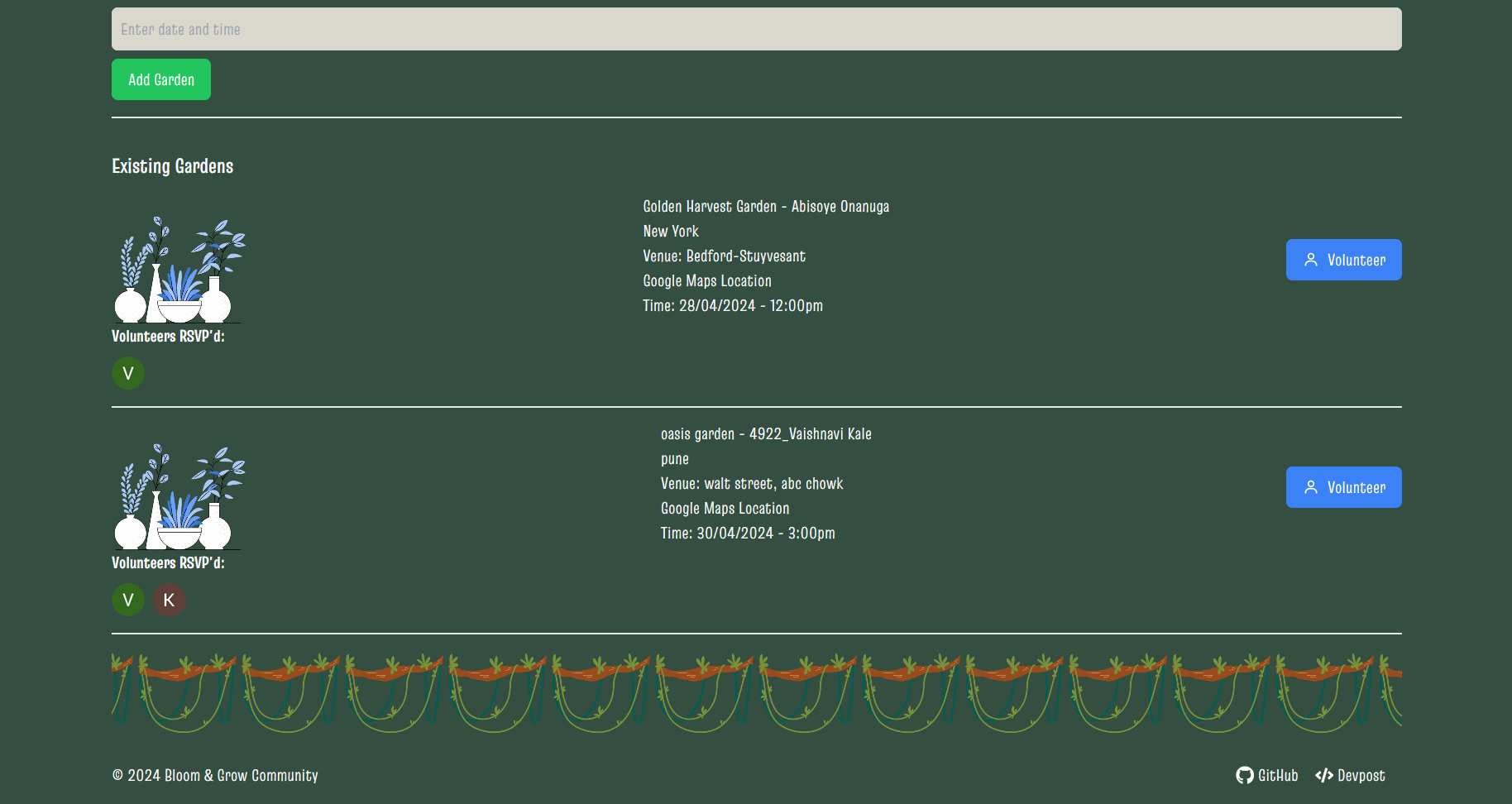
Community Gardens
-
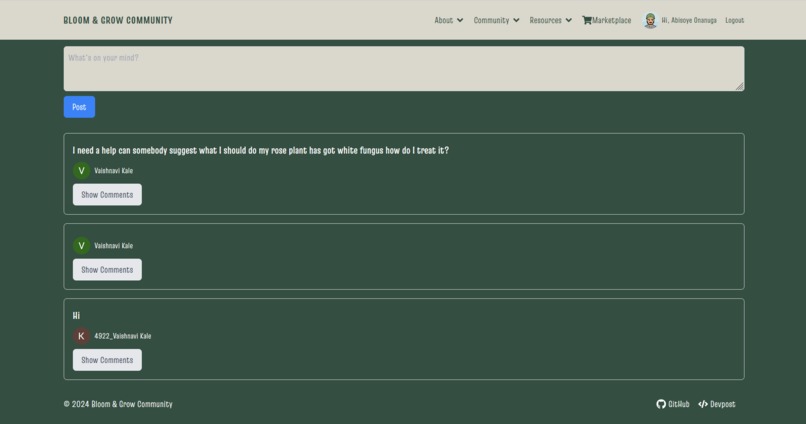
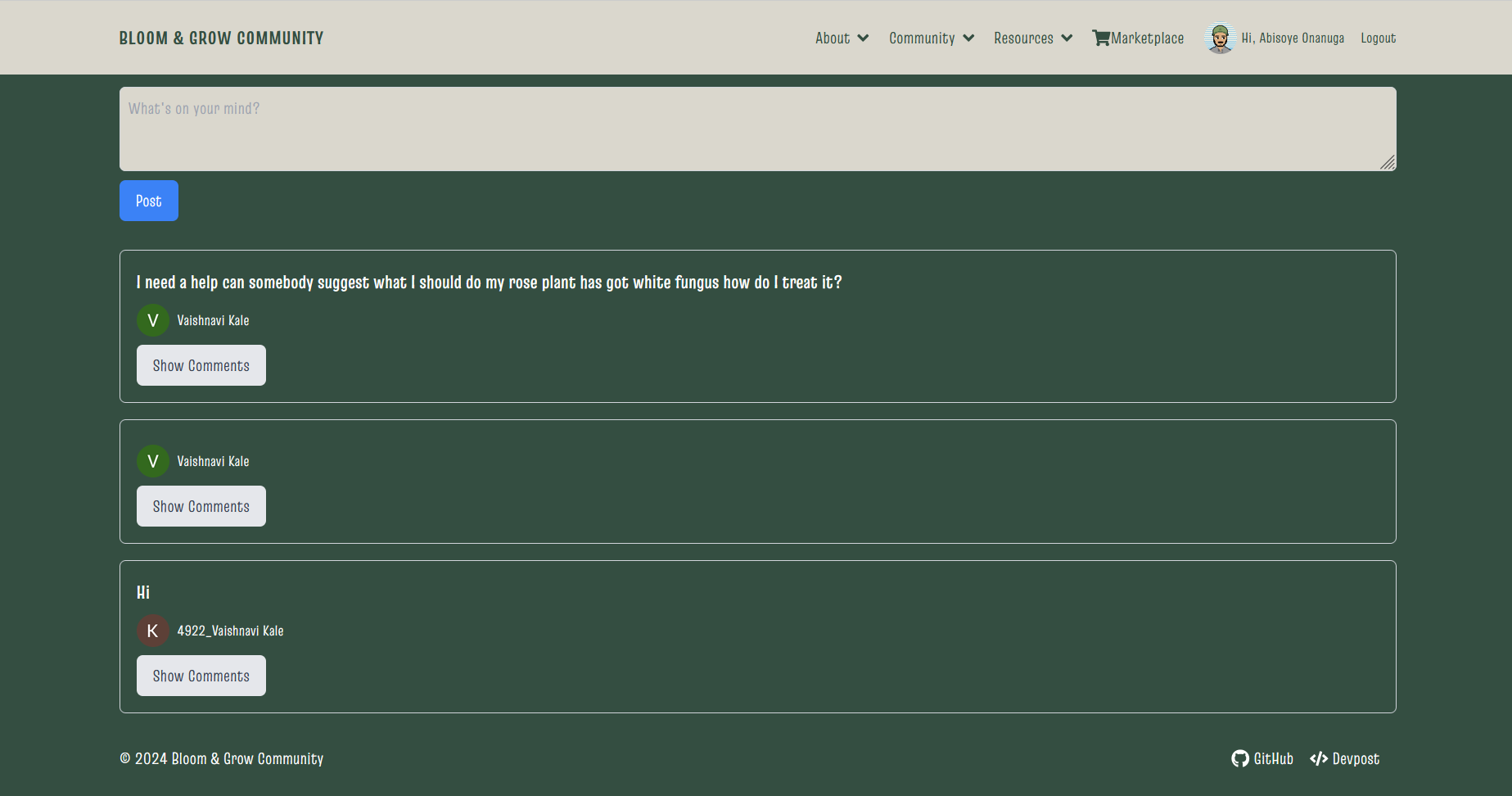
Community Forum
-
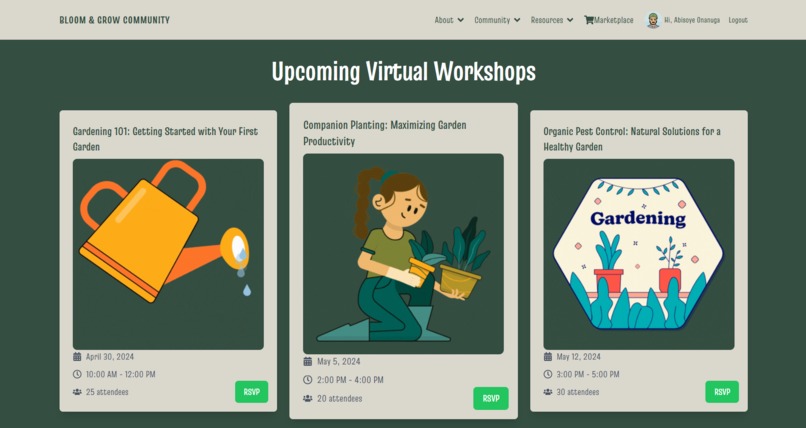
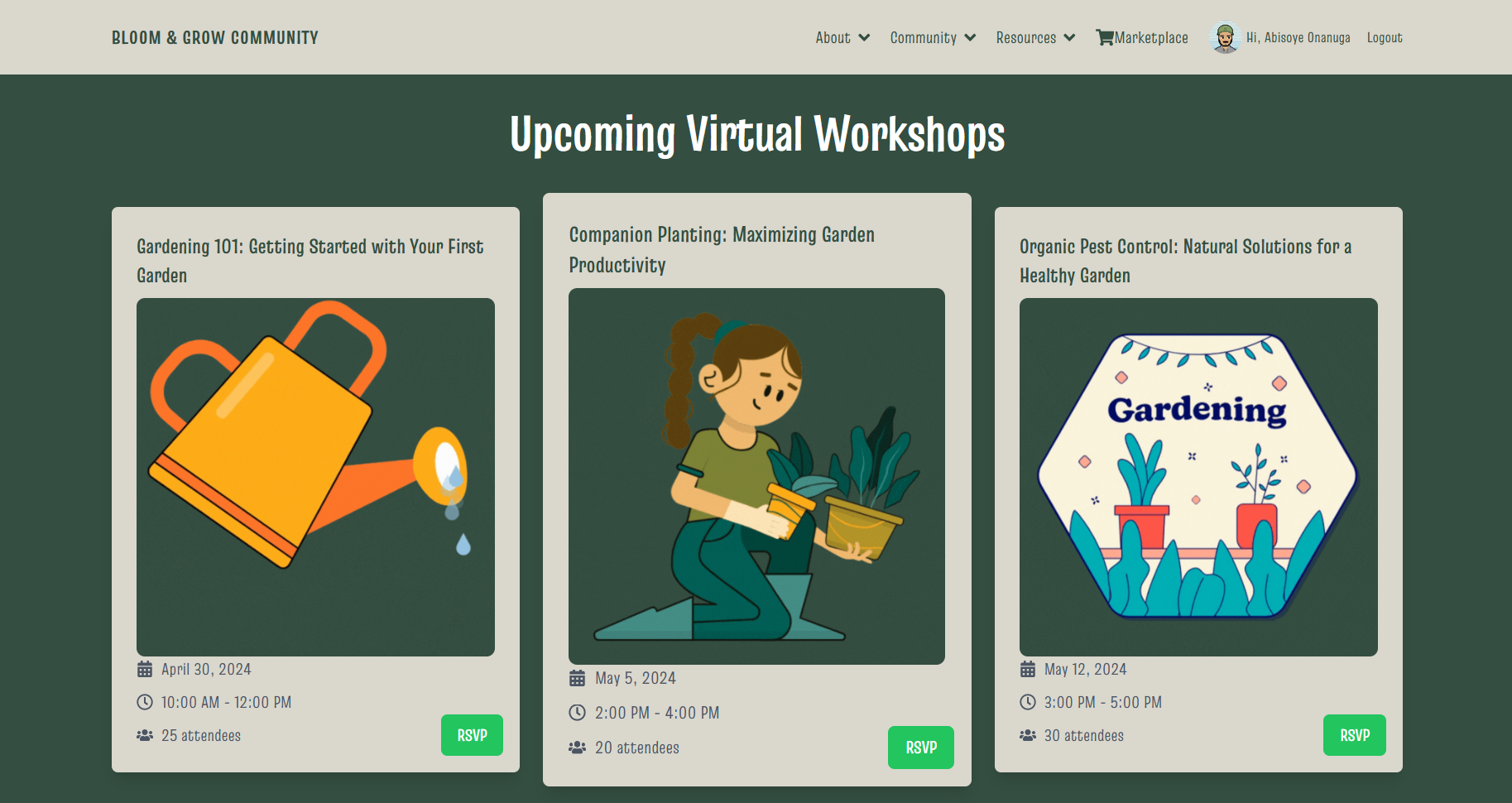
Virtual Workshops
-
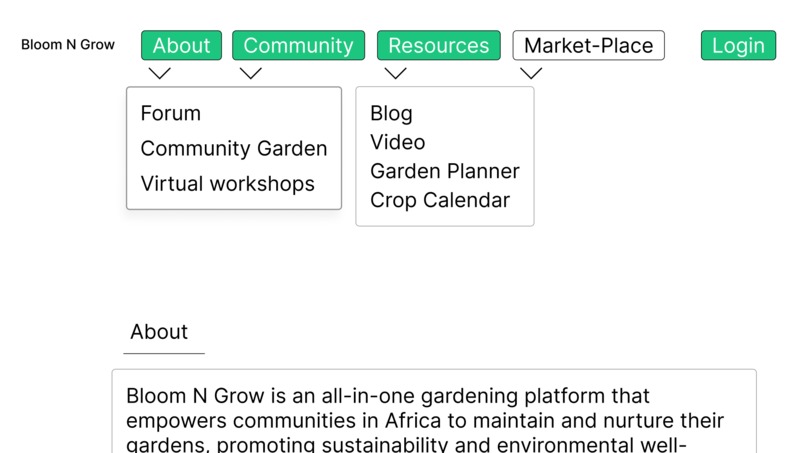
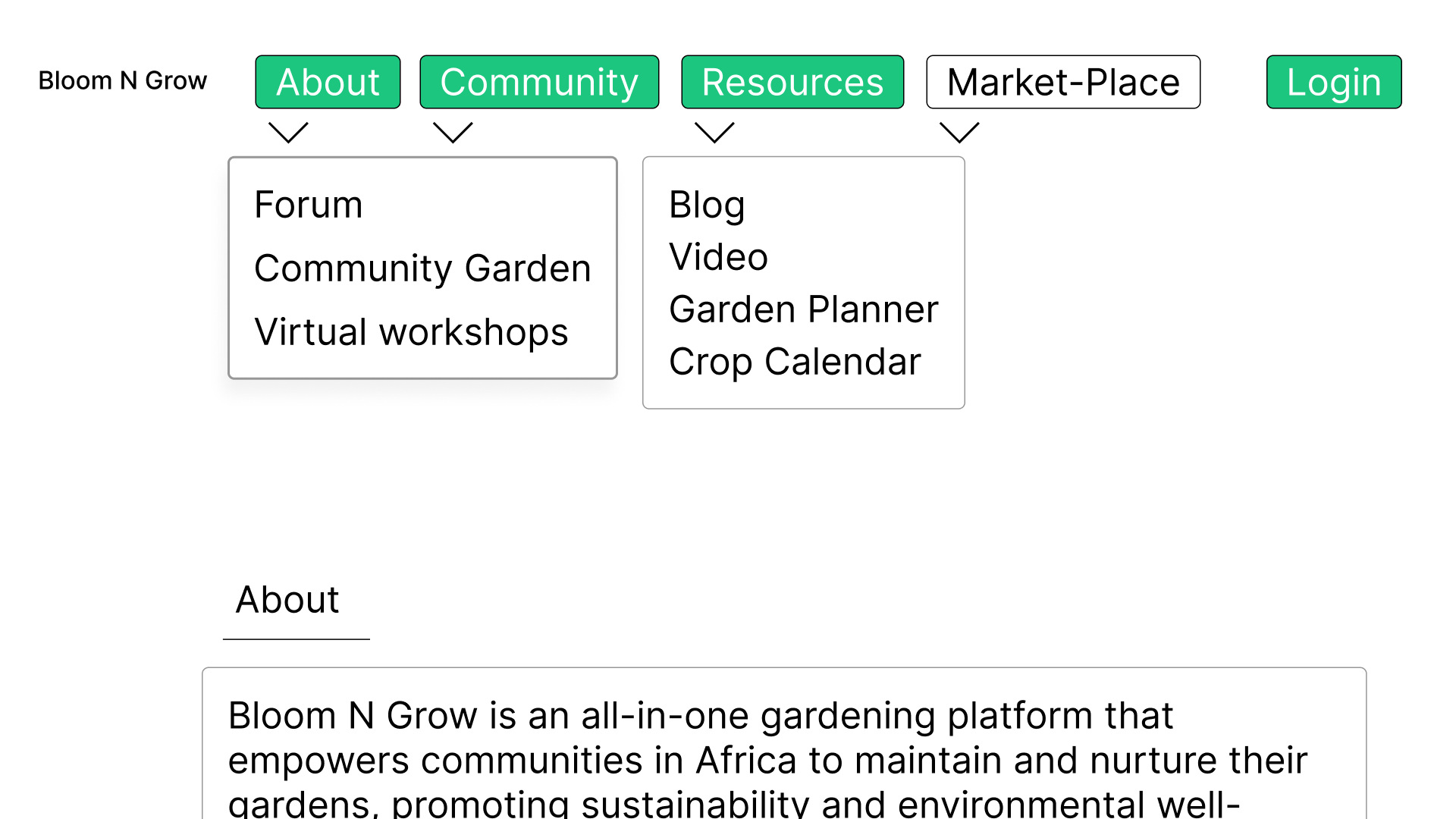
Landing page wireframe
-
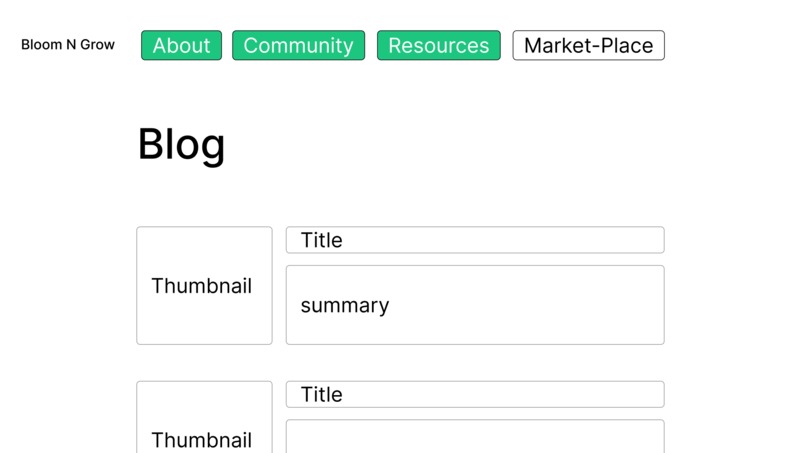
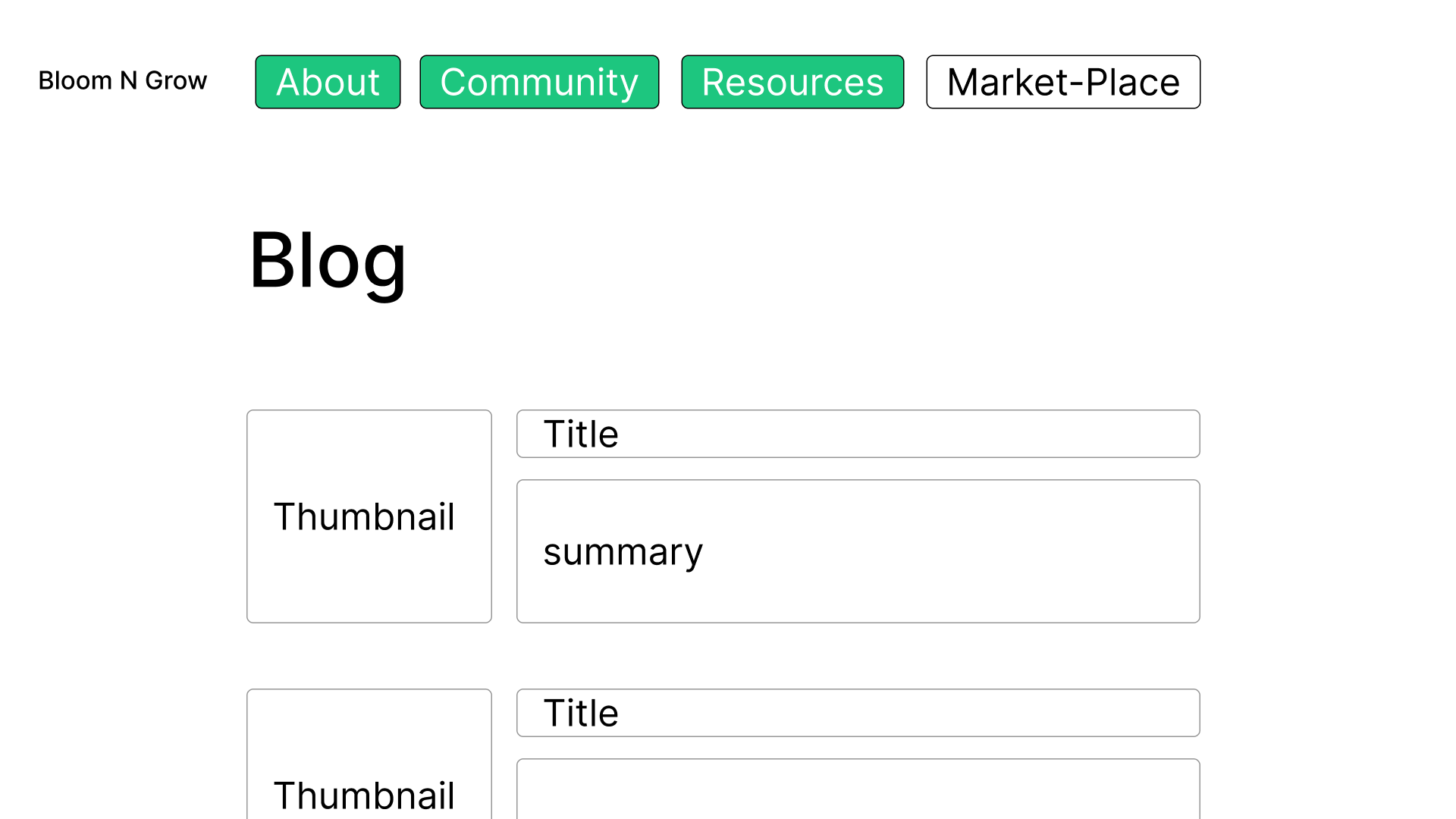
Blog wireframe
-
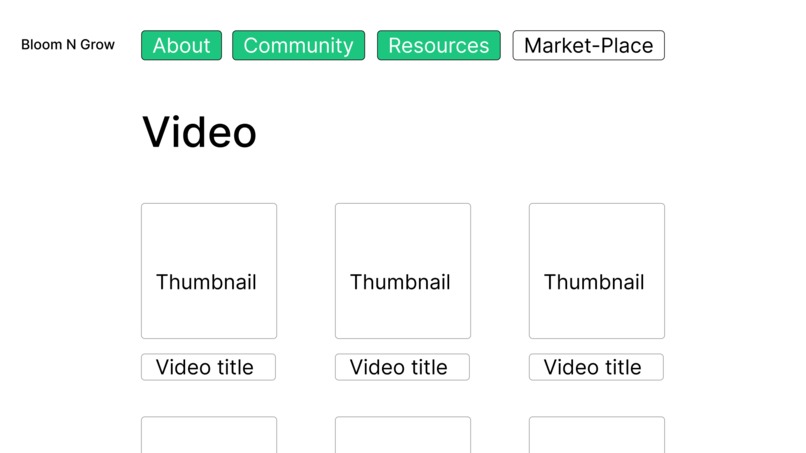
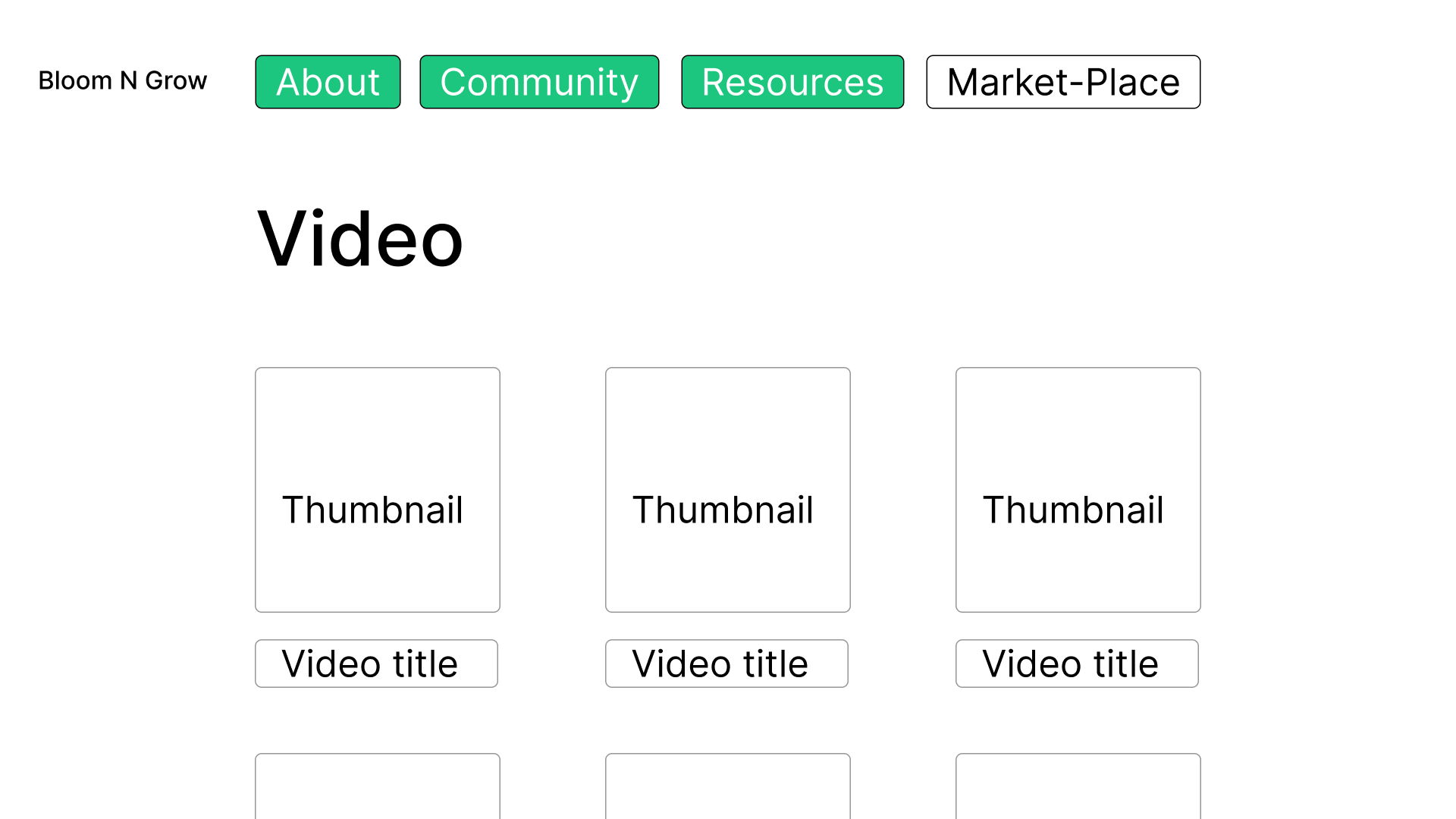
Video wireframe
-
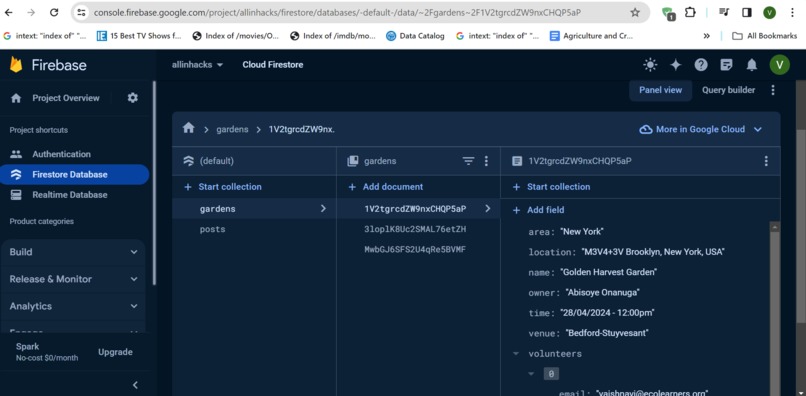
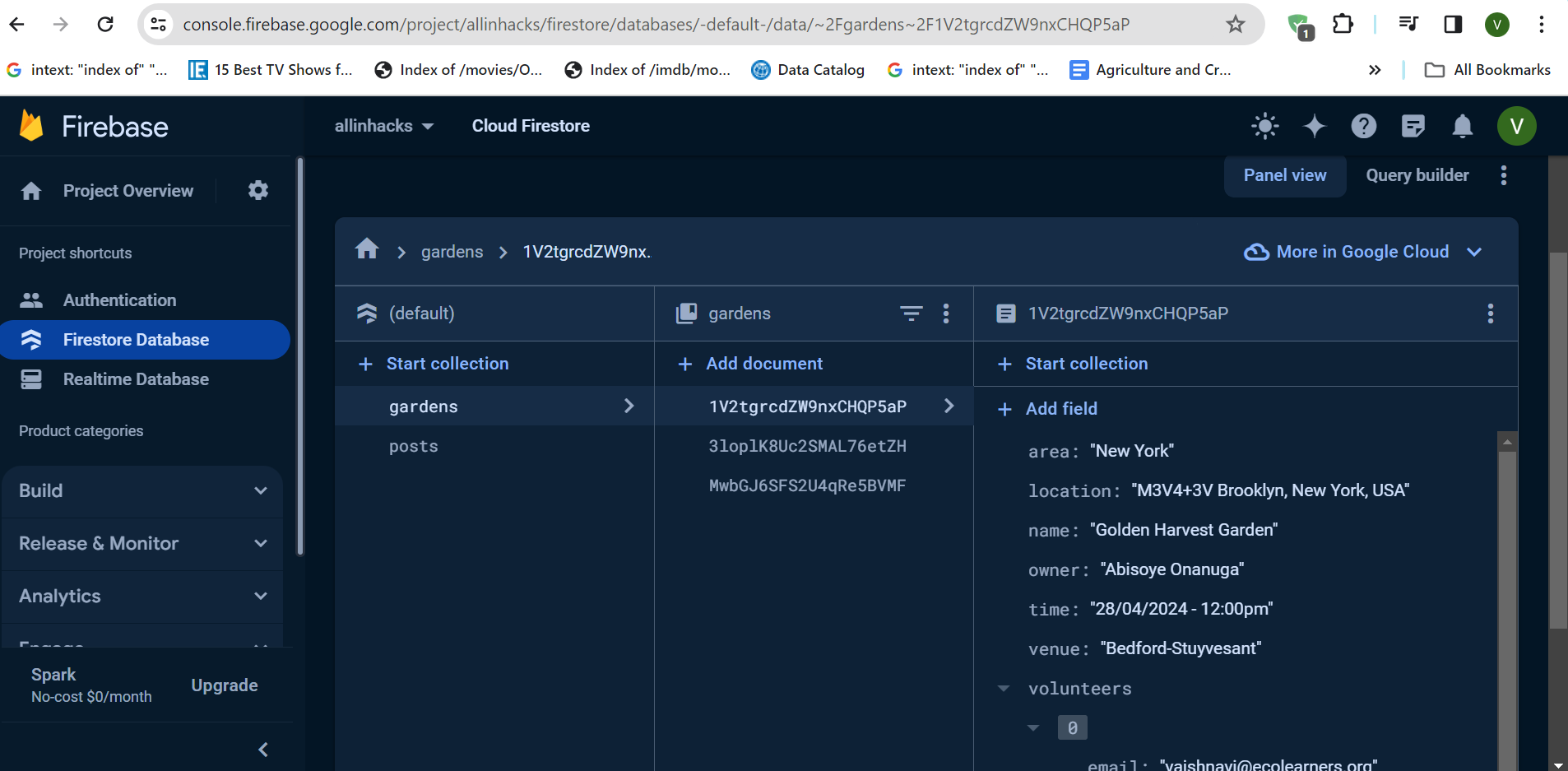
Firebase
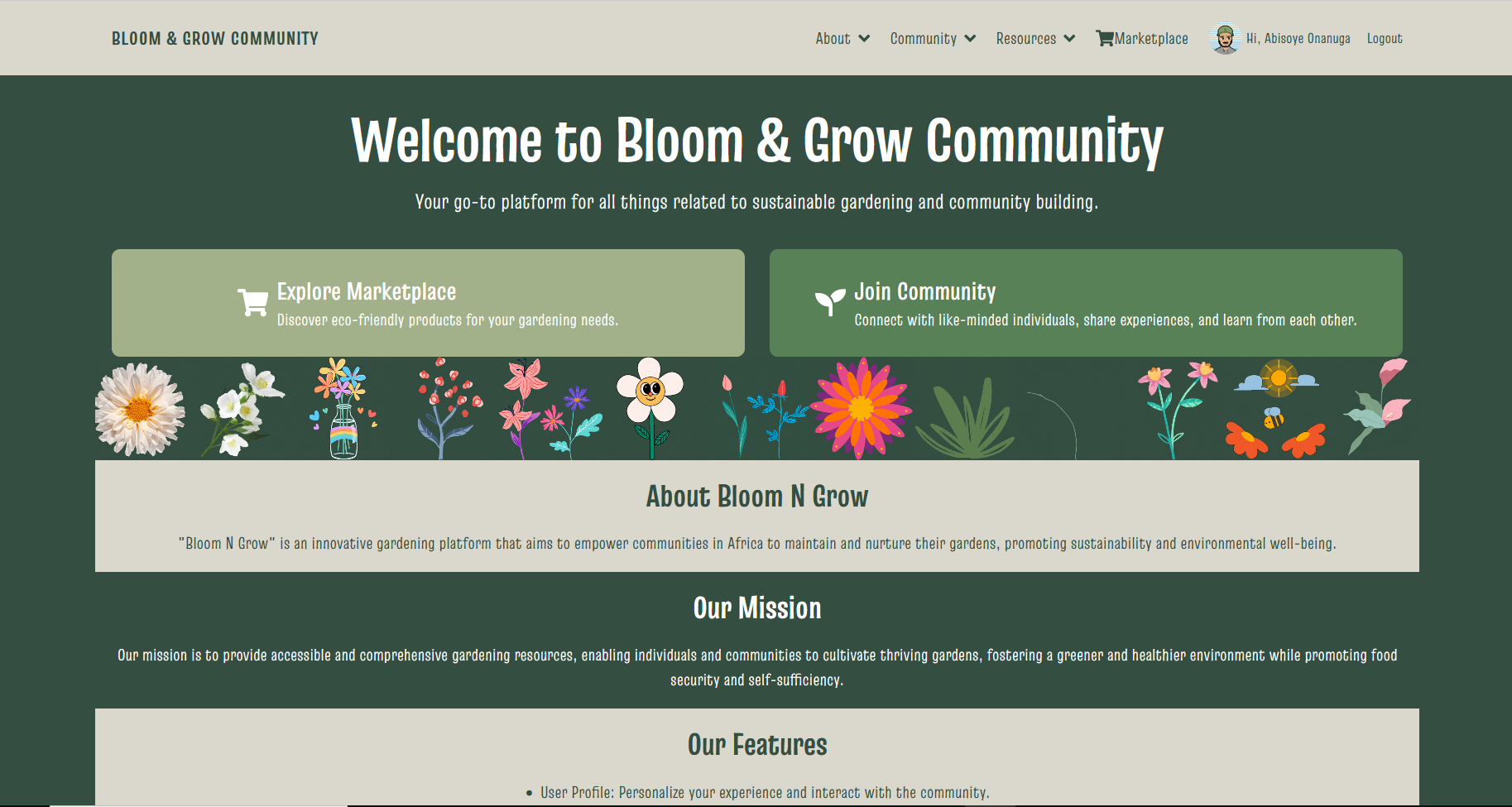
Bloom N Grow
All-in-one gardening resource for Africa 🌱
Inspiration
Inspired by the alarming rate of garden loss in African communities due to lack of care and resources, Bloom N Grow aims to bridge the gap by offering a centralized platform that equips users with the knowledge, tools, and support needed to nurture and sustain their gardens.
What it does
Bloom N Grow is an all-in-one gardening platform that empowers communities in Africa to maintain and nurture their gardens, promoting sustainability and environmental well-being.
While we aim to develop as much as we can accommodate during the hackathon period, we also have a list of features available for Open Source tooling and collaboration:
- Profiles & Community: Gardeners can create profiles, share their journey, and connect with others.
- Sustainable Marketplace: A space to trade eco-friendly gardening tools and supplies.
- Learning Resources: Access to articles, guides, and tools for soil and water conservation.
- Community Gardens: Organizers can manage garden profiles and community engagement.
- Social Features: Challenges, forums, and workshops encourage collaboration and community impact.
- Secure Payments: A trustworthy system for transactions within the marketplace.
How we built it
The project was built using a combination of cutting-edge technologies, including React for the frontend and Firebase for the backend.
Challenges we ran into
Built with React and Firebase, the project overcame challenges in accessibility and usability, particularly for communities in Africa with diverse tech literacy levels. The team is proud of the platform’s potential to foster sustainable practices and community growth in African regions.
Accomplishments that we're proud of
- Bloom N Grow demonstrates the power of technology in addressing real-world challenges and promoting sustainable practices.
- Having the potential to positively impact communities across Africa, as well as, empowering communities across Africa to cultivate thriving gardens and contribute to environmental conservation efforts.
What we learned
- User-Centered Design: Emphasized the need for a design that addresses the unique needs of target communities.
- Interdisciplinary Collaboration: Discovered the importance of combining knowledge from agriculture, environmental science, and technology to create a comprehensive platform.



Log in or sign up for Devpost to join the conversation.