Inspiration
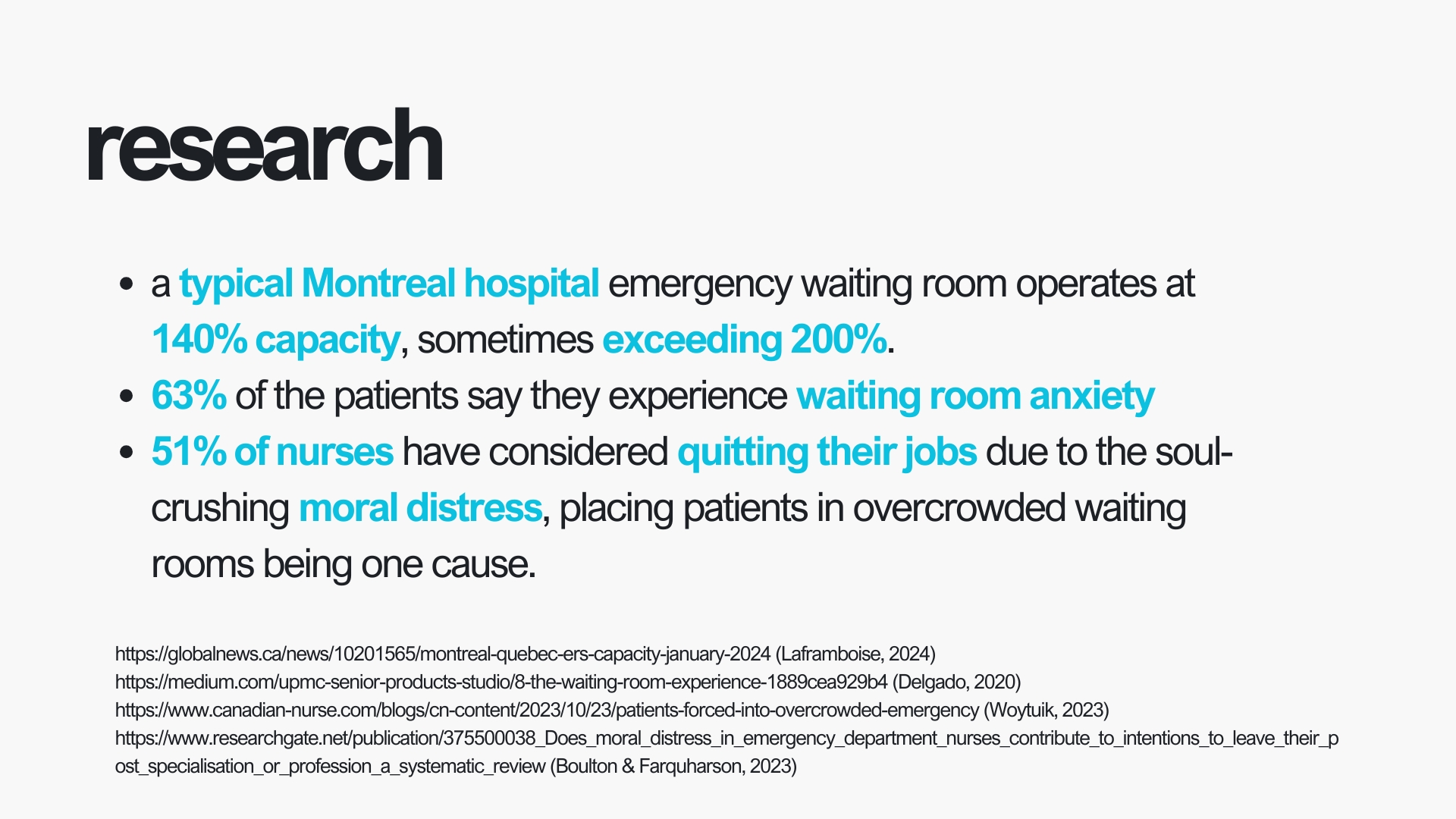
Our inspiration is driven by research, and a growing problem in Canada. We decided to tackle the problems of wait time management in the ER for Canadians, more specifically Montreal. We saw that a typical Montreal hospital Emergency room operates at a scary 140% Capacity, sometimes even exceeding a boggling 200% Capacity. Other reasons we found in our research include, 63%* of patients report feeling anxious in the waiting room, and an astonishing **51% of nurses have considered quitting there job due to the soul crushing moral distress of managing patients.
What it does
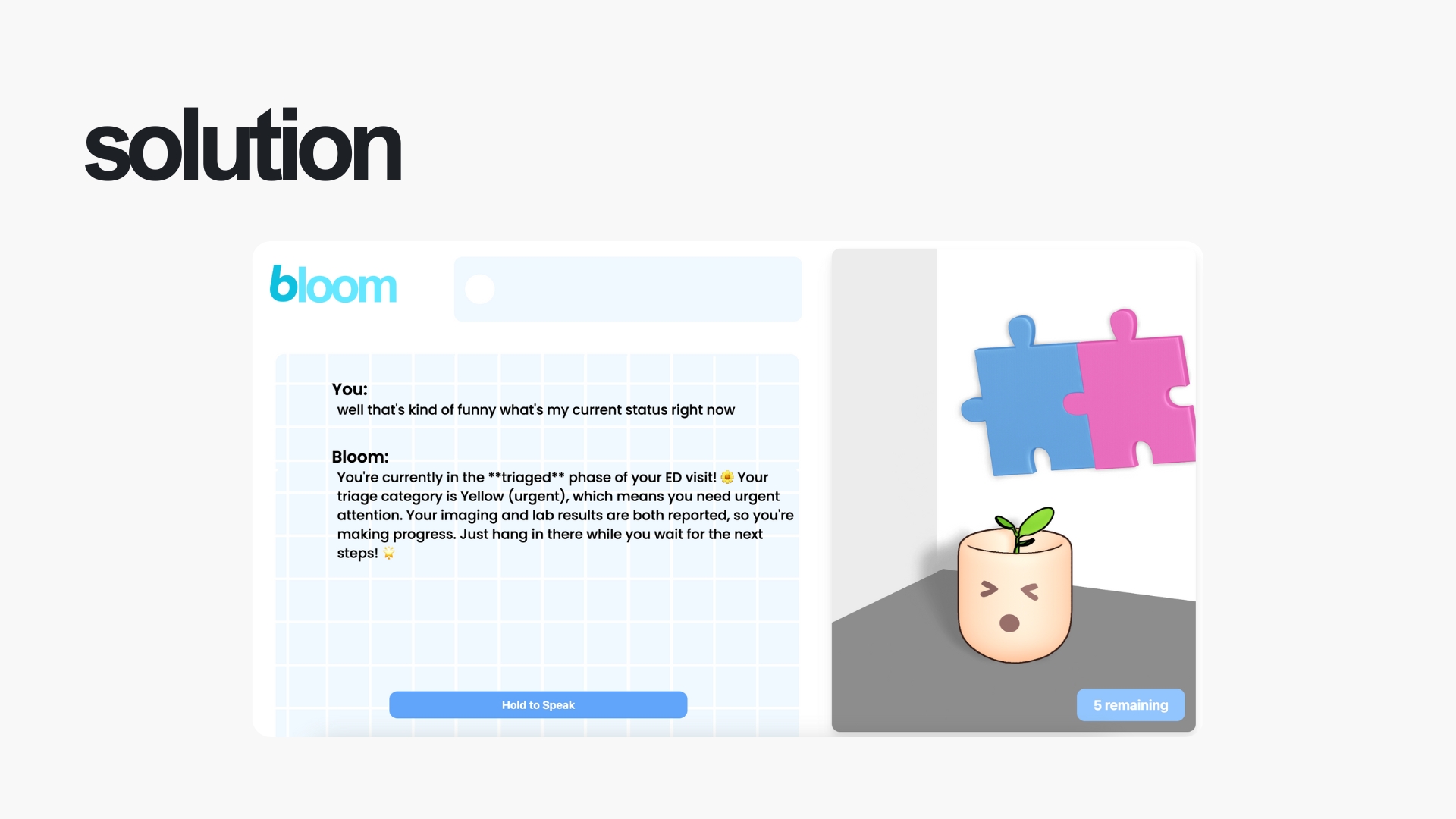
So to combat this growing problem, we decided to build a GROWING solution. Introducing bloom an AI companion in the wait room that keeps you company while you're in the wait room, with feature such as being able to use your voice to speak to it, as well as audio responses to help you calm your nerves. We decided to provide bloom a bubbly and whole hearted personality to help you through one of your most soul crushing moments. Additionally bloom will grow as you the time passes and it gets closer to your turn! We respected the rules and bloom can not give you medical advice because of AI ethical issues, but you're able to have fun conversations as well as stay updated on your current profile over the time! It will also move its mouth and and make funny expressions accordingly.
How we built it
We built bloom with modern technology such as React.js, Python, Flask, Tailwind CSS and even three.js. We also use apple and windows text to speech features, as well as OpenAI! This is all possible with IFEM's data that they provide which we run local simulations of the patient data to show how a real life session would be like. Now with these *simulations we show stuff such as remaining people in queue as well as your case information which you can ask bloom for!
Challenges we ran into
Some challenges we ran into would definitely be optimizing our software for a real waiting room experience. Since waiting room's can have a tendency to be loud sometime we added a hold to speak feature to help cover this problem where it helps stop picking up other conversations and speech. We also wanted to implement a lot of features that are commonly pay walled, but we developed our own in house solutions to overcome them.
Another problem that we had was that as a proof of concept, we couldn't really have the API work for our idea, as it was a bit of a spin off. Since we wanted to be able to interact with the patients, but didn't really know the lifecycle of the patient fully (while still wanting to showcase the features of the app), we randomly chose a patient and followed it's life cycle.
Accomplishments that we're proud of
We're proud of completing our project in time for submission and the demo, as well as the learning we had on the way! Even though we were only 2 people we managed to pull through and finish our MVP way before time to better prepare it for the presentation as well as cool new features!
What we learned
We learned the importance of building together! Especially having a plan. Something that we realized really helped us not slack off was us keeping each other accountable of certain tasks and having hard set meetings to discuss going fowards!
What's next for Bloom Companion
Our goal is for Bloom to be fully omniscient and interactive, being able to view the person they are talking to, seeing their emotions and facial expressions as well as being able to perform cool tricks and make funny jokes to keep the patient entertained.



Log in or sign up for Devpost to join the conversation.