-
-
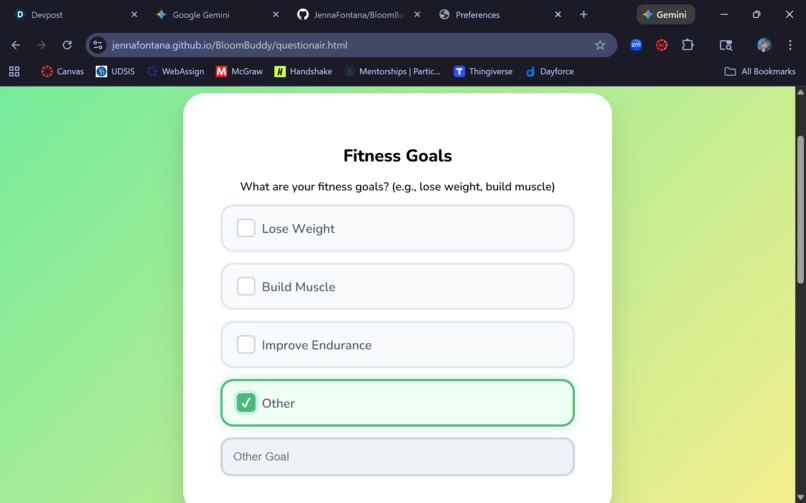
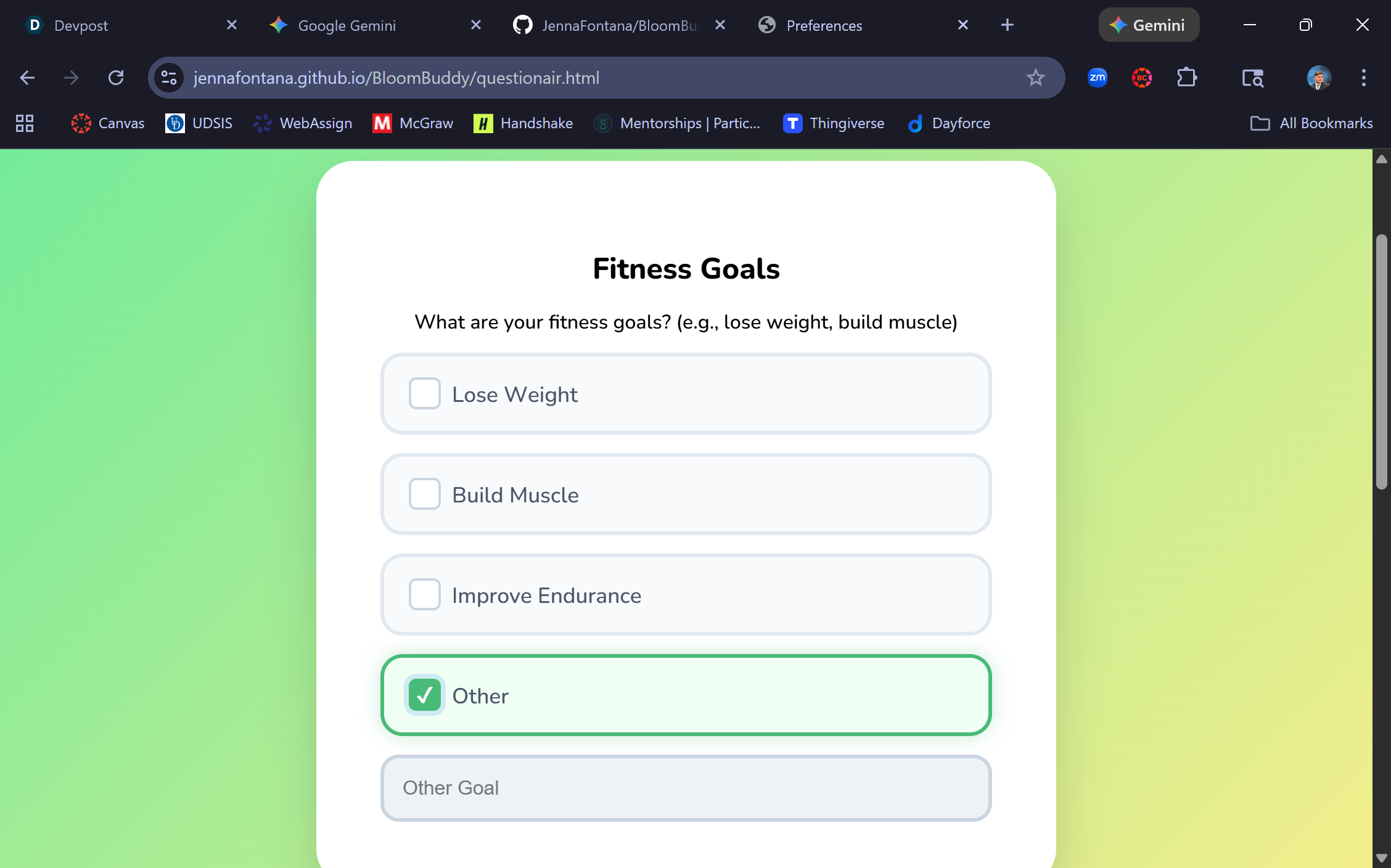
Fitness goal options
-
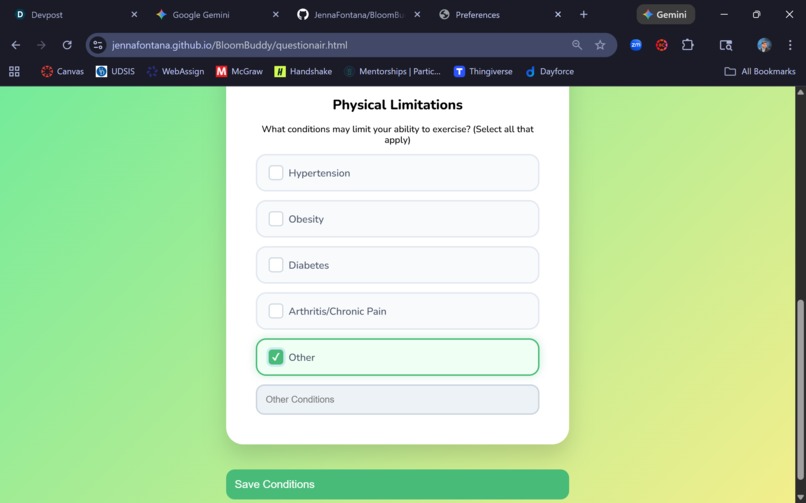
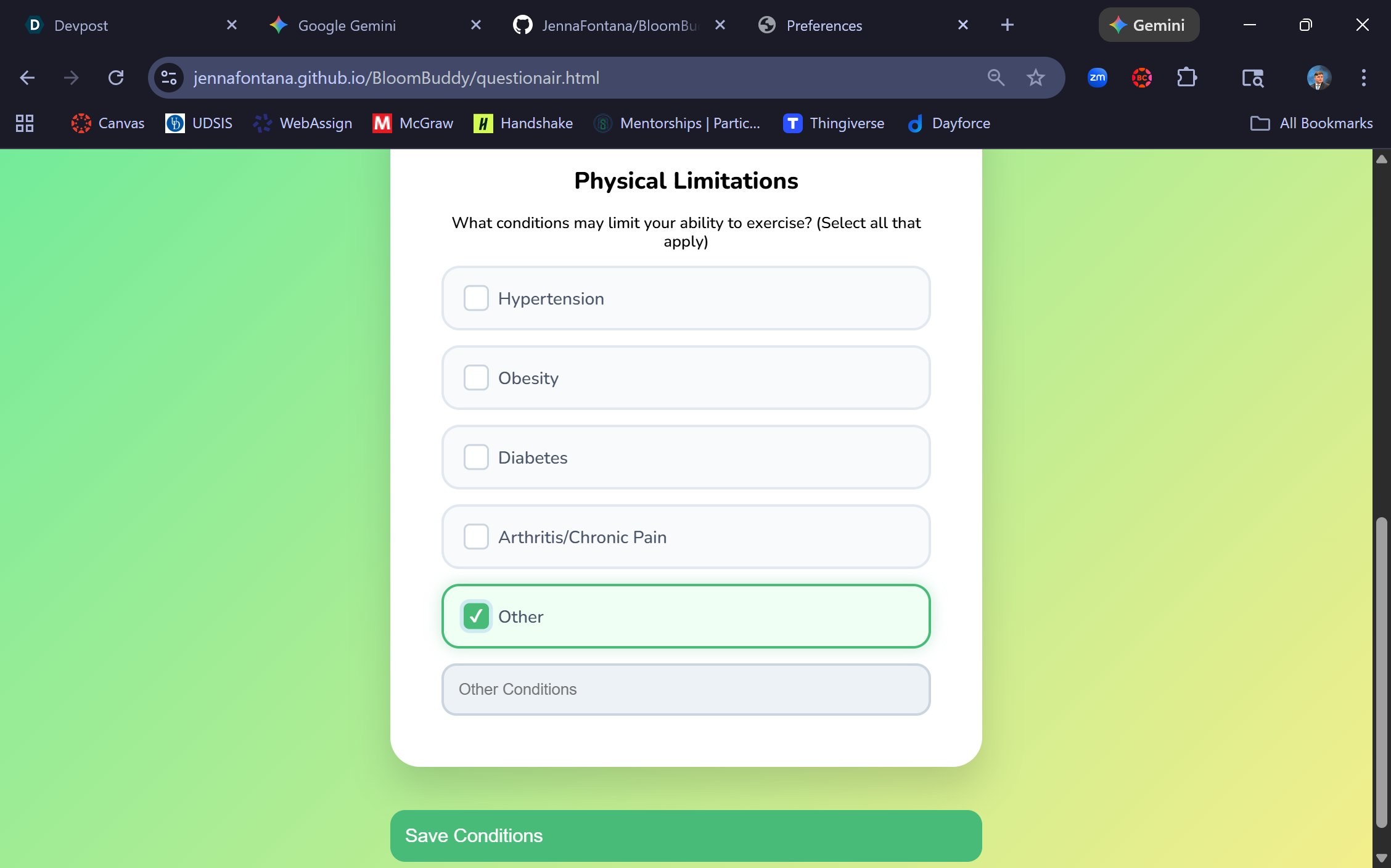
Physical limitation options
-
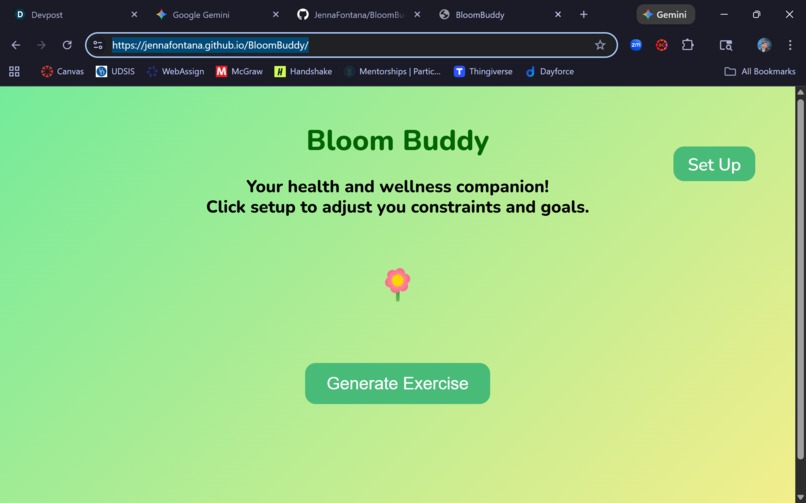
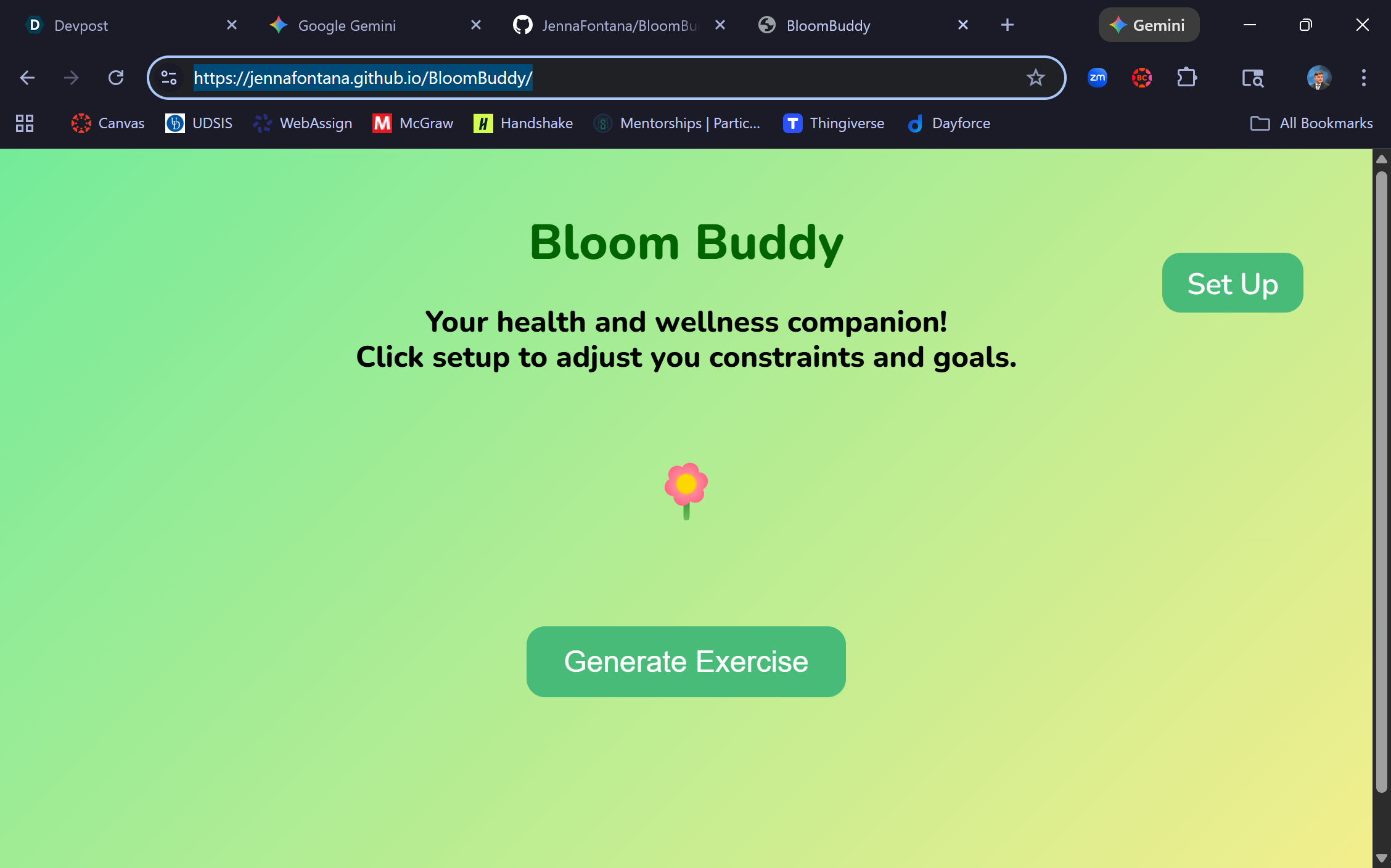
Home Page
Inspiration
Bloom Buddy was inspired by mobile apps such as Finch that make a game out of self care, through the caring of a virtual pet or plant. This was an attractive method, as it utilizes both positive reinforcement and loss aversion to motivate the user into an active life style.
What it does
Bloom Buddy is virtual companion that gamifies physical exercise and activity. It utilizes behavioral concepts such as loss aversion and positive reinforcement to motivate the user to exercise in accordance to personally curated work out schedule, via Gemini 2.5 Flash, rewarding users with a thriving digital plant as they continue to follow the work out schedule.
How we built it
Bloom Buddy uses Gemini 2.5 Flash and Firebase on the back end for the storing and processing of user data. Firebase handles the storage of user data, such as the fitness goals and physical limitations of user. This data is stored in conjunction with anonymous user IDs generated by Firebase. Bloom Buddy's front end was built using barebones HTML, CSS, JavaScript. These tools allowed us to build modern and user friendly interface that is minimally dependent on third party packages.
Challenges we ran into
- Prompt Engineering: Used trial and error to finetune the output of Gemini to ensure that workout plans are safe and personalized to the user's needs.
- Version Control: Faced frequent merge conflicts which we resolve with concise communication between team members on which code was necessary. ## Accomplishments that we're proud of We are proud of efficient development cycle regardless of challenges we faced. Using CI/CD via GitHub actions and splitting up tasks to best take advantage of each team members skills.
What we learned
During our brain storming and early development process we found it very important to reach outside what we are familiar with but also to be carful not to over extend into a project that could not be feasibly completed in the allotted 24 hours.
What's next for Bloom Buddy
The next steps for Bloom Buddy are to shift the user interface to a mobile first design, then using a framework such as Capacitor or Ionic to convert the website into a cross platform mobile application.

Log in or sign up for Devpost to join the conversation.