The problem with habit trackers is that they panic for you.
Streak counters treat your wellbeing like a glass chain: miss one day and 47 days of effort shatter to zero at midnight. That's a design choice — and we think it's the wrong one. Guilt is not a growth strategy.
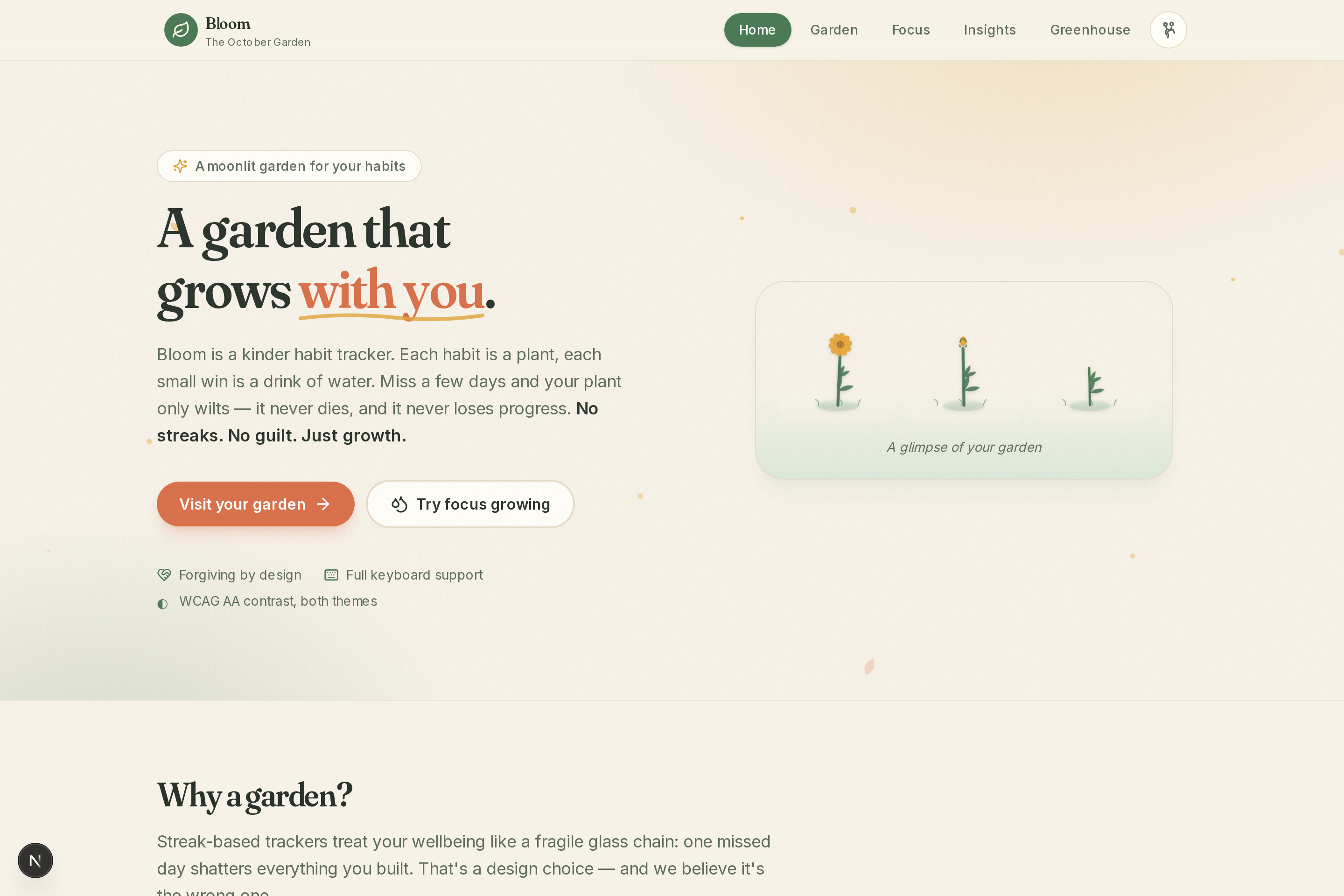
Bloom replaces the streak with something that behaves like real growth: a garden.
What it does
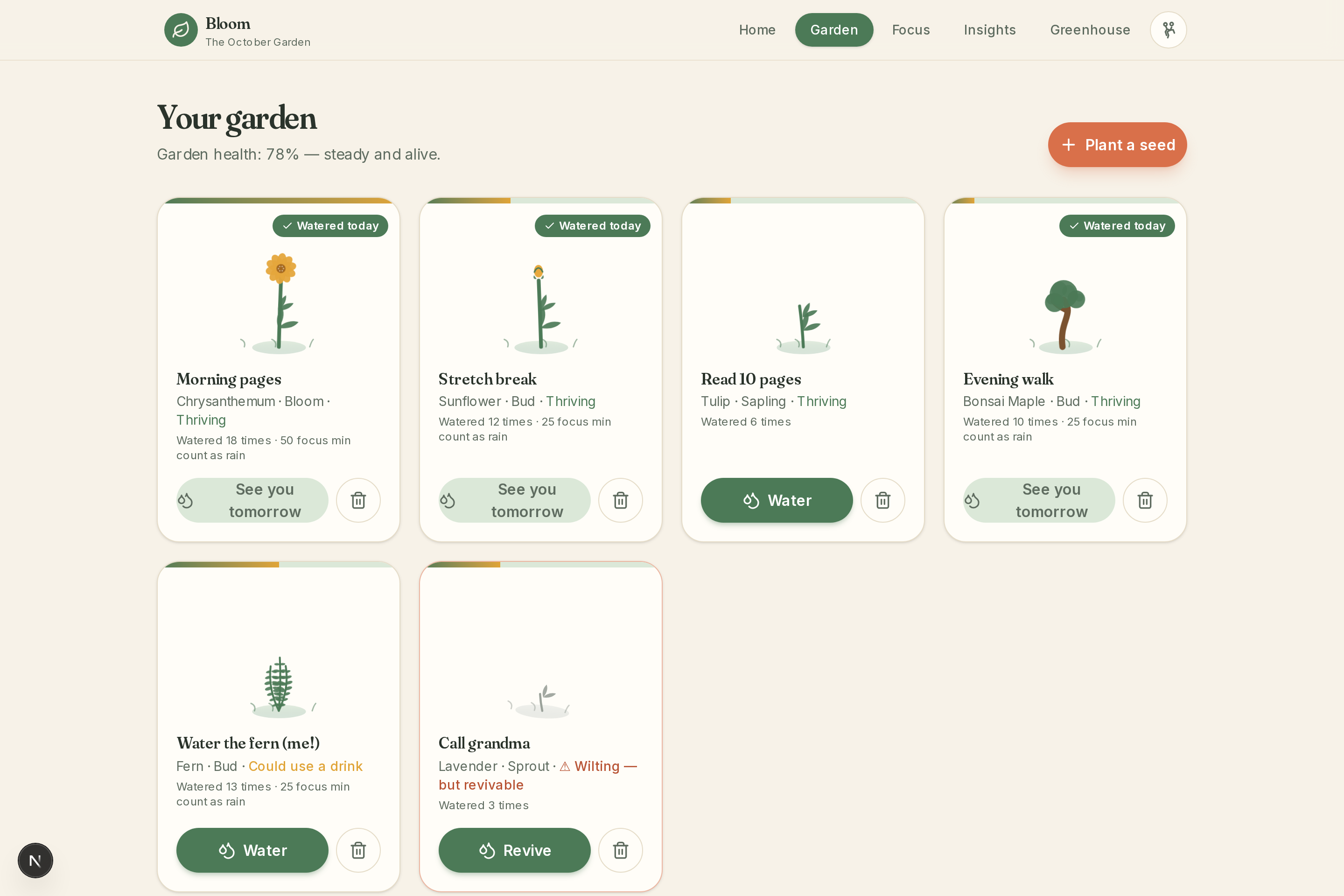
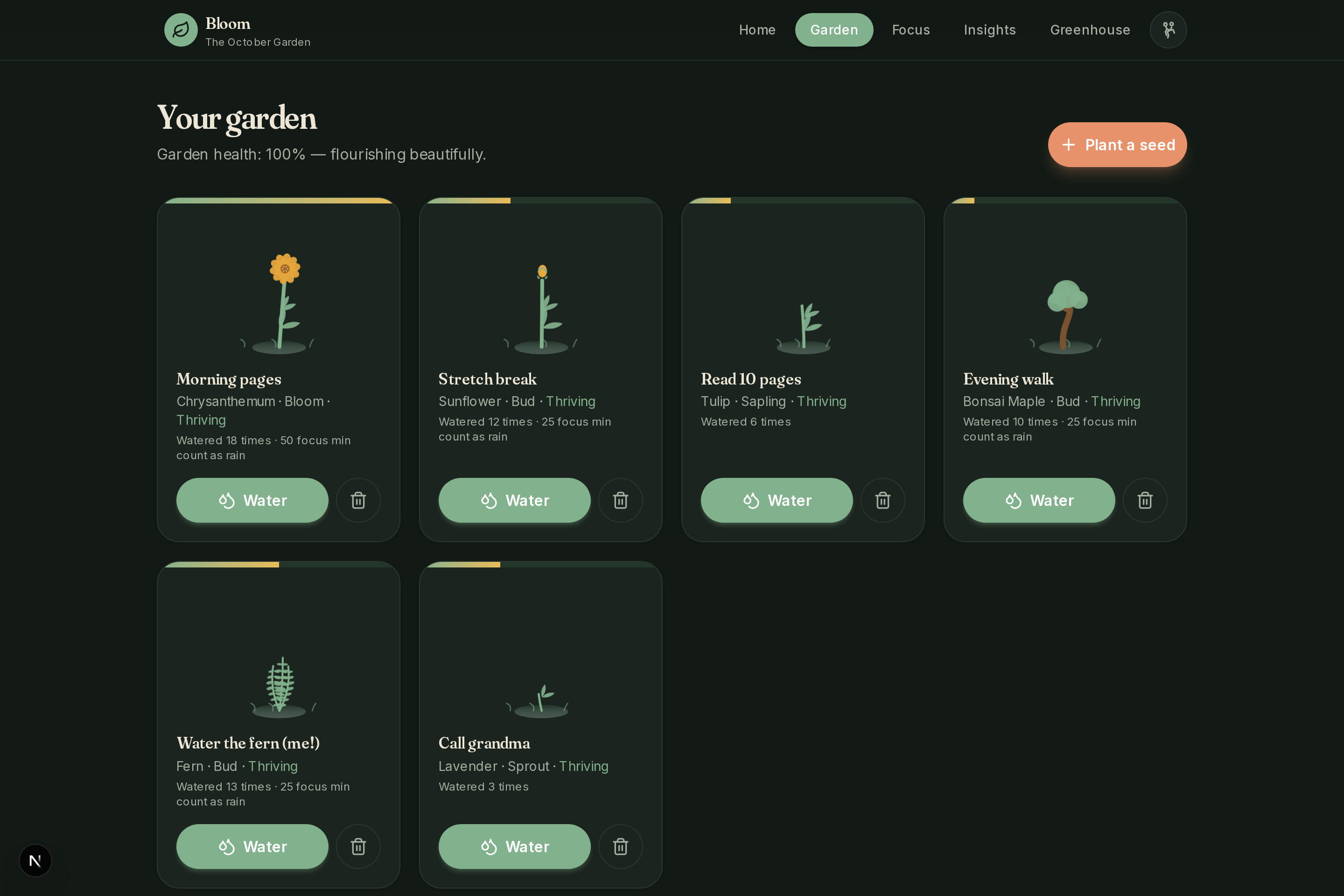
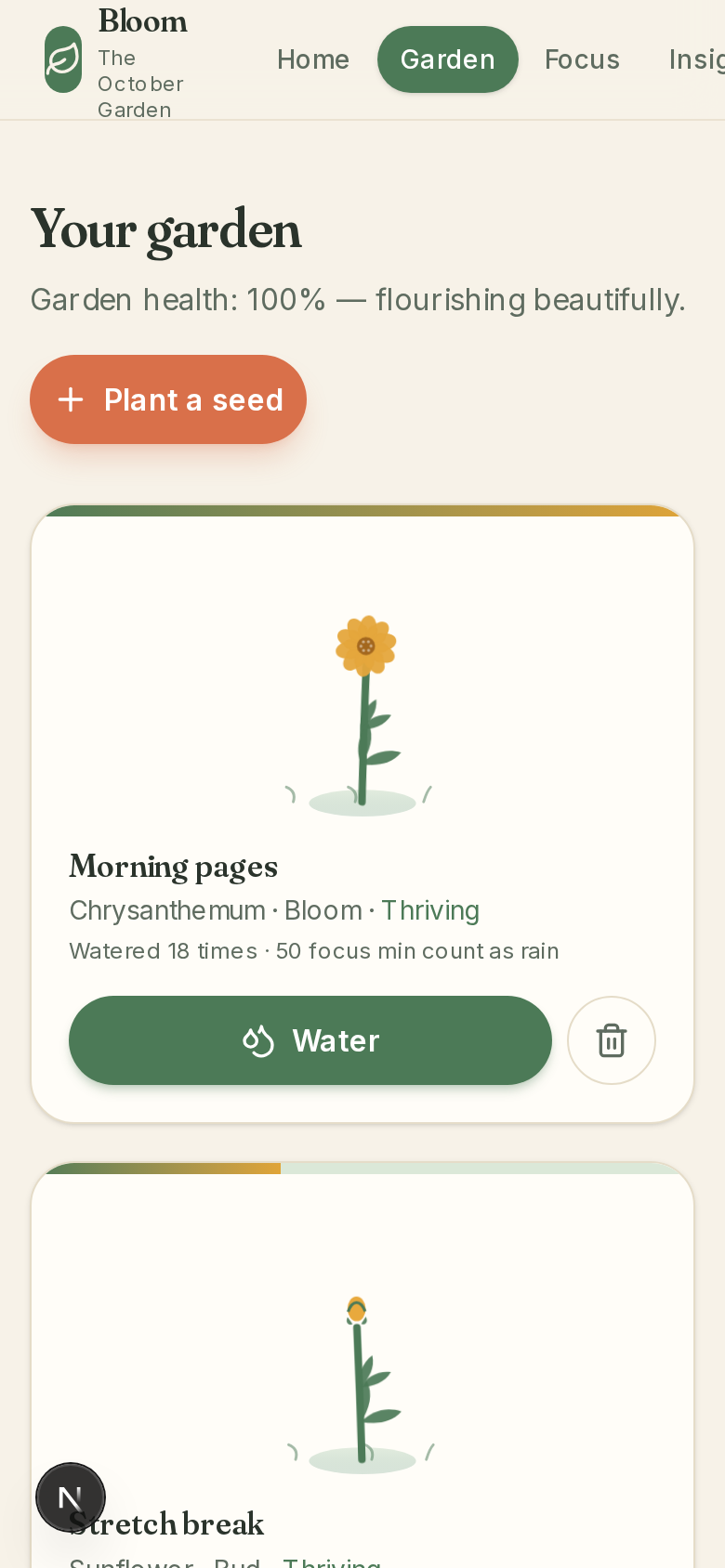
- Plant a seed for each habit — 7 hand-drawn species (sunflower, fern, tulip, lavender, cactus, bonsai maple, chrysanthemum), each with its own temperament
- Water with one tap on the days you show up, and watch your plant grow through five stages: seed → sprout → sapling → bud → bloom
- Forgiveness, built in: miss a few days and your plant only wilts. One tap revives it, and every stage of growth it earned stays earned — forever. Plants don't punish you for a rainy week.
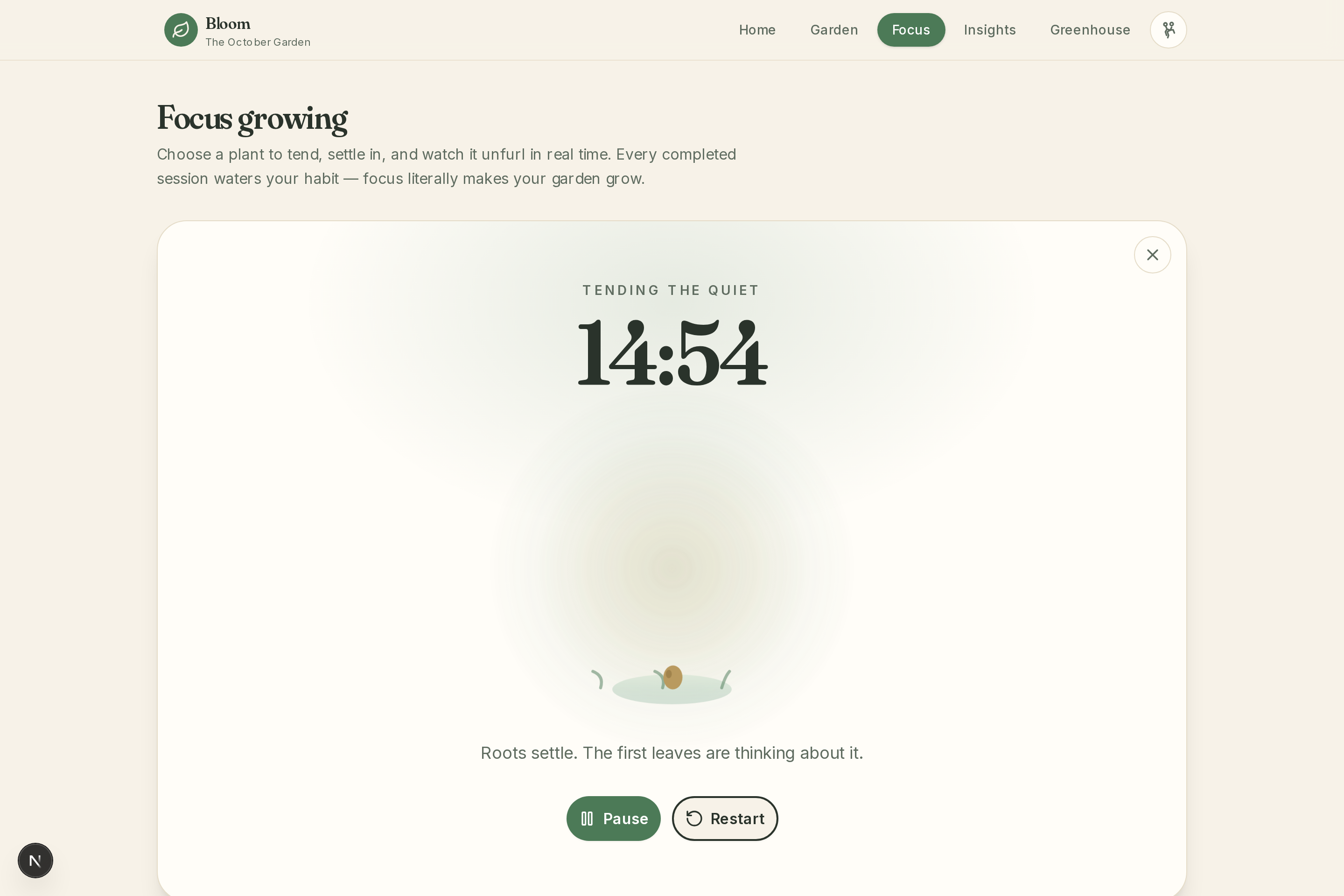
- Focus Mode: settle into a 15/25/45-minute session and watch a flower unfurl in real time as the timer runs — a living progress bar. Every 25 minutes of deep focus waters your garden as rain.
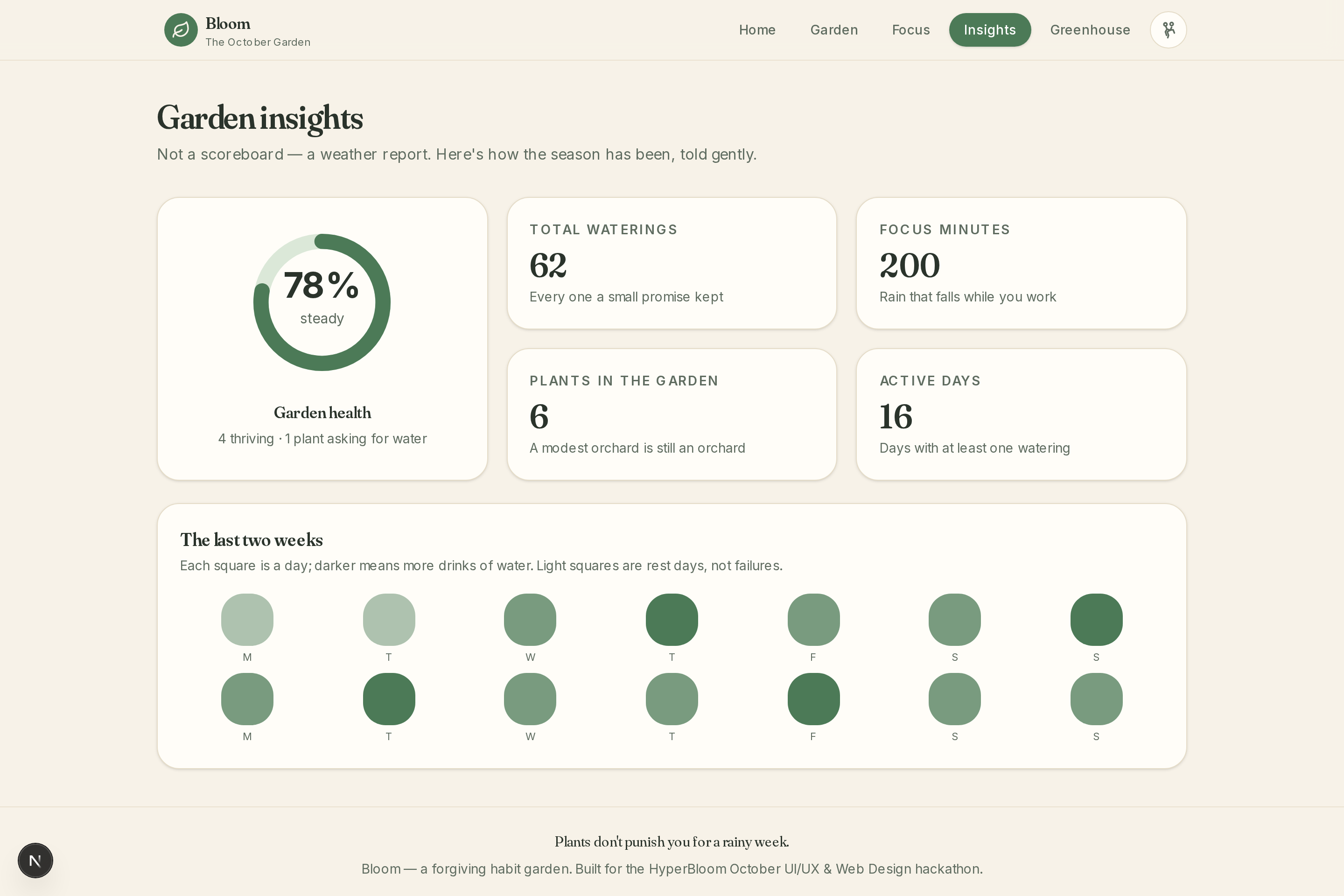
- Insights as a weather report, not a scoreboard: garden health, a 14-day watering calendar, and gentle totals
How we built it
- Next.js 16 + TypeScript + Tailwind CSS 4 + Zustand, zero backend — all state lives in the browser (localStorage), so Bloom is instant, offline-friendly, and private by default
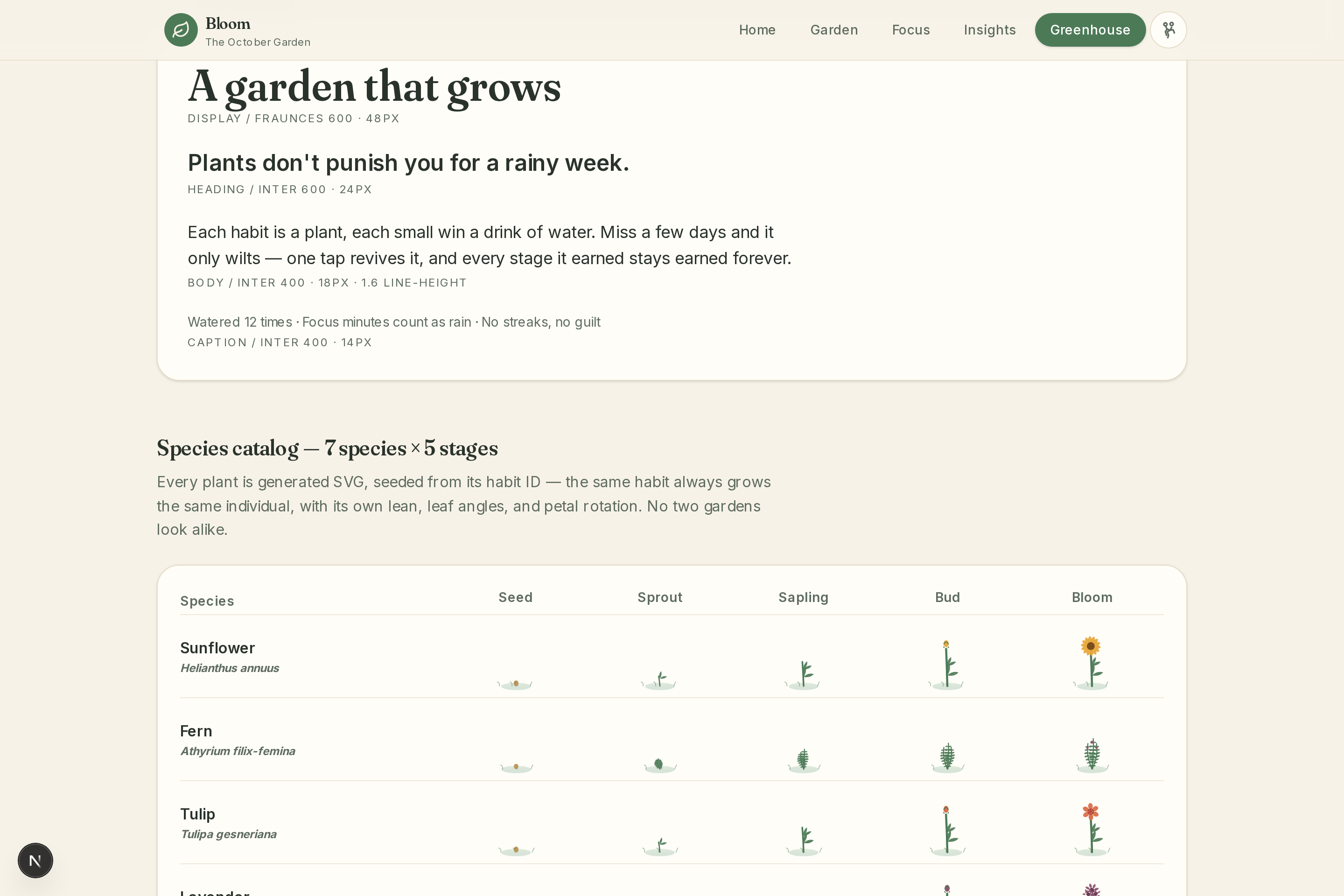
- Generative SVG plants: every habit's ID deterministically seeds its height, lean, leaf angles and petal rotation — the same habit always regrows the same individual plant, and no two gardens look alike
- Web Audio API synthesizes the optional watering chime — no audio assets
- Day/night theming follows your system; October ambience (drifting pollen, falling leaves) rendered in pure CSS/SVG
Accessibility is a first-class garden bed, not a hedge
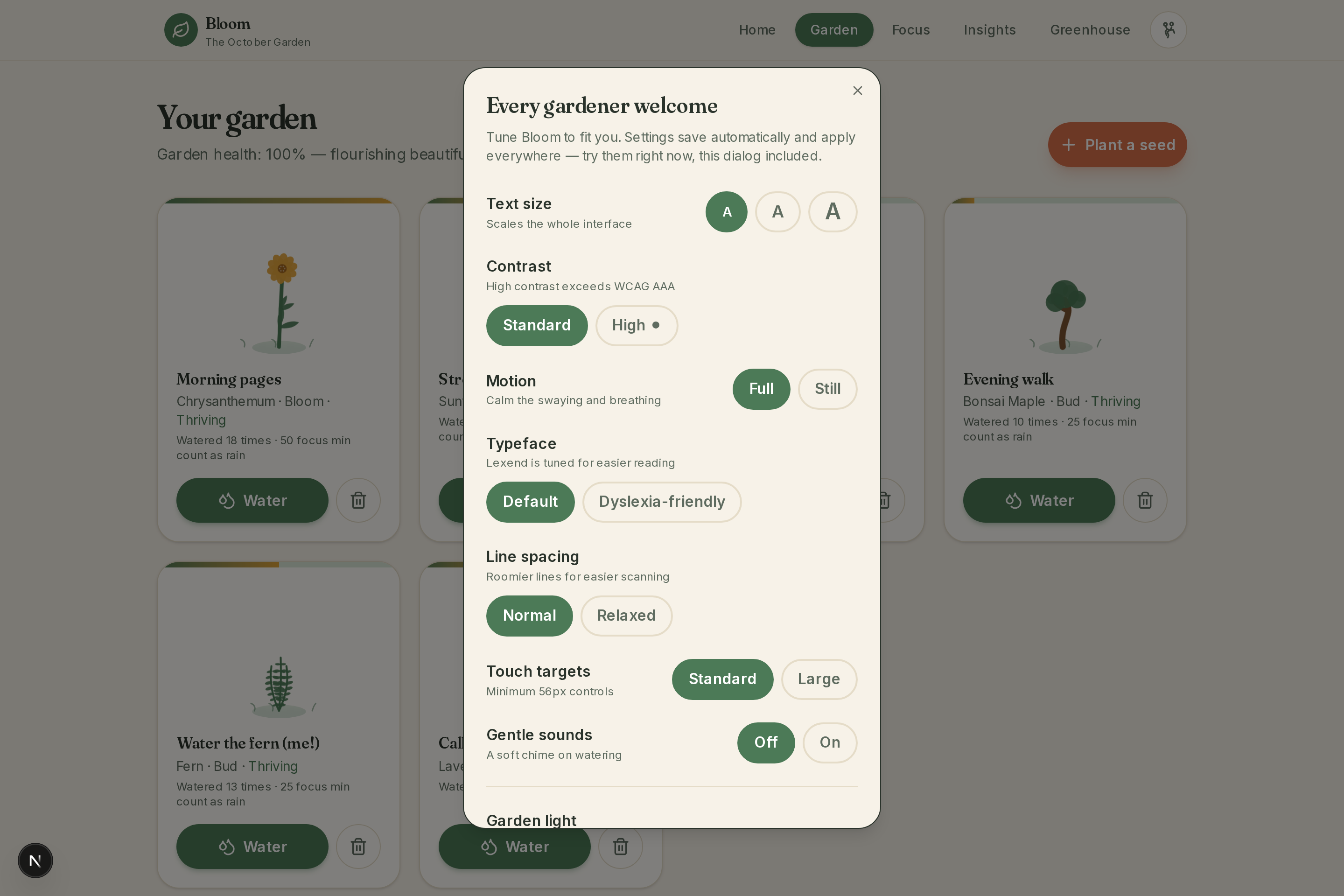
Bloom ships a live in-app accessibility panel (the circle-person button, top right) with six persisted settings: text size, high contrast (beyond WCAG AAA), reduced motion, dyslexia-friendly typeface, relaxed line spacing, and large touch targets — applied instantly, on this very page. Under the hood:
- Full keyboard support: skip link, 3px visible focus rings, focus moves to each view's heading on navigation, Escape closes every overlay
- Screen-reader care: landmarks,
aria-livetoasts with real Undo, labeled progress bars, and described plants (species, stage, health) - State is never color-alone — wilting always pairs icons and text
prefers-reduced-motionhonored by default; every ambient animation has a still-life path
The Greenhouse — a design system you can audit
Every judge can inspect Bloom's design decisions in-app: the full token palette (warm ivory soil, leaf greens, terracotta clay, harvest gold), the Fraunces/Inter type pairing (with a one-tap Lexend swap), all 7 species × 5 growth stages, and component states with honest hover/focus/disabled treatment.
Challenges we ran into
- Making "forgiving" feel intentional rather than unfinished — the wilt/revive mechanics went through several tunings (7-day wilt threshold, zero progress loss) until kindness read as clearly as pressure does in other apps
- Keeping 7 species × 5 stages legible as silhouettes while staying generative and deterministic
- Balancing delight against respect: motion that charms at full speed and disappears entirely when reduced motion is requested
What we learned
Kindness is a design constraint. Removing streaks forced us to replace manufactured urgency with intrinsic motivation — growth you can see. Once the plant was the progress bar, every design decision got easier and more honest.
Try the live demo at hyperbloom.pages.dev — plant a seed, water it, wilt it, revive it, and grow a flower through one focus session. The garden remembers you when you come back. Full source code: github.com/43aquarius/bloom-habit-garden.
Built With
- accessibility
- css
- design
- javascript
- nextjs
- react
- svg
- tailwind
- typescript
- ux



Log in or sign up for Devpost to join the conversation.