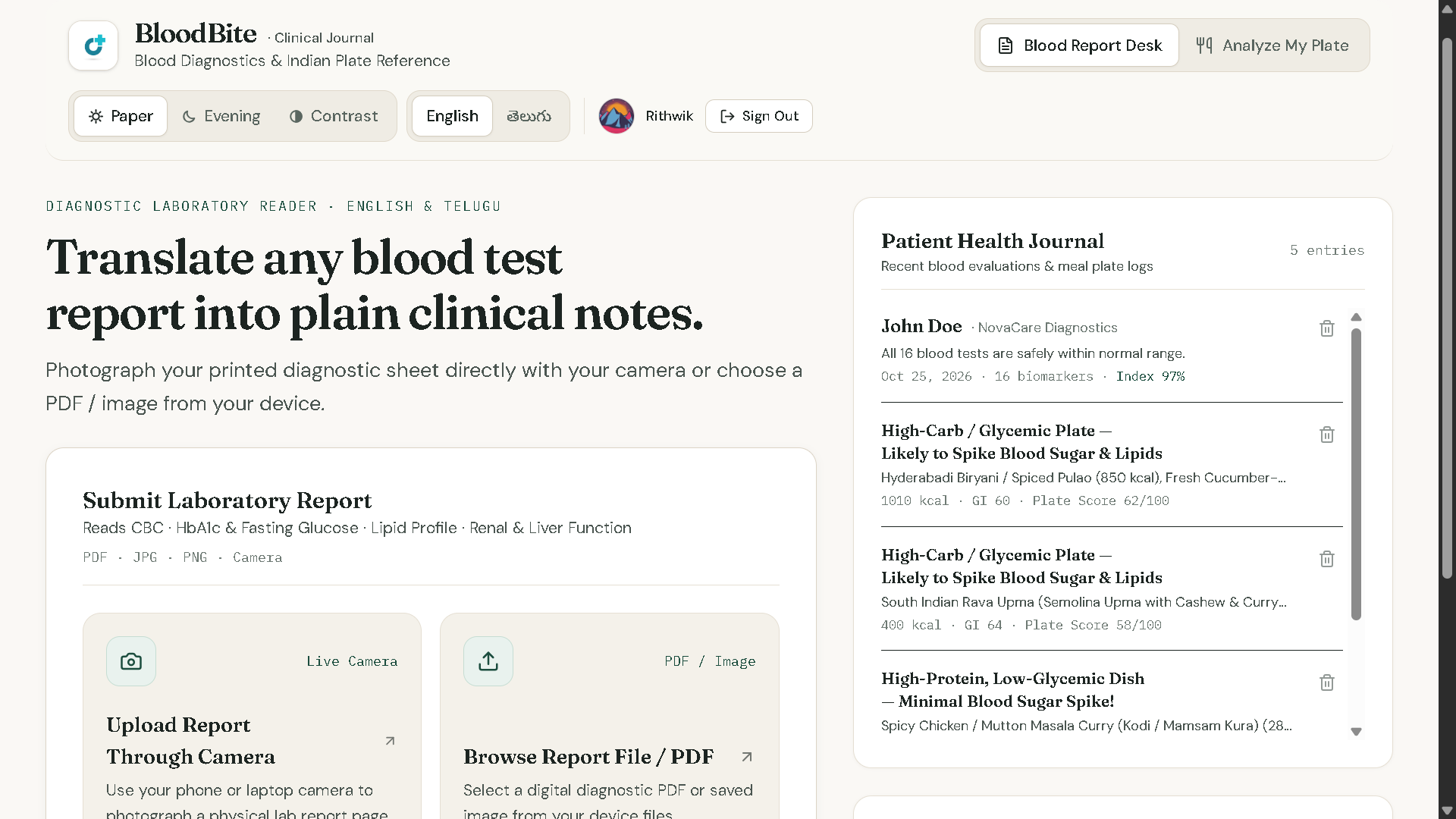
BloodBite is a full-stack health technology application designed to bridge the gap between complex clinical data and everyday nutritional choices. It serves as an AI-powered companion that not only translates confusing medical jargon from blood test reports into plain language but also provides actionable, localized dietary guidance based on those results.
Here is a detailed breakdown of the project to help you explain its architecture, features, and value proposition to others.
1. The Core Problem It Solves
Most patients struggle to understand the raw data in their diagnostic lab reports. Even if they do understand that a biomarker (like HbA1c or Cholesterol) is out of range, they often do not know how to adjust their daily meals to improve it. BloodBite solves this by combining clinical report analysis with a culturally relevant food scanner.
2. Primary Modules & Features
Module A: Clinical Blood Report Analyzer
Smart Scanning: Users can upload a PDF, a saved image, or use their device's live camera to scan a physical lab report.
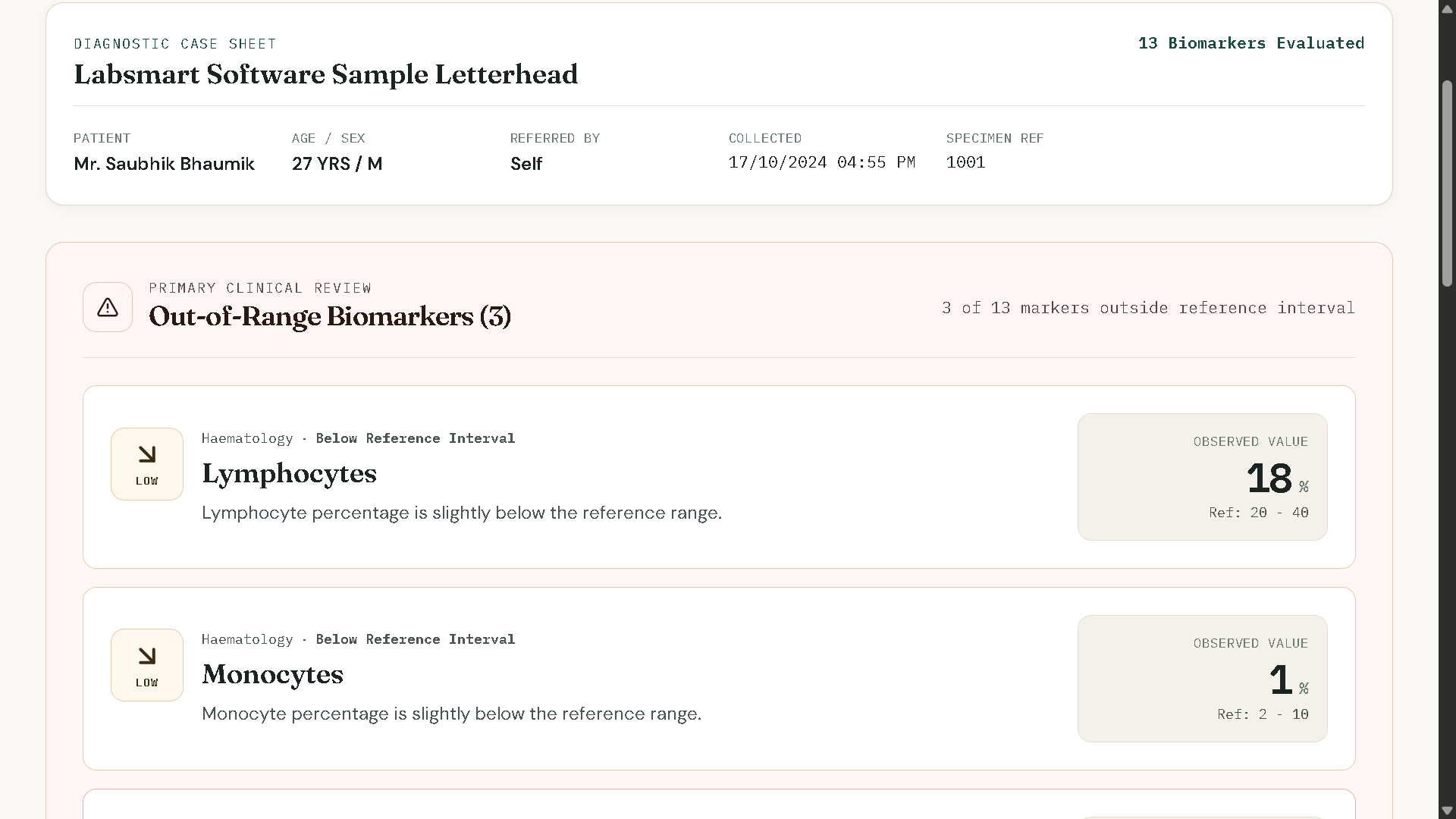
Data Extraction & Categorization: The app extracts the data and categorizes it into core clinical systems: Hematology (CBC), Glycemic Control (Diabetes), Lipid & Vascular (Heart), and Renal & Hepatic (Kidney/Liver).
Triage System: It separates the results into two clear ledgers: "Needs Attention" (out-of-range markers with explanations of what they mean) and "Within Normal Range".
Overall Wellness Score: It generates a composite percentage score indicating the user's overall biomarker balance.
Module B: "Analyze My Plate" Nutritional Studio
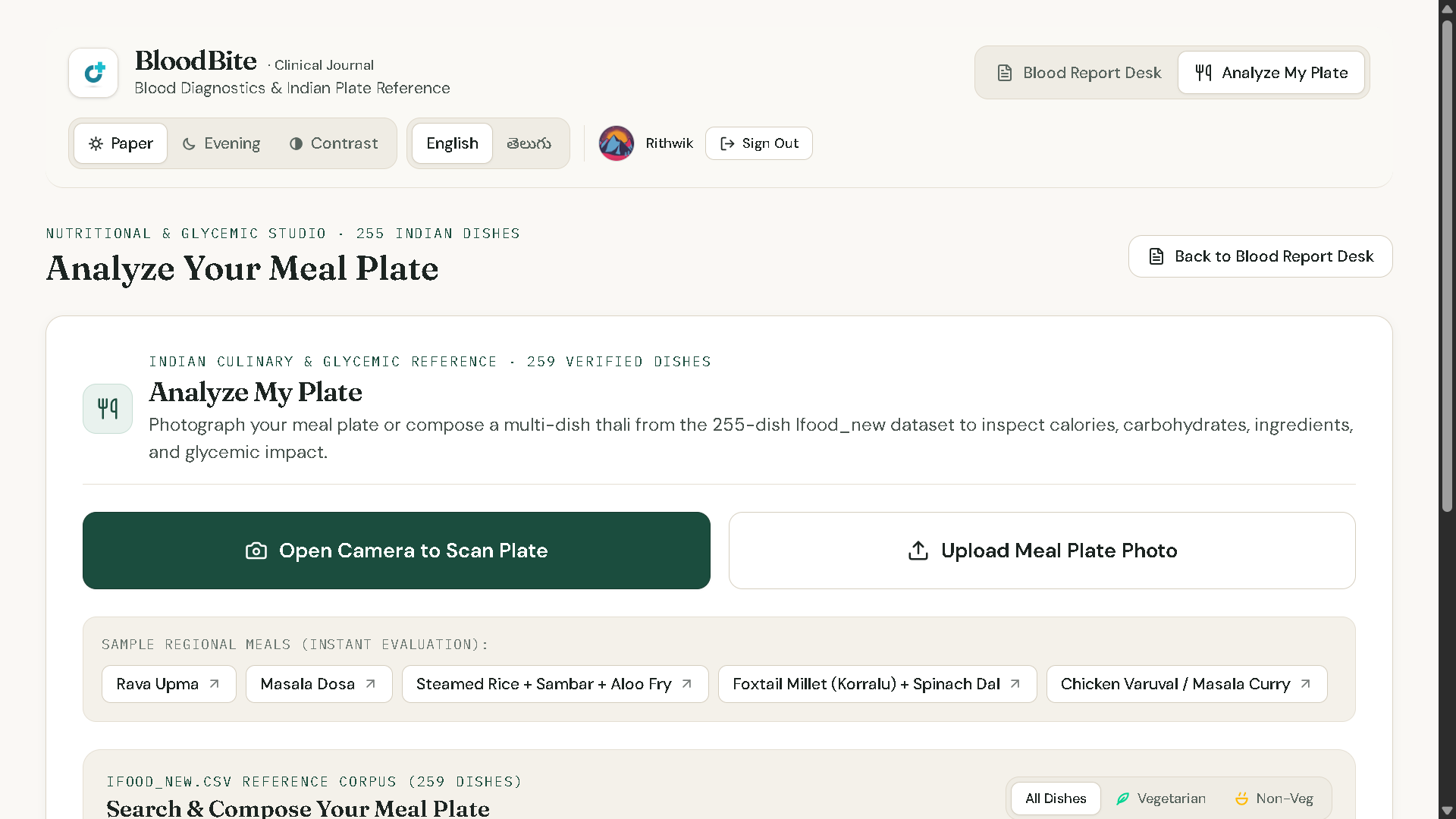
Live Plate Scanning: Users can point their camera at their meal to get an instant nutritional breakdown.
Indian Culinary Database: The app is integrated with a verified 255-dish Indian nutritional dataset (Ifood_new / ICMR-NIN). Users can manually search and build their plate using local items like Upma, Dosa, or Chicken Varuval.
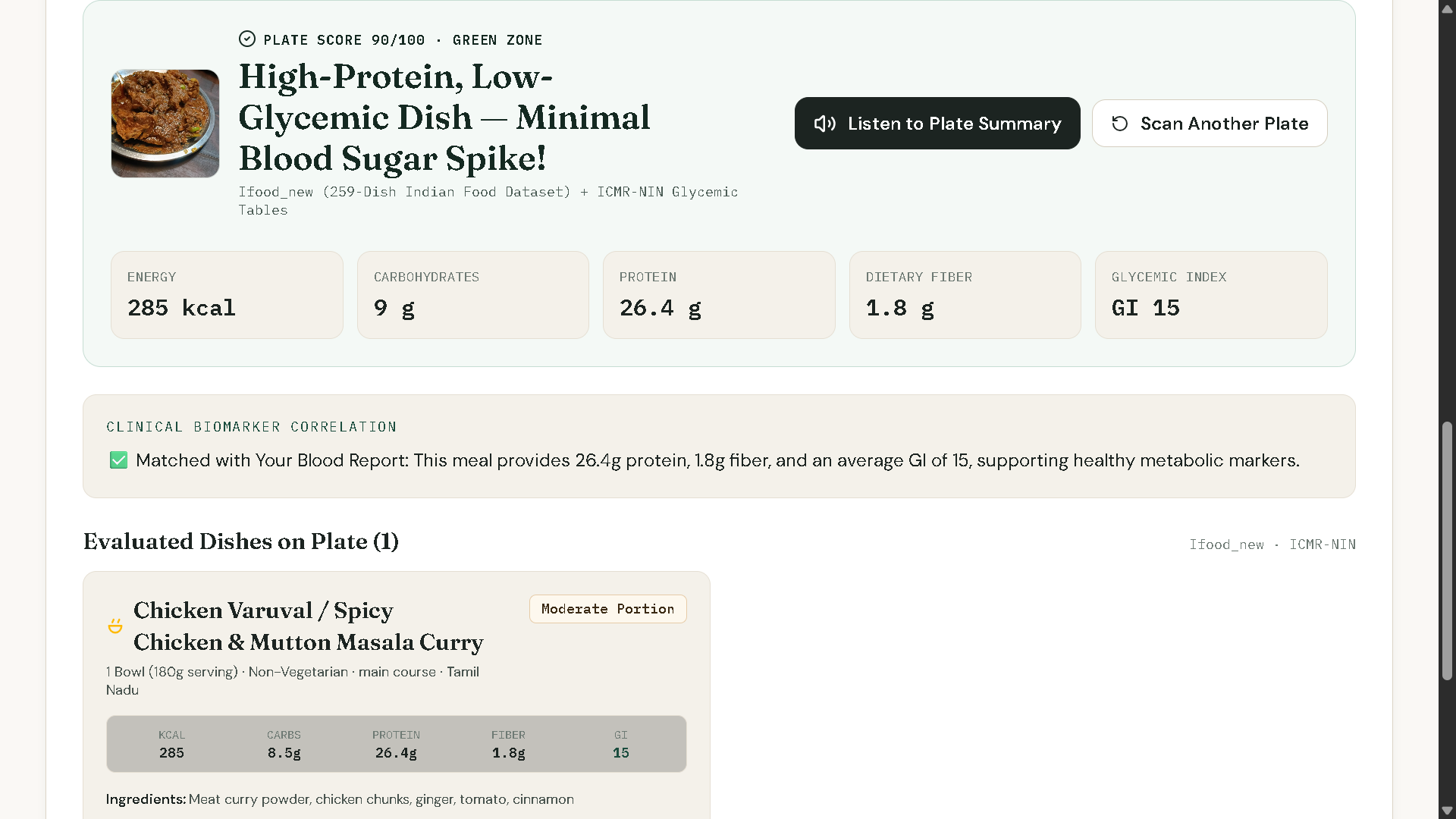
Macro & Glycemic Tracking: It calculates total calories, carbohydrates, protein, dietary fiber, and the meal's overall Glycemic Index (GI).
Clinical Correlation: Most importantly, it cross-checks the food on the plate against the user's uploaded blood report, offering specific portion or pairing adjustments to improve their health markers.
Module C: Accessibility & Localization
Bilingual Interface: The entire application toggles seamlessly between English and Telugu, making it accessible to a wider regional demographic in Andhra Pradesh and Telangana.
Audio Summaries: For visually impaired users or those who prefer listening, the app generates spoken audio readouts of both the blood report summaries and the plate analysis.
WhatsApp Dispatch: Users can easily copy their results or send a formatted plain-text summary directly to their doctor or family members via WhatsApp.
3. Technical Architecture (Tech Stack)
Frontend UI/UX: Built with React 19 and Vite for high performance. The interface uses Tailwind CSS for responsive styling, featuring custom themes (Paper, Dark, and Neon Contrast modes). Smooth animations are handled by Framer Motion.
AI & Processing Engine: Powered by the Gemini AI API, which handles the complex tasks of parsing the medical documents, evaluating the food images, and generating the clinical and dietary text.
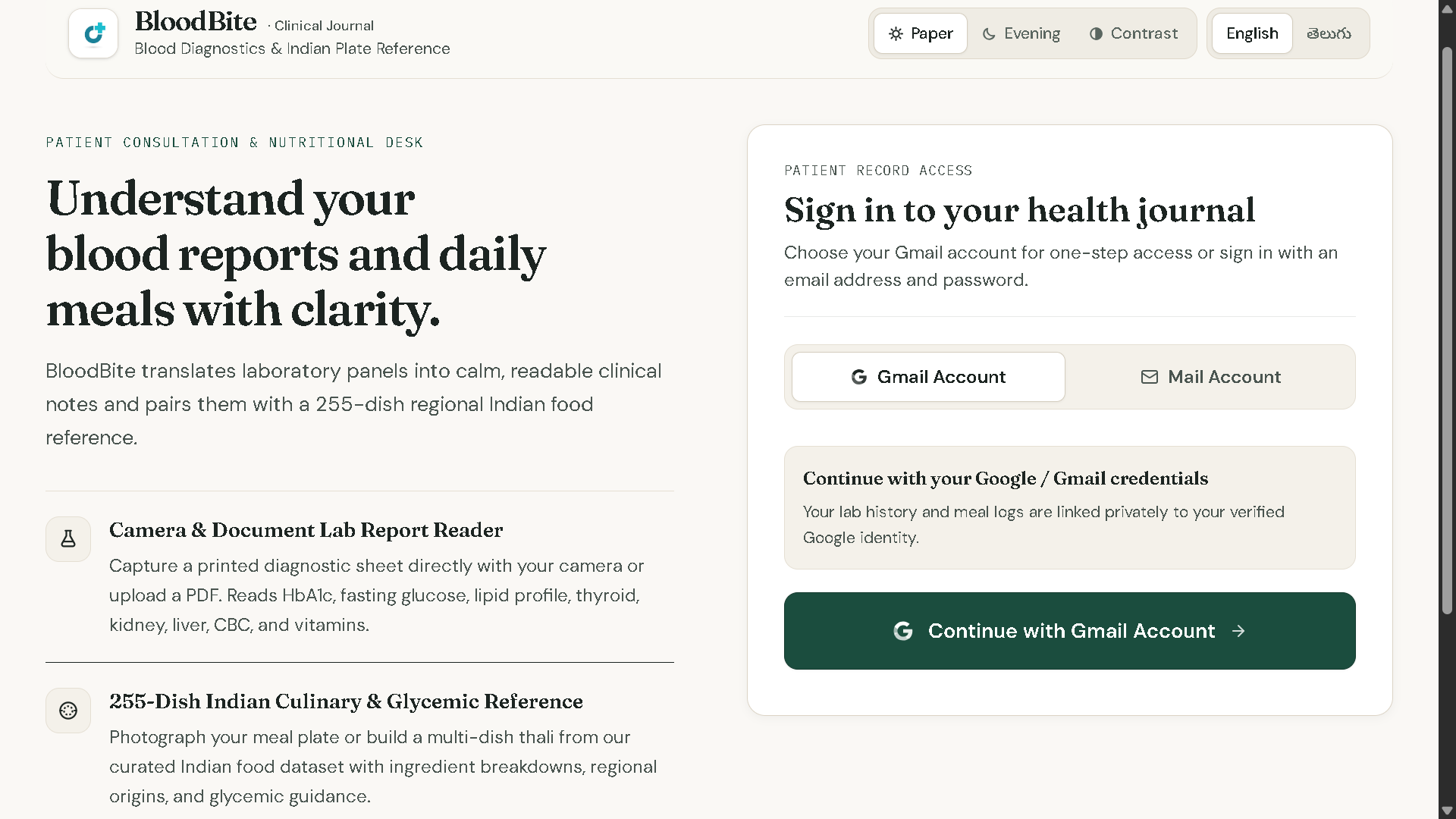
Backend & Authentication: Secured by Firebase. It uses Firebase Authentication to manage user sign-ins and Firestore (database) to maintain a "Patient Health Journal," allowing users to save and track their past reports and meal scans over time.


Log in or sign up for Devpost to join the conversation.