
Blood Pact
A cinematic dark-medieval kingdom-building strategy RPG where battles, oaths and sacrifices permanently shape the kingdom — and the history — you build.
Blood Pact begins with the fall of a kingdom. You survive it, inherit its final oath, and begin building what comes next.
The core idea is simple:
Most games remember that you won. Blood Pact is designed to remember what the victory cost.
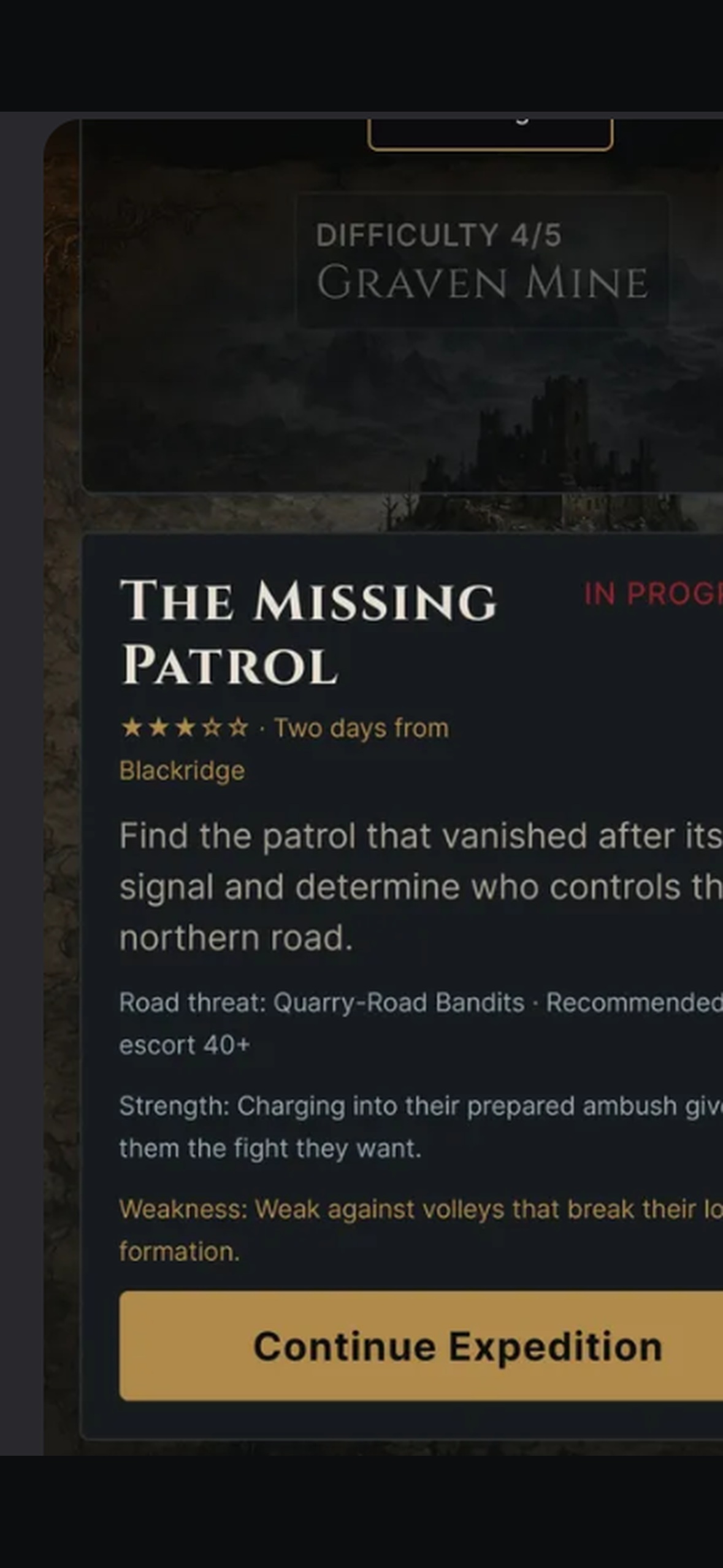
Players explore dangerous territory, make strategic decisions, fight two-way battles, found and develop Blackridge, swear Pacts, uncover the Veiled Host, and create a persistent history of their reign.
Why Blood Pact is different
Blood Pact connects systems that mobile strategy games often keep separate:
- Cinematic storytelling tied to actual game progression
- Expeditions and investigations that feed into campaigns and battles
- Two-way combat presentation where player and enemy actions both matter
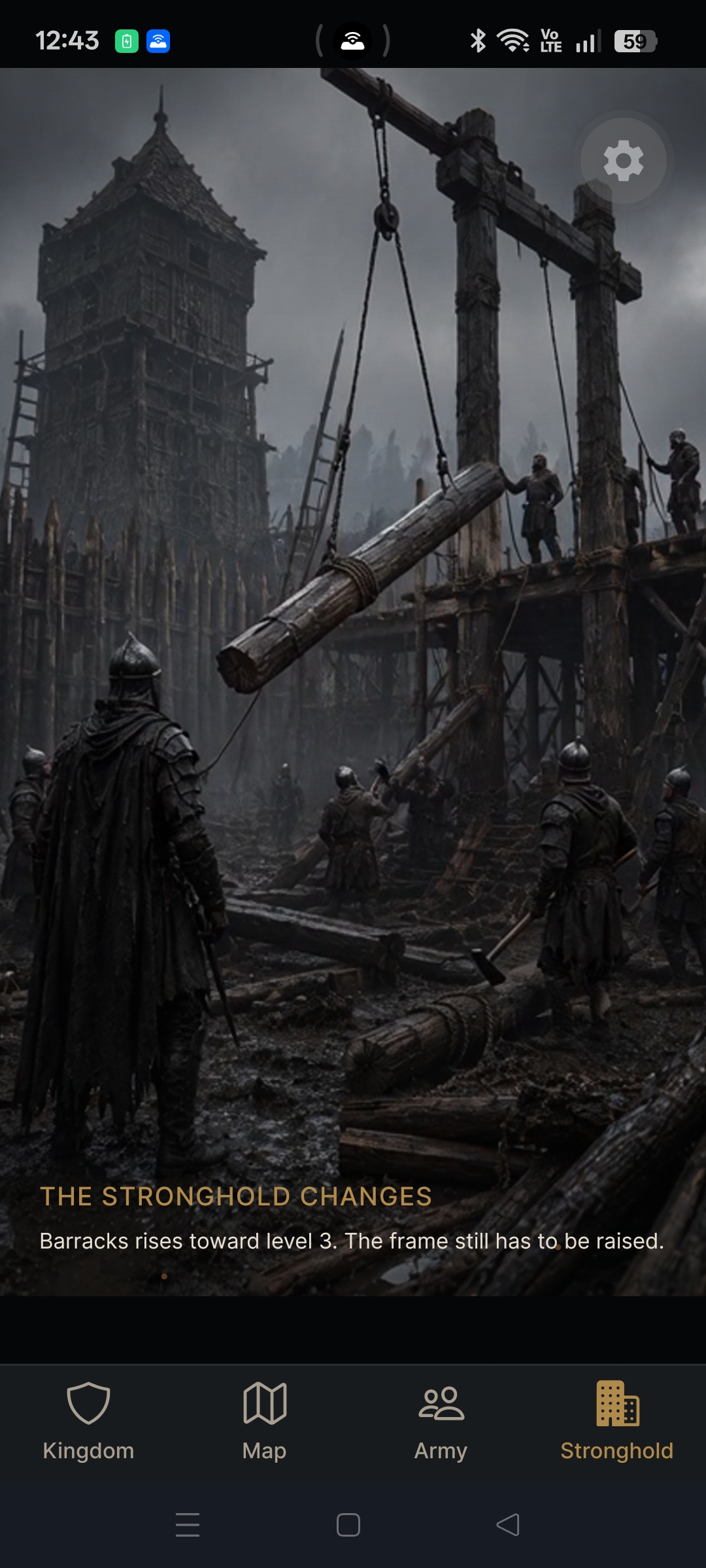
- Blackridge, a stronghold that develops from the consequences of the player's campaigns
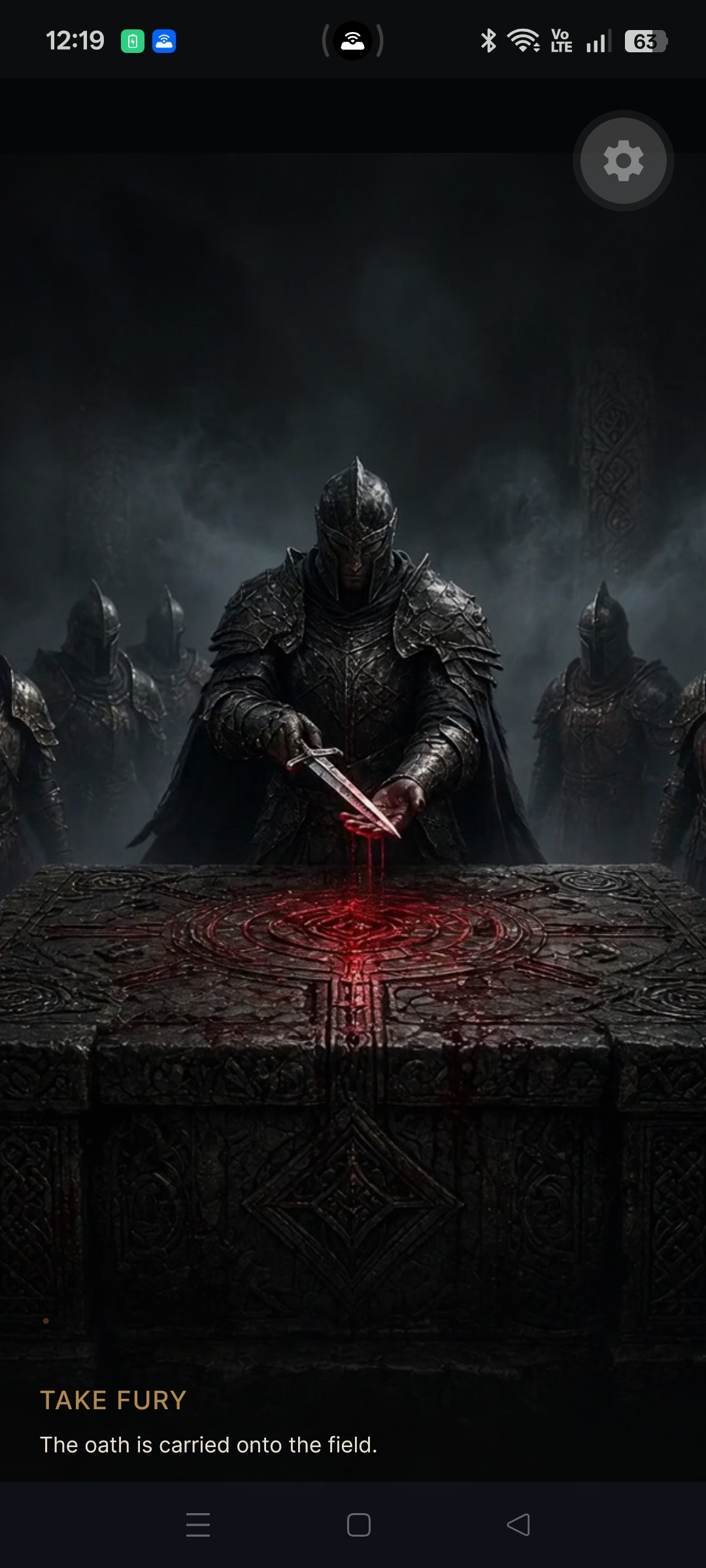
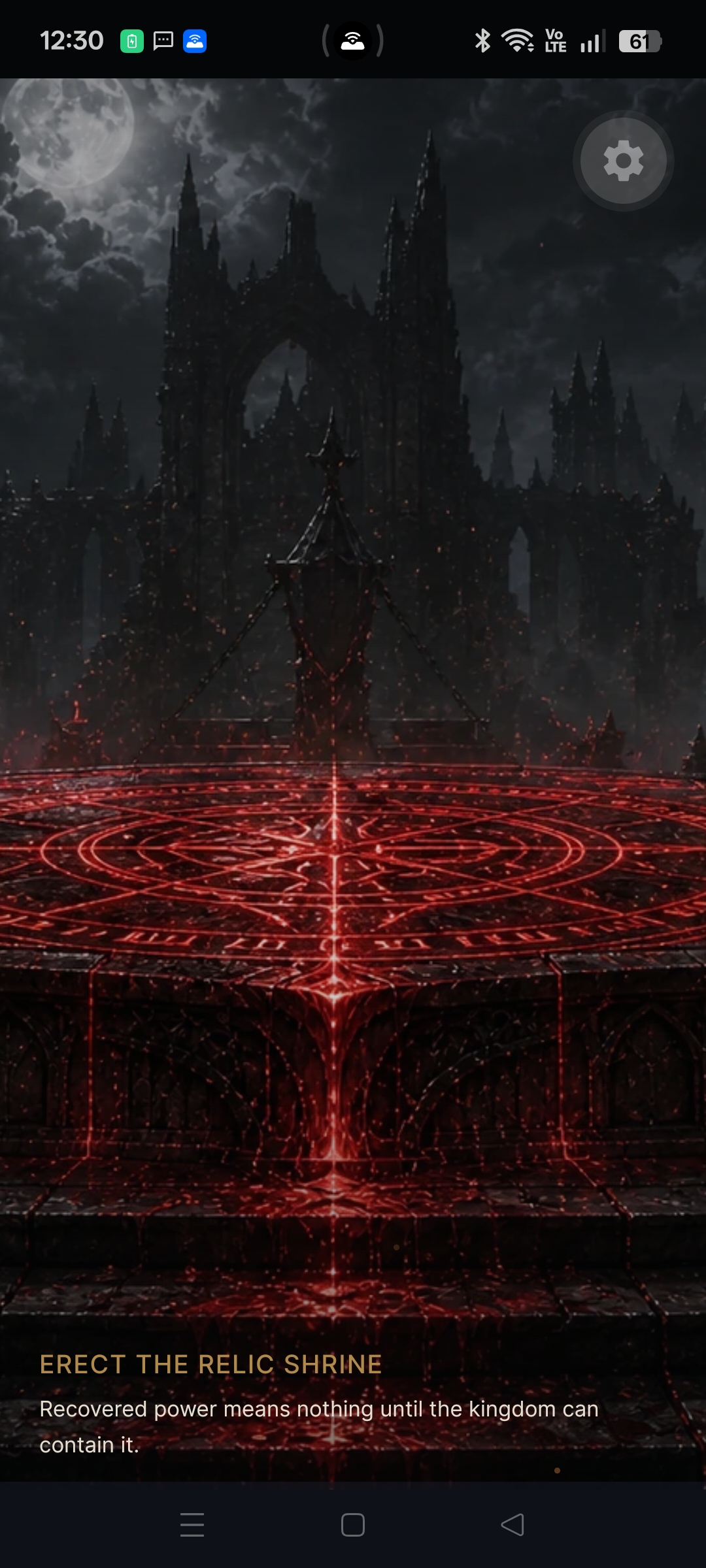
- Pacts, major commitments designed to carry consequences beyond a single quest
- Persistent history, where important victories, losses, discoveries and decisions become part of the player's reign
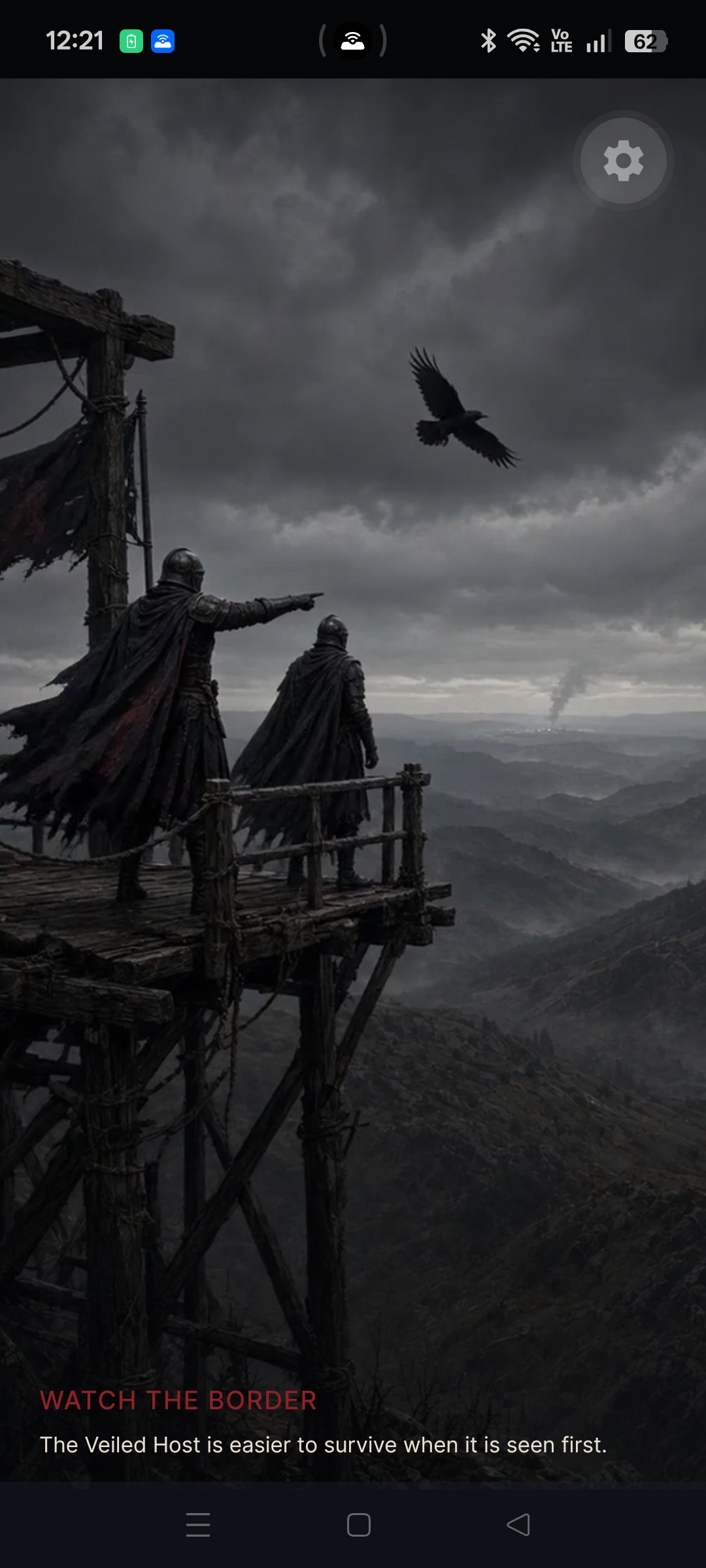
- The Veiled Host, a slowly emerging threat that gives the wider campaign continuity
The goal is not to give the player hundreds of disposable choices. It is to make the choices they do make feel consequential.
The opening chapter
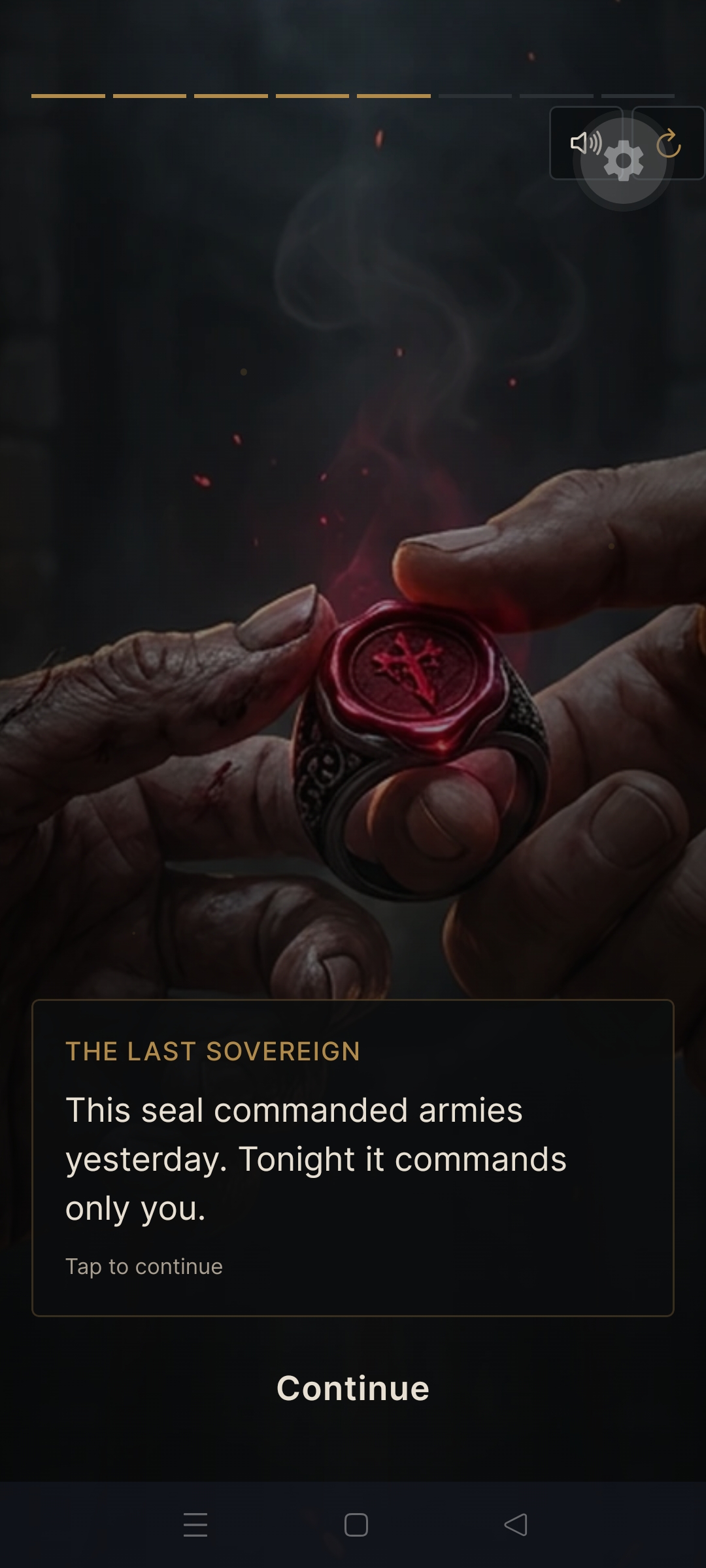
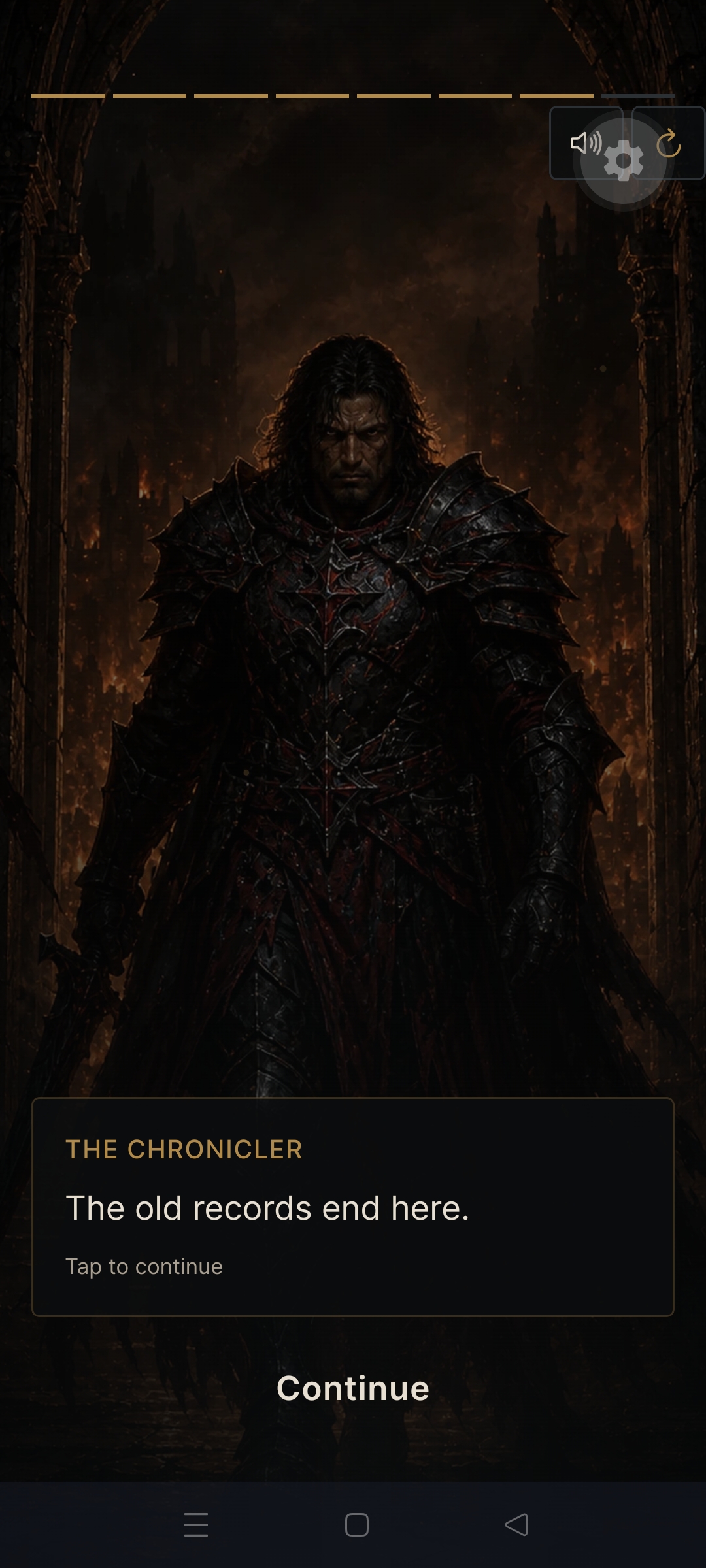
Blood Pact opens during the destruction of the old kingdom.
A wounded ruler. A burning throne room. The royal seal. Sacrifice. An oath.
The player does not begin as the ruler of a thriving kingdom. They begin as a survivor carrying responsibility for what comes next.
From there, the playable loop expands into:
exploration → decision → encounter → battle → consequence → kingdom progression
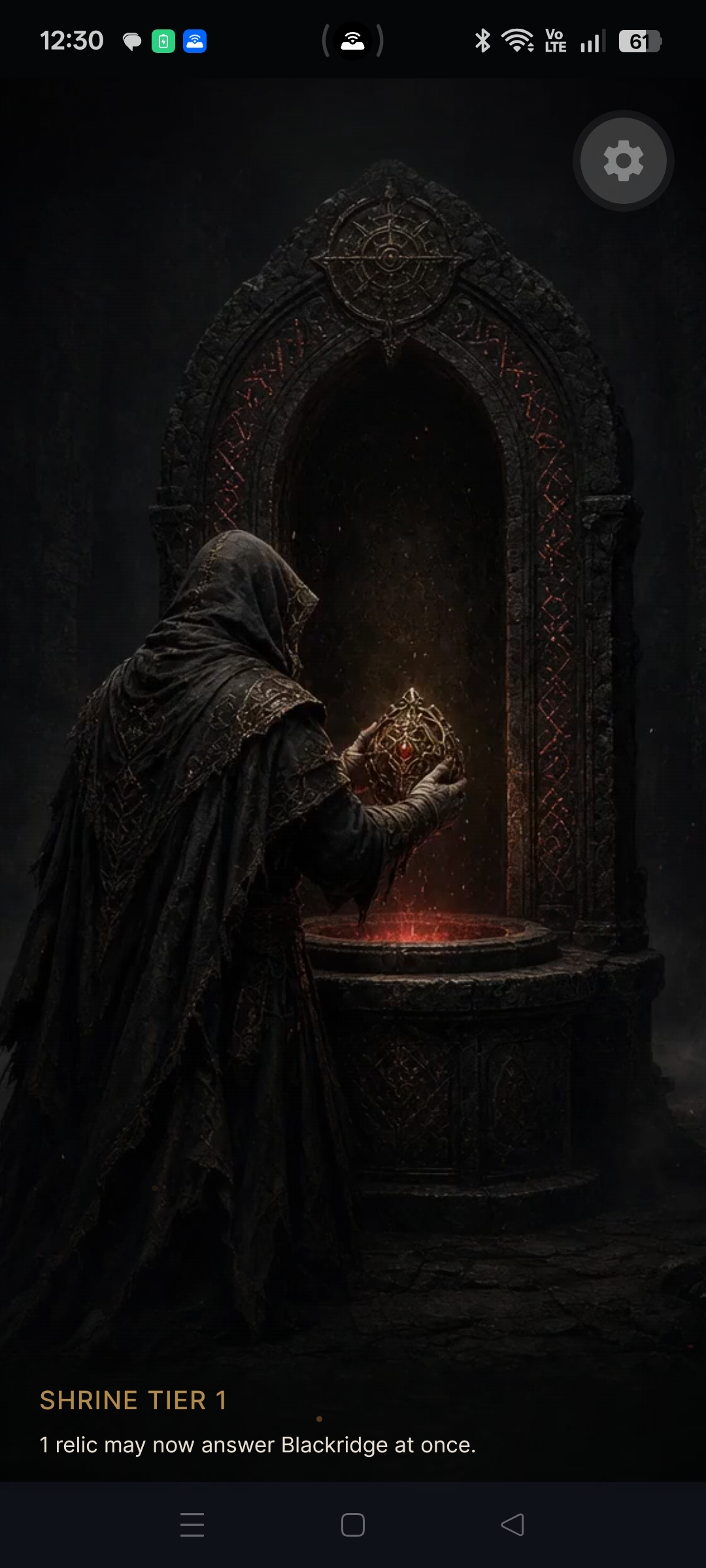
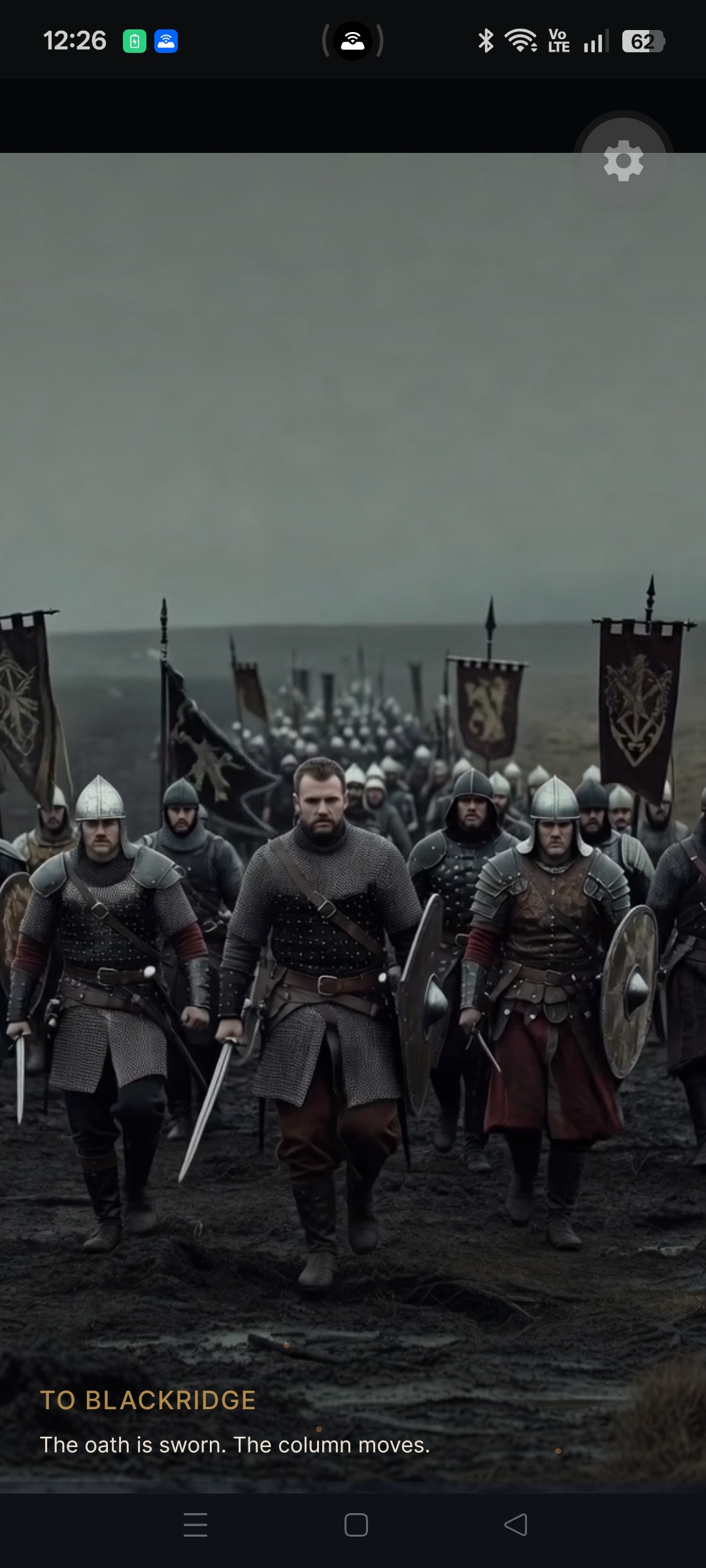
Eventually the player founds Blackridge, turning survival into responsibility.
Battles and expeditions
Players leave Blackridge to explore, investigate incidents, gather intelligence and undertake military campaigns.
Combat is part of the larger campaign rather than an isolated minigame. Player orders and enemy responses are both presented on the battlefield, while casualties, discoveries and outcomes can affect what happens afterward.
Victory can strengthen Blackridge.
Defeat can cost soldiers and resources.
Sometimes survival itself is the victory.
A kingdom that remembers
At the centre of Blood Pact is the idea of persistent consequence.
Important events from the player's reign can become part of its evolving history, including battles, discoveries, Pacts, kingdom milestones and major decisions.
Blackridge is intended to become visible evidence of that history: not merely a collection of upgraded numbers, but a place shaped by what the player has actually survived and achieved.
The design principle is:
“I chose this.” — not simply “I completed this.”
The Raven Journey — OneSignal
Blood Pact also uses OneSignal as part of the fiction rather than treating notifications as generic reminders.
After Blackridge is founded, the Raven Journey changes state and can be used to bring the player back when something meaningful is happening in their kingdom — intelligence, threats and developments tied to the wider Veiled Host storyline.
The implementation includes persistent Raven state, segmentation and synchronization with the player's game state so the messaging can reflect where the player actually is in the story.
The objective is simple: the world should feel as though it continues when the player closes the game.
Monetisation — RevenueCat and the Founder's Oath
Blood Pact is designed to be free to download and play.
Its initial monetisation is the optional Founder's Oath, implemented through RevenueCat as a one-time non-consumable purchase.
The Founder's Oath deliberately avoids selling combat power. Instead, it is built around the same themes as the game itself: identity, permanence, history and participation.
Founder benefits are designed around things such as:
- permanent Founder recognition
- exclusive heraldry
- distinctive Chronicle treatment
- participation in selected future roadmap decisions
The earliest supporters are therefore not simply buying an item. They are becoming part of Blood Pact's founding history.
That is why RevenueCat is not bolted onto the game as an unrelated paywall: the monetisation model is designed to fit the fiction and genre.
How we built it
Blood Pact is a production-bound mobile game rather than a hackathon-only prototype.
The Shipaton build uses technologies and systems including React Native, Expo, TypeScript, RevenueCat and OneSignal, together with persistent game-state, narrative-state, battle, expedition, kingdom progression and cinematic presentation systems.
One of the hardest architectural problems was making these systems influence one another rather than behave as disconnected features.
A cinematic event may change a later decision.
A battle may change the kingdom.
A Pact may matter beyond the screen where it was sworn.
Challenges
Connecting narrative and strategy
Cinematic storytelling only works if it reinforces gameplay rather than interrupting it. A battle means more when the soldiers shown represent forces the player has built and can genuinely lose.
Persistent consequence
The game has to carry important state across expeditions, campaigns, battles and kingdom development. A historical record is meaningless if the events it records never affected anything.
Mobile cinematic presentation
The project also required work around video playback, portrait presentation, asset management, transitions, sequencing and keeping gameplay responsive around cinematic scenes.
Two-way combat
Early battle presentation did not communicate strongly enough that two forces were actually fighting. The combat presentation was expanded so enemy actions receive visual representation as well as player actions.
Accomplishments
The Shipaton build brings together the foundations of the intended game loop:
- cinematic destruction of the old kingdom
- player decisions and persistent state
- exploration and expeditions
- battlefield encounters
- two-way combat presentation
- founding of Blackridge
- kingdom progression
- Pact-based decisions
- persistent historical consequence
- the opening stages of the Veiled Host storyline
- RevenueCat-powered Founder monetisation
- OneSignal-powered Raven Journey integration
The accomplishment we value most is that these increasingly feel like parts of one game rather than a collection of features.
A journey can lead to an encounter.
An encounter can lead to a battle.
A battle can change the kingdom.
And what happened can become history.
What we learned
The strongest lesson from building Blood Pact was that persistence makes relatively small decisions feel much larger.
Players do not necessarily need endless choices. They need reasons to believe the choices they make matter.
The same is true of cinematics: presentation becomes much more powerful when it represents something the player caused, survived, lost or failed to prevent.
What's next
The Shipaton build is the opening chapter, not the finished scope of Blood Pact.
The roadmap includes deeper kingdom development, more campaigns and expeditions, additional Pacts, expanded historical persistence, richer Chronicle sharing, deeper strategic battle decisions, more cinematic encounters, further development of the Veiled Host and balancing based on real player behaviour.
The long-term goal is for players to look at Blackridge and recognise a kingdom that could only have resulted from their reign.
Their victories.
Their failures.
Their promises.
Their sacrifices.
Their history.
Blood Pact
Swear the Pact.
Survive the fall.
Build something worth defending.
Built With
- android
- expo.io
- onesignal
- react-native
- revenuecat
- typescript


Log in or sign up for Devpost to join the conversation.