-
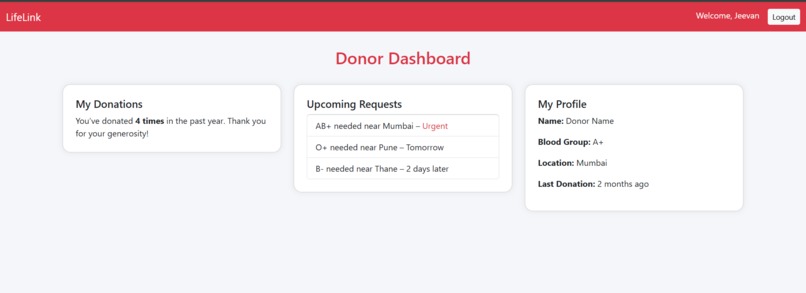
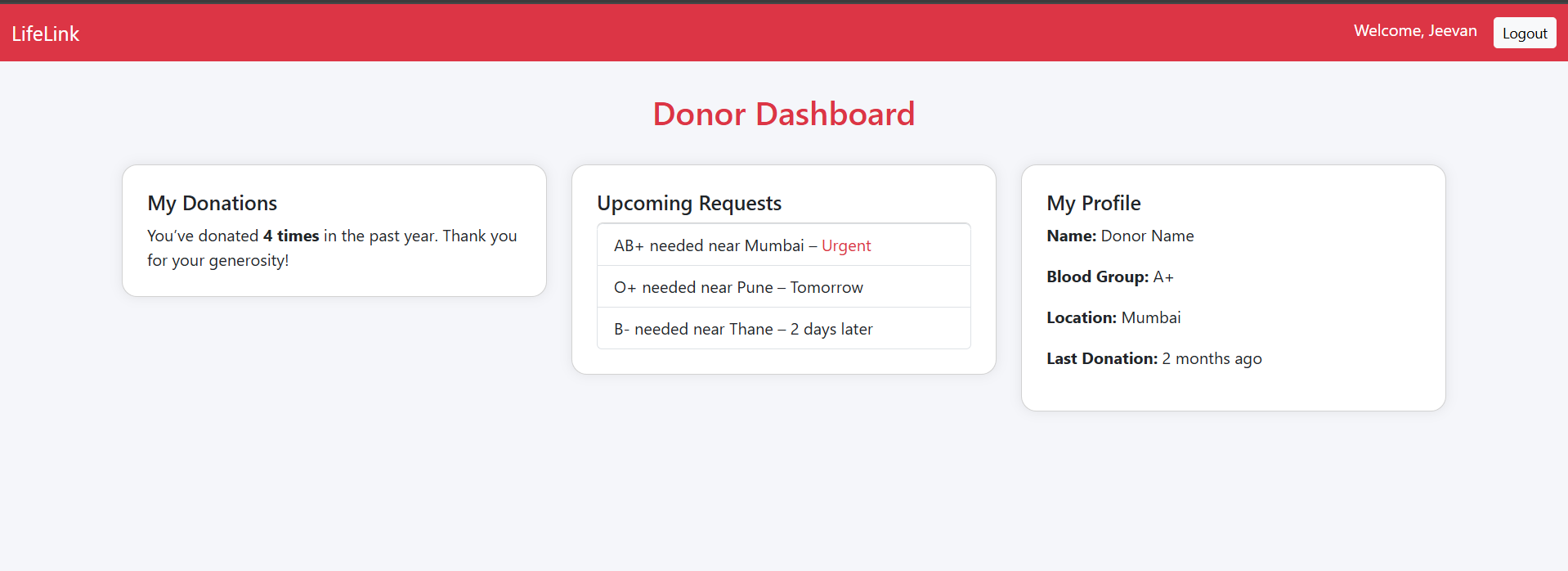
After login draft design
-
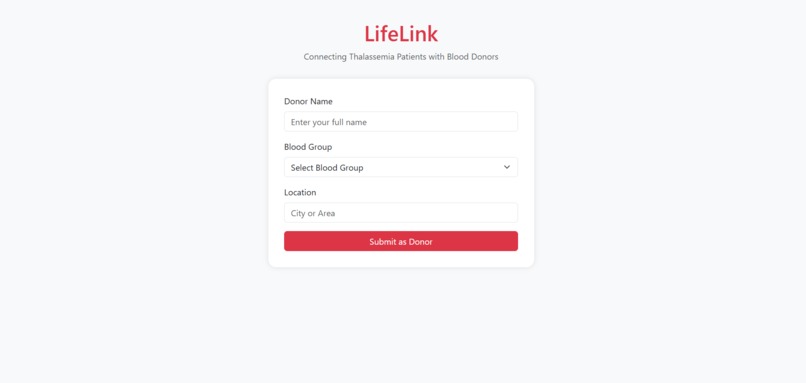
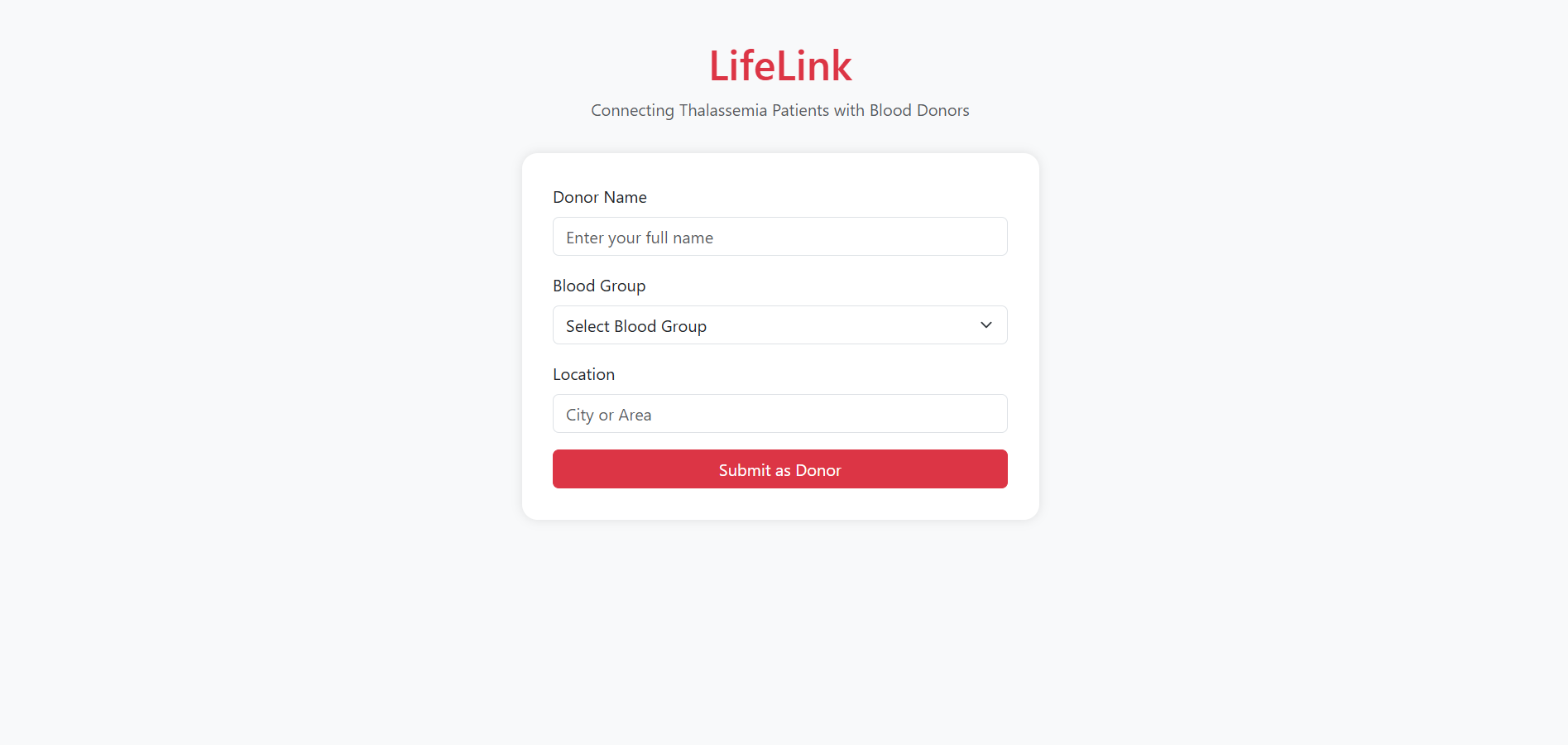
Login page
Inspiration
The inspiration behind LifeLink came from the struggles faced by Thalassemia patients, who require blood transfusions every few weeks for life. We’ve all seen urgent social media appeals for blood donors — often too late. Despite digital platforms like e-RaktKosh, there’s no real-time, intelligent system to connect donors and patients quickly and consistently.
We were deeply moved by the work of NGOs like Blood Warriors, who manually coordinate hundreds of blood donations. We wanted to build a platform that automates, predicts, and personalizes this life-saving process, using the power of AI and real-time alerts.
What it does
LifeLink is an AI-powered web and mobile platform that: Connects Thalassemia patients with nearby eligible donors Predicts future donor availability using historical donation patterns Sends geolocation-based alerts to donors during emergencies Tracks donor contributions and encourages recurring donations via gamification Offers an admin dashboard for NGOs/hospitals to manage requests and monitor trends Supports integration with national systems like e-RaktKosh and Blood Bridge
How we built it
We built LifeLink using the following stack: Frontend: React.js (web), React Native (mobile app) Backend: FastAPI (Python) for API services Database: PostgreSQL and Firebase (for real-time updates) AI/ML: Python with scikit-learn and Prophet for time-series donor prediction Authentication: OAuth2 and JWT for secure user management Hosting: Deployed using Google Cloud & Firebase Notifications: Firebase Cloud Messaging and Twilio (SMS) We used dummy data to simulate donor-patient interactions and prototyped real-time alerts with location filtering.
Challenges we ran into
No access to real datasets: We had to simulate donor histories and transfusion needs. Lack of public APIs: Integration with e-RaktKosh/Blood Bridge was planned but limited due to restricted API documentation. Time constraint: Balancing frontend, backend, and AI in a short time was challenging. Privacy concerns: Designing the system to be HIPAA/GDPR-ready without real legal access to medical data required careful abstraction. Predictive modeling: Forecasting donor availability accurately with limited data was a tough ML task.
Accomplishments that we're proud of
Successfully built a working donor-patient matching system with live alerts. Implemented a basic AI model to predict donor availability. Designed a clean and intuitive multirole UI for donors, patients, and admins. Created a secure backend with real-time update capability. Developed a solution that’s scalable, ethical, and immediately useful in the real world.
What we learned
AI in healthcare must be designed with empathy and simplicity. Real-time coordination is possible but needs strong infrastructure and security. Gamification can play a powerful role in healthcare behavior change. NGOs and healthcare professionals need tools, not just data — actionable, accessible tools. We learned how to build an MVP under pressure while planning for long-term sustainability.
What's next for LifeLink
Pilot deployment with Blood Warriors in select hospitals Full integration with national systems like e-RaktKosh Add multilingual chatbot for donor/patient support Build analytics dashboards for hospitals and government planners Explore voice-based and WhatsApp-based interfaces for low-literacy users Extend the platform to support hemophilia, sickle cell anemia, and emergency care Partner with government and healthcare orgs for national-level scale-up
Built With
- and-numpy-for-ai/ml;-postgresql-and-firebase-realtime-database-for-data-storage;-hosted-on-netlify
- and-render;-with-apis-like-twilio
- and-vite-for-the-frontend;-fastapi-and-python-for-the-backend;-scikit-learn
- bootstrap-5
- css3
- e-raktkosh-api
- fastapi
- firebase-cloud-messaging
- firebase-realtime-database
- github
- html5
- javascript-(es6+)
- netlify
- numpy
- postgresql
- prophet
- python
- render
- scikit-learn
- twilio
- vite
