-
-
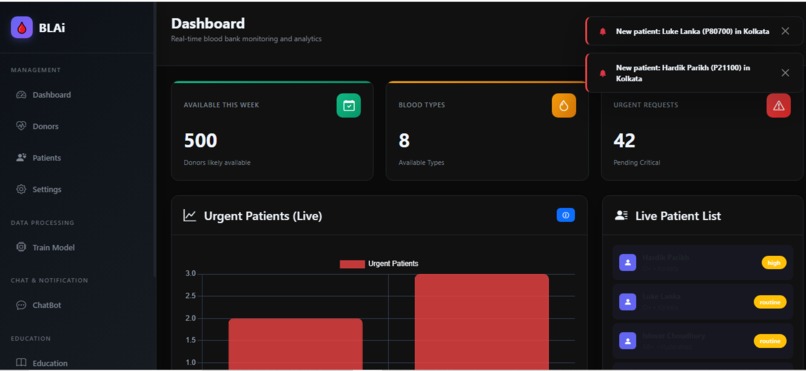
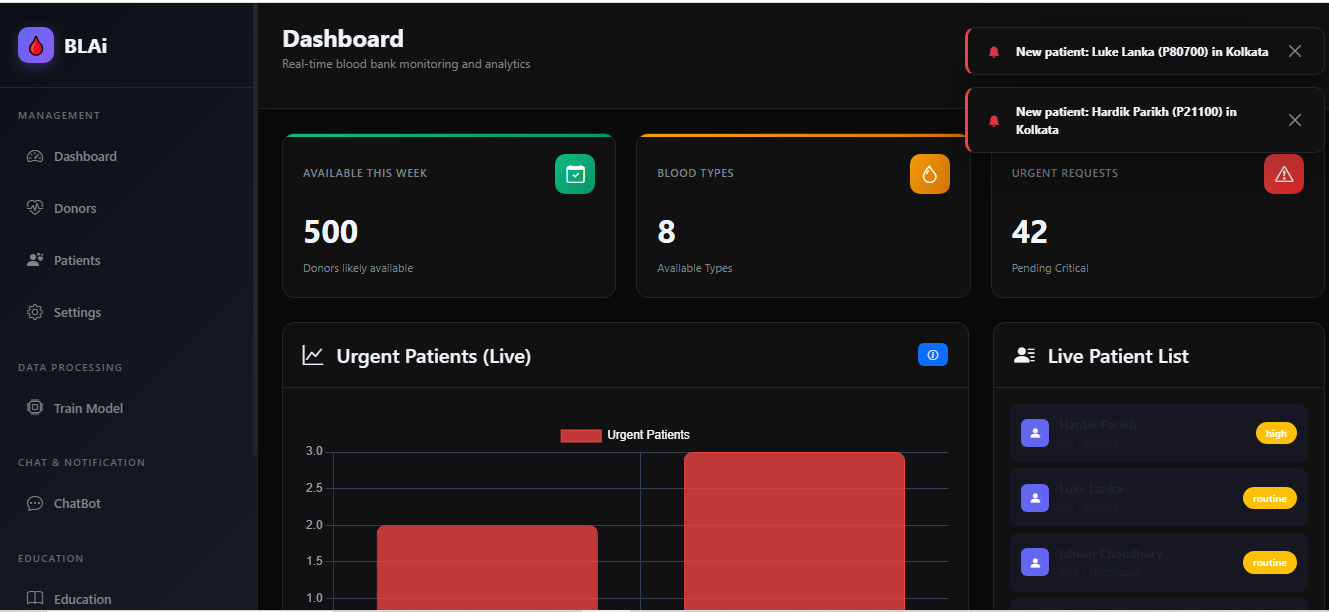
Dashboard
-
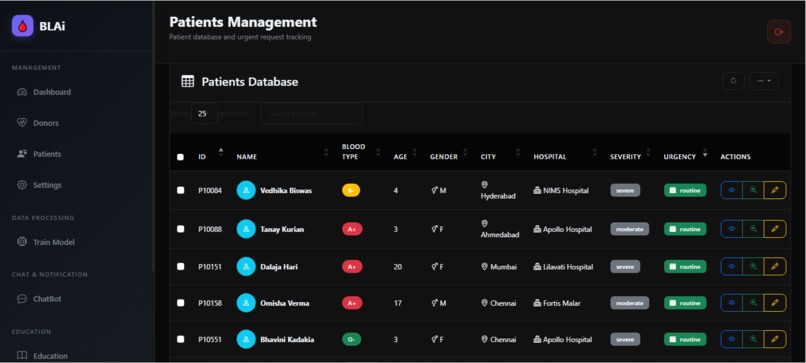
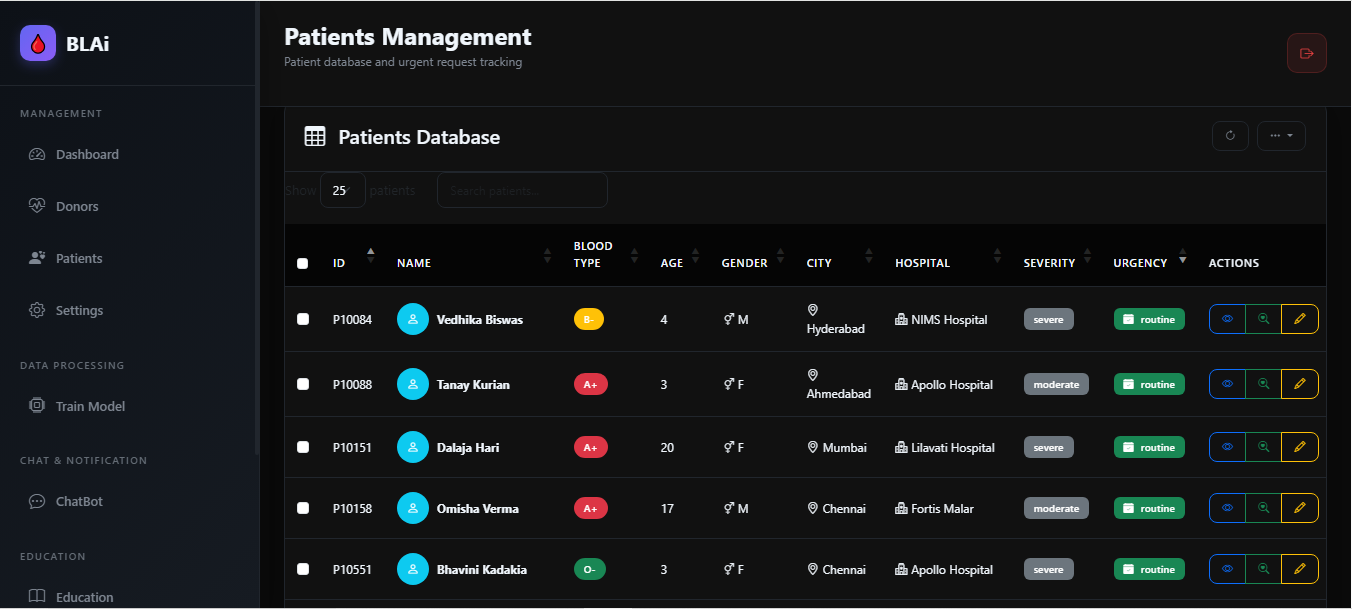
patients
-
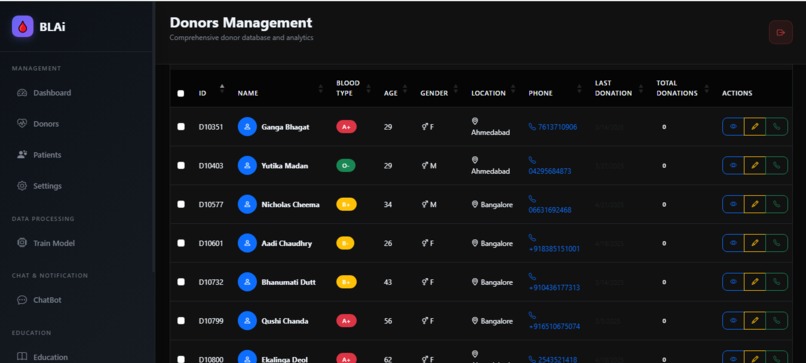
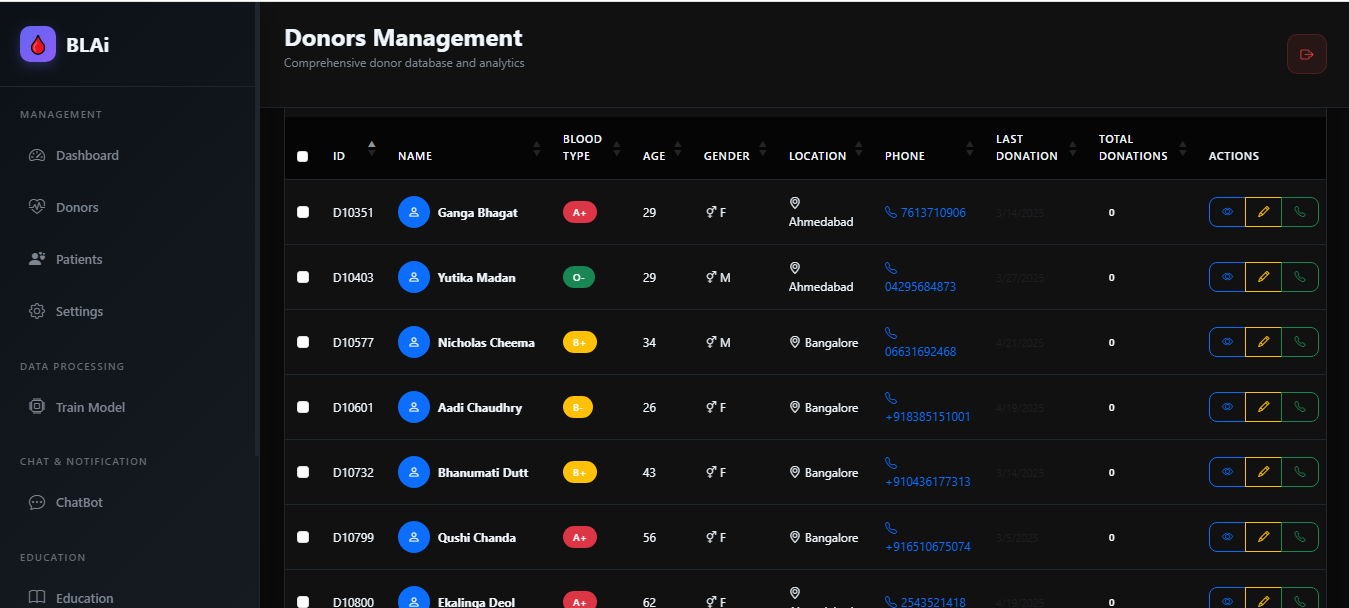
donors
-
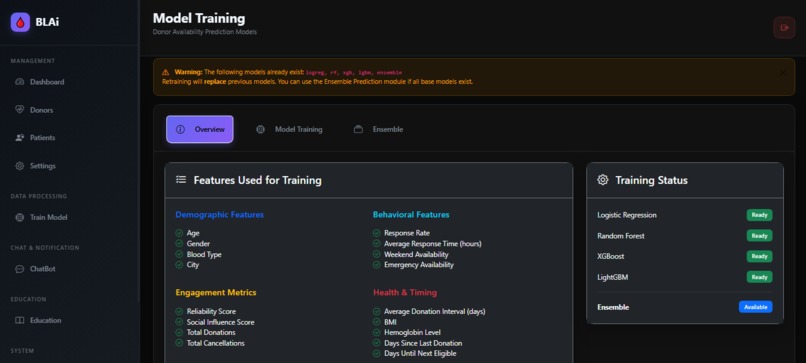
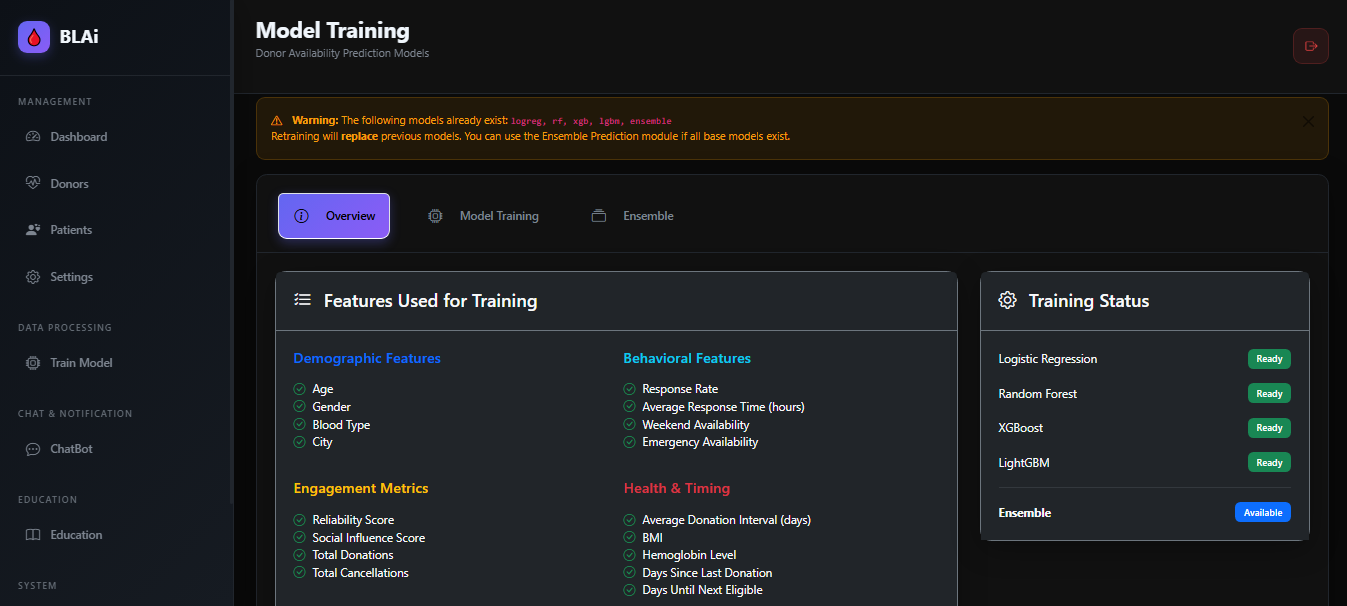
model training
Inspiration
The inspiration for BloodLink AI came from the urgent need to modernize blood donation and matching for thalassemia patients. Every year, thousands of lives depend on timely donor availability, yet the process remains manual, slow, and often unreliable. Our team wanted to harness the power of AI and real-time web technologies to create a platform that not only predicts donor availability but also educates, connects, and empowers both patients and donors.
The learning process
Throughout this hackathon, I learned how impactful data-driven solutions can be in healthcare , explored advanced machine learning models for donor prediction, integrated real-time communication using Flask-SocketIO, and built a user-friendly dashboard to visualize key metrics it also deepened my understanding of deploying full-stack apps on cloud platforms, handling authentication securely, and managing asynchronous tasks.
How it was Built
It started by designing a modular Flask backend, organizing the code into blueprints for donors, patients, matching, and education. The data pipeline loads and preprocesses donor and patient data, extracting features such as age, blood type, reliability score, and engagement metrics. For prediction, i have trained multiple models—Logistic Regression, Random Forest, XGBoost, and LightGBM—using scikit-learn and imbalanced-learn’s SMOTE for balanced training. The ensemble model combines predictions from all base models, using the formula: $$ P_{ensemble} = \frac{P_{rf} + P_{xgb} + P_{lgbm} + P_{logreg}}{4} $$ where each ( P ) is the probability output from a model. A responsive frontend using Bootstrap and custom CSS, with interactive charts and tables powered by JavaScript. Real-time notifications and chat features were implemented using Flask-SocketIO, allowing patients and donors to communicate instantly.
Education
The webapp has integrated HuggingFace API, enabling users to ask questions about thalassemia and blood donation. All sensitive keys and tokens are managed securely using environment variables.
Challenges Faced
Deploying a full-stack AI-powered app in a hackathon timeframe was a major challenge. thw issues we faced with cloud platform compatibility—Render’s CPU limits prevented live model training, and Vercel’s serverless functions didn’t support the full Flask app.This was overcame by training models locally and uploading them to the cloud, ensuring fast inference for users. Managing real-time features and persistent data storage required careful design the code hat to refactor handle file paths correctly across different environments, and ensure that session management and authentication were robust yet simple for demo purposes. Integrating reCAPTCHA for security and handling cross-origin requests also presented hurdles, but were aboe to configure these services for custom domains and cloud deployments.
Conclusion
BloodLink AI is more than a hackathon project—it’s a vision for smarter, faster, and more compassionate blood donation. I'm proud of how combined AI, real-time web tech, and user-centric design to address a real-world problem. The journey taught resilience, the use of AI/ML in healthcare sector and the power of rapid prototyping in healthcare innovation.
Built With
- bootstrap-machine-learning:-scikit-learn
- css-frameworks:-flask
- eventlet-for-async-support
- flask-socketio
- google-recaptcha-cloud-platforms:-render-database:-json-file-storage-(for-demo)
- html
- imbalanced-learn
- javascript
- joblib-apis:-huggingface-transformers-(q&a)
- json-file-storage-(for-demo)
- languages:-python
- lightgbm
- ngrok
- pandas
- pandas-dataframes-other:-python-dotenv-for-environment-variables
- xgboost

Log in or sign up for Devpost to join the conversation.