Inspiration
Across U.S. cities, affordable housing shortages are growing rapidly — but identifying where and how to invest remains slow, costly, and complex. We wanted to build a tool that helps decision-makers act faster and smarter, using AI to simulate real-time community feedback and make housing data more human-centered.
BlockQuote isn’t meant to replace full-scale feasibility studies or market analyses — it’s a starting point. Our goal is to help investors fine-tune the early details of their projects so they can enter the next stages of planning with more focus and confidence. Instead of spending thousands on scoping work upfront, users can use our tool to get quick, data-driven insights — saving time and resources for the stages that matter most.
What It Does
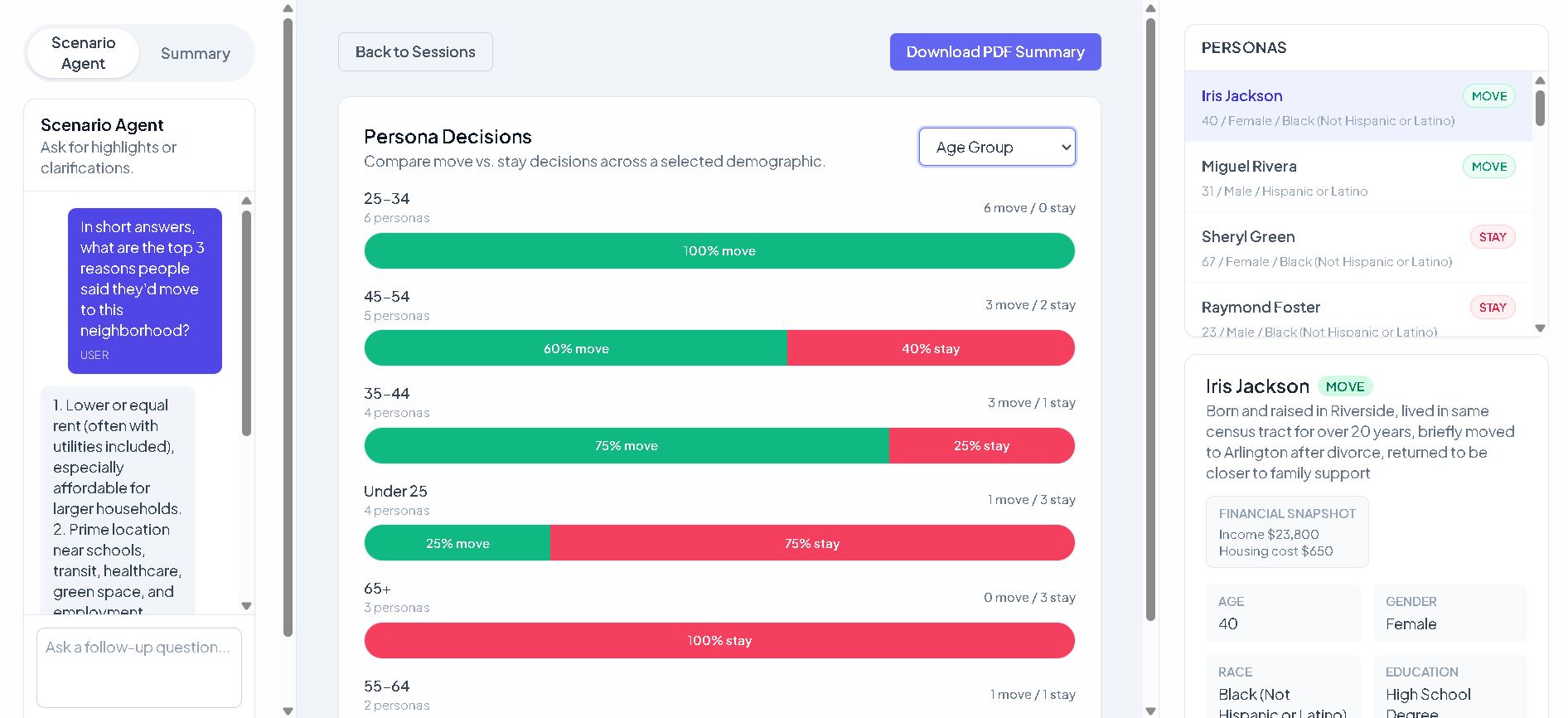
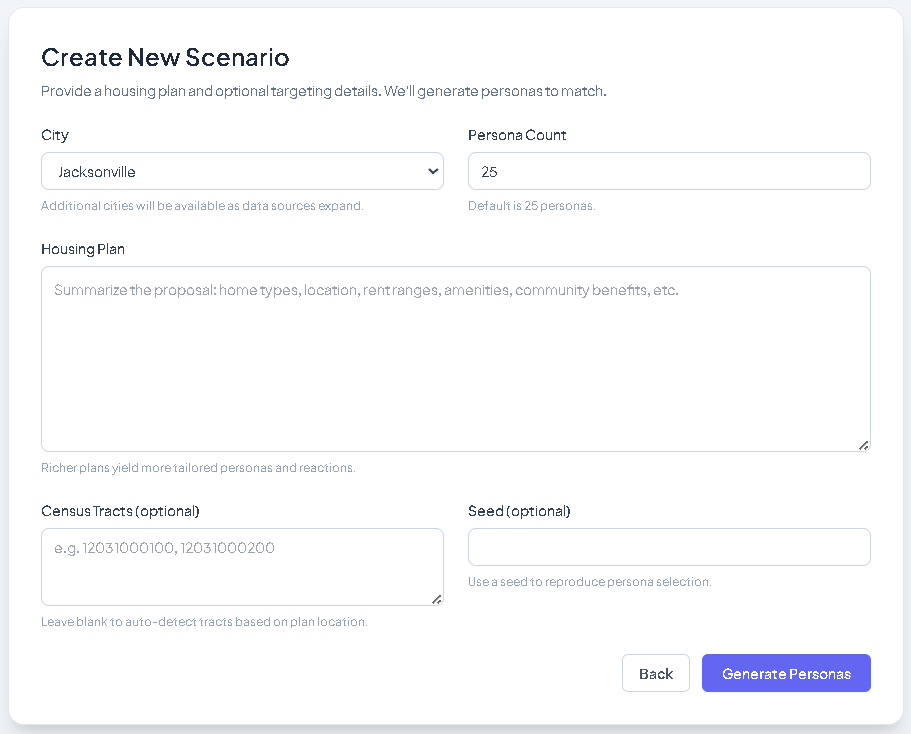
BlockQuote helps investors and city planners make faster, smarter decisions about affordable housing. Using AI-powered surveys, it models community sentiment around proposed projects, revealing what residents value most — such as price or location — and flagging early concerns.
The platform creates personas with traits like age, sex, education, and marital status — each representing people with different perspectives and priorities. This allows investors to explore how various demographics might respond to a proposal and adjust their plans accordingly.
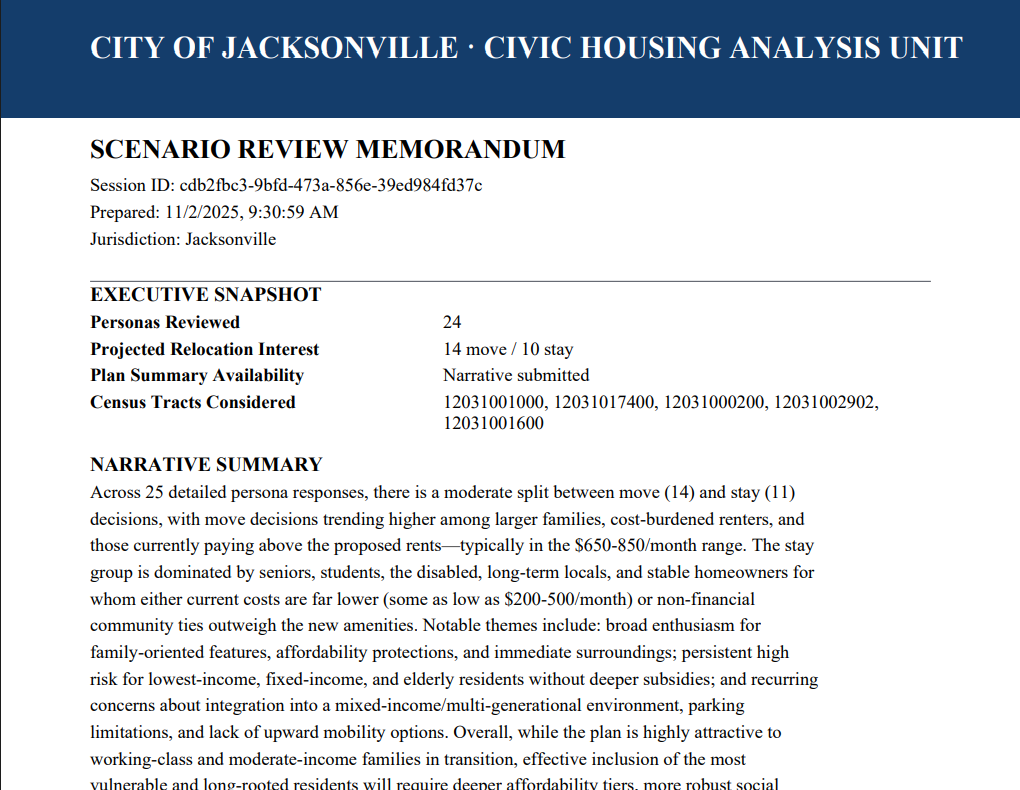
BlockQuote also generates an AI summary report with key insights and recommendations on how to refine investment strategies before committing resources to full feasibility studies.
It’s not meant to replace full-scale research or data analysis — it’s a starting point that helps focus planning, reduce upfront costs, and guide smarter, data-driven development decisions.
Challenges We Ran Into
One of our biggest challenges was managing the large and fragmented datasets. The data was messy, inconsistent, and difficult to interpret at first. To bring structure and clarity, we organized everything by GEOID, which allowed us to align data across regions and make meaningful comparisons.
Another challenge was the lack of social context — most of the available data was financial and economic, offering little insight into the people behind the numbers. To address this, we incorporated additional demographic variables such as age, sex, education, and marital status, adding depth and helping us capture more nuanced perspectives within the analysis.
Accomplishments We’re Proud Of
- Developed a functional prototype that integrates spatial data with AI-simulated community sentiment.
- Transformed messy, disconnected datasets into a clean, GEOID-based structure for consistent regional analysis.
- Built a platform that bridges the gap between data-driven planning and community-centered decision-making.
What We Learned
We learned how essential it is to connect data to people, not just places. Effective data organization unlocks powerful insights, and incorporating demographic and social dimensions makes analysis far more impactful and relevant.
What’s Next for BlockQuote
We plan to expand coverage to more cities, conduct real-world testing to validate results, and continually refine our models to improve accuracy and predictive power over time.

Log in or sign up for Devpost to join the conversation.