-
-
logo
-
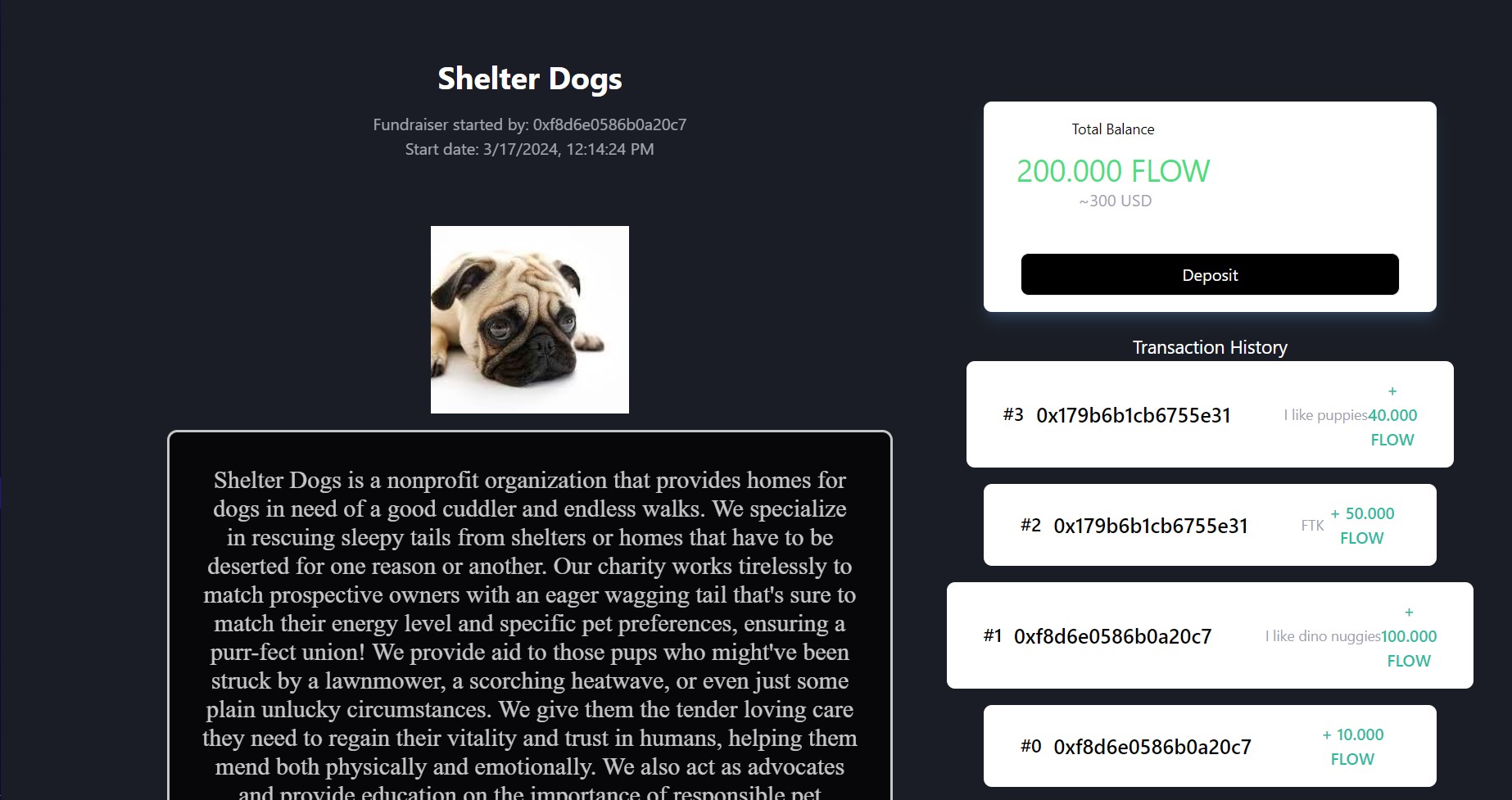
ExampleCharity
-
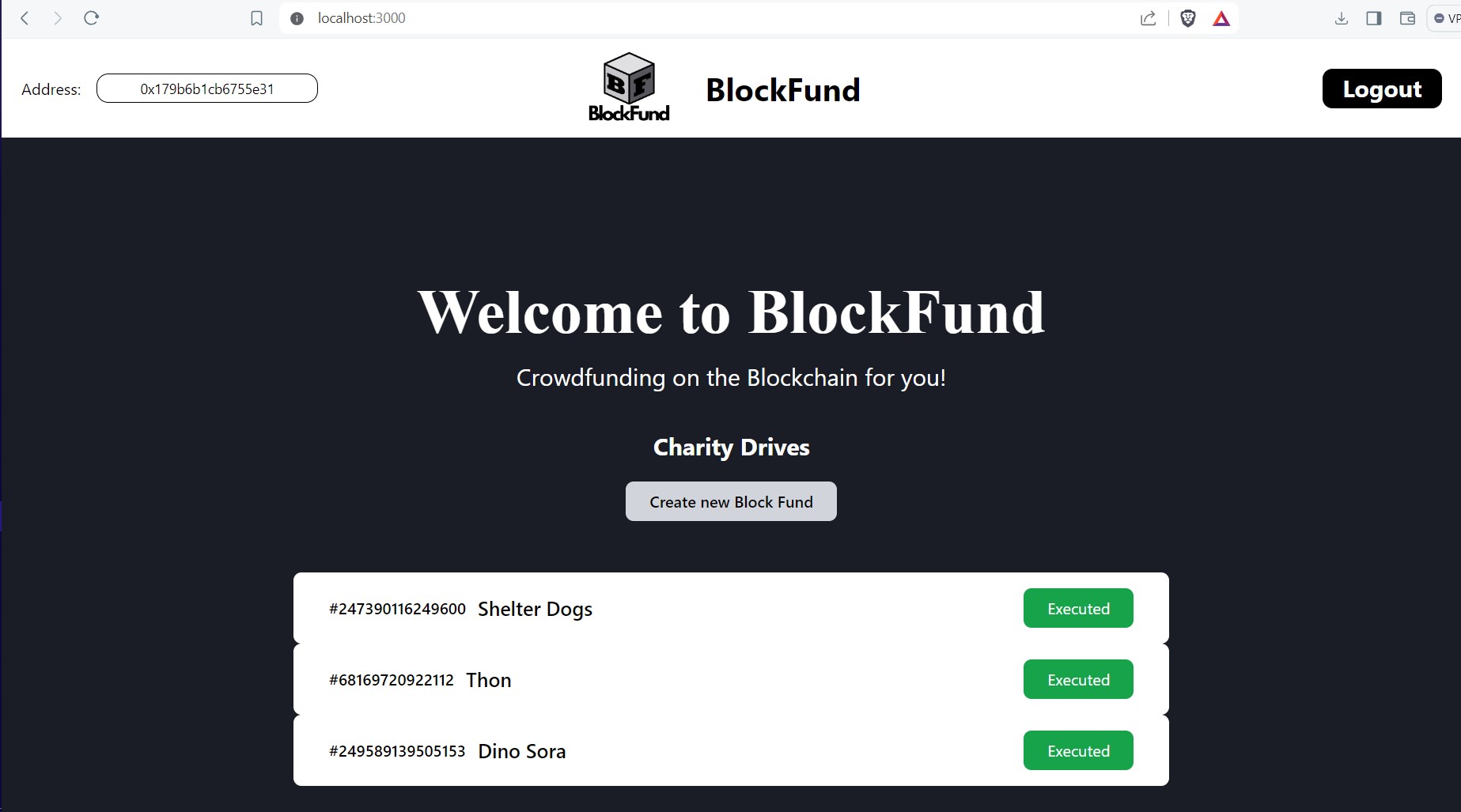
landingPage
-
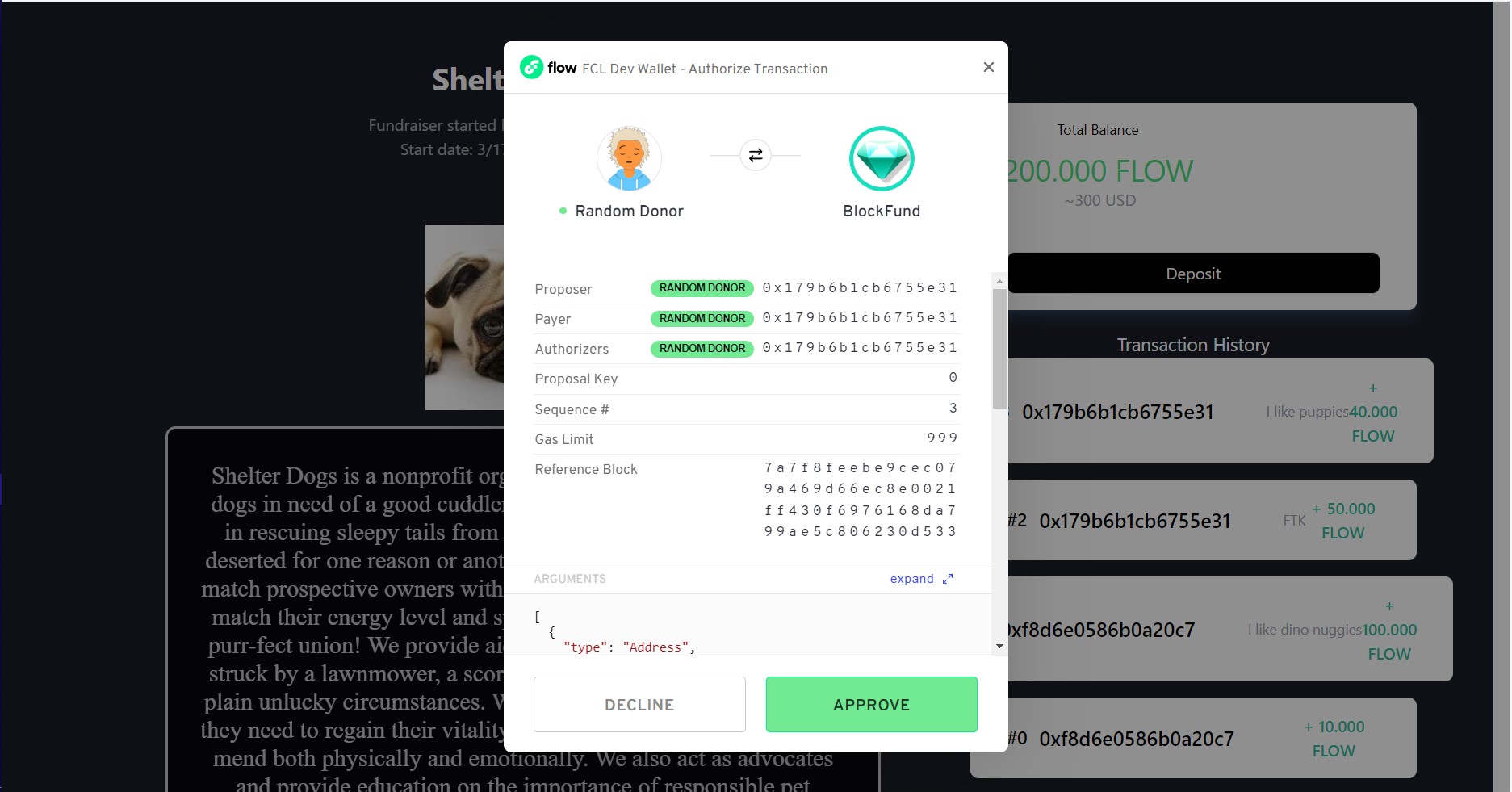
BlockchainTransactions
Inspiration
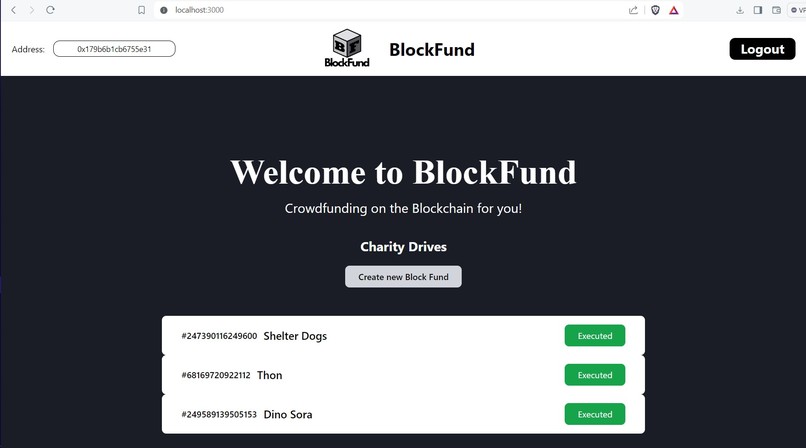
This year, amidst the burgeoning potential of blockchain technology, we found ourselves drawn to two main competition ideas: Blockchain and Coding for Social Good. Inspired by these dual ambitions, BlockFund emerged as our answer to a critical question: How can we use blockchain to make crowdfunding more accessible, transparent, and efficient? BlockFund is our leap towards redefining how projects get funded and how communities can come together to support ideas they believe in, all on the Flow blockchain.
Why Blockchain for CrowdFunding?
Blockchain technology presents a transformative solution for crowdfunding, addressing many of the challenges faced by traditional platforms like GoFundMe. While GoFundMe has undeniably served as a crucial resource for fundraising, assisting countless individuals and organizations in times of need, it has also encountered significant operational hurdles. These include payment delays, scamming attempts, and issues with fund withdrawal, which became notably problematic during critical periods like the COVID-19 pandemic. For instance, Carl Bass and Chris Taggart's experience of struggling to access over $60,000 raised to support their initiative of producing and distributing plastic face shields highlights the limitations of current systems. They faced a myriad of obstacles, from the platform's website issues to slow customer support, reflecting a broader issue that many users encounter, including unexplained holds on donations and lengthy verification processes.
Blockchain for crowdfunding offers a decentralized and transparent alternative, potentially eliminating these inefficiencies and trust issues. By leveraging smart contracts, blockchain platforms can automate the release of funds upon meeting certain conditions, ensuring that donations reach their intended recipients swiftly and securely. This technology also provides an immutable ledger of transactions, enhancing transparency and accountability, thereby reducing the risk of fraud. Blockchain's inherent characteristics promise a crowdfunding model where operational transparency, immediate fund access, and reduced risk of scams are not just ideals but standard practices. This approach could revolutionize how we support initiatives and causes, making the act of giving more direct, efficient, and trustworthy.
What it does
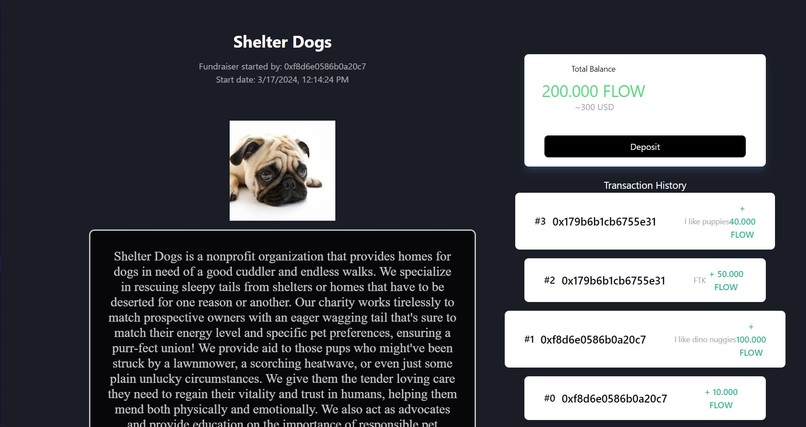
In our demo, we successfully implemented a smart contract via Cadence that logs a campaigns deadline, name, description, and image. Along with the ability to transfer funds. By using the smart
How we built it
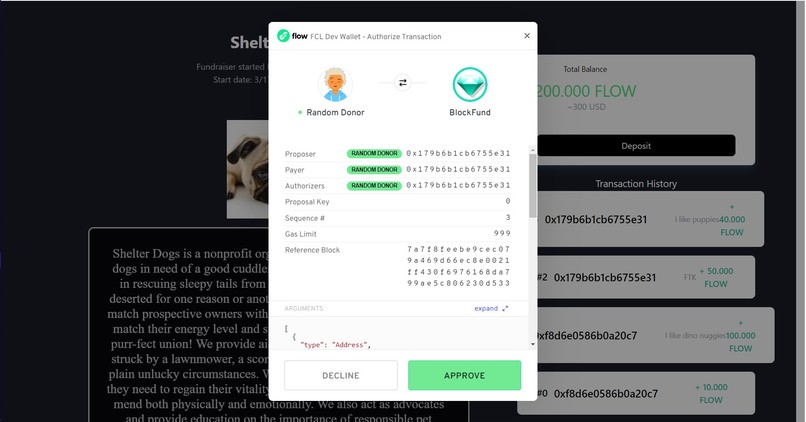
We spent about 4-6 hours learning Cadence's syntax. As it was everybody's first time programming on a resource-oriented language and we first began with our initial smart contract. Following issues we pivoted into using one of the Flow's Quickstart tutorials where we implemented a voting smart contract. Building this on top of the voting smart contract, we converted the voting mechanism directly into a funding mechanism by treating every vote as a flow token. Additionally we added the ability for users to directly select how many Flow Tokens they would give to a charity.
Challenges we ran into
Setting up the initial smart contract was very challenging. One of the unique challenges of trying to test blockchain models is that we are unable to modify changes without fullfilling a transaction process. This often meant that we would be unsure whether it was our smart contract that was bugged or our transaction script. This lead to us eventually pivoting to using one of Flow's quickstart tutorial as we knew that at the bare minimum the code functions
Accomplishments that we're proud of
Overall, We're proud of the fact that we were able to created decentralized application using blockchain for the first time. It was a struggle.
What we learned
For this project we learned how to use Cadence Blockchain for the first time. Additionally It interestingly working on UI too as this project was essentially one of the first 2nd project in which we made UI. Overall, we were able to get an in depth view and understanding of how the blockchain works and how smart contracts in particular is revolutionizing efficacy and transparency in the Tech industry.
What's next for BlockFund
Currently BlockFund is using Flow's Blockchain emulator. The next step would be to deploy onto Flow's blockchain test net for more in depth testing.
Developing BlockFund Into A business
Developing BlockFund into a business revolves around capitalizing on the unique benefits blockchain technology brings to crowdfunding. The platform stands out by offering unparalleled transparency, efficiency, and accessibility, directly addressing the pain points of traditional platforms like GoFundMe. With BlockFund, every transaction is immutable and transparent, thanks to the blockchain ledger, and smart contracts ensure that funds are released quickly and safely once campaign criteria are met. The next step involves deploying BlockFund on Flow's testnet for rigorous testing, followed by a strategic launch targeting both project creators and backers seeking a more reliable, transparent crowdfunding experience. To monetize, BlockFund could introduce transaction fees lower than traditional platforms, premium features for project creators, or offer consultancy services for setting up blockchain-based campaigns. Marketing efforts should emphasize the platform's benefits over existing ones, particularly its ability to mitigate fraud and ensure timely fund access. As blockchain awareness and adoption grow, BlockFund has the potential to redefine crowdfunding, making it more democratic and efficient for a global audience.
Built With
- blockchain
- cadence
- cohere-ai
- css
- ctrl+shift+i
- dapp
- flow
- html5
- javascript
- llm
- nextjs
- node.js
- react
- web3


Log in or sign up for Devpost to join the conversation.