-
-

logo
-
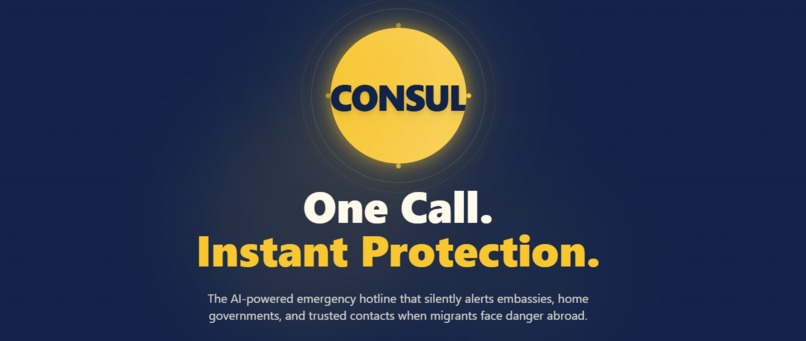
landing
-
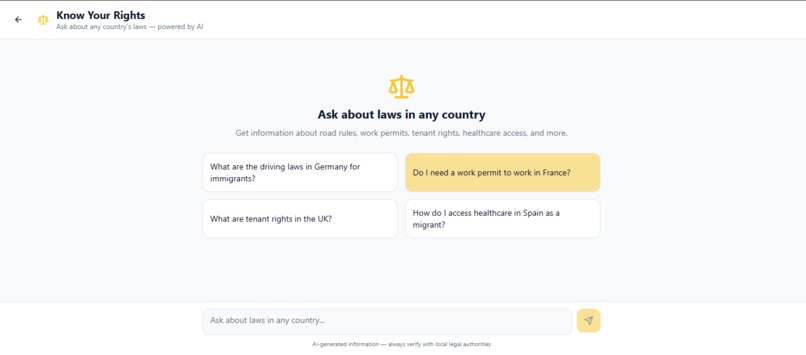
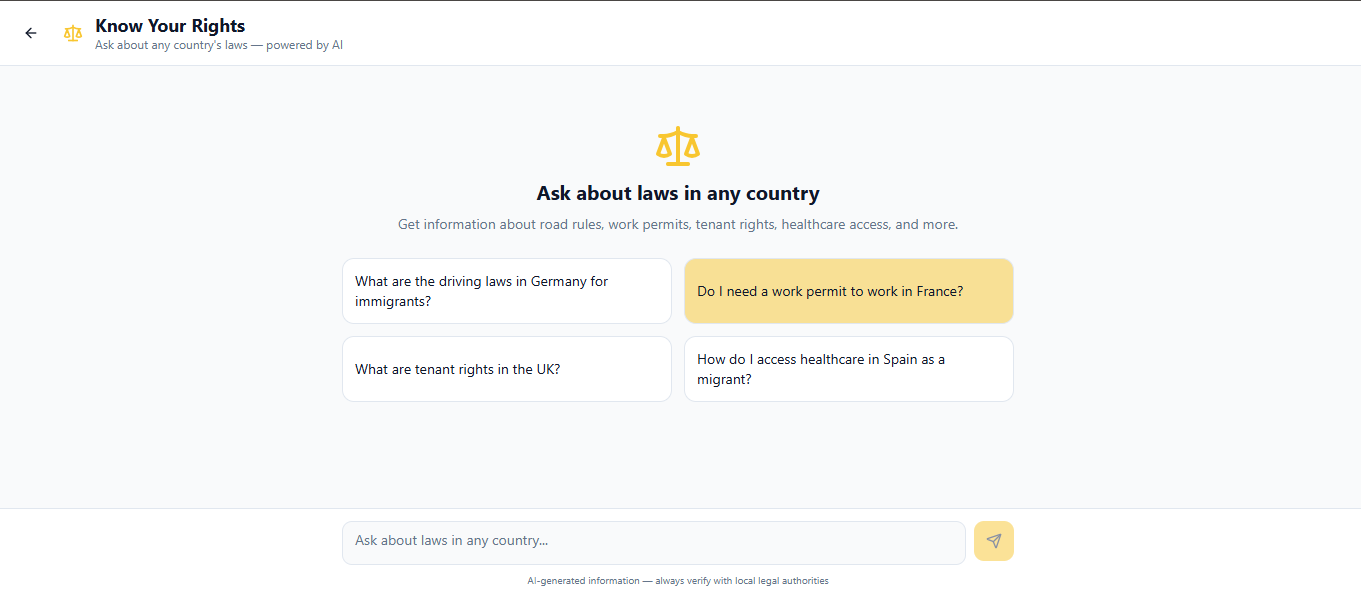
feature helping foreigners navigate countries rule
-
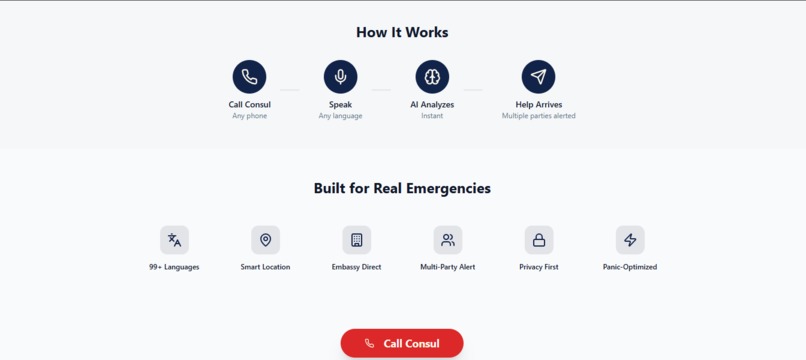
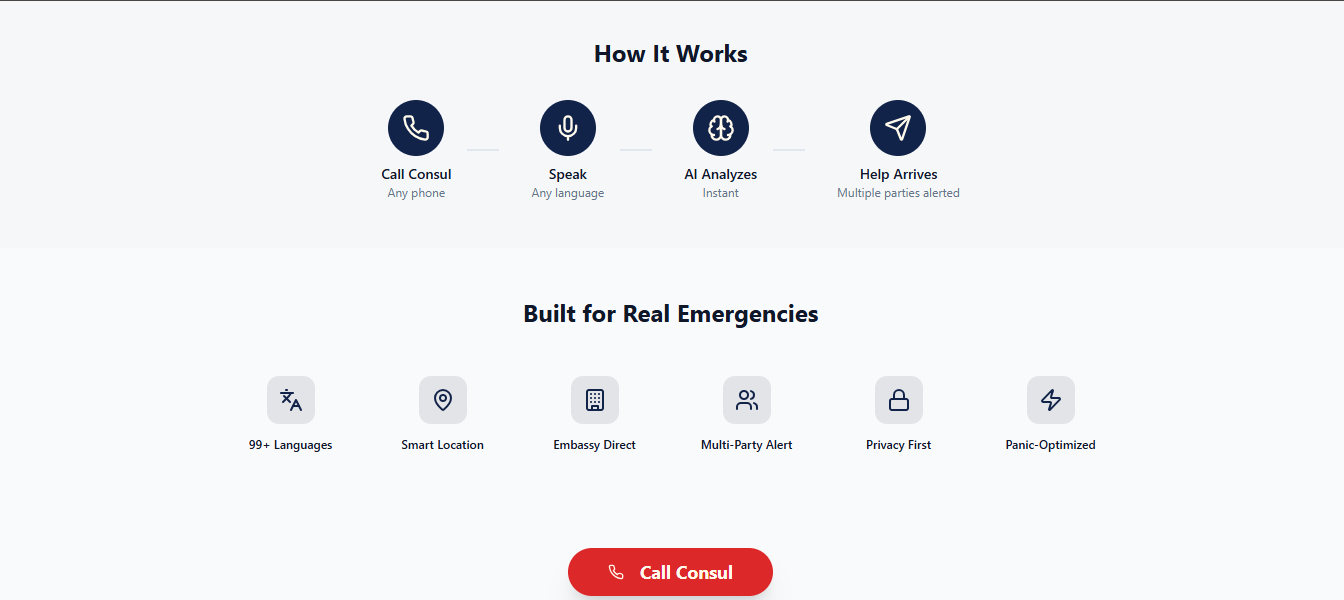
guide on how consul works

CONSUL (777)
An AI Emergency Line for Migrants
🌍 What Inspired This Project
The idea for CONSUL (777) came from a simple but uncomfortable truth:
in moments of crisis, migrants often do not know who to call, what to say, or how to say it.
Many emergency systems assume:
- stable internet access,
- fluency in the local language,
- familiarity with legal or bureaucratic processes,
- and the emotional capacity to explain a crisis clearly.
In reality, migrants and travelers often face emergencies while:
- offline or with limited connectivity,
- using borrowed phones,
- under stress, fear, or panic,
- unsure of their rights or nearest embassy contacts.
I was inspired by how emergency numbers like 911 or 999 reduce complexity to one action.
I asked myself:
What if migrants had a single number that didn’t require them to know what to say, who to call, or which forms to fill?
That question became CONSUL (777).
🧠 What I Learned
Building this project taught me several key lessons:
AI is most powerful when it removes cognitive load, not when it adds features.
The goal was not a “smart chatbot,” but a calm, structured listener that works under pressure.Emergency systems are workflows, not apps.
The real value lies in automating what happens after the call: data structuring, routing, notifications, and escalation.Trust matters more than novelty.
For a system touching embassies and personal data, clarity and restraint matter more than flashy interfaces.Offline-first thinking changes architecture decisions.
Designing for voice calls instead of screens reshaped everything.
🛠️ How I Built the Project
1. Core Concept
CONSUL (777) is an AI-powered emergency hotline that migrants can call from any phone.
Instead of speaking to a human operator, callers speak to an AI agent that:
- Collects essential information through natural conversation
- Works even with limited or unstable connectivity
- Structures the data automatically
- Sends verified emergency reports to:
- relevant embassies or consular offices
- pre-listed emergency contacts
The user does not need to explain what to do.
The system knows.
2. Technical Architecture (High Level)
Input Layer
- Voice call to short-code number (e.g. 777)
- Speech-to-text pipeline
AI Layer
- Google Gemini 3 for:
- intent detection
- structured data extraction
- multilingual understanding
- calm, guided conversational flow
Mathematically, the extraction step can be seen as:
[ \text{Conversation} \xrightarrow{\text{Gemini}} { \text{Name}, \text{Nationality}, \text{Location}, \text{Emergency Type}, \text{Consent} } ]
Processing Layer
- Validation and normalization of inputs
- Location handling via:
- user-declared location
- optional device-based location if available
Output Layer
- Automated dispatch to:
- embassy systems
- emergency contacts
- Logged case reference for follow-up
3. Why Gemini 3
Gemini 3 was critical because it:
- Handles multilingual voice conversations
- Maintains context across stressed, unstructured speech
- Converts free-form dialogue into clean, machine-readable records
- Allows rapid prototyping without building a rule-based dialogue tree
Without Gemini, the system would either be brittle or slow.
⚠️ Challenges I Faced
1. Location Without Assumptions
A major challenge was handling location when callers might:
- use borrowed phones,
- be offline,
- not want automatic tracking.
The solution was consent-first, declaration-first:
- Ask the caller to state their location
- Offer optional location sharing if available
- Never assume silently
2. Designing for Panic
People in distress do not speak in neat sentences.
I had to design prompts that:
- are short,
- avoid legal language,
- feel calming rather than interrogative.
3. Balancing Privacy and Urgency
Emergency response requires speed, but migrants are rightly sensitive about data sharing.
CONSUL only collects:
- what is necessary,
- what the user consents to,
- and only for the purpose of emergency escalation.
4. Making It Feel “Real”
One risk was building something that felt like a concept, not infrastructure.
To avoid this, I focused on:
- realistic embassy workflows,
- credible naming and tone,
- minimal but clear scope.
🚀 Potential Impact
If deployed, CONSUL could:
- Reduce response time during migrant emergencies
- Lower language and knowledge barriers
- Act as a digital extension of embassies
- Serve millions of travelers, refugees, and migrant workers globally
This is not just an app.
It is emergency infrastructure powered by AI.
🧭 Closing Thought
CONSUL is built on one belief:
In an emergency, people should not have to be articulate, connected, or informed.
They should only have to ask for help.
AI makes that possible.


Log in or sign up for Devpost to join the conversation.