Inspiration
The rapid digitalization of the healthcare industry has made managing sensitive data both essential and challenging. With patient data increasingly stored and exchanged online, it became clear that traditional data management systems were not adequately protecting against unauthorized access, data tampering, and security breaches. This realization, combined with the potential of blockchain technology to create immutable and decentralized records, inspired me to design a cloud-based healthcare data management system that addresses these concerns by integrating blockchain.
What I Learned
This project provided me with hands-on experience in designing a robust, scalable, and secure system for handling healthcare data. I learned how to leverage Red Hat OpenShift for cloud-native application deployment, configure Hyperledger Fabric for secure data transactions, and implement best practices for data encryption and access control. Through this process, I deepened my understanding of healthcare regulations like HIPAA and how technology can help meet these compliance requirements. The project also taught me the importance of optimizing performance in blockchain integrations to avoid latency while preserving security.
How I Built the Project
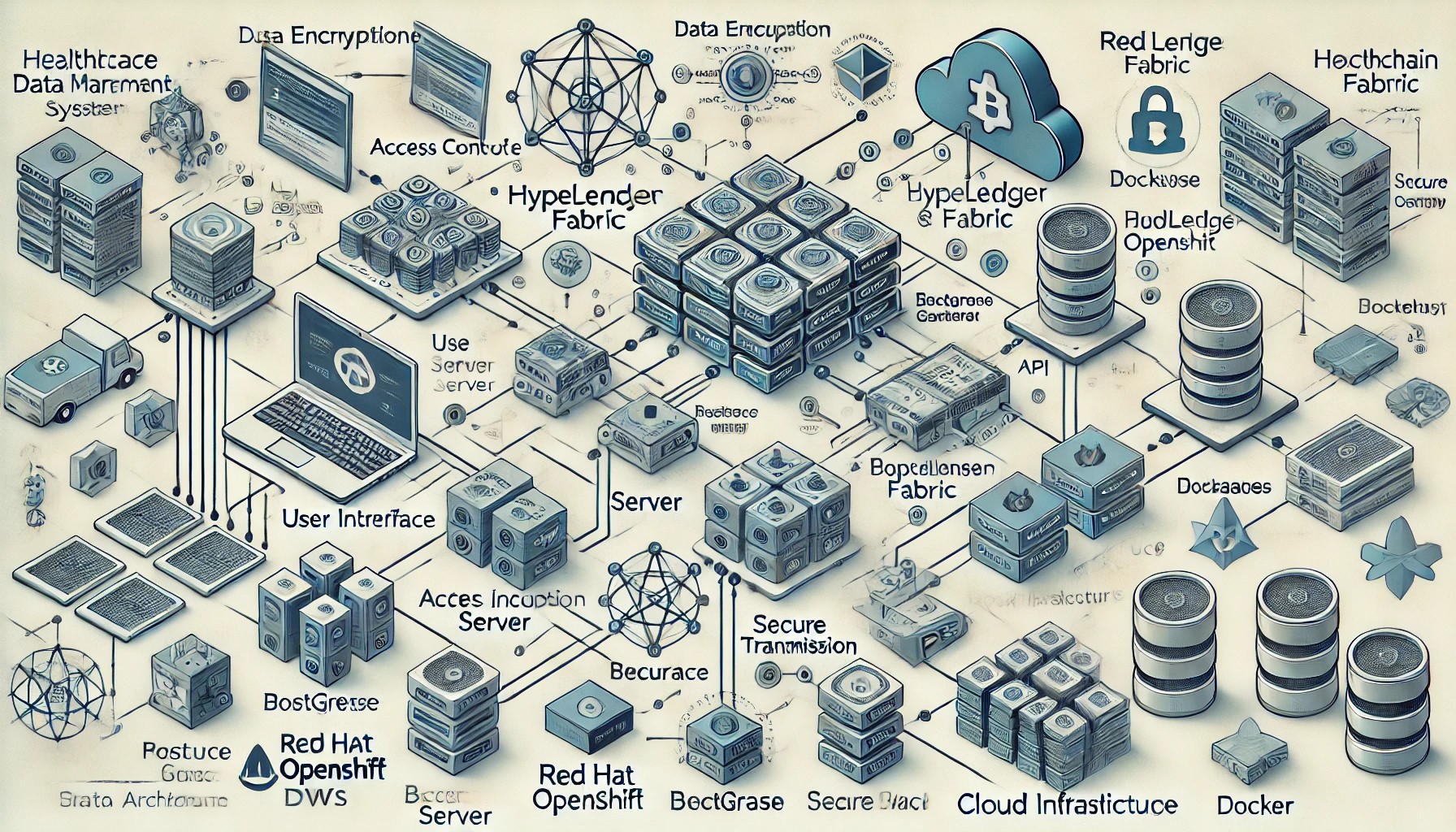
Designing the Cloud Infrastructure: I deployed the application on Red Hat OpenShift, using Kubernetes for container orchestration to ensure scalability and high availability. AWS was used for cloud storage, providing a secure, compliant environment for patient data.
Implementing Blockchain with Hyperledger Fabric: Hyperledger Fabric was selected for its permissioned blockchain capabilities, ensuring that only authorized users could access patient data. I used Fabric’s modular architecture to customize the blockchain for healthcare needs, focusing on data integrity, transparency, and auditability.
Securing Data with Encryption and Access Control: To protect patient data, I implemented AES-256 encryption for data at rest and SSL/TLS for data in transit. I also added role-based access controls to restrict access, ensuring that only authorized personnel could interact with sensitive data.
Creating Interoperability: Using REST APIs, I designed the system to interact with existing healthcare platforms, making data exchange seamless and ensuring interoperability with legacy systems.
Challenges Faced
Blockchain and Performance Optimization: Blockchain’s inherent nature to validate every transaction slowed the process. Finding a balance between transaction speed and security required numerous optimizations, especially to handle the high data volume in healthcare.
Regulatory Compliance: Ensuring HIPAA compliance while maintaining user experience was challenging. The stringent security requirements meant that every component needed careful planning to meet regulatory standards.
Seamless Integration: Integrating blockchain into existing healthcare systems and achieving interoperability posed challenges. Developing APIs that ensured consistent data flow between new and legacy systems took extensive testing and refinement.

Log in or sign up for Devpost to join the conversation.