-
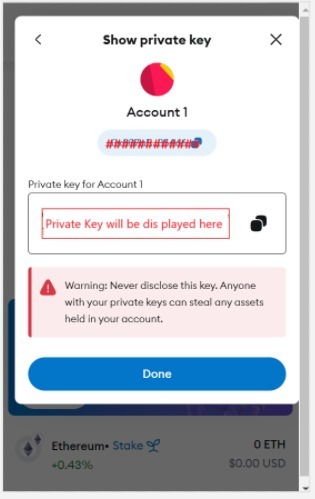
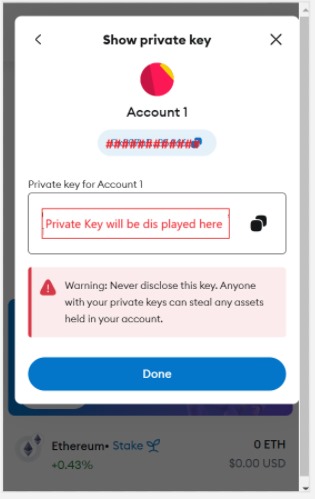
Private key
-
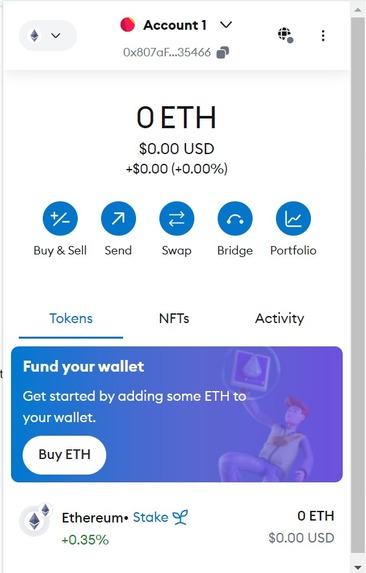
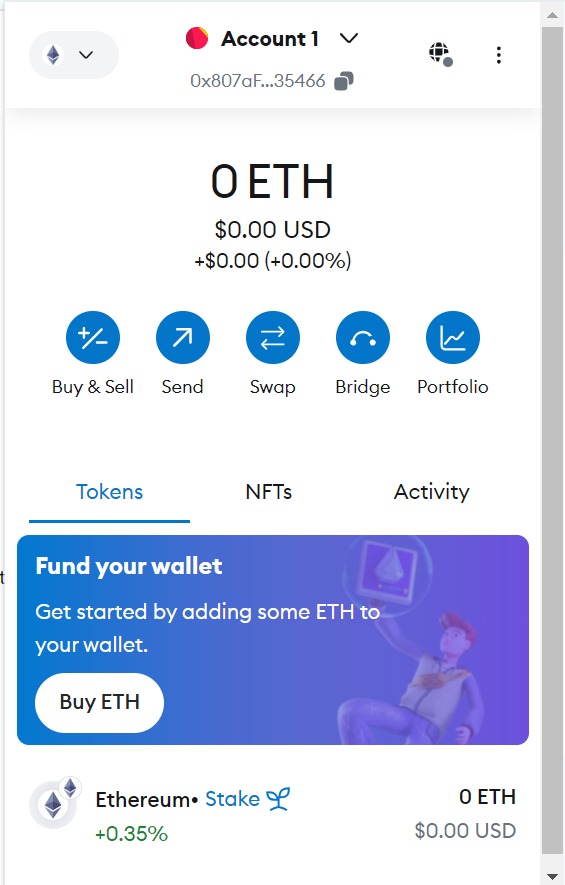
Ethereum wallet in Metamask
-
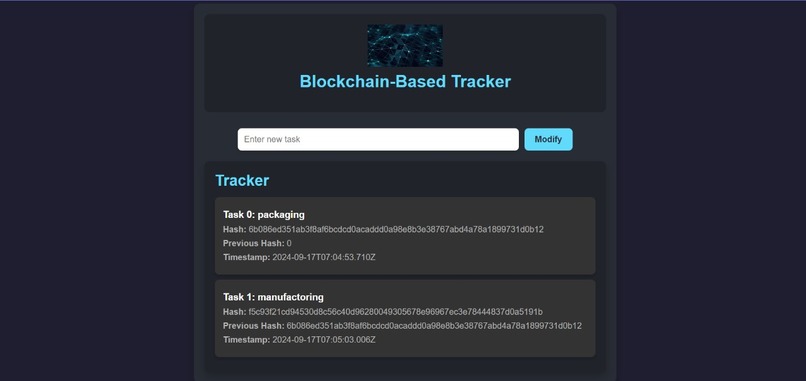
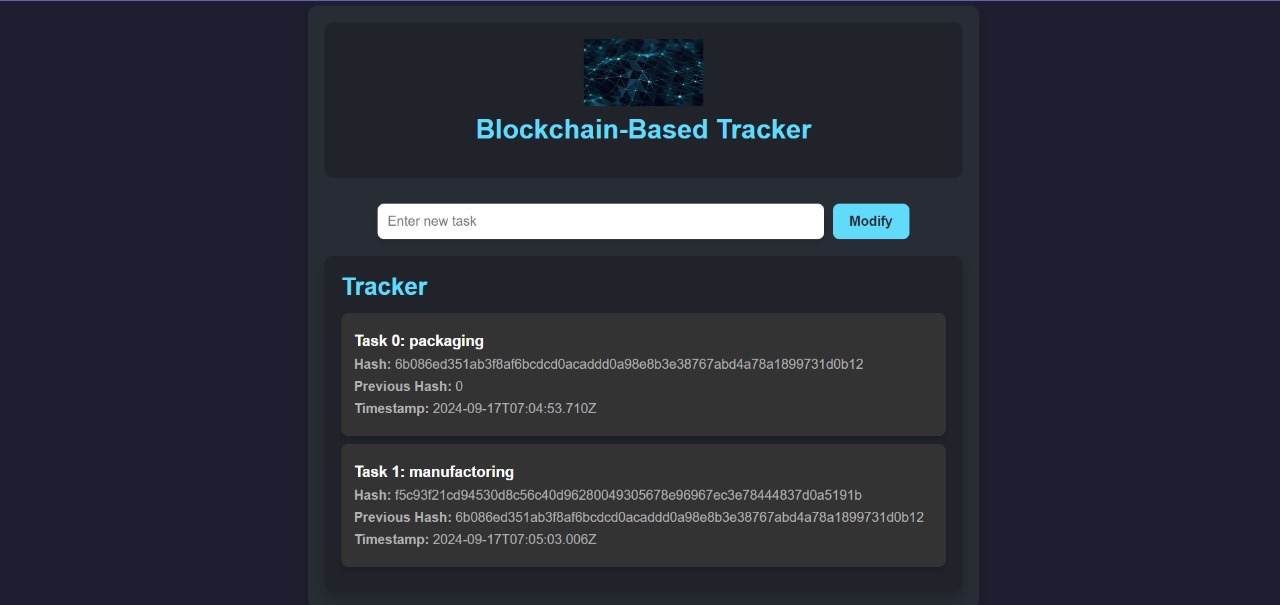
Webpage UI
Inspiration: Traditional tracker applications often struggle with data integrity, transparency, and security. Users may experience data tampering, lack of transparency in task history, and insufficient security for sensitive data.
What it does: Traditional trackers often face issues like data tampering, poor transparency, and weak security. A blockchain-based tracker solves these problems by using a decentralized, immutable ledger. This ensures that data cannot be altered without authorization, maintaining data integrity and providing a clear, transparent history of all actions.
Only authorized users can access or modify the data, preventing unauthorized tampering. Each transaction is securely recorded on the blockchain, creating an auditable and tamper-proof record. With robust cryptographic security, a blockchain-based tracker ensures that sensitive data is secure, reliable, and trustworthy for all users.
How we built it: To develop our blockchain-based tracker, we created a wallet and private key using Metamask, leveraging Solidity as the programming language. We chose Ethereum as the platform to build our blockchain solution, utilizing Ether as the currency for transactions. As newcomers to the blockchain space and with limited time for the competition, we focused on generating a prototype to demonstrate our concept effectively.
For the backend, we used Python to manage and process data, while React was chosen for the frontend to create an interactive user interface. This approach allowed us to showcase our idea within the time constraints.
Challenges we ran into: As newcomers to blockchain, we faced several challenges while building our project. Setting up Metamask, generating a wallet, and understanding how private keys work was initially complex. Learning Solidity and integrating it with Ethereum's smart contracts added another layer of difficulty, especially with limited time.
We also struggled with connecting the blockchain to our backend using Python, as it required proper handling of transactions and smart contract interactions. For the frontend, integrating React with the Ethereum network to display real-time data proved to be challenging, requiring us to bridge gaps between different technologies.
Accomplishments that we're proud of:
Successful Integration: We effectively integrated Metamask with our blockchain-based tracker, enabling secure wallet creation and private key management.
Prototype Development: Despite time constraints, we developed a functional prototype using Solidity for smart contracts, Python for backend development, and React for the front end, showcasing our blockchain solution effectively.
Smart Contract Implementation: We successfully wrote and deployed smart contracts on the Ethereum platform, demonstrating our ability to work with blockchain technology and Solidity.
Cross-Technology Integration: We managed to bridge Python and React with the Ethereum network, creating a seamless interface for interacting with our blockchain tracker.
Real-Time Data Display: Our React frontend effectively displayed real-time data from the blockchain, showcasing our ability to create an interactive and user-friendly interface.
What we learned:
Blockchain Fundamentals: We gained a solid understanding of blockchain technology, including wallet creation, private key management, and smart contract development using Solidity.
Ethereum Platform: We learned how to deploy and interact with smart contracts on the Ethereum platform, enhancing our understanding of blockchain transactions and Ether.
Integration Challenges: We discovered how to bridge different technologies—integrating Metamask with Python and React—and learned how to handle interactions between blockchain and web applications.
Frontend Development: We improved our skills in using React to build dynamic and responsive user interfaces that communicate with the blockchain.
Prototype Development: We gained experience in quickly developing a functional prototype under tight deadlines, and balancing technical complexity with project constraints.
What's next for Blockchain-based Tracker:
Enhanced Security: Implement advanced security features such as multi-signature wallets and encryption techniques to further protect sensitive data and transactions.
Scalability: Explore scaling solutions like layer-2 protocols or sidechains to handle increased transaction volumes and improve system performance.
User Experience: Refine the user interface and user experience to make the tracker more intuitive and accessible to a broader audience.
Feature Expansion: Add new features such as real-time notifications, detailed analytics, and customizable tracking options to enhance functionality.
Integration with Other Platforms: Integrate with additional platforms and services, such as IoT devices or other blockchain networks, to expand the tracker’s capabilities and use cases.
Compliance and Regulations: Ensure the tracker complies with relevant regulations and standards, particularly in areas like data privacy and security.
Community and Feedback: Engage with users and stakeholders to gather feedback, address issues, and continuously improve the system based on real-world use cases and requirements.
Built With
- ethereum
- etherlink
- flask/django
- javascript
- metamask
- mongodb
- nosql
- python
- react
- smartcontracts
- solidity
- web3.js/ethers.js

Log in or sign up for Devpost to join the conversation.