-
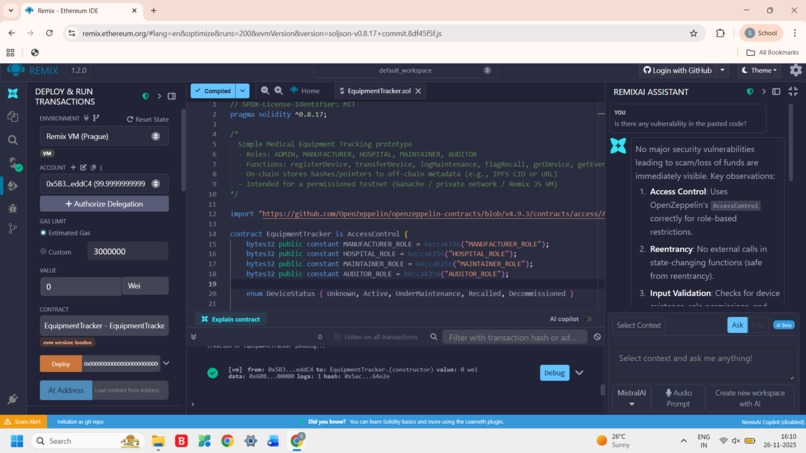
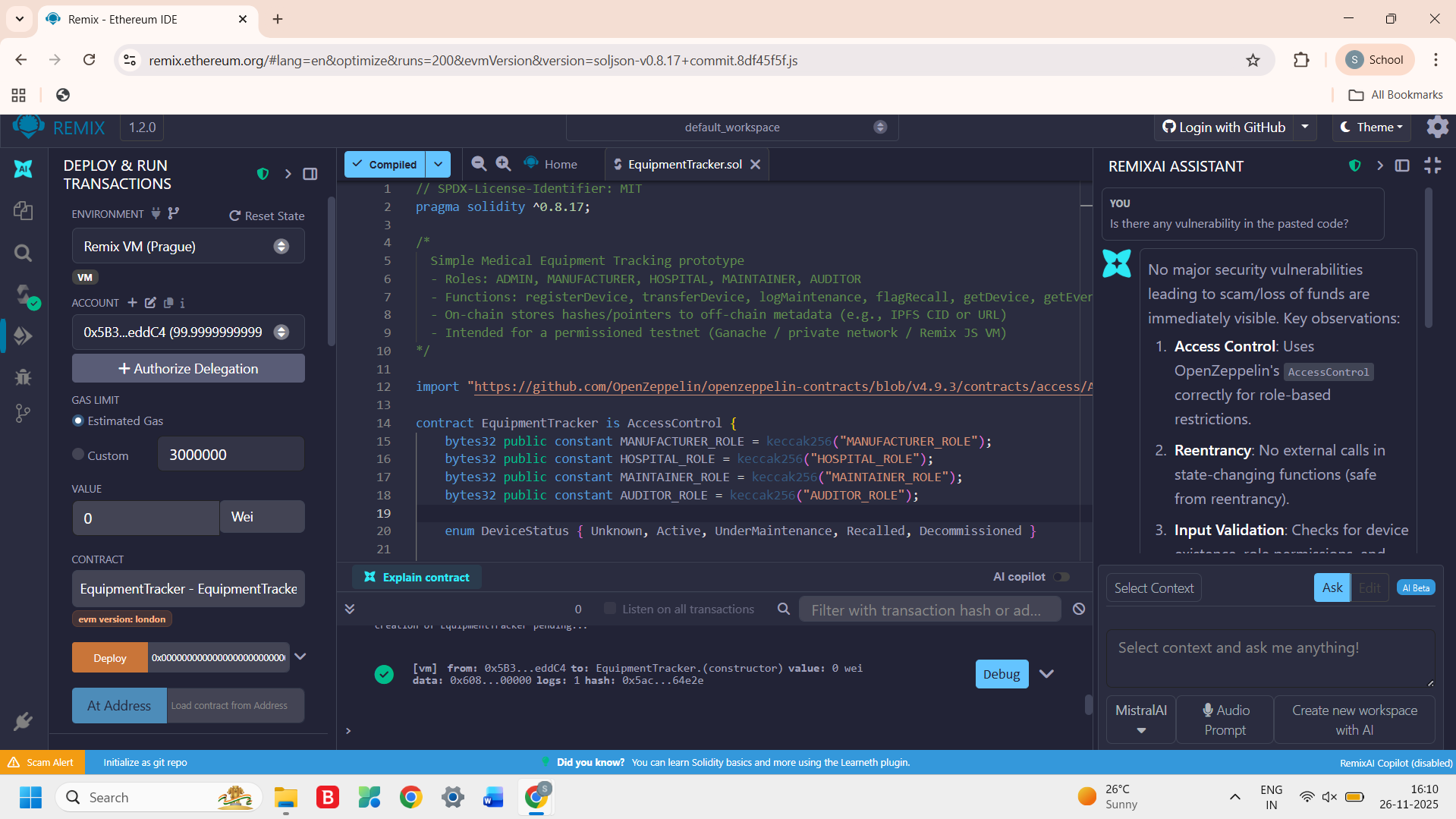
Deploy the Contract
-
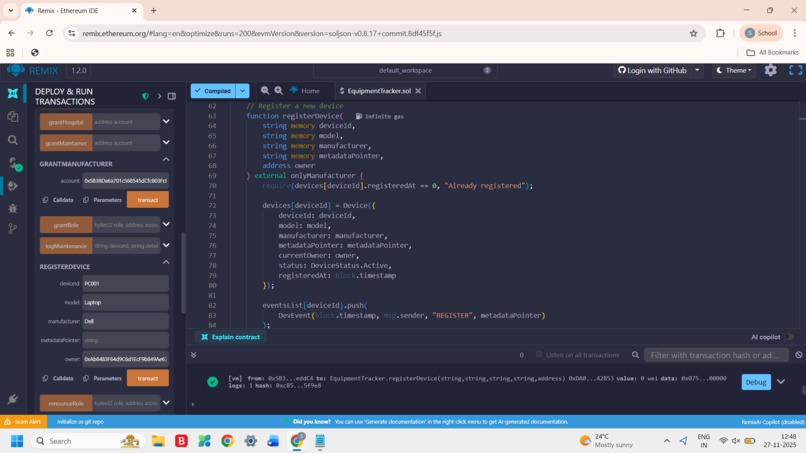
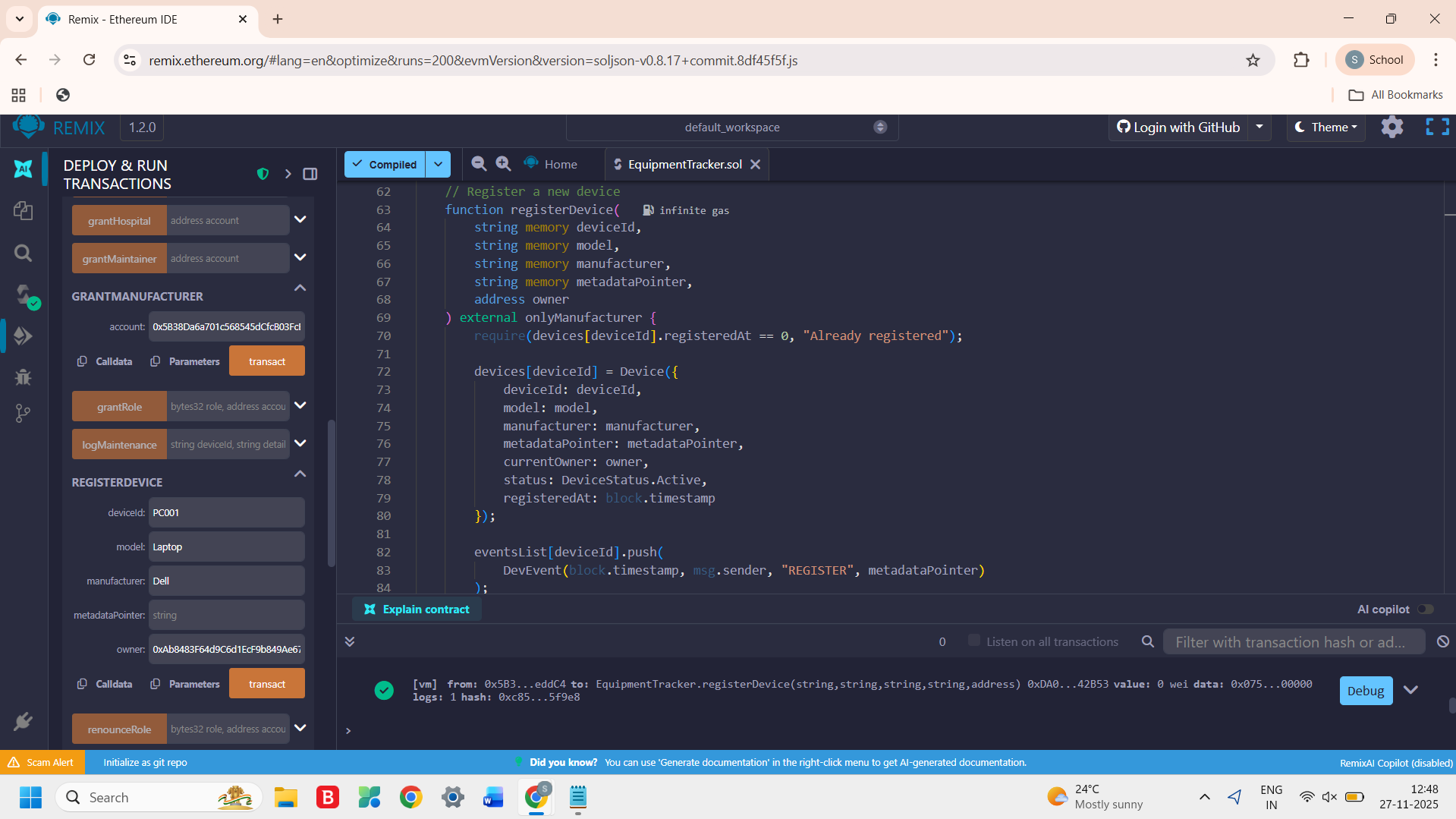
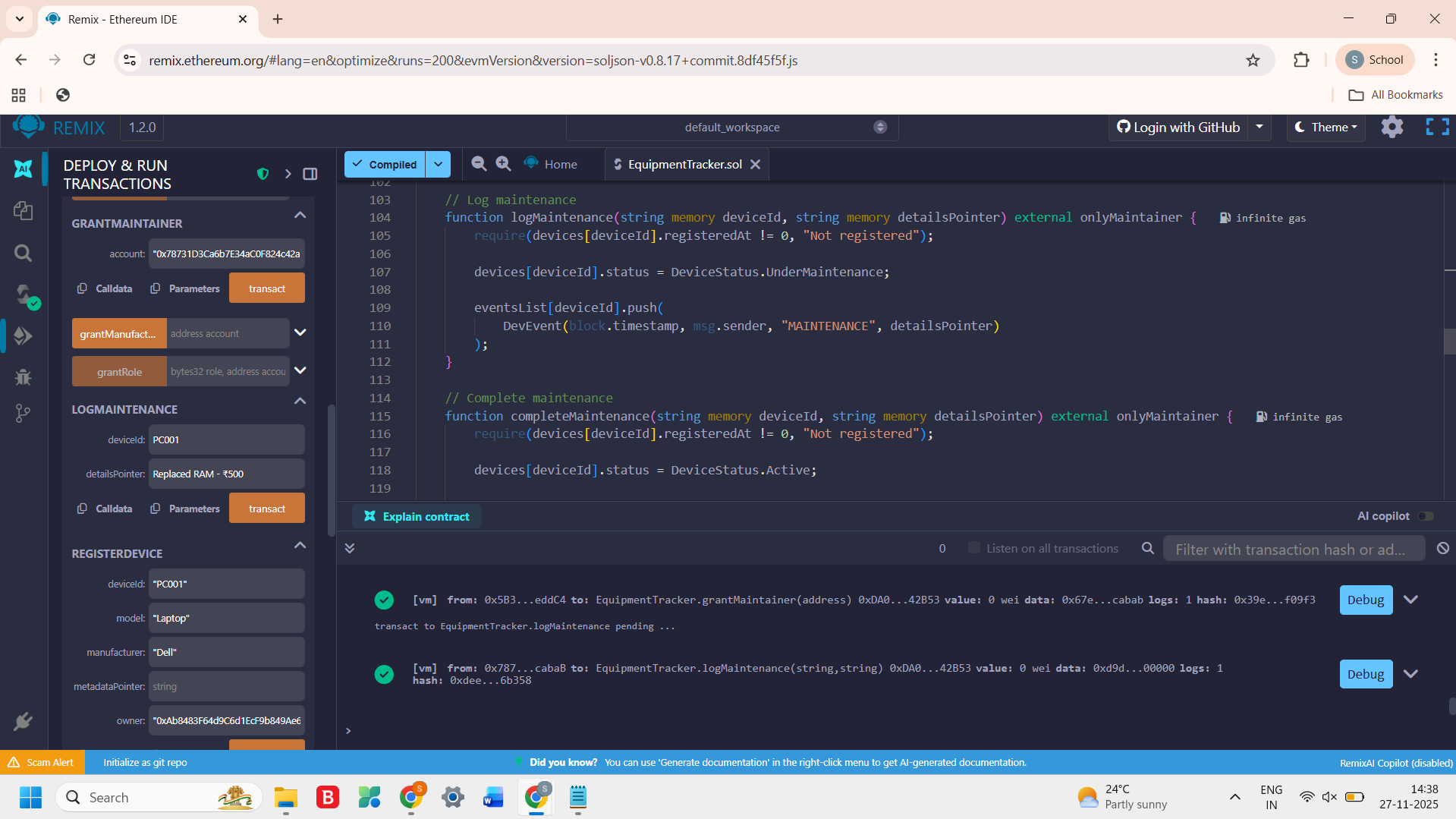
Register a Device
-
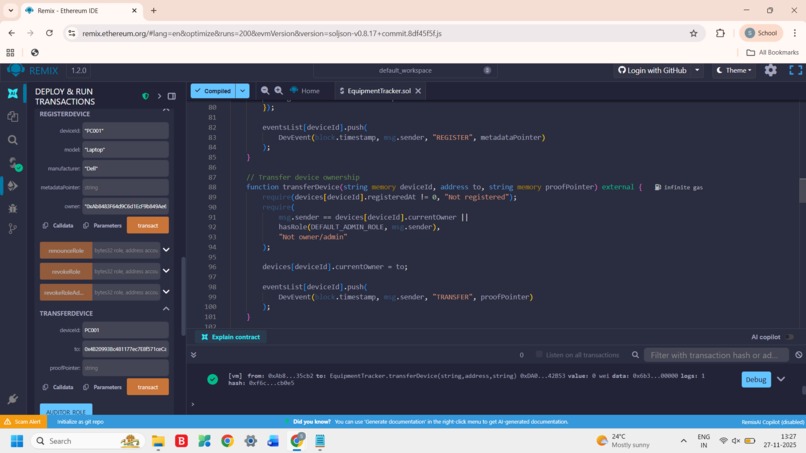
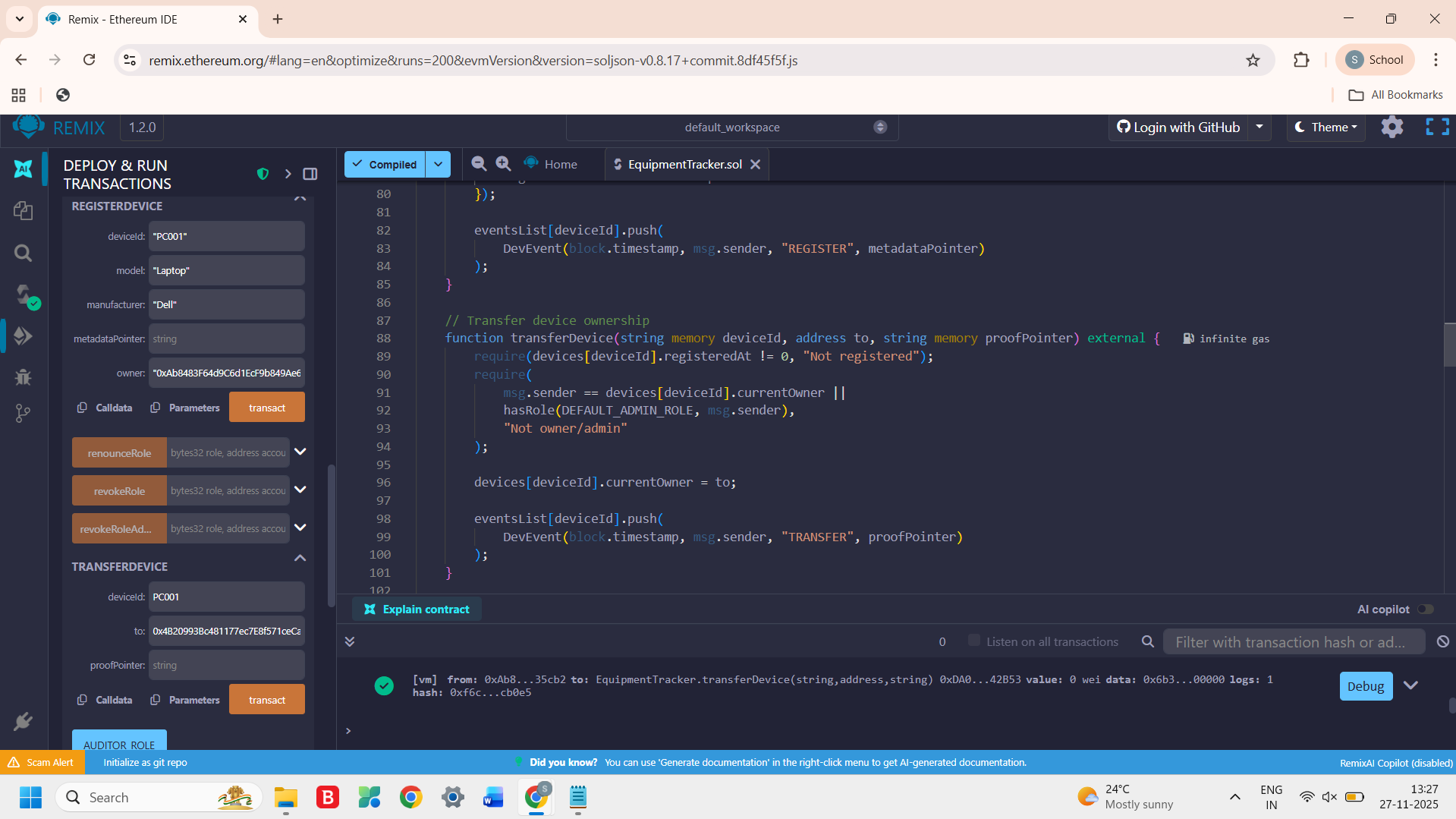
Transfer the Device
-
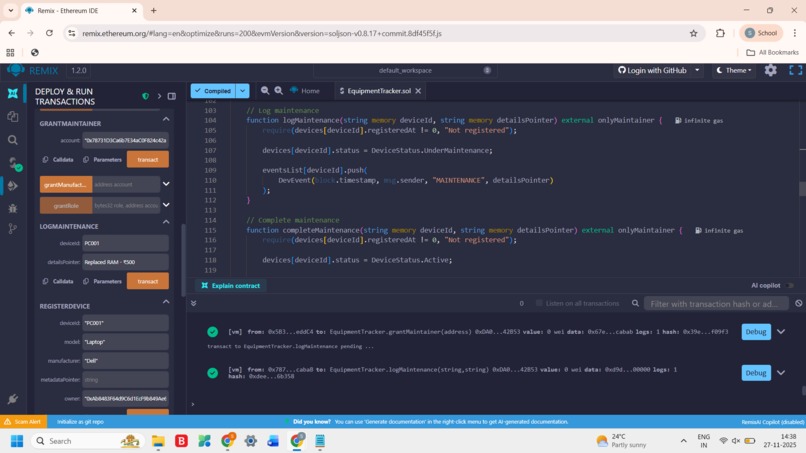
Log Maintenance
-
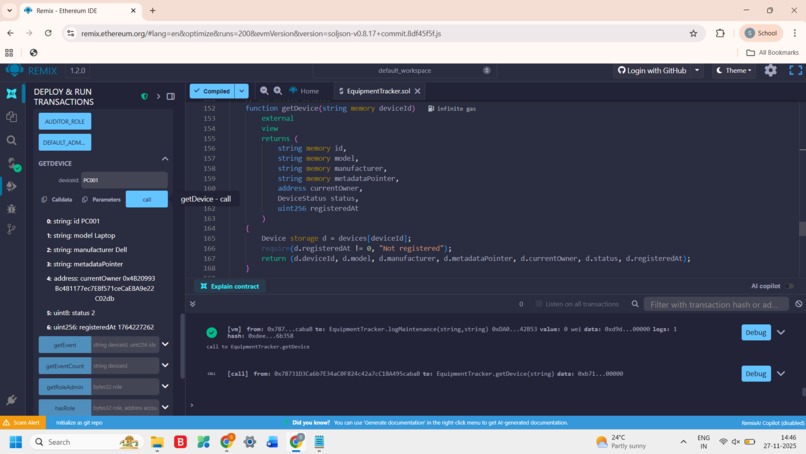
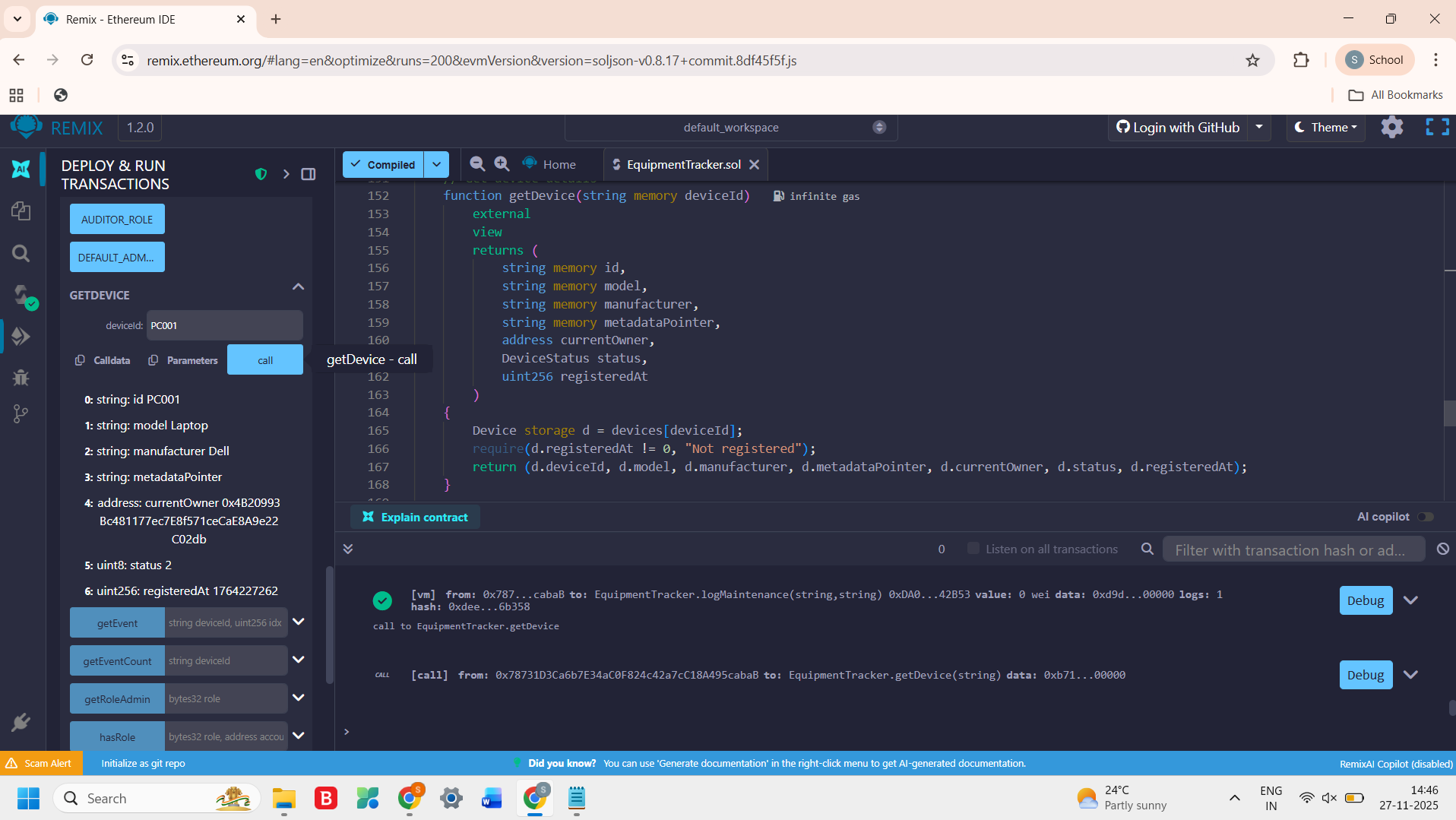
Fetch device details
Inspiration
Hospitals often struggle to track medical equipment as it moves between manufacturers, service teams, and clinical departments. Misplaced devices, incomplete maintenance records, and counterfeit equipment risks create vulnerabilities in patient safety. We wanted to build a system where every device carries its own unalterable story, visible to all authorized stakeholders. Blockchain offered a way to replace scattered logs with a shared, trustworthy source of truth.
What it does
The system records the entire lifecycle of a medical device—from its creation by a manufacturer, to ownership transfers, to each maintenance activity—on a blockchain. It allows:
Admins to assign roles
Manufacturers to register devices
Hospitals to manage ownership
Maintainers to log service events
Anyone with permission to view the complete history of a device
This ensures transparency, traceability, and authenticity across the supply and service chain.
How we built it
We developed a smart contract using Solidity to define roles, device registration logic, ownership transfer rules, and maintenance logging. A Web3-based client was connected through Remix for contract deployment and interaction. UI inputs were mapped to corresponding contract functions, and we used Ganache/MetaMask accounts to simulate real stakeholders. IPFS links were included for metadata storage. Each step—from device creation to maintenance log entry—was tested through controlled transactions to validate immutability and role-based access.
Challenges we ran into
We faced difficulties in understanding Ethereum account roles and mapping them correctly to admin, manufacturer, hospital, and maintainer functions. Ownership transfer steps initially caused confusion due to address mismatch and permission checks. Managing the sequence of operations—granting roles before registration, transferring ownership before logging maintenance—required careful coordination. Debugging incorrect transactions and ensuring proper account selection were key hurdles.
Accomplishments that we're proud of
We successfully built an end-to-end, role-aware blockchain system where each action produces a verifiable transaction. Key achievements include:
A functioning lifecycle model for medical devices
Consistent ownership transfer with permanent history
Secure, role-restricted operations
Maintenance logs that cannot be altered or deleted
A working demonstration using real blockchain tools
What we learned
We gained hands-on experience in writing and deploying smart contracts, understanding gas costs, and managing blockchain accounts. We learned how strict access control must be implemented to prevent unauthorized actions. Most importantly, we realized how blockchain transforms trust from “institution-based” to “system-based”—removing the need to rely on manual logs or fragmented databases.
What's next for BLOCKCHAIN-BASED MEDICAL EQUIPMENT TRACKING SYSTEM
Future improvements include adding a user-friendly dashboard, integrating QR/NFC tags for quick device lookup, and connecting real hospital inventory systems through APIs. We plan to implement automated alerts for overdue maintenance, integrate more detailed metadata, and eventually deploy on a scalable Layer-2 network for lower gas costs. Expanding the system to track pharmaceuticals or surgical assets is also a promising direction.
Built With
- ethereum
- ipfs
- javascriptvm
- metamask/ganache
- remix
- solidity
- web3.js

Log in or sign up for Devpost to join the conversation.