-
-
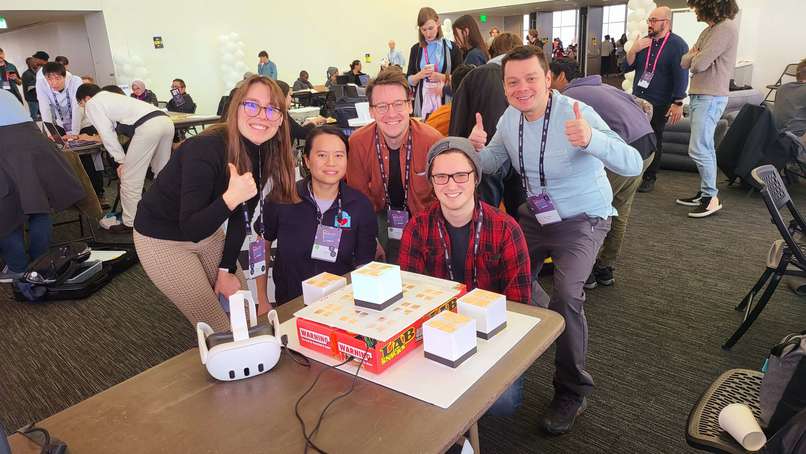
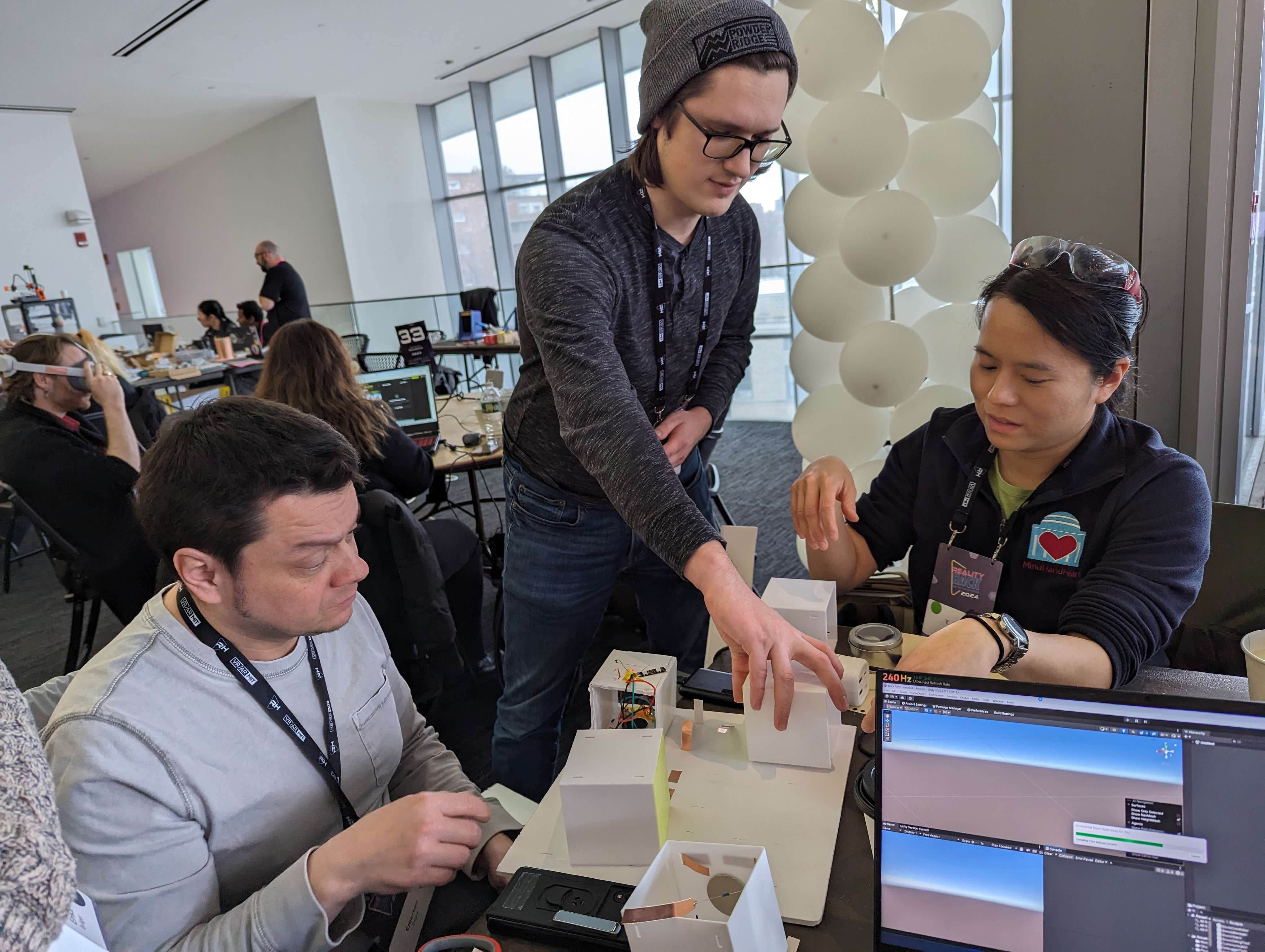
Meet the team! From Left to right: Erika, Jenny, Stanton, Quinn, Emerson
-
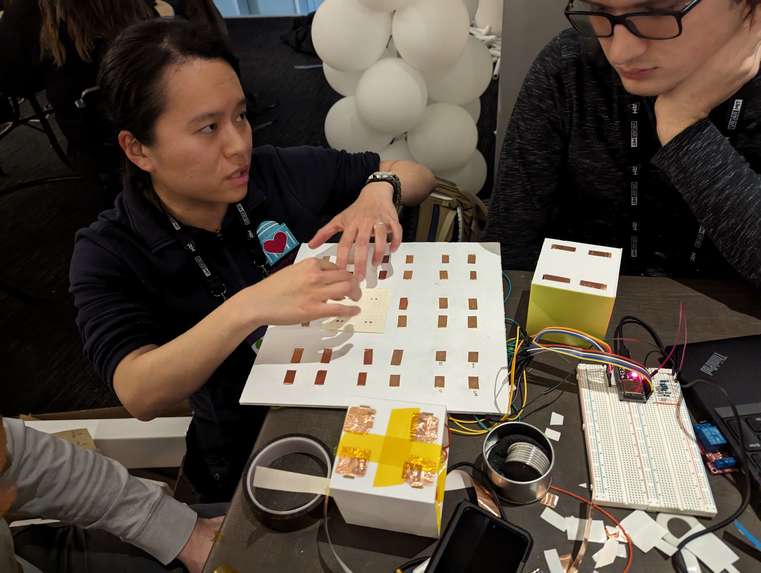
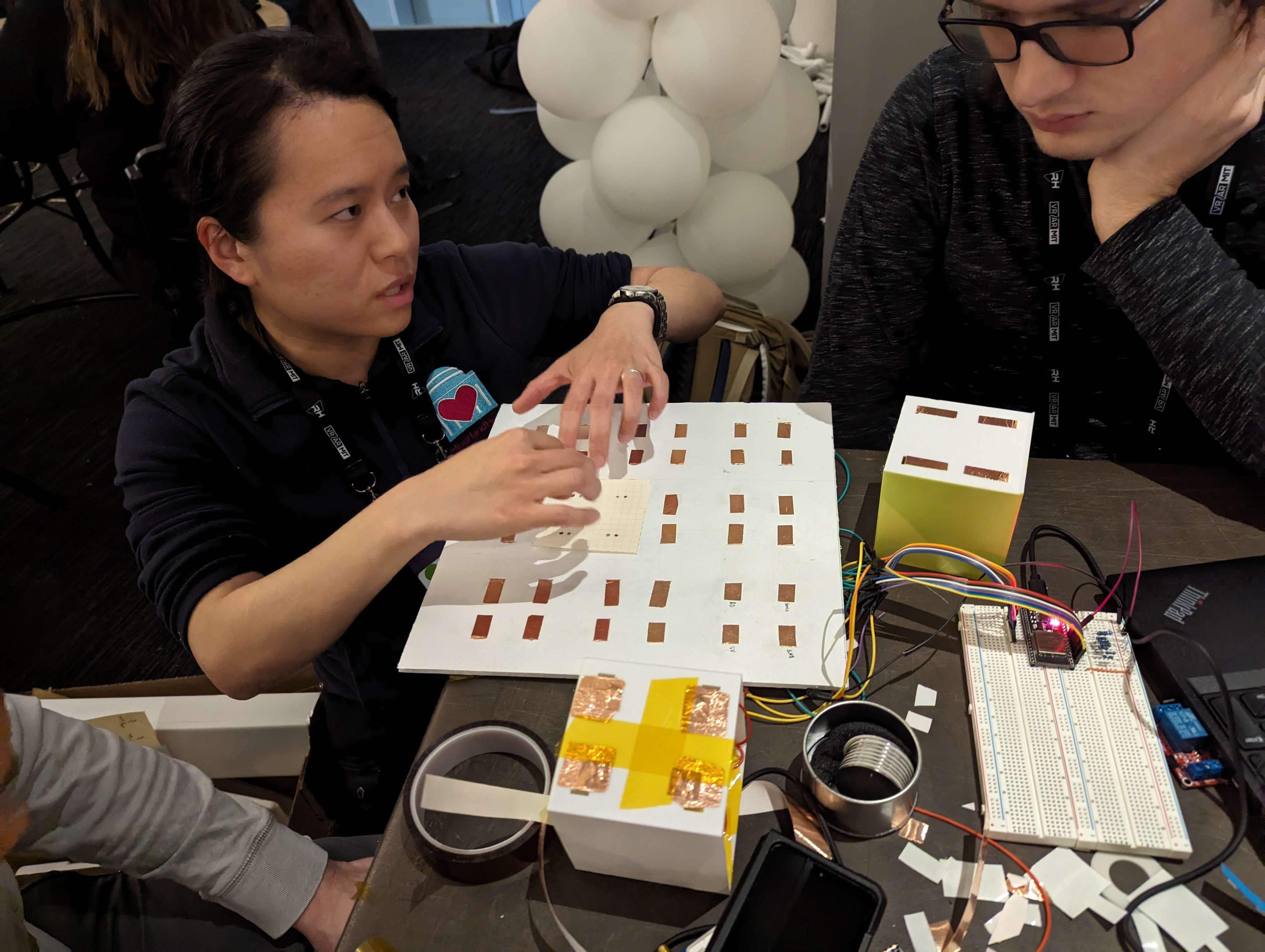
Emerson, Jenny, and Quinn discussing cube orientation
-
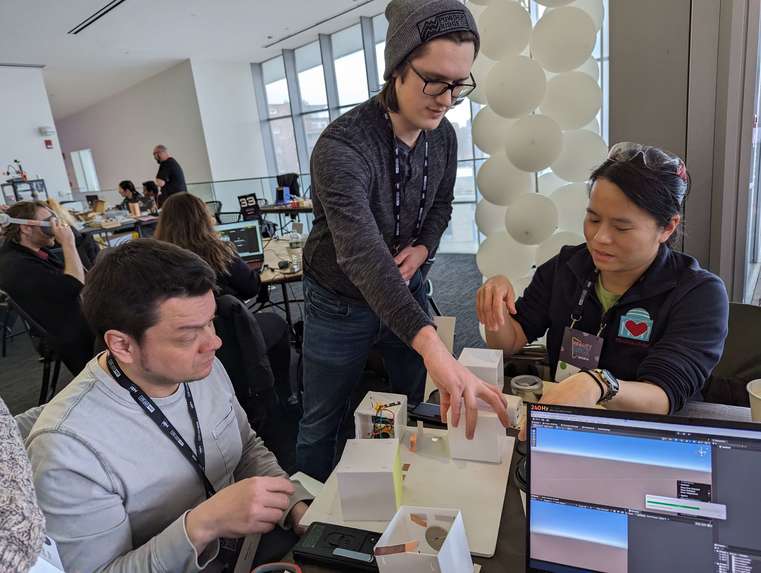
Emerson, Quinn, and Jenny ideating on board design
-
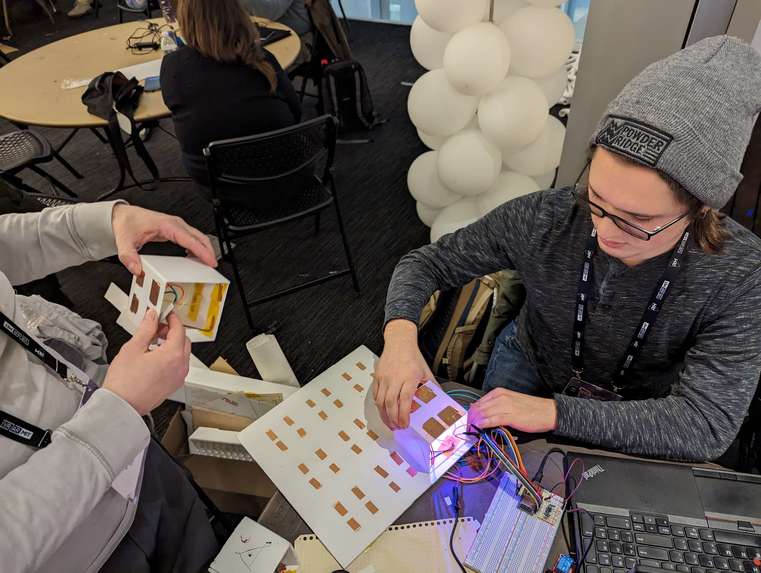
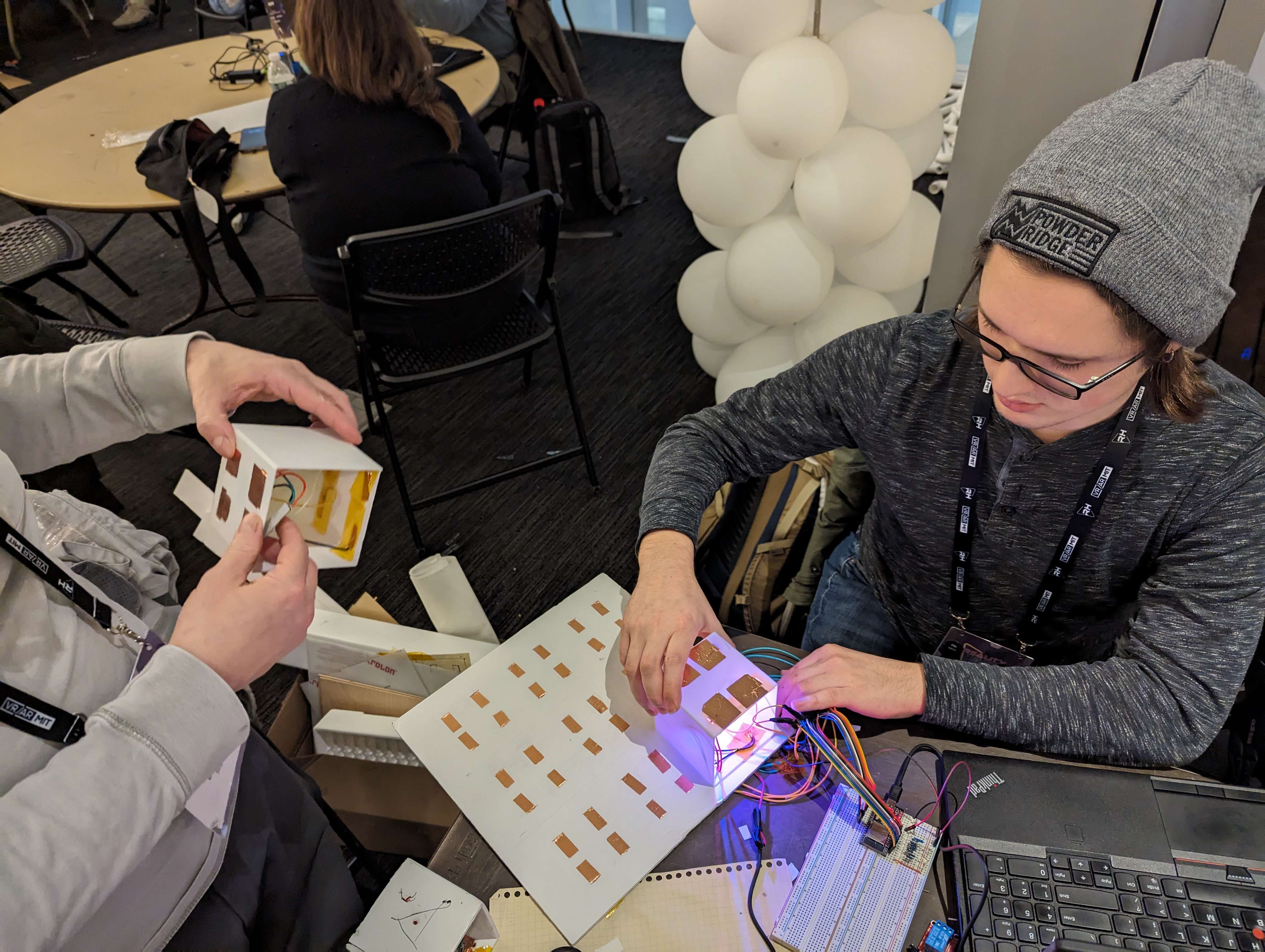
Quinn testing out a cube
-
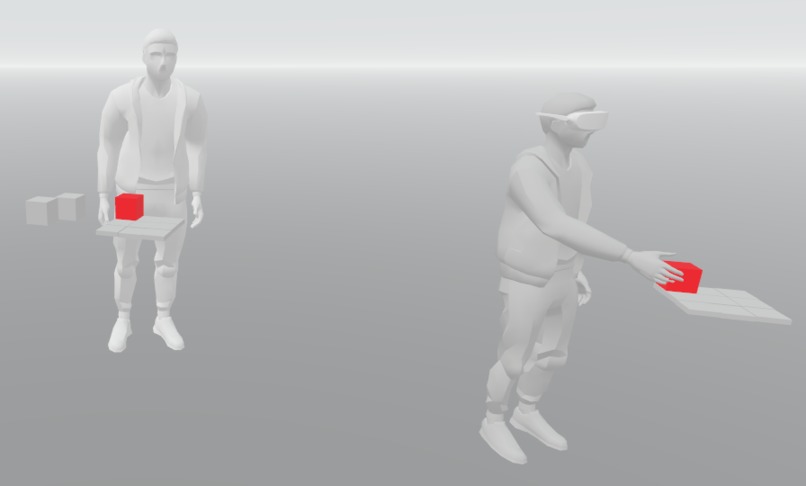
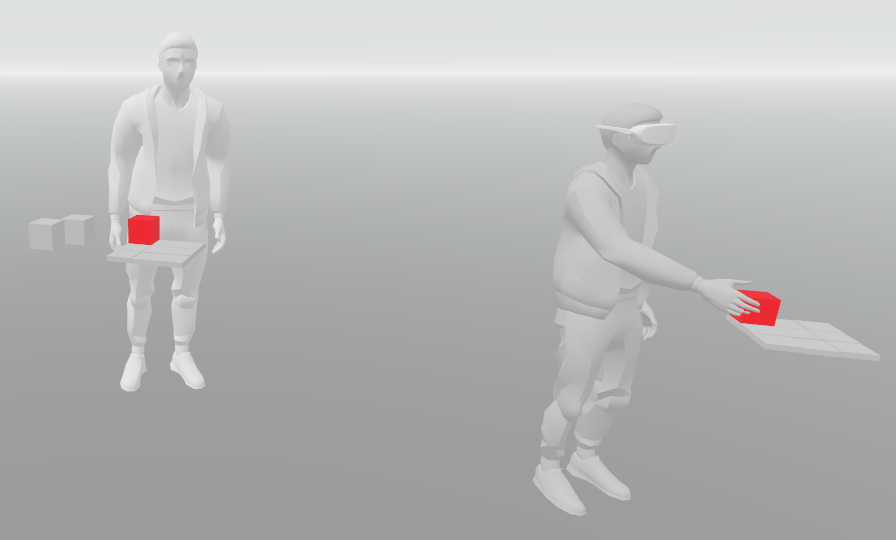
The initial 3D sketch of the idea using ShapesXR
-
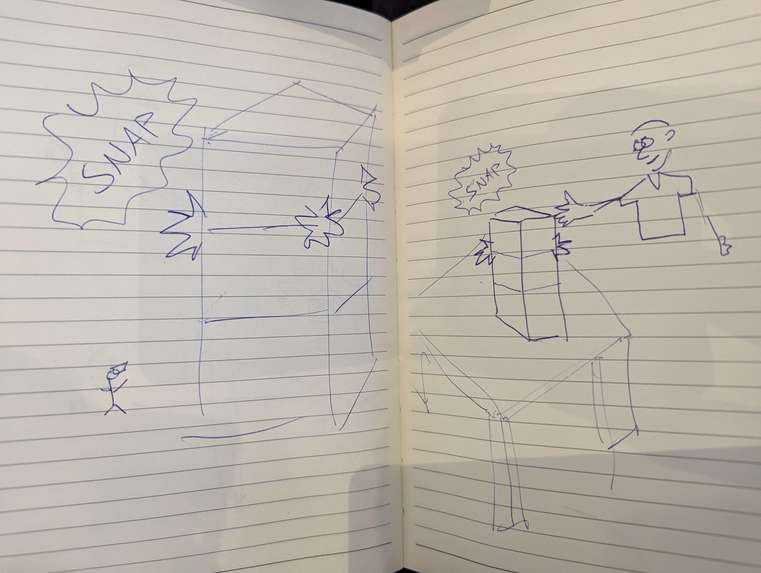
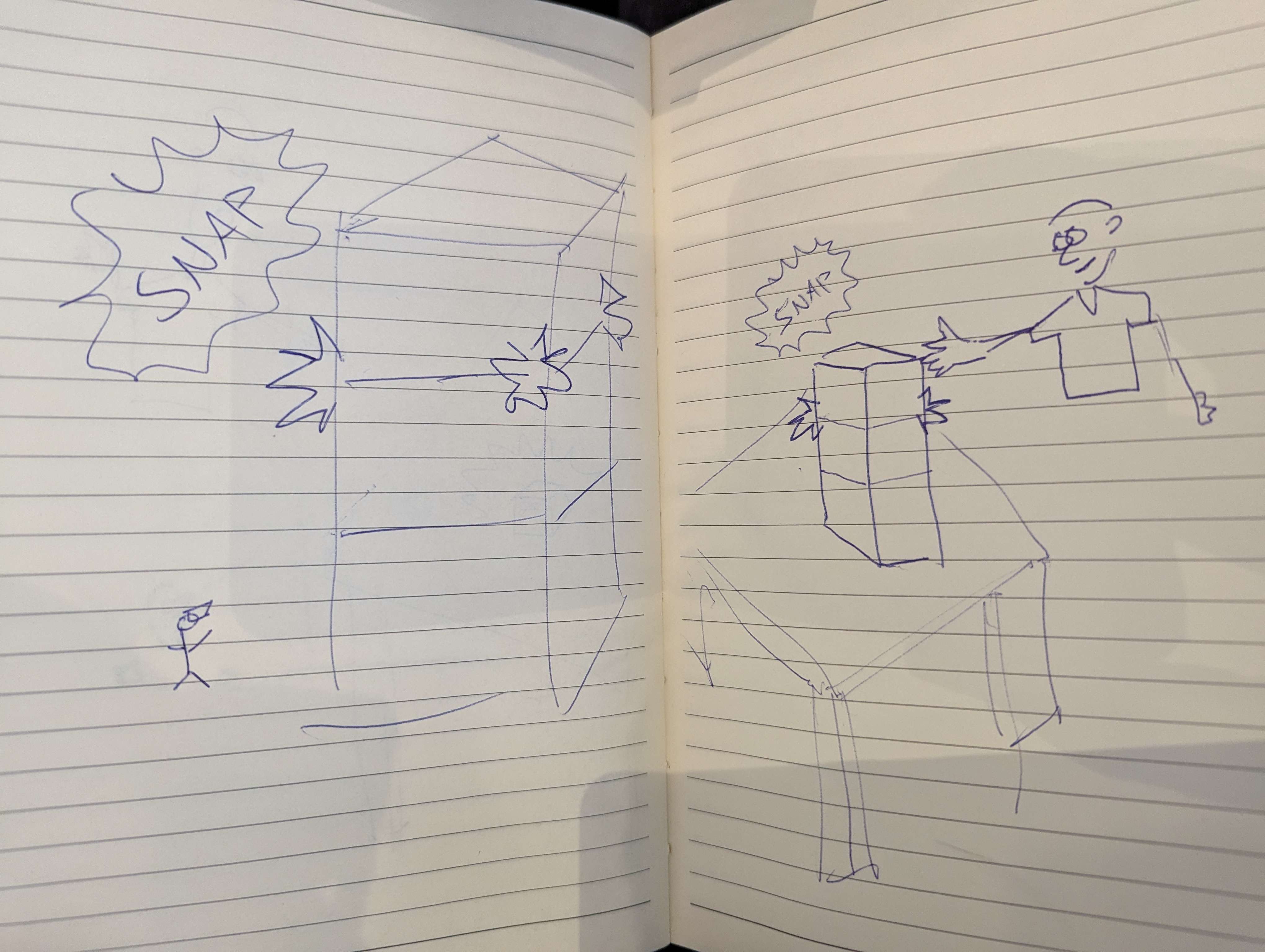
A paper sketch of how the cubes should stack
-
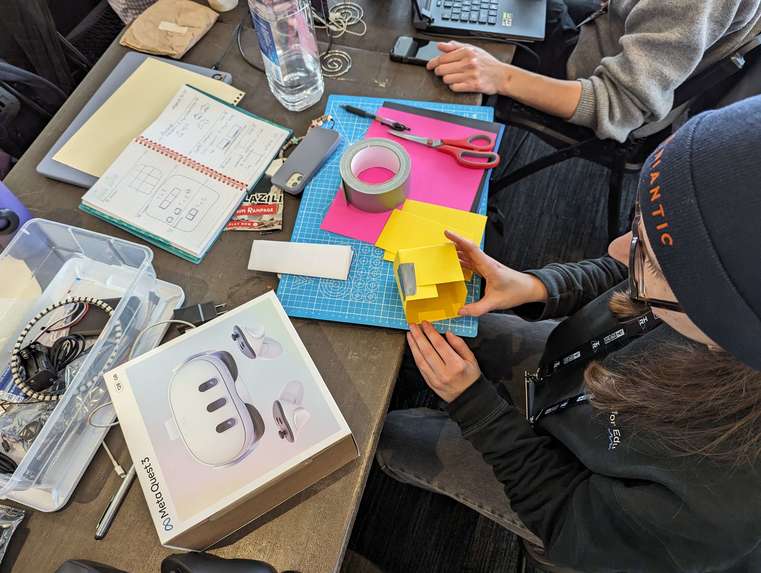
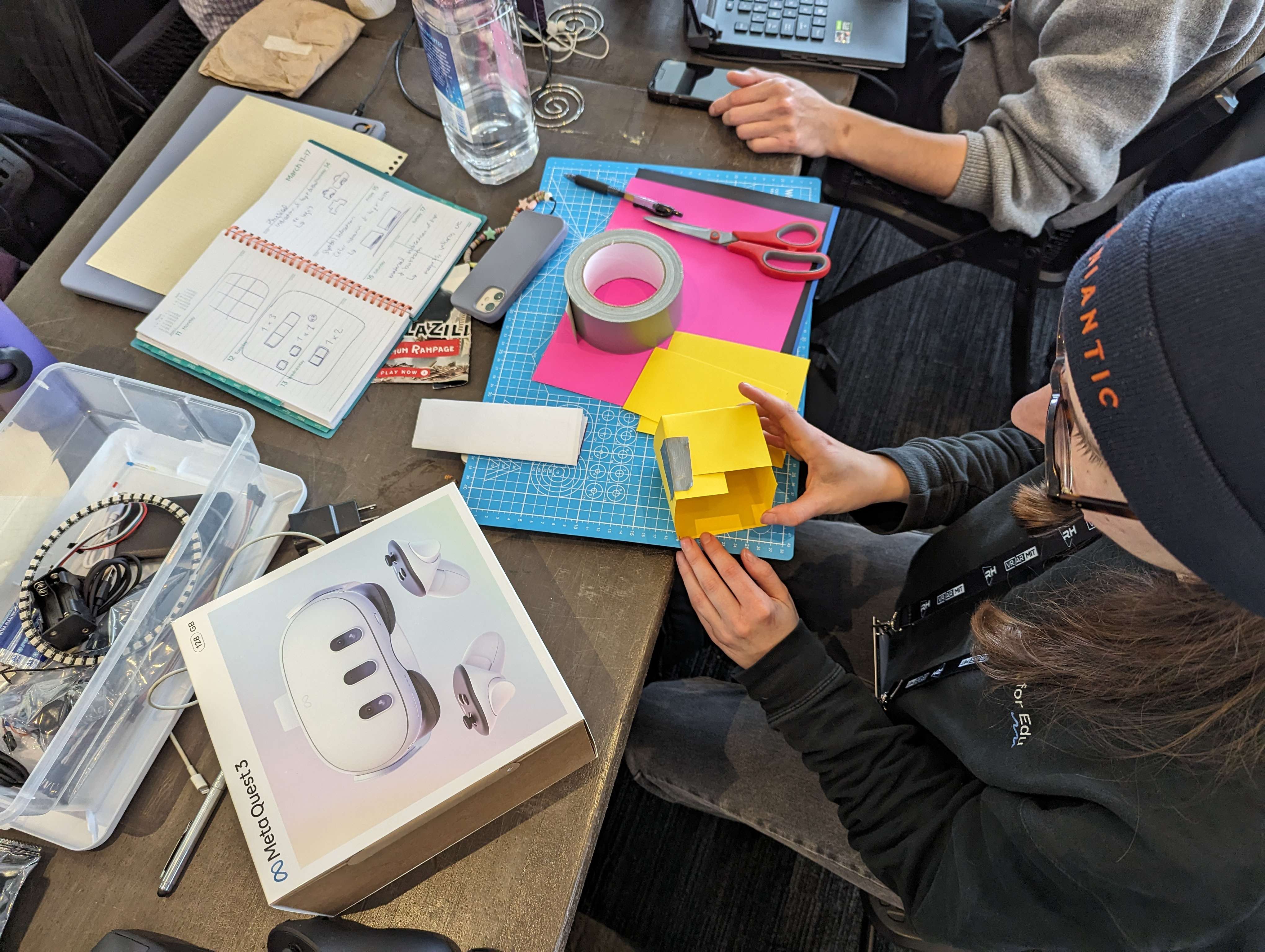
Erika creating our first paper model of the cubes
-
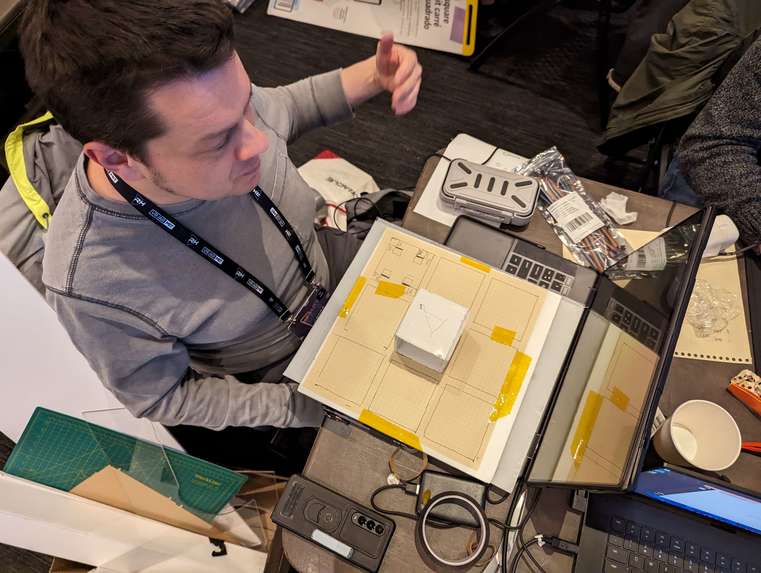
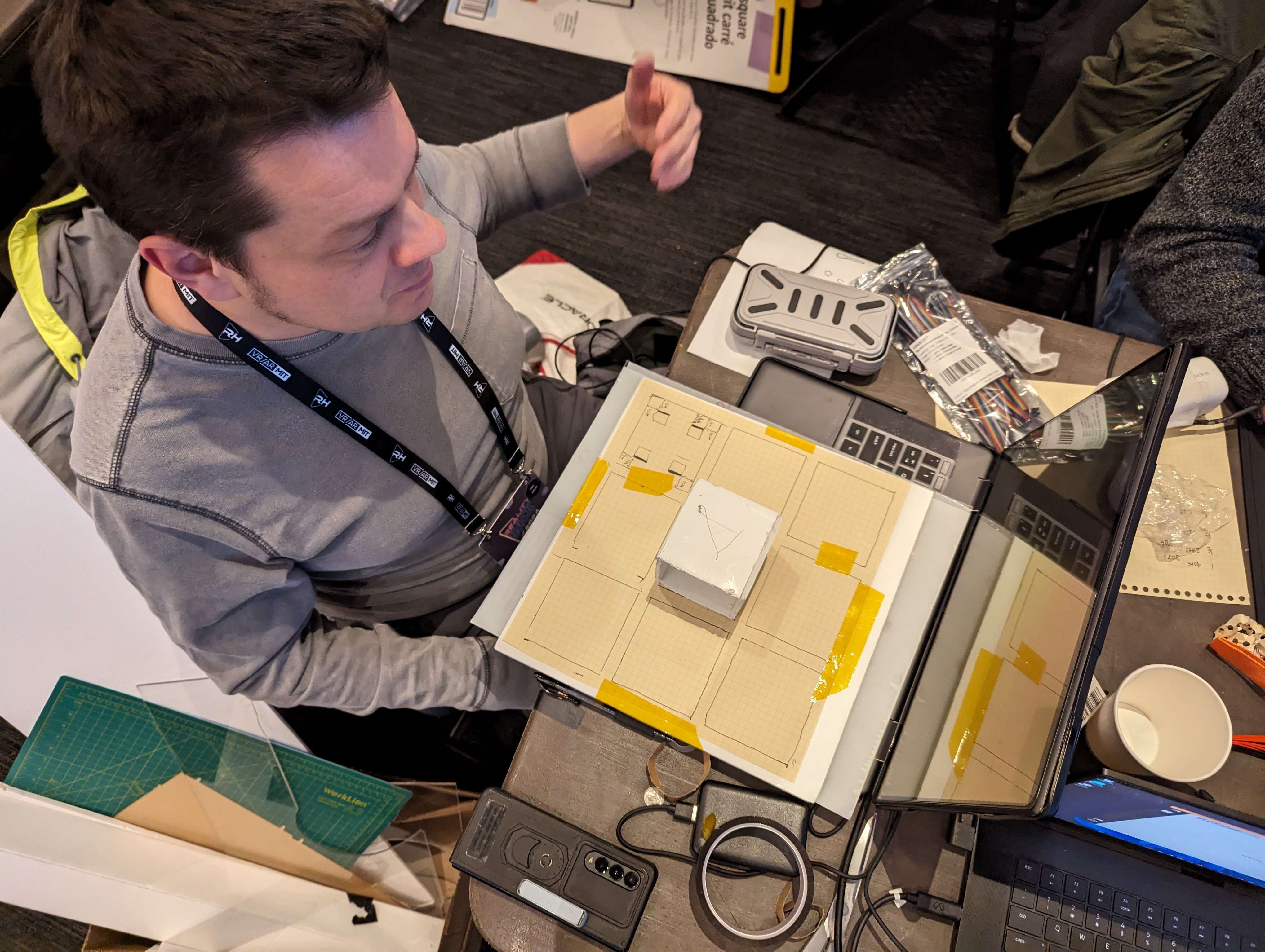
Emerson working on a more refined paper model
-
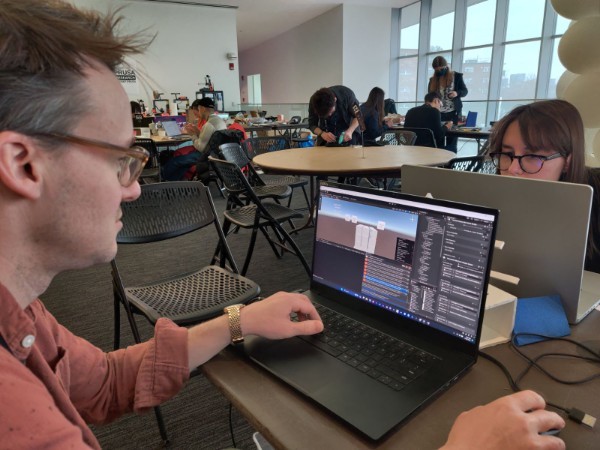
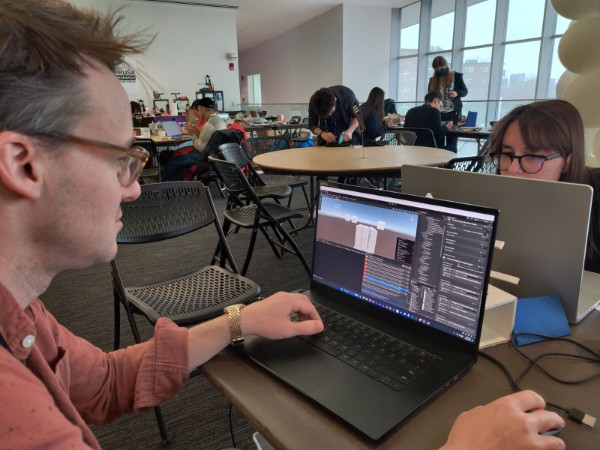
Stanton working on the VR prototype

Silver medalist of best hack overall
Winner of RealityHack's Best of Hardware Track
Augmented Productivity runner up
Inspiration
Use VR to connect the physical and digital realities. Build, ideate, & immerse in a VR blockscape. Connect with friends & collaborators, enabling people in both VR and IRL to interact simultaneously. We aimed for a lego-like experience which could be useful to play with family or kids remotely, or could be used in a classroom environment as a teaching tool.
What it does
Place a cube IRL. See it in VR.
Touch a cube in VR. See it light up IRL.
Stack cubes to unlock other objects in VR.
Shrink down in VR to see your physical build from a whole new perspective.
VR Block Party allows someone to be in the real world stacking blocks and building something new. At the same time, someone in VR can be interacting with those blocks and seeing exactly what the person in the real world is building live. When the person in VR interacts with the cubes, the real world blocks light up to indicate this interaction.
How We Built It
The Concept
The team came around the vision of creating a project where actions in VR affected things in real life, and actions in real life affected things in VR. We first ideated using post-it note brainstorming with all team members coming up with as many ideas as possible within a few minutes. Then, we each remixed the initial ideas into a project concept we pitched to the team. Finally, we voted on the pitches to determine our main concept.
The Board
The board is a 3x3 grid which allows you to place cubes on it and can sense these cubes as well as light them up. An ESP32 is controlling the board and measures a sensing voltage to detect how many cubes are stacked on a grid space. The ESP32 is also controlling the individually addressable LEDs inside each of the cubes to add a greater level of presence and interaction.
The Cubes
Inside each of the cubes is a simple circuit which consists of one resistor and 2 LEDs. The resistor connects to the sense pin on the ESP32 and each additional cube drops the voltage the the ESP32 is reading on that sense pin. The LEDs are ws2812b's which can be strung together and individually addressed to create entertaining effects.
Challenges we ran into
In general the project took an incredibly large time to make because of the large number of steps that go into producing them. However the electrical contacts on the cubes were an especially big problem because we are just using copper tape. The copper tape is unreliable at making a connection between cubes and the board. If we had additional materials we could have instead used magnets as contacts which we think would make a much more reliable connection.
For this project, each cube needed to be able to make electrical contacts on any square so consistency in the construction was very important. However, due to the tool set limitations, the copper tape was cut and placed by hand so there is a limit to how accurately we could position the electrical contacts on each cube and on each square on the board. We had to balance between making the contacts large enough to overcome the inconsistencies in the positions of the copper tape and making them small enough to prevent shorting out the board.
The singularity API (which is used to communicate between the ESP32 and our VR headset) took a very long time to get working because of some unclear documentation that was provided.
Accomplishments that we're proud of
The communication between the ESP32 and the headset has nearly no noticeable lag and it feels very responsive to interact with the cubes. We're especially proud of how satisfying it feels to touch the cubes in VR and see them light up in real life.
What We Learned
Iterate fast and fail hard. Thankfully, we iterated often from sketches, ShapeXR, paper, & styrofoam prototypes. The physicality of the cubes invites play and havoc, so users will often interact with them in ways we did not intend. It is important to guard against short circuiting and misuse of objects.
Make design decisions for the time limitation and the project scope. We had 2.5 days to build this project, which required careful planning so that we could get everything done in time. Very early on, we decided to limit the board size to 3x3 and support a maximum of 3 blocks in each stack because this was the minimum size that would allow us to showcase the idea. Limiting the board in this way allowed us to take some shortcuts on the Unity project and create a very simple wiring for the blocks. Some of our approach would not work well if scaled up for a larger board, but this project allowed us to demonstrate the concept and access how users react.
Not everyone on a hardware hack needs to know hardware. Having a good designer is critical to creating the interactions and user experience to fully showcase the technical capabilities of the project.
What's next for Block Party
We would like to rework the project so that the electrical contacts are more reliable and we can use PCBs instead of point to point wiring inside the cubes. Once those changes are made it would be incredibly easy to miniaturize the cubes and create massive boards which could contain hundreds of cubes and we could create complex structures. It would also be nice to add magnets and contacts on the sides of the cubes so you can create overhangs. We might make a kickstarter so you can hold your own Block Party.


Log in or sign up for Devpost to join the conversation.