-
-
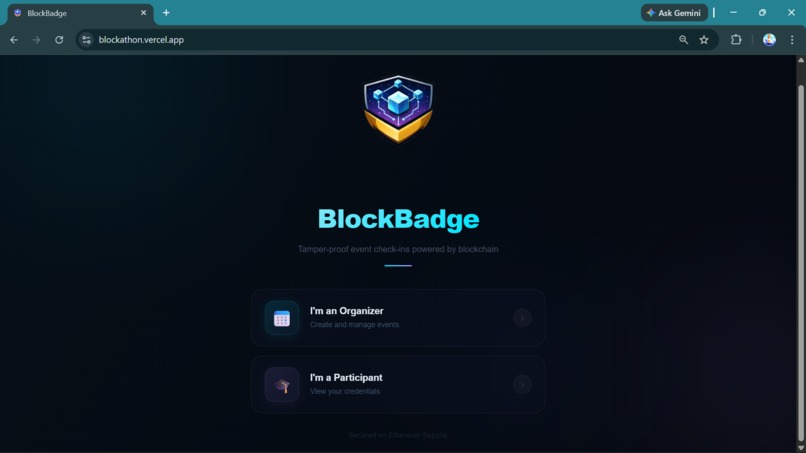
Home Page
-
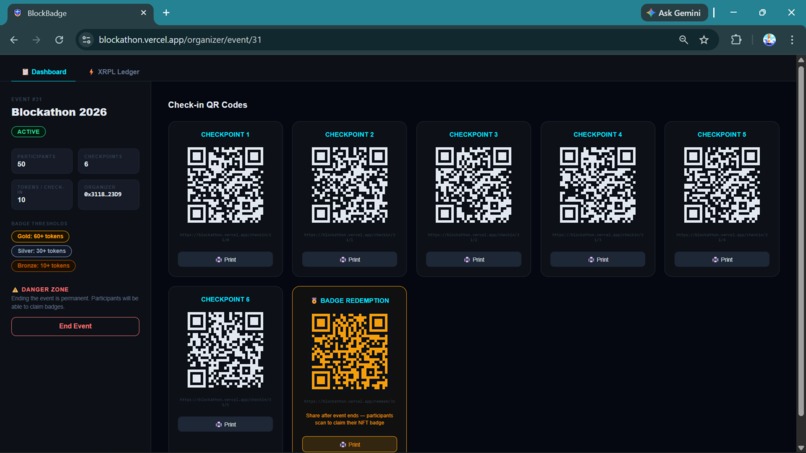
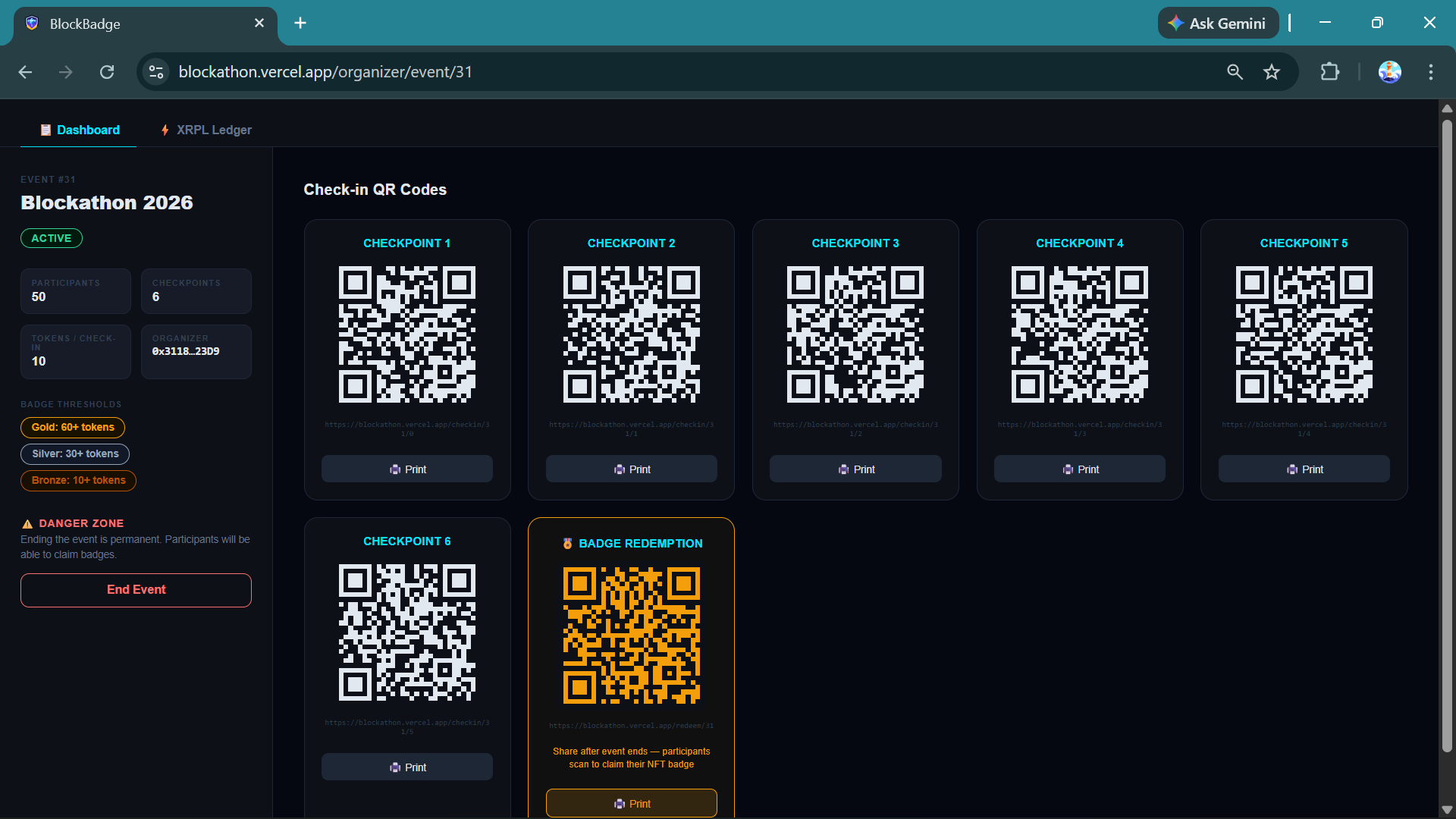
Organizer's Dashboard
-
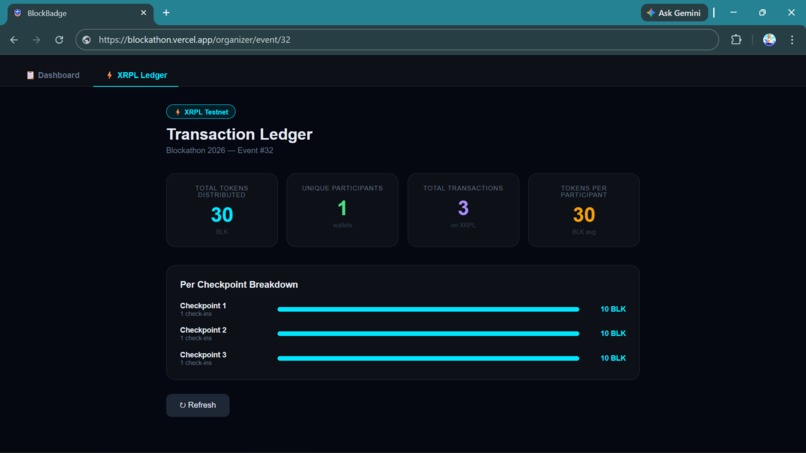
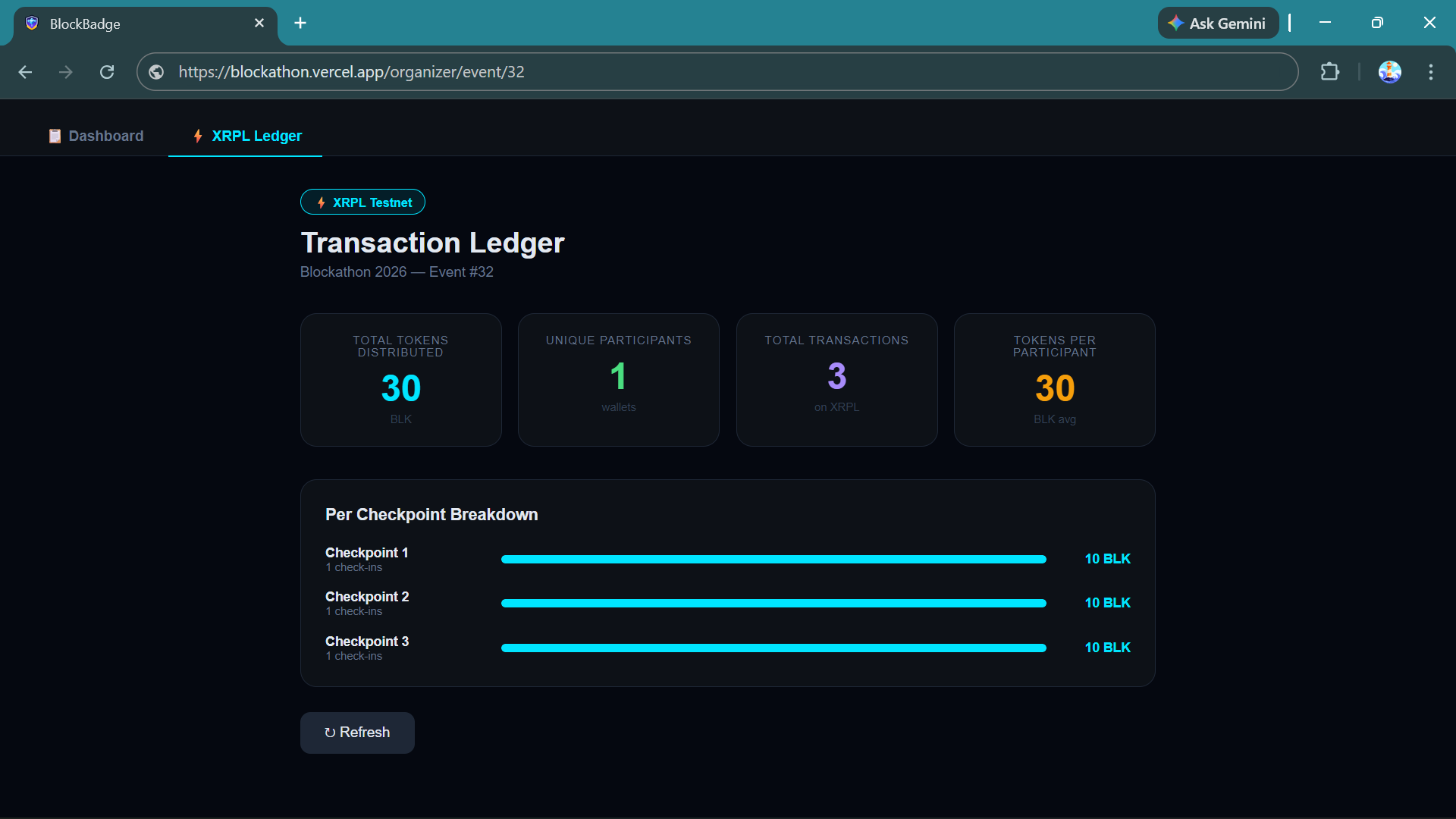
XRP Ledger Dashboard
-
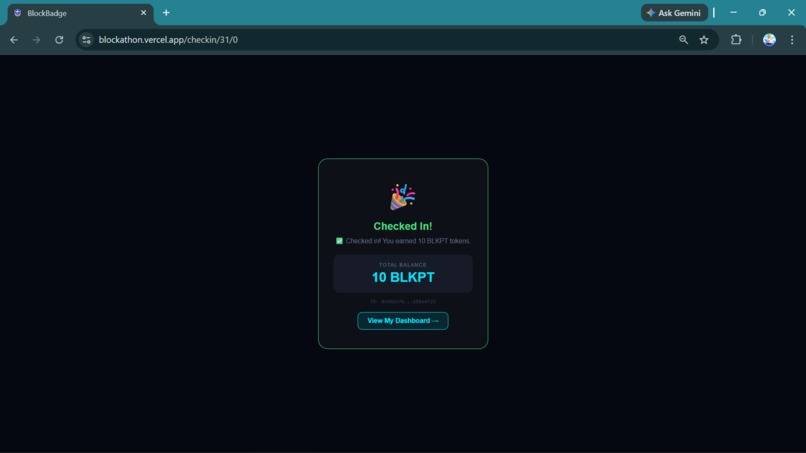
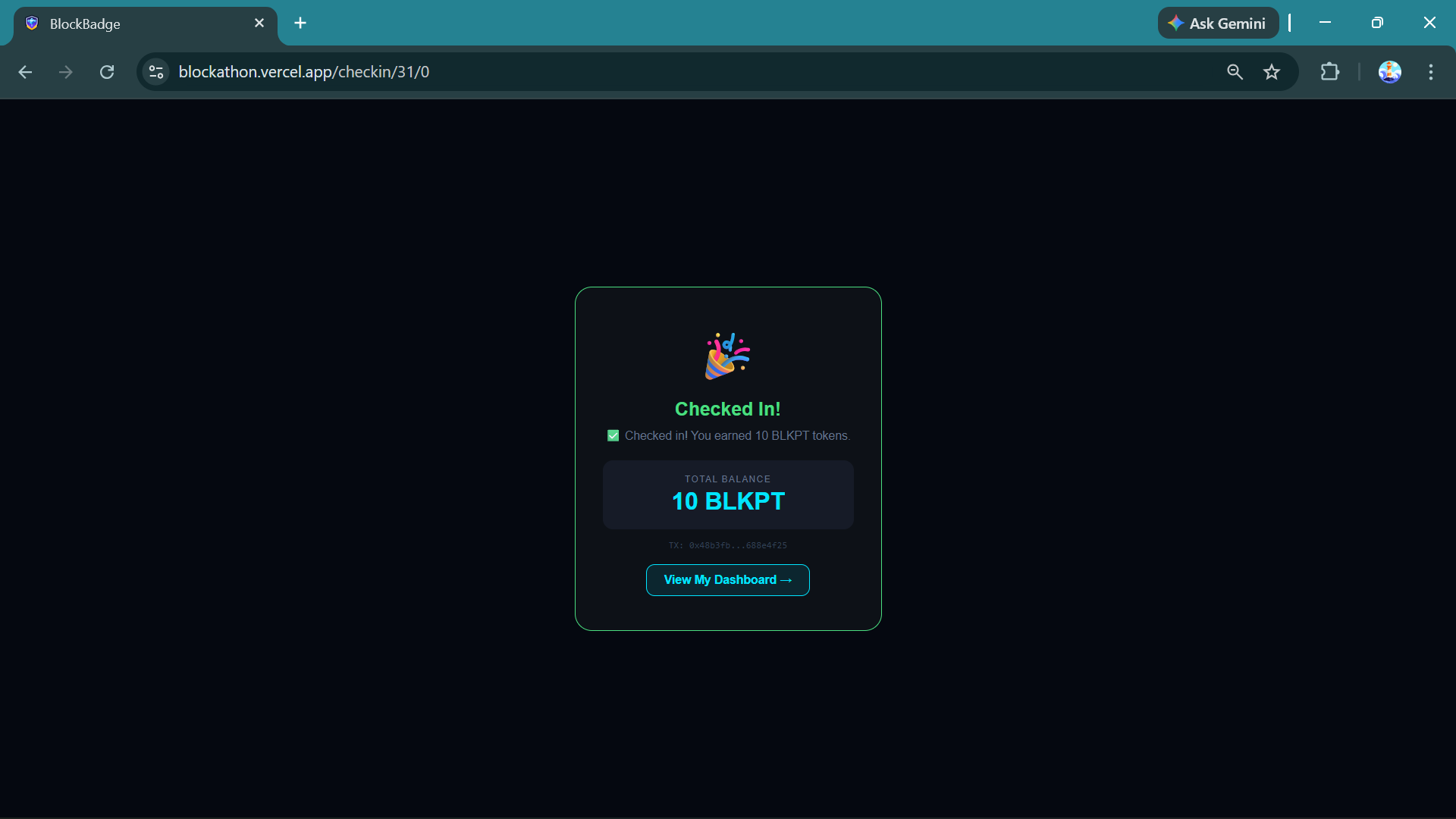
Checked in tokens
-
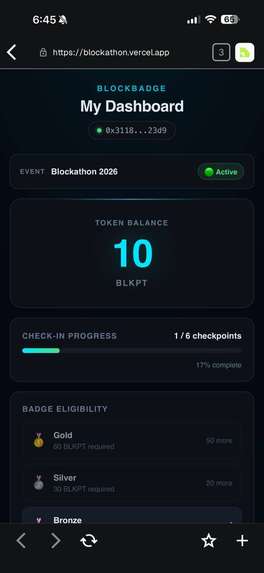
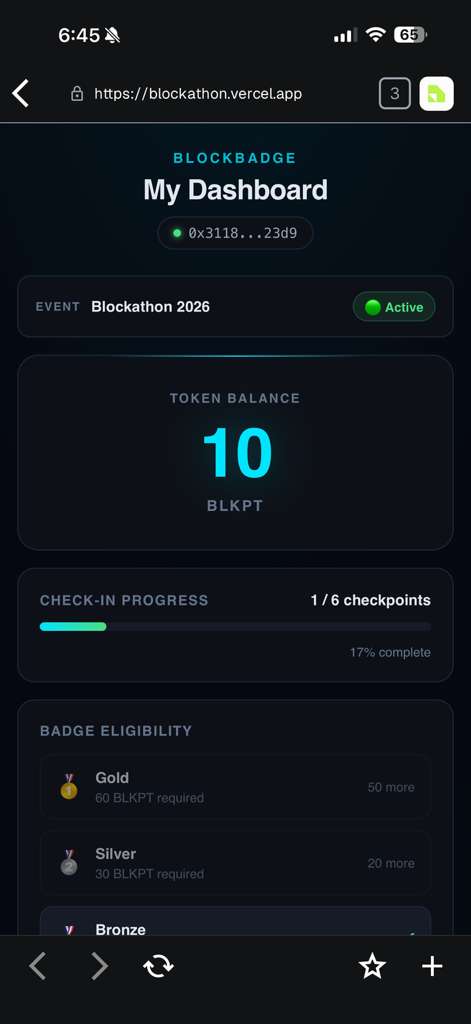
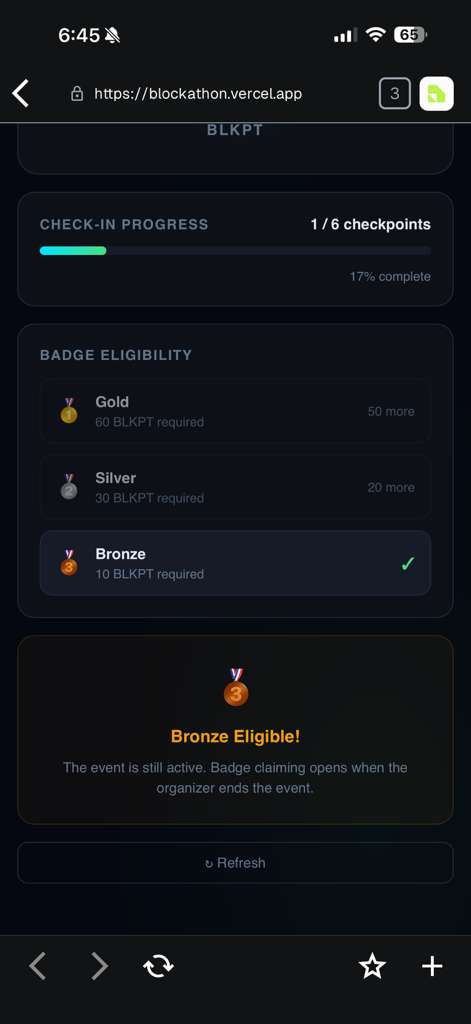
Participant's Dashboard (Top)
-
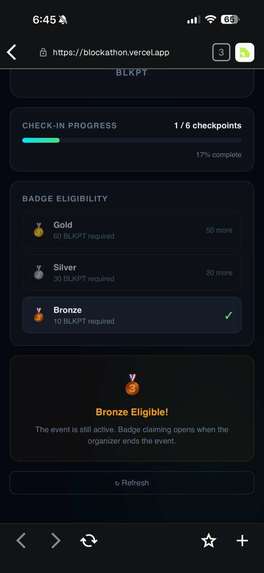
Participant's Dashboard (Bottom)
-
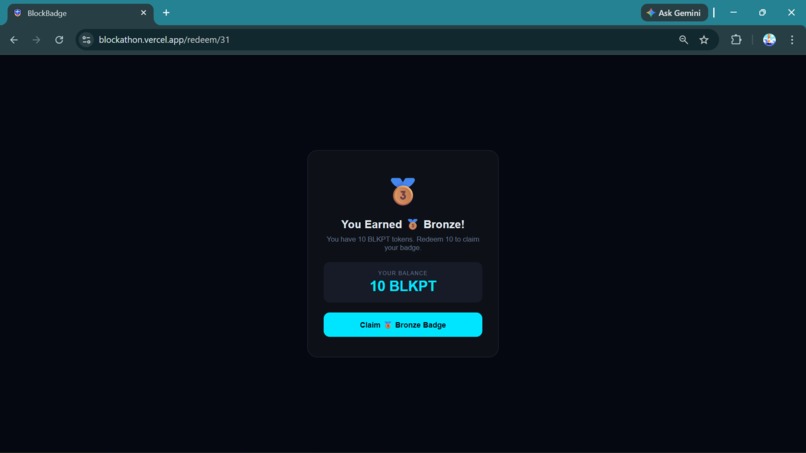
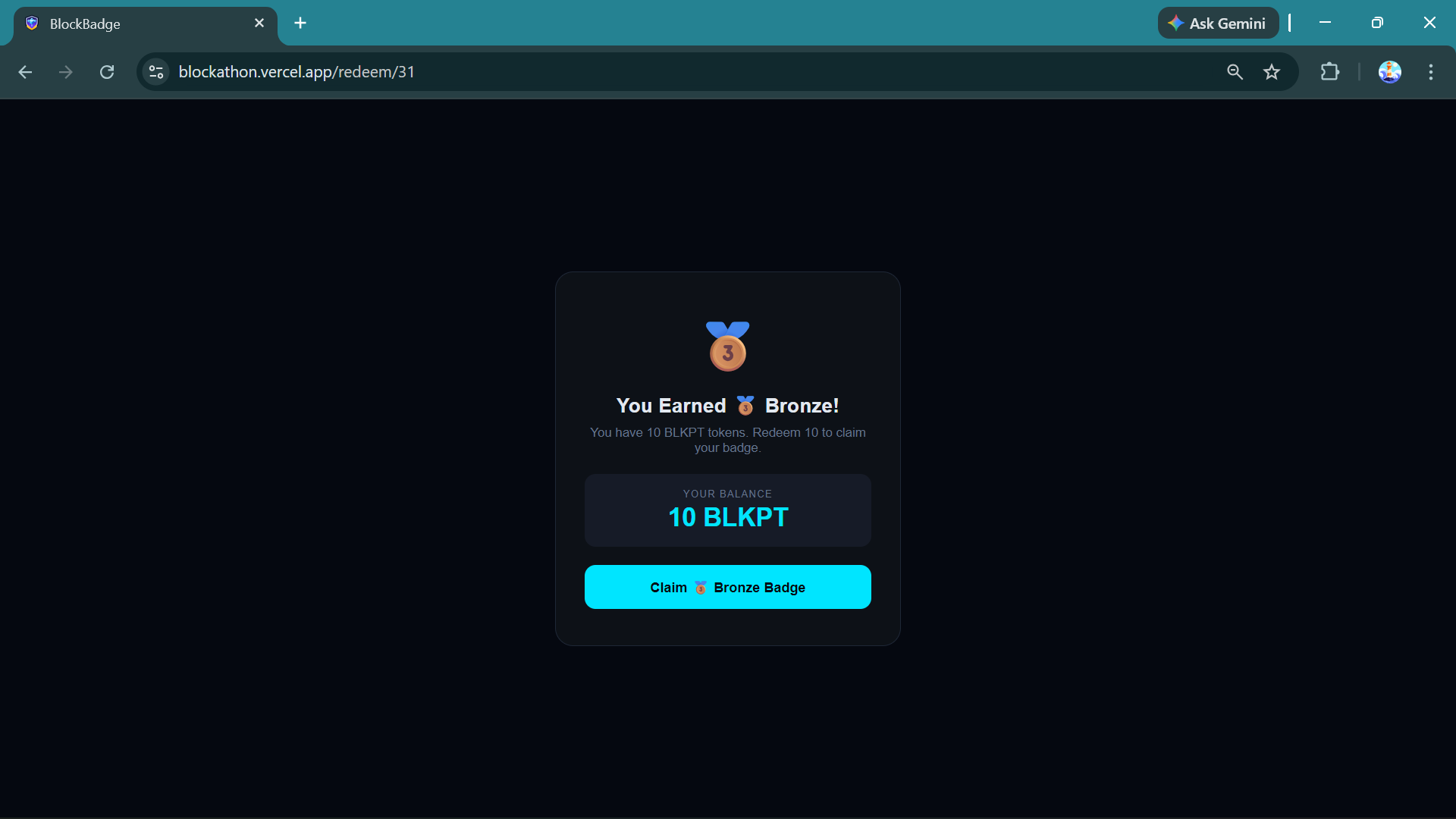
Prompt showing the participant's points and eligible badge
-
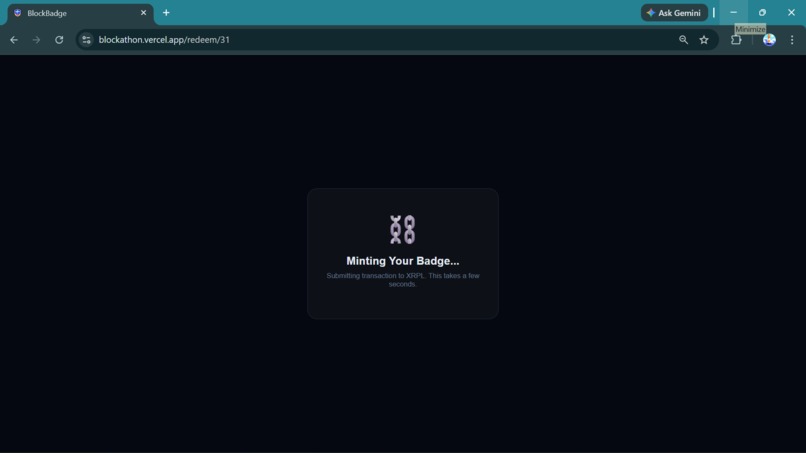
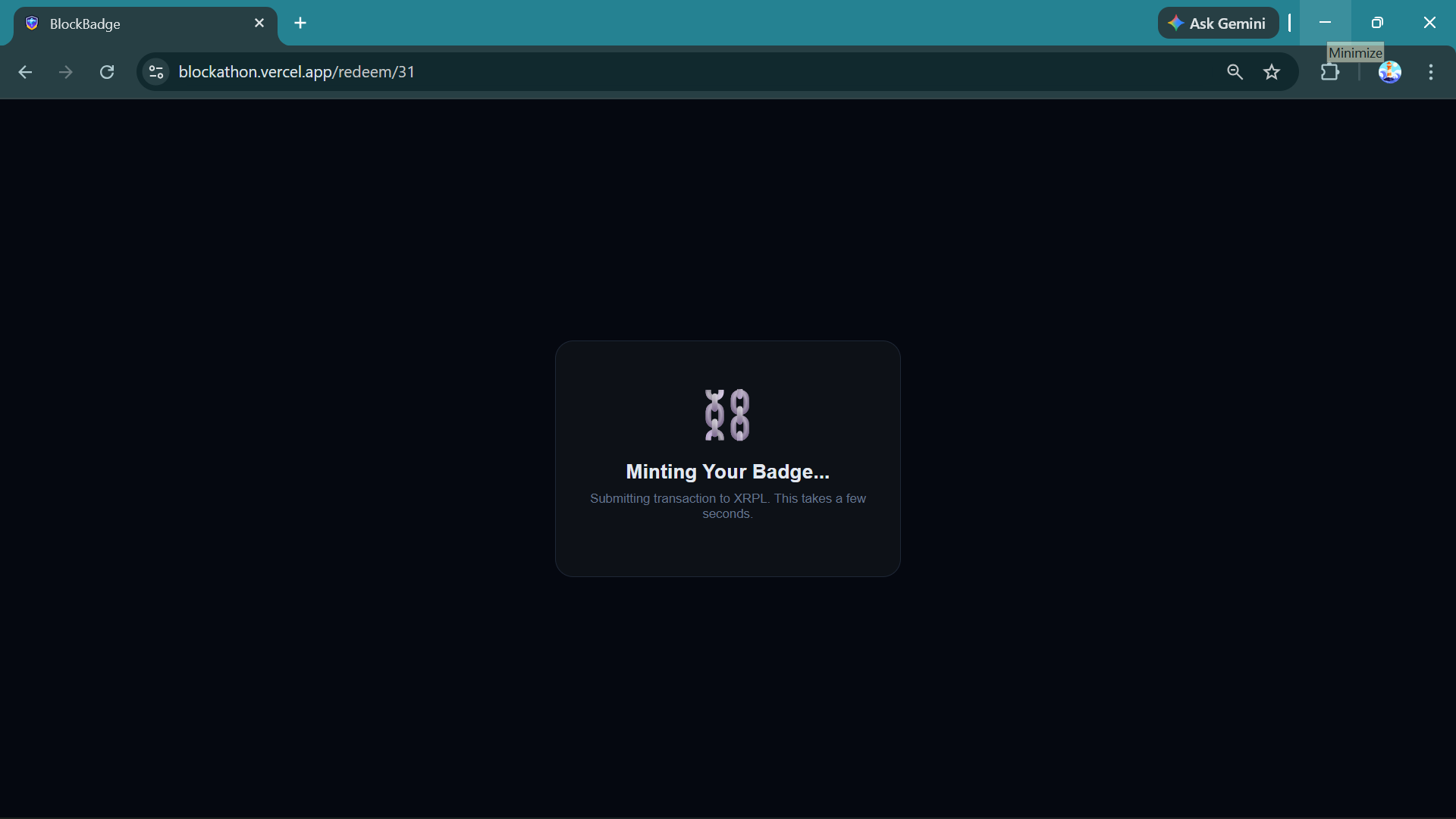
minting buffer screen
-
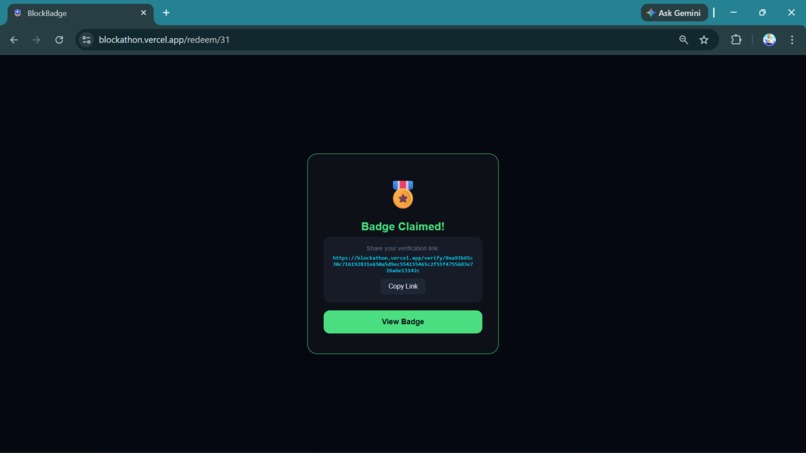
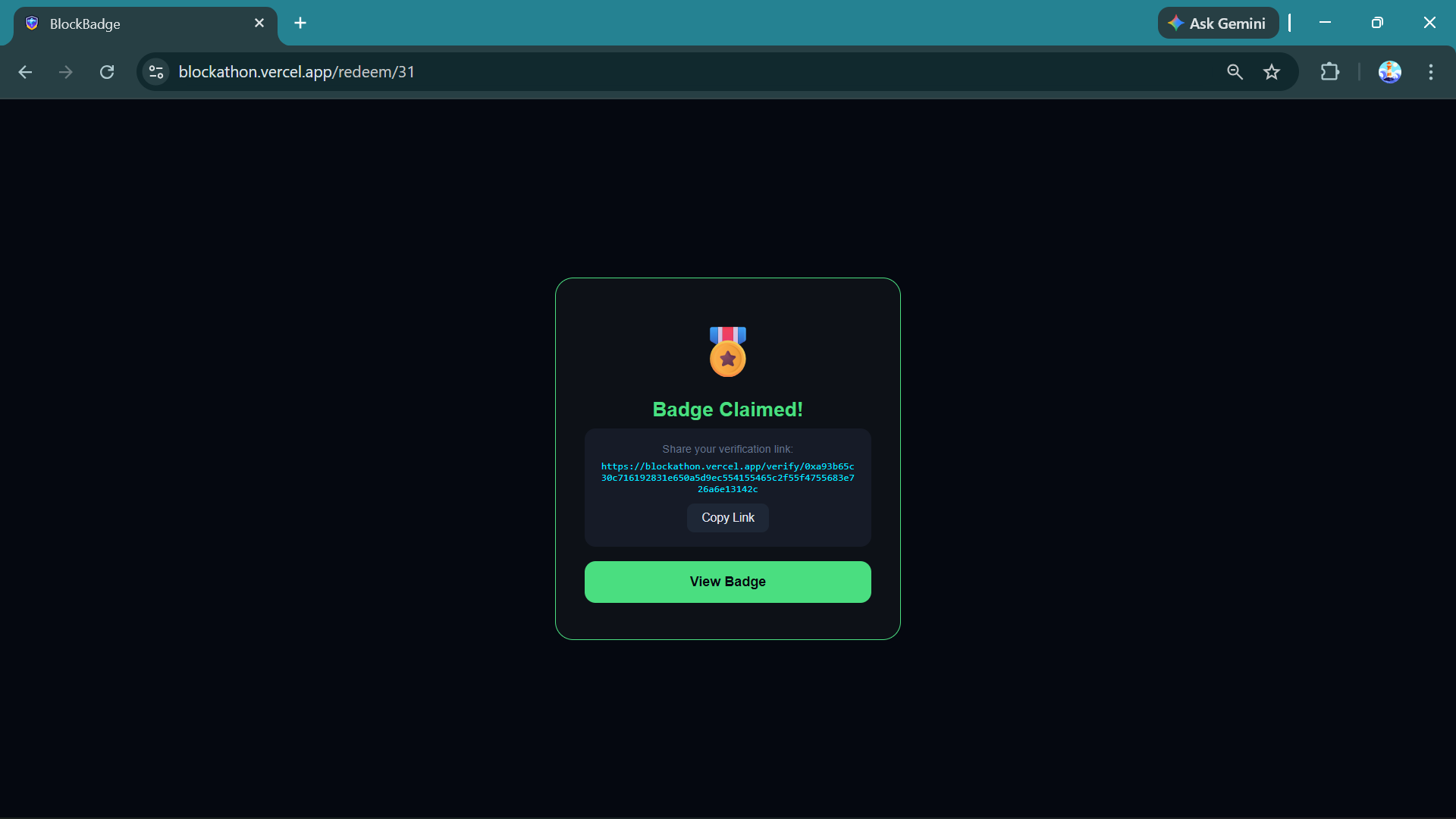
NFT Badge claimed!!!!
-
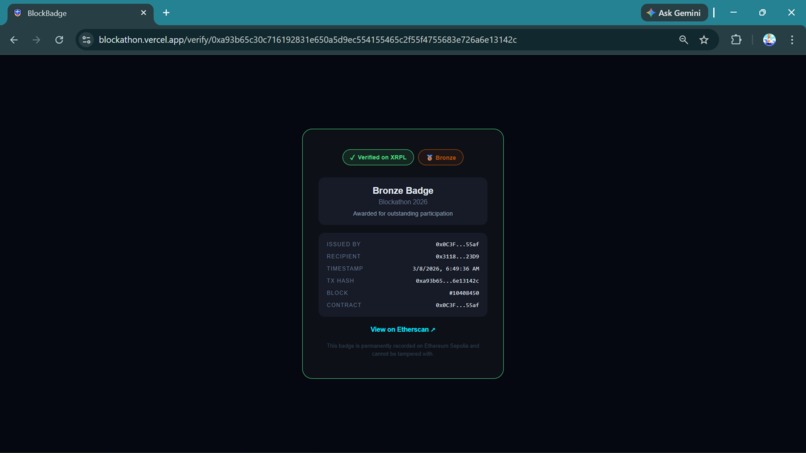
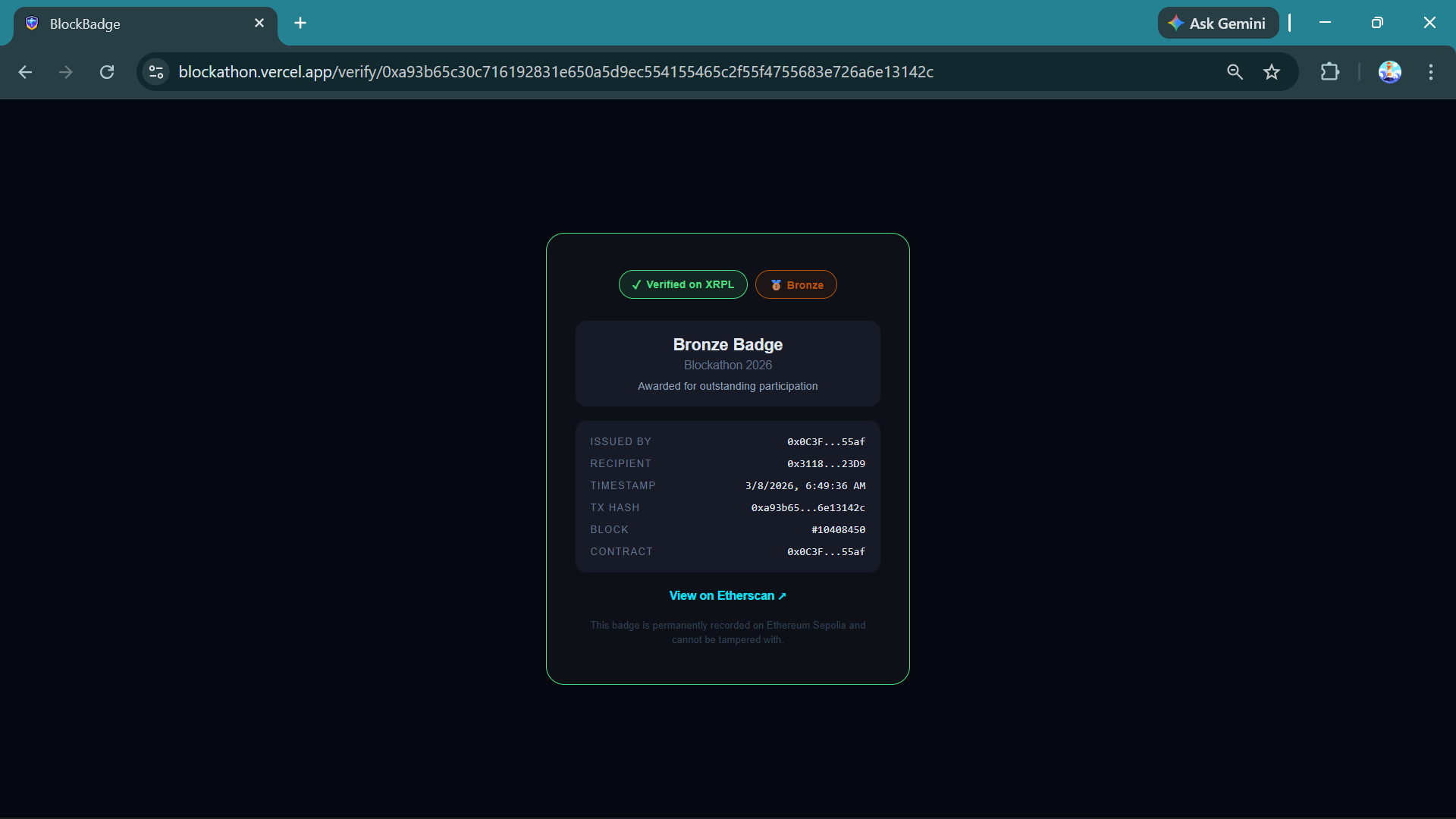
Minted NFT that can be verified!!
-
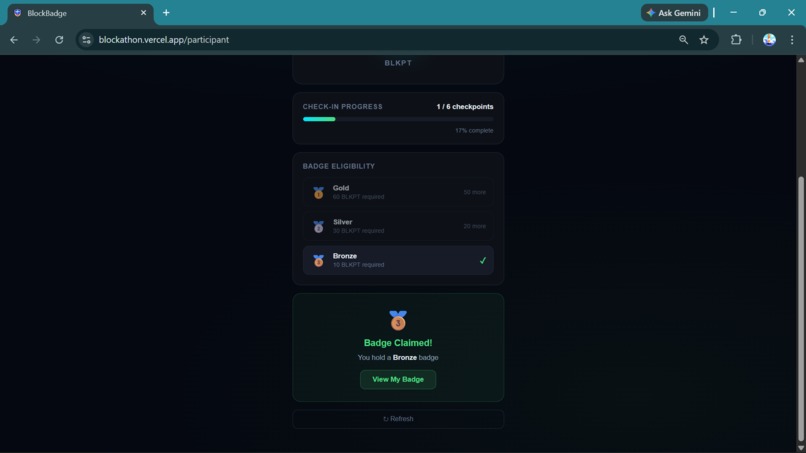
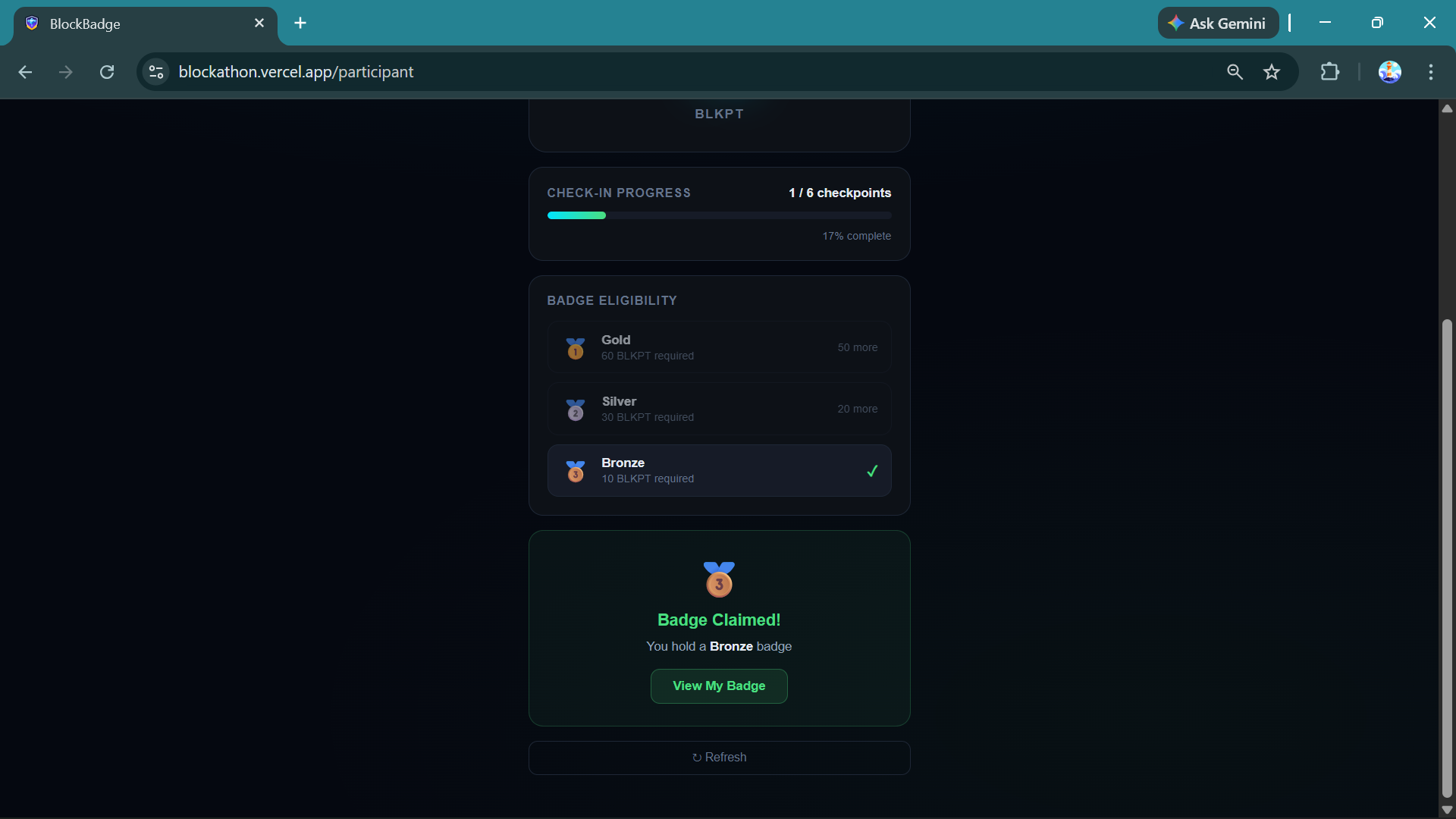
Participant's dashboard after claiming the badge
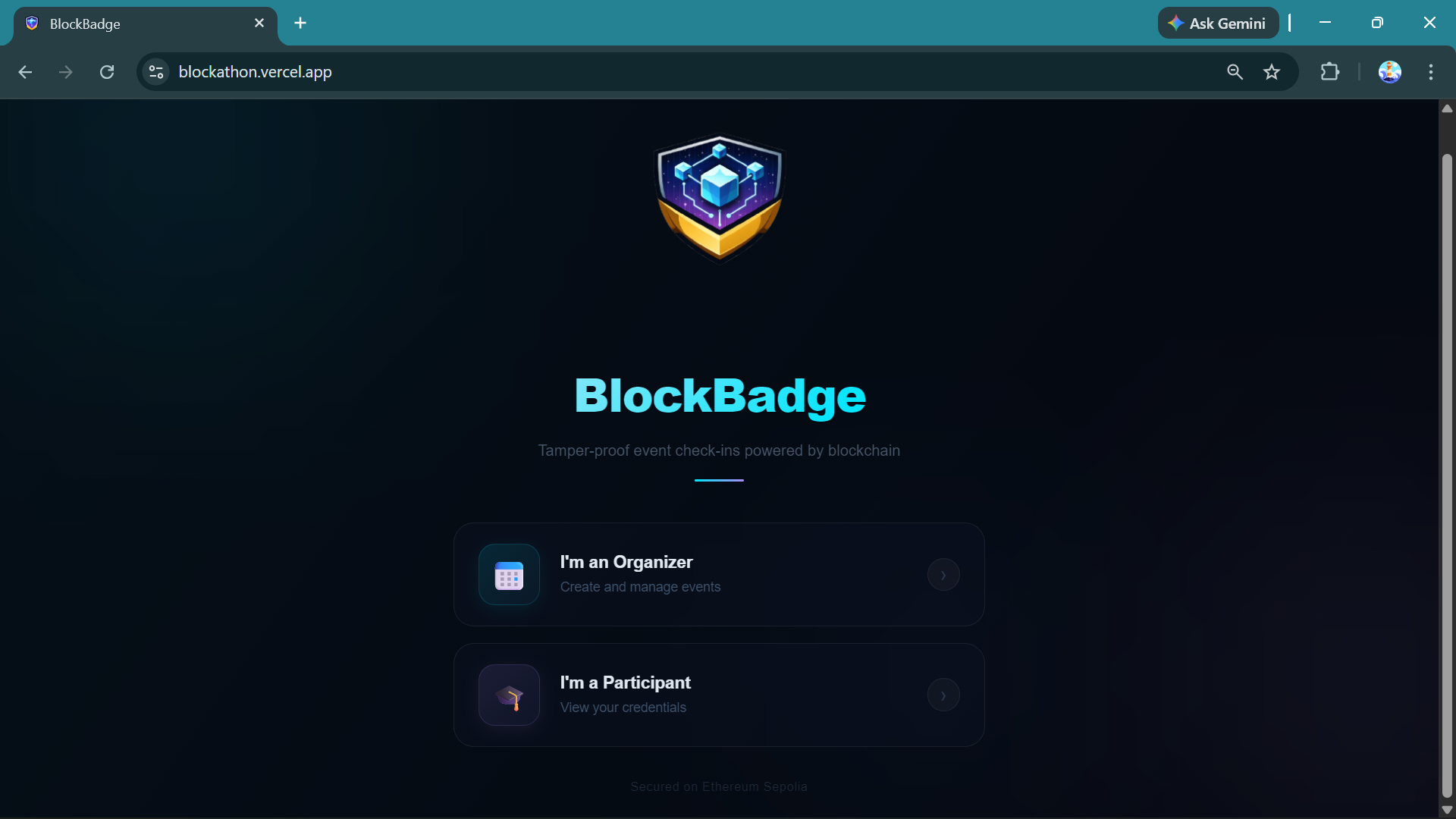
BlockBadge — Tamper-Proof Event Check-Ins Powered by Blockchain
About the Project
BlockBadge is a decentralized event attendance and credentialing platform that replaces paper wristbands, manual sign-in sheets, and centralized ticketing systems with verifiable, on-chain proof of participation.
Organizers create events on the Ethereum Sepolia blockchain, set up checkpoint QR codes, and define badge reward thresholds. Participants scan QR codes at each checkpoint throughout the event every scan triggers an XRP Ledger token transfer, rewarding them with BLK tokens in real time. When the event ends, participants redeem their tokens for an NFT badge (Gold, Silver, or Bronze) minted and pinned to IPFS via Pinata, permanently proving they were there.
The entire lifecycle from event creation to badge redemption is trustless, transparent, and immutable.
How It Works
- Organizer creates an event on-chain via MetaMask (name, checkpoints, token rewards, badge thresholds)
- BlockBadge auto-generates QR codes for each checkpoint and a badge redemption QR
- Participants scan checkpoint QRs throughout the event each scan sends BLK tokens to their XRPL wallet
- Organizer ends the event on-chain when done
- Participants scan the redemption QR and claim their NFT badge based on tokens earned
Tech Stack
| Layer | Technology |
|---|---|
| Smart Contracts | Solidity on Ethereum Sepolia |
| Token Distribution | XRP Ledger (XRPL) Testnet: BLK custom token |
| NFT Storage | IPFS via Pinata |
| Frontend | React + Vite |
| Wallet | MetaMask (EIP-1193) |
| Deployment | Vercel |
What It Can Be Used For
- Conferences & Hackathons — Prove attendance across multiple sessions; reward active participants with verifiable credentials
- University Events — Replace paper sign-in sheets with tamper-proof blockchain records for attendance tracking
- Concerts & Festivals — Multi-stage check-ins that reward fans who explore the full event
- Corporate Training — Issue verifiable completion badges for workshops and training programs
- Community DAOs — Reward members for showing up to governance meetings and community events
- Sports Events — Checkpoint-based engagement (e.g. rally stages, fan zones) with collectible NFT mementos
The NFT badges are permanently stored on IPFS and verifiable by anyone they become a portable, on-chain resume of event participation.
What We Enjoyed
Building BlockBadge pushed us into the intersection of two very different blockchain ecosystems Ethereum for smart contracts and XRPL for fast, low-cost micropayments and making them work together seamlessly was genuinely exciting.
We particularly enjoyed:
- The QR-to-chain pipeline — watching a QR scan translate into a live XRPL token transfer in seconds felt like real magic. The feedback loop from physical world to blockchain is instant and satisfying.
- Designing the badge system — deciding how Gold, Silver, and Bronze tiers would work, and seeing the NFT metadata come together with the badge art felt like creating something participants would actually want to keep.
- The XRPL Ledger dashboard — building the real-time transaction breakdown (tokens distributed, unique participants, per-checkpoint stats) gave the organizer genuine insight into how their event was going live.
- Full end-to-end demo — running the complete flow from event creation to NFT redemption for the first time without any manual intervention was a huge team moment.
What We Found Challenging
Bridging Ethereum and XRPL — these two chains have completely different paradigms. Ethereum is account-based with smart contracts; XRPL is UTXO-adjacent with trust lines and offers. Getting them to work in a single coherent UX required understanding both deeply and designing a clear separation of responsibilities.
XRPL Trust Lines — before participants can receive BLK tokens, they need to establish a trust line with the organizer's issuer wallet. This is an extra step that doesn't exist in ERC-20 world, and making it invisible to the end user was a UX challenge.
Managing two async chains in one UI — the Ethereum transaction might confirm while the XRPL payment is still processing. Handling loading states, errors, and race conditions across two independent networks required careful state management.
MetaMask + XRPL wallet — participants have a MetaMask wallet for Ethereum NFT redemption but need a separate XRPL wallet for token collection. Communicating this dual-wallet flow clearly in the UI without confusing users was harder than expected.
QR code security — ensuring check-in QR codes are event-specific and checkpoint-specific so they can't be reused or shared took deliberate design in the URL schema and contract validation.
Conclusion
BlockBadge demonstrates that blockchain technology can solve a genuinely real-world problem event attendance fraud and the lack of portable, verifiable credentials in a way that is lightweight, user-friendly, and doesn't require participants to understand the underlying technology at all.
By combining Ethereum's programmable smart contracts with XRPL's high-speed token transfers, we built a system that is both trustless and practical. Organizers get a powerful dashboard. Participants get NFT badges they actually own. And everyone benefits from a record that can never be altered or faked.
This is just the beginning. Future directions include mainnet deployment, cross-event badge portfolios, DAO-gated events, and a public badge verification explorer.
BlockBadge, your attendance, on-chain, forever.


Log in or sign up for Devpost to join the conversation.