
Inspiration
Blob started with a simple question: what if taking a photo of waste could do more than just identify it?
I wanted to combine my interests in programming, artificial intelligence, and environmental problems into something people could actually use. While developing Blob, I realized that individual waste scans could become much more valuable when combined into a larger dataset.
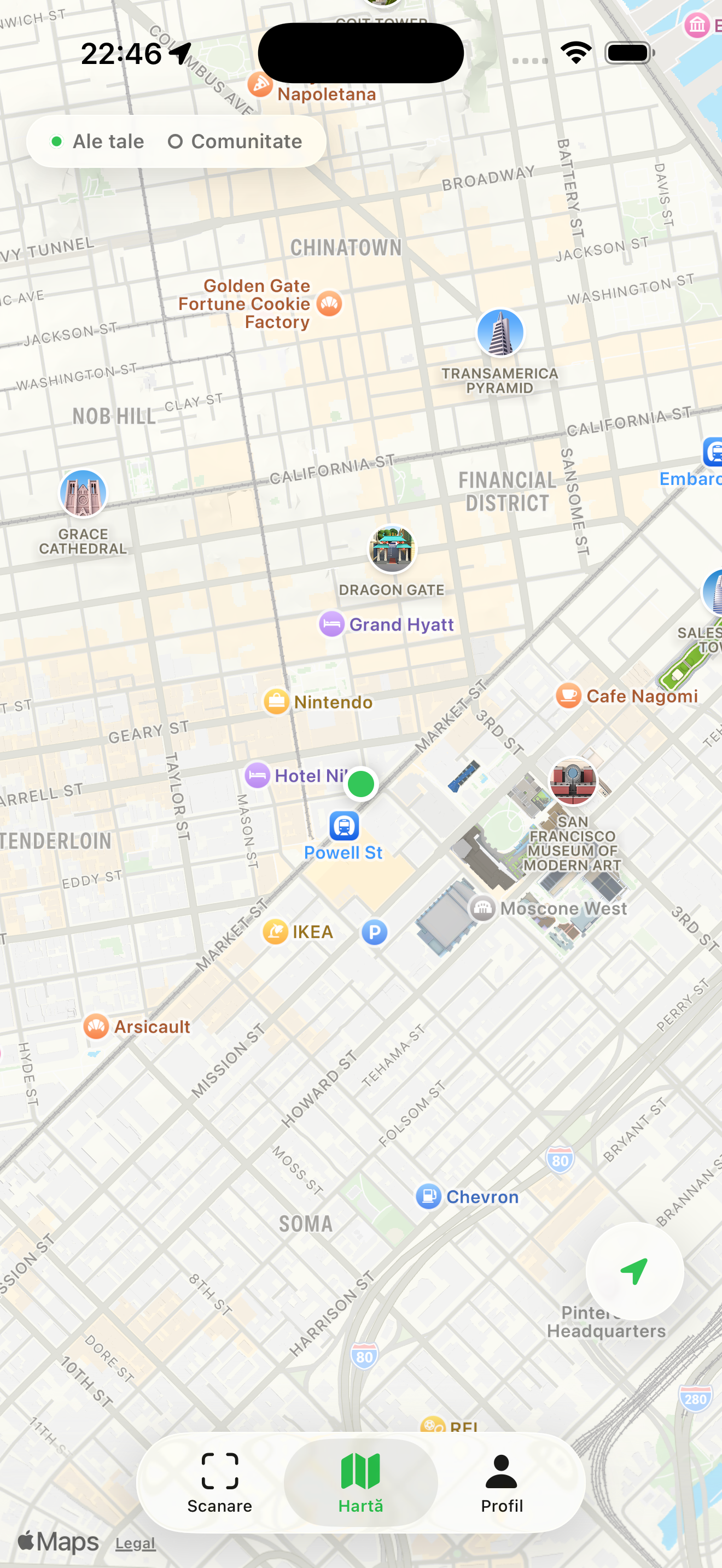
This led to the idea behind Blob: use AI to identify waste, then use the locations of those scans to build an environmental heatmap showing where waste is being reported most frequently.
The project received funding from ING Bank Romania through the Fund for Programming and Robotics Scholarships, with support from the Community Foundation Bucharest and Community Foundation Galați. This funding helped me turn the concept into a real iOS application and gave me the resources needed to implement and test it.
What it does
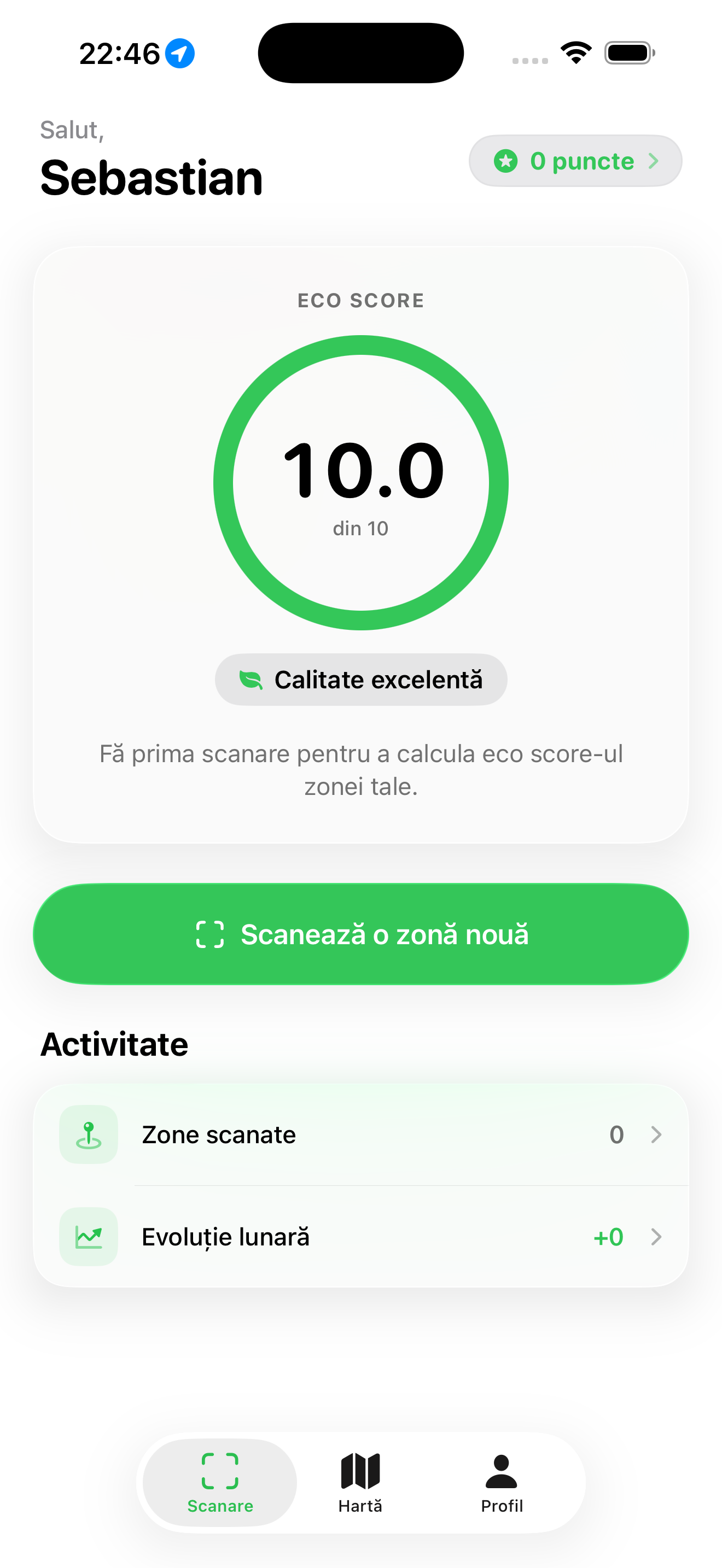
Blob is an iOS application that applies on-device artificial intelligence and computer vision to recognize waste from a photograph.
Once a scan is complete, the data can feed into an environmental heatmap. As more people use Blob, the gathered scans may highlight areas where waste is reported more often.
The concept aims to convert individual actions into meaningful environmental data. Rather than merely identifying a bottle, can, or piece of paper, Blob helps form a broader view of where waste appears.
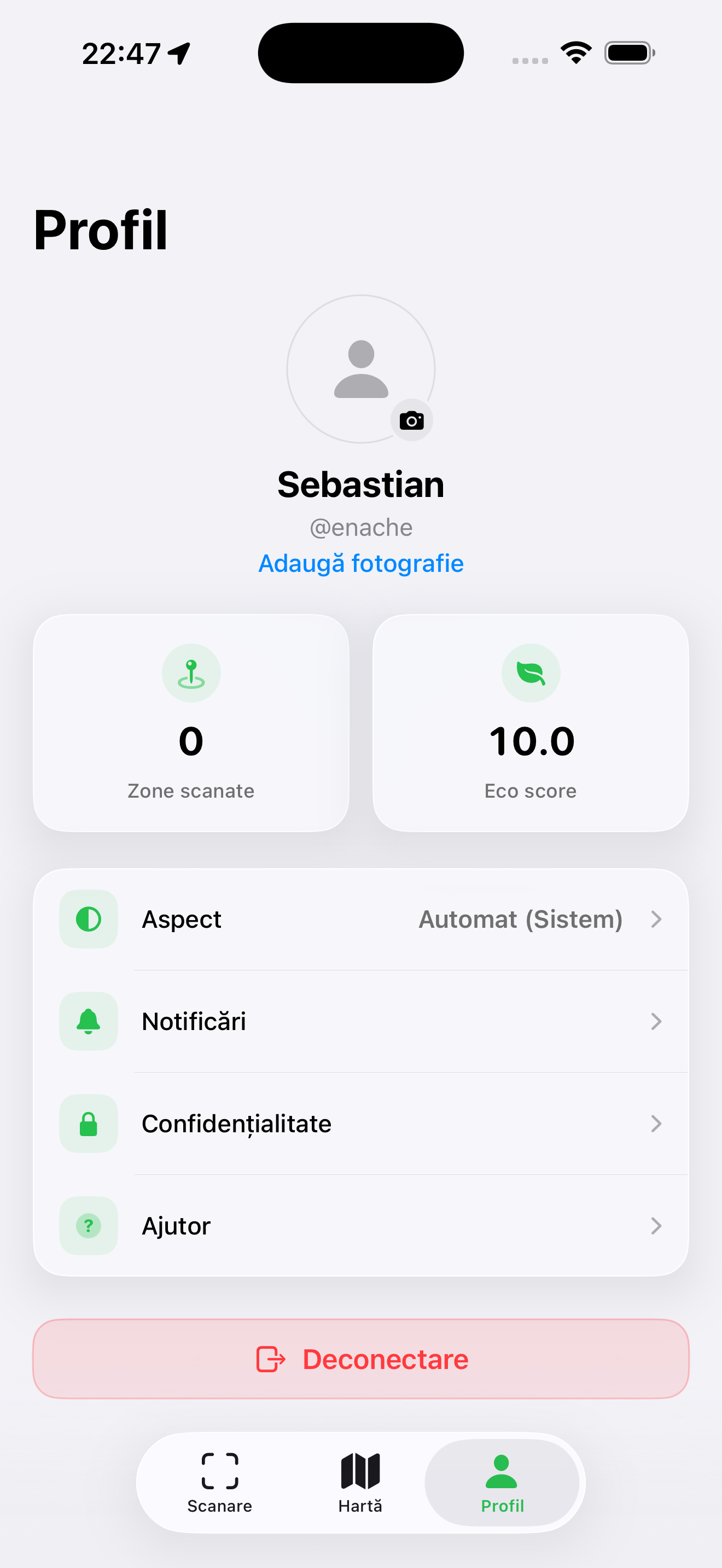
Blob also features a points system that motivates users to continue scanning and sharing data while reducing the value of repeated scans in the same location.
How we built it
Blob was developed for iOS with Swift and SwiftUI. The waste recognition system relies on Core ML and Apple’s Vision framework to run inference locally.
I trained a custom classification model from image datasets, adjusting the categories to match the waste types Blob must identify.
The app handles camera input on the device, selects the most relevant categories, and links each scan to geographical data for the environmental heatmap.
I also built the surrounding infrastructure, covering the scanning flow, data storage, location-based visualization, and the points system.
Challenges we ran into
One major challenge involved adapting the AI to real-world waste rather than carefully prepared images. Waste varies with lighting, camera angle, distance, background, and visible portion, so a model that succeeds on a dataset may still falter through a phone camera.
Another issue was running the model efficiently on an iPhone. I aimed for Blob to handle inference on-device instead of using a remote service, which required balancing accuracy, size, and speed.
The heatmap also created a data-quality issue. More scans do not guarantee better data; repeated scans of the same waste or location could distort the map, so I had to explore ways to limit duplicate and abusive contributions.
Accomplishments that we're proud of
The most significant achievement was transforming an early environmental idea into a functional iOS app. I developed the core system alone, covering the SwiftUI interface, computer vision pipeline, Core ML integration, waste classification, location-based data collection, environmental heatmap, and points system. Securing funding from ING Bank Romania marked another key milestone, allowing investment in TerraSense and advancing Blob past its first prototype. Above all, Blob merges several technologies into a single tool: on-device AI, computer vision, geolocation, cloud data, and a community-built environmental dataset.
What we learned
This project showed me that creating an AI application extends well beyond training a model.
Data quality, model performance, mobile hardware limits, privacy, user experience, and how users produce data all shape the outcome.
I also recognized how various parts must align. The AI is only one element; for Blob to be effective, the recognition system, scanning experience, data collection, heatmap, and incentives must function as a unified system.
Building Blob also provided practical experience in developing and releasing a complete iOS application instead of merely experimenting with a machine learning model.
What's next for Blob
The next step involves expanding users and scans so the environmental heatmap gains greater utility.
I aim to enhance the waste recognition model by adding categories, improving performance across lighting and camera angles, and deepening environmental detail.
I also want Blob to serve more than one city, despite its availability in over 170 countries on the App Store. With sufficient community data, the same method could display waste patterns across cities and nations.
The long-term concept is straightforward: make each scan valuable twice. First, it identifies waste in front of you. Then, anonymously aggregated data from that action can clarify the broader environmental picture.
Built With
- cloudkit
- coreml
- swift

Log in or sign up for Devpost to join the conversation.