-
-
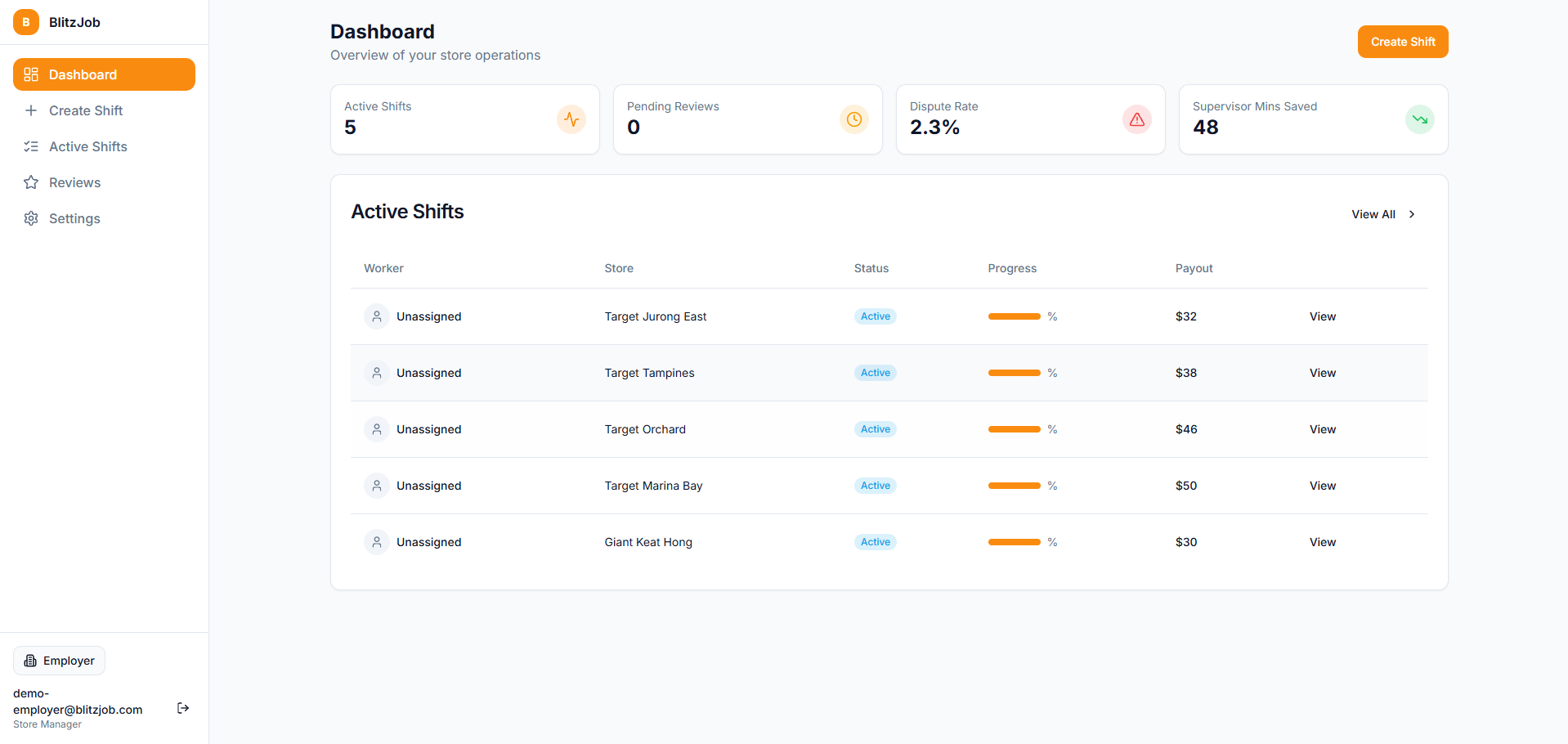
Cover_photo
-
Create_shift
-
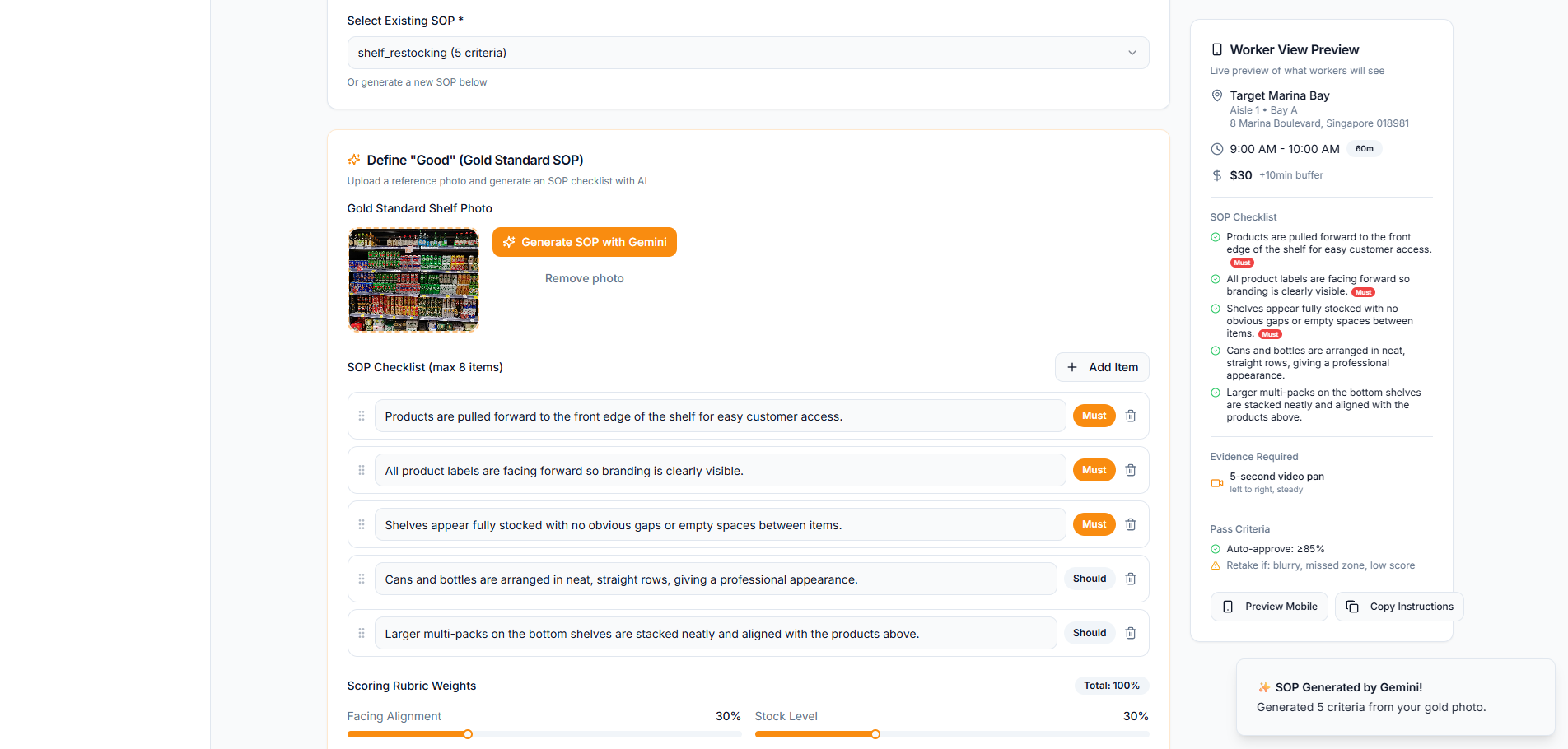
Generate_SOP
-
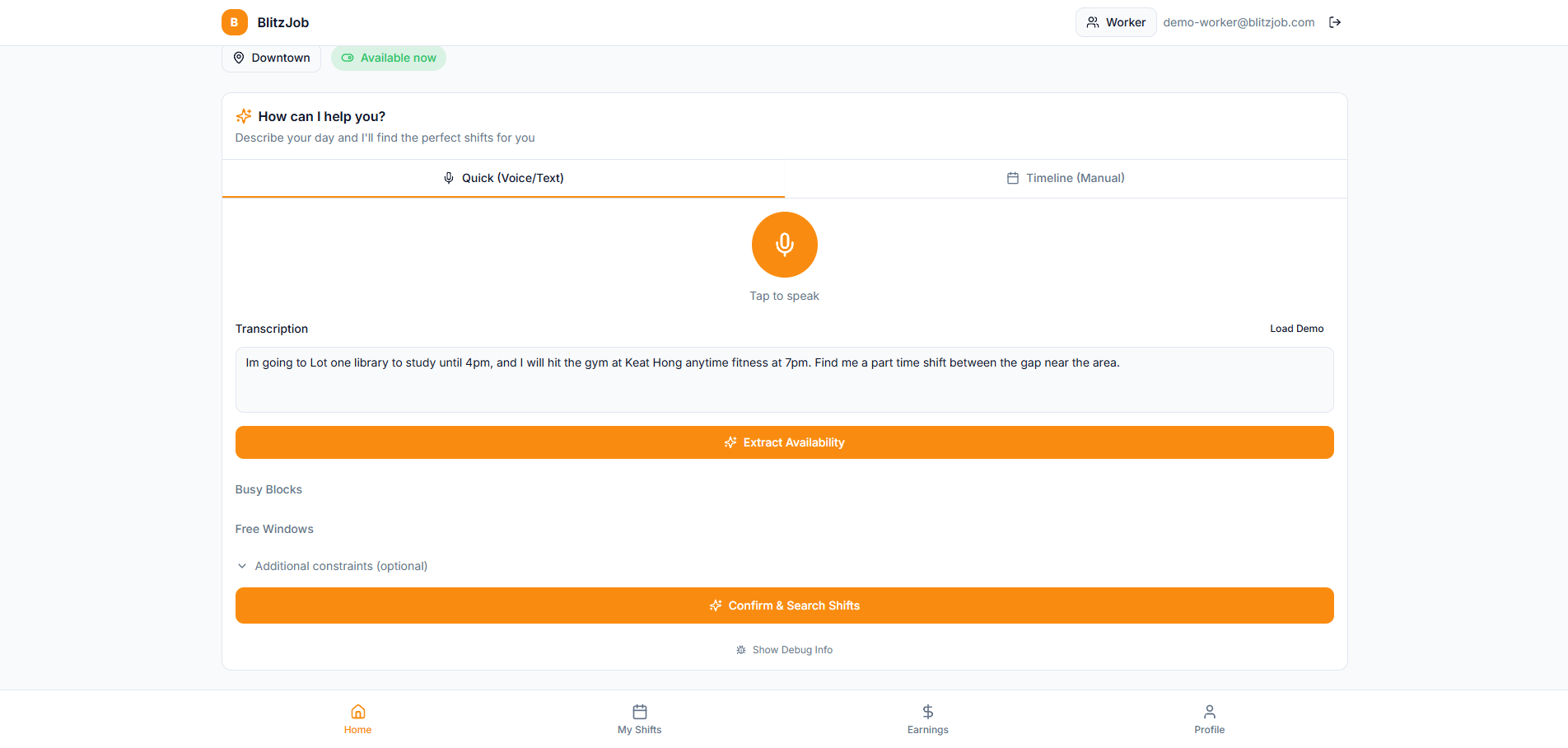
UserRequest_Extraction
-
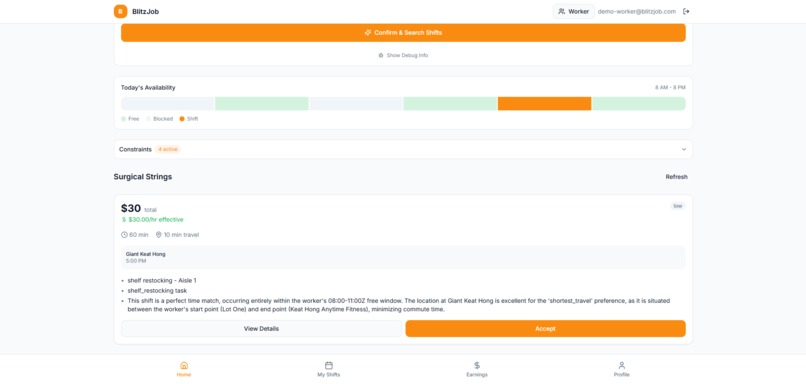
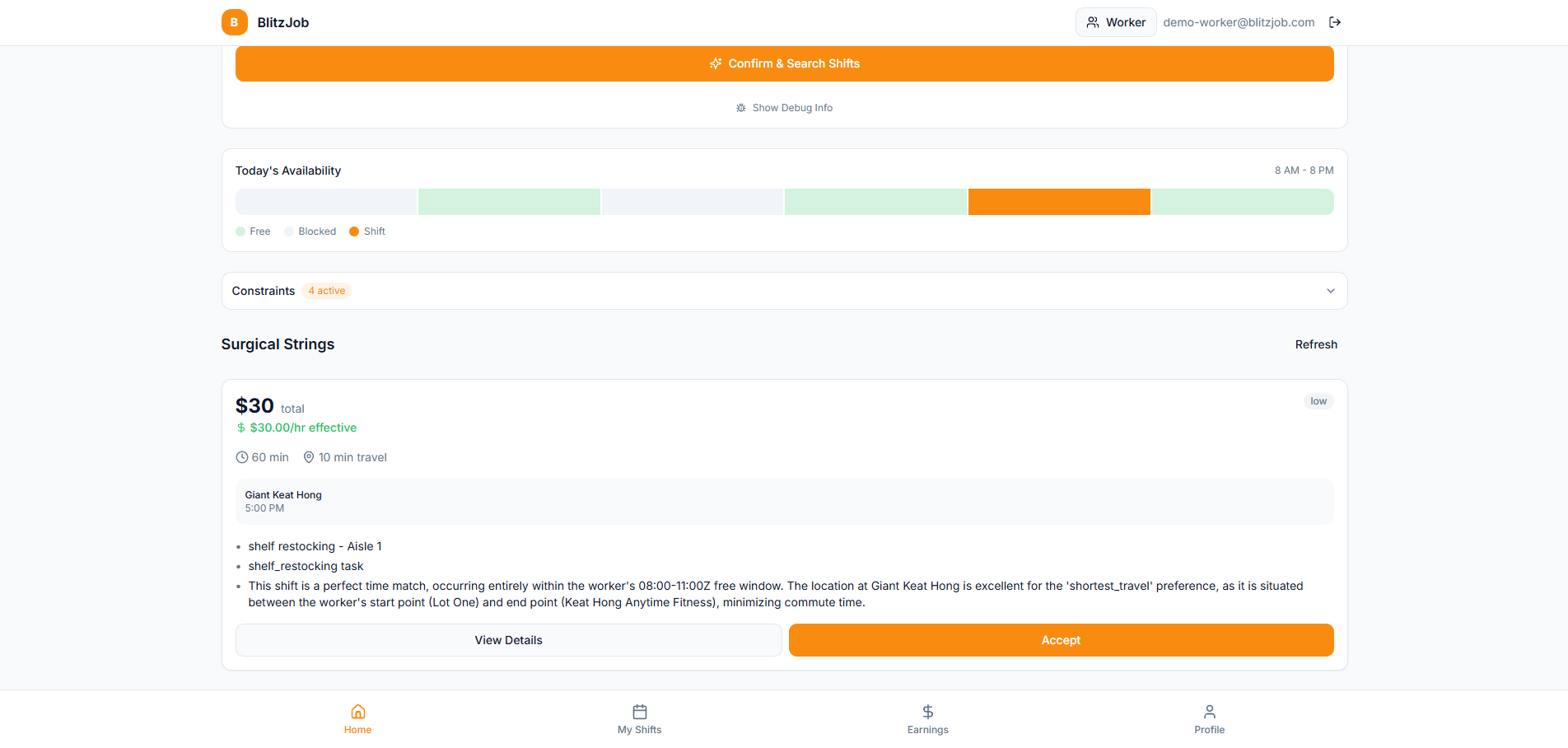
Matched_Shift
-
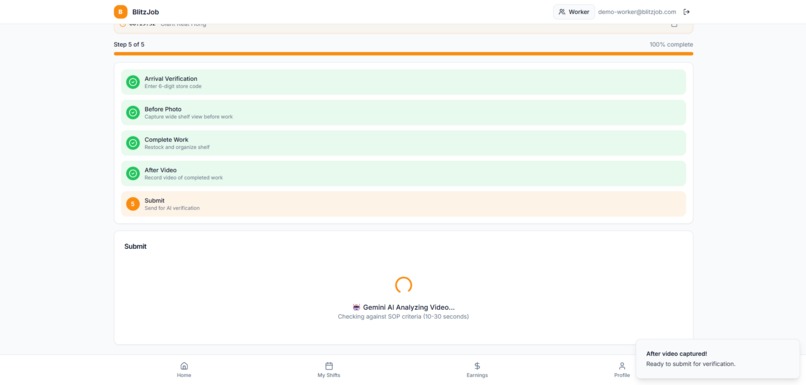
Submit_Video
-
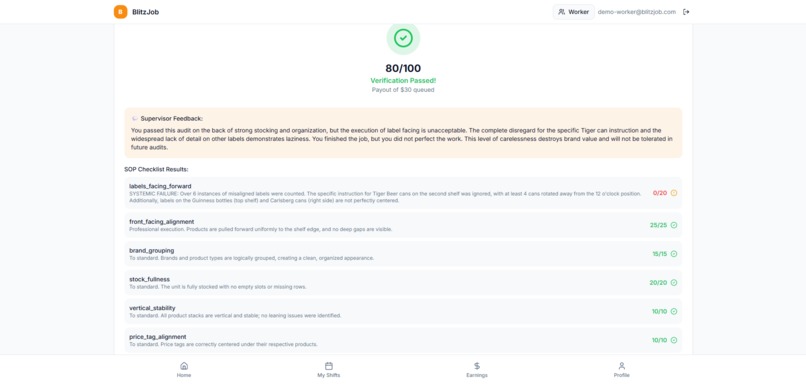
Gemini_return_result
Inspiration
While researching gig economy pain points using BubbleLab AI to scrape Reddit discussions, I discovered a recurring frustration: traditional employment models force workers into rigid 4-8 hour shifts, while modern workers (students, parents, side-hustlers) need flexible, bite-sized income opportunities. Simultaneously, service businesses struggle to fill short-duration gaps without committing to full-time hires.
This insight led to BlitzJobz: a hyper-local staffing marketplace for 2-3 hour "micro-shifts" in retail restocking, warehouse work, and service industries. The platform tackles the "nobody wants to work" problem by aligning work hours with actual modern labor force availability.
What it does
BlitzJobz uses Gemini 3 AI at three critical points:
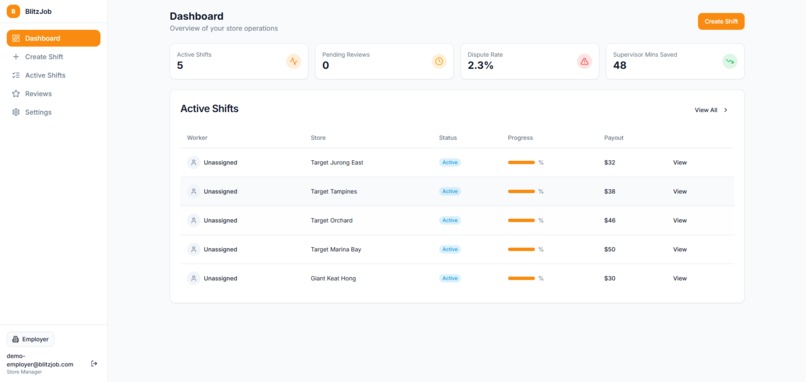
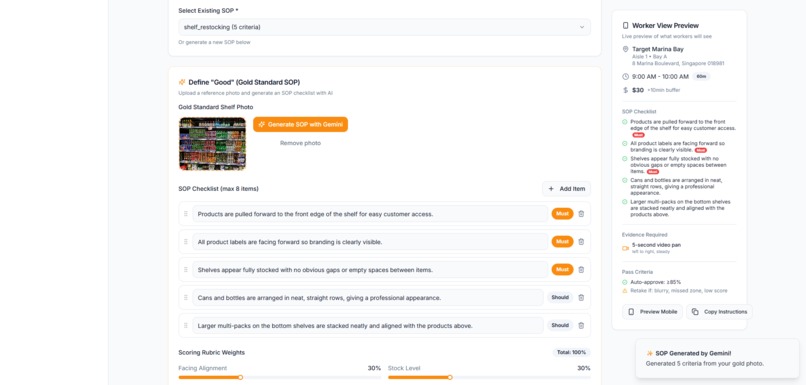
SOP Generation: When employers create shifts, Gemini 3 Flash generates professional standard operating procedures from simple task descriptions, ensuring quality standards are clear before work begins.
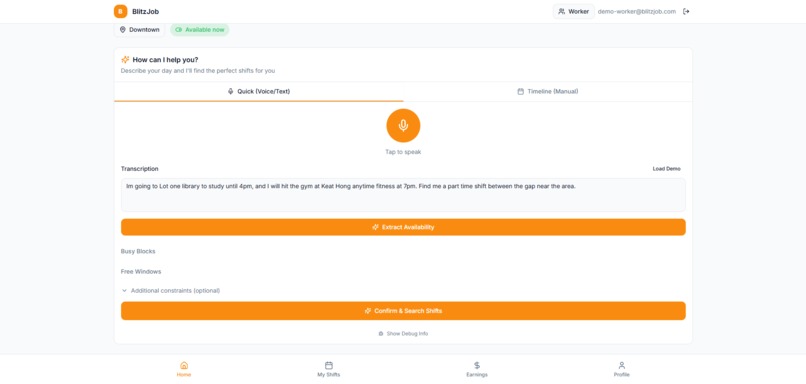
Voice-Powered Matching: Workers describe their availability in natural language ("I'm free tomorrow morning between 8am and noon near Keat Hong"), and Gemini 3 Flash extracts precise time windows, locations, and preferences to match them with optimal shifts.
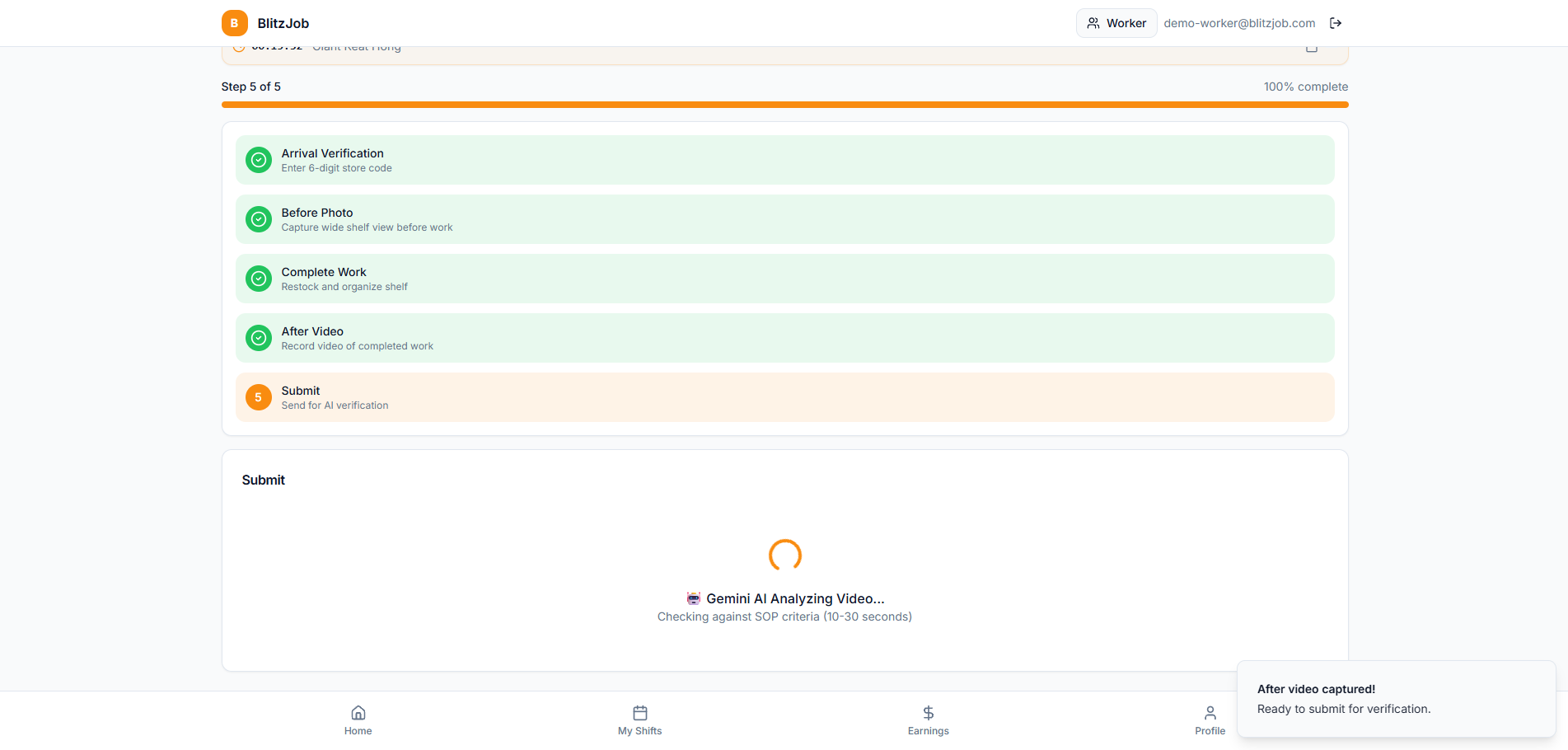
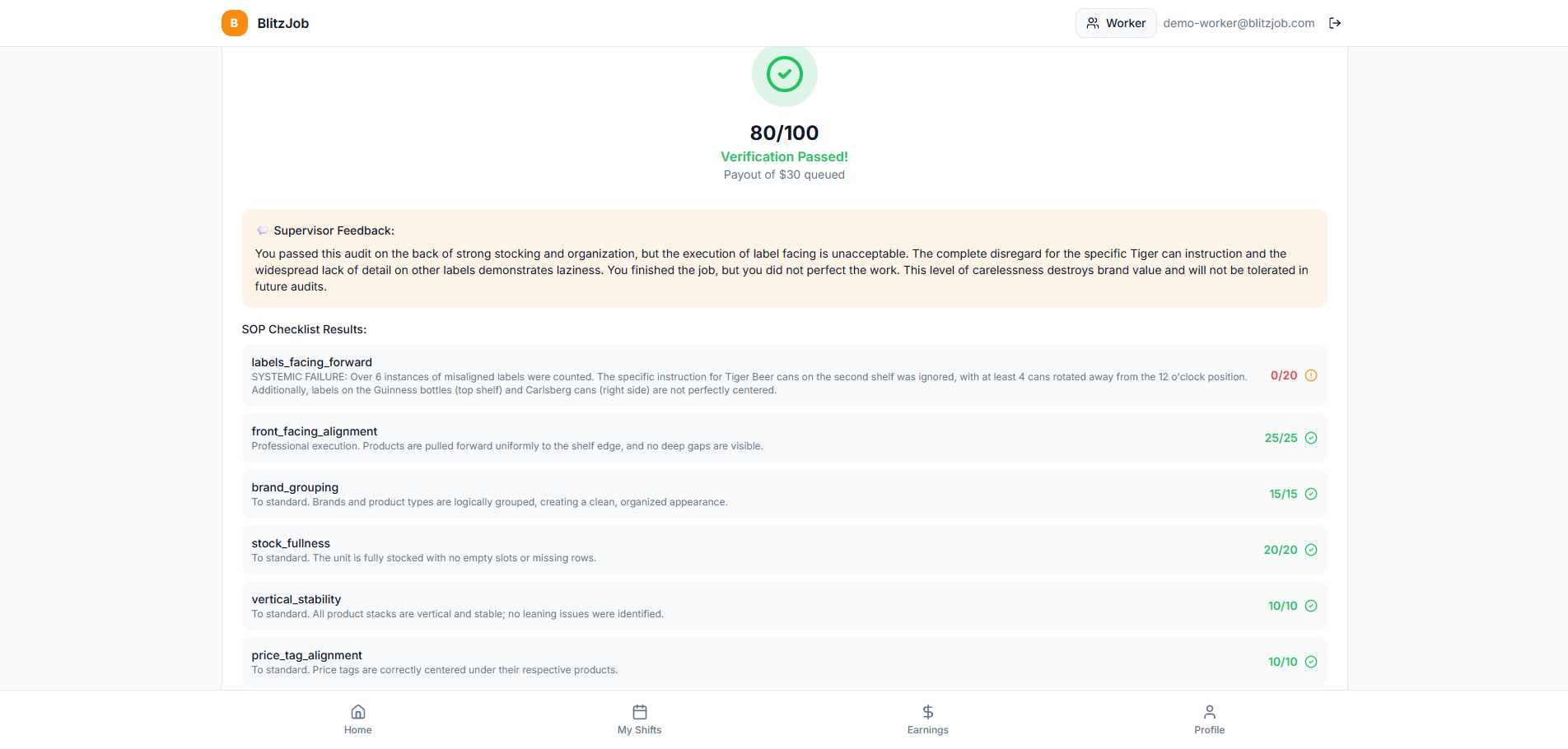
Automated Work Verification: After shift completion, workers submit before/after videos. Gemini 3 Pro Image analyzes footage frame-by-frame against the SOP checklist, scoring work quality (0-100) and providing detailed feedback—eliminating manual review and enabling instant payouts.
The result: Zero-friction hiring for businesses, flexible income for workers, and quality assurance without human oversight.
How we built it
Frontend: React + TypeScript with Vite, styled using TailwindCSS and shadcn/ui components. Rapid prototyping with Lovable, then enhanced with custom integrations.
Backend: FastAPI (Python) with Supabase PostgreSQL for data persistence. Implemented Row-Level Security policies to separate employer/worker data access.
AI Integration: Google Gemini 3 models via AI Studio API:
gemini-3-flash-previewfor text operations (constraint extraction, SOP generation, shift ranking)gemini-3-pro-image-previewfor video verification (with audio stripped using MoviePy due to model limitations)
Deployment: Vercel for frontend hosting, Render for backend services. CORS configuration to enable cross-origin requests between platforms.
Development Tools: Cursor for backend development with AI-assisted coding, Lovable for rapid frontend iteration.
Challenges we ran against
Prompt Engineering for Video Verification: The biggest challenge was calibrating Gemini's strictness for work quality assessment. Initial prompts were too lenient—giving 85/100 scores to objectively poor work with 25+ visible defects. Through iterative refinement, we developed a "brutally honest auditor" prompt that enforced mathematical scoring rules:
- 1-2 issues = -5% deduction
- 3-5 issues = -50% deduction
- 6+ issues = -100% deduction (criterion fails)
This required extensive testing with real shelf-stocking videos to find the balance between fair evaluation and maintaining professional standards.
Gemini 3 Model Limitations:
gemini-3-pro-image-previewdoesn't support video with audio, requiring audio stripping preprocessing- API key limitations meant we couldn't access Gemini 1.5 models, forcing creative workarounds with Gemini 3 variants
- Safety filters occasionally blocked legitimate business prompts, requiring
BLOCK_NONEthresholds
Timezone Handling: Storing and matching shifts across Singapore Time (UTC+8) and UTC required careful conversion logic. Gemini correctly extracted local times to UTC, but shift creation needed proper timezone awareness to avoid mismatches.
Response Truncation: Gemini 3 Flash occasionally stopped mid-JSON response. We implemented retry logic with JSON validation—retrying up to 3 times until receiving complete, parseable responses rather than just checking character length.
Integration Complexity: Connecting a Lovable-generated React frontend with a Cursor-built FastAPI backend required resolving CORS policies, authentication flows, and API client timeout configurations. The systems were built in isolation and needed careful integration.
What we learned
Gemini 3 Capabilities: Hands-on experience with Google's latest models revealed impressive multimodal reasoning—accurately extracting temporal constraints from conversational language and analyzing video content against detailed checklists. The models handle complex, multi-step reasoning remarkably well when prompted correctly.
Prompt Engineering is Critical: The difference between an 83/100 score (wrong) and 58/100 score (correct) came down to prompt specificity. Explicit mathematical rules, harsh language ("brutally honest", "systemic failure"), and example scenarios dramatically improved output quality.
Video AI is Production-Ready: Gemini 3's video analysis capability genuinely eliminates the need for human verification in structured quality assessment tasks. With proper SOP checklists and calibrated prompts, AI can reliably evaluate retail work quality—a game-changer for gig platforms.
Integration Challenges Matter: The technical complexity isn't in individual components—it's in making them work together seamlessly. CORS, authentication, timezone handling, and deployment configuration consumed more time than AI integration itself.
User Experience Over Technical Perfection: Rather than building the "perfect" system, we focused on a compelling end-to-end demo showcasing Gemini 3's capabilities. A working prototype that demonstrates AI value beats a technically flawless system that judges can't interact with.
What's next for BlitzJobz
Immediate: Fix timezone handling in shift creation
Short-term: Expand SOP generation to include safety protocols, add worker reputation scoring based on verification history, and implement employer feedback loops to refine quality thresholds per business.
Long-term: Mobile app with real-time shift notifications, geographic expansion beyond Singapore, and integration with payroll systems for instant worker payouts. The vision: become the "Uber for micro-shifts" across Southeast Asia's service economy.
AI Evolution: As Gemini models improve, we'll leverage audio analysis in video verification (checking for safety callouts, team communication), and explore Gemini's agentic capabilities for predictive shift scheduling based on historical demand patterns.
Built With
- fastapi
- fastapi-+-python-backend
- gemini3
- google-gemini-3-ai-models
- python
- react
- render
- supabase
- supabase-postgresql-database
- tailwindcss
- typescript
- vercel
- vite


Log in or sign up for Devpost to join the conversation.