-
-
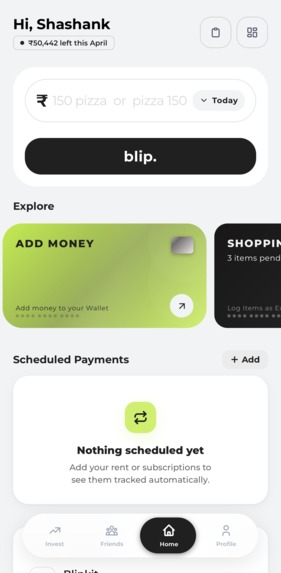
Home Screen for the app
-
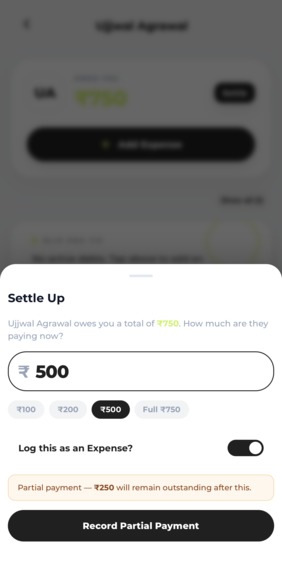
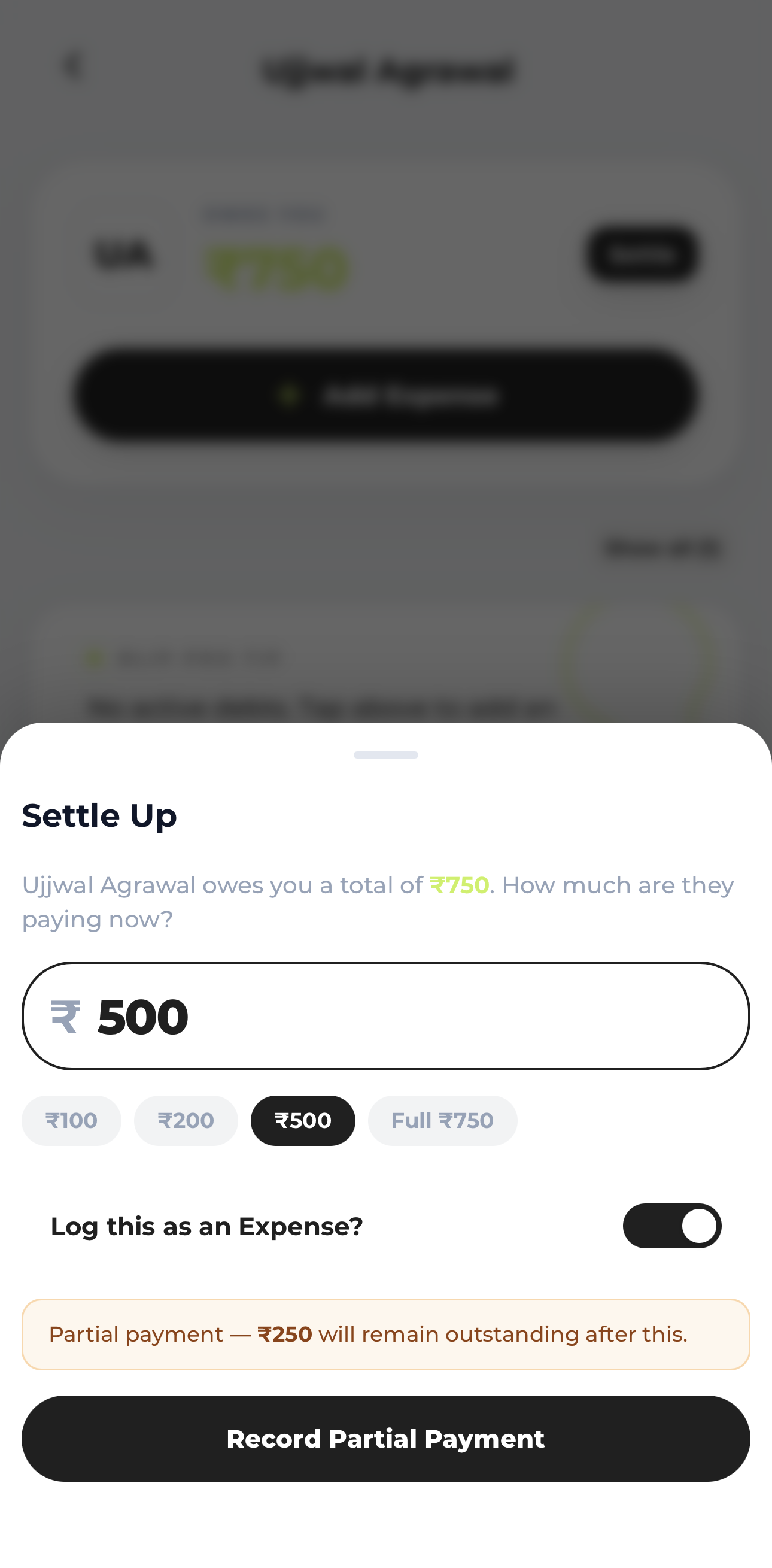
App Expense Settlement Screen with Friends
-
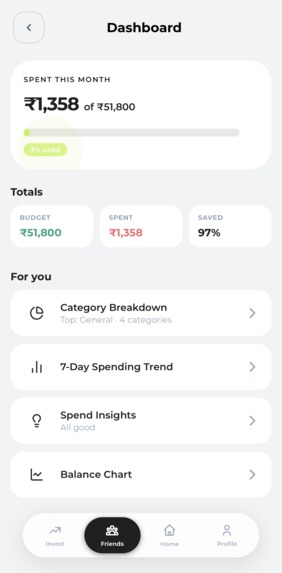
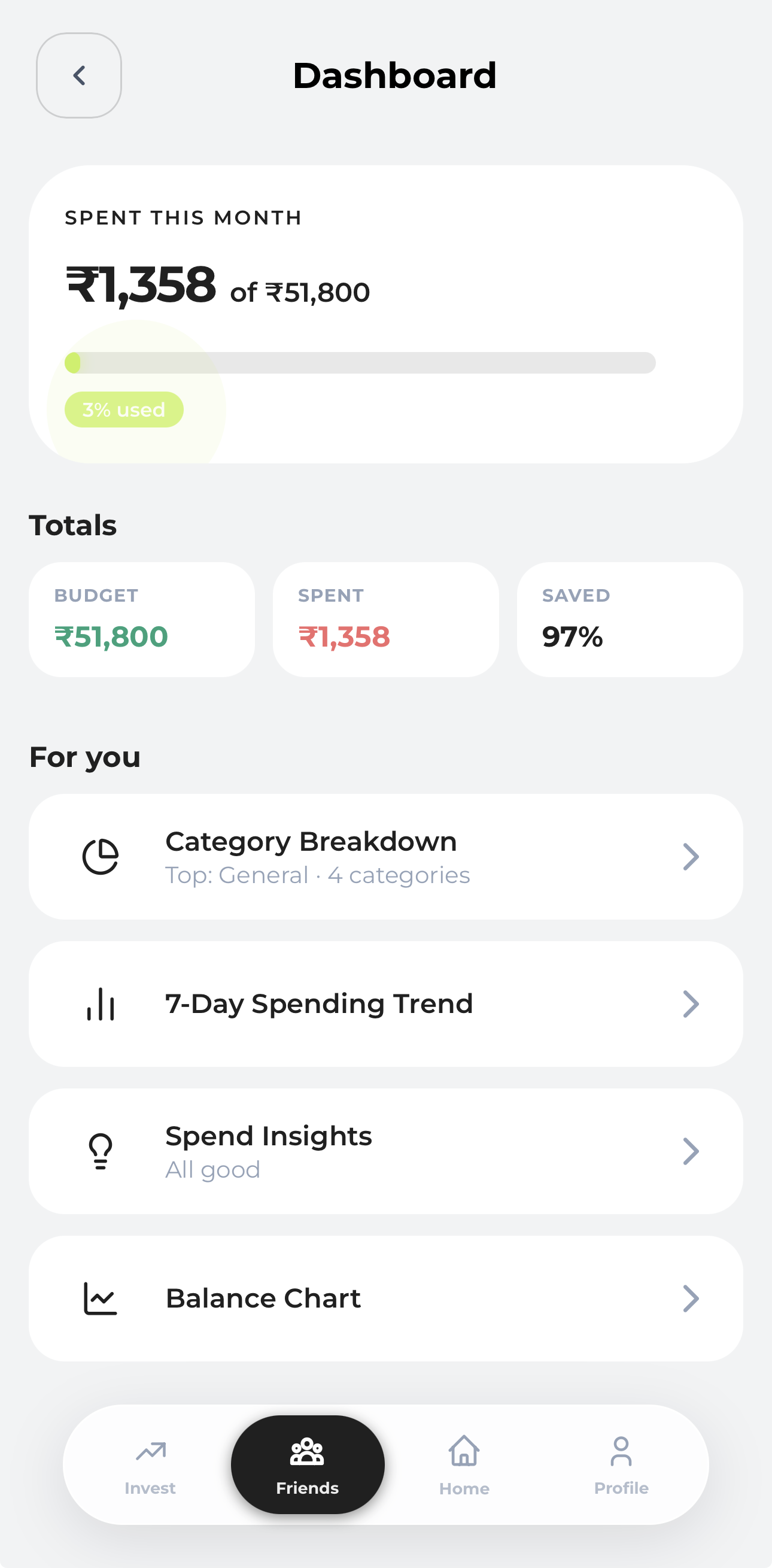
Dashboard that shows analytics
Inspiration
Most social debt and expense-tracking applications suffer from massive cognitive overload. They are cluttered with unnecessary features, slow down user workflows, and utilize clunky interfaces that create friction during a simple transaction. I wanted to build a financial tool that operates the way a software engineer’s brain works: ruthlessly efficient, highly reliable, and visually stripped down to only what matters. The inspiration for blip. was to bridge the gap between heavy multi-party ledger backend logic and a beautiful, high-contrast, minimalist aesthetic.
What it does
blip. is a Progressive Web App (PWA) designed for frictionless social debt settlement. It allows users to manage shared expenses and settle balances across friend groups without the usual interface friction. Its core feature is a blazing-fast, real-time expense logging system that allows users to input transactions using natural language. Behind the scenes, it manages complex concurrent balance updates, ensuring financial data integrity while presenting the user with an ultra-clean, flat-vector geometric interface.
How I built it
I engineered the platform as a Full-Stack PWA to ensure cross-device fluidity.
Frontend: Built with React.js, focusing heavily on a high-contrast, modern UI optimized for power-user workflows and rapid data entry.
Backend: Powered by Node.js, handling the core API routing and business logic.
Database: Architected on PostgreSQL, utilizing ACID transactions to maintain strict data integrity for the financial ledgers.
NLP Engine: Instead of relying on slow third-party AI APIs, I engineered a custom rule-based NLP engine to parse the natural language expense entries.
Deployment: Hosted on Vercel for seamless continuous integration and edge delivery.
Challenges I ran into
Building a financial system requires zero room for error, which introduced several hard technical hurdles:
Concurrent Financial Updates: Handling multiple users settling debts at the exact same time risked race conditions. I had to deep-dive into PostgreSQL row-level locking to ensure concurrent balance updates were processed safely without data corruption.
The AI Latency Trap: Initially, parsing natural language inputs using LLMs introduced unacceptable latency. To achieve the instant feedback required for a "frictionless" app, I had to completely eliminate the LLM call latency and engineer the custom rule-based engine instead.
Serverless Cold Starts: Deploying on a serverless architecture like Vercel naturally introduces cold starts, which destroys the "premium" feel of an app. I had to implement serverless warm-up strategies alongside optimistic UI updates on the frontend to completely mask any perceived latency from the user.
Accomplishments that I'm proud of
Achieving low processing speeds for the real-time expense logging by stripping out bloated AI calls in favor of highly optimized rule-based logic.
Successfully architecting a multi-party ledger system that safely handles concurrent database writes without failing.
Creating a stark, minimalist visual identity using strict geometric typography and high-contrast hex codes that perfectly hides the complex backend database operations.
What I learned
This project was a masterclass in the trade-offs of system design. I learned that throwing AI at a problem isn't always the best solution—especially when speed is the primary user requirement. I also significantly deepened my understanding of database concurrency, specifically how to utilize ACID properties and row-level locking to build trustworthy financial architecture from scratch.
What's next for Blip
The immediate next step is deepening the ecosystem integration to remove even more friction from the logging process. I am currently planning to integrate iOS Shortcuts for sub-second logging directly from a mobile device without even opening the PWA. Additionally, I plan to introduce immersive 3D scroll-based animations to elevate the premium, fluid feel of the interface even further.

