-
-
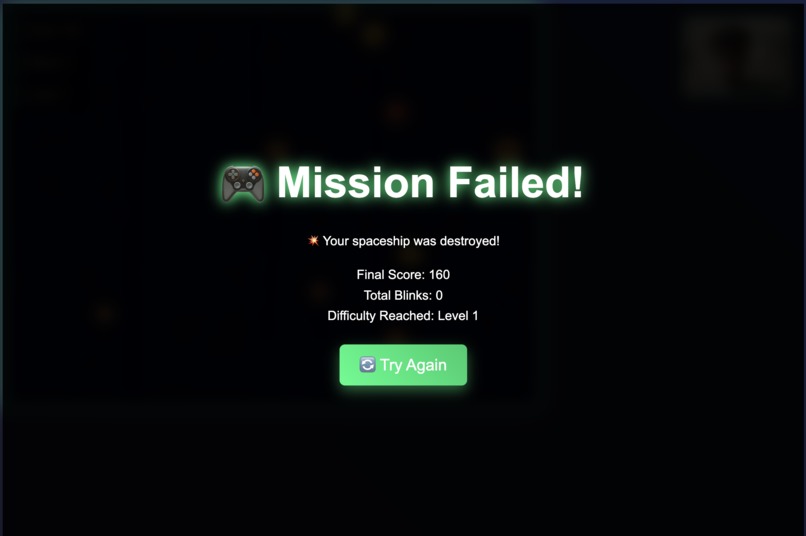
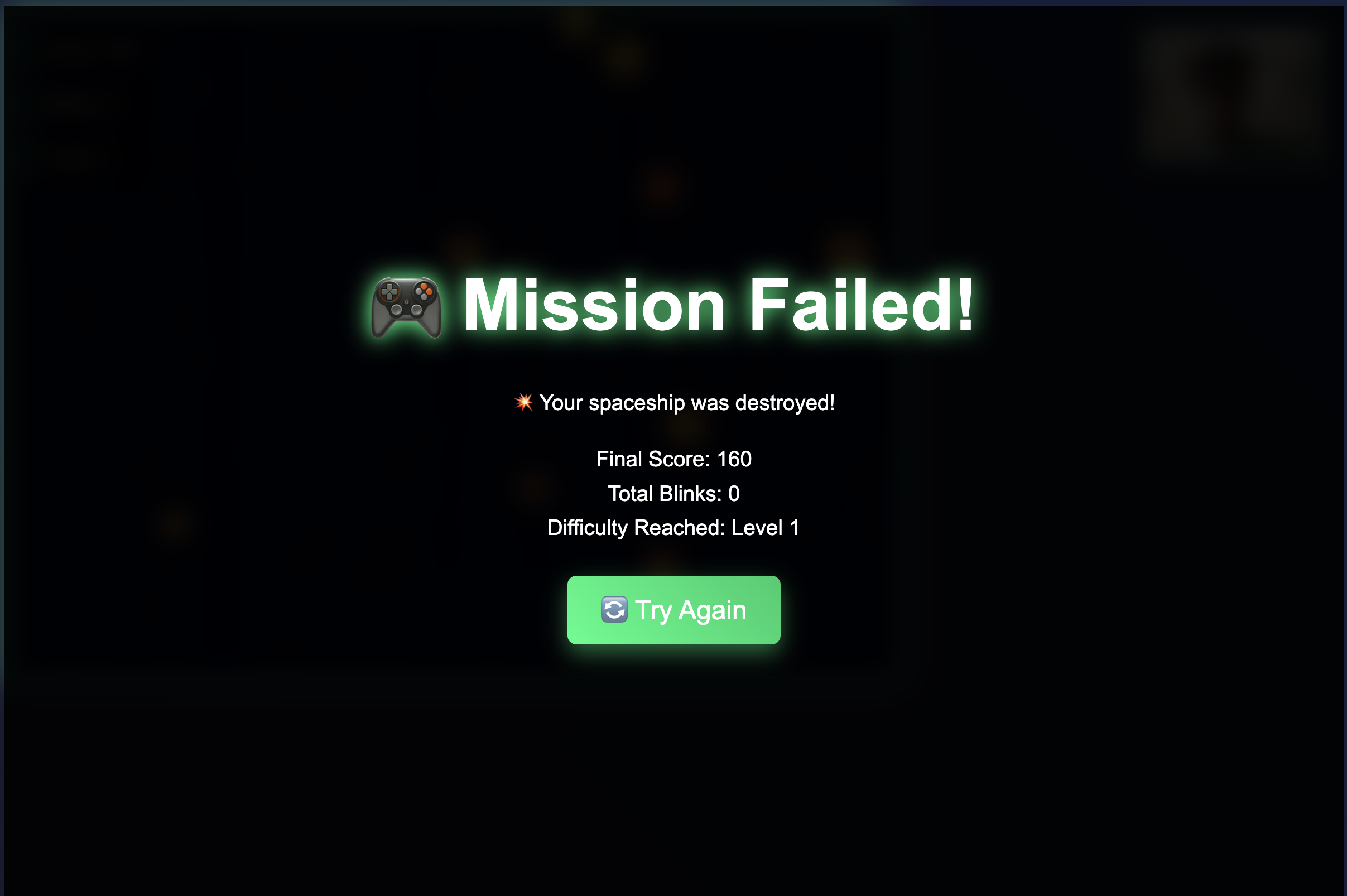
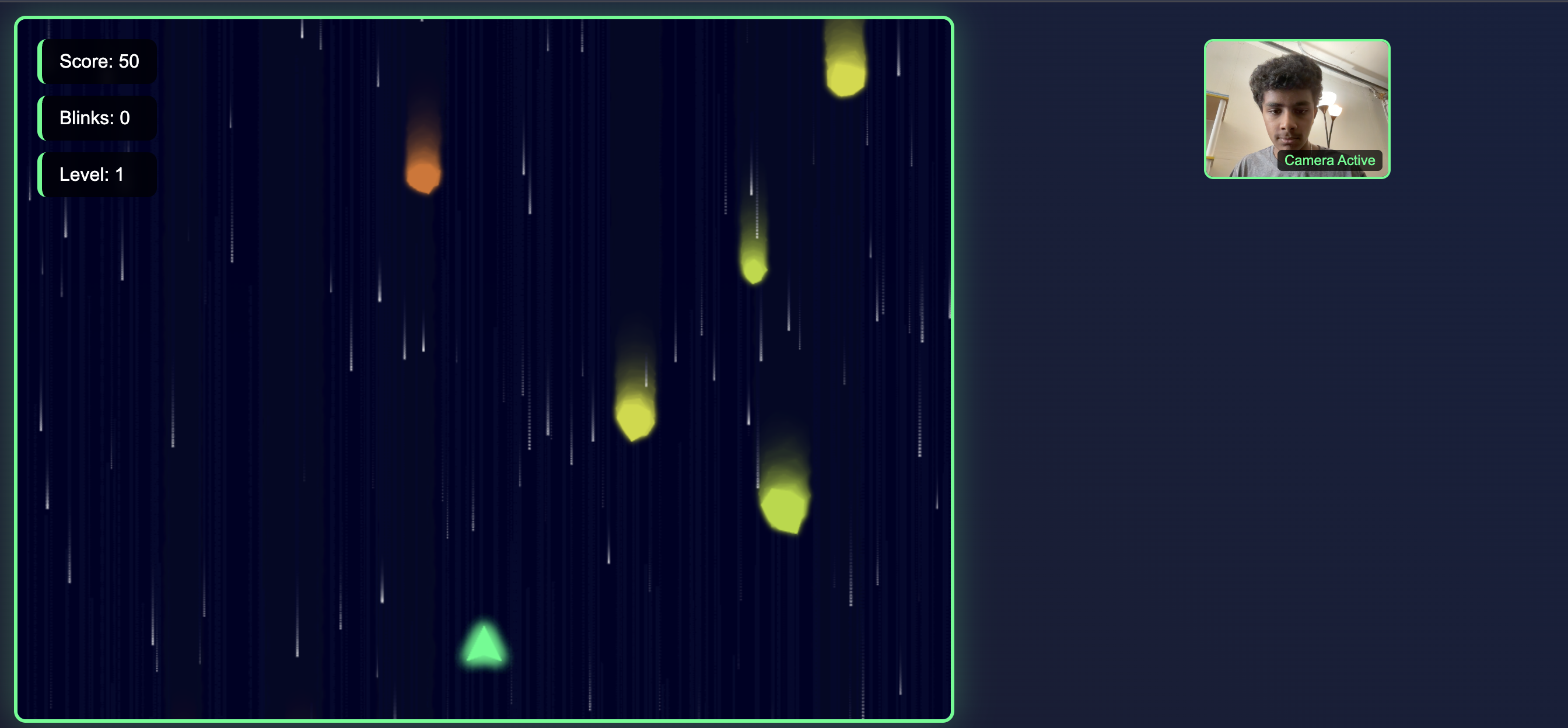
End Game Screen
-
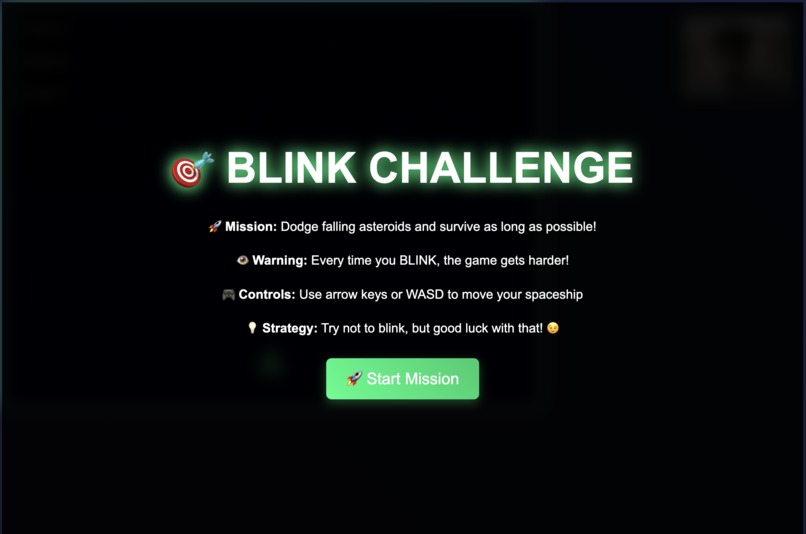
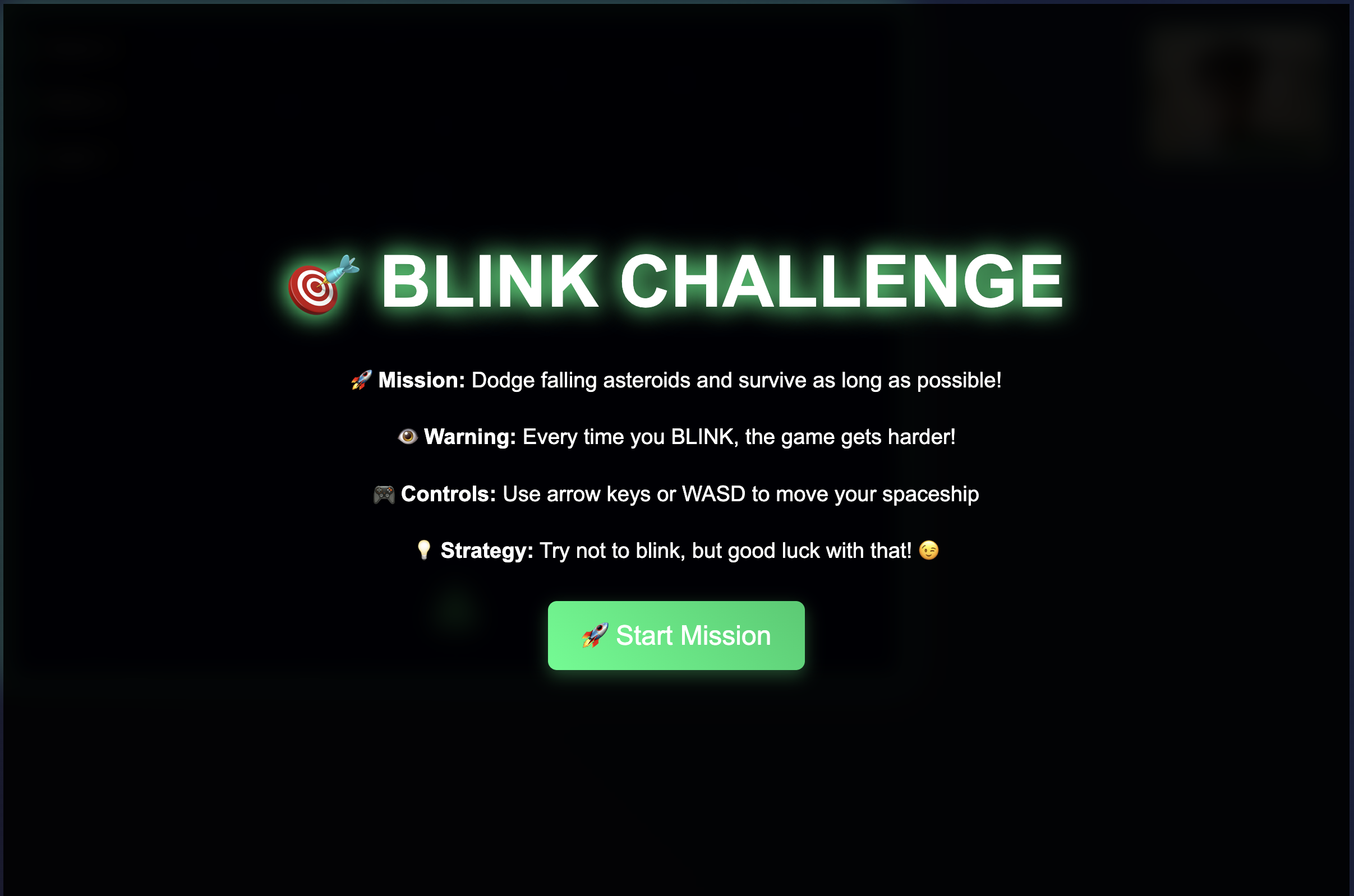
Starting Page
-
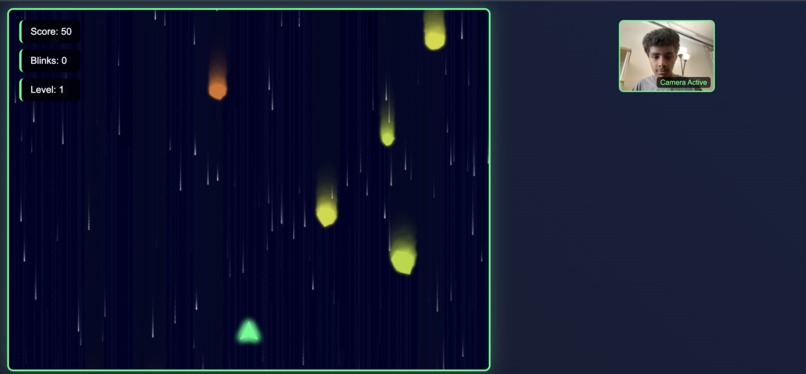
The more the user blinks, the harder the game gets!
Inspiration
We wanted to create a game that combined physical involuntary actions with gameplay difficulty in a creative and humorous way. Blinking is something everyone does—but what if it made a game harder? This idea of turning a natural reflex into a mechanic of escalating chaos inspired us to build Blink Challenge. It’s fun, stressful, and completely unpredictable, making every playthrough a hilarious test of willpower.
What it does
Blink Challenge is a real-time, webcam-powered game where you pilot a spaceship dodging incoming asteroids. Every time you blink, the game detects it using your webcam and ramps up the difficulty—faster asteroids, more spawn points, and screen-shaking chaos. You can control your ship with arrow keys or WASD, and live stats display your score, blink count, and current difficulty level. Visual feedback like screen shakes and alerts enhance the immersion, all set in a glowing neon space environment.
How we built it
We used a combination of JavaScript, HTML5 Canvas, and the WebRTC API to create the game. The real-time blink detection system utilizes brightness tracking from the webcam feed, calibrated to detect eye closures reliably without false positives. The game loop runs at 60fps to ensure smooth gameplay, with object pooling and optimization for performance. Particle systems, screen feedback, and visual overlays were used to build a vibrant, responsive interface.
Challenges we ran into
- Calibrating blink detection to be accurate but not overly sensitive was a major hurdle.
- Handling real-time webcam feeds without lag, especially on lower-end machines, took optimization.
- Making the difficulty progression feel natural but intense required careful tuning.
- Ensuring consistent frame rate and smooth visuals while processing computer vision in parallel with gameplay.
Accomplishments that we're proud of
- Successfully integrating real-time webcam-based blink detection with smooth gameplay.
- Creating an innovative game mechanic that turns blinking—a universal reflex—into a fun challenge.
- Building a fully playable, polished experience with vibrant visuals and feedback systems.
- Achieving reliable performance and minimal false positives in computer vision without needing external libraries.
What we learned
- How to integrate computer vision concepts into web-based games using just the webcam and brightness tracking.
- Importance of player feedback and subtle animations in creating immersive game experiences.
- Balancing innovation with usability—gameplay should challenge but not frustrate.
- That the simplest ideas (like blinking) can lead to surprisingly engaging and unique experiences.
What's next for Blinking Challenge
- Enhance blink detection using machine learning models like TensorFlow.js for more accuracy.
- Add power-ups, new asteroid types, and leaderboards for a more competitive experience.
- Optimize mobile compatibility and allow for eye-tracking with external devices.
- Launch it on game platforms and gather user feedback to evolve the game with more community-driven features.


Log in or sign up for Devpost to join the conversation.