Inspiration
Driver fatigue is the leading cause of a major fraction of traffic accidents globally, which is a serious safety issue. Drivers are especially at risk of drowsiness and micro-sleep because of long travel times, irregular sleep cycles, monotonous routes, and stressful lifestyles. Breaking the Blink Barrier introduces a non-intrusive, real-time fatigue management system for common drivers.
What it does
The system employs an ESP32 microcontroller and an infrared (IR) eye-blink sensor to continuously monitor eyelid movement, blink rate, and closure duration. These are reliable physiological indicators of the onset of fatigue. To bring back the driver's attention and avoid the possible loss of control over the vehicle, the system, therefore, switches on the buzzer and LED alert instantly when it finds that the abnormal blink pattern or prolonged eye closure exceeds a preset threshold. The IR-based detection frees the driver from discomfort and being conspicuous and at the same time makes it possible for the operation to be accurate in different lighting conditions. The device is a small, cheap, and easy car-board integration solution that offers a great way to enhance road safety. There are some possible future features like cloud-based data logging, IoT connectivity, mobile app integration, and AI-driven fatigue prediction. In general, the project provides a feasible solution to reduce the number of crashes caused by fatigue and to encourage safer driving practices
How we built it
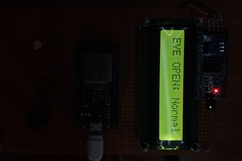
In our invention, the IR sensors are implanted in a comfortable and light goggle frame, thus enabling the continuous observation of whether the eyes are open or closed. The reason is that IR sensors are not dependent on lighting conditions, and therefore, they provide a stable and real-time performance. In a situation where the driver's eyes are closed for a period exceeding five seconds, the buzzer is set off by the system as a means of giving a warning. When the closure continues for up to eight seconds, a vibration motor delivers a stronger alert. This two-step alert feature helps reduce microsleep and hence, the risk of accidents is lowered. Firstly, the research studies show that microcontrollers, e.g., Arduino, PIC, and STM32, are mostly used in safety monitoring systems. Nevertheless, the ESP32 is gaining more popularity because of its high speed, dual-core architecture, integrated communication capabilities, and low power consumption. The Silva and co-workers research, among others, has revealed that the ESP32 is very efficient in real-time systems that require fast data processing and multitasking. In comparison with the Raspberry Pi, the ESP32 is more energy-efficient and is capable of working under more challenging situations with continuous movements such as cars. This makes it a perfect match for wearable and portable devices like our goggle-based model. The literature also points out that it can effortlessly facilitate IoT features such as cloud access or mobile alerts. Taken together, the present research works constitute a convincing argument for the ESP32 as a dependable and efficient option in constructing the proposed drowsiness detection system. Stage 1 – Normal Condition
Eye Open LCD: "Eyes Open / Normal" LEDs OFF Buzzer OFF Vibrator OFF
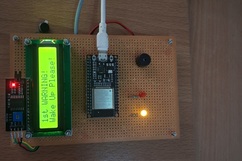
Stage 2 – First Warning (5 seconds closure)
If the driver's eyes remain closed for ≥ 5 seconds: Yellow LED ON (1st Warning) Buzzer rings LCD shows: “1st WARNING! Drowsy Alert” Vibrator OFF
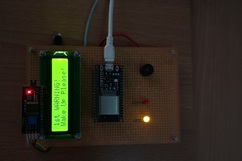
Stage 3 – Second Warning (8 seconds closure)
If eyes remain continuously closed for ≥ 8 seconds: Red LED ON Buzzer ON Vibrator motor ON (strong alert) LCD displays exactly what shows in your image: “2nd WARNING! Vibration ON”
Accomplishments that we're proud of
. The proposed methodology, unlike conventional camera -based systems, it eradicates the dependency on lighting conditions and using IR sensors that is embedded in light weight google frame by directly tracking the eyelid movement visual image processing can be done. The alert mechanism that is the two-stage alert mechanism, an audible buzzer, and a vibrating motor, reduces the risk associated with sleep and ensures timely driver re-engagement. The ultimate result efficiently identifies prolonged eye closure and accurately alerts under varying driving conditions and environments
Built With
- aurdio

Log in or sign up for Devpost to join the conversation.