Inspiration
Imagine planning the perfect day. Every task is listed, every meeting is scheduled, and everything seems manageable. Then reality happens. Two events overlap. A promise slips your mind. A task cannot begin because you forgot an essential step. Your plan looked perfect. So what went wrong? Sometimes, the biggest problems aren't the things we plan to do. They're the things we overlook. That question inspired BlindSpot. What if an intelligent assistant could do more than remember our plans? What if it could help us notice what we've missed before it becomes a problem?
What it does
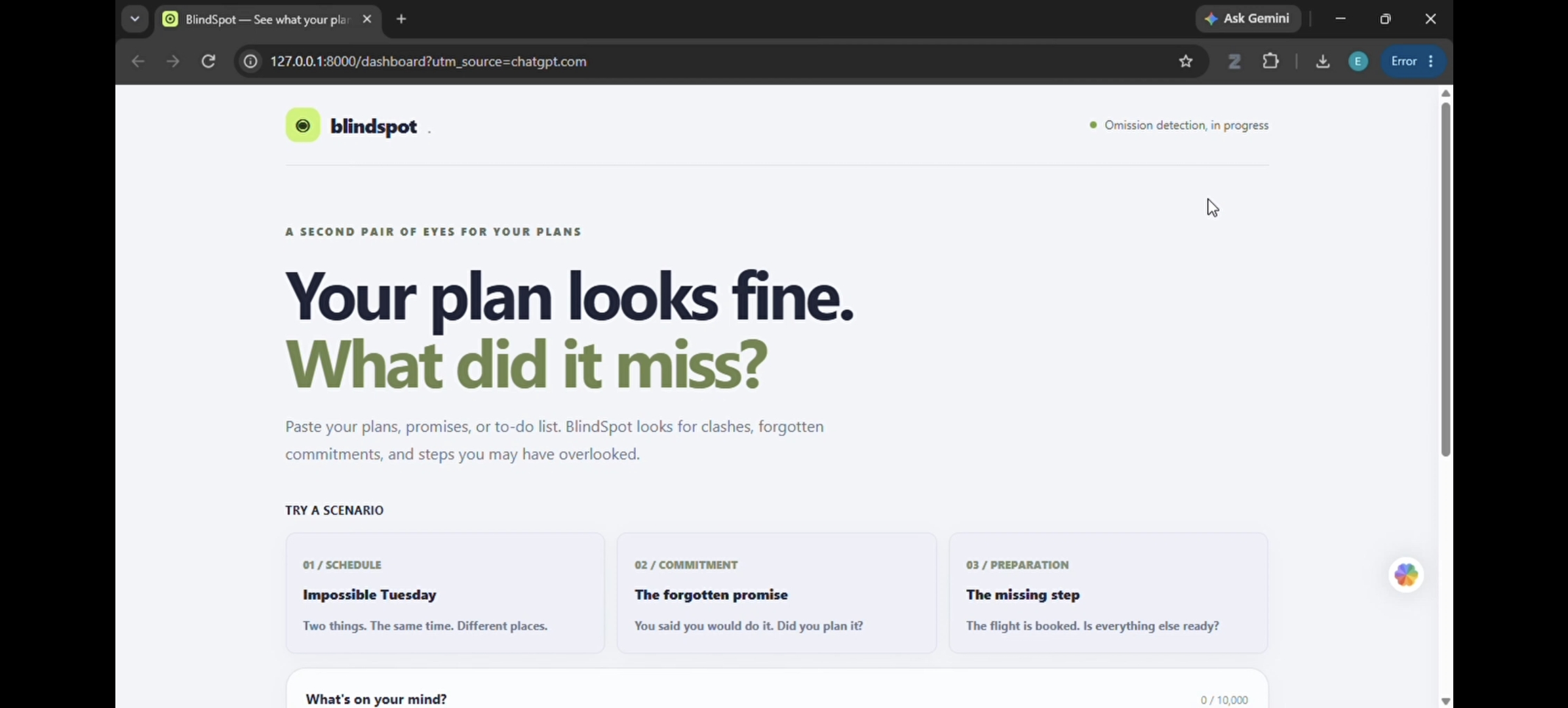
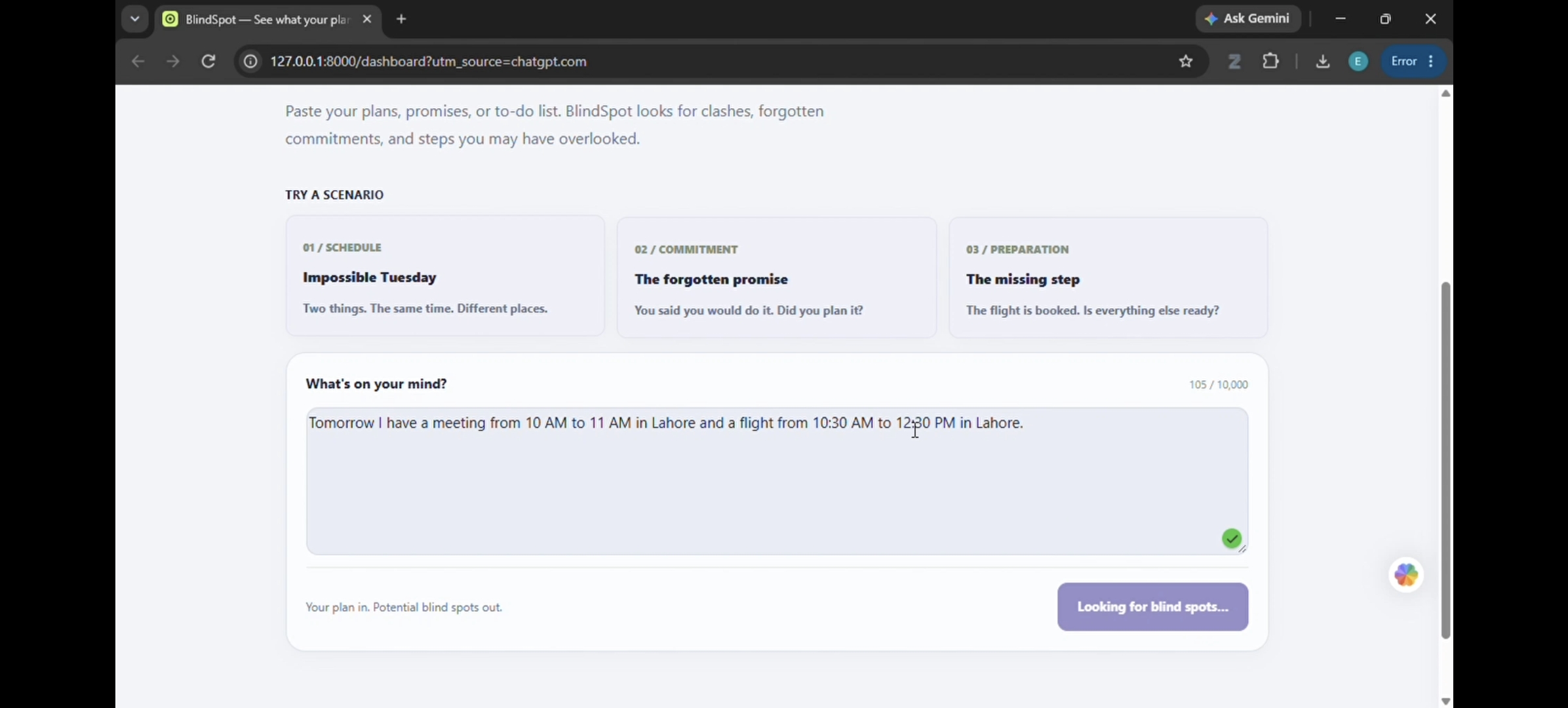
BlindSpot explores a simple idea: a plan should be checked for what might be missing, not just what is written down. It focuses on three everyday blind spots: Temporal Collision: Identifies potential scheduling conflicts. Ghost Commitment: Surfaces forgotten promises and commitments. Prerequisite Failure: Highlights missing steps that could prevent a task from being completed. Together, these scenarios demonstrate how proactive assistance could help people catch overlooked problems before they disrupt their plans.
How we built it
We turned the idea into a working web-based simulation with a dashboard where users can explore realistic planning scenarios and see potential problems identified. The system combines structured detection logic with AI to explore overlooked commitments, timing conflicts, and missing prerequisites. Each category addresses a different way a seemingly complete plan can fail. Rather than trying to solve every planning problem at once, we focused on three relatable situations that demonstrate the concept clearly.
Challenges we ran into
The tricky part wasn't simply identifying tasks. It was recognizing the problems hiding between them. A forgotten promise might not appear anywhere on a task list. Two individually reasonable plans might conflict when combined. And a task that looks ready might depend on something unfinished. Turning these situations into clear, testable scenarios challenged us to think beyond ordinary task management and consider how a system could explain what deserves attention.
Accomplishments that we're proud of
We're proud to have turned an everyday frustration into a working prototype with three distinct problem-detection scenarios. Each scenario represents a different kind of oversight, making the idea tangible rather than leaving it as a concept on paper. Most importantly, BlindSpot demonstrates a different way to think about planning: not just helping people remember what they intend to do, but helping them recognize what could go wrong.
What we learned
We learned that a helpful AI experience isn't necessarily the one that does the most. Sometimes, its greatest value comes from noticing something the user hasn't considered. We also learned the importance of breaking an ambitious idea into focused components, testing it against realistic situations, and making its limitations clear.
What's next for BlindSpot — See What Your Plan Missed
Today, BlindSpot is a web-based simulation exploring an Alexa+ inspired vision of proactive assistance, not a live Alexa integration. Next, we'd like to explore calendar connections, persistent commitments, more personalized recommendations, and broader testing against real-world planning situations. The long-term vision is simple: an assistant that doesn't just help you follow your plan, but helps you recognize when your plan needs a second look. Because sometimes, you don't need a better plan. You need to see what your plan missed.

Log in or sign up for Devpost to join the conversation.