-
-
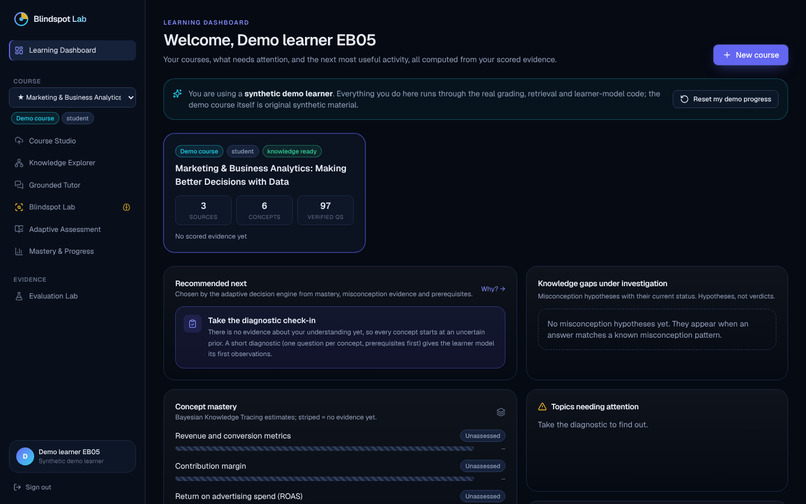
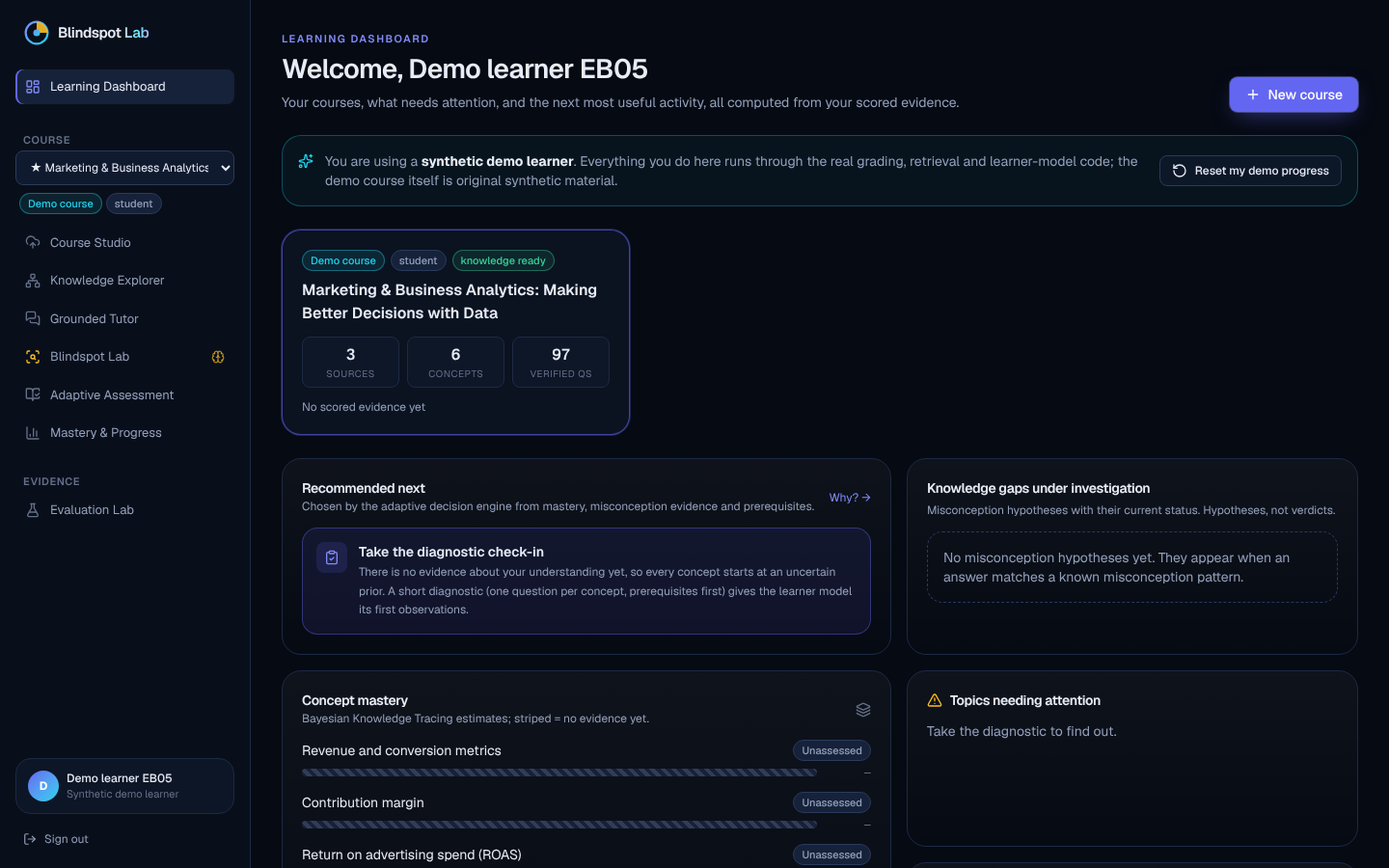
Learning Dashboard — Initial State: Baseline learner dashboard showing unassessed concepts and personalized diagnostic recommendations.
-
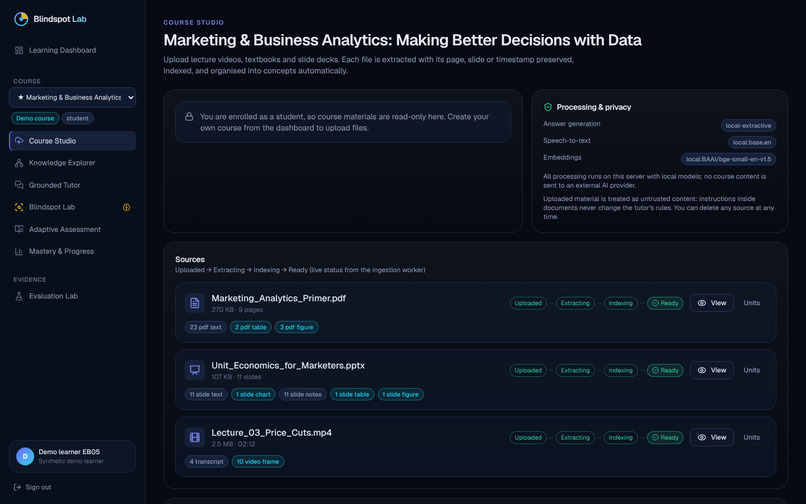
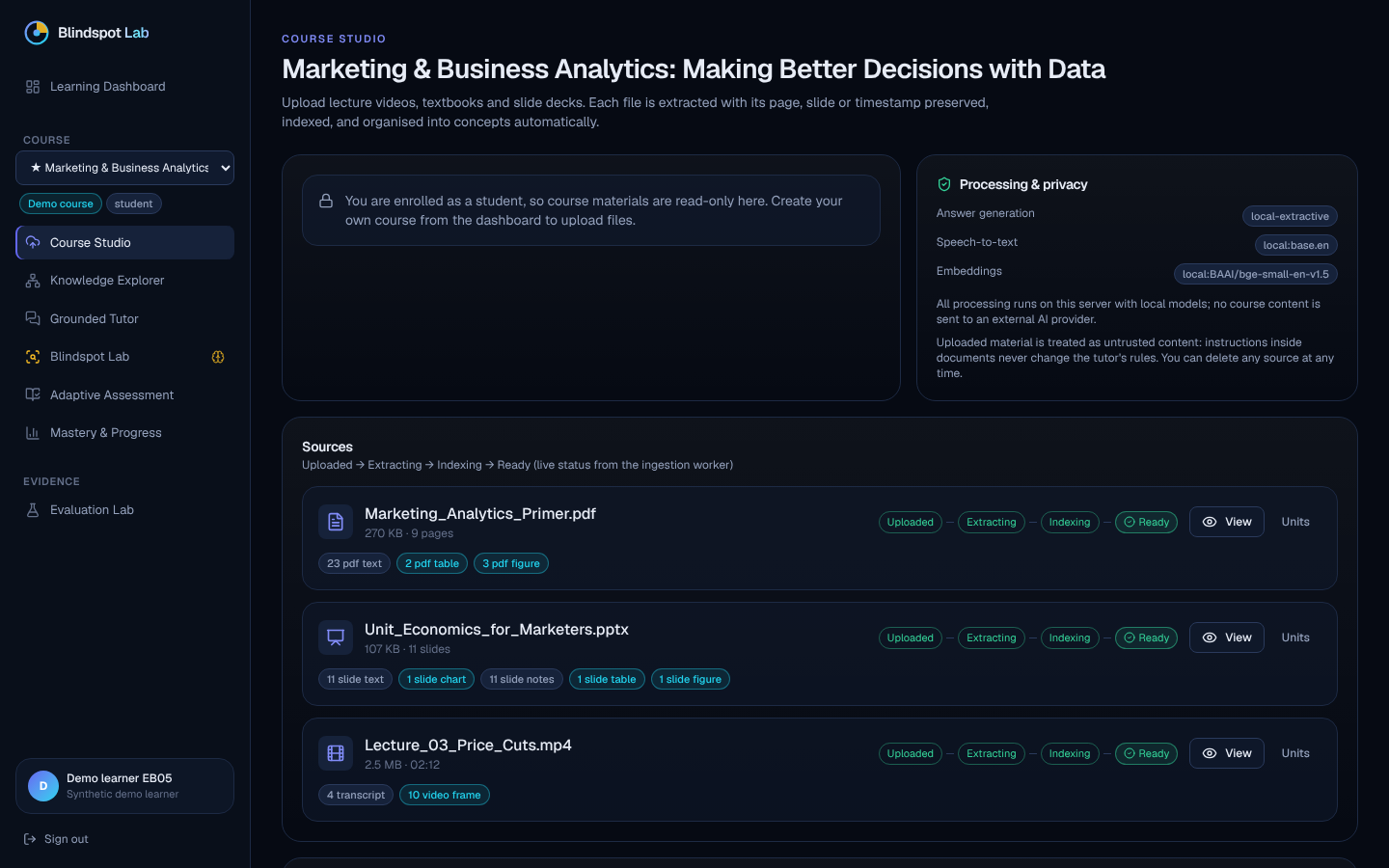
Multimodal Course Studio: Processes PDFs, presentations, and lecture videos into structured, searchable learning content.
-
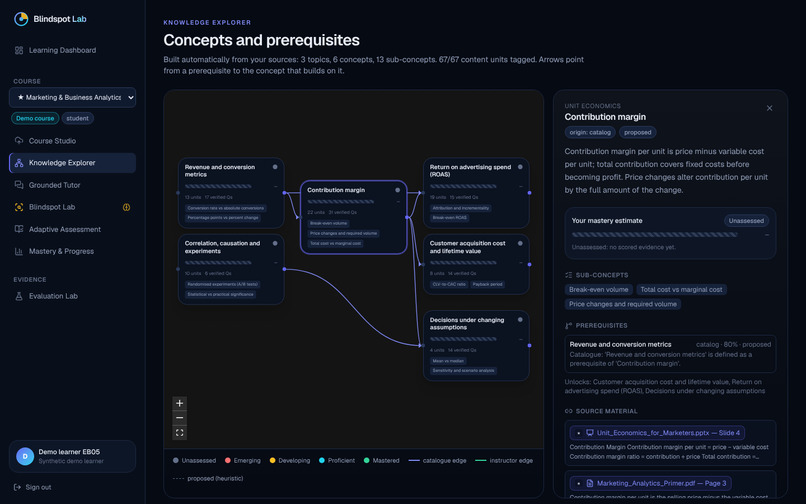
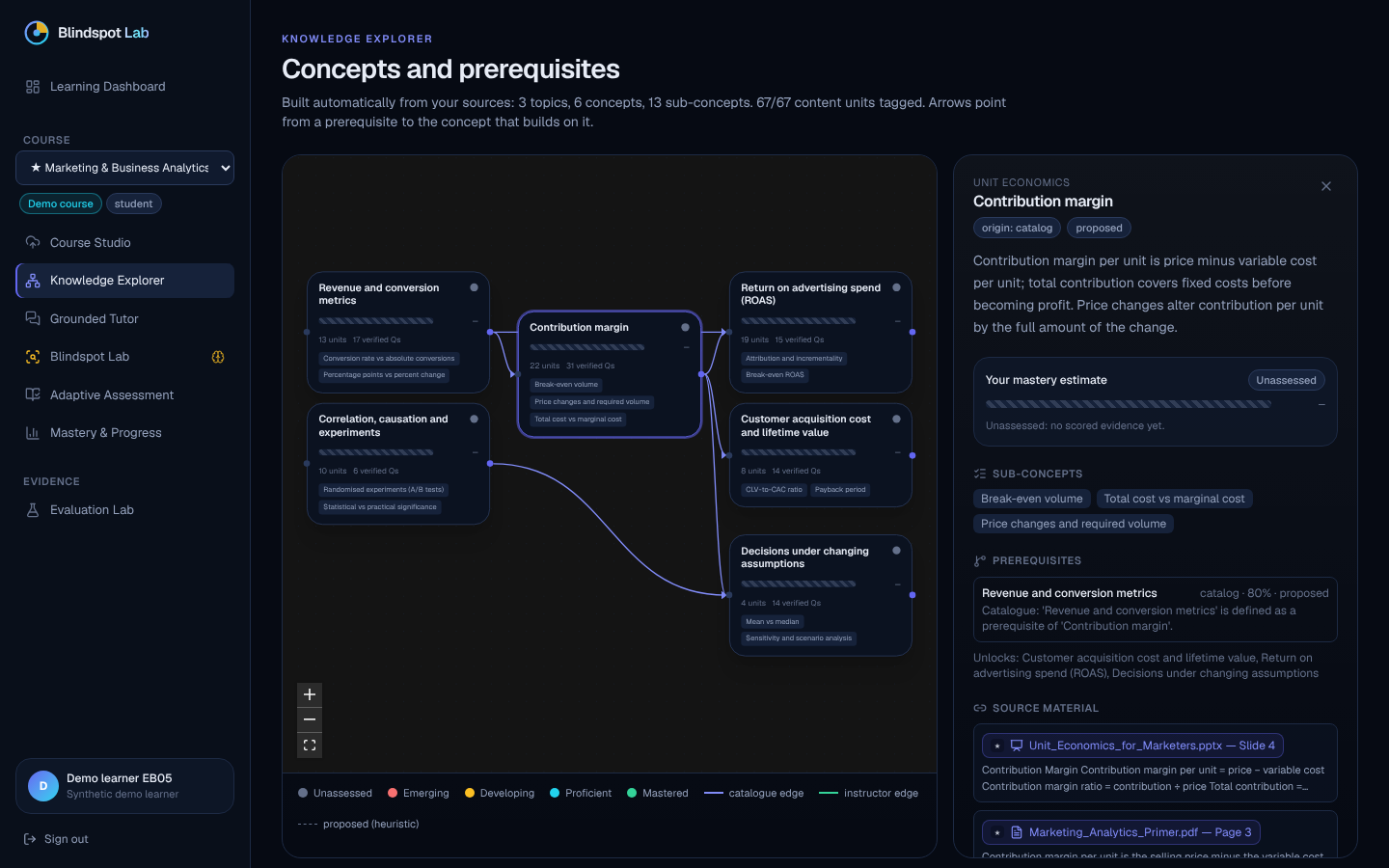
Knowledge Explorer: Interactive concept mapping visualizes learning dependencies, prerequisites, and source-linked knowledge.
-
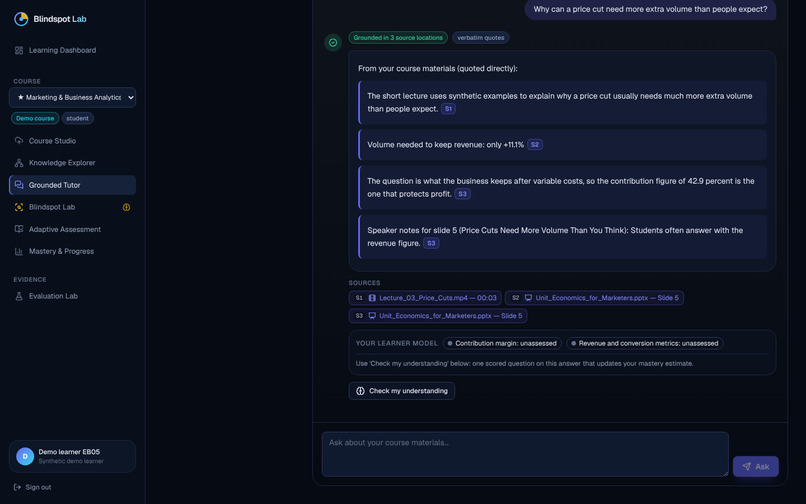
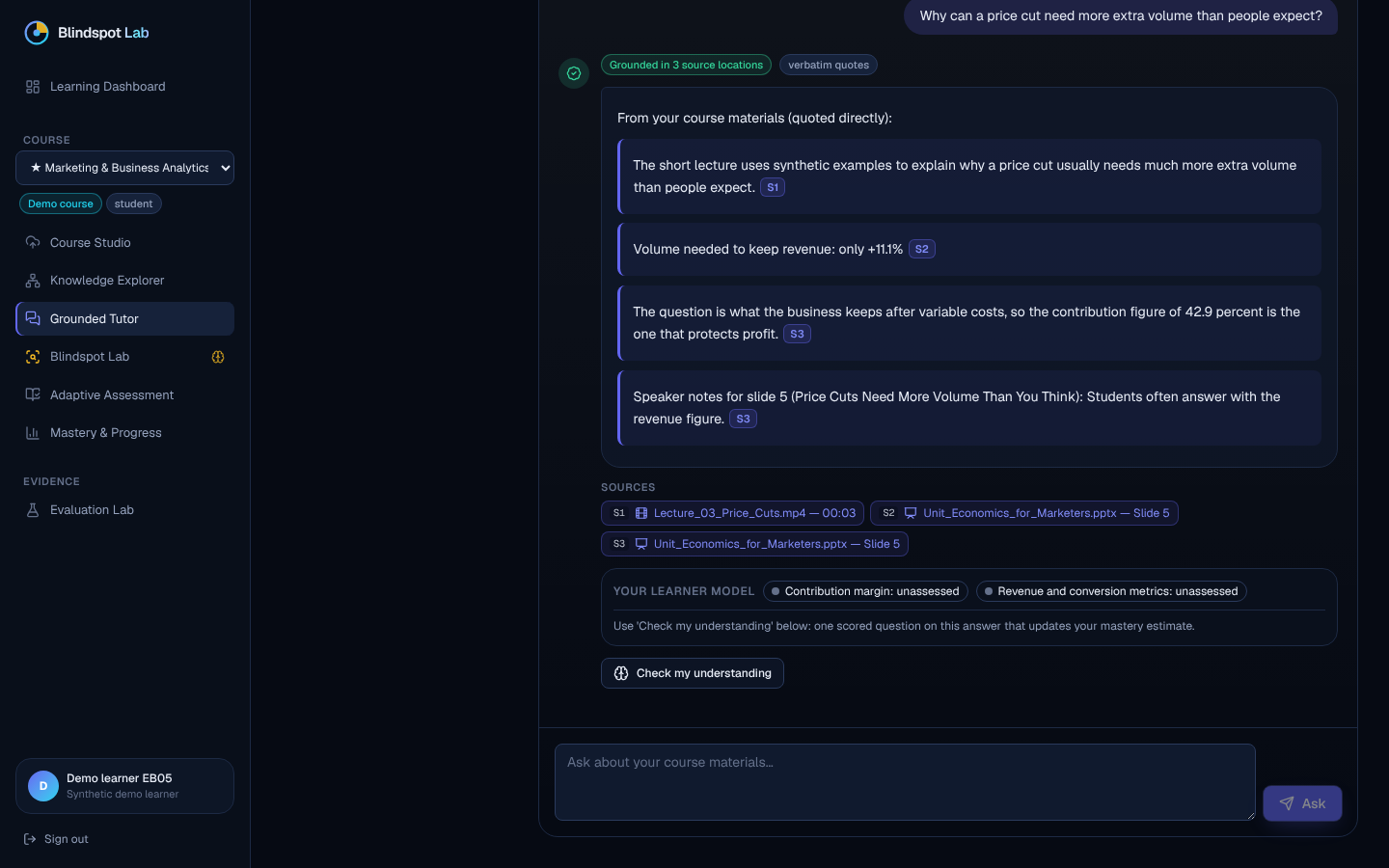
Grounded AI Tutor: Context-aware tutoring with verifiable citations linked directly to course materials.
-
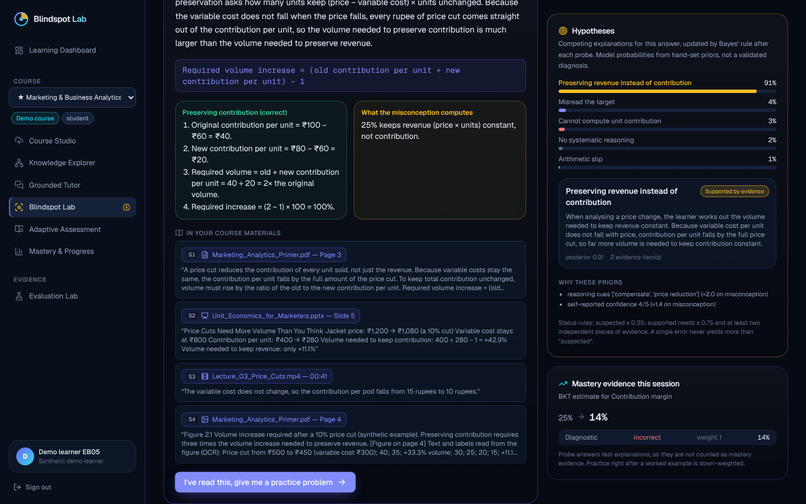
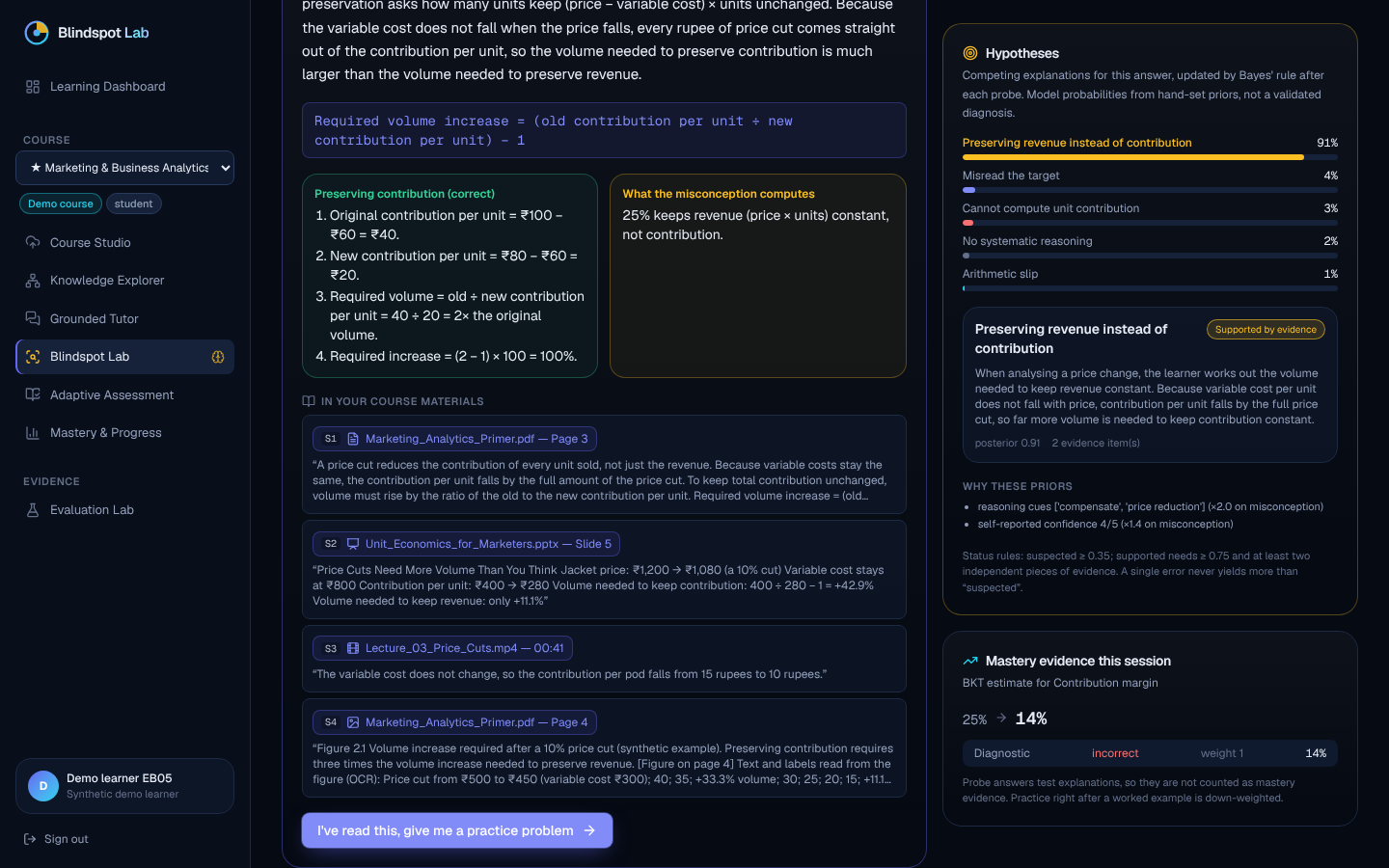
Misconception Repair: AI-powered diagnosis identifies the root misconception and delivers source-backed explanations and corrective practice
-
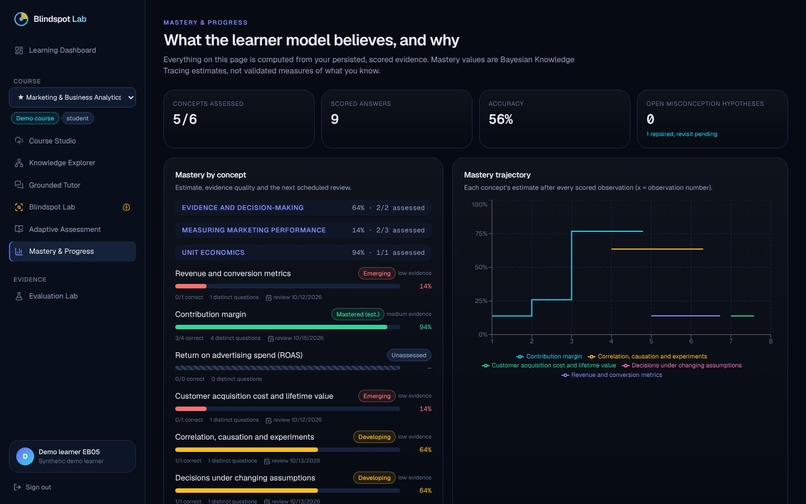
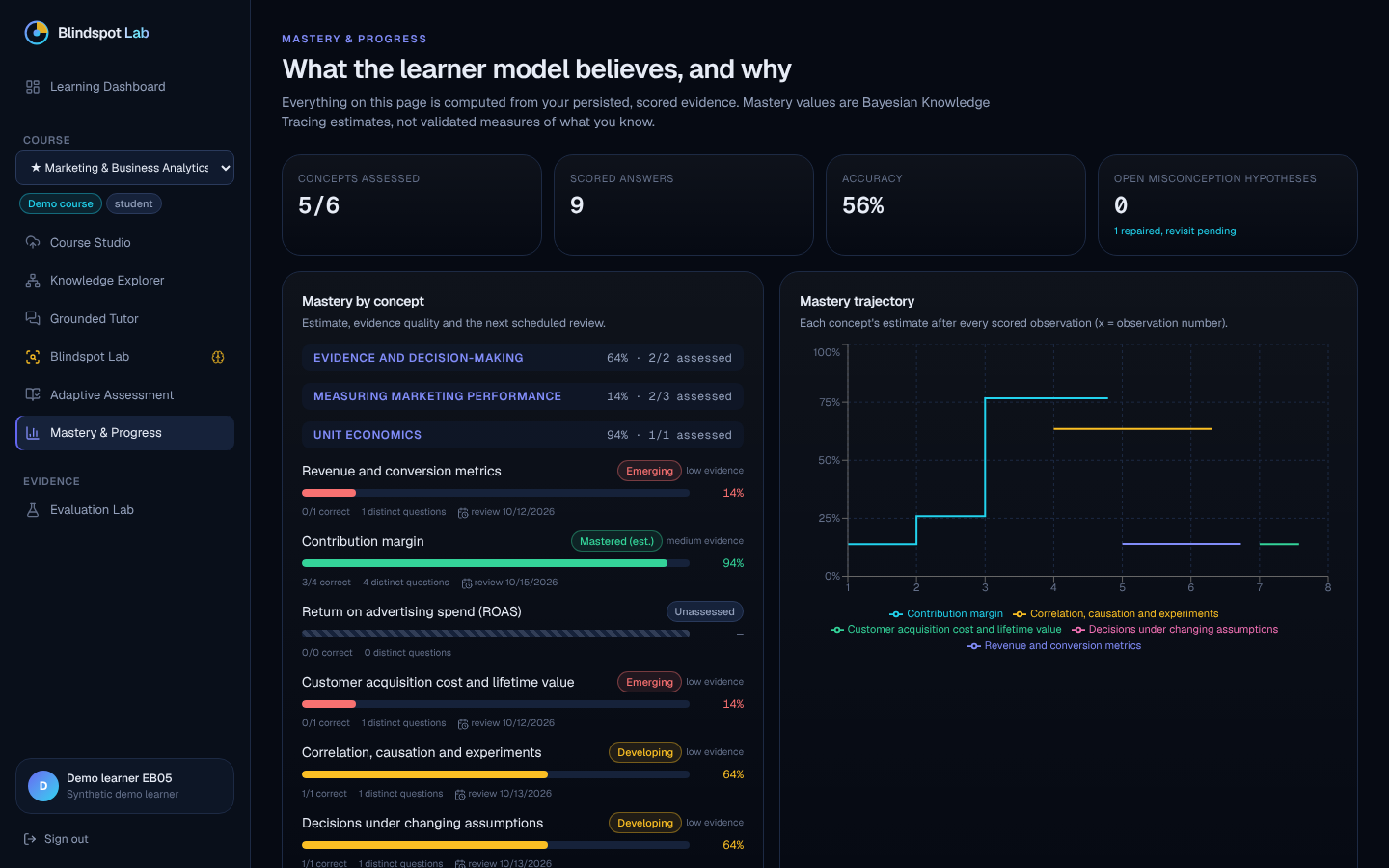
Mastery & Progress Analytics: Evidence-based concept mastery, learning trajectories, accuracy tracking, and misconception resolution.
-
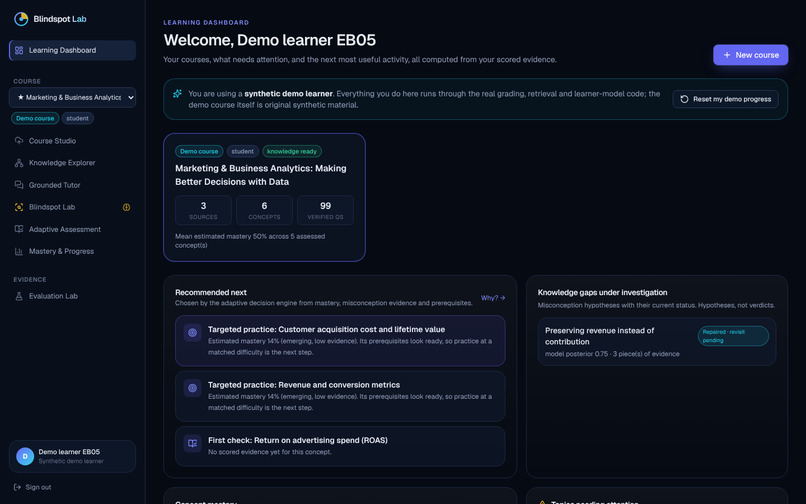
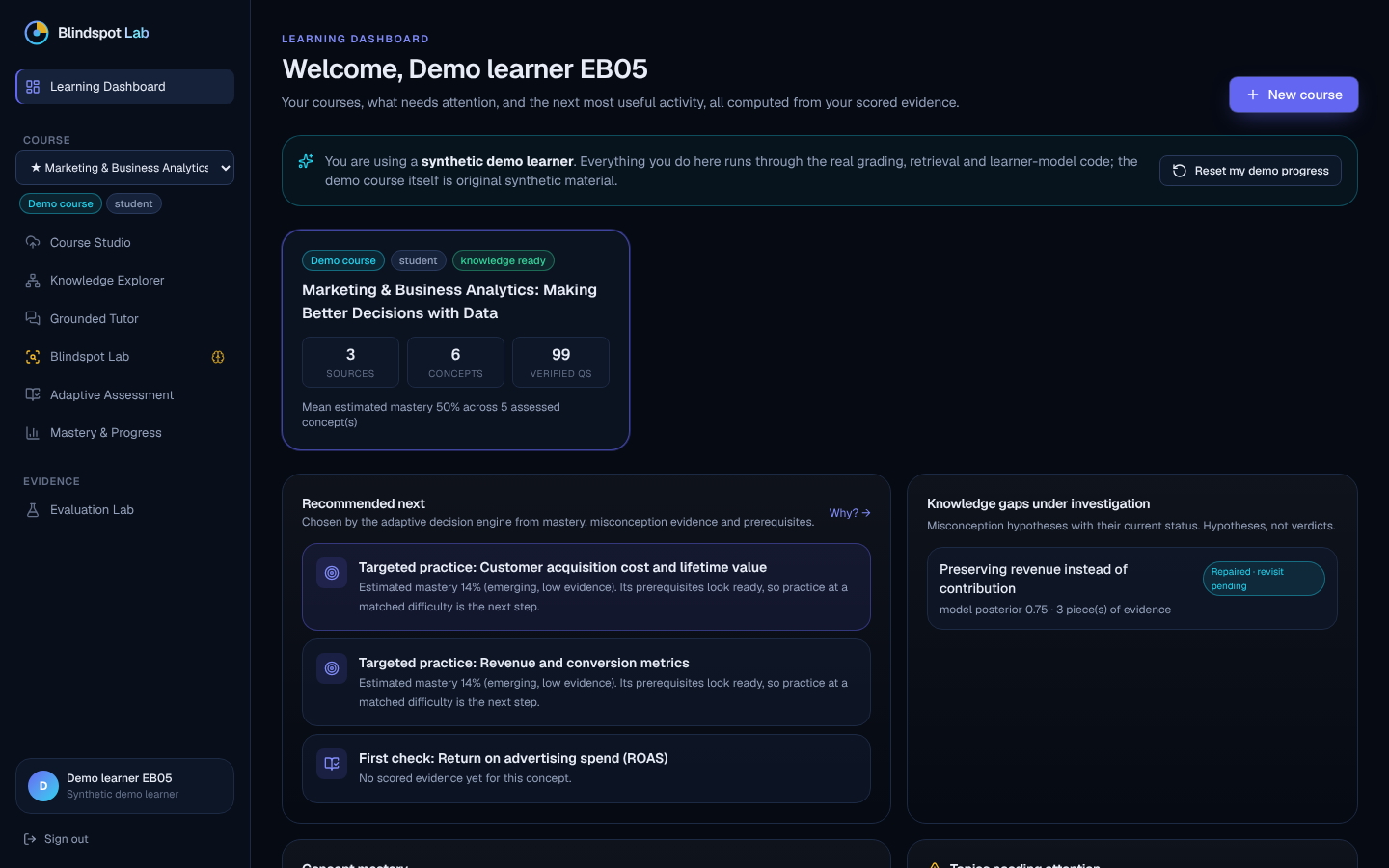
Learning Dashboard — After Assessment: Personalized learning recommendations and misconception tracking based on the student's performance.
Inspiration
Students don't always know what they don't know.
They attend lectures, read textbooks, revise slides and sometimes score well on quizzes. Yet a hidden misconception can survive all of that preparation.
Most AI study assistants focus on answering questions. We wanted to build something different: a learning companion that can identify why a student misunderstood a concept and determine whether that misunderstanding has genuinely been corrected.
That is the idea behind BlindSpot Lab.
What it does
BlindSpot Lab is a multimodal, source-grounded learning platform designed around four stages: Learn → Diagnose → Repair → Verify.
1. Learn from actual course material
Students upload lecture videos, PDF textbooks and presentation slides. The system processes text, diagrams, figures and speech to organize knowledge into topics, concepts and prerequisite relationships.
Information retains its original page, slide or video timestamp so explanations can be traced back to the source.
2. Diagnose hidden misconceptions
Rather than stopping at right or wrong answers, BlindSpot Lab uses targeted follow-up questions to identify potential gaps in reasoning.
For example, a Marketing Analytics student might confuse percentage change with percentage-point change. Instead of merely displaying the correct formula, the system investigates the reasoning error behind the answer.
3. Repair understanding with evidence
The AI tutor provides explanations grounded in uploaded course materials, with navigable citations. It adapts explanations and practice questions to the student's weak concepts and existing knowledge.
Unsupported answers are explicitly flagged rather than presented as course-backed facts.
4. Verify genuine learning
Students encounter new questions that test the same concept in a different context. Their performance informs a continuously updated learner model and topic-mastery dashboard.
The goal is not simply memorization, but transferable understanding.
How we are building it
The proposed architecture combines a Next.js web interface with a Python FastAPI backend and PostgreSQL-based data storage.
A multimodal ingestion pipeline extracts information from videos, PDFs and presentations while preserving source locations.
A retrieval-augmented generation pipeline supports cited tutoring conversations. An assessment engine generates and verifies topic-specific questions, while a learner-model service tracks mastery and recommends subsequent activities.
System evaluation will use established RAG evaluation metrics, together with simulated student profiles across multiple learning sessions.
Key engineering challenges
Three problems are especially important:
- Maintaining accurate citations across multiple media types.
- Distinguishing genuine misconceptions from isolated mistakes.
- Generating reliable assessments without repeating questions or introducing incorrect answer keys.
We are approaching these challenges through structured source metadata, diagnostic questioning, answer verification and repeatable evaluations.
What makes BlindSpot Lab different
Traditional AI tutors focus on explaining the correct answer.
BlindSpot Lab focuses on finding the reasoning gap behind an incorrect answer, providing grounded remediation, and checking whether understanding transfers to unfamiliar problems.
Our initial focus is Marketing and Business Analytics education, with opportunities to expand into other disciplines and professional training.
What's next
Our priority is completing and evaluating the end-to-end prototype: multimodal ingestion, citation-backed tutoring, adaptive assessment and measurable learner progress.
Future enhancements include interactive prerequisite maps, personalized revision schedules, multilingual tutoring and tools for educators to understand recurring misconceptions across a class.
Built With
- alembic
- chatgpt
- claude-code
- fastapi
- ffmpeg
- github
- github-actions
- next.js
- onnx-runtime
- pgvector
- playwright
- postgresql
- pymupdf
- python
- python-pptx
- ragas
- react
- react-flow
- recharts
- sqlalchemy
- tailwind-css
- tesseract-ocr
- typescript
- whisper

Log in or sign up for Devpost to join the conversation.