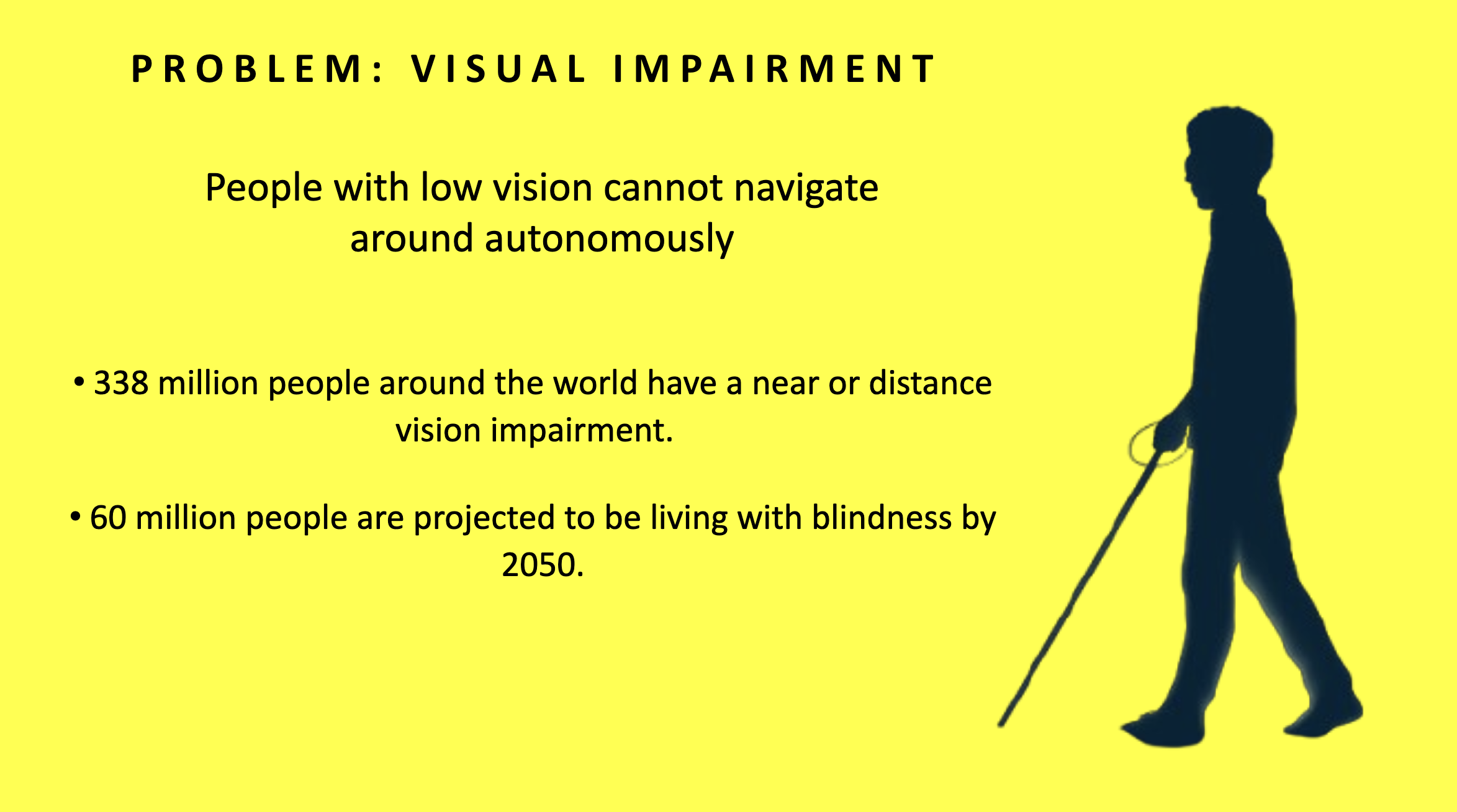

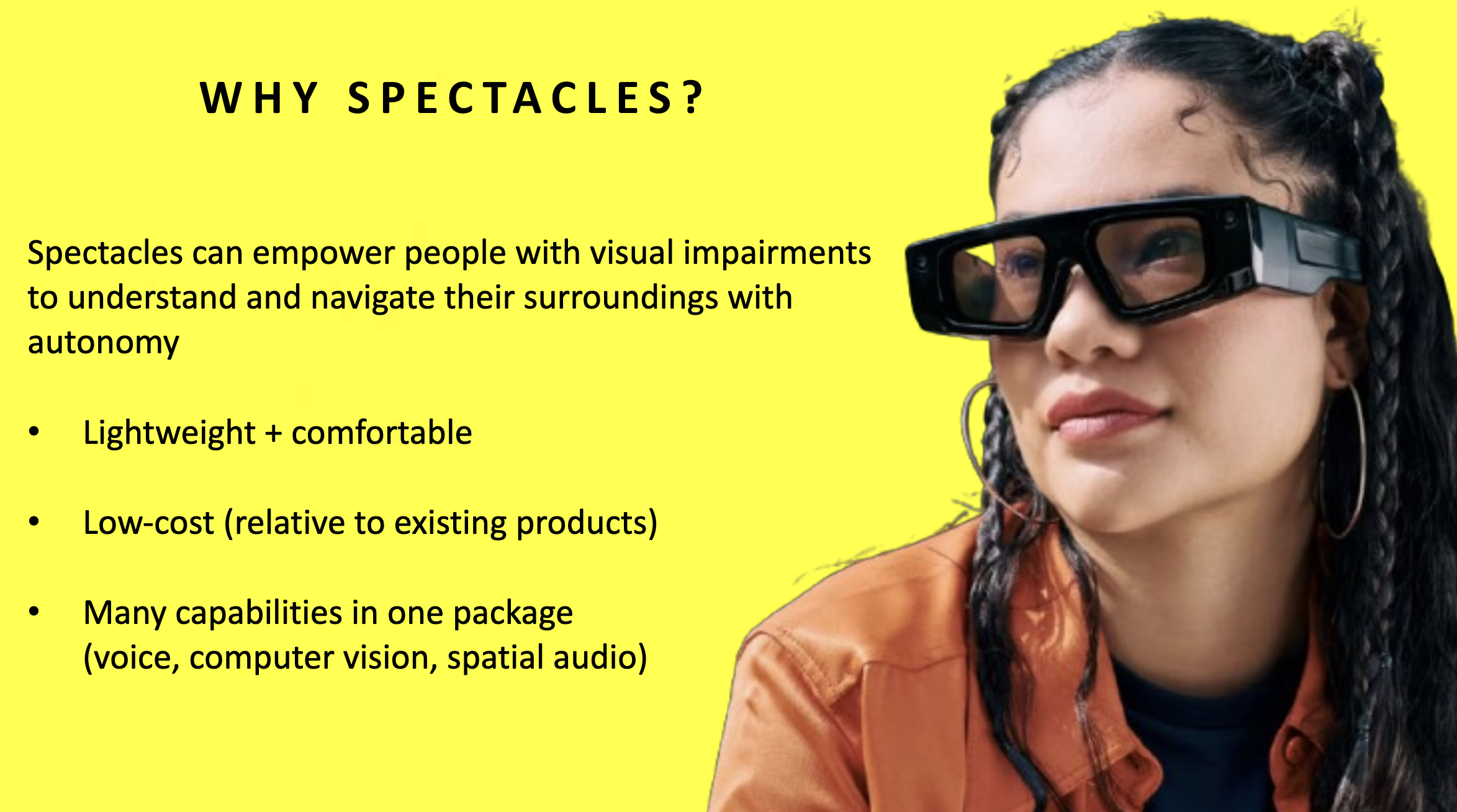


Inspiration - our team had several inspirations, including learning from each other. That was an inspiration in itself along with working with new tech (spectacles). With regards to the project, we all wear glasses and/or know individuals with visual impairments. So we were trying to understand how this tech could better help them and the wider visually impaired community.
What it does - Blind spot helps to utilise several objects being detected along with speech and text.
A person is detected by sound. Screenshots can be taken by those sighted to help those that then use the headset to hear familiar information of objects around them.
How we built it - WorldQuery constantly scans the environment and plays spatialised, dynamic audio to build intuitive understanding of space, a 'virtual cane' can be used to get more precise, targeted information about the world, nearby people are located with ambient spatial audio sources
Spectacles camera frames can be captured and sent to vision AI models to provide further assistance when required "what does this sign say". https://www.snapchat.com/lens/621fc6f79e08458dae7e70ddea45b5a2?sender_web_id=c3a22412-934e-40f0-b302-e46b4a6d14a9&device_type=desktop&is_copy_url=true
Challenges we ran into - error bugs, screenshot troubles, A.I agents not helping, recording errors.
Accomplishments that we're proud of - working as a team and the project we put together.
What we learned - migration, deeper understanding of lens studio,
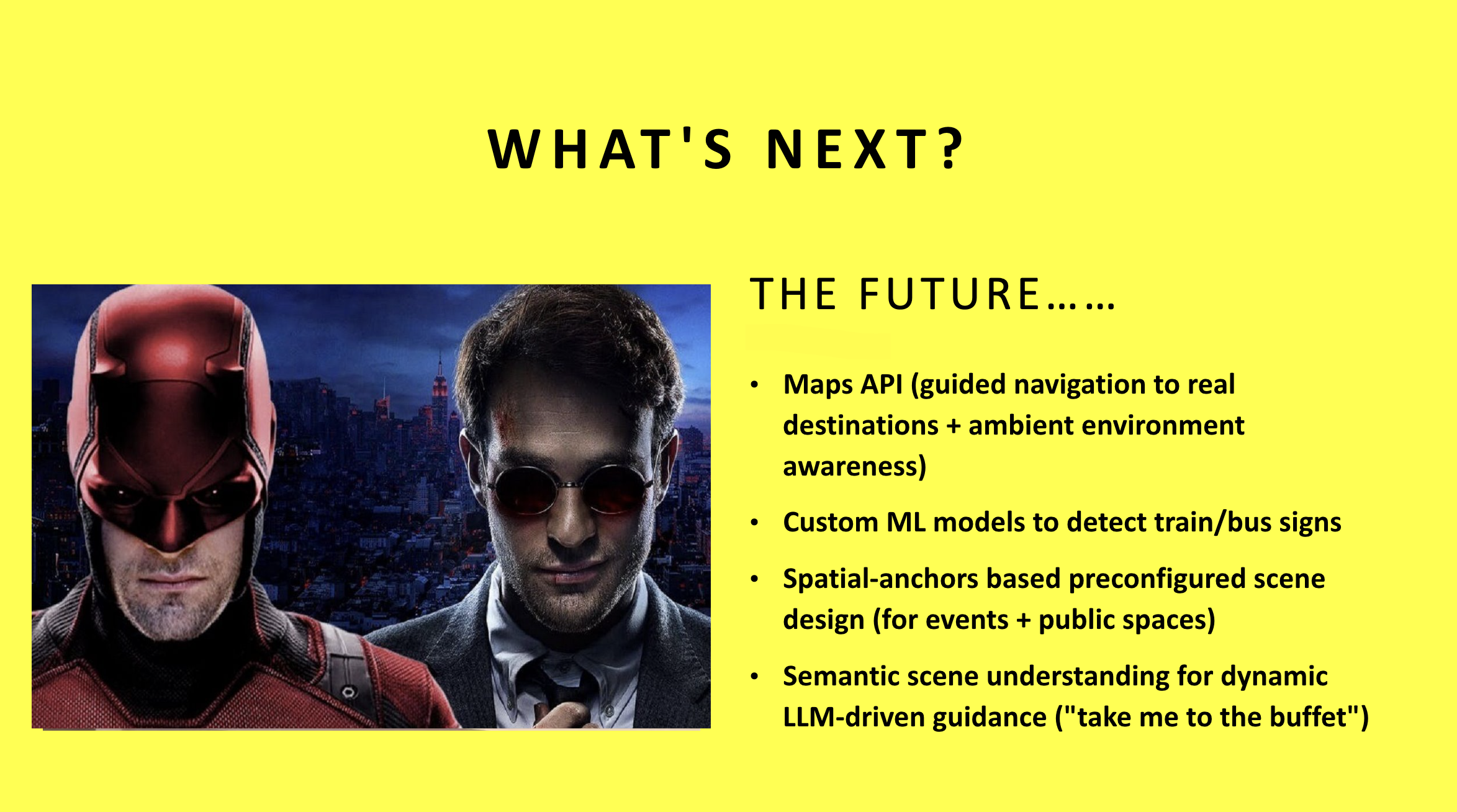
What's next for Blind Spot - We want to solve the issue of whether multiple objects be detected at one go? we want to work on Blind Spot so that it can detect walkways, zebra crossings, signals.
Be able to use Google Maps API with Spectacles
Built With
- lensstudio

Log in or sign up for Devpost to join the conversation.