-
-
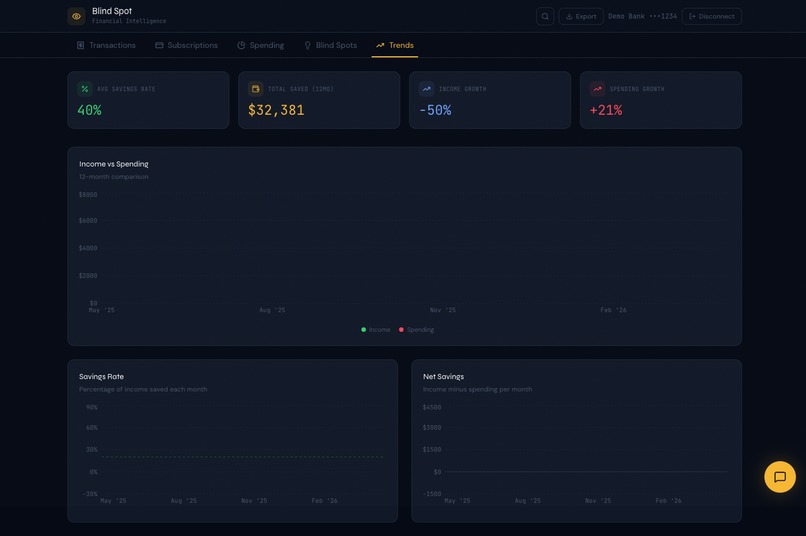
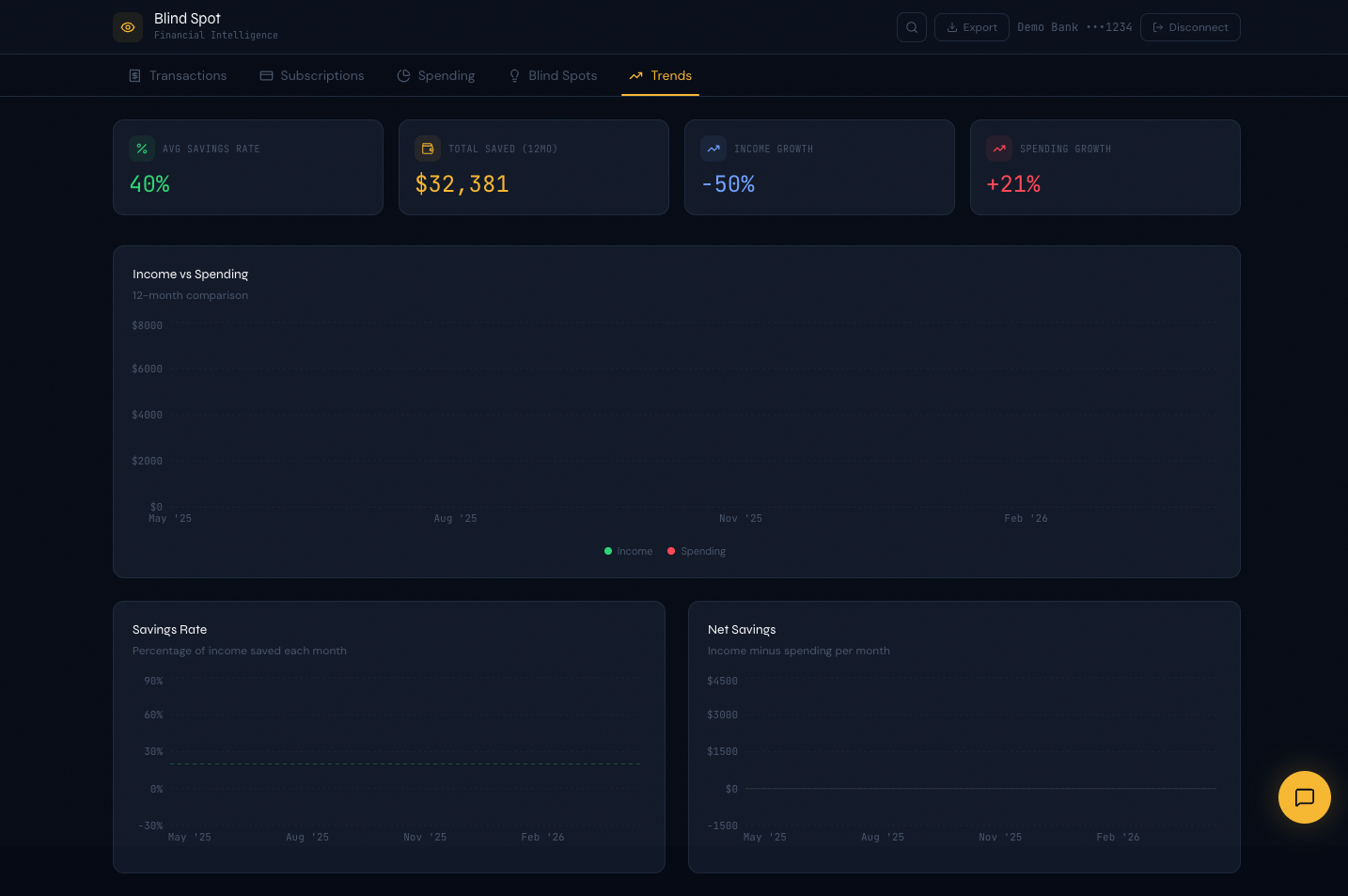
Trends
-
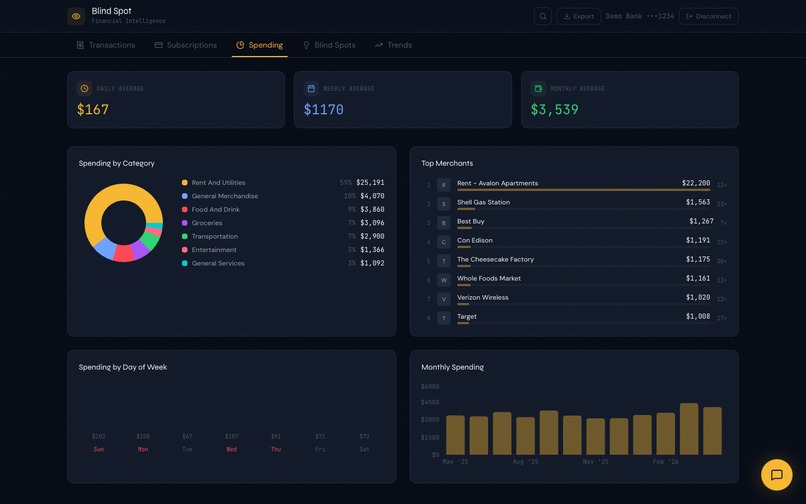
Spending
-
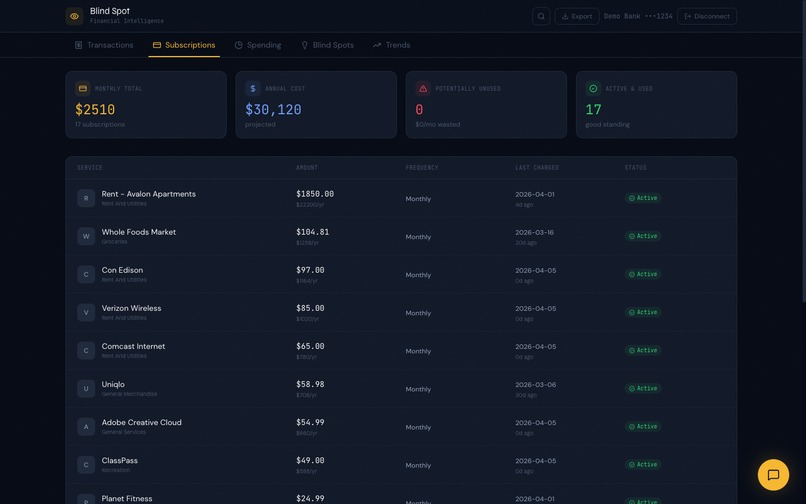
Subscriptions
-
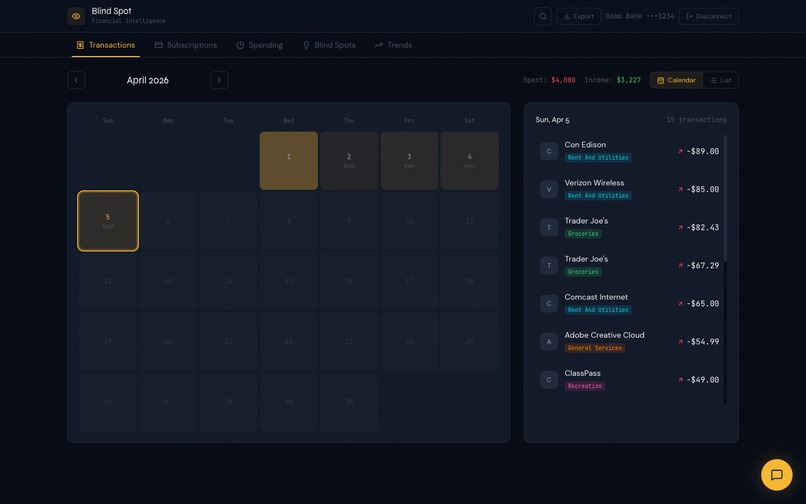
Transcations calendar
-
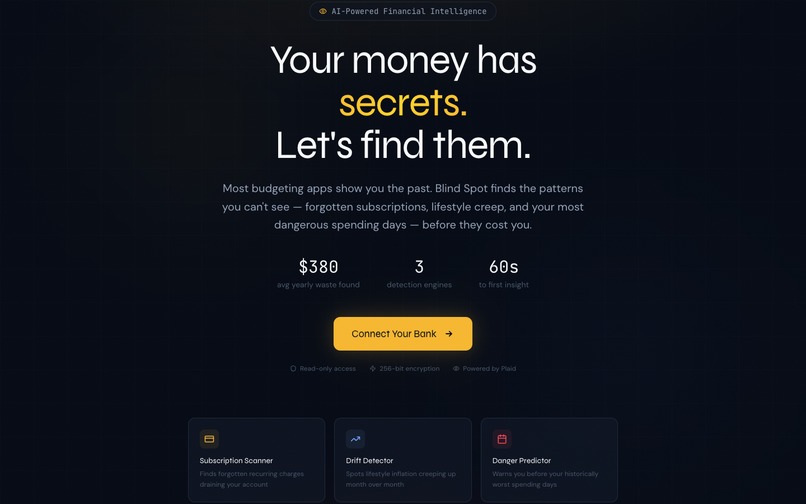
Landing page
-
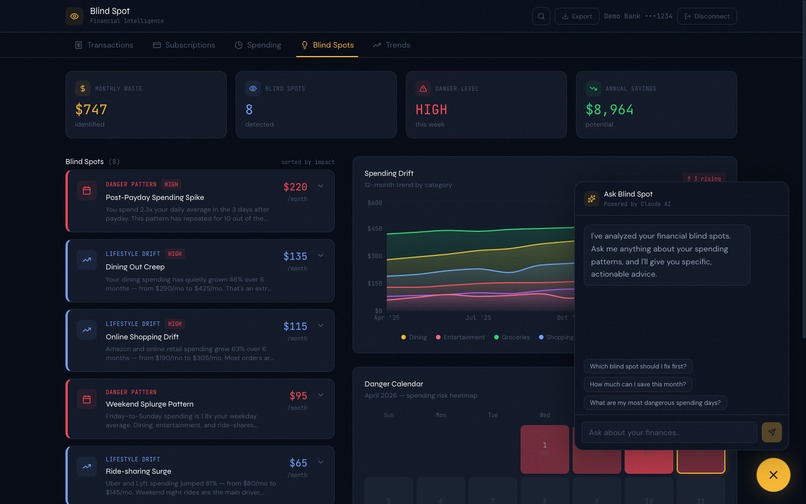
AI Chat
-
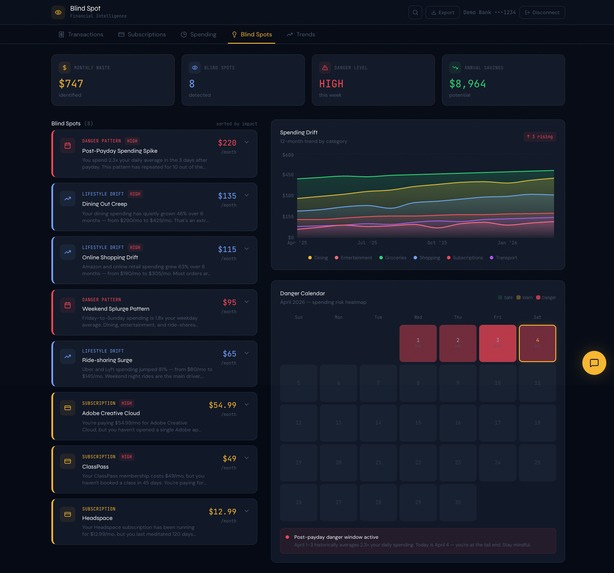
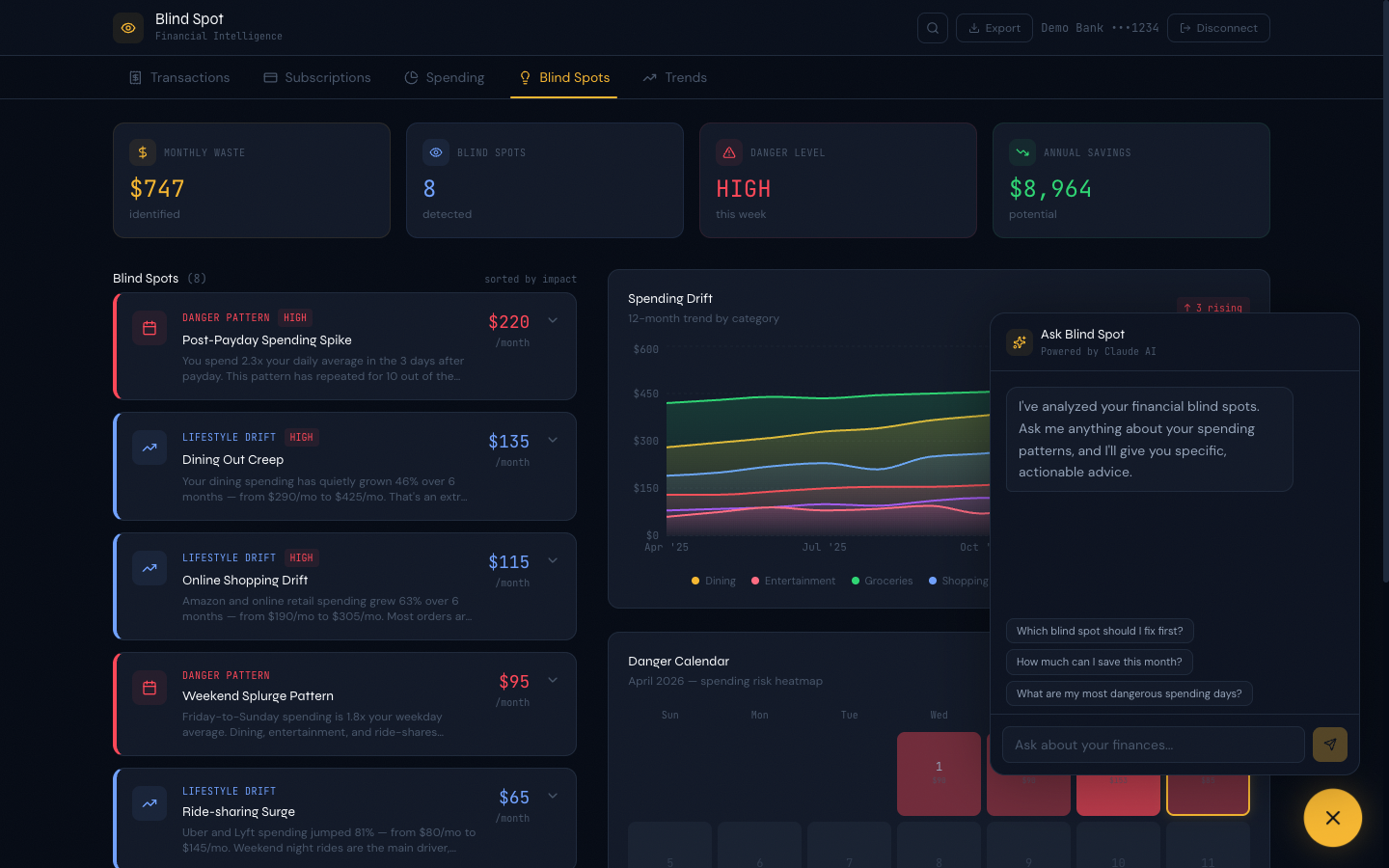
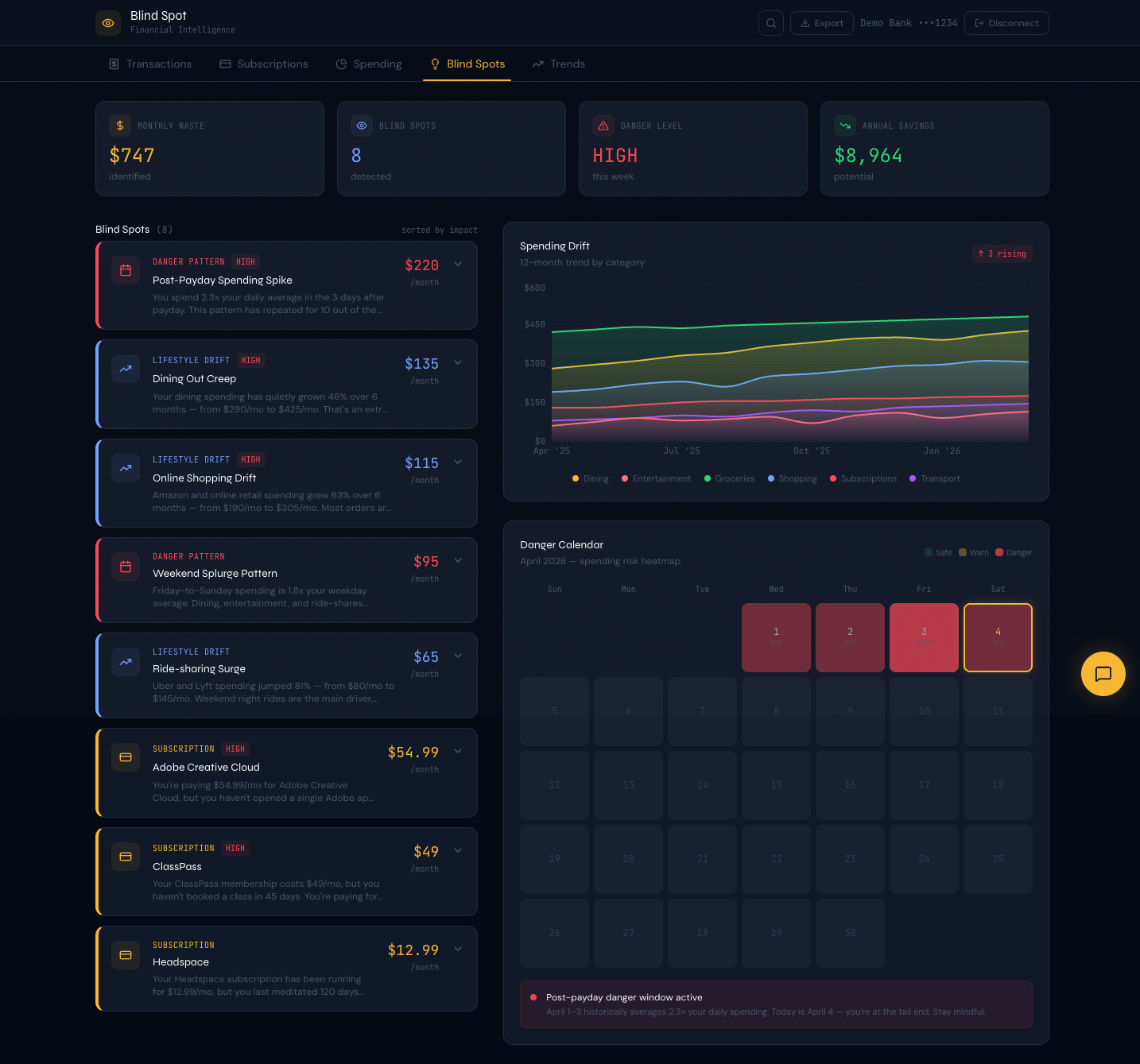
Blindspots
Inspiration
We all have financial blind spots — recurring charges we forgot about, spending categories that quietly crept up 40% over six months, or the fact that we blow through 2x our daily budget every payday
weekend. These aren't problems you can solve by "checking your bank app more often." They hide in plain sight across hundreds of transactions.
We wanted to build something that connects to your real bank data and uses AI to surface the patterns humans are bad at spotting.
## What it does
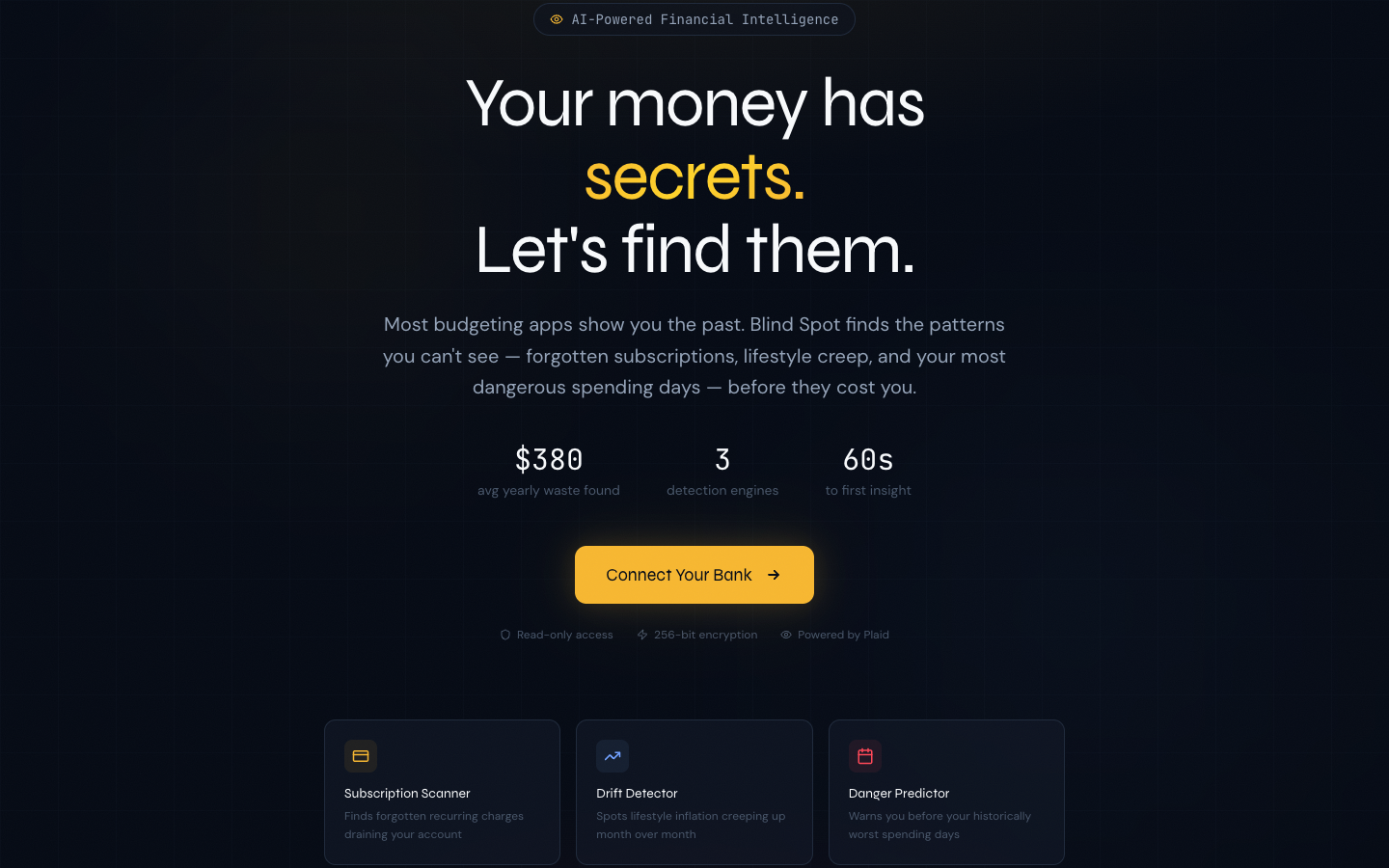
Blind Spot connects to your actual bank account through Plaid and analyzes up to 12 months of transactions using three custom detection engines:
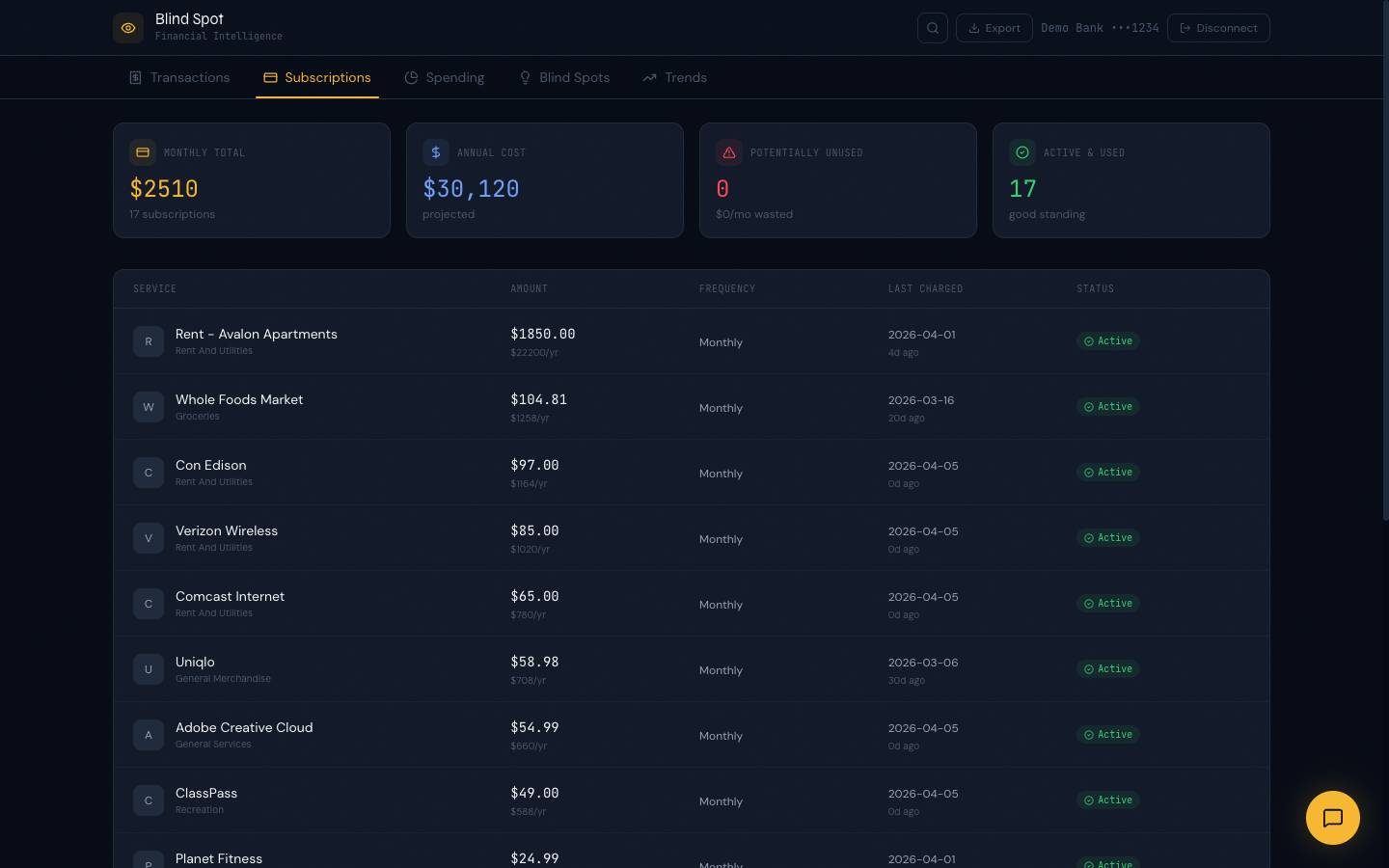
- Subscription Scanner — Finds recurring charges and flags ones you haven't used recently
- Drift Detector — Compares your spending by category over time to catch slow, invisible increases (e.g., dining up 46% over 6 months)
- Danger Period Predictor — Identifies when you overspend (post-payday spikes, weekend splurges) and quantifies the cost
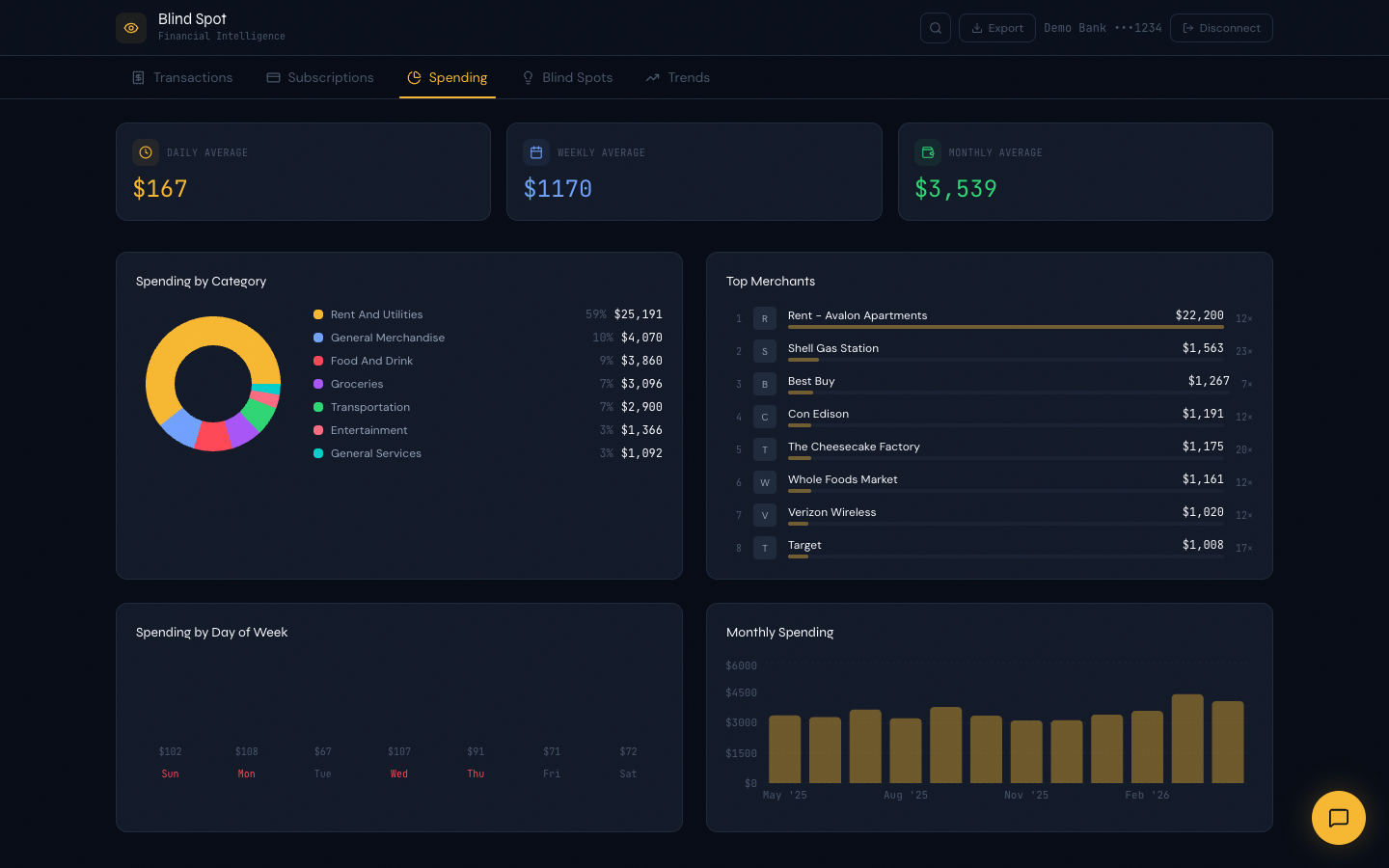
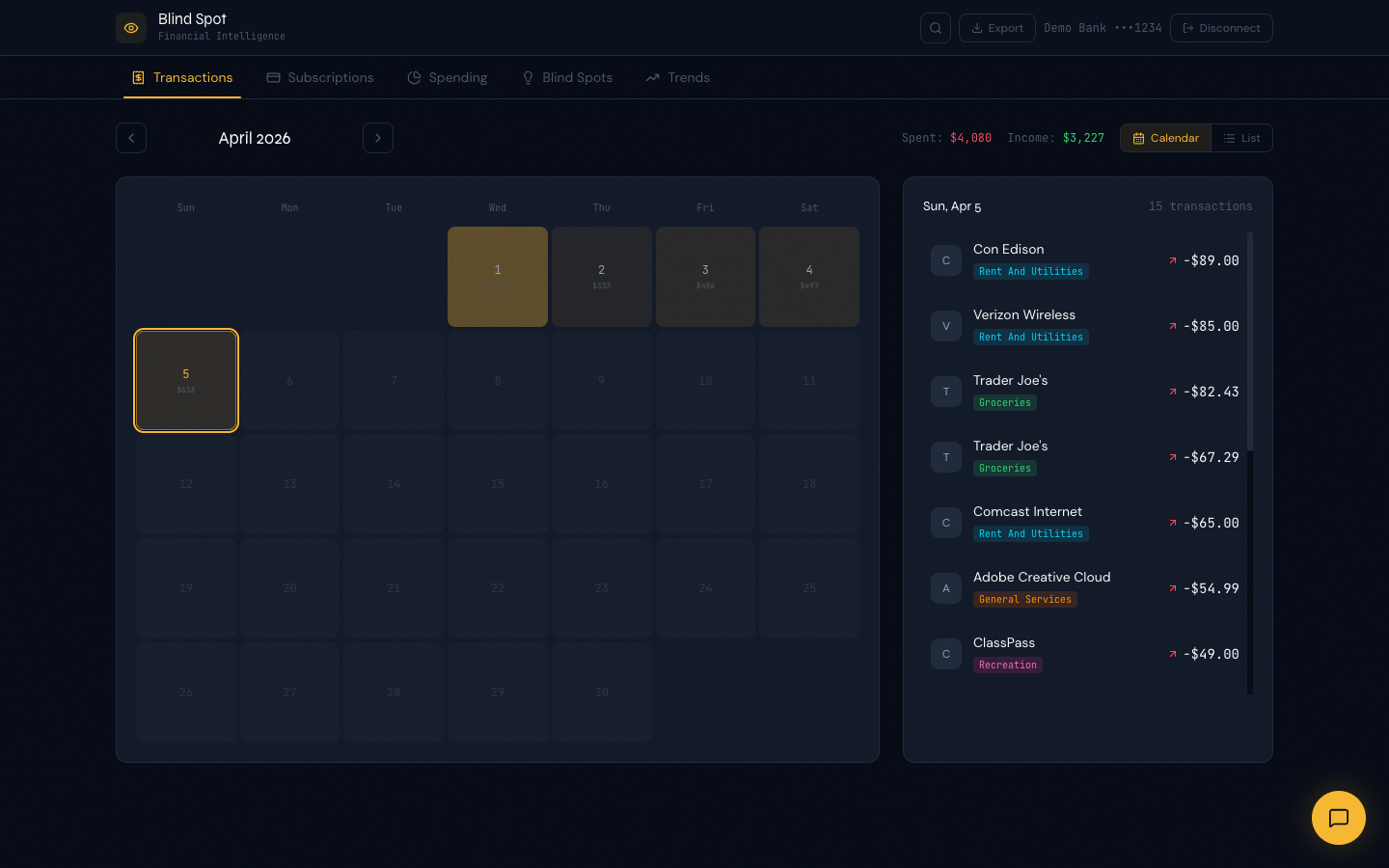
The results are presented in a full-featured dashboard with 5 tabs: Transactions (calendar + list view), Subscriptions, Spending Analytics, Blind Spots, and Trends. An AI chat coach powered by Claude
lets you ask follow-up questions like "Which blind spot should I fix first?" and get personalized, data-backed advice.
## How we built it
Frontend: React + Tailwind CSS v4 with a dark observatory aesthetic — obsidian backgrounds, gold/amber accents, and three carefully paired fonts (Syne, DM Sans, JetBrains Mono). Animations powered
by Motion (Framer Motion). Charts built with Recharts.
Backend: Express.js server integrating the Plaid API for real bank connections and Anthropic's Claude API for AI-generated insight narratives and an interactive financial coach chatbot.
Analysis Engines: Three custom algorithms that process raw transaction data — pattern-matching recurring charges by merchant/amount consistency, comparing category spending across time windows to
detect drift, and mapping spending multipliers to calendar patterns.
## Challenges we faced
- Tailwind CSS v4 Cascade Layers — A global CSS reset was silently overriding all Tailwind utility classes. Took deep debugging with computed style inspection to discover that unlayered styles beat
Tailwind's
@layer utilitiesin the cascade. - Plaid Sandbox vs Development — Our API keys were for sandbox but we initially configured the development environment, causing cryptic authentication failures.
- Making AI insights useful — Getting Claude to generate concise, non-generic financial advice required careful prompt engineering with the user's actual transaction data as context.
## What we learned
- How the Plaid API works end-to-end: link tokens, public/access token exchange, and transaction pagination
- Tailwind CSS v4's new architecture with CSS layers and the
@themedirective - Prompt engineering for structured JSON output from LLMs
- That financial blind spots are real — even our test data revealed surprising patterns
## What's next
- Budget goal setting with per-category limits and progress tracking
- Monthly financial report cards with shareable summary images
- 50/30/20 rule analysis (Needs/Wants/Savings)
- Spending predictions based on current pace vs. historical data
Built With
- anthropic
- claude-api
- express.js
- framer-motion
- javascript
- node.js
- plaid-api
- react
- recharts
- tailwind-css
- vite

Log in or sign up for Devpost to join the conversation.