-
-
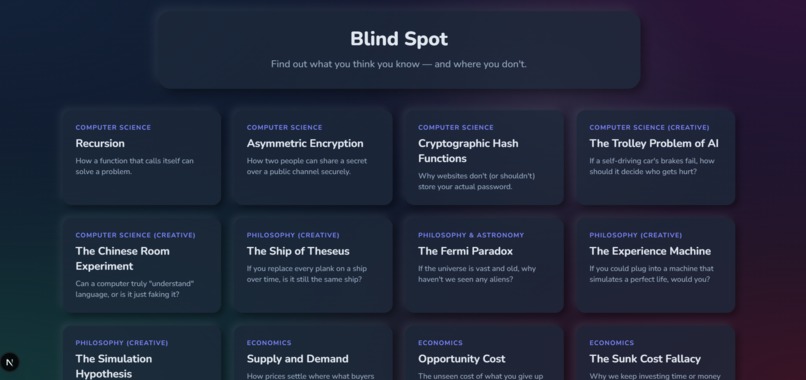
Blind Spot- An Ai tutor
-
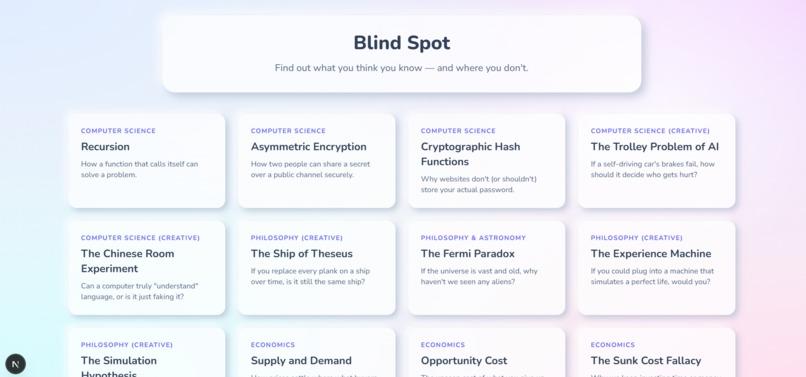
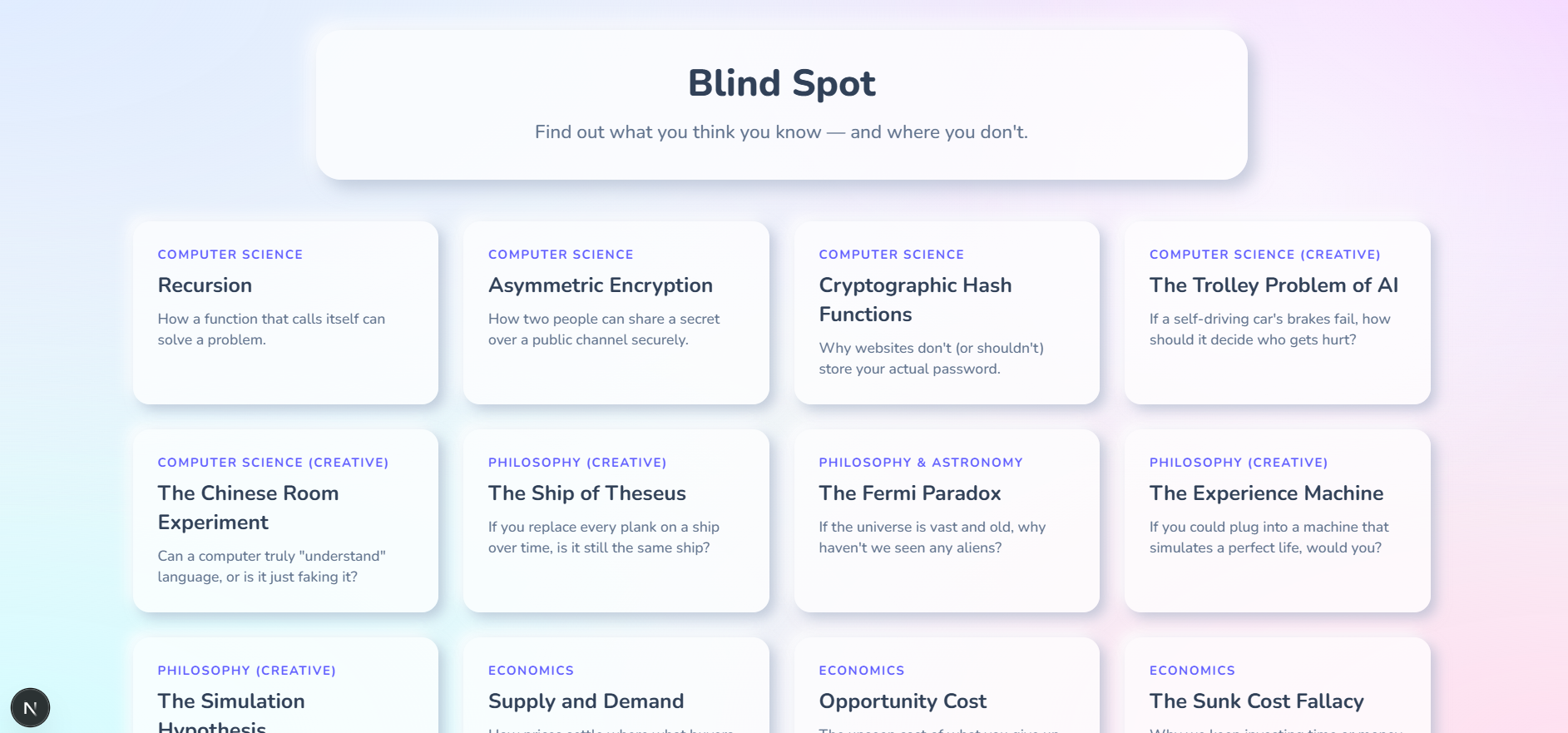
Light Mode
-
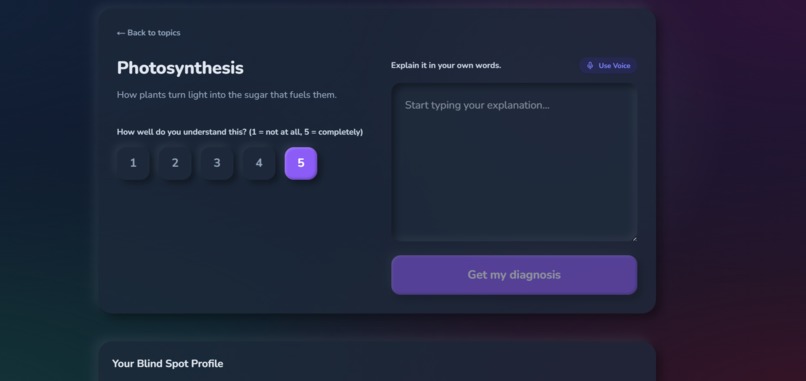
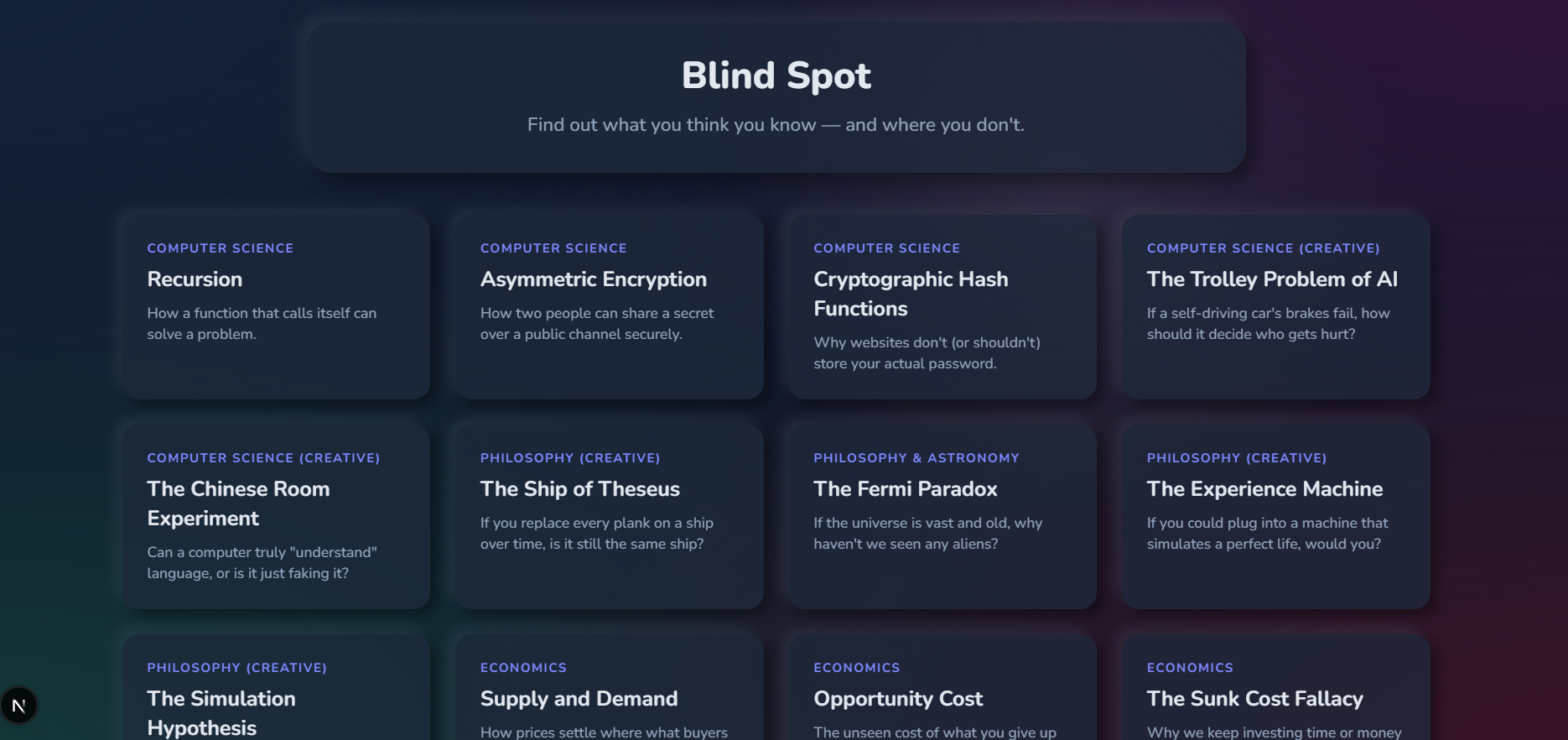
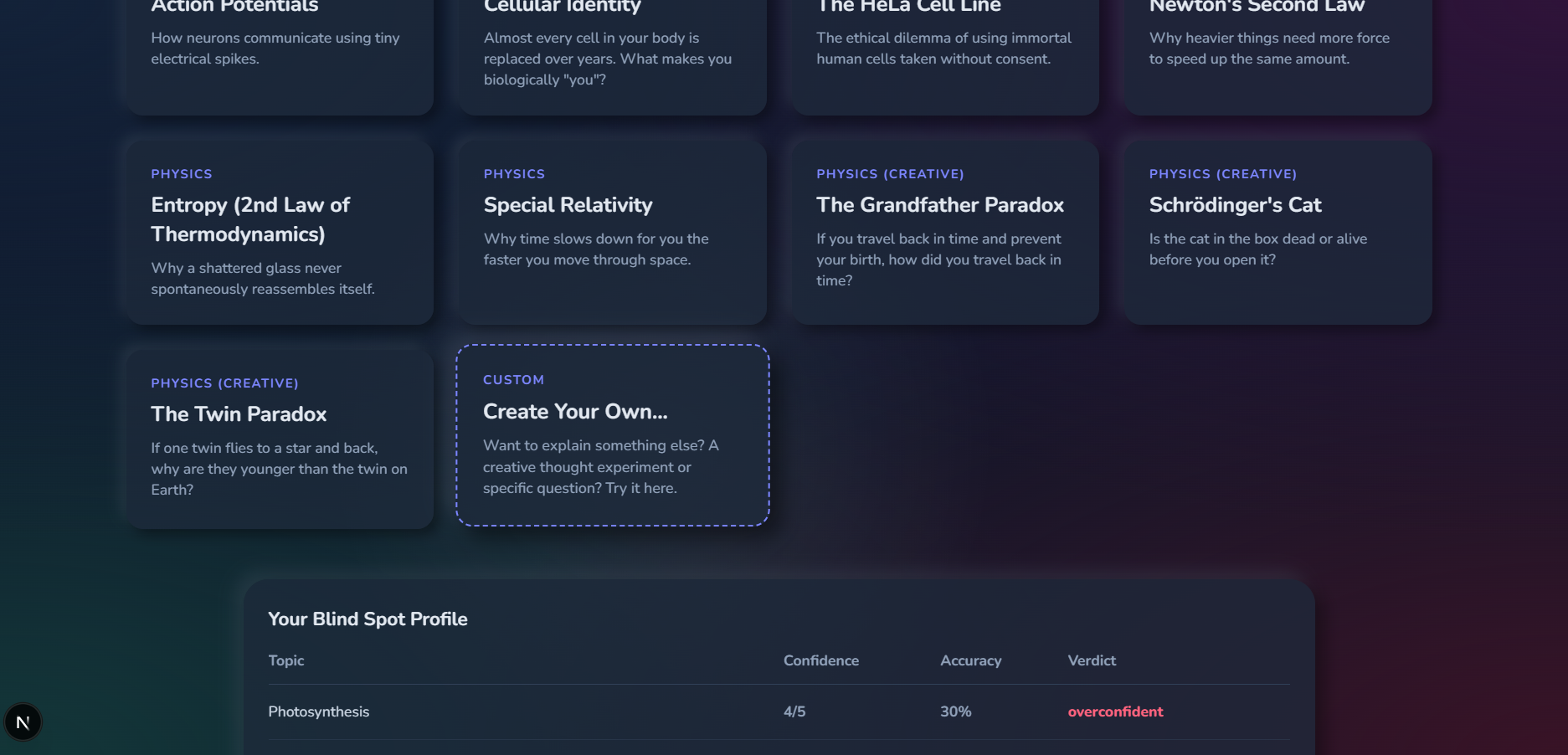
Select the topic and give your answer
-
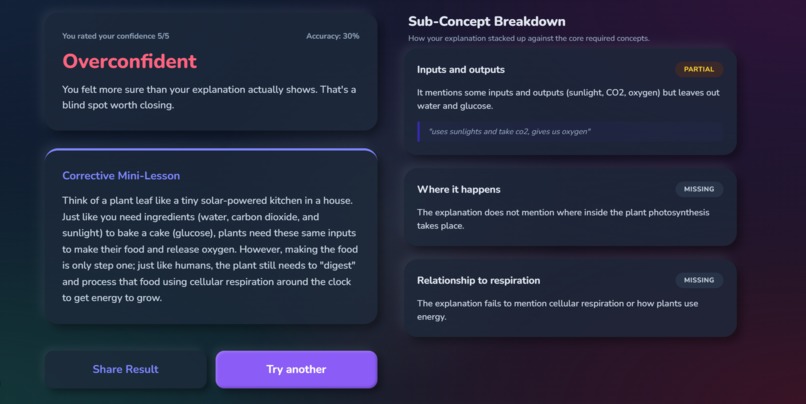
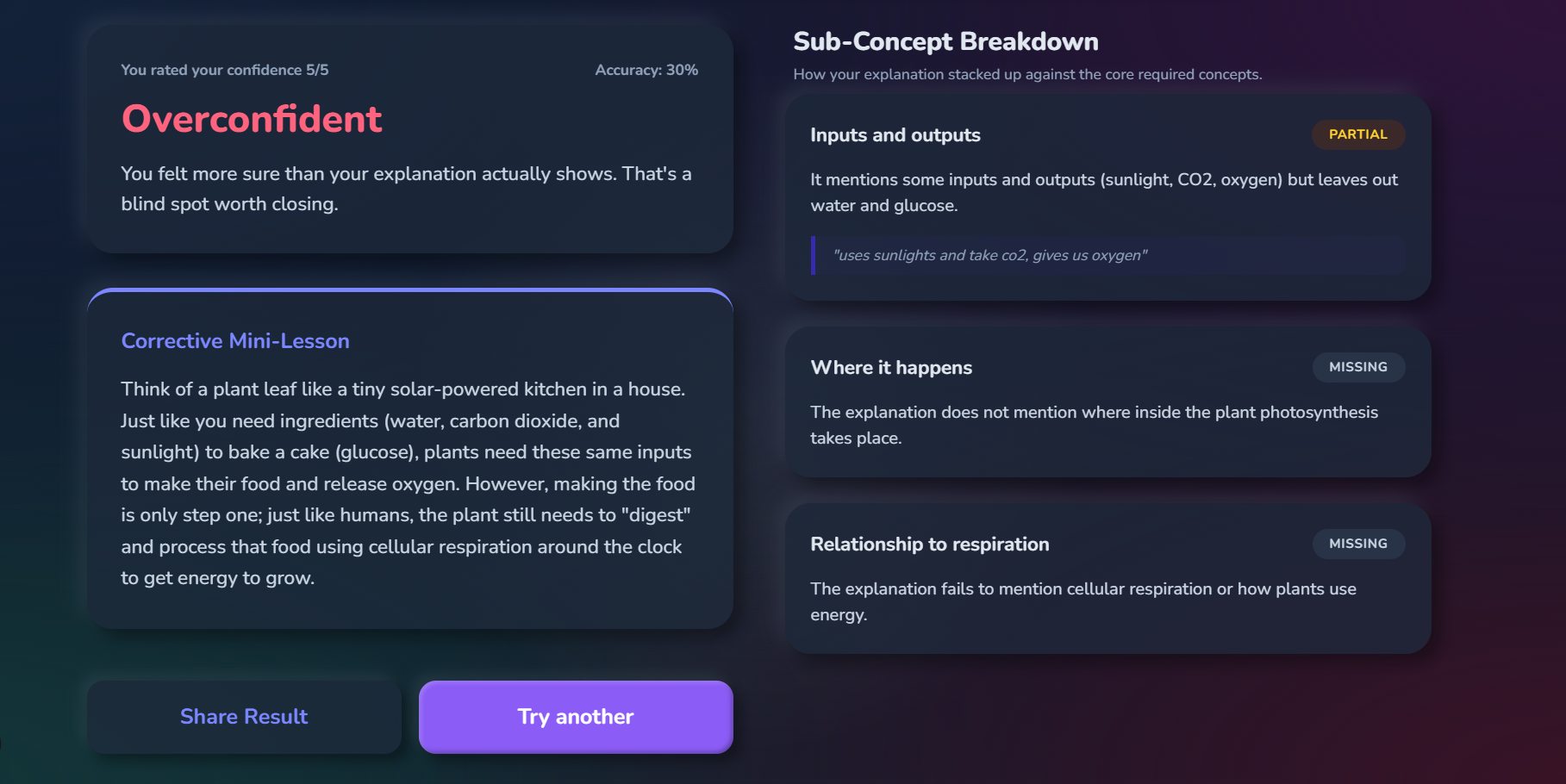
Ai evaluator, gives you mini lesson, and missing/partial word or phrases
-
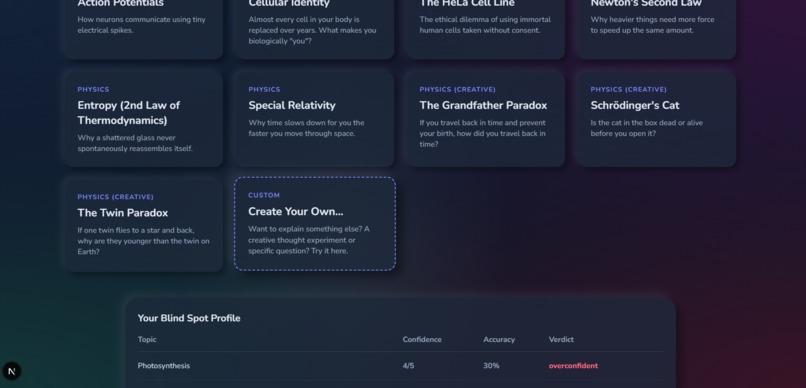
Custom your own question
-
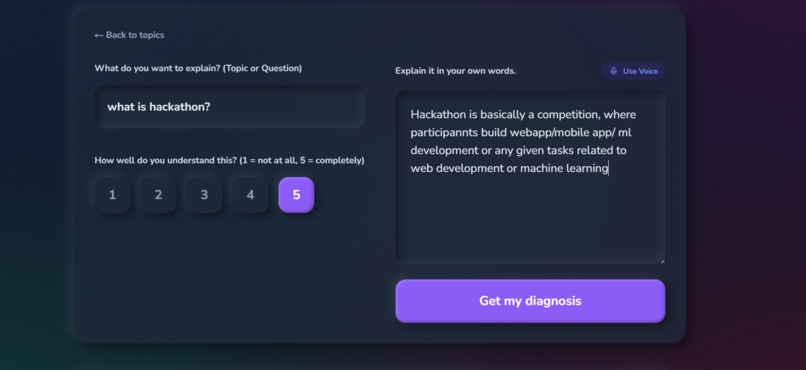
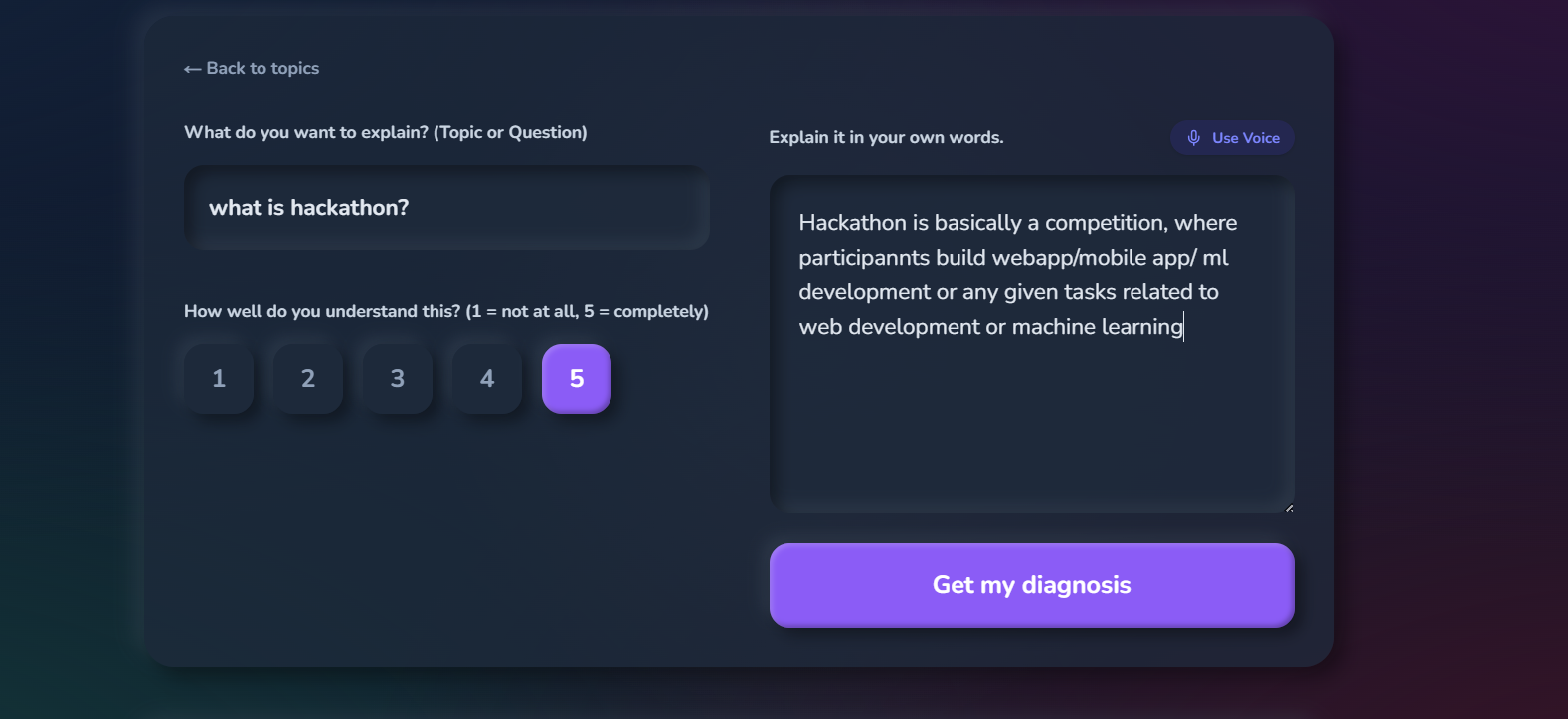
Give answer to the custo questions
-
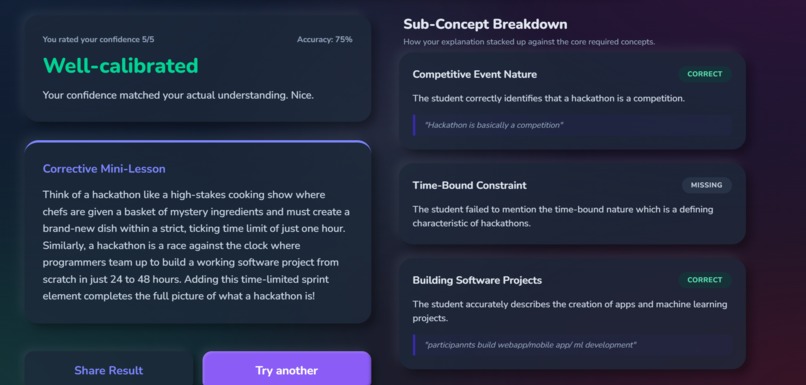
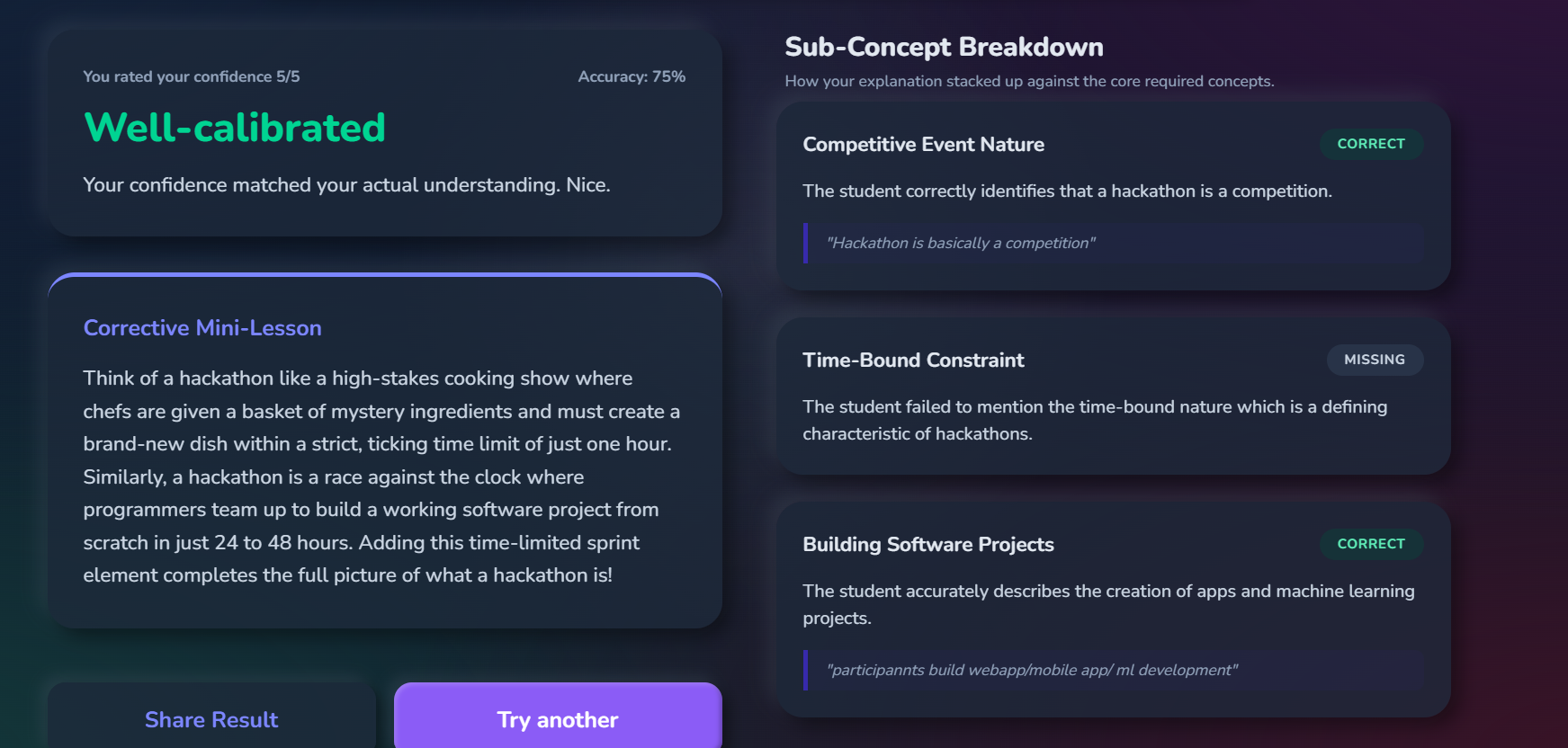
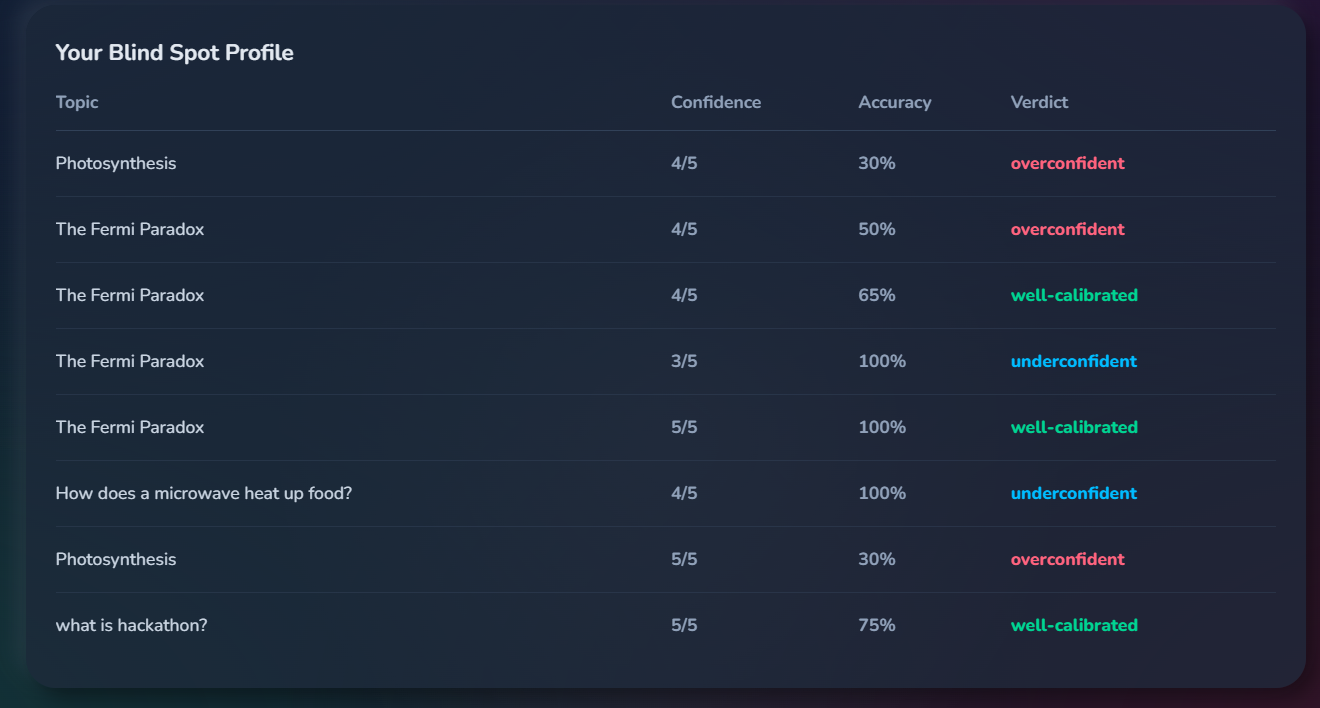
Well-calibrated result
-
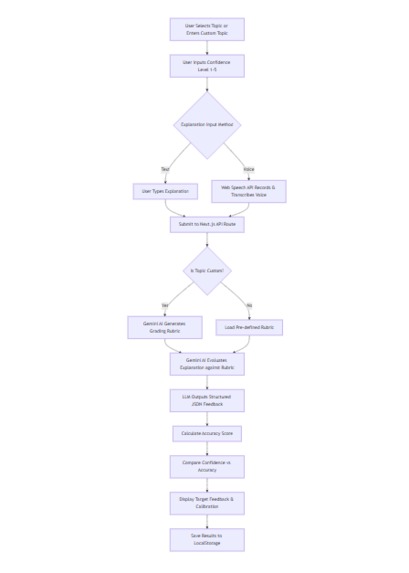
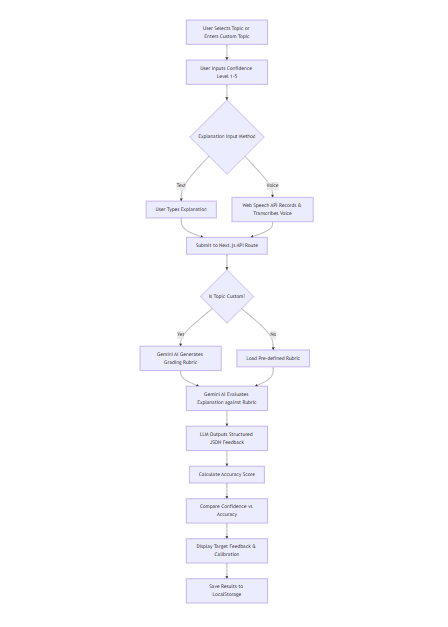
Pipeline
-
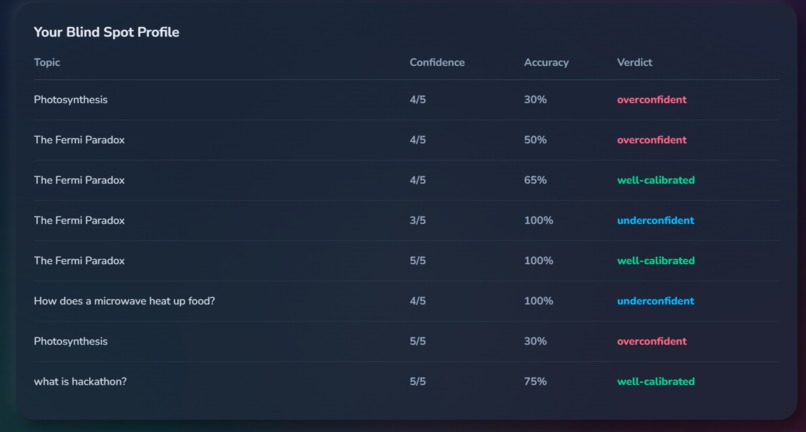
Blind Spot history
Inspiration: The "Illusion of Competence"
It's a trap almost every student falls into-you read a textbook, watch a video lecture, or review your notes, and you feel like you completely understand the material. But the moment you sit down for the exam and have to explain it from scratch, you draw a complete blank.
This is known as the Illusion of Competence: confusing the recognition of information with actual understanding.
We wanted to build a tool that shatters this illusion using the proven Feynman Technique. By forcing users to explain concepts in plain English, we wanted to uncover hidden weak points in their mental models before they take the test.
What it does
Blind Spot is an AI-powered educational platform that tests your true comprehension against your perceived confidence.
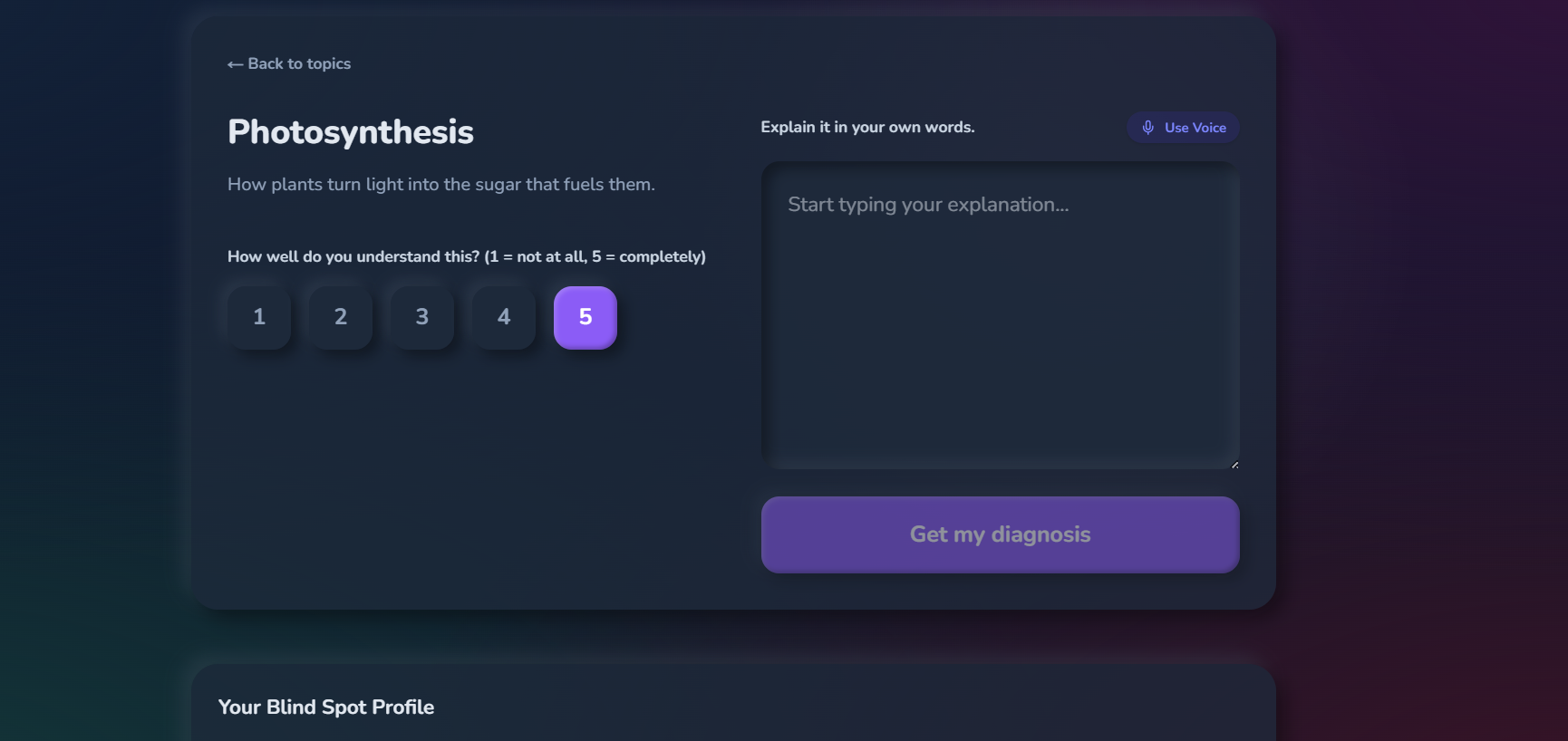
- The Feynman Test: Users select a topic (or input a custom one) and rate how confident they feel about it on a scale of 1 to 5.
- Voice-to-Text Explanations: Instead of just typing, users can use their microphone to explain the concept naturally, just like they are teaching a friend.
- Strict AI Evaluation: When submitted, the AI evaluates the explanation against a strict, 3-point hidden grading rubric to score their actual accuracy.
- Confidence Calibration: The app compares the user's self-rated confidence with their actual score to diagnose them as Overconfident, Underconfident, or Well-calibrated.
- Targeted Mini-Lessons: For the specific sub-concept the user missed, the AI generates a customized, simple analogy to fix their exact "blind spot."
How we built it
Blind Spot is a modern web application designed for a premium user experience.
- Frontend & UI: We built the app using Next.js 15 and React 19. For styling, we used Tailwind CSS v4 to create a highly responsive, custom Glassmorphism and Claymorphism aesthetic that feels tactile and engaging.
- The LLM Engine: At the core of the platform is Google's Gemini AI. However, instead of using it as a standard conversational chatbot, we engineered it as an invisible, rigorous evaluator.
- Dynamic Grading: For custom topics, Gemini dynamically generates the grading rubric on the fly. It creates the standard, and then grades the user against it.
Challenges we ran into
- Constraining the LLM: Forcing the AI to consistently output highly structured JSON against a strict hidden rubric required rigorous prompt engineering. We had to implement advanced JSON repair fallbacks in our Next.js API routes to ensure the app never broke in production.
- Evaluating Custom Questions: Evaluating completely custom, user-generated questions meant the AI couldn't rely on pre-written rubrics. We had to create a sophisticated two-step prompt system where Gemini first defines what a "correct" answer entails for a wild question, and then mathematically grades the user against its own generated standard.
- Voice Integration: Implementing seamless voice-to-text to make the experience feel natural required tapping into the Web Speech API. Managing complex React state to handle audio recording dynamically across different browsers was a significant hurdle.
Accomplishments that we're proud of
- The "Aha!" Moment: Seeing the stark visual contrast on the dashboard when a user rates their confidence a 5/5, but scores a 33% accuracy. It proves exactly why this tool is necessary!
- Dynamic Rubrics: Successfully getting Gemini to generate high-quality, 3-point rubrics for literally any custom question a user can think of, from quantum physics to pop culture.
- The Design: Achieving a cohesive, beautiful Claymorphism UI that makes an educational testing app feel playful and premium rather than stressful.
What we learned
We learned a massive amount about advanced prompt engineering—specifically, how to constrain LLM outputs for reliable, programmatic use rather than just open-ended text generation.
On an educational level, we learned how powerful metacognition and calibration are for true learning. AI shouldn't just give students the answers; it should teach them how to think and accurately evaluate their own knowledge.
What's next for Blind Spot
- Spaced Repetition Integration: Reminding users to re-explain topics where they previously showed "blind spots."
- Multi-modal Explanations: Allowing users to draw diagrams or upload images of their notes for Gemini to evaluate alongside their voice explanation.
- Teacher Dashboards: Allowing educators to assign topics and see aggregate data on where the entire class is experiencing an Illusion of Competence.
Built With
- claymorphism
- css3
- eslint
- gemini-api
- glassmorphism
- google-gemini
- html5
- javascript
- localstorage
- next.js
- npm
- postcss
- prompt-engineering
- react
- tailwind-css
- typescript
- vercel
- vitest
- web-speech-api


Log in or sign up for Devpost to join the conversation.