Inspiration✨
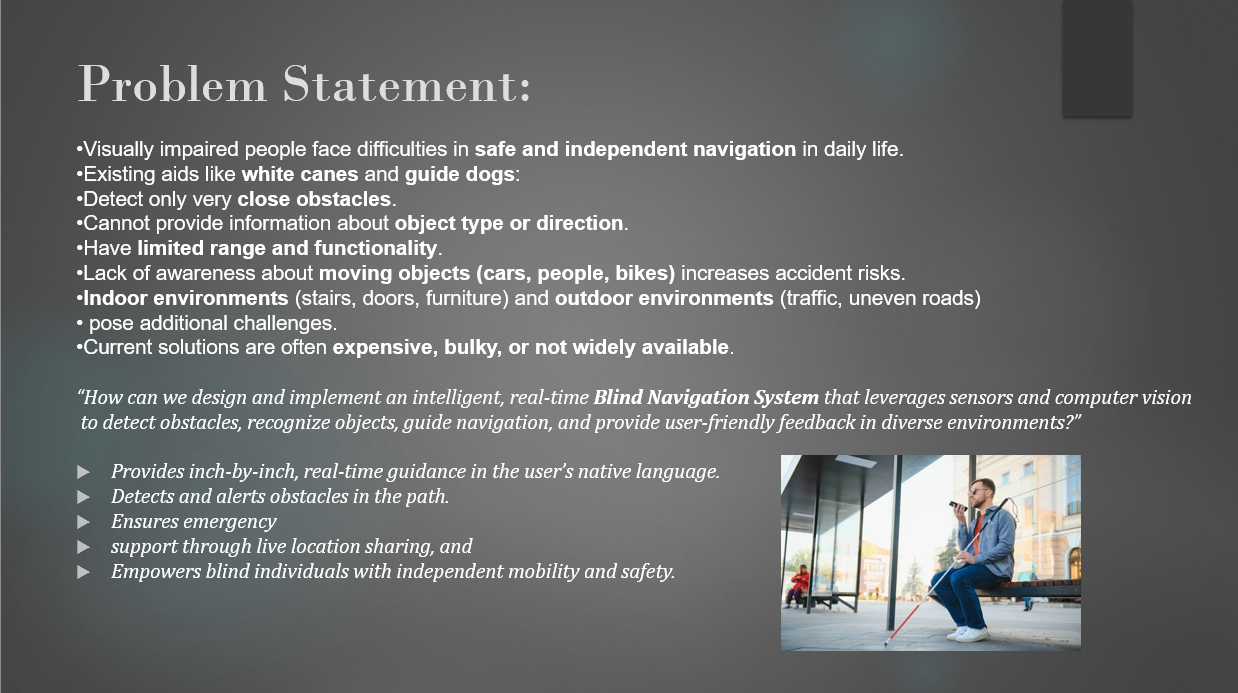
The inspiration behind our project came from observing the daily struggles faced by visually impaired individuals. Navigating unfamiliar environments without assistance is not only challenging but also unsafe. We wanted to create a system that empowers them to move independently with the help of modern technology.
📖 What We Learned
Through this project, we explored various concepts such as:
Integration of Google Maps API for real-time route guidance.
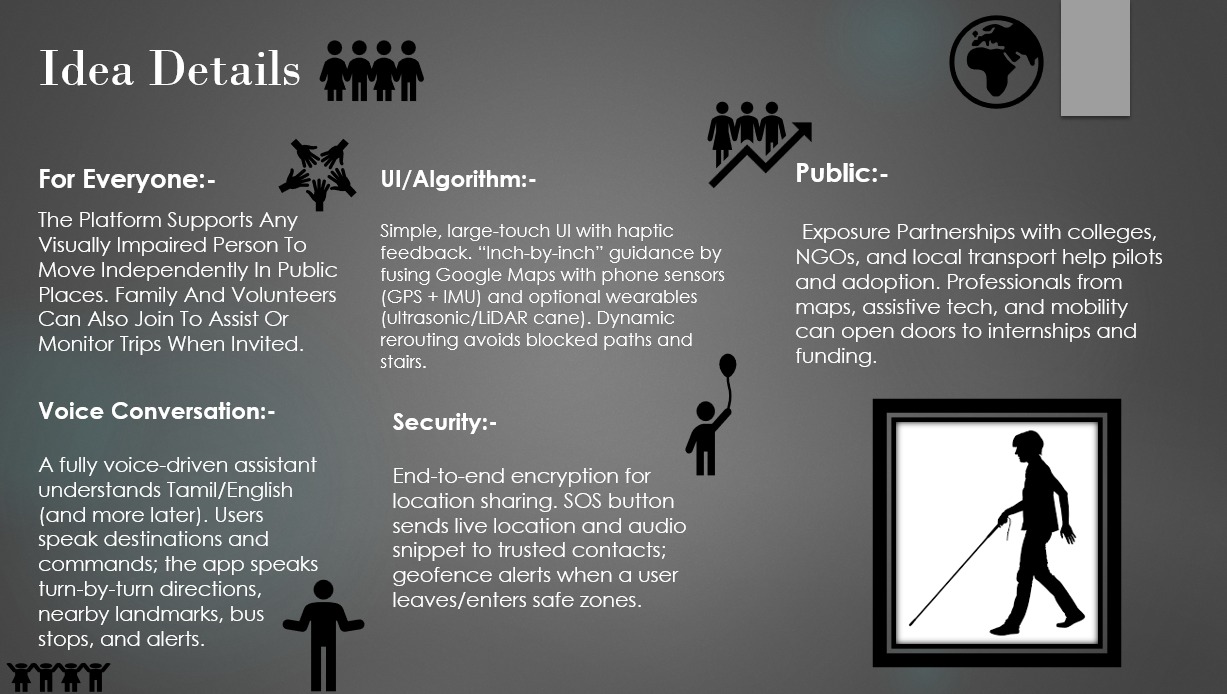
Speech recognition and text-to-speech conversion to ensure the user can interact naturally with the system.
Sensor-based obstacle detection (e.g., ultrasonic sensors) to provide inch-by-inch movement guidance.
Application of algorithms like shortest path calculation using graph theory:
D_{min}(u, v) = \min \sum_{i=1}^{n} w(e_i)
where is the shortest distance between nodes and , and is the weight of each edge.
This gave us insights into both hardware-software integration and human-computer interaction.
🔧 How We Built It
Research & Planning: Studied existing navigation aids for the blind and identified gaps.
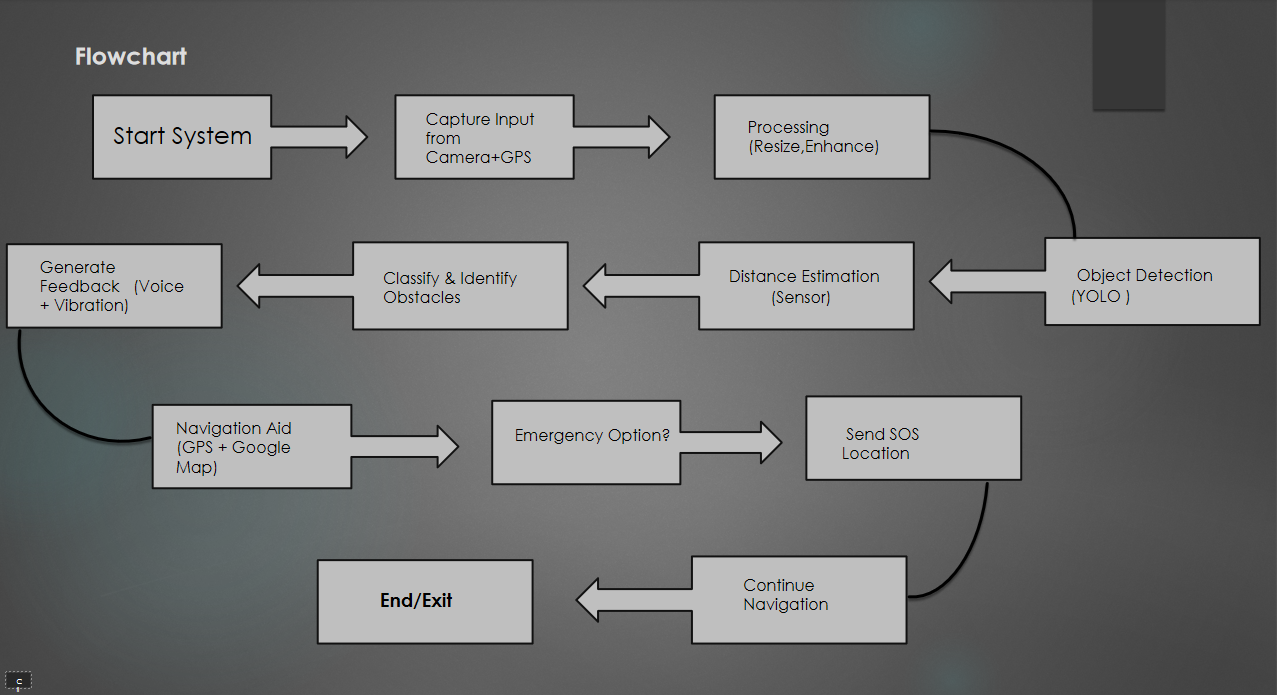
Design: Created a flowchart and architecture diagram to map the data flow between sensors, voice system, and Google Maps API.
Implementation:
Used a mobile application linked with Google Maps.
Added voice input so the user can simply speak their destination.
Output is provided via voice guidance in the user’s native language.
Obstacle detection integrated to ensure safety while walking.
- Testing: Tried different routes and obstacle scenarios to check system accuracy and usability.
🚧 Challenges Faced
Voice Accuracy: Ensuring the app understands commands in different accents and languages.
Real-Time Processing: Handling delays in GPS and sensor data updates.
Battery Optimization: Reducing power consumption of sensors and GPS while keeping the system active.
User Adaptability: Making the system simple enough for visually impaired users to adopt without difficulty.
🌍 Impact
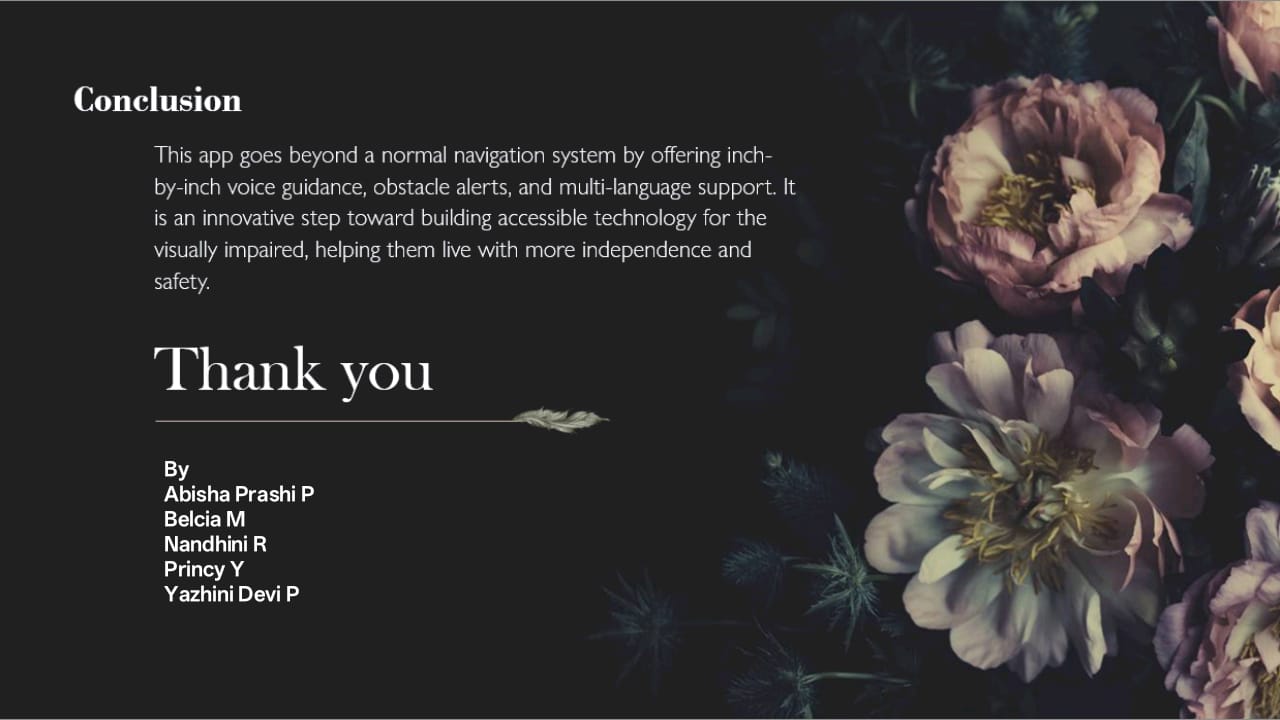
Our Blind Navigation System is designed not just as a project but as a real-world assistive technology that can enhance independence, safety, and confidence among the visually impaired community.
Built With
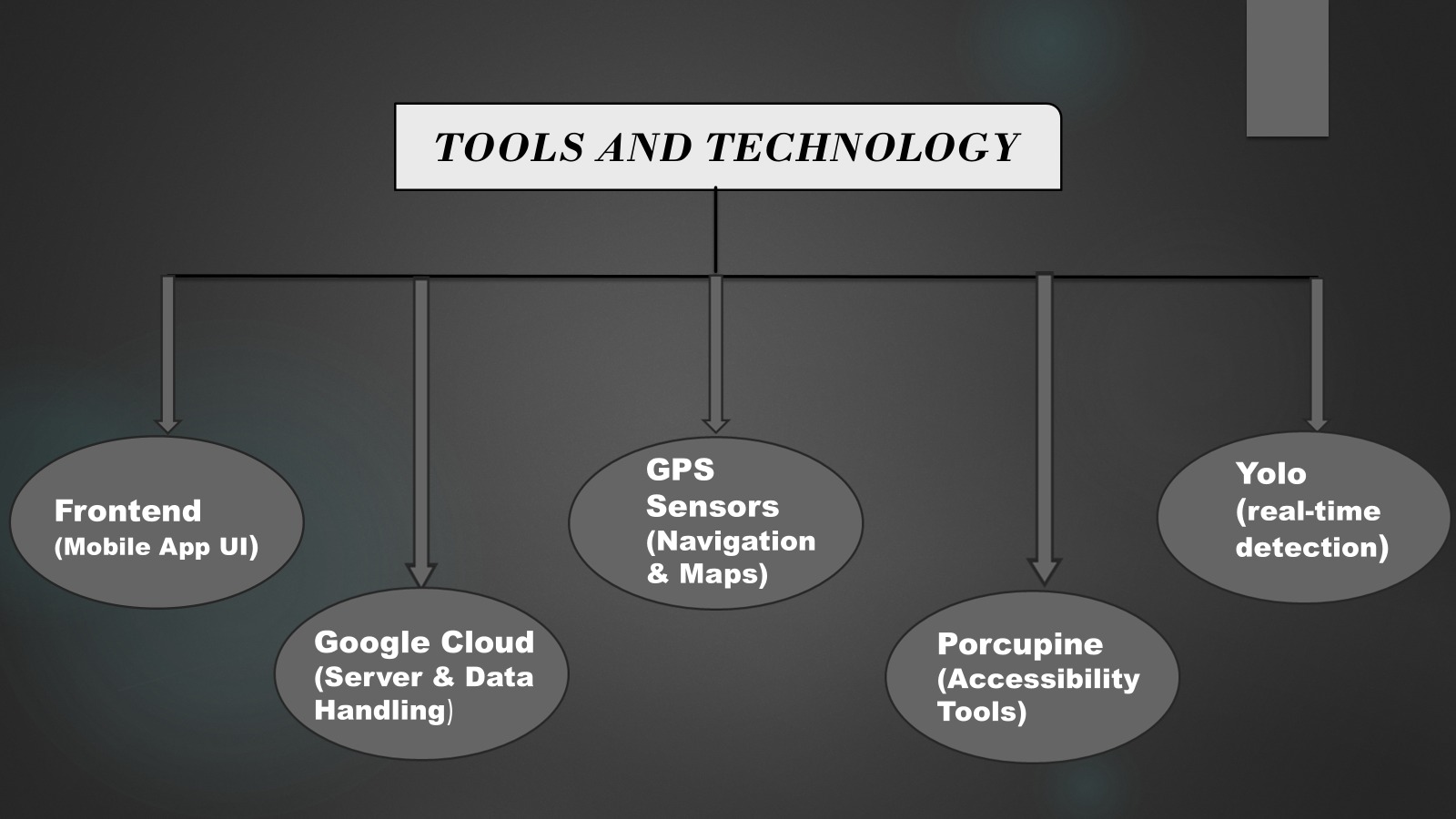
- android-studio-(for-app-development)-platforms:-google-maps-api
- cloud-storage)-databases:-firebase-realtime-db-/-sqlite-apis:-google-maps-api
- gps-services
- java
- kotlin-(for-mobile-app)-frameworks:-flask/django-(backend)
- languages:-python
- real-time-database
- speech-to-text-and-text-to-speech-apis-cloud-services:-firebase-(for-authentication
- voice-recognition-api


Log in or sign up for Devpost to join the conversation.