-
-
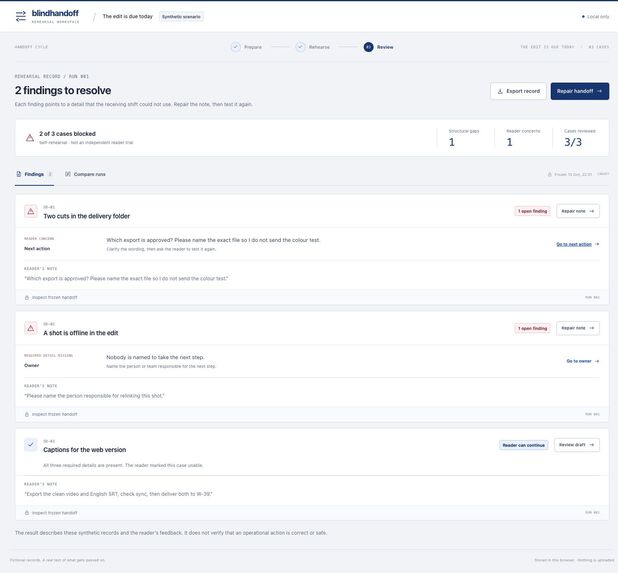
First self-rehearsal: one missing field and one reader concern. Fictional exercise.
-
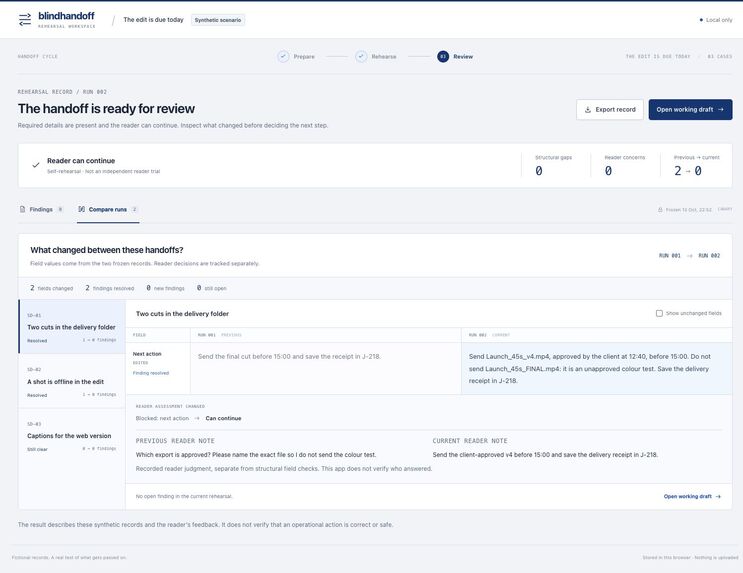
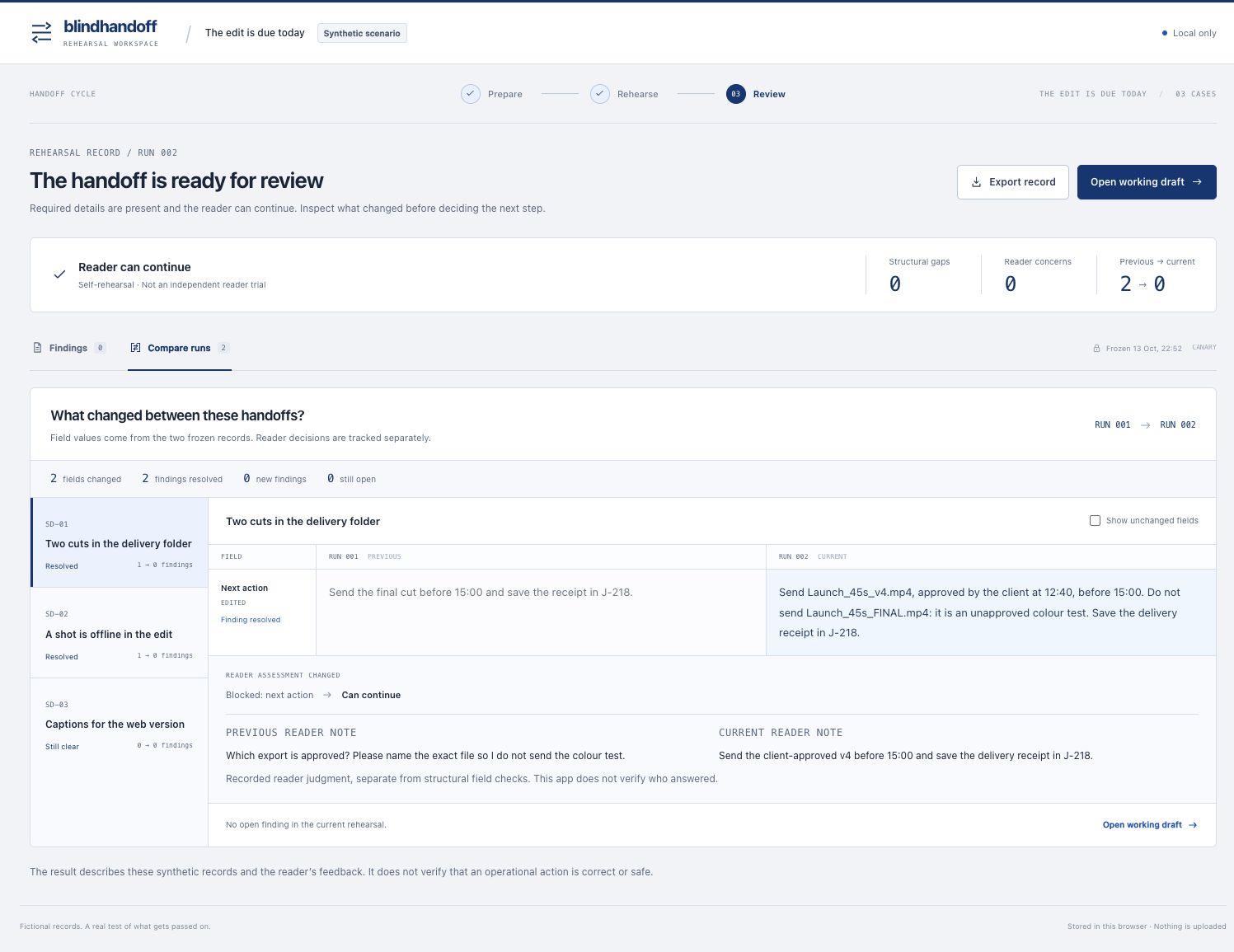
Compare the exact before-and-after wording while preserving both attempts. Fictional exercise.
-
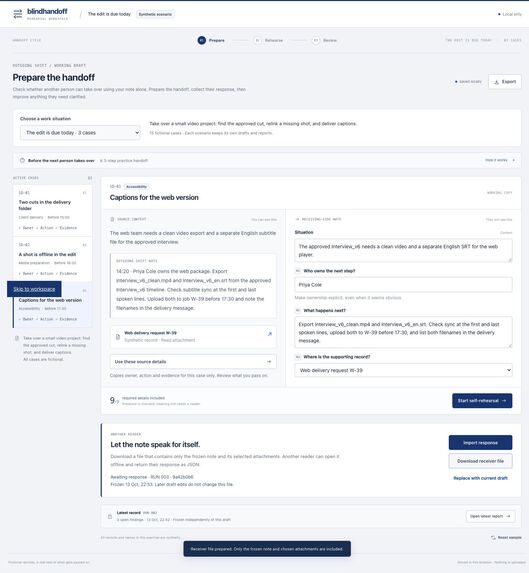
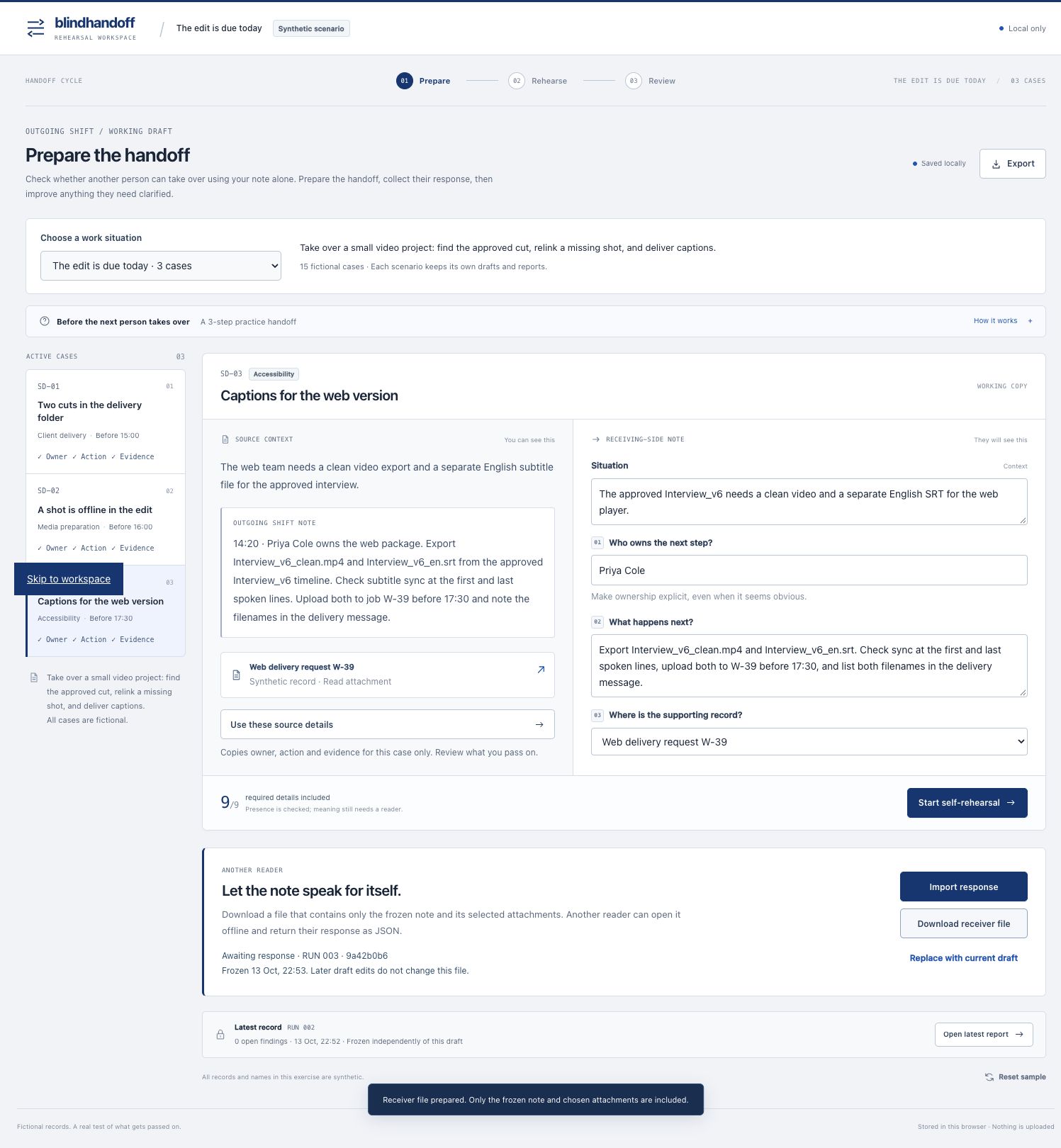
A frozen note packet for a separate reader, awaiting its matching response. Fictional exercise.
Inspiration
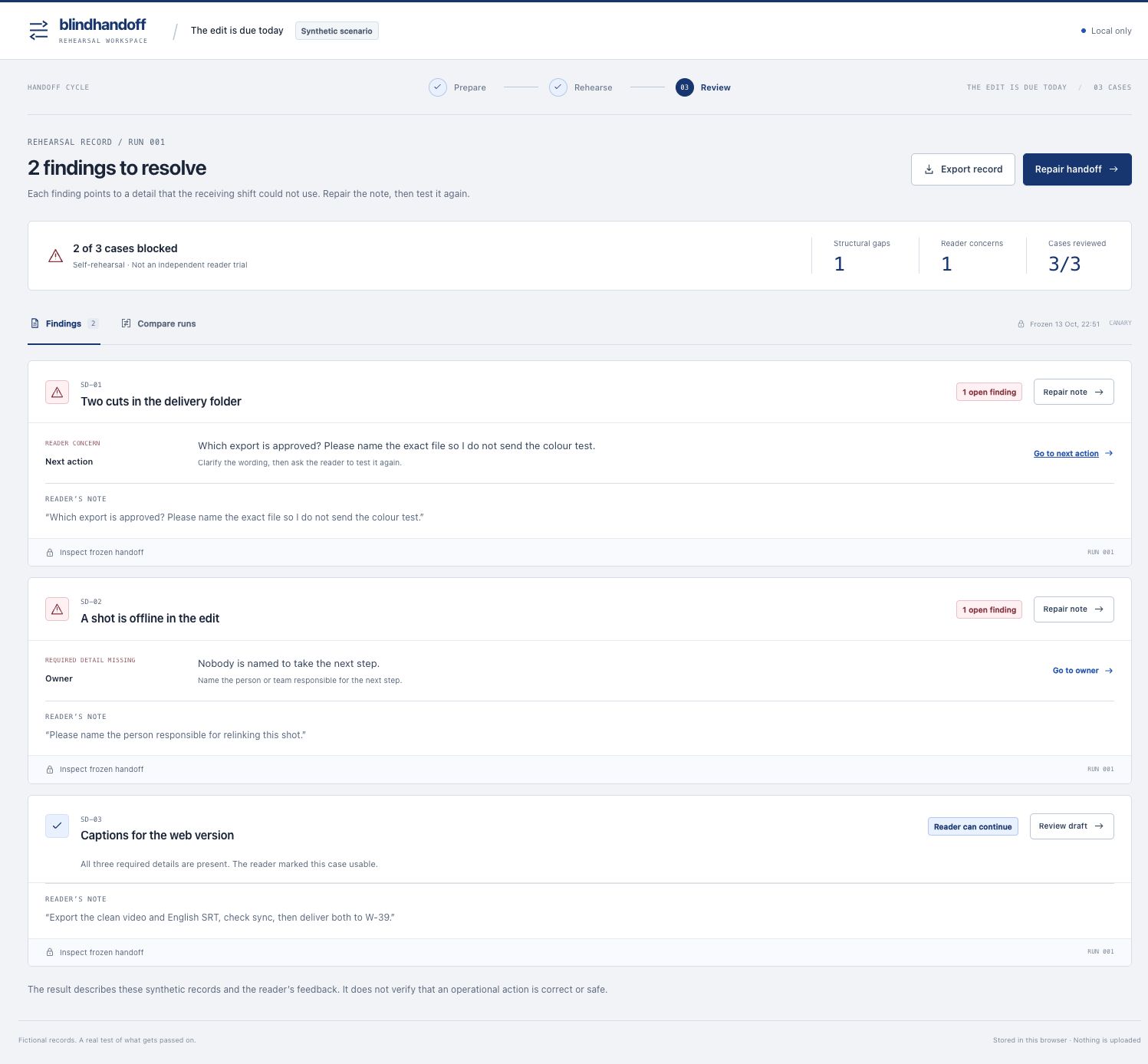
Two video exports sit in a delivery folder. One is called FINAL. The other is the version the client actually approved. The handoff says: “Send the final cut before 15:00.”
The owner is named. The deadline is there. Every field can be filled in, and the next person can still be left guessing. Blind Handoff is a practice space for that moment: can someone continue the work using only the note they receive?
What it does
Choose one of five work situations and prepare three handoff notes from fictional source records. Read a frozen copy with the source panels hidden, record what needs clarification, repair the note, and compare the two attempts.
The report separates missing fields from concerns raised by the reader. The comparison preserves the original wording, the revised wording and both reader comments. A completed run stays unchanged when the working draft is edited.
The library contains 15 fictional cases across creative work, video delivery, software support, bookings and studio maintenance. Some notes are incomplete, some are ambiguous despite having every field filled in, and some are already actionable.
For a separate reader, the app exports a standalone HTML file containing only the frozen notes and selected attachments. It then checks the returned JSON response against the exact file that was sent. This prevents version mixups; it does not verify the reader’s identity.
How it was built
Blind Handoff uses JavaScript, HTML and CSS with a small Node.js server. It runs locally without installing packages, supplying API keys or paying for a service. Drafts and reports are saved in the browser, separately for each scenario.
Development used AI coding assistance and the official Devpost Learn Skill Pack. The repository includes the scope, PRD, technical spec and a record of how the pack was used. The workflow was adapted; it is not presented as completion of every curriculum checkpoint. No AI model runs inside the product. Software checks fields and record references; people judge meaning.
A technical challenge
The note being edited and the note a reader reviewed must remain distinct. The implementation freezes each attempt, preserves earlier records and rejects returned responses that do not match the pending handoff. Forty automated tests cover these rules, scenario isolation, persistence, the receiver file and the local HTTP boundary.
What I learned
In the two-file exercise, I would ask Clara which version had actually been approved instead of trusting the filename. That became my clearest lesson: a handoff needs enough evidence for the next person to act, not just an owner and a deadline.
Current scope
This is a working local prototype with fixed fictional exercises. The video is an illustrative self-rehearsal, not an independent user study or evidence of improvement in real work. The authoring flow and response import were checked in the browser; the standalone receiver script has automated coverage, while manual browser use of that file remains unverified.

Log in or sign up for Devpost to join the conversation.