-
-
Home
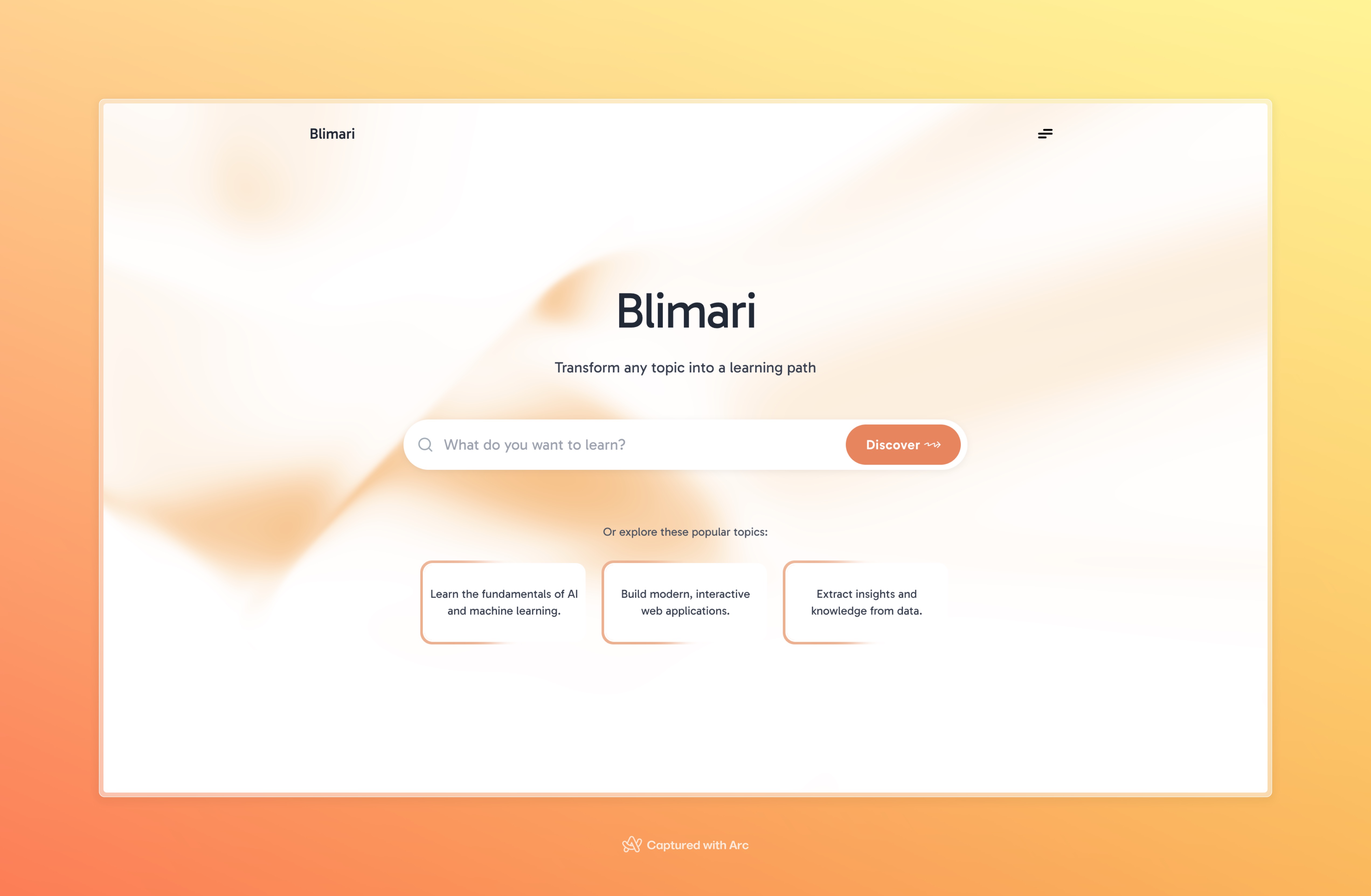
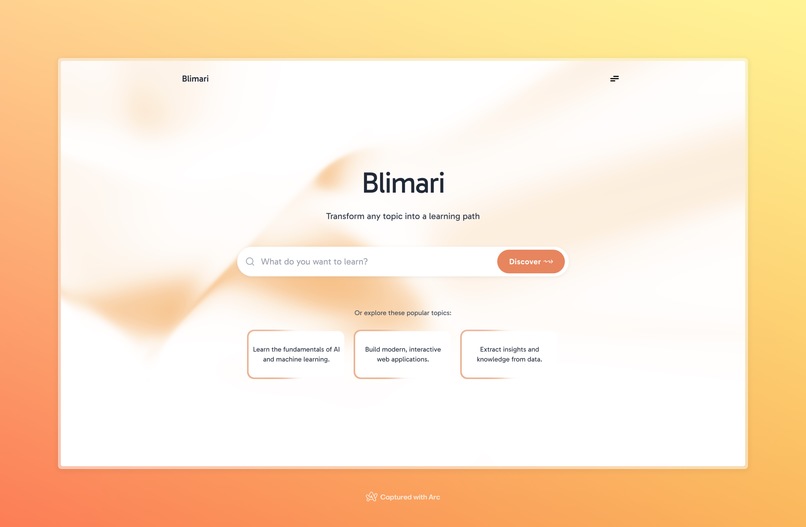
Online learning is often overwhelming and generic. Many learners abandon courses because they cannot see themselves in the content. I wanted to solve this by asking: what if learning could feel personal, cultural, and effortless? That question inspired Blimari.
Blimari is a platform that turns any learning goal into a structured journey in just a few minutes. The process is simple: the learner writes what they want to study, the AI generates guiding questions, and Qloo’s cultural intelligence shapes the path so that the language, examples and even the flow feel natural to them. What makes it unique is that it doesn’t feel like a course catalog or an endless search — it feels like a learning experience designed for you.
The project was built with Next.js 14, React and Tailwind on the frontend, Node.js with serverless routes on the backend, and Neon PostgreSQL as the database. Google Gemini powers the generation of questions, summaries and quizzes, while Qloo ensures the journey adapts invisibly to each learner’s cultural context. Content is discovered live from YouTube, GitHub and Medium, then filtered for quality, ranked for cultural relevance and sequenced into a clear learning path.
One of the biggest challenges was balancing simplicity and depth. Too much personalization risked making the product heavy and complicated, while too little would make it feel generic. Another challenge was orchestrating the APIs in real time without losing speed. We wanted everything to happen smoothly, within seconds, so the user experience felt effortless.
What I’m most proud of is that Blimari works as a real MVP. The onboarding takes less than two minutes, the learning paths have a clear beginning, middle and end, and early testers felt genuinely more connected to the examples and content. That validated the vision that cultural intelligence can transform engagement in education.
Through this project I learned that personalization is not only about algorithms. It’s about respect. When learning paths adapt to culture, people feel seen, and that alone can change how they engage. AI is powerful on its own, but when paired with cultural intelligence, it becomes something more human.
The next step for Blimari is to expand multilingual support and focus on African student communities, launching community-created templates for common learning goals. In the long run, the vision is to partner with schools and organizations to make culturally-aware learning accessible to anyone, anywhere.
Built With
- gemini
- javascript
- nextjs
- node.js
- qloo
- youtube

Log in or sign up for Devpost to join the conversation.