-
-
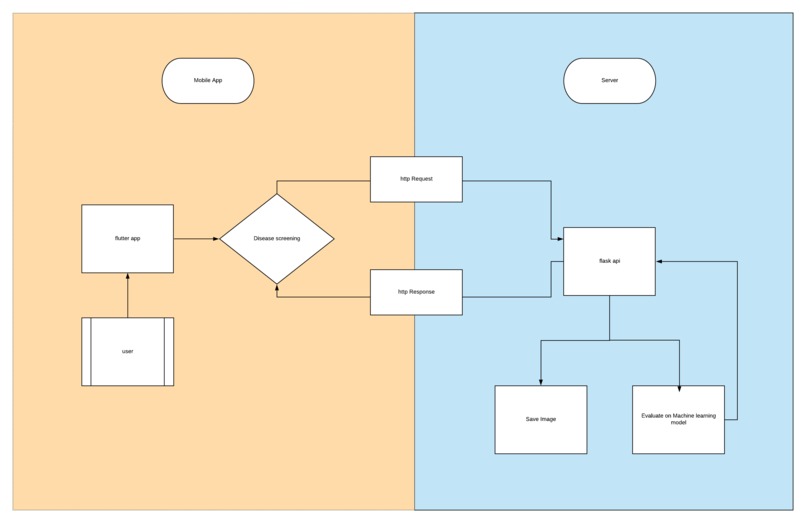
Activity Diagram
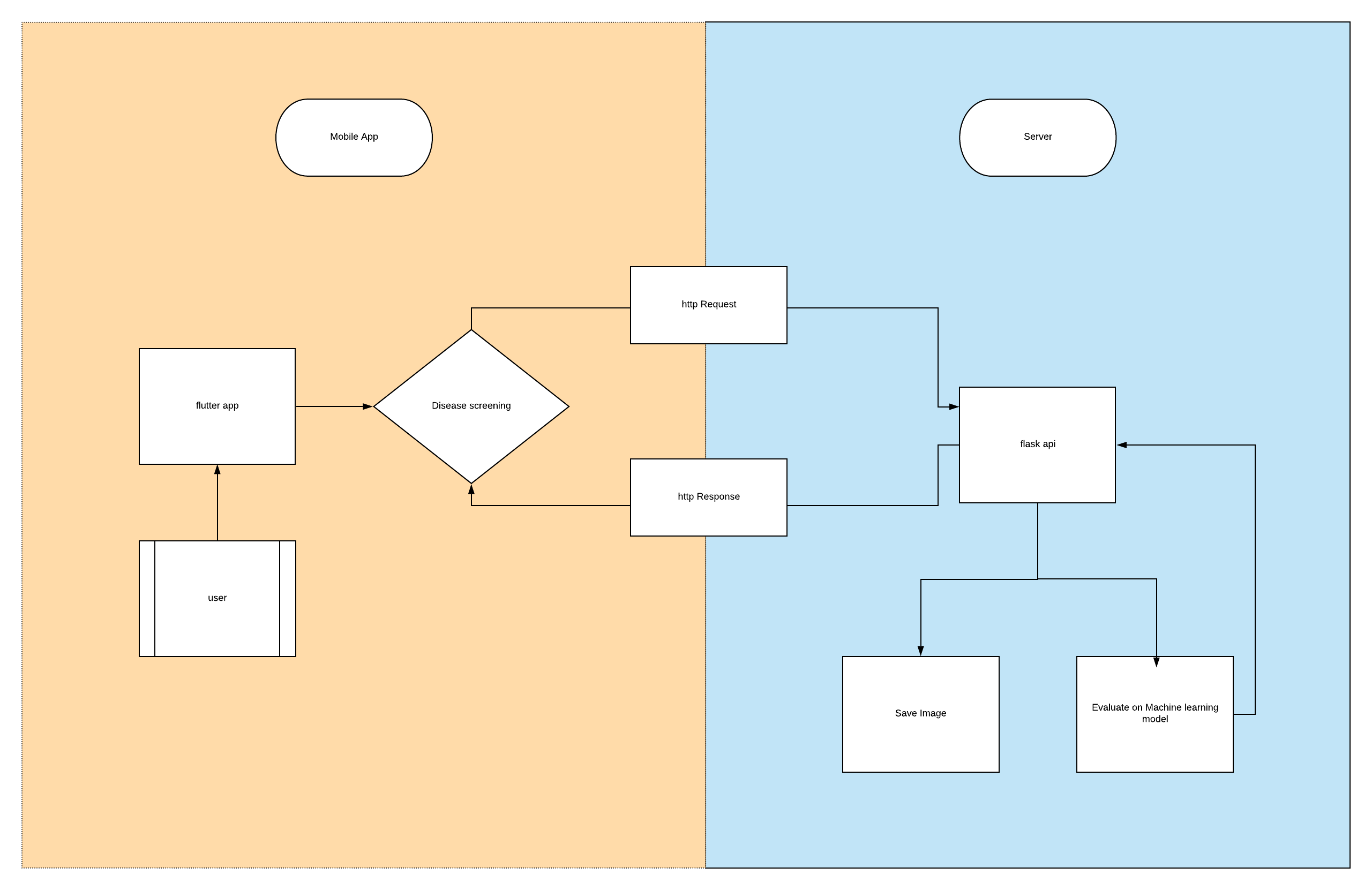
Inspiration
In recent years many public datasets became available for training CNN models. We decided to use a public dataset of skin disorders and Computer Vision to diagnose diseases using the camera feed. This tool enables preliminary diagnosis for a skin disorder to then be checked with a doctor.
What it does
Our product takes pictures of skin moles and uses a CNN utilizing fast feature extraction from the VGG network to return a possible diagnosis for a skin disorder.
How we built it
We used GCP, Android Native, Android Material Design, Volley for handling requests and Public Datasets for model training.
Challenges we ran into
Figuring out why GCP returns so many [502s]. Giving our native Android application a usable feel. Sending byte arrays of images packed into JSON.
Accomplishments that we're proud of
Pushing ourselves to stay motivated and work on the project to the end, and being able to communicate well within the team to progress at a consistent pace.
What we learned
It was our first time using such a large data-set for training a CNN model, for one of the members it was first time working with native Android Development, and for another it was taking a picture on client-side, compressing it and sending to the backend CNN.
What's next for Blight-EYE
Improving the model to have comparable recognition rate to that of doctors. Maintaining the code and improving the usability of the mobile app to possibly turn it into a business project.


Log in or sign up for Devpost to join the conversation.