-
-
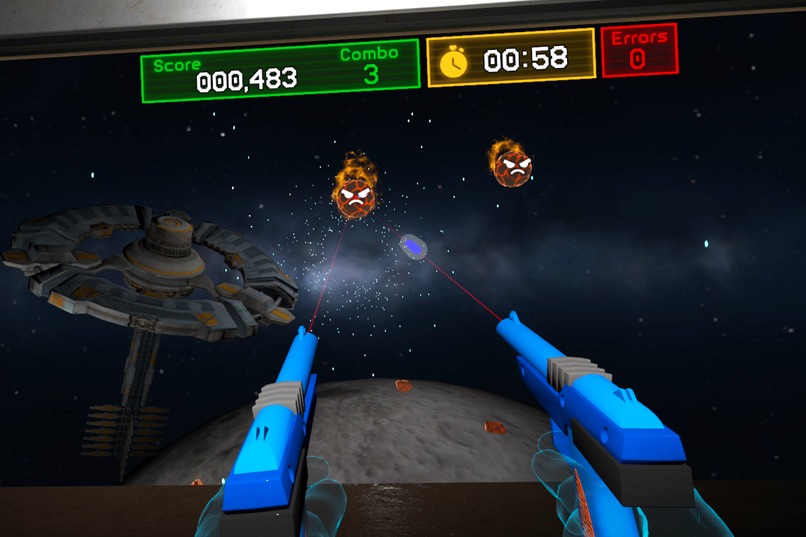
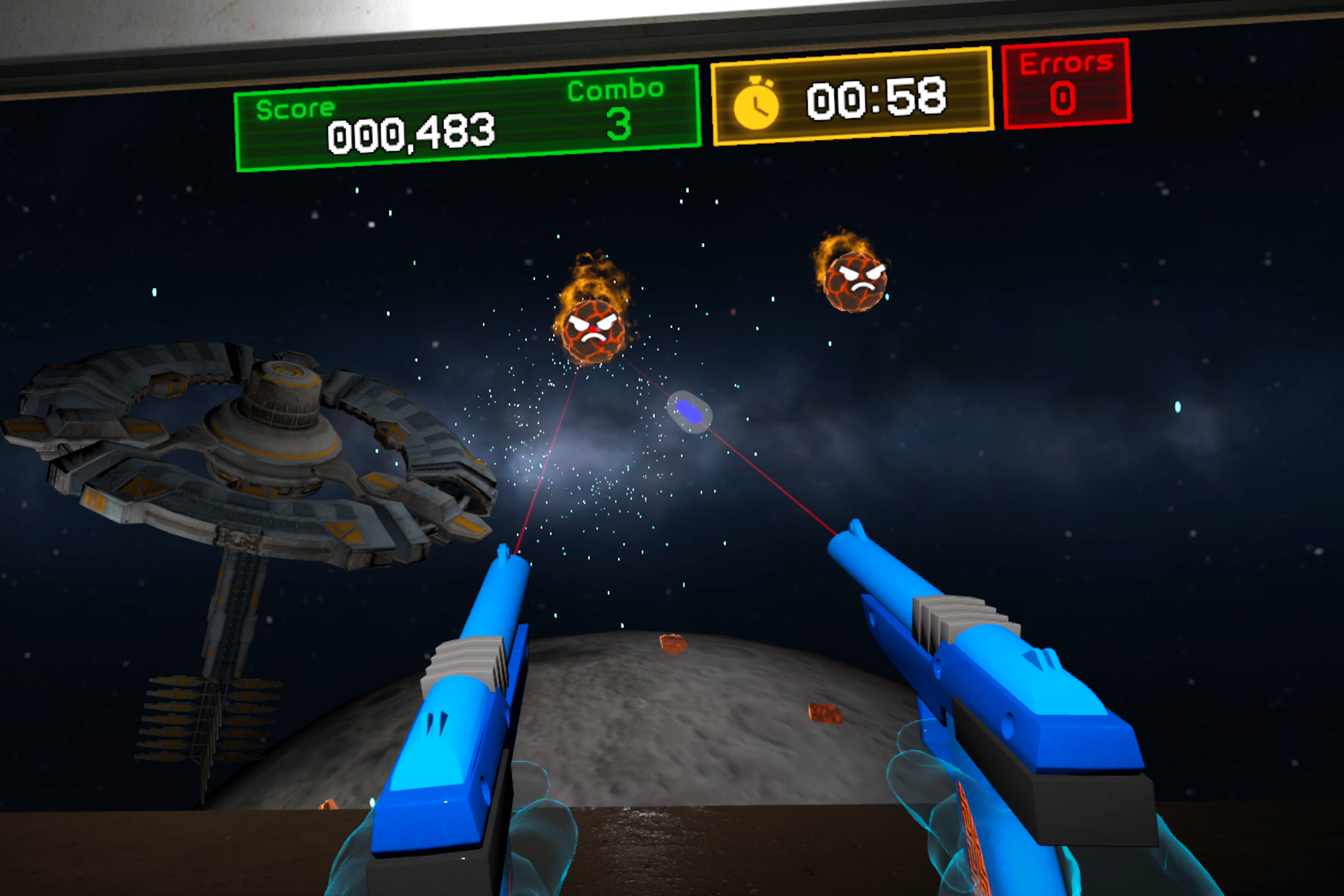
Double gun for space targets
-
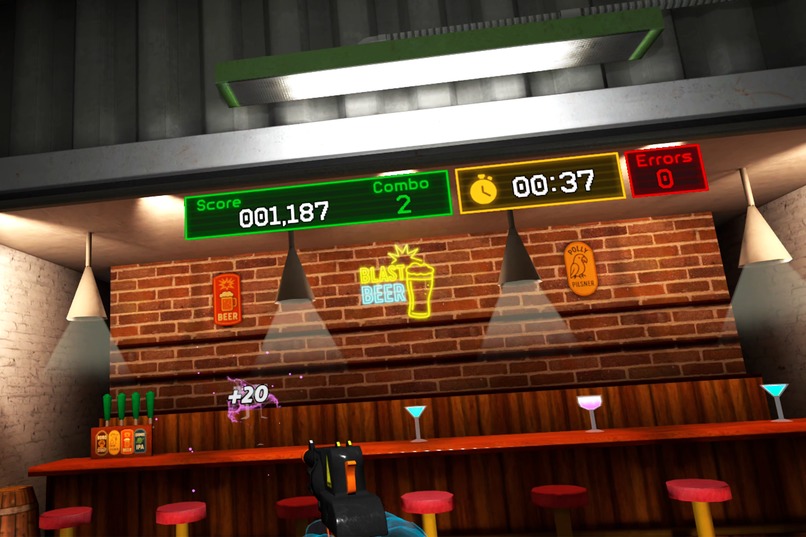
Braking virtual glasses
-
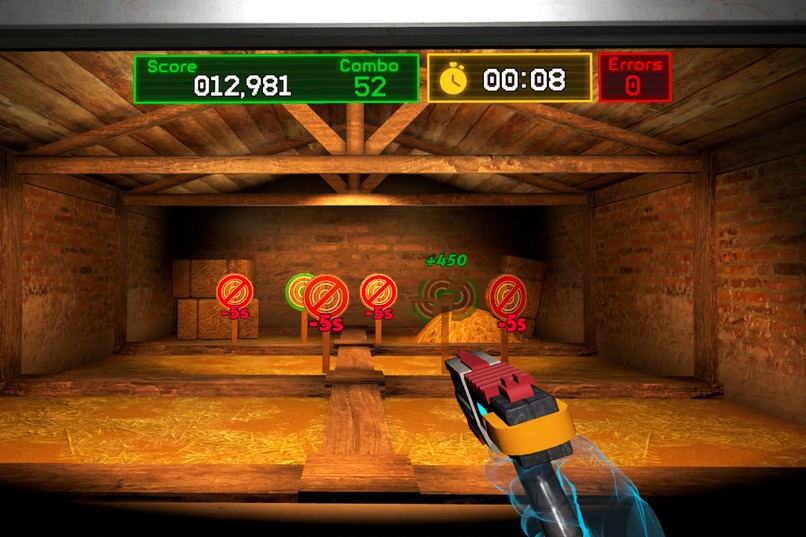
Classic targets
-
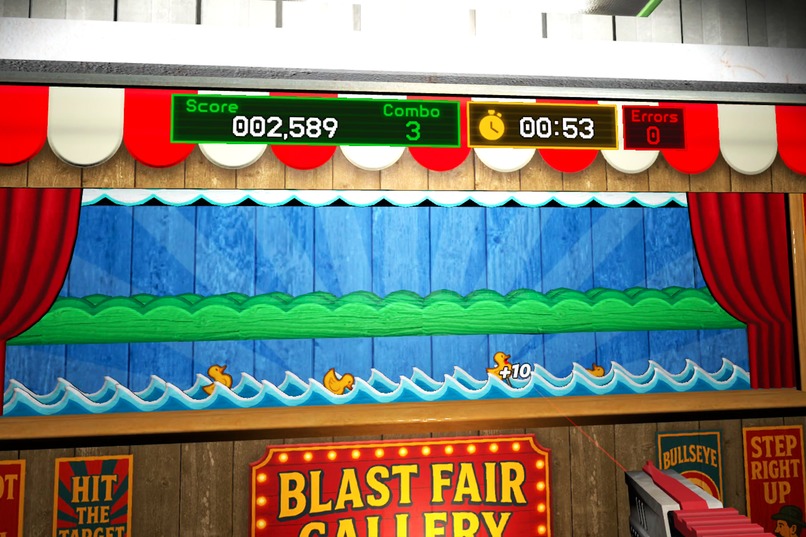
Classic fair shooting gallery
-
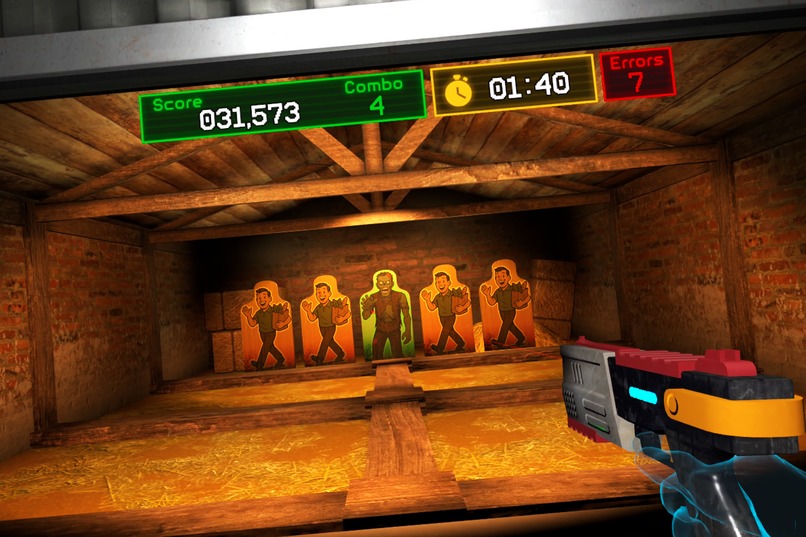
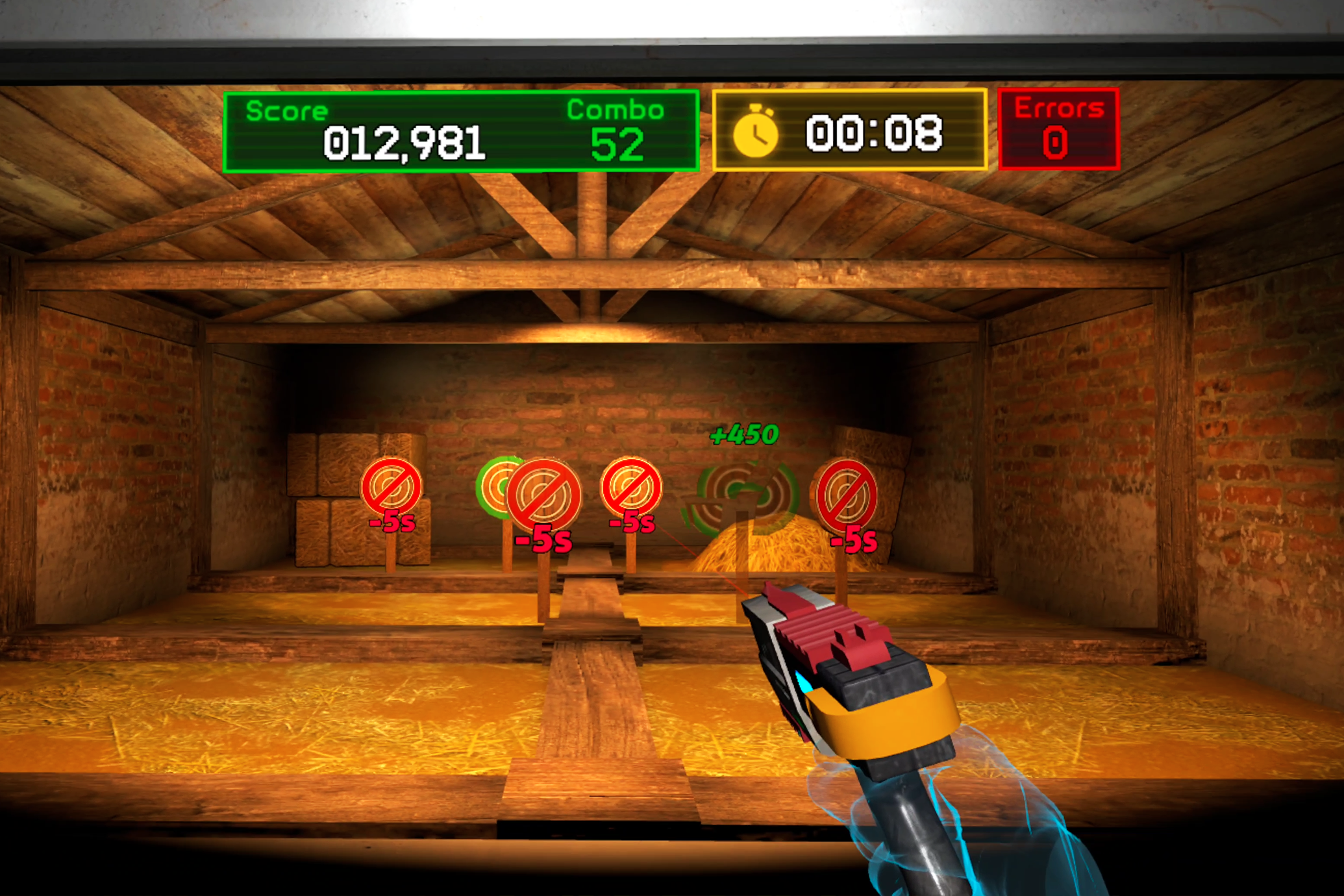
Positive and negative targets
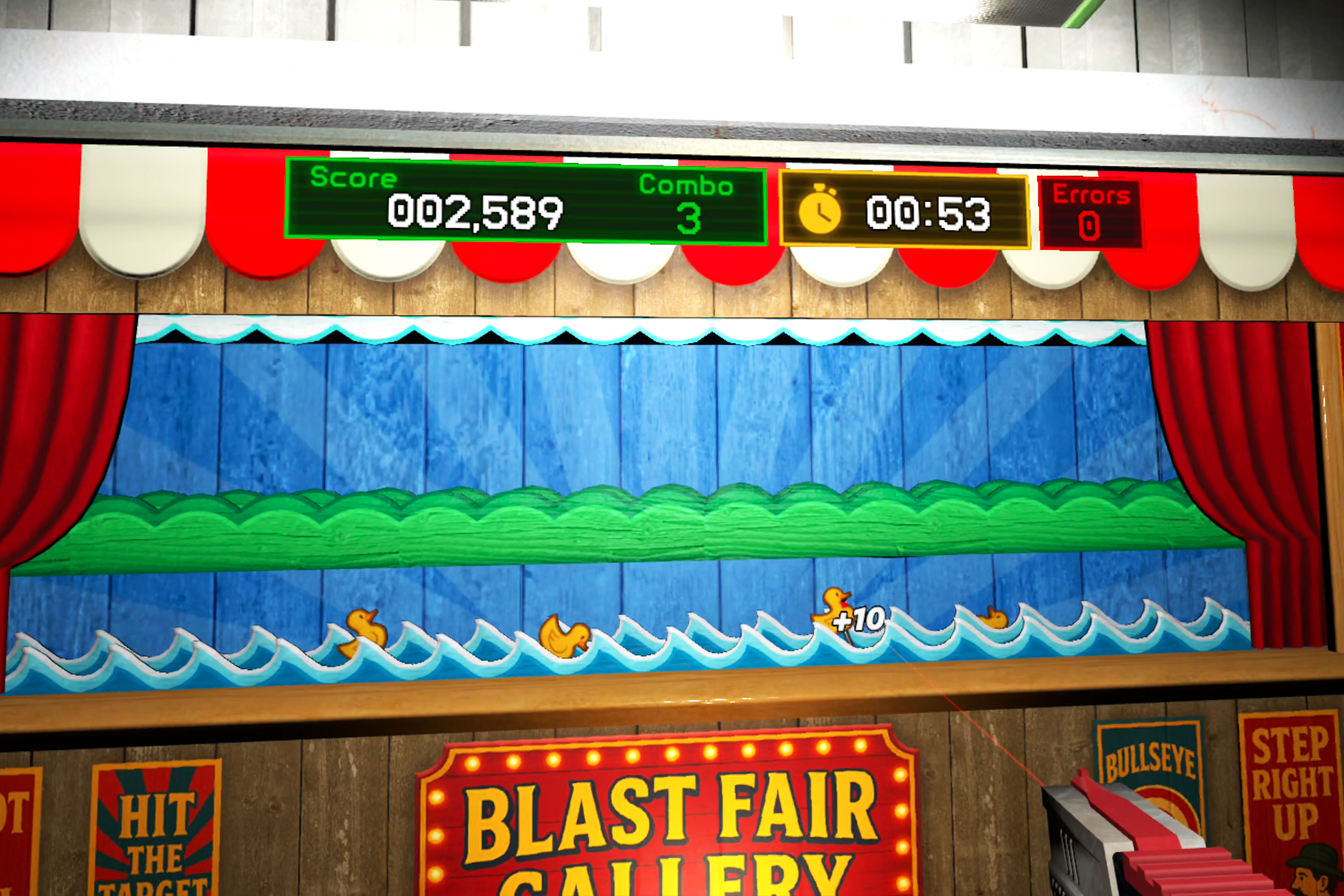
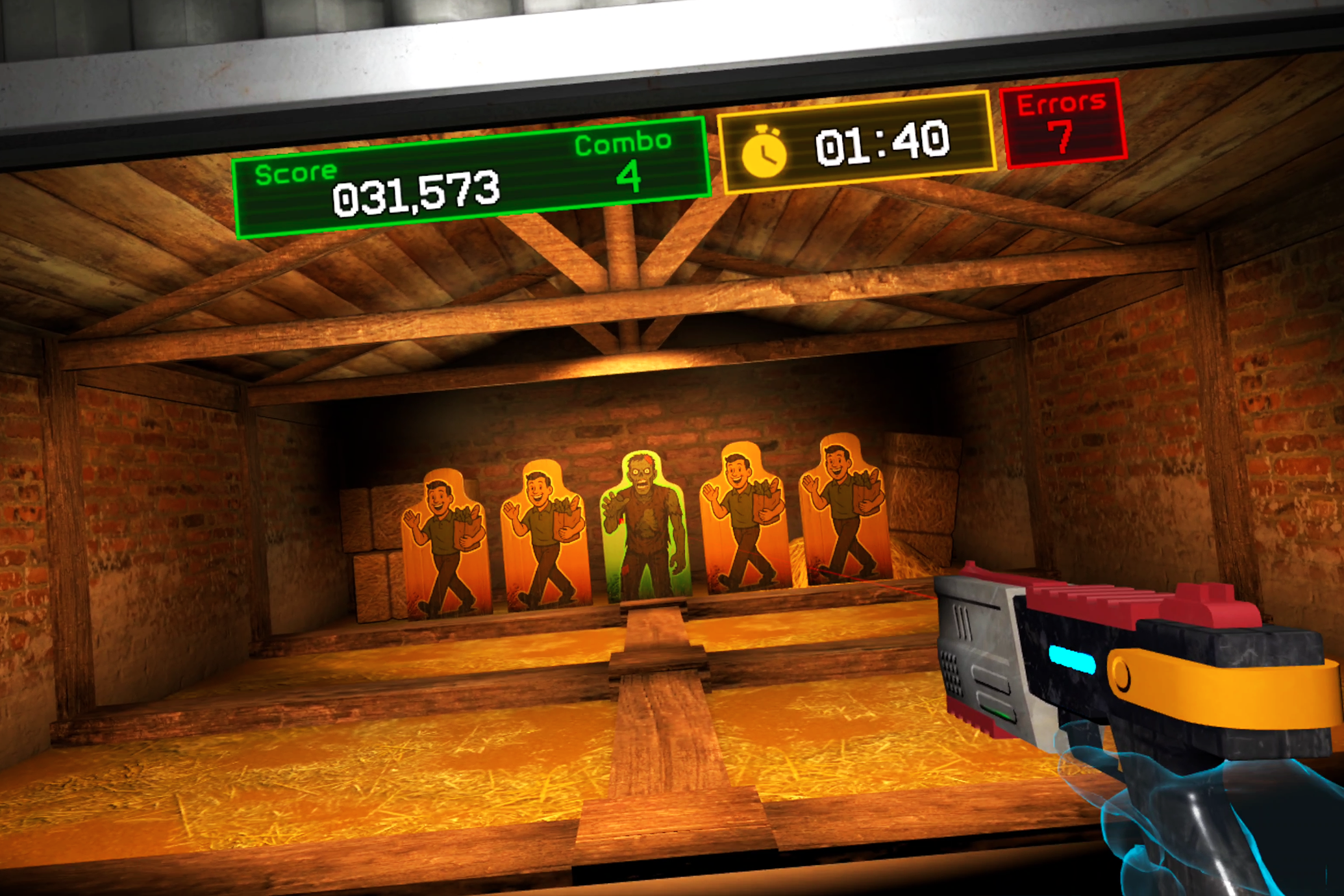
Inspiration
BlastZone is inspired by the classic light-gun arcade games we grew up loving—Duck Hunt, Point Blank, and those colorful cabinets where you could pick up a toy gun and instantly start having fun. We wanted to recreate that arcade magic: fast, friendly, and endlessly replayable. We also fell in love with how those old arcades pushed you to beat the highest score, which naturally led us to include a global leaderboard.
What it does
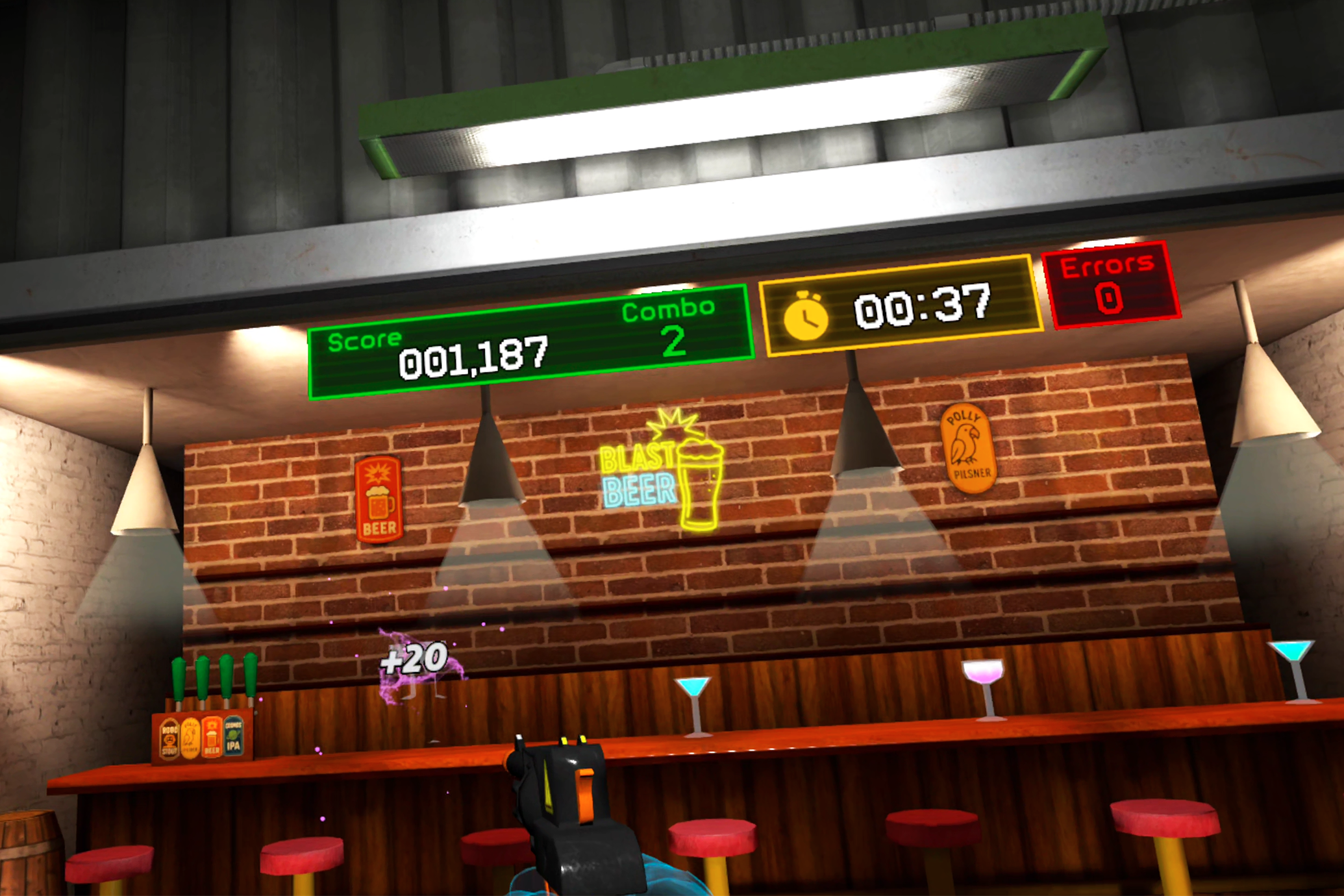
BlastZone delivers an accessible VR shooting-gallery experience built around instant action, evolving weapons, and themed dynamic stages. You start in a grounded, familiar hub area, and once you’re ready, a metallic roller shutter transports you into completely different themed arenas—something only VR can truly offer. With stylized toy guns, reactive targets, and a straightforward loop of “shoot → evolve → beat your score,” the game aims to be fun for players of all ages.
How we built it
We developed BlastZone using Unreal Engine 5.
- 3D modeling: Blender
- Textures: Photoshop
- Vector artwork: Inkscape
- Materials: Quixel Mixer
- Audio: Adobe Audition
For level design, we built a flexible modular system that reads stage definitions from a JSON file. As the system grew in complexity, we created an internal tool that visualizes the target grid and movement patterns, allowing for faster and more intuitive stage creation. The combination of hand-crafted assets and custom tooling helped us build a polished and scalable experience.
Challenges we ran into
One major challenge was learning how to design user interfaces that feel natural inside VR. Traditional floating menus break immersion, so we iterated heavily to ensure BlastZone’s UI is minimal and seamlessly integrated into the environment.
Performance optimization was another key challenge. VR demands smooth, stable frame rates, so we carefully optimized every scene—using baked lighting, minimizing dynamic lights, and reducing unnecessary complexity wherever possible.
Level design also became increasingly complex. Writing advanced behaviors directly in JSON quickly became difficult, pushing us to develop our own internal visualization tool to handle target placement, timing, and movement more intuitively.
Accomplishments that we're proud of
We’re proud that BlastZone manages to capture a nostalgic arcade feeling while taking full advantage of VR’s unique strengths. Our playtests with family members—especially younger players—validated our approach: they loved the style, the fast action, and the urge to improve their weapons and chase higher scores. Creating our first VR and Unreal Engine project as a team is a milestone we’re extremely happy to reach.
What we learned
We learned how important UI design is in VR—how small elements can make or break immersion. We also gained a deep understanding of VR optimization techniques, balancing visual fidelity with performance. Building our own level-design tool taught us the value of creating custom workflows to keep development efficient and scalable.
What's next for BlastZone
We plan to expand BlastZone with new themed stages, additional weapons with unique abilities and skins, detailed player statistics, and even multiplayer features such as co-op challenges. Our goal is to keep evolving BlastZone just like the guns in the game—adding more replayability, variety, and surprises for the community.


Log in or sign up for Devpost to join the conversation.