-
-
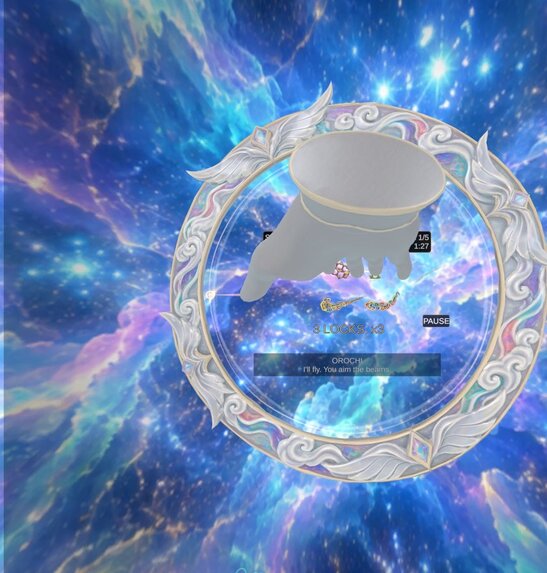
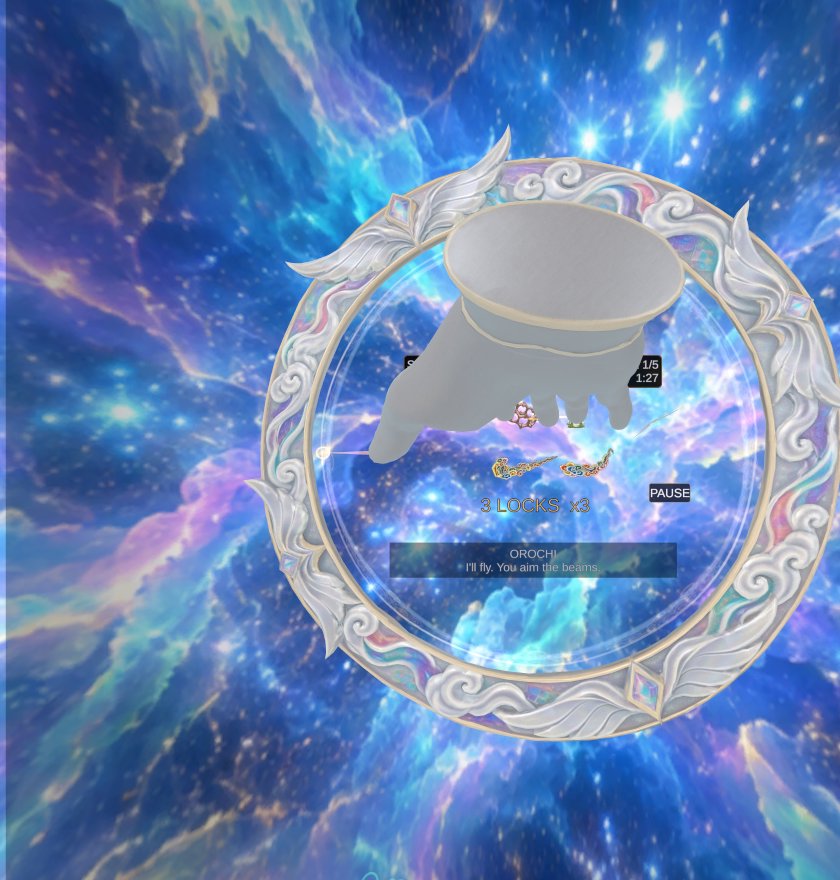
Three fingertip locks trigger a Yakumo volley. Quest 3 profile in Meta XR Simulator.
-
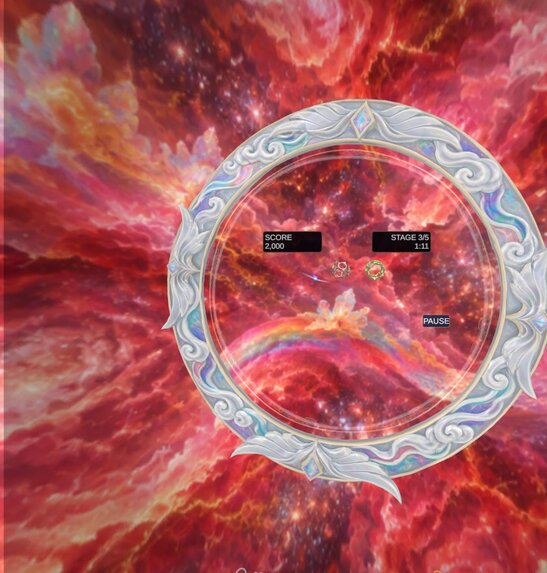
Zelganium crystals in Rosette, the third of five starfields. Quest 3 profile in Meta XR Simulator.
-
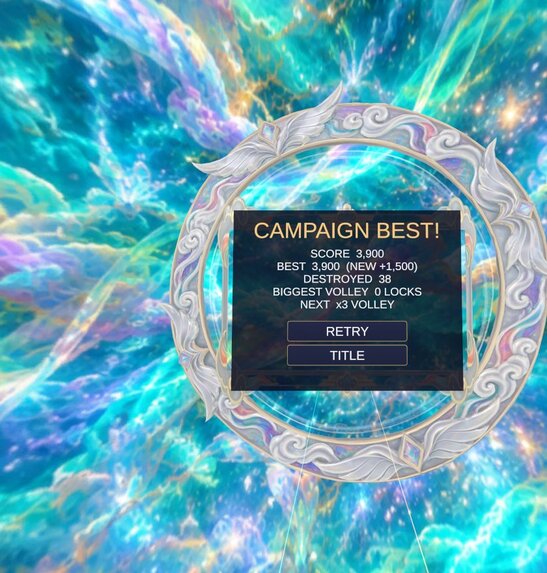
Campaign clear. Review your score and retry for a higher one. Quest 3 profile in Meta XR Simulator.
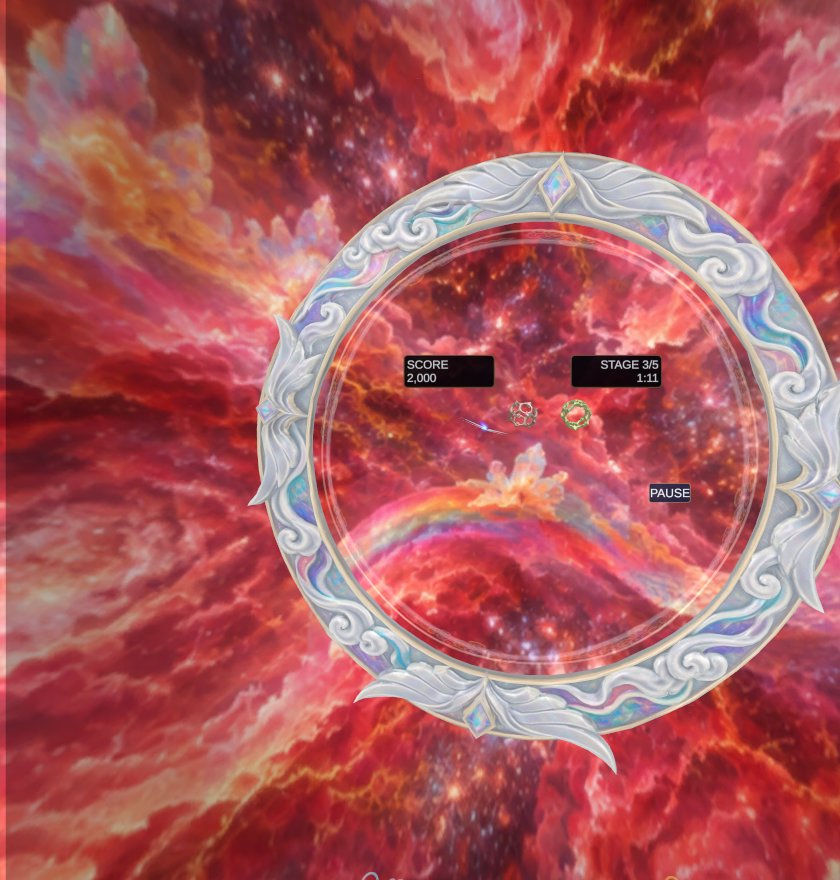
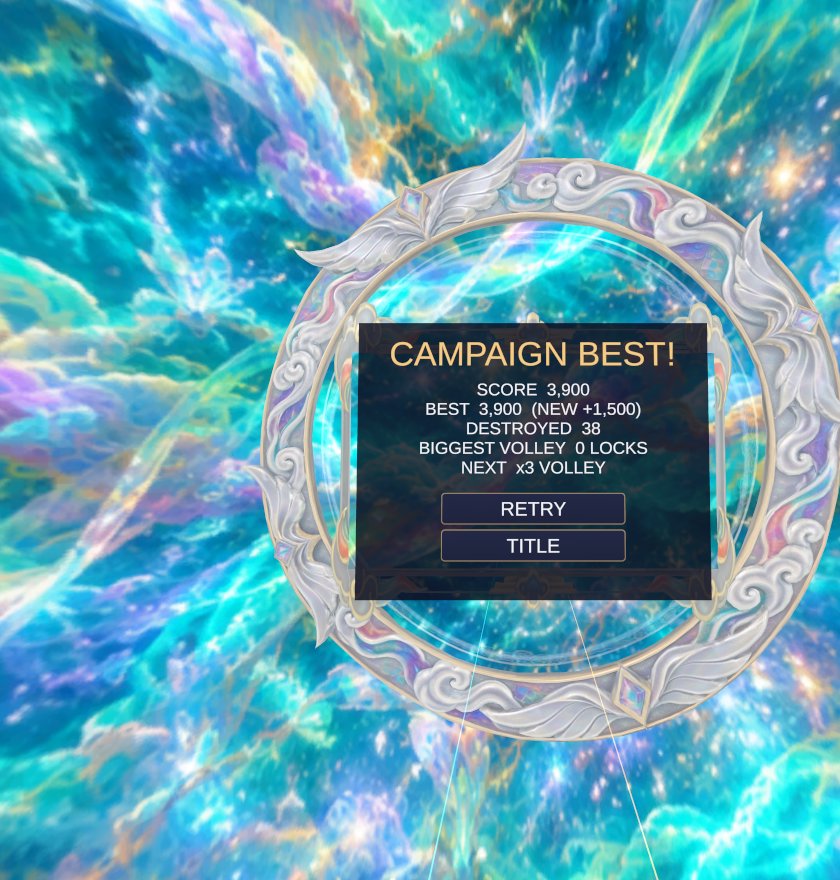
Why we made it
In the original BLAST BUSTER, a fingertip crossing a crystal on screen was enough to fire. I wanted to bring that feeling back for seated VR. The pilot is Mikoto Susa, a freight operator whose routes are threatened by an ever-growing mineral life form. Mikoto’s partner is Orochi, the silver, four-winged fighter that ended the last war. Orochi has strong opinions about being sent out on cleanup duty.
How to play
Aim an index ray at START and pinch with that same hand. In combat, extend a finger across a crystal. When the ray intersects it, the lock resolves and Orochi fires automatically. All ten fingers can mark targets, and the optional gaze lock can work alongside them. Orochi banks and rams on its own. Follow its curved, multicolored Yakumo cloud trails to see where your shots land.
The five nebulae take 6 minutes 45 seconds in total. You can pause, save a run and return, play one-handed, or retry from the results screen. In mixed reality, the ring opens onto space while the room remains visible around it.
What changed for this competition
This is an adaptation of the Oculus Rift and Leap Motion original, Perilous Dimension / BLAST BUSTER. The new Unity game brings the original lock-on idea to tracked hands, adds optional eye aiming on supported devices, and lets the fighter move independently through a seated play space. The cloud-beam art draws on the painted Yakumo clouds of Izumo. The targets are living minerals whose seven base colors shift in the light.
How it was built and tested
I rebuilt the game in Unity 6.7 with URP, OpenXR and Meta XR SDK 209. On Meta VR Glasses, the forward head pose and the placement of the score, timer and tutorial text follow the SDK’s viewing guide. Codex helped implement the port and test its campaign. I used AI-assisted artwork and 3D asset tools for the new visual treatment and ElevenLabs for a non-vocal engine sound. I used the Meta XR Simulator to run the title, practice, five-stage campaign, results and retry with SDK-generated inputs. On the Glasses profile I verified eye-driven shots. On the Quest 3 profile the same option uses head direction. The Windows simulator demonstrations use automated input. The Android build uses Vulkan and ARM64 IL2CPP.
What's next
The target Meta Store launch is March 2027. Before launch I want to tune how easily players can pick crystals out of the brighter nebulae and validate sustained performance and hand visibility on physical hardware.