-
-
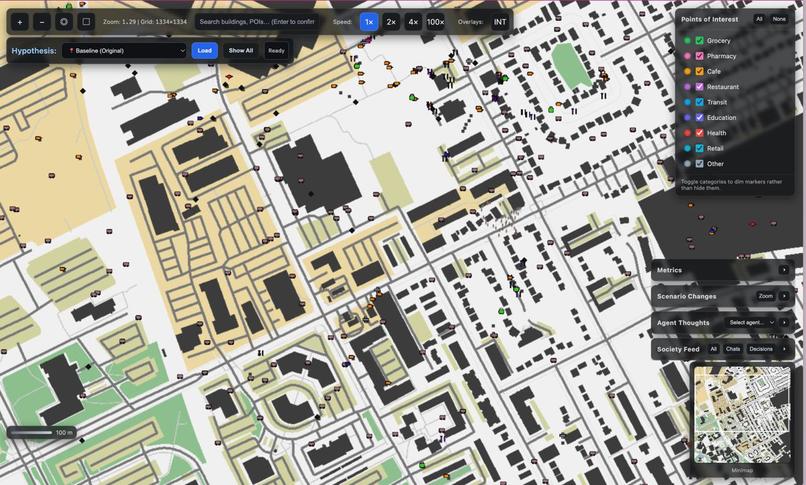
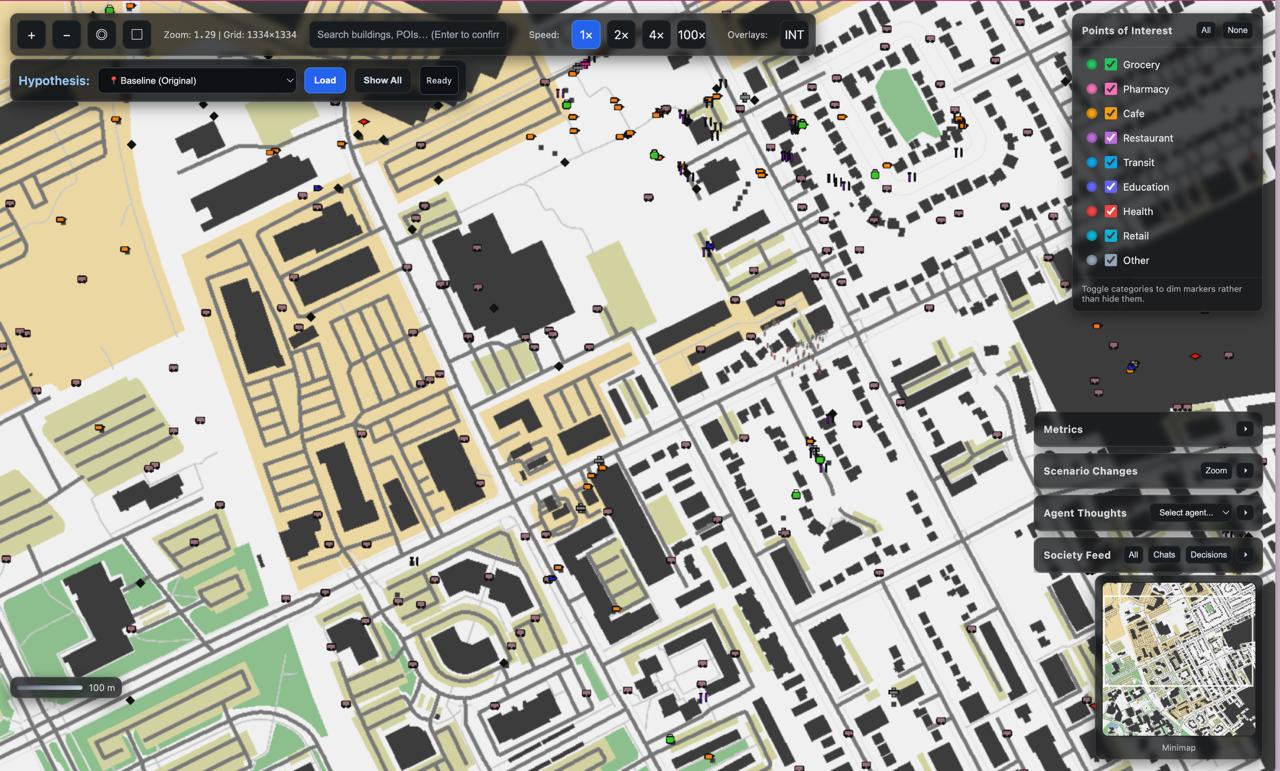
Map Page
-
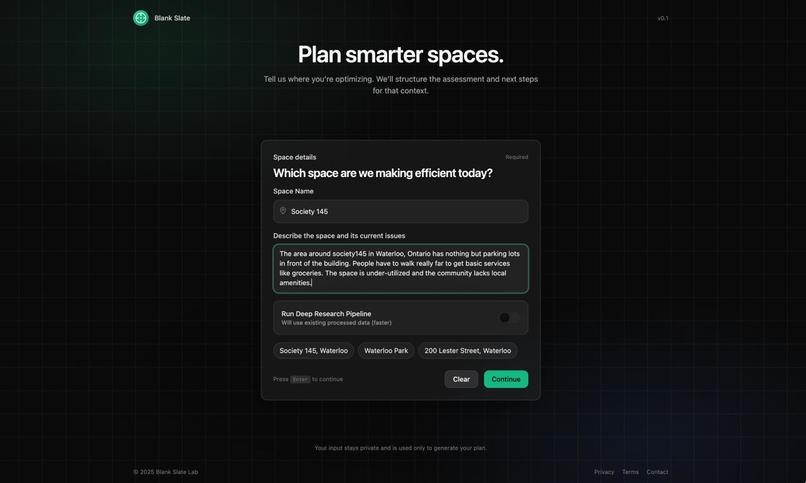
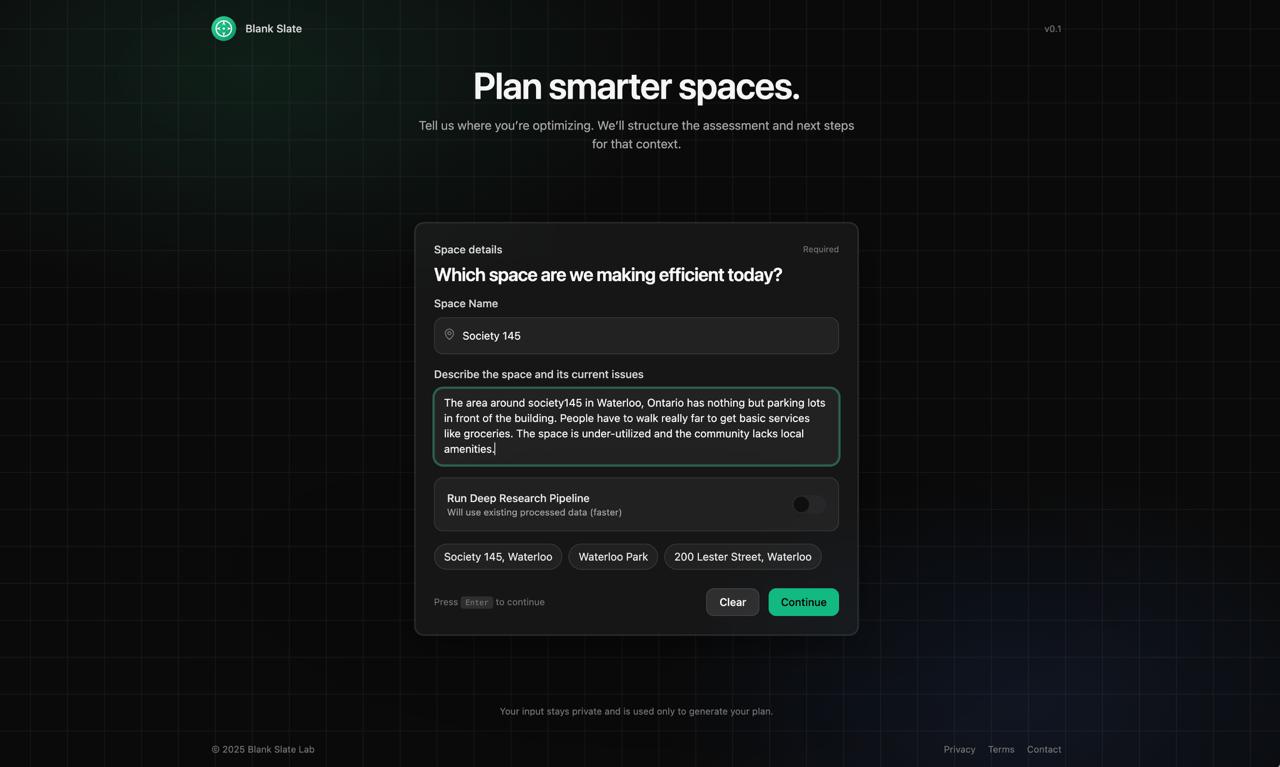
HomeScreen
-
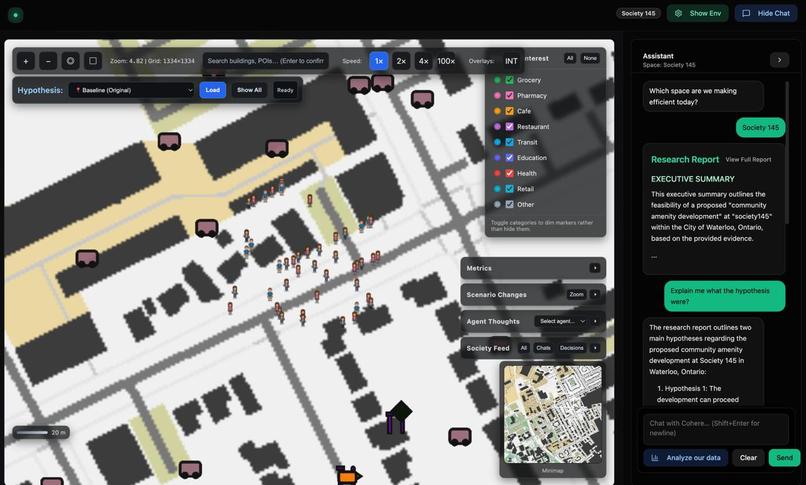
Detailed View of Map
-
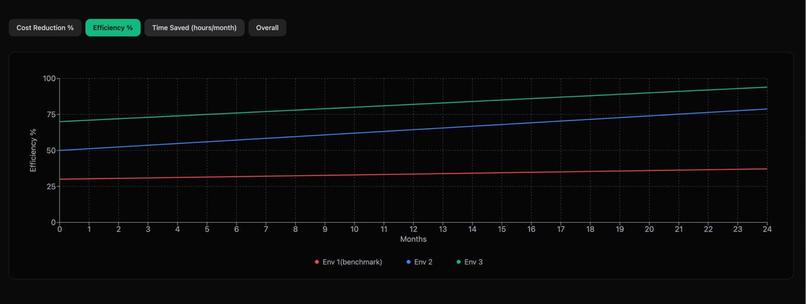
Blank Slate
Blank Slate transforms underused real-world spaces into data-backed proposals. Instead of guessing what a parking lot, alleyway, or empty corner could become, Blank Slate researches the rules, simulates how people would use it, and delivers a clear report with visuals, comparisons, and recommendations.
Inspiration
Every day, we pass by spaces that feel wasted: empty parking lots, neglected corners, lifeless public squares. These spaces sit idle even though they could be serving the community in meaningful ways.
Right next to our university, there’s a place called Society145. The front area is nothing more than a flat parking lot. No grocery store, no café, no convenience store, no community life. Standing there, I asked myself: What’s the best use of this space?
Instead of relying on guesswork or vague urban planning discussions, I realized we could simulate the possibilities. What if we could see how different proposals would play out, backed by real data, legal feasibility, and human behavior models? That realization was the spark behind Blank Slate — a platform that lets us imagine, test, and compare alternate realities for the places we live in.
What it does
Blank Slate is a decision-support tool for urban spaces. It takes a simple description of a location and produces a data-driven simulation of what would happen if new amenities were introduced. Instead of endless debate or intuition-based planning, Blank Slate gives concrete answers to “what if?” questions.
The process begins when a user describes the pain point of a space. For example: “There are no convenience stores near my building, I can’t buy milk.” or “Traffic around this block is unbearable, but nothing is nearby to walk to.”
From there, Blank Slate runs through a five-step pipeline:
AI Research for Options
Our system pulls from zoning documents, municipal regulations, and urban design knowledge to propose realistic solutions. These might be a small grocery store, a community gym, or a café cluster with outdoor seating. Every suggestion is grounded in the actual context of the space — not just hypotheticals.Legal & Regulatory Feasibility
Ideas are only useful if they’re buildable. Each proposal is checked against zoning laws, building codes, and permit requirements, ensuring feasibility. This step filters out “dream” ideas that aren’t legally possible.Community Simulation
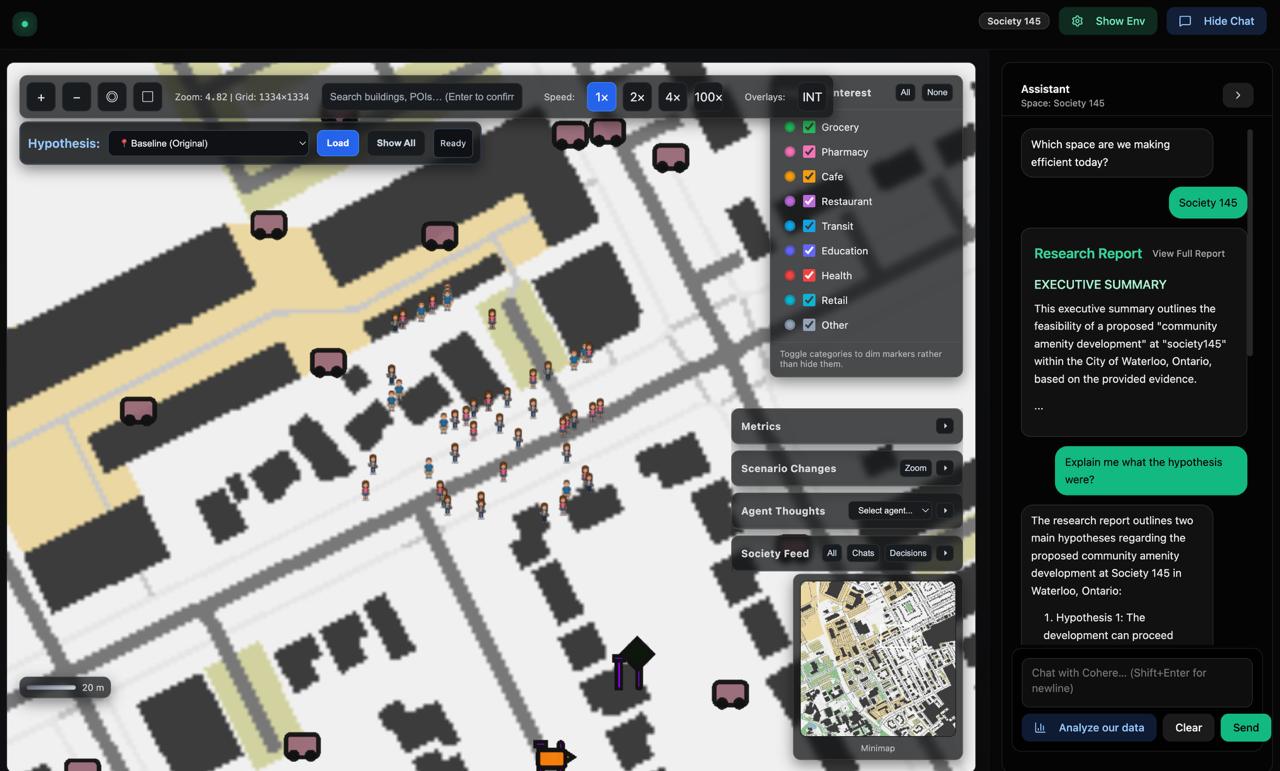
Using an agent-based model, Blank Slate creates a “virtual twin” of the neighborhood. Agents like students, residents, and workers move through the environment:- Walking, driving, and shopping
- Making daily decisions like stopping by a café before class or buying groceries nearby
- Showing where time and money flow in the new setup
This stage reveals how proposals would realistically shape daily life.
- Walking, driving, and shopping
Impact Measurement
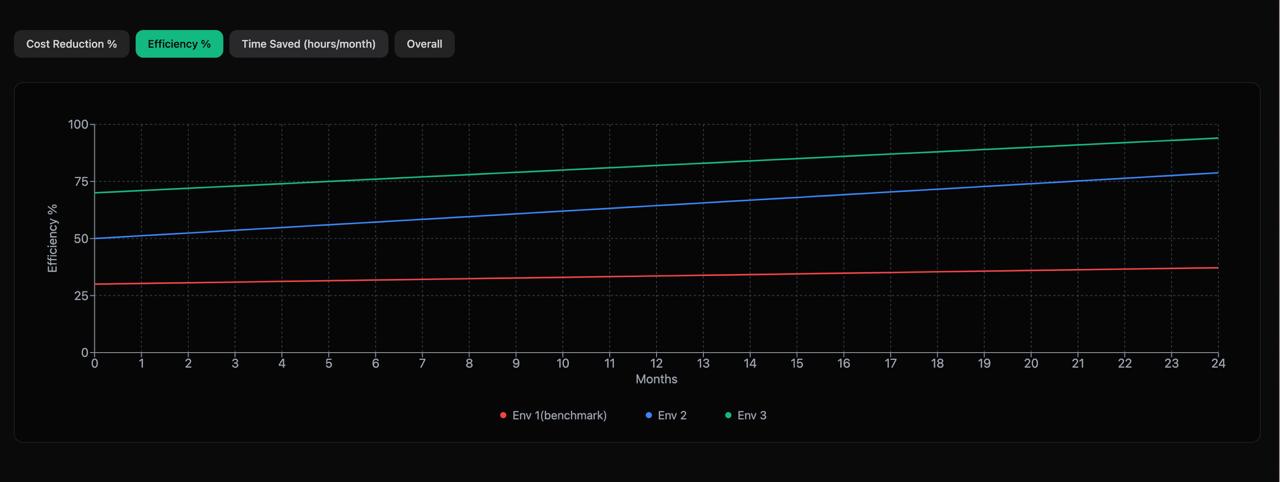
The system quantifies changes across key metrics:- Time saved: minutes shaved off errands or commutes
- Local spending: money that stays in the community
- Traffic flow: whether streets get smoother or more congested
- Community happiness: a proxy score of satisfaction
- Overall efficiency: how well the proposal addresses the original problem
- Time saved: minutes shaved off errands or commutes
Comprehensive Report
Finally, Blank Slate generates a polished report with side-by-side proposal comparisons, visualizations of before vs. after, evidence citations from zoning and research, and a clear recommendation for the “best” option.
As a bonus, users can explore the results through a Cohere-powered chatbot, asking questions like:
- “Why did the grocery store perform better than the gym?”
- “What permits would I need to build this?”
- “How many minutes of travel time were saved?”
This makes the report not just static, but interactive.
How I built it
To bring Blank Slate to life, I combined several systems into one end-to-end pipeline:
AI Research Engine:
Uses Tavily for web search, Jina Reader for extracting zoning and municipal text, and large language models (Gemini, Cohere) to summarize and verify legal constraints.Simulation Engine:
Custom-built agent-based architecture with A* pathfinding and task prioritization. It models 15–50 agents (residents, students, workers), tracking metrics like time saved, money spent, and engagement levels.Frontend:
Built with React, Vite, and Tailwind CSS for a clean, responsive interface. Visualizations are powered by PIXI.js for high-performance 2D map-style rendering. Real-time polling shows progress during research and simulation.Backend / Core:
Python (Flask) handles simulation logic and orchestration. Pydantic ensures data validation, and NumPy powers the heavy calculations. Outputs are modular — generated both in Markdown (for human-readable reports) and JSON (for programmatic reuse).
Challenges
- Messy regulations: Zoning and permit rules are often inconsistent or vague. I had to build fallback parsing, confidence scoring, and reranking layers to avoid bad outputs.
- Modeling human behavior: Simulating realistic agents required careful tuning of priorities (e.g., students going to cafés before class, workers making errands after work).
- Speed vs. depth: Achieving meaningful simulations while keeping runtime under ~30 seconds meant optimizing trade-offs.
- Guarding against hallucinations: LLMs sometimes fabricated rules or citations. I implemented verification pipelines and source-checking to ensure reliability.
Accomplishments
Blank Slate takes a speculative idea — “What if this empty space became something useful?” — and makes it tangible in under a minute. I built an integrated system that not only generates proposals, but simulates their impact, checks feasibility, and produces clear reports with citations.
I’m especially proud that the simulation shows before vs. after outcomes, making trade-offs visible in a way that feels like SimCity, but grounded in real-world logic.
Having a multi-agentic structure simulating human behaviour in a map that was created by openstreetmap and then further rasterized to have custom physics, was definitely an achievement for me.
What I learned
Through building Blank Slate, I learned how complex urban planning actually is — from regulatory hurdles to social dynamics. I saw firsthand that while LLMs are powerful, they need guardrails to avoid misleading outputs.
Agent-based modeling turned out to be more effective (and fun) than expected, making abstract urban planning debates feel concrete. Most importantly, I realized the power of numbers: telling someone “this idea saves 9 minutes per person per day” is much more compelling than saying “it’s a good idea.”
What’s next
Looking forward, Blank Slate will evolve in several directions:
- Smarter, adaptive agents that learn and adjust over time
- Richer report exports (PDF, Notion integration, GitHub Gist)
- Public sandbox mode where anyone can experiment with ideas in their neighborhood
By continuing to refine both the research and simulation layers, Blank Slate can grow into a powerful platform for cities, developers, and communities to design smarter, data-backed spaces.
Built With
cohere · gemini · jina · tavily · numpy · flask · react · vite · tailwind · pixi.js


Log in or sign up for Devpost to join the conversation.